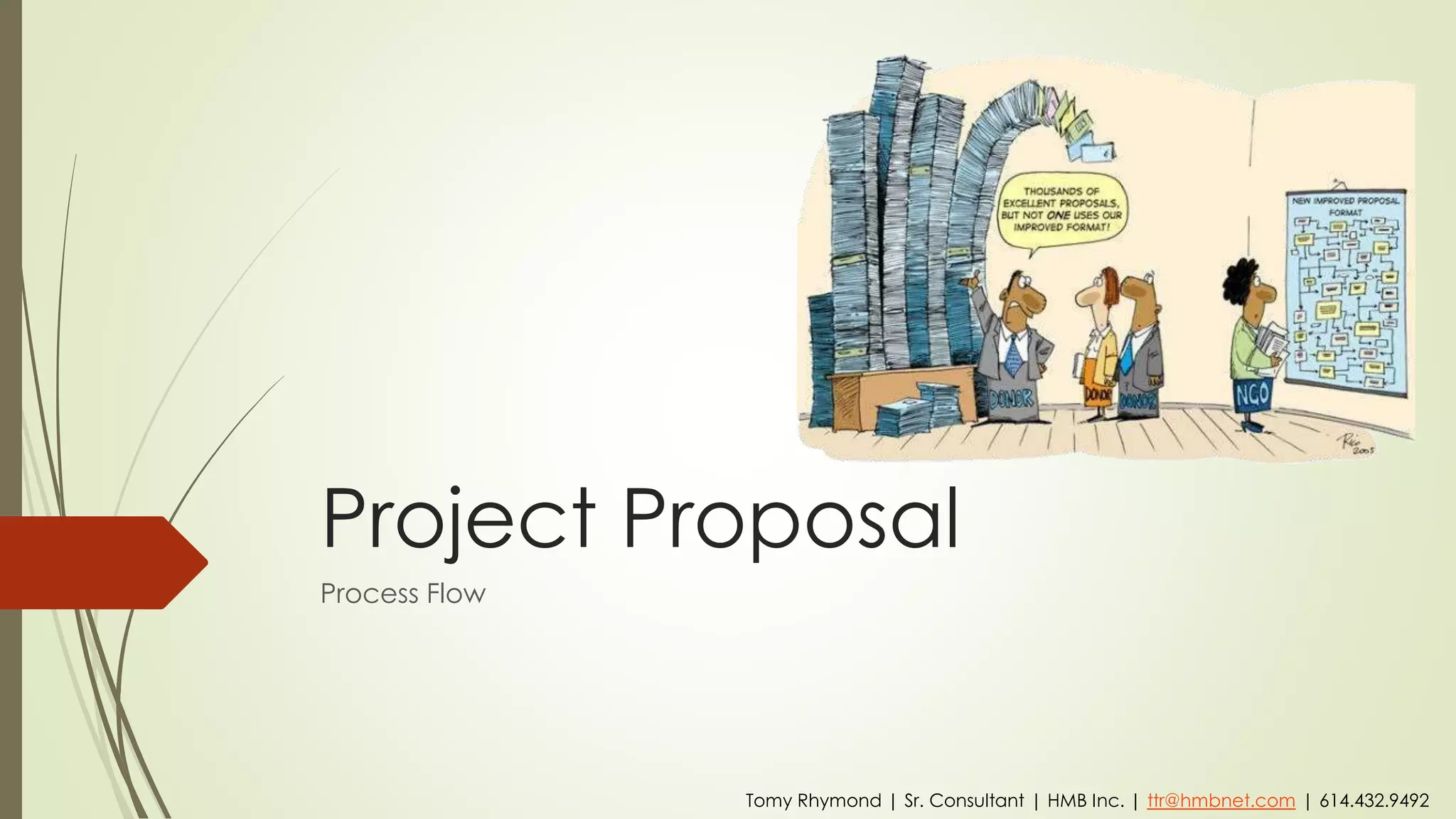
Project Proposal 
Process Flow 
Tomy Rhymond | Sr. Consultant | HMB Inc. | ttr@hmbnet.com | 614.432.9492
What is a Proposal? 
 Project proposals are documents designed to present a plan of action, outline the 
reasons why the action is necessary, and convince the reader to agree with and 
approve the implementation of the actions recommended in the body of the 
document. 
 Proposals are usually drafted as a response to a Request for Proposal (RFP) that is 
issued by a current or prospective client. 
 A project proposal will be clearly arranged so that readers can follow a logical 
progression of thought to the conclusion. 
 Often, the RFP will lay out the basic structure of the proposal, provide invaluable 
clues as to specific information that is of interest to the potential client, and define 
the order in which data is presented. 
 When an RFP is provided, it is essential to follow the specifications of the document 
to the letter. Otherwise, the proposal will be set aside and one of the other vendors 
who did follow the provisions closely will be awarded the business.
12 tips to a write a killer proposal. 
i. Create a powerful, but concise executive summary Decision-makers start with and focus 
on the executive summary, so create this section with that fact in mind. When writing the 
executive summary, assume that the reader knows little or nothing about the proposed 
project. 
ii. Quantify the results that the client can expect from engaging you Some consultants 
create proposals that overemphasize their consulting process and methodologies. Clients 
buy results, not tools or methodologies. 
iii. Be generous with your ideas You may fear that revealing your ideas about how to solve a 
problem during the proposal process could result in clients taking those ideas and 
completing the project themselves. In rare cases, that may happen. But you'll have more 
success if you don't hoard your ideas. Use them to show clients that your team thinks and 
approaches problems in creative and innovative ways. 
iv. Size does matter Keep your proposals as short as possible, while meeting the client's 
request. Think quality, not quantity. 
v. Focus on the client Many proposals begin with a long discussion of the consulting firm, 
describing its qualifications and history. Focus your proposal on the client's needs first, and 
then describe your firm's capabilities. Remember, clients care only about how you'll address 
their issues, so show them how you'll do that. 
vi. Beware of best practices The client may view your liberal use of "best practices" as a 
convenient crutch. Instead of relying on answers that worked for a previous client, find a 
blend of outstanding practices and innovative solutions that fit your client's particular needs.
12 tips to a write a killer proposal. (cont.) 
vii. Be accurate If you are using client data to support aspects of your proposal, 
double-check and triple-check that information. It's easy for facts to be 
misunderstood and misused in a proposal. You'll risk turning a winning proposal 
into a loser if you present inaccurate data to the client. 
viii. Sweat every detail Watch for typos, use high-quality materials, and make sure 
that the right people receive the proposal on time. 
ix. Rewrite your resume for every proposal Highlight the skills in your resume that 
demonstrate your qualifications for the project at hand. A boilerplate resume is 
rarely up to the task. 
x. Finish early Let your proposal sit for a day after you've completed the final draft, 
and then reread it completely before sending it to the client. You're likely to come 
up with some new ideas that enhance your work, and you may find errors that 
you missed earlier. 
xi. Let your personality shine through Give clients a sense of your firm's culture and 
its style of working. The traditional, stilted language of many consulting proposals 
doesn't help clients answer the all-important question: What will it be like to work 
with these consultants? 
xii. Don't let your claims outdistance your true capabilities Some proposals tout the 
expertise of the consulting firm by referring to past successes with similar projects. 
These testaments to past achievements are important, but be sure that the 
capabilities of the proposed consulting team can live up to your firm's claims.
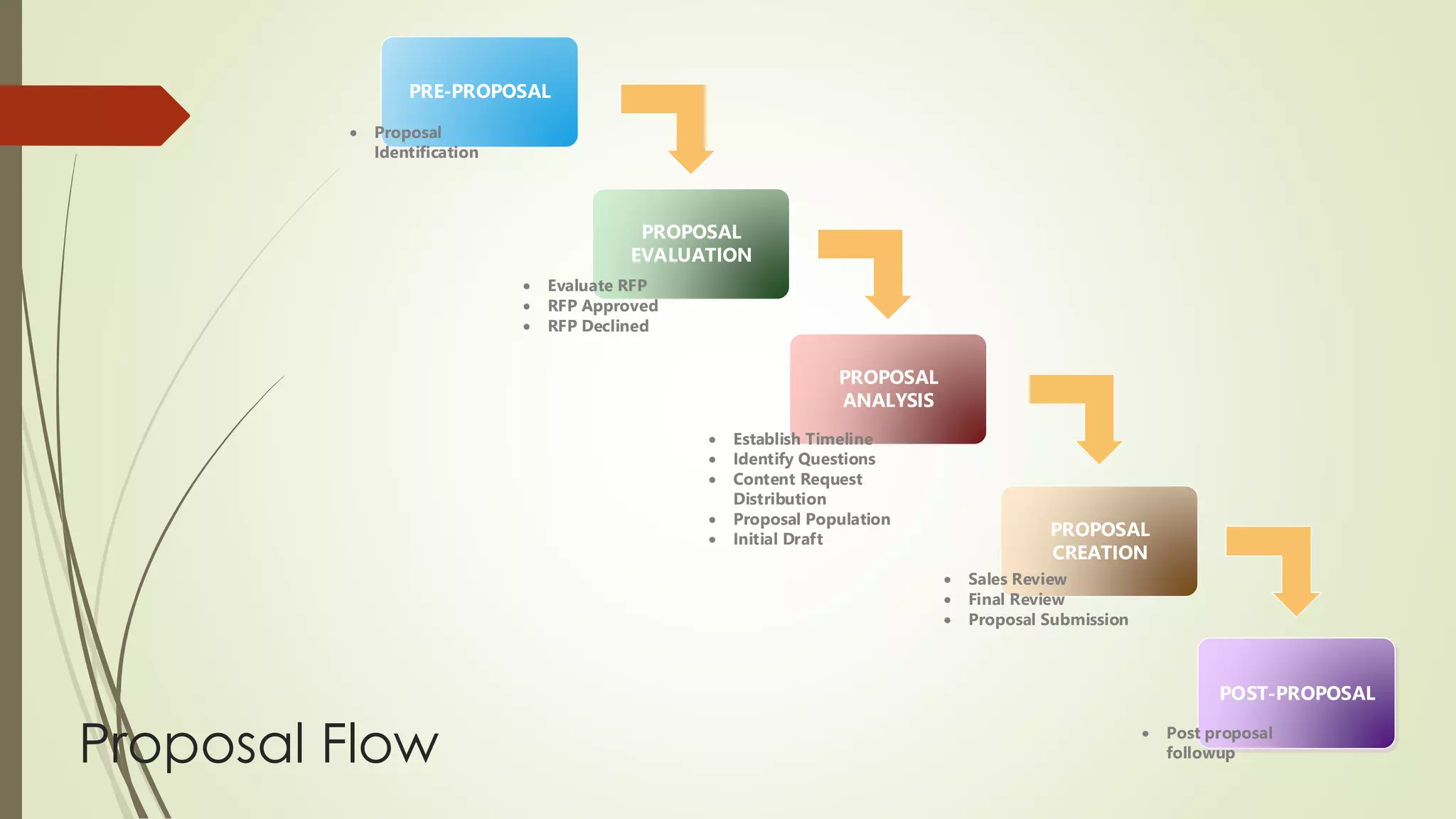
PRE-PROPOSAL 
Proposal Flow 
PROPOSAL 
EVALUATION 
PROPOSAL 
ANALYSIS 
PROPOSAL 
CREATION 
POST-PROPOSAL 
 Proposal 
Identification 
 Evaluate RFP 
 RFP Approved 
 RFP Declined 
 Establish Timeline 
 Identify Questions 
 Content Request 
Distribution 
 Proposal Population 
 Initial Draft 
 Sales Review 
 Final Review 
 Proposal Submission 
 Post proposal 
followup
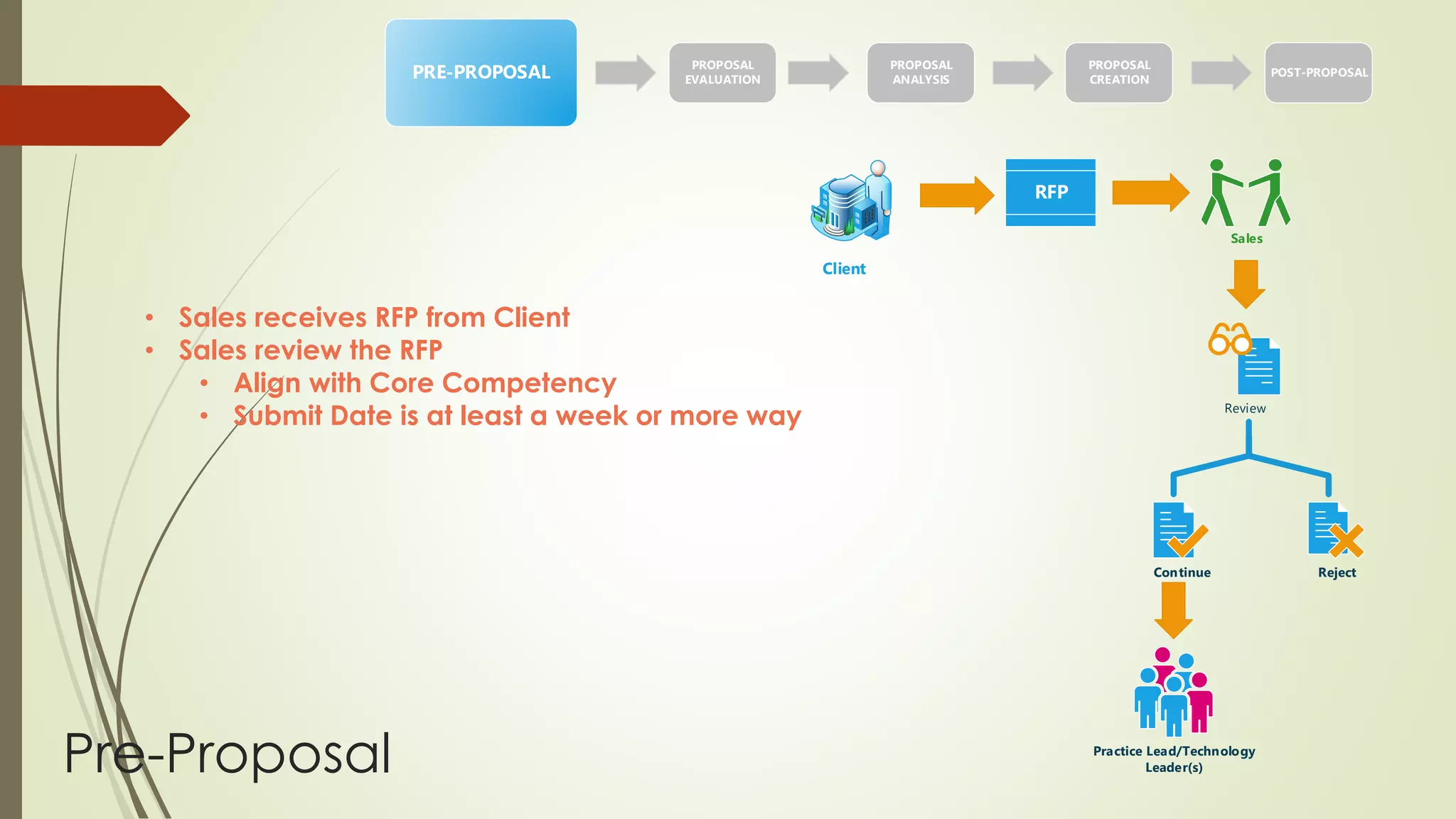
• Sales receives RFP from Client 
• Sales review the RFP 
• Align with Core Competency 
• Submit Date is at least a week or more way 
Pre-Proposal 
PROPOSAL 
EVALUATION 
PROPOSAL 
ANALYSIS 
PROPOSAL 
CREATION 
PRE-PROPOSAL POST-PROPOSAL 
RFP 
Sales 
Continue Reject 
Practice Lead/Technology 
Leader(s) 
Client 
Review
PRE-PROPOSAL 
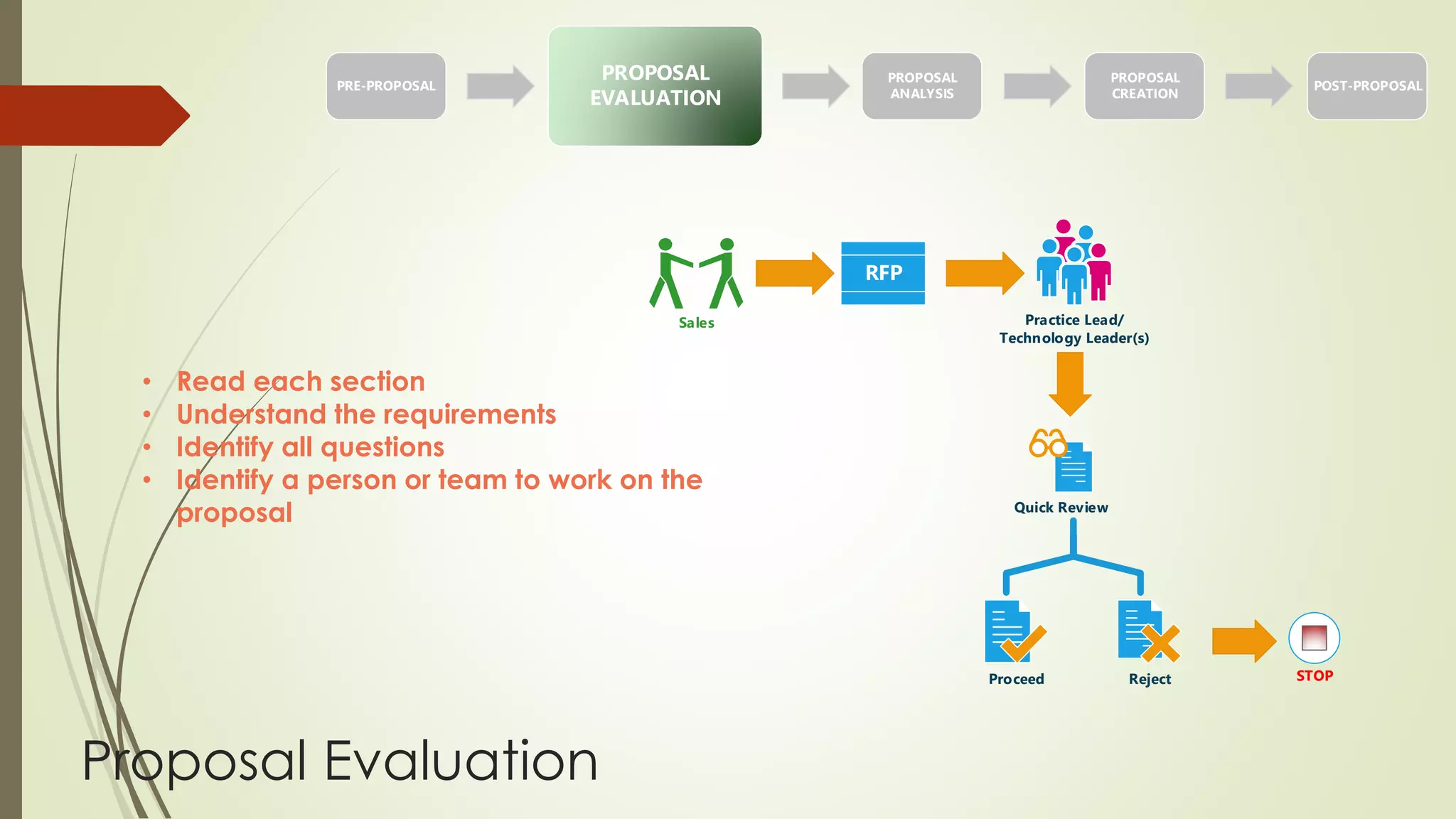
• Read each section 
• Understand the requirements 
• Identify all questions 
• Identify a person or team to work on the 
proposal 
Proposal Evaluation 
PROPOSAL 
ANALYSIS 
PROPOSAL 
CREATION 
POST-PROPOSAL 
PROPOSAL 
EVALUATION 
Practice Lead/ 
Technology Leader(s) 
Sales 
RFP 
Quick Review 
Proceed Reject STOP
PRE-PROPOSAL 
PROPOSAL 
EVALUATION 
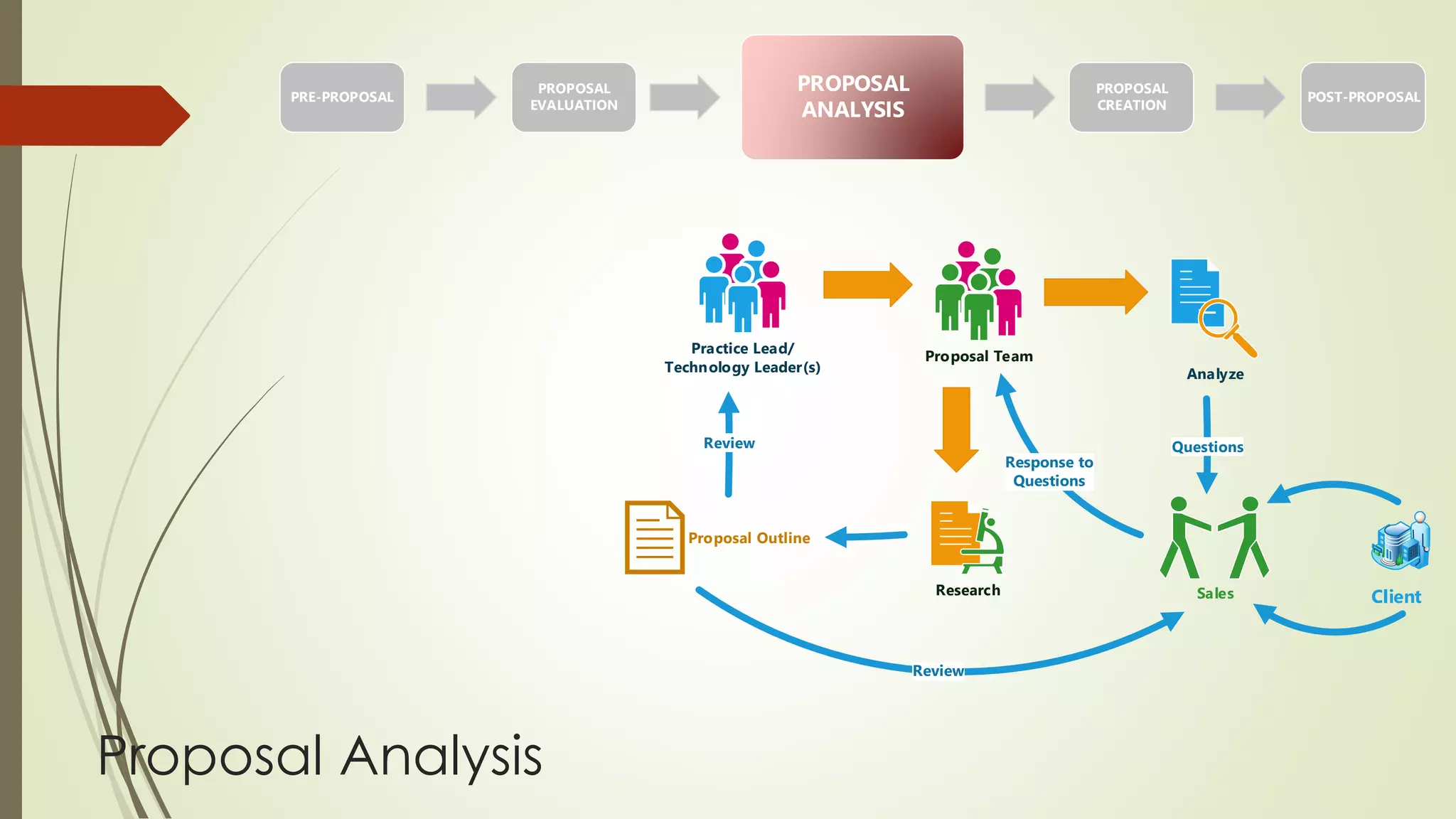
Proposal Analysis 
PROPOSAL 
ANALYSIS 
PROPOSAL 
CREATION 
POST-PROPOSAL 
Analyze 
Sales 
Proposal Team 
Research 
Questions 
Practice Lead/ 
Technology Leader(s) 
Review 
Proposal Outline 
Client
PRE-PROPOSAL 
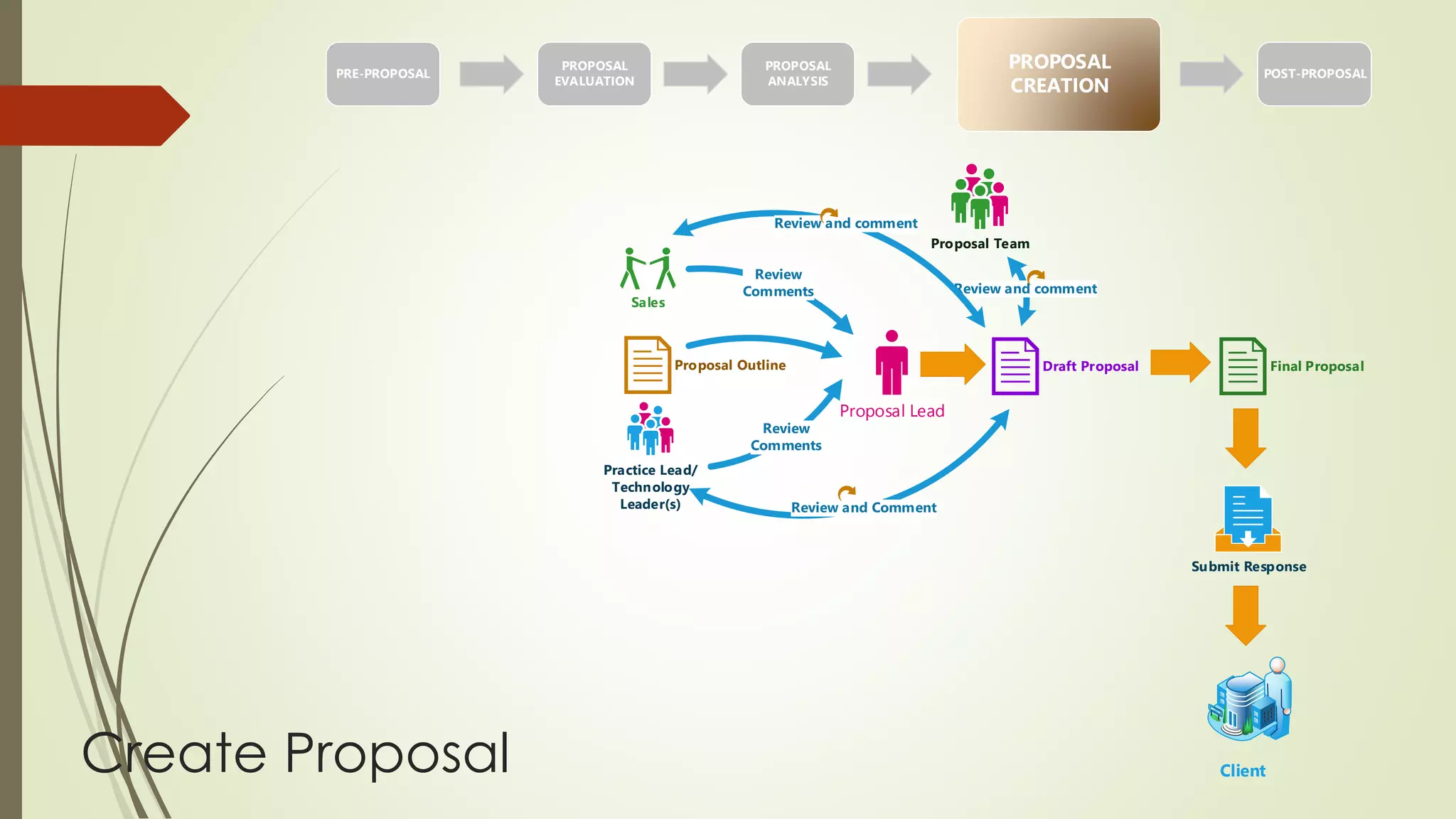
Create Proposal 
PROPOSAL 
EVALUATION 
PROPOSAL 
ANALYSIS 
POST-PROPOSAL 
PROPOSAL 
CREATION 
Proposal Outline 
Sales 
Practice Lead/ 
Technology 
Leader(s) 
Draft Proposal 
Proposal Lead 
Final Proposal 
Proposal Team 
Submit Response 
Client
PRE-PROPOSAL 
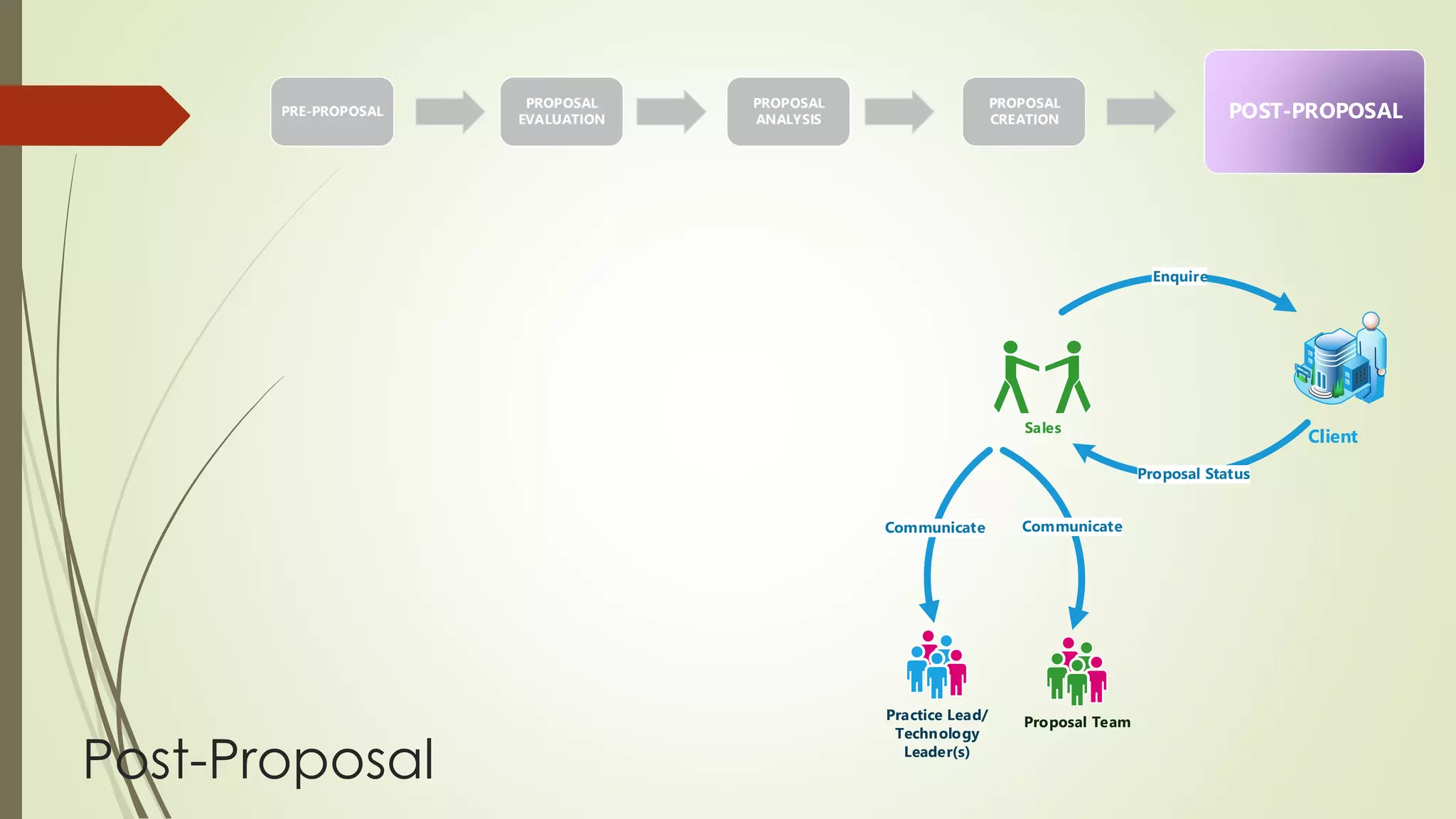
Post-Proposal 
PROPOSAL 
EVALUATION 
PROPOSAL 
ANALYSIS 
PROPOSAL 
CREATION POST-PROPOSAL 
Sales 
Client 
Practice Lead/ 
Technology 
Leader(s) 
Proposal Team 
Enquire
Final Thoughts.. 
 Project proposals are documents designed to present a plan of action, outline the 
reasons why the action is necessary, and convince the reader to agree with and 
approve the implementation of the actions recommended in the body of the 
document. 
 Proposals are usually drafted as a response to a Request for Proposal (RFP) that is 
issued by a current or prospective client. 
 A project proposal will be clearly arranged so that readers can follow a logical 
progression of thought to the conclusion. 
 Often, the RFP will lay out the basic structure of the proposal, provide invaluable 
clues as to specific information that is of interest to the potential client, and define 
the order in which data is presented. 
 When an RFP is provided, it is essential to follow the specifications of the document 
to the letter. Otherwise, the proposal will be set aside and one of the other vendors 
who did follow the provisions closely will be awarded the business.
Tomy Rhymond 
Sr. Consultant, HMB, Inc. 
ttr@hmbnet.com 
http://tomyrhymond.wordpress.com 
@trhymond 
614.432.9492 (m) 
ABOUT ME

Project Proposal Workflow

  • 1.
    Project Proposal ProcessFlow Tomy Rhymond | Sr. Consultant | HMB Inc. | ttr@hmbnet.com | 614.432.9492
  • 2.
    What is aProposal?  Project proposals are documents designed to present a plan of action, outline the reasons why the action is necessary, and convince the reader to agree with and approve the implementation of the actions recommended in the body of the document.  Proposals are usually drafted as a response to a Request for Proposal (RFP) that is issued by a current or prospective client.  A project proposal will be clearly arranged so that readers can follow a logical progression of thought to the conclusion.  Often, the RFP will lay out the basic structure of the proposal, provide invaluable clues as to specific information that is of interest to the potential client, and define the order in which data is presented.  When an RFP is provided, it is essential to follow the specifications of the document to the letter. Otherwise, the proposal will be set aside and one of the other vendors who did follow the provisions closely will be awarded the business.
  • 3.
    12 tips toa write a killer proposal. i. Create a powerful, but concise executive summary Decision-makers start with and focus on the executive summary, so create this section with that fact in mind. When writing the executive summary, assume that the reader knows little or nothing about the proposed project. ii. Quantify the results that the client can expect from engaging you Some consultants create proposals that overemphasize their consulting process and methodologies. Clients buy results, not tools or methodologies. iii. Be generous with your ideas You may fear that revealing your ideas about how to solve a problem during the proposal process could result in clients taking those ideas and completing the project themselves. In rare cases, that may happen. But you'll have more success if you don't hoard your ideas. Use them to show clients that your team thinks and approaches problems in creative and innovative ways. iv. Size does matter Keep your proposals as short as possible, while meeting the client's request. Think quality, not quantity. v. Focus on the client Many proposals begin with a long discussion of the consulting firm, describing its qualifications and history. Focus your proposal on the client's needs first, and then describe your firm's capabilities. Remember, clients care only about how you'll address their issues, so show them how you'll do that. vi. Beware of best practices The client may view your liberal use of "best practices" as a convenient crutch. Instead of relying on answers that worked for a previous client, find a blend of outstanding practices and innovative solutions that fit your client's particular needs.
  • 4.
    12 tips toa write a killer proposal. (cont.) vii. Be accurate If you are using client data to support aspects of your proposal, double-check and triple-check that information. It's easy for facts to be misunderstood and misused in a proposal. You'll risk turning a winning proposal into a loser if you present inaccurate data to the client. viii. Sweat every detail Watch for typos, use high-quality materials, and make sure that the right people receive the proposal on time. ix. Rewrite your resume for every proposal Highlight the skills in your resume that demonstrate your qualifications for the project at hand. A boilerplate resume is rarely up to the task. x. Finish early Let your proposal sit for a day after you've completed the final draft, and then reread it completely before sending it to the client. You're likely to come up with some new ideas that enhance your work, and you may find errors that you missed earlier. xi. Let your personality shine through Give clients a sense of your firm's culture and its style of working. The traditional, stilted language of many consulting proposals doesn't help clients answer the all-important question: What will it be like to work with these consultants? xii. Don't let your claims outdistance your true capabilities Some proposals tout the expertise of the consulting firm by referring to past successes with similar projects. These testaments to past achievements are important, but be sure that the capabilities of the proposed consulting team can live up to your firm's claims.
  • 5.
    PRE-PROPOSAL Proposal Flow PROPOSAL EVALUATION PROPOSAL ANALYSIS PROPOSAL CREATION POST-PROPOSAL  Proposal Identification  Evaluate RFP  RFP Approved  RFP Declined  Establish Timeline  Identify Questions  Content Request Distribution  Proposal Population  Initial Draft  Sales Review  Final Review  Proposal Submission  Post proposal followup
  • 6.
    • Sales receivesRFP from Client • Sales review the RFP • Align with Core Competency • Submit Date is at least a week or more way Pre-Proposal PROPOSAL EVALUATION PROPOSAL ANALYSIS PROPOSAL CREATION PRE-PROPOSAL POST-PROPOSAL RFP Sales Continue Reject Practice Lead/Technology Leader(s) Client Review
  • 7.
    PRE-PROPOSAL • Readeach section • Understand the requirements • Identify all questions • Identify a person or team to work on the proposal Proposal Evaluation PROPOSAL ANALYSIS PROPOSAL CREATION POST-PROPOSAL PROPOSAL EVALUATION Practice Lead/ Technology Leader(s) Sales RFP Quick Review Proceed Reject STOP
  • 8.
    PRE-PROPOSAL PROPOSAL EVALUATION Proposal Analysis PROPOSAL ANALYSIS PROPOSAL CREATION POST-PROPOSAL Analyze Sales Proposal Team Research Questions Practice Lead/ Technology Leader(s) Review Proposal Outline Client
  • 9.
    PRE-PROPOSAL Create Proposal PROPOSAL EVALUATION PROPOSAL ANALYSIS POST-PROPOSAL PROPOSAL CREATION Proposal Outline Sales Practice Lead/ Technology Leader(s) Draft Proposal Proposal Lead Final Proposal Proposal Team Submit Response Client
  • 10.
    PRE-PROPOSAL Post-Proposal PROPOSAL EVALUATION PROPOSAL ANALYSIS PROPOSAL CREATION POST-PROPOSAL Sales Client Practice Lead/ Technology Leader(s) Proposal Team Enquire
  • 11.
    Final Thoughts.. Project proposals are documents designed to present a plan of action, outline the reasons why the action is necessary, and convince the reader to agree with and approve the implementation of the actions recommended in the body of the document.  Proposals are usually drafted as a response to a Request for Proposal (RFP) that is issued by a current or prospective client.  A project proposal will be clearly arranged so that readers can follow a logical progression of thought to the conclusion.  Often, the RFP will lay out the basic structure of the proposal, provide invaluable clues as to specific information that is of interest to the potential client, and define the order in which data is presented.  When an RFP is provided, it is essential to follow the specifications of the document to the letter. Otherwise, the proposal will be set aside and one of the other vendors who did follow the provisions closely will be awarded the business.
  • 12.
    Tomy Rhymond Sr.Consultant, HMB, Inc. ttr@hmbnet.com http://tomyrhymond.wordpress.com @trhymond 614.432.9492 (m) ABOUT ME