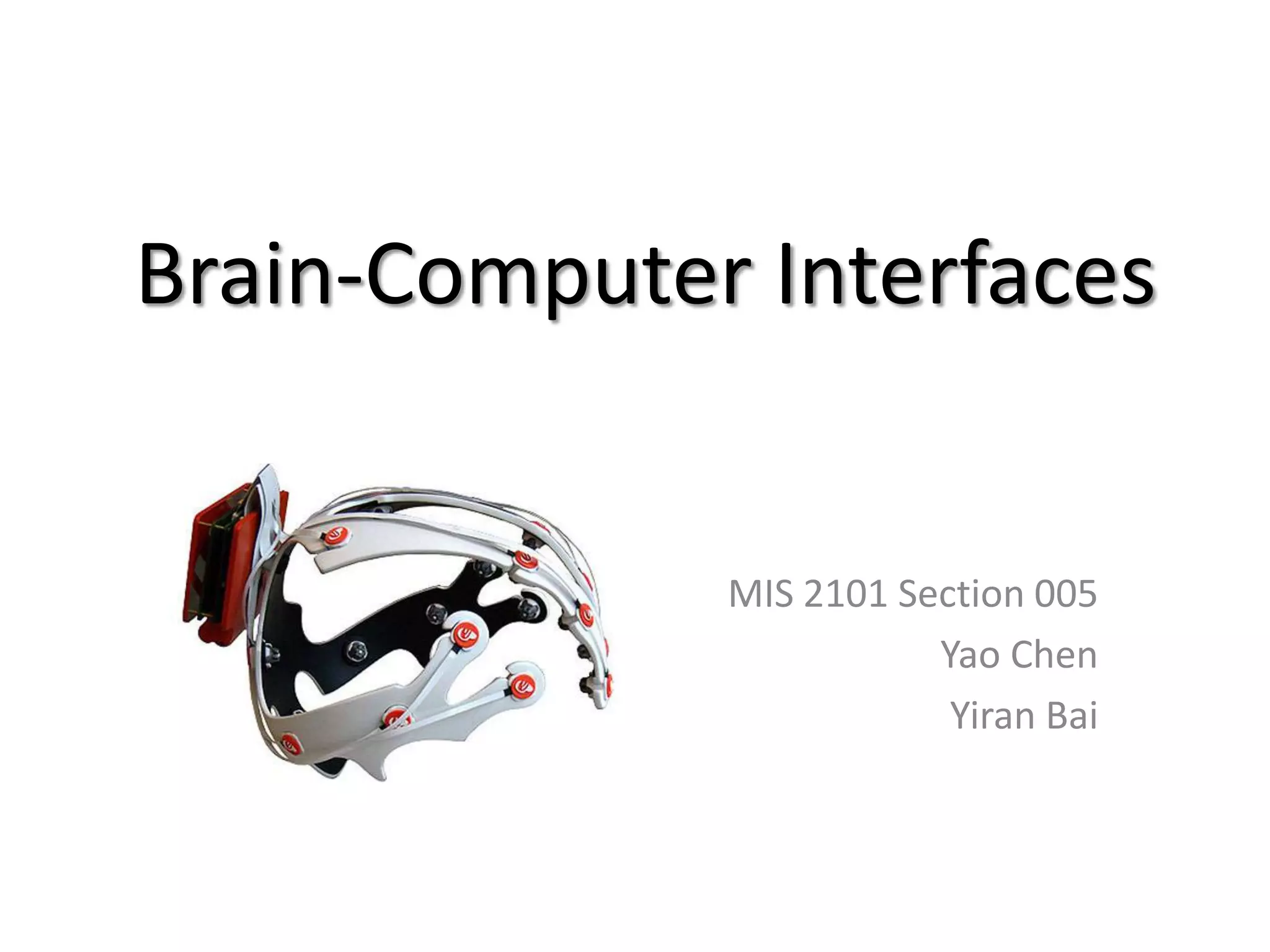
Brain-computer interfaces interpret distinct brain wave patterns as commands to control devices. They can detect signals through implanted electrodes, external electrodes in a cap or helmet, or software analyzing thoughts. They have medical uses like enabling disabled people to control their environment and are being developed for gaming through mind control. While already used in small areas, limitations include safety, accuracy, and response speed that need improving before widespread consumer use. It may replace devices like keyboards and voice control and is currently used mainly for gaming through a few commercial products, but penetration is still low due to technical challenges. Experts believe it will revolutionize human interaction with technology as it continues to develop.