Mind Controlled
Device
IT’S APPLICATION AND FUTURE
PROSPECTS
S O U M I K S I N H A
5 1 1 2 1 6 0 0 6
D E P E R T M E N T O F M I N I N G E N G I N E E R I N G
I I E S T , S H I B P U R
E M AI L : s o u m i k s i n h a 1 8 0 @ g m a i l . c o m
C O N T AC T N O : 8 9 1 0 0 4 5 1 5 8
Our communication with machines has always been limited to conscious and
direct form, where it something simple like turning on the light of the switch ,
or even as complex as programming robotics
We have always had to give a command to a machine or a series of commands
in order it for it to do something for us
So with the help of a new technology the whole realm of human interaction is
converted into human computer interaction so that the computer can under
stand not only what you direct it to do but it can also respond to our facial
expressions and emotional experience
And what better way to do this than by interpreting the signals naturally
produced by our brain our centre for control and experience
Past vs. Future
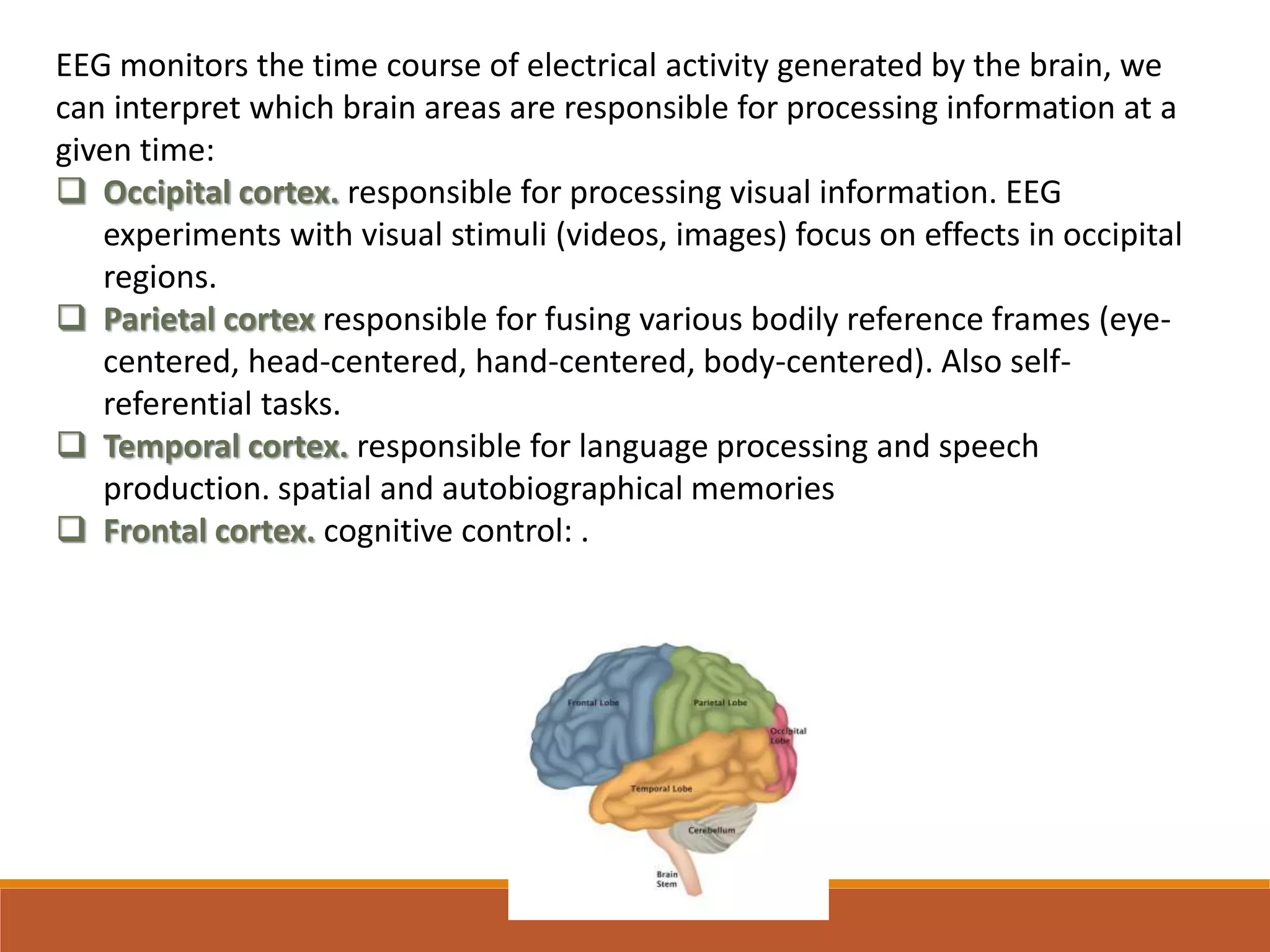
EEG Headset
It is a device which record brain activity
through EEG (electroencephalograph) sensors.
Specifically this monitors electrical activity,
which suggests communication between
neurons. More activity means more
communication, means more brain activity.
EEG Headset
Electroencephalography (EEG)
.
It is an electrophysiological monitoring
method to record electrical activity of
the brain.
EEG measures voltage fluctuations resulting
from ionic current within the neurons of
the brain. In clinical contexts, EEG refers to the
recording of the brain's spontaneous electrical
activity over a period of time, as recorded
from multiple electrodes placed on the scalp
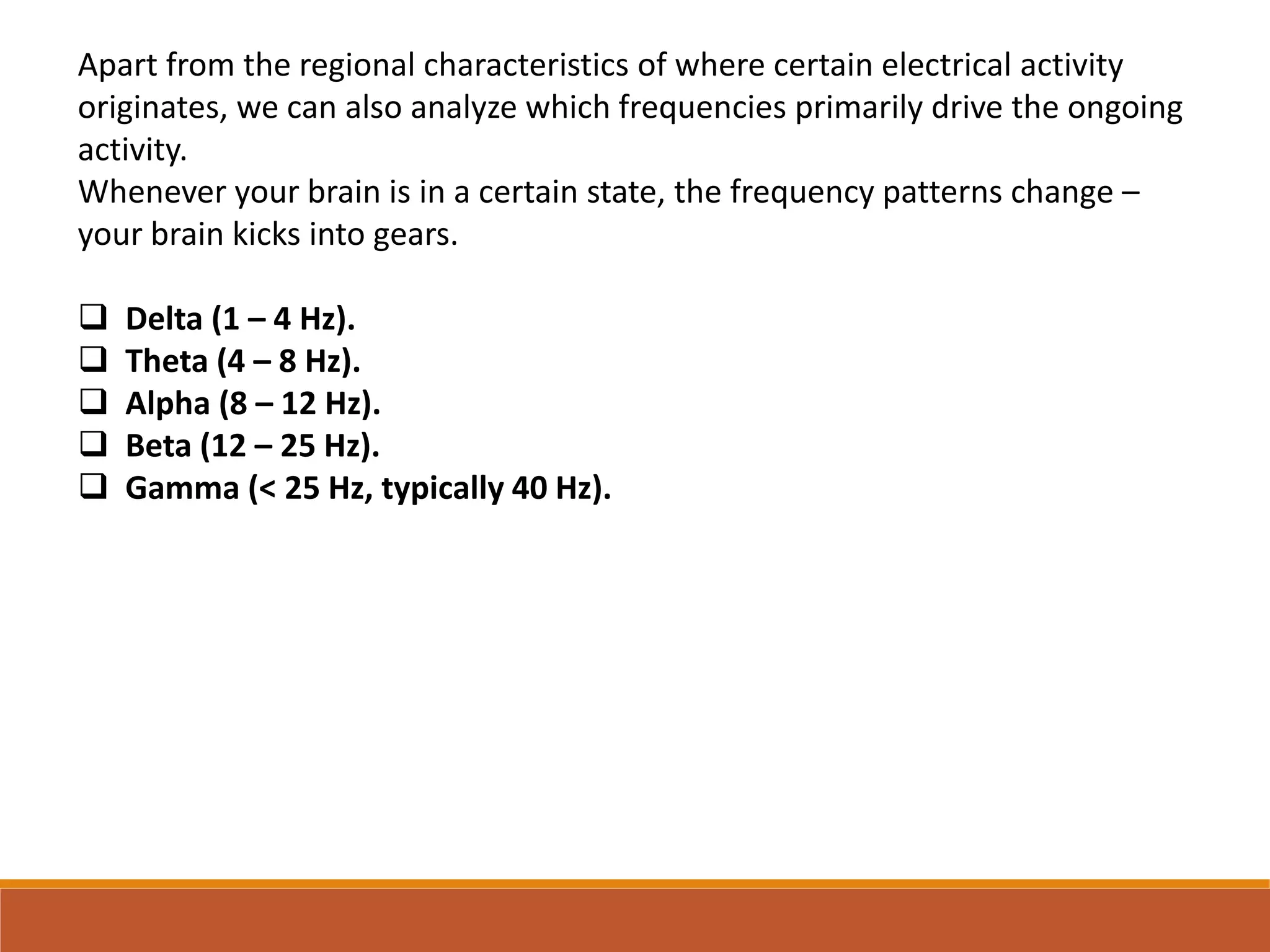
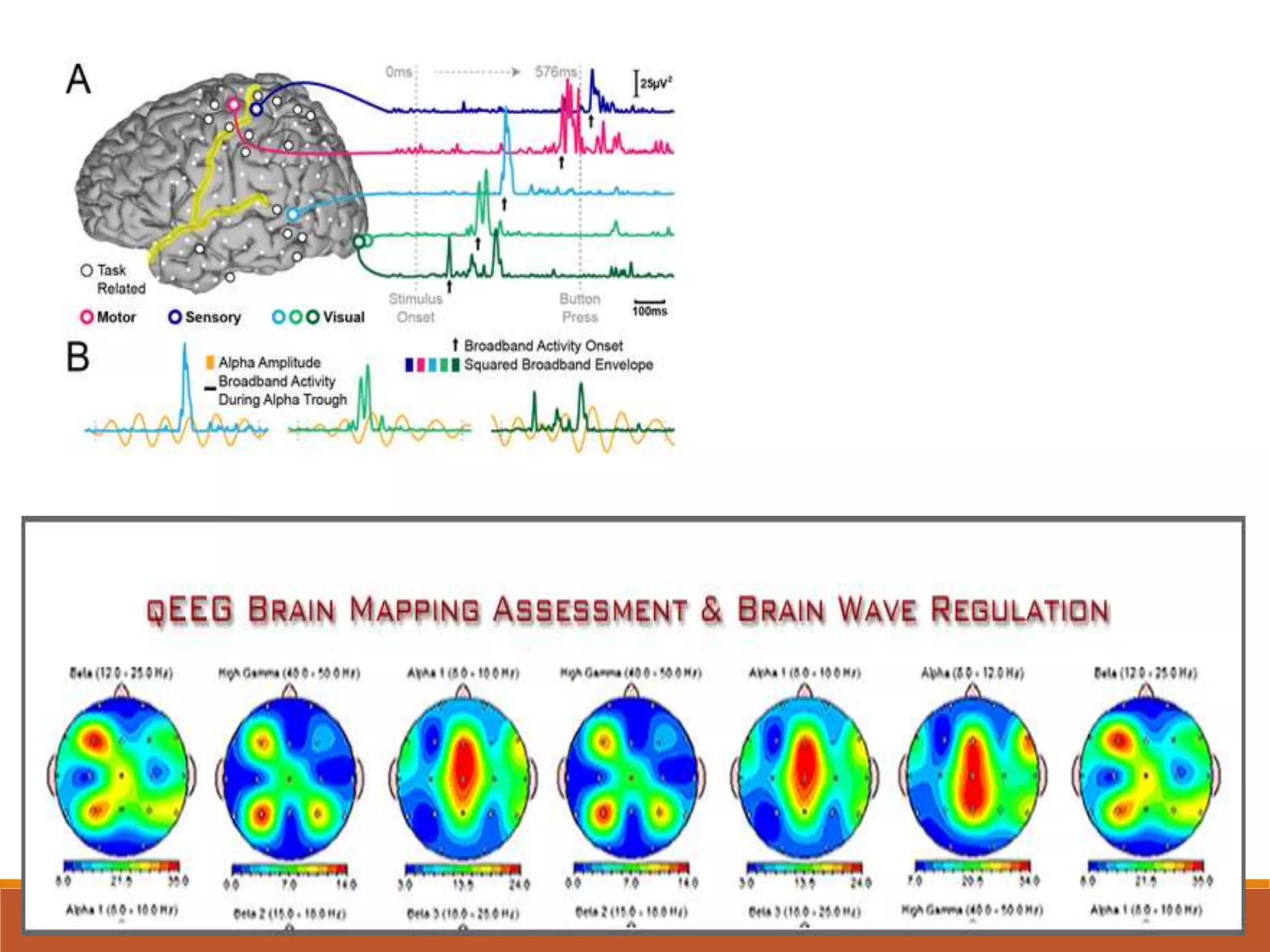
EEG monitors the time course of electrical activity generated by the brain, we
can interpret which brain areas are responsible for processing information at a
given time:
 Occipital cortex. responsible for processing visual information. EEG
experiments with visual stimuli (videos, images) focus on effects in occipital
regions.
 Parietal cortex responsible for fusing various bodily reference frames (eye-
centered, head-centered, hand-centered, body-centered). Also self-
referential tasks.
 Temporal cortex. responsible for language processing and speech
production. spatial and autobiographical memories
 Frontal cortex. cognitive control: .
Apart from the regional characteristics of where certain electrical activity
originates, we can also analyze which frequencies primarily drive the ongoing
activity.
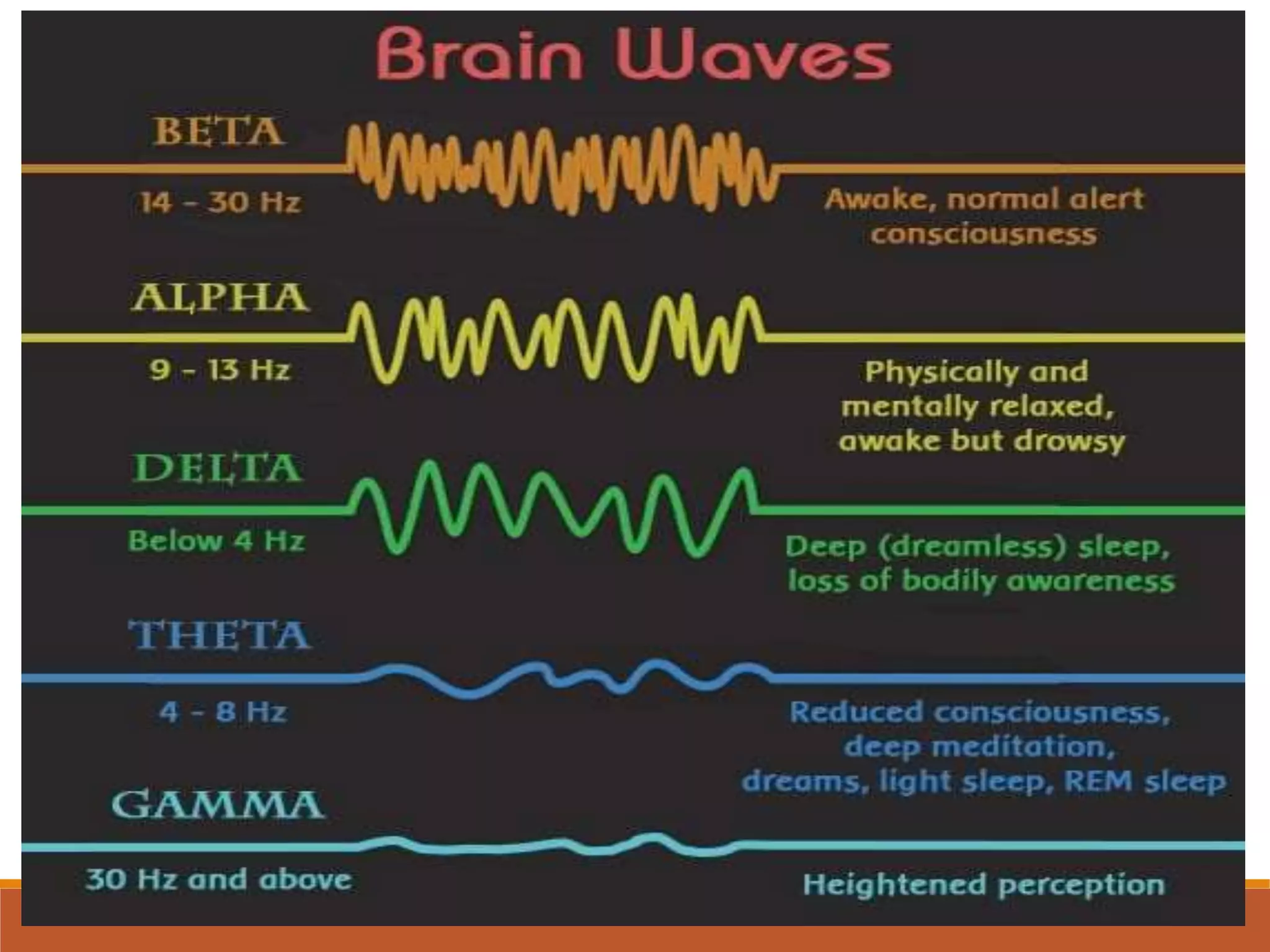
Whenever your brain is in a certain state, the frequency patterns change –
your brain kicks into gears.
 Delta (1 – 4 Hz).
 Theta (4 – 8 Hz).
 Alpha (8 – 12 Hz).
 Beta (12 – 25 Hz).
 Gamma (< 25 Hz, typically 40 Hz).
By observing the fluctuations in electrical impulses and how groups of
neurons interact and then shift rhythm to coordinate with other subsets
of neurons, we can glean some insight into the emotional and cognitive
states of a person and even deduce his or her facial expressions
These devices reads and interprets your brainwaves. The headset's
multisensor "arms," which extend to the front and back of your head,
pick up electrical signals from different functional parts of the brain. Both
subconscious and conscious mental states can be detected using
advanced algorithms, allowing the computer to react more naturally to
the user’s mental state and even to accept direct mental commands.
How Does This Device Works
But the problem is that all EEG devices also pick up signals from other sources,
like muscle movements or other electrical devices, that can look like EEG
signals.
In laboratories, scientists can reduce this "noise" by having subjects sit still in a
controlled environment, and by applying a conductive paste to the electrodes
— so called "wet electrodes"
But commercial brain wearables use "dry electrodes." Although these have
improved in recent years, and the most advanced types are now as good as
wet electrodes, there's still the problem of filtering out all that noise
Advanced algorithm to analyse type and
position of brain wave
Conversion of brain wave into
programming code
Application
As these devices covert your mental condition or your brain activity to
some binary code which can be processed by computer,
One can now control any machine or any code running module with help
of his mind.
Example:
 Video Games controlled by players mind
 Remote control car, drone etc.
 Any kind of electric or electronic device connected with special
receiver such as your house light,fan,micro oven
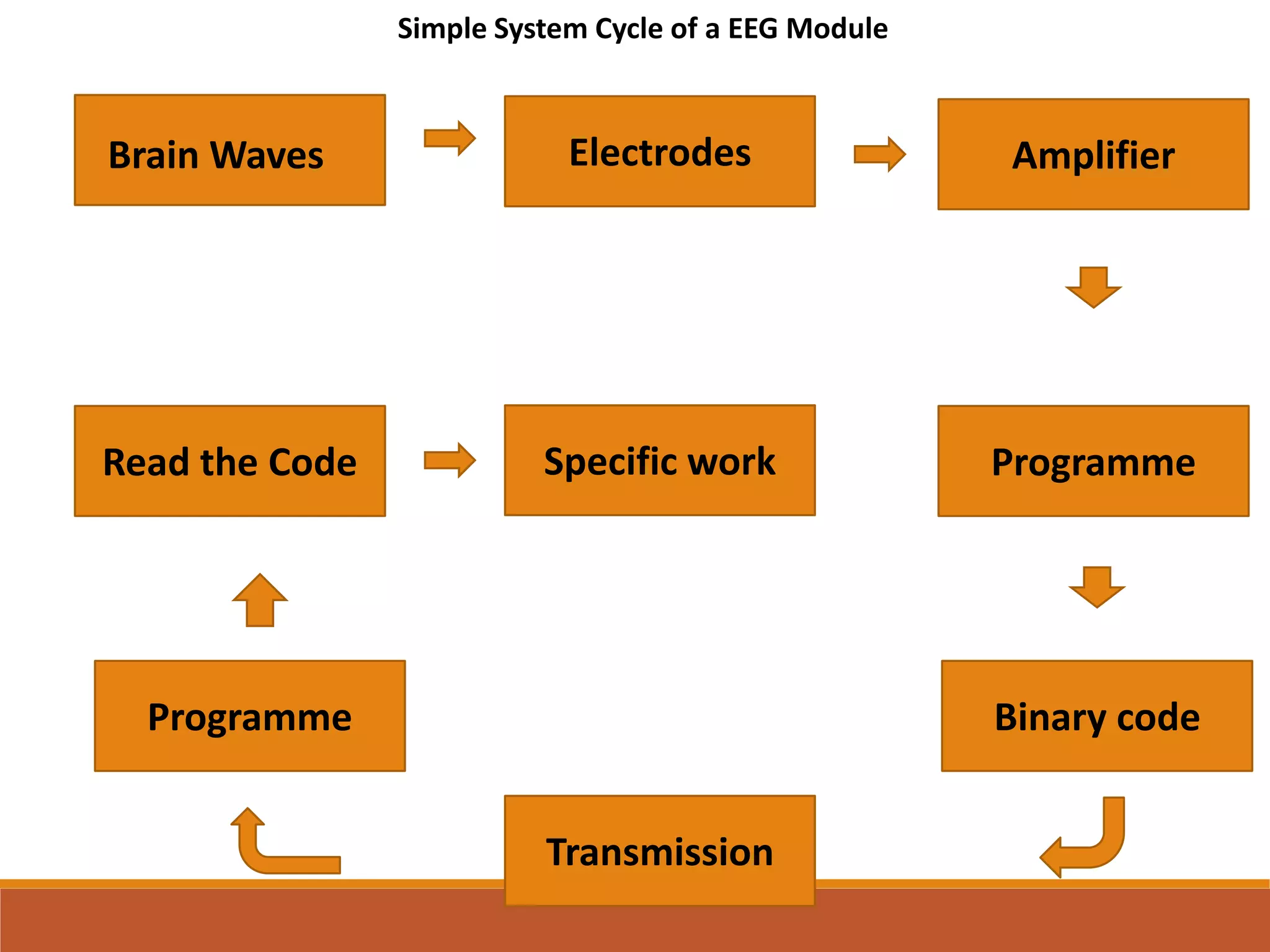
Electrodes Amplifier
Binary code
ProgrammeSpecific workRead the Code
Brain Waves
Transmission
Programme
Simple System Cycle of a EEG Module
Application
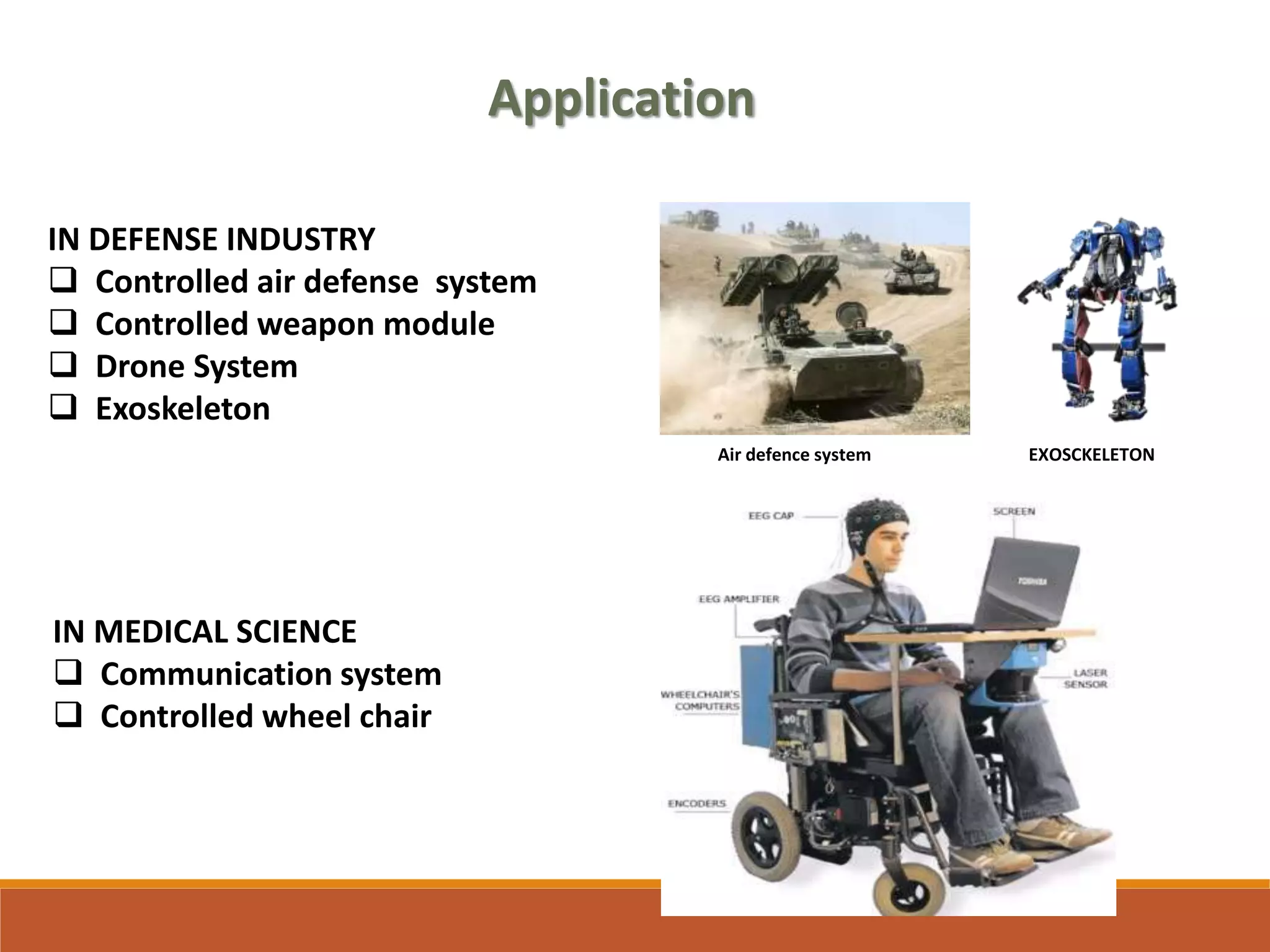
IN DEFENSE INDUSTRY
 Controlled air defense system
 Controlled weapon module
 Drone System
 Exoskeleton
IN MEDICAL SCIENCE
 Communication system
 Controlled wheel chair
Air defence system EXOSCKELETON
 IN SMART GAMING
 IN MEDITATION
 CONTROLLED CAR
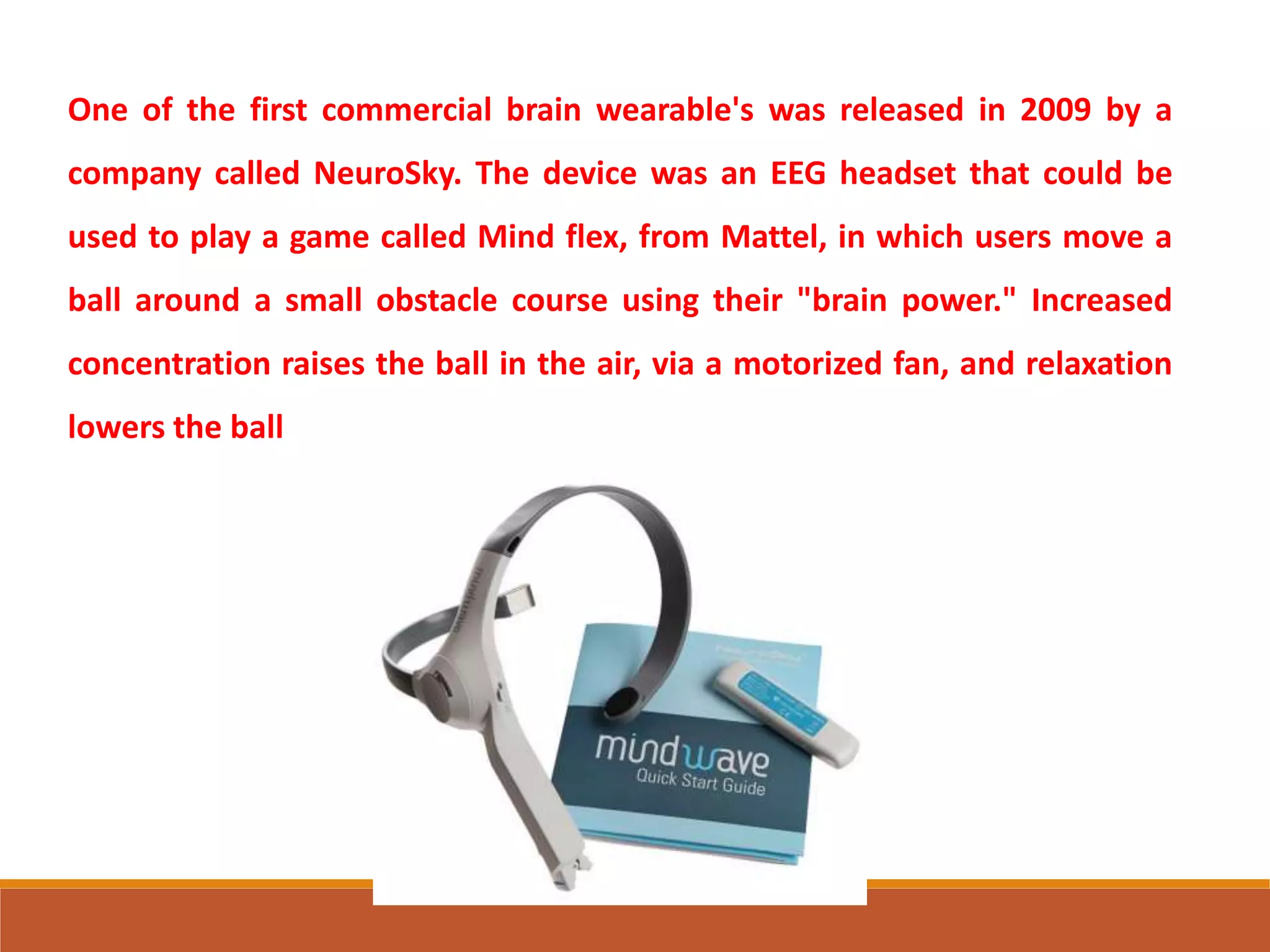
One of the first commercial brain wearable's was released in 2009 by a
company called NeuroSky. The device was an EEG headset that could be
used to play a game called Mind flex, from Mattel, in which users move a
ball around a small obstacle course using their "brain power." Increased
concentration raises the ball in the air, via a motorized fan, and relaxation
lowers the ball
These devices can also be used for Meditation
Meditation is essentially the practice of controlling your own thought
patterns in order to be able to direct your attention, to be able to calm
your thoughts and to be able to muse on ideas in depth.
As they works by connecting to your computer to display your brain
activity and this allows it to work with a number of different software.
The majority of these encourage you either to 'focus' on something or to
try and calm your thoughts, giving you immediate visual rewards for doing
either successfully.
Essentially then, this boils down to meditation
Limitations
The limitations of these mind control device lie in the limitations of EEG in
general. All EEG does is to measure electrical activity throughout the brain. It
can't tell you which part of the brain is working, it can't tell you how well it's
working… it just tells you what degree of 'on' or 'off' it is.
Thus there's no way that they could help you – for example – to become
better at math's.
THANK YOU

Mind control device

  • 1.
    Mind Controlled Device IT’S APPLICATIONAND FUTURE PROSPECTS S O U M I K S I N H A 5 1 1 2 1 6 0 0 6 D E P E R T M E N T O F M I N I N G E N G I N E E R I N G I I E S T , S H I B P U R E M AI L : s o u m i k s i n h a 1 8 0 @ g m a i l . c o m C O N T AC T N O : 8 9 1 0 0 4 5 1 5 8
  • 2.
    Our communication withmachines has always been limited to conscious and direct form, where it something simple like turning on the light of the switch , or even as complex as programming robotics We have always had to give a command to a machine or a series of commands in order it for it to do something for us So with the help of a new technology the whole realm of human interaction is converted into human computer interaction so that the computer can under stand not only what you direct it to do but it can also respond to our facial expressions and emotional experience And what better way to do this than by interpreting the signals naturally produced by our brain our centre for control and experience Past vs. Future
  • 3.
    EEG Headset It isa device which record brain activity through EEG (electroencephalograph) sensors. Specifically this monitors electrical activity, which suggests communication between neurons. More activity means more communication, means more brain activity. EEG Headset
  • 4.
    Electroencephalography (EEG) . It isan electrophysiological monitoring method to record electrical activity of the brain. EEG measures voltage fluctuations resulting from ionic current within the neurons of the brain. In clinical contexts, EEG refers to the recording of the brain's spontaneous electrical activity over a period of time, as recorded from multiple electrodes placed on the scalp
  • 5.
    EEG monitors thetime course of electrical activity generated by the brain, we can interpret which brain areas are responsible for processing information at a given time:  Occipital cortex. responsible for processing visual information. EEG experiments with visual stimuli (videos, images) focus on effects in occipital regions.  Parietal cortex responsible for fusing various bodily reference frames (eye- centered, head-centered, hand-centered, body-centered). Also self- referential tasks.  Temporal cortex. responsible for language processing and speech production. spatial and autobiographical memories  Frontal cortex. cognitive control: .
  • 6.
    Apart from theregional characteristics of where certain electrical activity originates, we can also analyze which frequencies primarily drive the ongoing activity. Whenever your brain is in a certain state, the frequency patterns change – your brain kicks into gears.  Delta (1 – 4 Hz).  Theta (4 – 8 Hz).  Alpha (8 – 12 Hz).  Beta (12 – 25 Hz).  Gamma (< 25 Hz, typically 40 Hz).
  • 8.
    By observing thefluctuations in electrical impulses and how groups of neurons interact and then shift rhythm to coordinate with other subsets of neurons, we can glean some insight into the emotional and cognitive states of a person and even deduce his or her facial expressions These devices reads and interprets your brainwaves. The headset's multisensor "arms," which extend to the front and back of your head, pick up electrical signals from different functional parts of the brain. Both subconscious and conscious mental states can be detected using advanced algorithms, allowing the computer to react more naturally to the user’s mental state and even to accept direct mental commands. How Does This Device Works
  • 9.
    But the problemis that all EEG devices also pick up signals from other sources, like muscle movements or other electrical devices, that can look like EEG signals. In laboratories, scientists can reduce this "noise" by having subjects sit still in a controlled environment, and by applying a conductive paste to the electrodes — so called "wet electrodes" But commercial brain wearables use "dry electrodes." Although these have improved in recent years, and the most advanced types are now as good as wet electrodes, there's still the problem of filtering out all that noise
  • 11.
    Advanced algorithm toanalyse type and position of brain wave Conversion of brain wave into programming code
  • 12.
    Application As these devicescovert your mental condition or your brain activity to some binary code which can be processed by computer, One can now control any machine or any code running module with help of his mind. Example:  Video Games controlled by players mind  Remote control car, drone etc.  Any kind of electric or electronic device connected with special receiver such as your house light,fan,micro oven
  • 13.
    Electrodes Amplifier Binary code ProgrammeSpecificworkRead the Code Brain Waves Transmission Programme Simple System Cycle of a EEG Module
  • 14.
    Application IN DEFENSE INDUSTRY Controlled air defense system  Controlled weapon module  Drone System  Exoskeleton IN MEDICAL SCIENCE  Communication system  Controlled wheel chair Air defence system EXOSCKELETON
  • 15.
     IN SMARTGAMING  IN MEDITATION  CONTROLLED CAR
  • 16.
    One of thefirst commercial brain wearable's was released in 2009 by a company called NeuroSky. The device was an EEG headset that could be used to play a game called Mind flex, from Mattel, in which users move a ball around a small obstacle course using their "brain power." Increased concentration raises the ball in the air, via a motorized fan, and relaxation lowers the ball
  • 17.
    These devices canalso be used for Meditation Meditation is essentially the practice of controlling your own thought patterns in order to be able to direct your attention, to be able to calm your thoughts and to be able to muse on ideas in depth. As they works by connecting to your computer to display your brain activity and this allows it to work with a number of different software. The majority of these encourage you either to 'focus' on something or to try and calm your thoughts, giving you immediate visual rewards for doing either successfully. Essentially then, this boils down to meditation
  • 18.
    Limitations The limitations ofthese mind control device lie in the limitations of EEG in general. All EEG does is to measure electrical activity throughout the brain. It can't tell you which part of the brain is working, it can't tell you how well it's working… it just tells you what degree of 'on' or 'off' it is. Thus there's no way that they could help you – for example – to become better at math's.
  • 19.