PLC PART-04
PLC SIZE AND APPLICATIONS
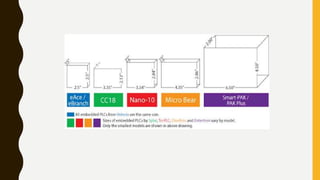
• The criteria used in categorizing PLC’s include functionality, number of inputs and
outputs, cost and physical size.
• The nano is the smallest size with less than 15 I/O points. This is followed by micro
types (15 to 128 I/O points), medium types(128 to 512 I/O points) and large types(over
512 I/O points).
• Matching the PLC with the application is a key factor in the selection process.
• There are three major types of PLC applications: single ended, multitask, and control
management.
• A single ended or stand alone PLC application involves one PLC controlling one
process. This would be a stand alone unit and would not be used for communicating
with others computers or PLCs.
• A multitask PLC application involves one PLC controlling several process. Adequate
I/O capacity is a significant factor in this type of installation.
• A control management PLC application involves one PLC controlling several others.
• Memory is the part of a PLC that stores, data, instructions, and the control program.
Memory size is usually expressed in K values: 1K, 6K, 12K and on.
• The measurement kilo abbreviated K, normally refers to 1000 units. When dealing with
computer or PLC memory, 1K means 1024, because this measurement is based on the
binary number system.
• Depending on memory type, 1K can mean 1024 bits, 1024 bytes or 1024 words.
Factors affecting the memory size needed for a particular PLC installation include:
• Number of I/O points used
• Size of control program
• Data collecting requirements
• Supervisory functions required
• Future expansion
• The installation set for a particular PLC lists the different types of instructions
supported. Typically, this ranges from 15 instructions on smaller units up to 100
instructions on larger, more powerful units.
APPLICATIONS
1. Petrochemical industry-crude separation.
2. Steel industry- smelter operations, blast furnace, temperature monitoring.
3. Power generation- boiler control from water injection, temperature, fuel, steam flow
monitoring.
4. Process industries- air flow control, controlling air fuel ratios.
5. Chemical industries- proportion of chemicals.
6. Nuclear power generation plants.
7. Home automation.
8. Automatic washing machine, cars, video camera etc.
9. Assembly machines, automatic transfer lines, packaging lines, robots.
10. Material handling, machine tools, conveyor system etc.
Programmable Logic Controller (PLC Part 4)

Programmable Logic Controller (PLC Part 4)

  • 1.
  • 2.
    PLC SIZE ANDAPPLICATIONS • The criteria used in categorizing PLC’s include functionality, number of inputs and outputs, cost and physical size. • The nano is the smallest size with less than 15 I/O points. This is followed by micro types (15 to 128 I/O points), medium types(128 to 512 I/O points) and large types(over 512 I/O points). • Matching the PLC with the application is a key factor in the selection process.
  • 6.
    • There arethree major types of PLC applications: single ended, multitask, and control management. • A single ended or stand alone PLC application involves one PLC controlling one process. This would be a stand alone unit and would not be used for communicating with others computers or PLCs. • A multitask PLC application involves one PLC controlling several process. Adequate I/O capacity is a significant factor in this type of installation. • A control management PLC application involves one PLC controlling several others. • Memory is the part of a PLC that stores, data, instructions, and the control program. Memory size is usually expressed in K values: 1K, 6K, 12K and on.
  • 7.
    • The measurementkilo abbreviated K, normally refers to 1000 units. When dealing with computer or PLC memory, 1K means 1024, because this measurement is based on the binary number system. • Depending on memory type, 1K can mean 1024 bits, 1024 bytes or 1024 words.
  • 8.
    Factors affecting thememory size needed for a particular PLC installation include: • Number of I/O points used • Size of control program • Data collecting requirements • Supervisory functions required • Future expansion
  • 9.
    • The installationset for a particular PLC lists the different types of instructions supported. Typically, this ranges from 15 instructions on smaller units up to 100 instructions on larger, more powerful units.
  • 10.
    APPLICATIONS 1. Petrochemical industry-crudeseparation. 2. Steel industry- smelter operations, blast furnace, temperature monitoring. 3. Power generation- boiler control from water injection, temperature, fuel, steam flow monitoring. 4. Process industries- air flow control, controlling air fuel ratios. 5. Chemical industries- proportion of chemicals. 6. Nuclear power generation plants. 7. Home automation. 8. Automatic washing machine, cars, video camera etc. 9. Assembly machines, automatic transfer lines, packaging lines, robots. 10. Material handling, machine tools, conveyor system etc.