1
Submitted by
Prima mol K P
16514383019
English
2
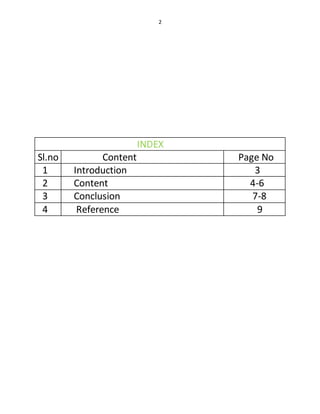
INDEX
Sl.no Content Page No
1 Introduction 3
2 Content 4-6
3 Conclusion 7-8
4 Reference 9
3
Professional communication
encompasses written, oral, visual and digital
communication within a workplace context. This
discipline blends together pedagogical principles
ofrhetoric , technology , software , and learning theory to
improve and deliver communication in a variety of
settings ranging from technical writing to usability and
digital media design. It is a new discipline that focuses on
the study from information and the ways it is created ,
managed , distributed , and consumed. Since
communication in modern society is a rapidly changing
area , the progress of technologies seems to often
outpace the number of available expert practitioners.
This creates a demand for skilled communicators which
continues to exceed the supply of trained professionals.
4
A professional learning community
is an extended learning opportunity to foster
collaborative learning. It is a group of educators that
meets regularly, shares expertise, and works
collaboratively to improve teaching skills and the
academic performance of students. The term is also
applied to schools or teaching faculties that use small-
group collaboration as a form of professional
development.
Professional learning communities tend to
serve to two broad purposes:
▪ Improving the skills and knowledge of educators
through collaborative study, expertise exchange, and
professional dialogue.
▪ Improving the educational aspirations, achievement,
and attainment of students through stronger leadership
and teaching.
5
The field of professional
communication is closely related to that of technical
communication, through professional communication
encompasses a wider variety of skills. Professional
communicators use strategies, learning theory, and
technologies to more effectively communicate in the
business world.
Successful communication skills are
critical to a business because all businesses, through to
varying degrees, involve the following: Writing, reading,
editing, speaking, listening, software applications,
computer graphics, and internet research. Job candidates
with professional communication backgrounds are more
likely to bring to the organization sophisticated
perspectives on society, culture, science and technology.
Studying professional communication
The study of professional communication includes:
6
 The study of rhetoric which serves as a rhetorical
basis.
 The study of technical writing which serves as a form
of professional communication.
 The study of in- personal and virtual training, which
serves as a form of communication delivery.
 The study of visual communication which also uses
rhetoric as a theoretical basis for various aspects of
creating visuals.
 The study of various research methods.
Types of professional documents;
 Short reports
 Proposals
 Case studies
 Lab reports
 Memos
Definition:
The various forms of speaking, listening,
writing, and responding carried out both in and
beyond the workplace, whether in person or
electronically.
7
As Cheng and Kong point out in the
preface to professional communication:
Collaboration Between academics and Practitioners
(2009), “Professional communication is an emerging
area of investigation in many disciplines such as
applied linguistics, communication studies,
education and psychology……….
….. he understands of
professional communication can be enhanced by the
studies conducted by the professionals themselves,
because they are the insiders in their professionals.”
It involves much more than a stuff
meeting or group of teachers getting together to
discuss a book they’ve read.
8
Primarily excluded from the
definition of professional communication would be diary
entries (discourse directed toward the writer ), personal
correspondence ( discourses directed to one or more
readers apart from their group affiliations ), reportage or
bellistric discourse (novels, poems, occasional essays—
discourse usually written by individuals and directed to
multiple readers not organized as a group), most
intraclassroom communications and some technical
communications . Professional communication …… would
seem different from discourses involving a single
individual apart from a group affiliation communicating
with another such person, or a single individual
communicating with a large unorganized aggregate of
individuals as suggested by the term mass
communication.
9
 http://eserver.org/courses/s05/506/
 www.cel.sfsu.edu/communication/
 Dr. jamaludheen
 Edglossary.org/professional-learning community.

Professional communication

  • 1.
    1 Submitted by Prima molK P 16514383019 English
  • 2.
    2 INDEX Sl.no Content PageNo 1 Introduction 3 2 Content 4-6 3 Conclusion 7-8 4 Reference 9
  • 3.
    3 Professional communication encompasses written,oral, visual and digital communication within a workplace context. This discipline blends together pedagogical principles ofrhetoric , technology , software , and learning theory to improve and deliver communication in a variety of settings ranging from technical writing to usability and digital media design. It is a new discipline that focuses on the study from information and the ways it is created , managed , distributed , and consumed. Since communication in modern society is a rapidly changing area , the progress of technologies seems to often outpace the number of available expert practitioners. This creates a demand for skilled communicators which continues to exceed the supply of trained professionals.
  • 4.
    4 A professional learningcommunity is an extended learning opportunity to foster collaborative learning. It is a group of educators that meets regularly, shares expertise, and works collaboratively to improve teaching skills and the academic performance of students. The term is also applied to schools or teaching faculties that use small- group collaboration as a form of professional development. Professional learning communities tend to serve to two broad purposes: ▪ Improving the skills and knowledge of educators through collaborative study, expertise exchange, and professional dialogue. ▪ Improving the educational aspirations, achievement, and attainment of students through stronger leadership and teaching.
  • 5.
    5 The field ofprofessional communication is closely related to that of technical communication, through professional communication encompasses a wider variety of skills. Professional communicators use strategies, learning theory, and technologies to more effectively communicate in the business world. Successful communication skills are critical to a business because all businesses, through to varying degrees, involve the following: Writing, reading, editing, speaking, listening, software applications, computer graphics, and internet research. Job candidates with professional communication backgrounds are more likely to bring to the organization sophisticated perspectives on society, culture, science and technology. Studying professional communication The study of professional communication includes:
  • 6.
    6  The studyof rhetoric which serves as a rhetorical basis.  The study of technical writing which serves as a form of professional communication.  The study of in- personal and virtual training, which serves as a form of communication delivery.  The study of visual communication which also uses rhetoric as a theoretical basis for various aspects of creating visuals.  The study of various research methods. Types of professional documents;  Short reports  Proposals  Case studies  Lab reports  Memos Definition: The various forms of speaking, listening, writing, and responding carried out both in and beyond the workplace, whether in person or electronically.
  • 7.
    7 As Cheng andKong point out in the preface to professional communication: Collaboration Between academics and Practitioners (2009), “Professional communication is an emerging area of investigation in many disciplines such as applied linguistics, communication studies, education and psychology………. ….. he understands of professional communication can be enhanced by the studies conducted by the professionals themselves, because they are the insiders in their professionals.” It involves much more than a stuff meeting or group of teachers getting together to discuss a book they’ve read.
  • 8.
    8 Primarily excluded fromthe definition of professional communication would be diary entries (discourse directed toward the writer ), personal correspondence ( discourses directed to one or more readers apart from their group affiliations ), reportage or bellistric discourse (novels, poems, occasional essays— discourse usually written by individuals and directed to multiple readers not organized as a group), most intraclassroom communications and some technical communications . Professional communication …… would seem different from discourses involving a single individual apart from a group affiliation communicating with another such person, or a single individual communicating with a large unorganized aggregate of individuals as suggested by the term mass communication.
  • 9.
    9  http://eserver.org/courses/s05/506/  www.cel.sfsu.edu/communication/ Dr. jamaludheen  Edglossary.org/professional-learning community.