BY- MANOJ KUMAR MISHRA
2K19/CEME/05
 In general, communication is an exchange of
meaning and understanding. Communication begins
with the sender sending message cues, which are
received by the receiver who assigns meaning to
them and responds to them accordingly.
 Simply : communication is the exchange of
information.
 Communication is are of two type
i. Verbal { Oral form}
ii. Non verbal { Written form}
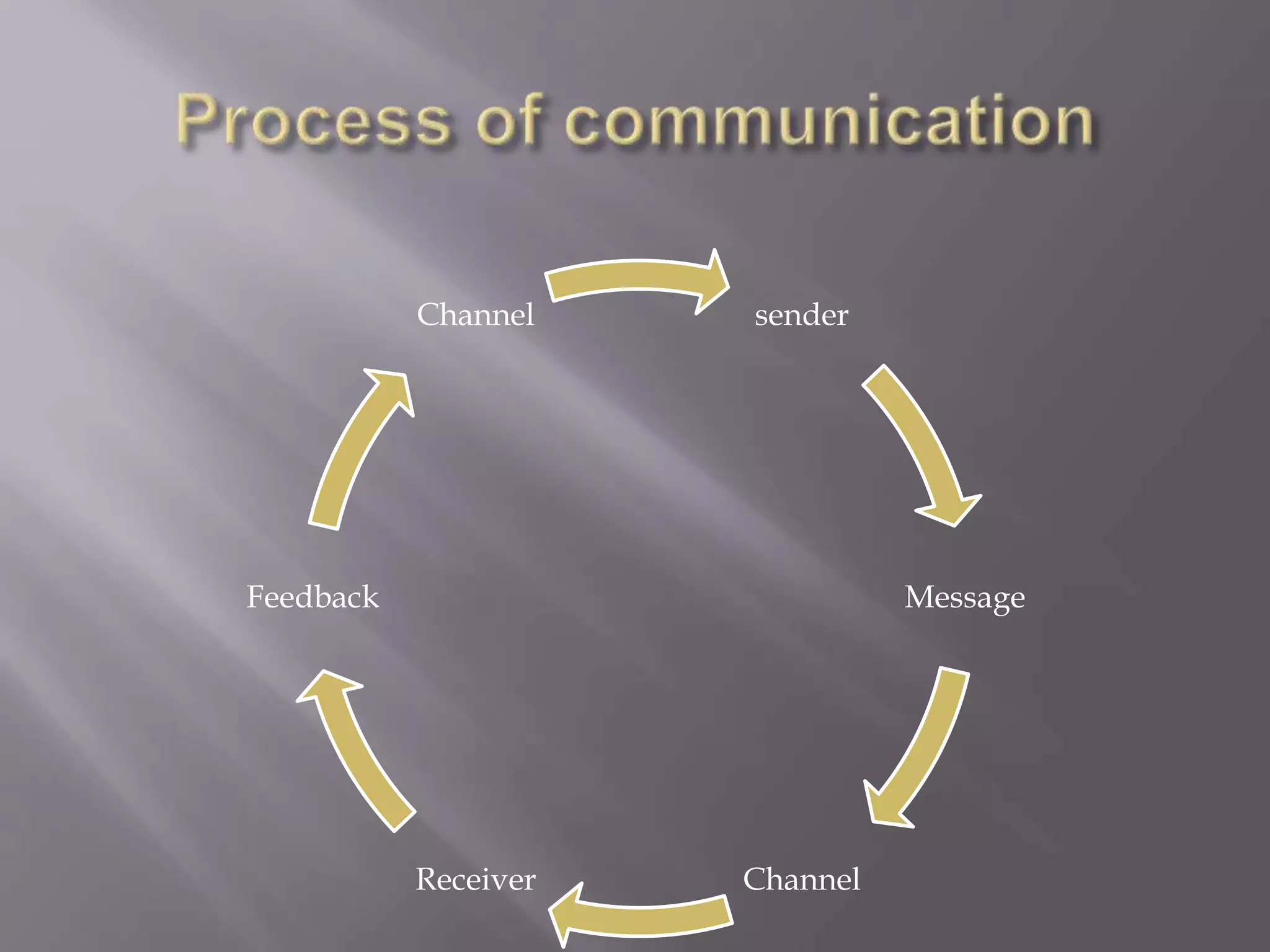
sender
Message
ChannelReceiver
Feedback
Channel
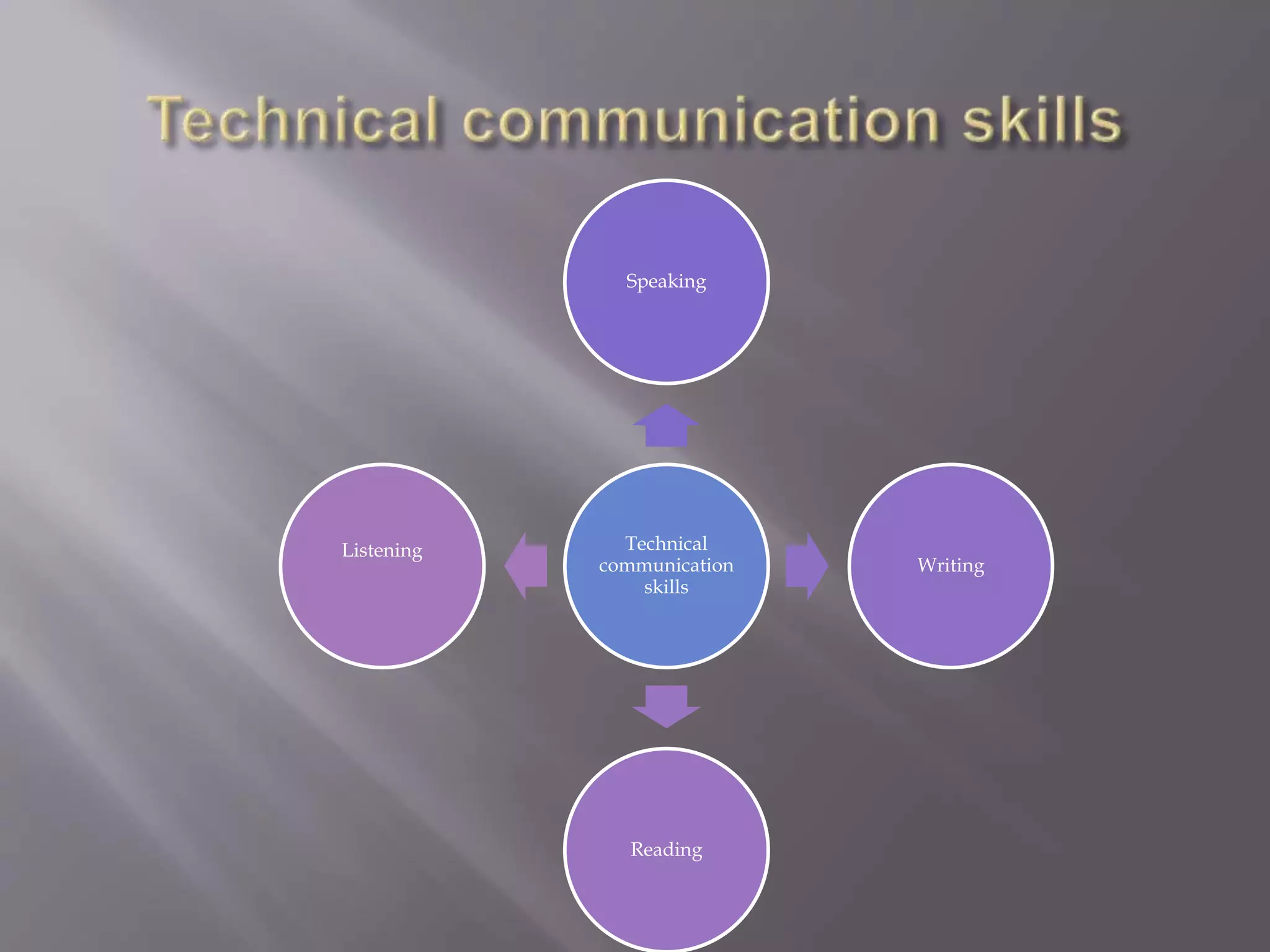
Technical
communication
skills
Speaking
Writing
Reading
Listening
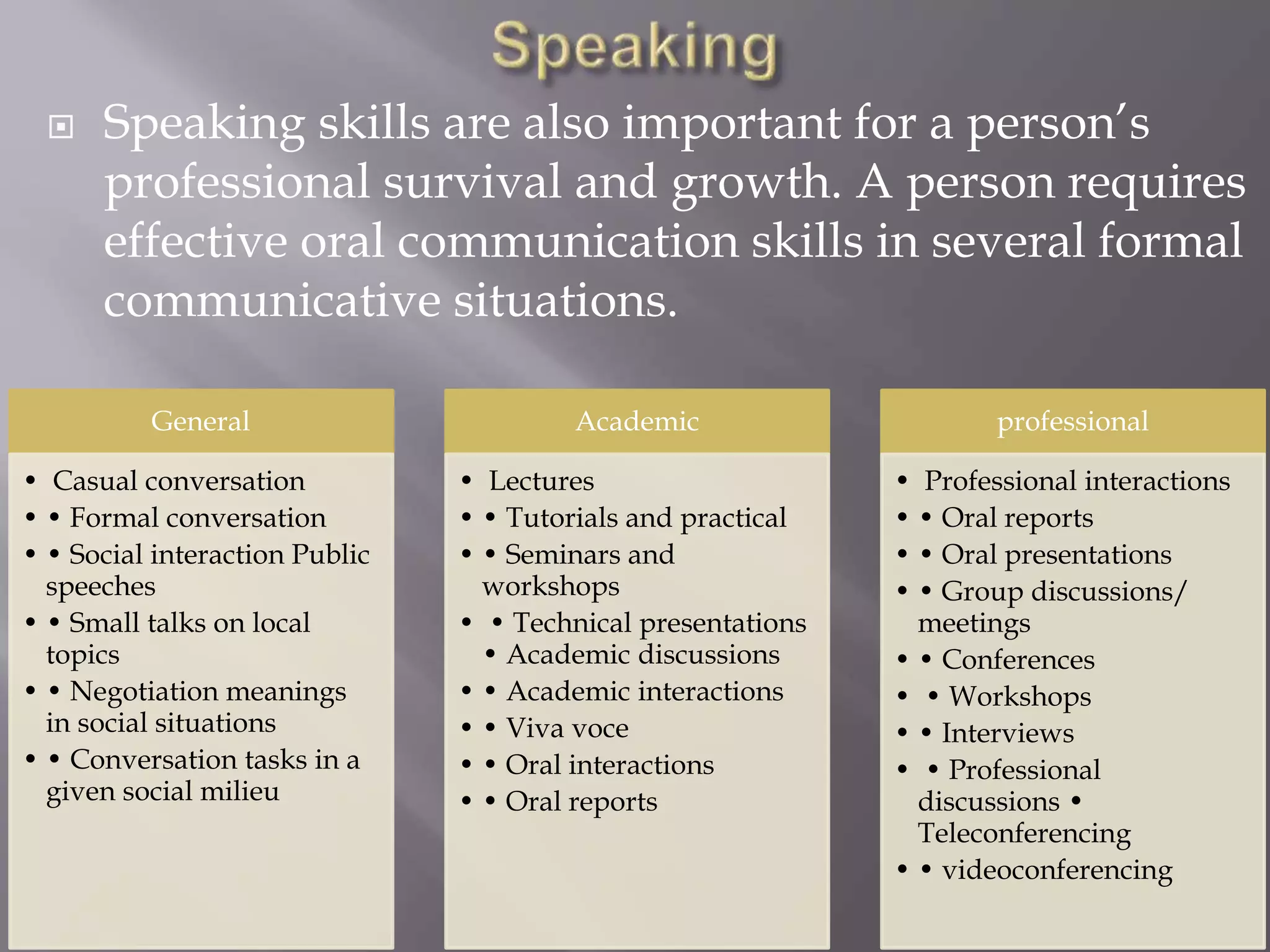
 Speaking skills are also important for a person’s
professional survival and growth. A person requires
effective oral communication skills in several formal
communicative situations.
General
• Casual conversation
• • Formal conversation
• • Social interaction Public
speeches
• • Small talks on local
topics
• • Negotiation meanings
in social situations
• • Conversation tasks in a
given social milieu
Academic
• Lectures
• • Tutorials and practical
• • Seminars and
workshops
• • Technical presentations
• Academic discussions
• • Academic interactions
• • Viva voce
• • Oral interactions
• • Oral reports
professional
• Professional interactions
• • Oral reports
• • Oral presentations
• • Group discussions/
meetings
• • Conferences
• • Workshops
• • Interviews
• • Professional
discussions •
Teleconferencing
• • videoconferencing
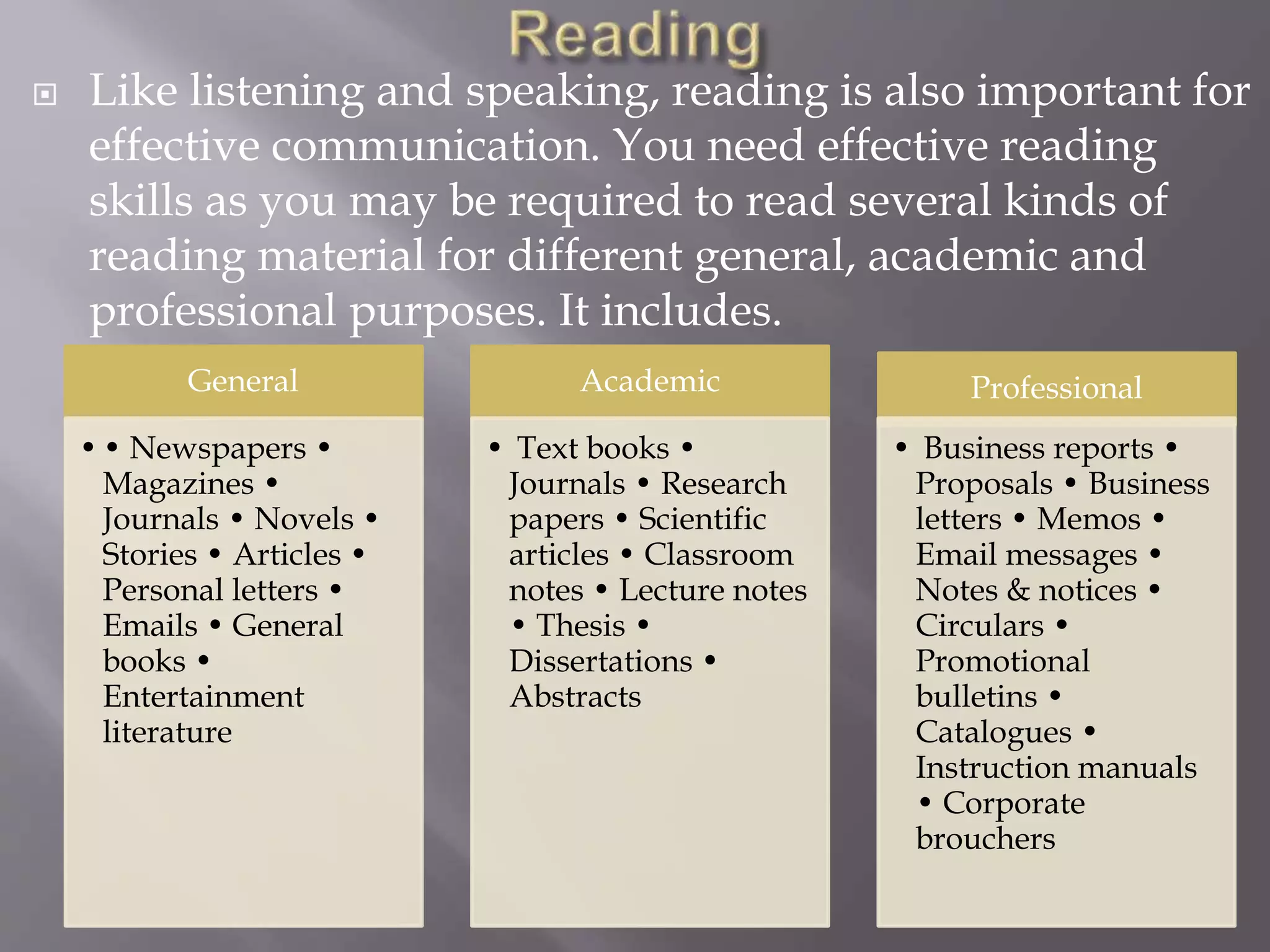
 Like listening and speaking, reading is also important for
effective communication. You need effective reading
skills as you may be required to read several kinds of
reading material for different general, academic and
professional purposes. It includes.
General
•• Newspapers •
Magazines •
Journals • Novels •
Stories • Articles •
Personal letters •
Emails • General
books •
Entertainment
literature
Academic
• Text books •
Journals • Research
papers • Scientific
articles • Classroom
notes • Lecture notes
• Thesis •
Dissertations •
Abstracts
Professional
• Business reports •
Proposals • Business
letters • Memos •
Email messages •
Notes & notices •
Circulars •
Promotional
bulletins •
Catalogues •
Instruction manuals
• Corporate
brouchers
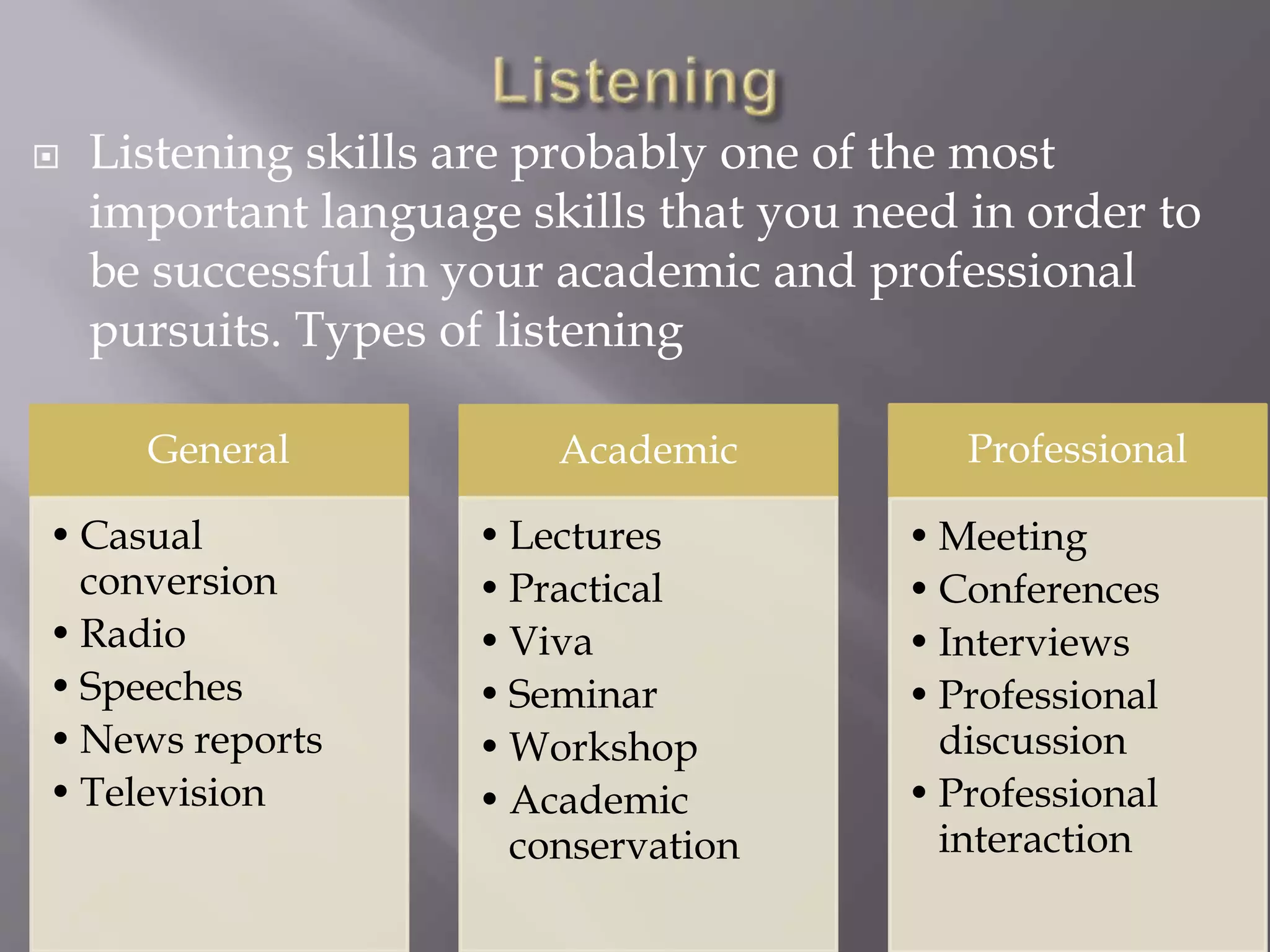
 Listening skills are probably one of the most
important language skills that you need in order to
be successful in your academic and professional
pursuits. Types of listening
General
• Casual
conversion
• Radio
• Speeches
• News reports
• Television
Academic
• Lectures
• Practical
• Viva
• Seminar
• Workshop
• Academic
conservation
Professional
• Meeting
• Conferences
• Interviews
• Professional
discussion
• Professional
interaction
Techanical communication  -engineering design and analysis

Techanical communication -engineering design and analysis

  • 1.
    BY- MANOJ KUMARMISHRA 2K19/CEME/05
  • 2.
     In general,communication is an exchange of meaning and understanding. Communication begins with the sender sending message cues, which are received by the receiver who assigns meaning to them and responds to them accordingly.  Simply : communication is the exchange of information.  Communication is are of two type i. Verbal { Oral form} ii. Non verbal { Written form}
  • 3.
  • 4.
  • 5.
     Speaking skillsare also important for a person’s professional survival and growth. A person requires effective oral communication skills in several formal communicative situations. General • Casual conversation • • Formal conversation • • Social interaction Public speeches • • Small talks on local topics • • Negotiation meanings in social situations • • Conversation tasks in a given social milieu Academic • Lectures • • Tutorials and practical • • Seminars and workshops • • Technical presentations • Academic discussions • • Academic interactions • • Viva voce • • Oral interactions • • Oral reports professional • Professional interactions • • Oral reports • • Oral presentations • • Group discussions/ meetings • • Conferences • • Workshops • • Interviews • • Professional discussions • Teleconferencing • • videoconferencing
  • 6.
     Like listeningand speaking, reading is also important for effective communication. You need effective reading skills as you may be required to read several kinds of reading material for different general, academic and professional purposes. It includes. General •• Newspapers • Magazines • Journals • Novels • Stories • Articles • Personal letters • Emails • General books • Entertainment literature Academic • Text books • Journals • Research papers • Scientific articles • Classroom notes • Lecture notes • Thesis • Dissertations • Abstracts Professional • Business reports • Proposals • Business letters • Memos • Email messages • Notes & notices • Circulars • Promotional bulletins • Catalogues • Instruction manuals • Corporate brouchers
  • 7.
     Listening skillsare probably one of the most important language skills that you need in order to be successful in your academic and professional pursuits. Types of listening General • Casual conversion • Radio • Speeches • News reports • Television Academic • Lectures • Practical • Viva • Seminar • Workshop • Academic conservation Professional • Meeting • Conferences • Interviews • Professional discussion • Professional interaction