The document discusses three primary models of communication: linear, interactive, and transactional, each characterized by different dynamics of message transmission and feedback. The linear model is a one-way process, while the interactive model involves two-way communication with feedback, and the transactional model allows for simultaneous feedback and role interchange. Various sub-models, such as Aristotle’s and Berlo’s models, are mentioned, illustrating the evolution and application of these communication frameworks.
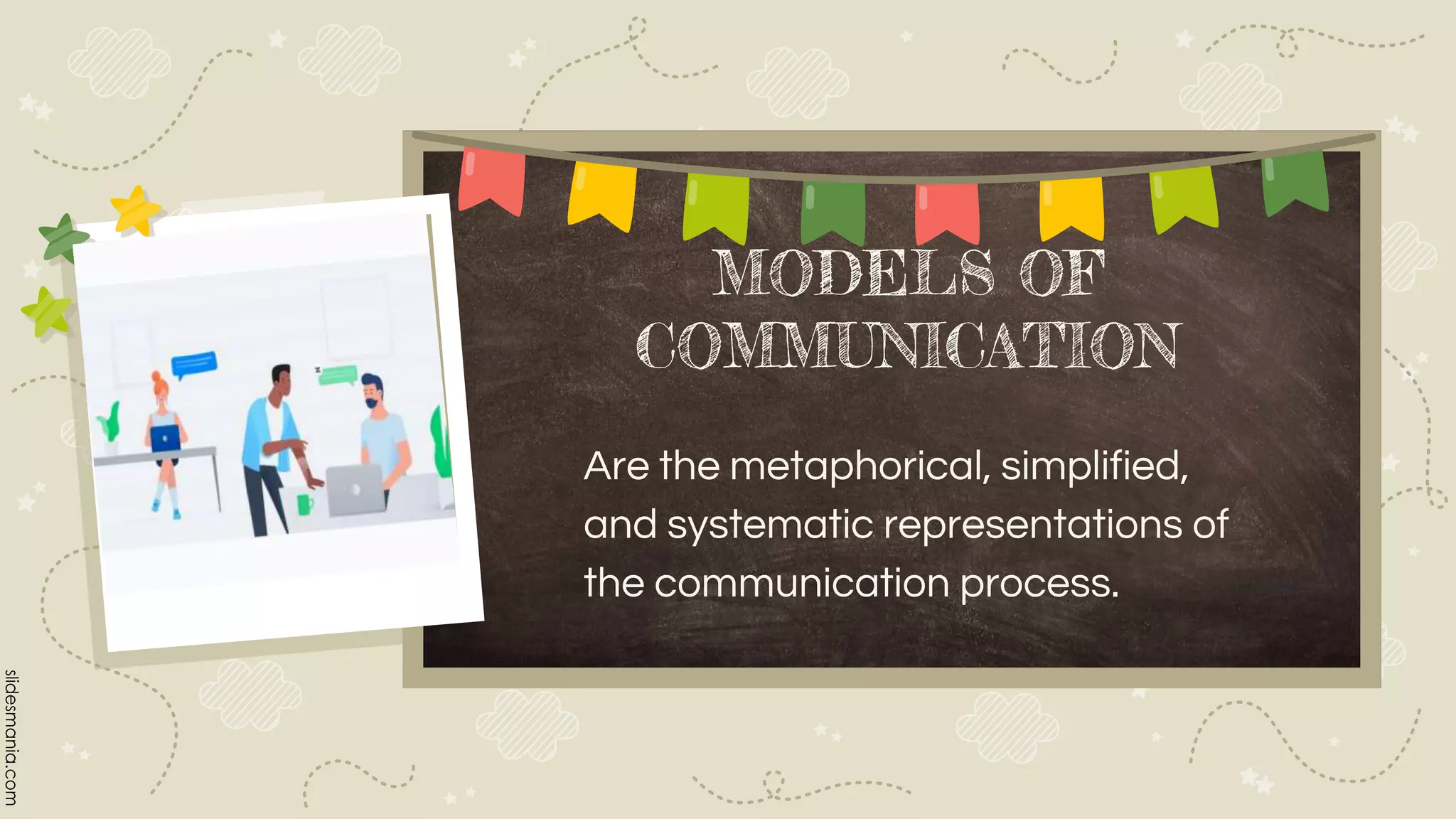
Overview of communication models as systematic representations of the communication process.
Explains three principal models of communication: Linear, Interactive, and Transactional.
Describes one-way communication where the sender delivers a message without feedback. Models include Aristotle’s, Laswell’s, Berlo’s, and Shannon-Weaver's.
Details oldest communication model focusing on public speaking and its effectiveness in mass communication.
Explains factors affecting source, message, channel, and receiver in communication. Known for its application in technical communication.
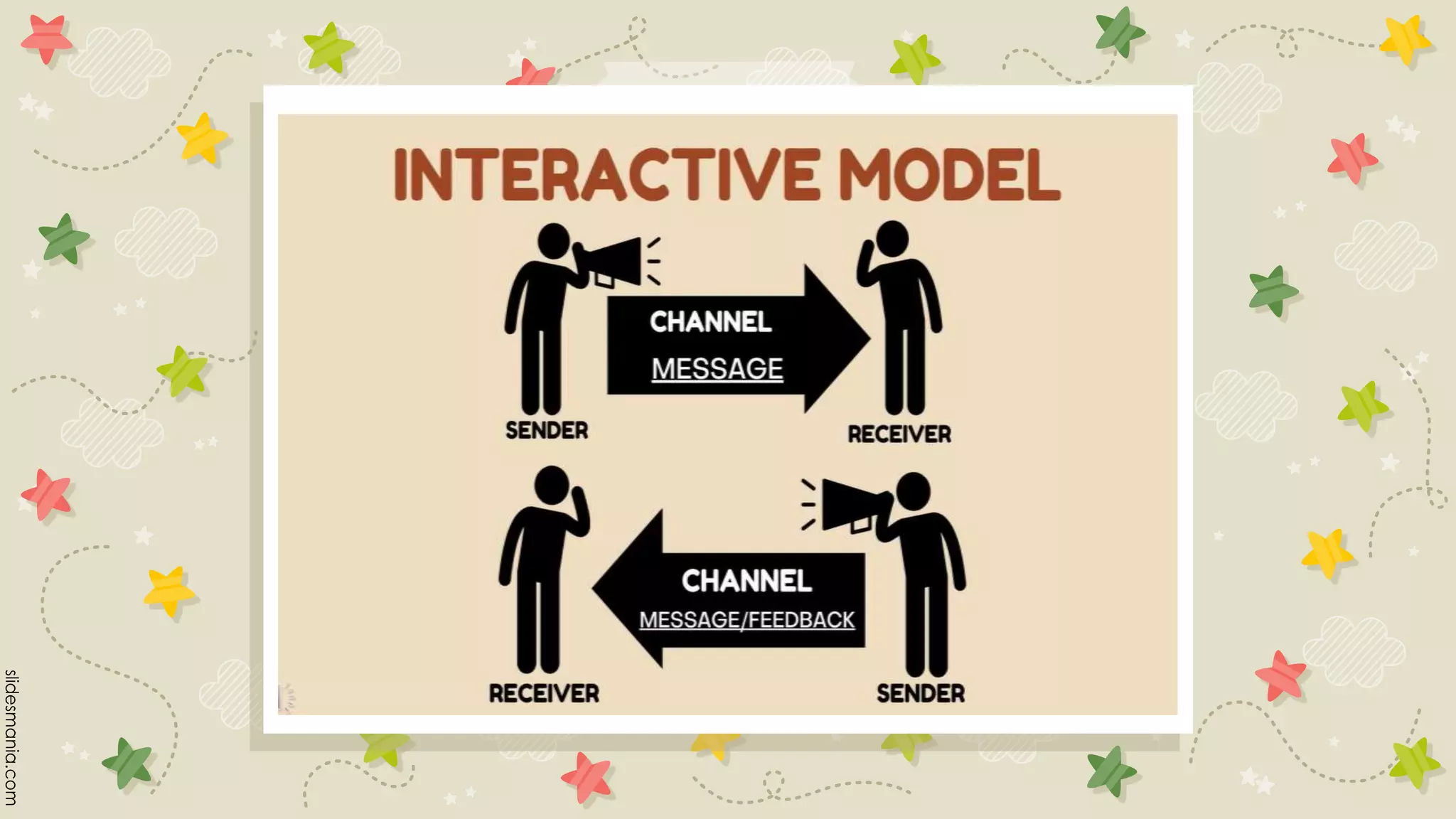
Describes two-way communication with feedback, notable for new media interactions and the impact of shared experiences.
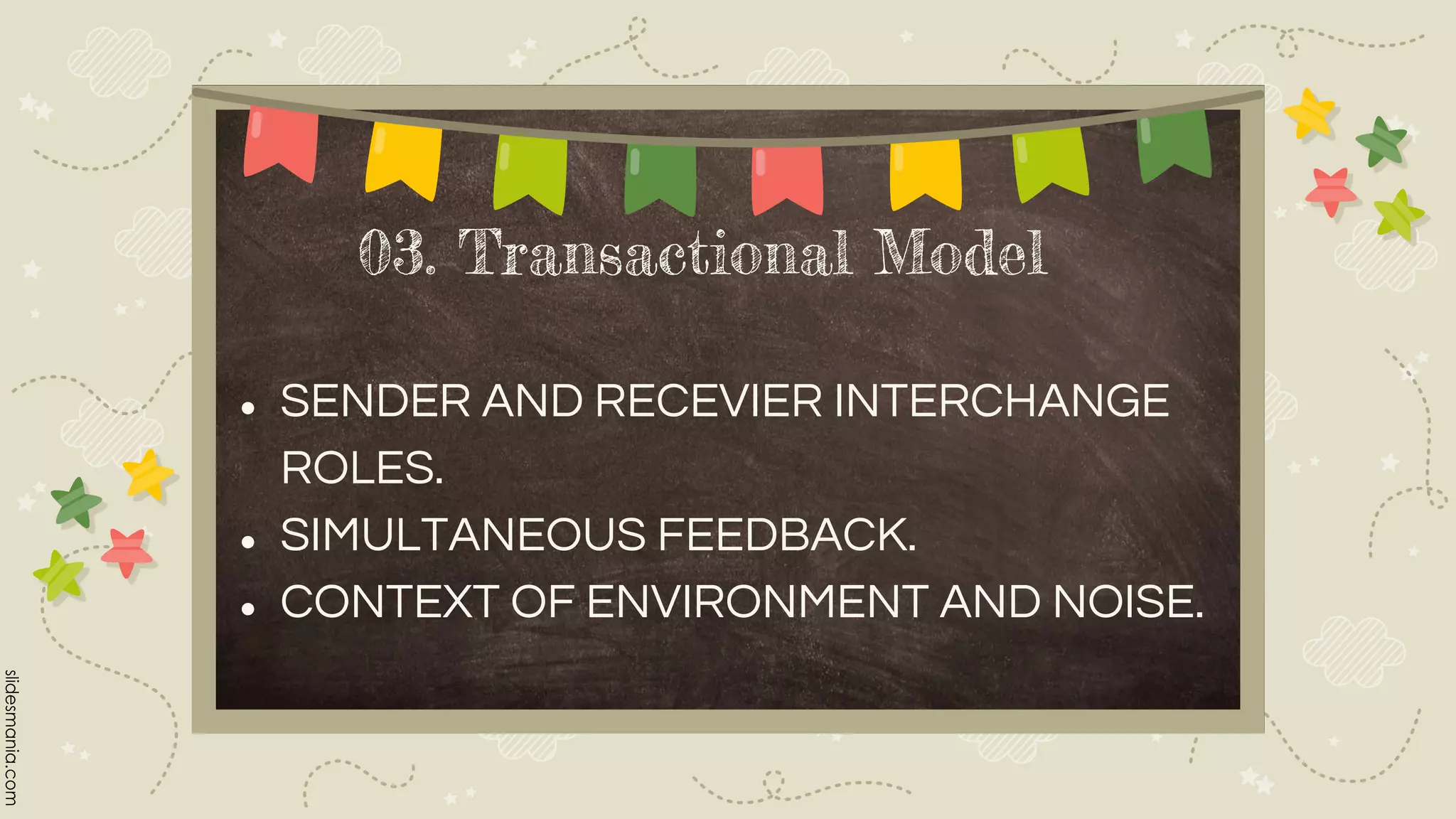
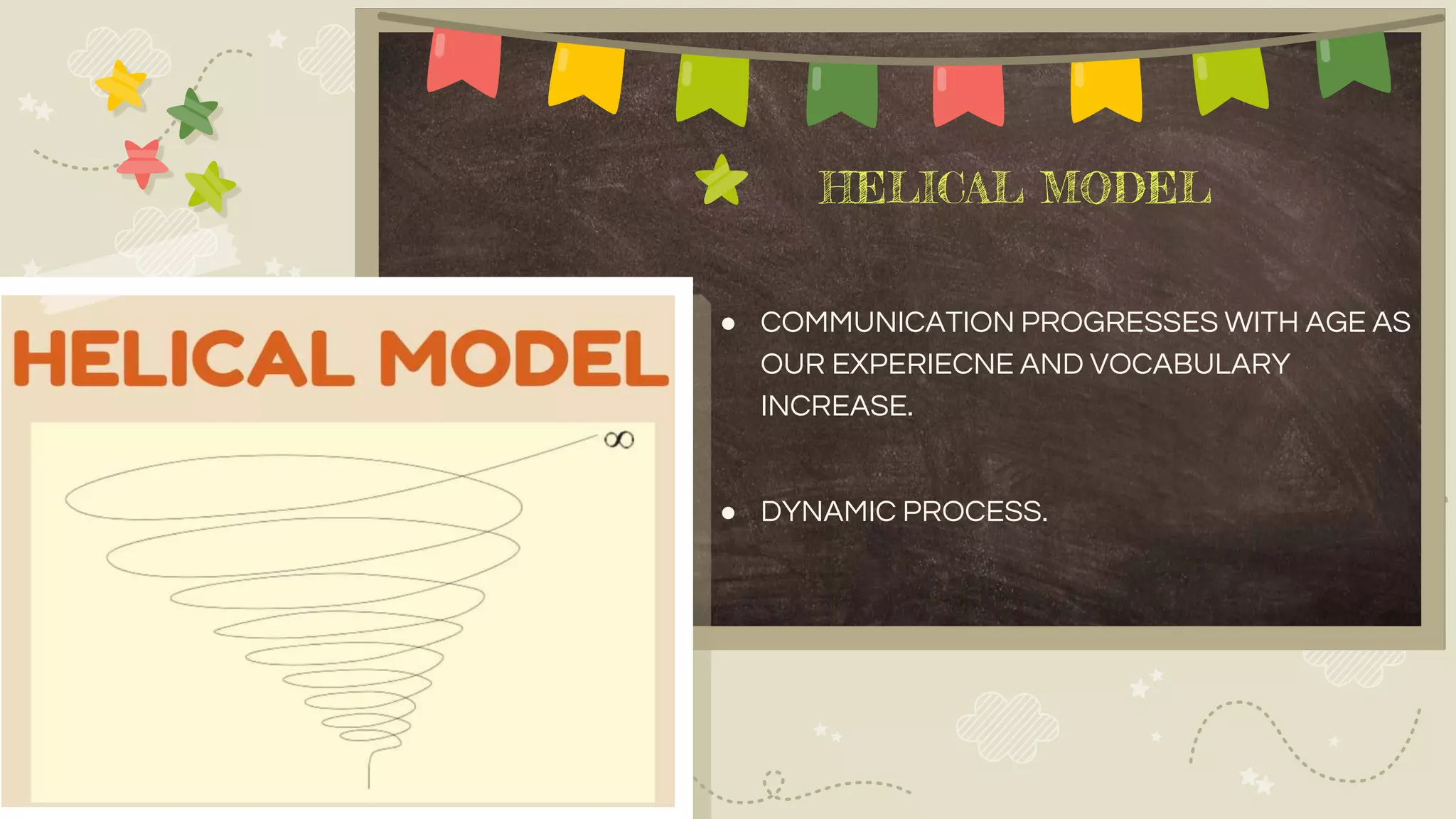
Highlights simultaneous feedback where sender and receiver exchange roles, including Barlund's and Helical models, emphasizing dynamic communication.
Final slide to conclude the presentation, thanking the audience for their attention.
Standard Model ofCommunication
01. Linear Model
02. Interactive Model
03. Transactional Model
4.
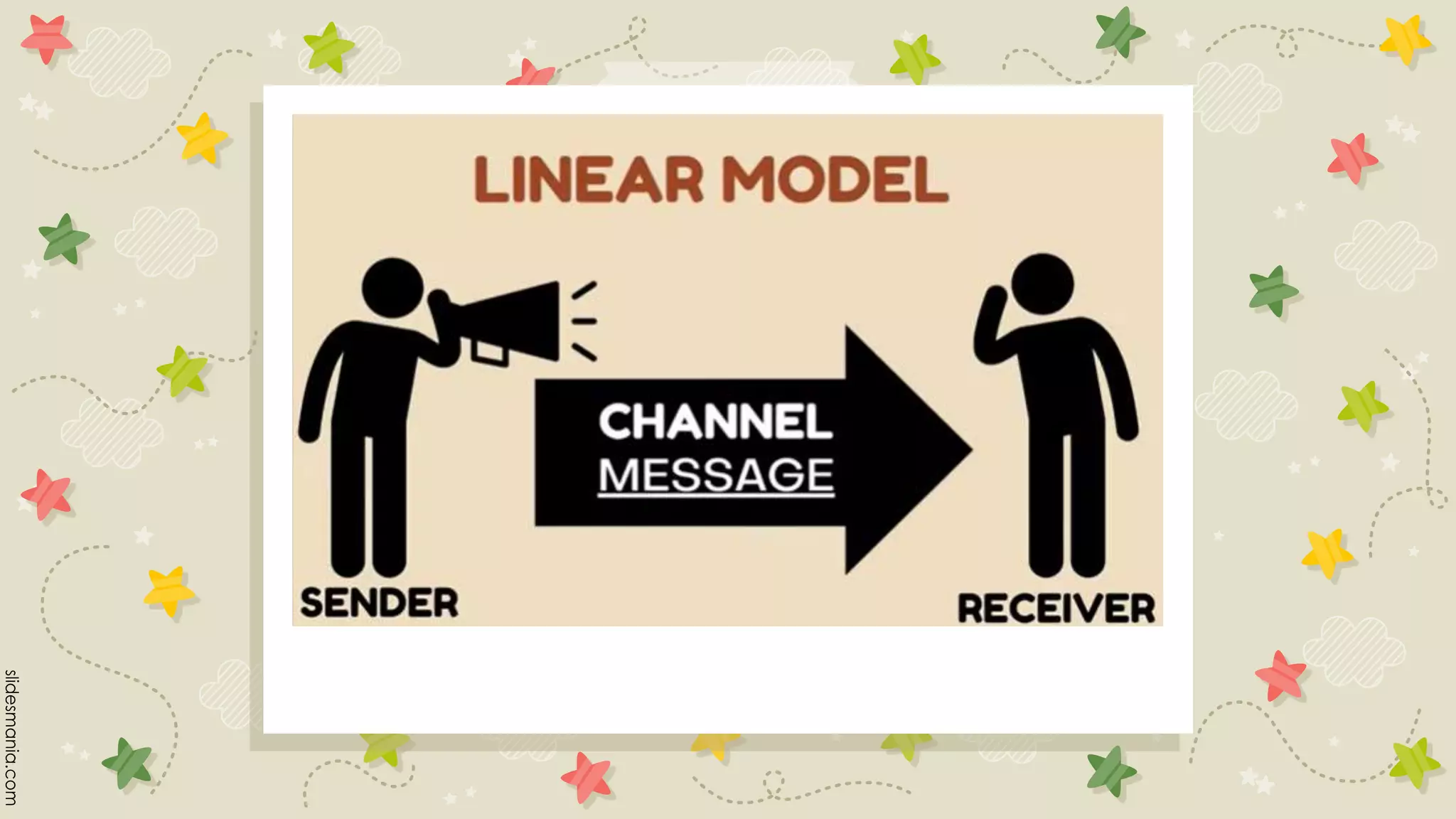
01. Linear Model
●One way communication.
● Sender sends the message and the
receiver only receives.
● No feedback.
● Concept of noise.
6.
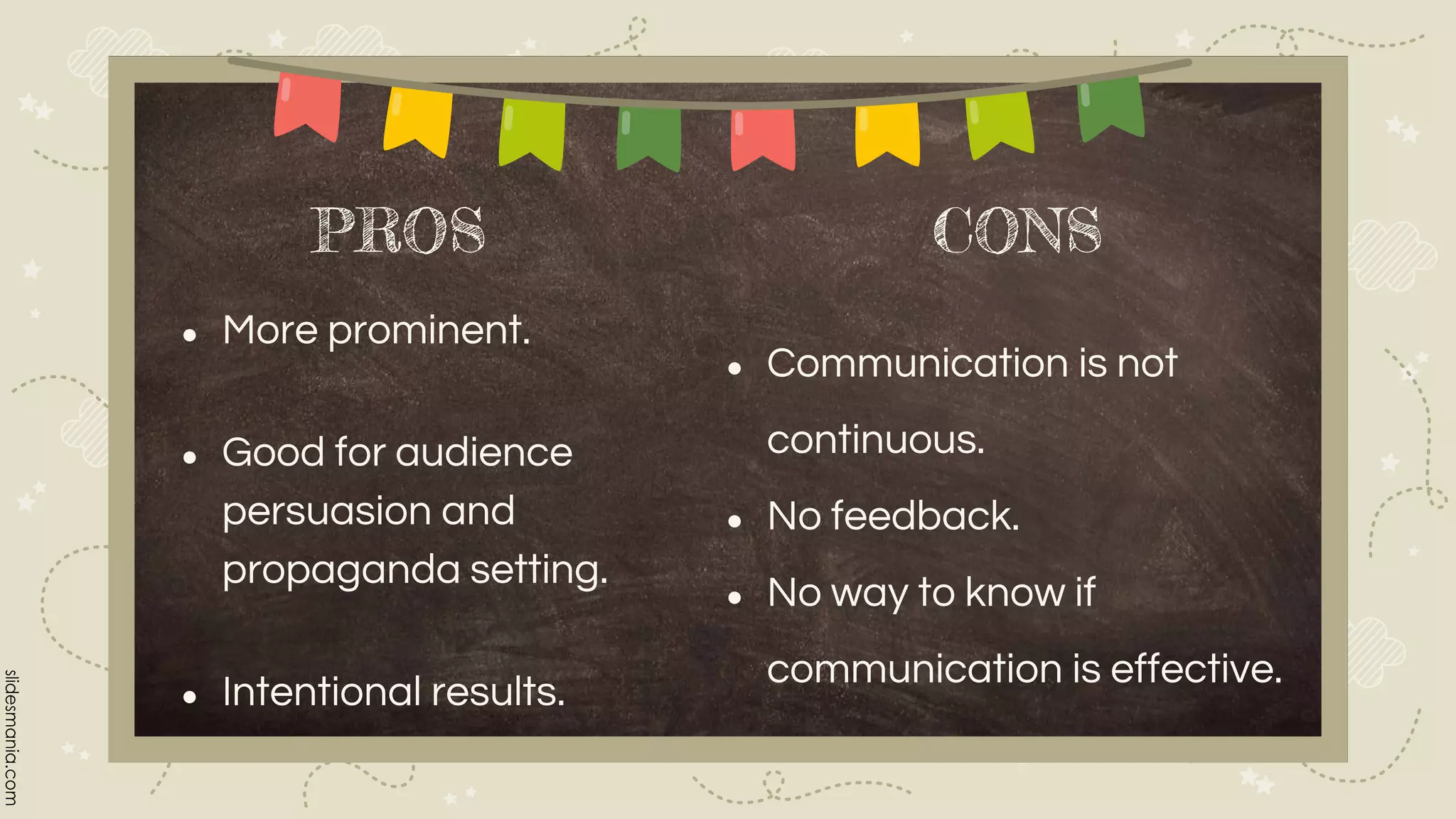
PROS
● Communication isnot
continuous.
● No feedback.
● No way to know if
communication is effective.
● More prominent.
● Good for audience
persuasion and
propaganda setting.
● Intentional results.
CONS
7.
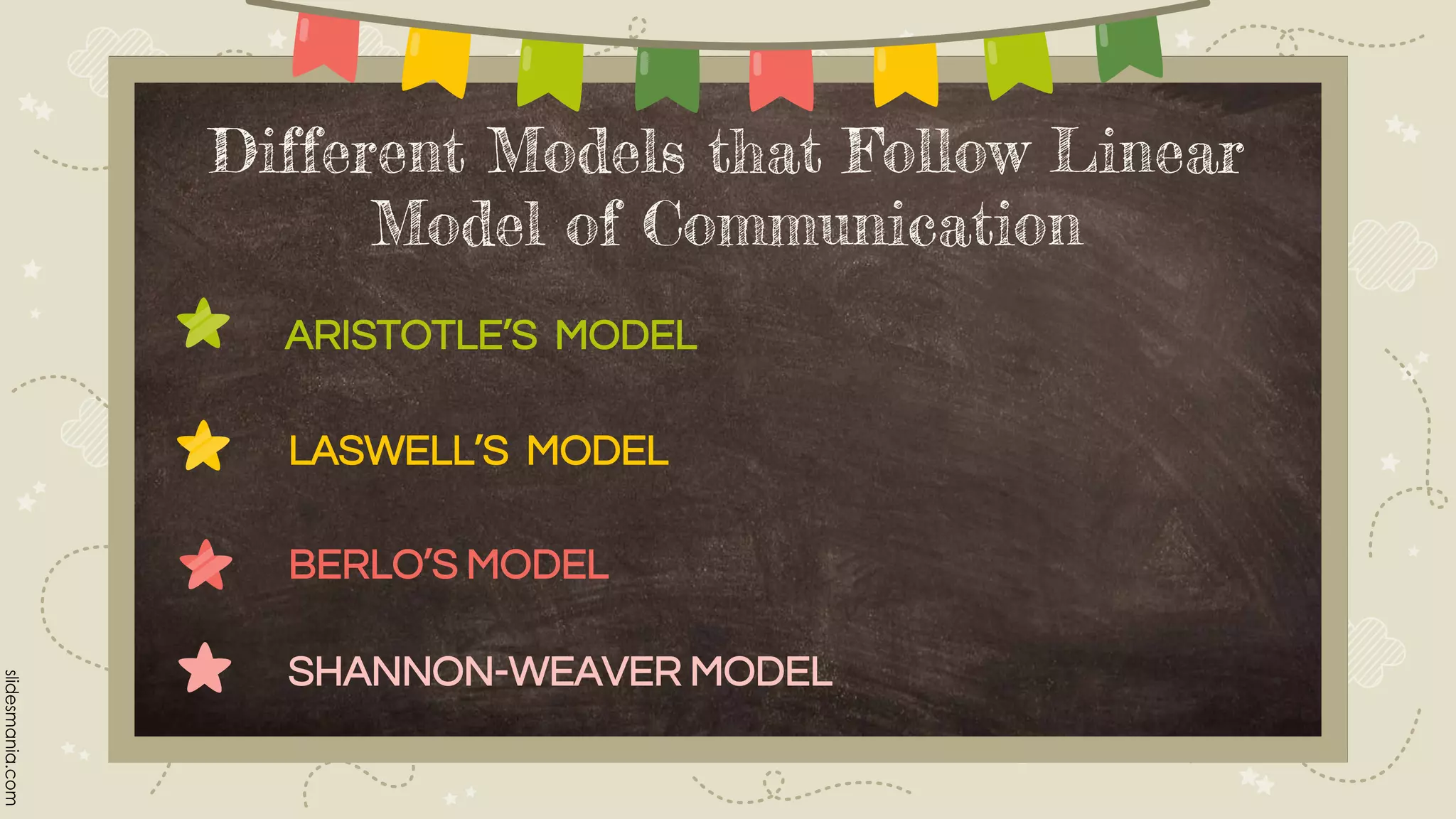
Different Models thatFollow Linear
Model of Communication
ARISTOTLE’S MODEL
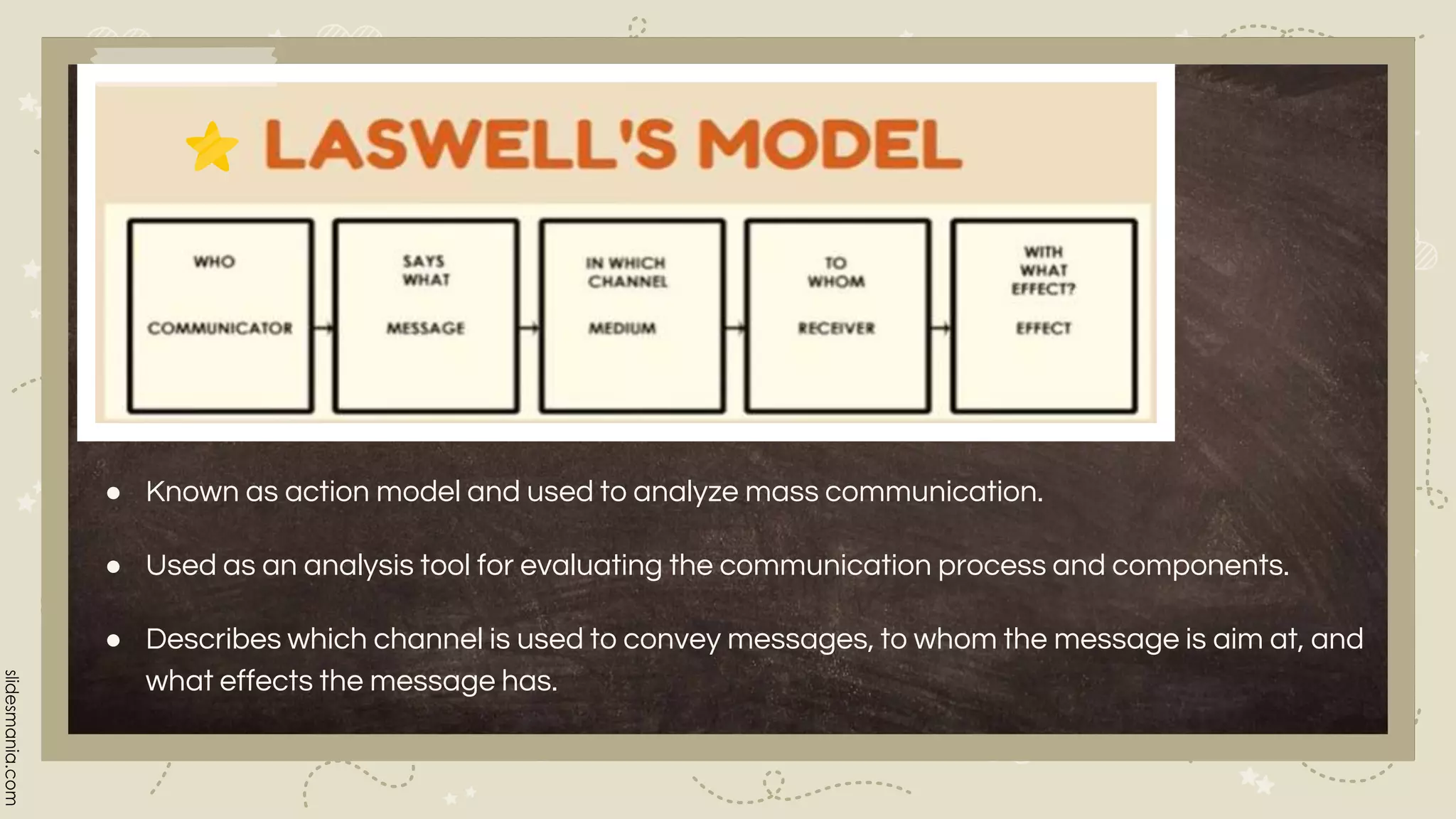
LASWELL’S MODEL
BERLO’S MODEL
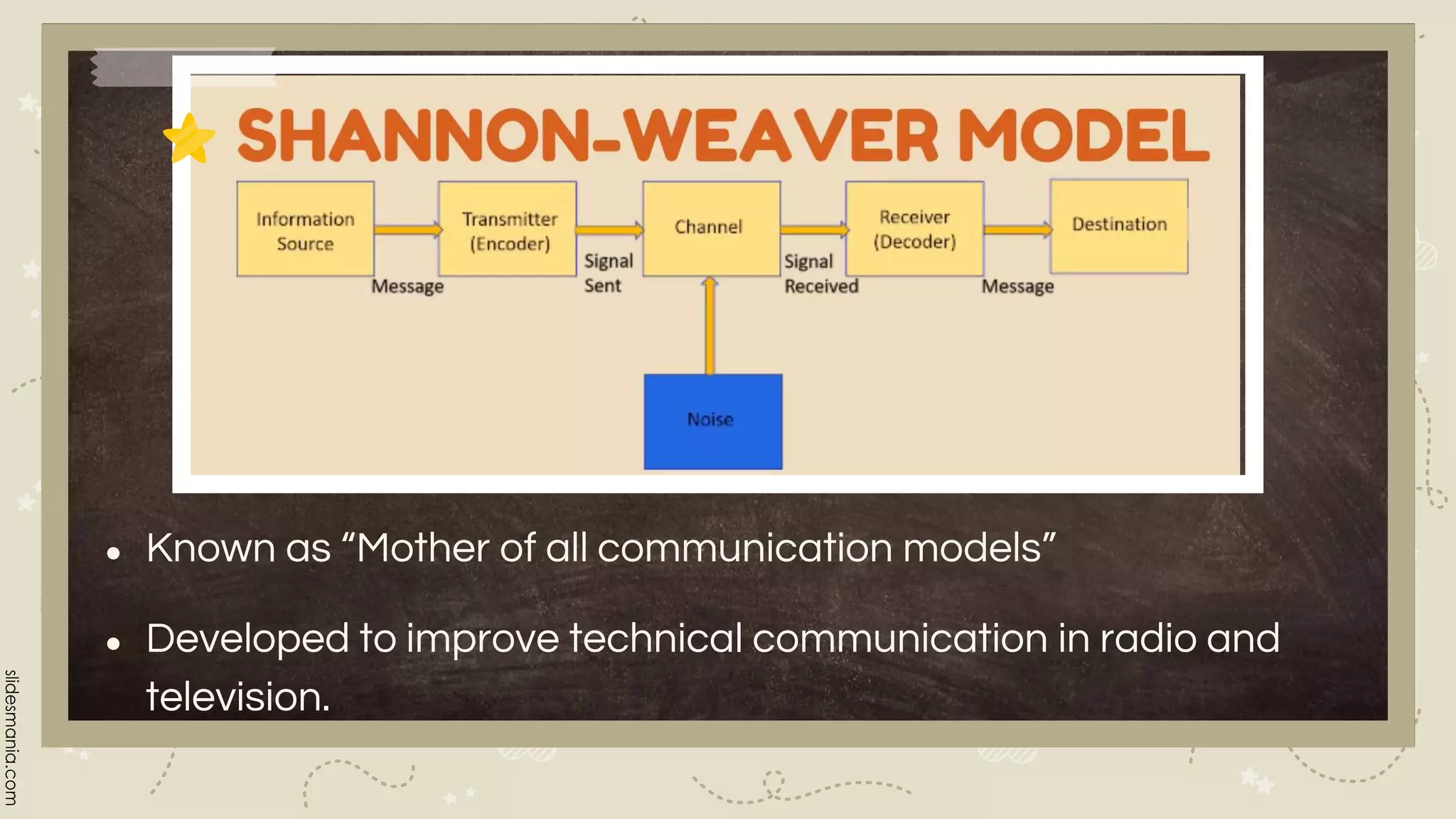
SHANNON-WEAVER MODEL
8.
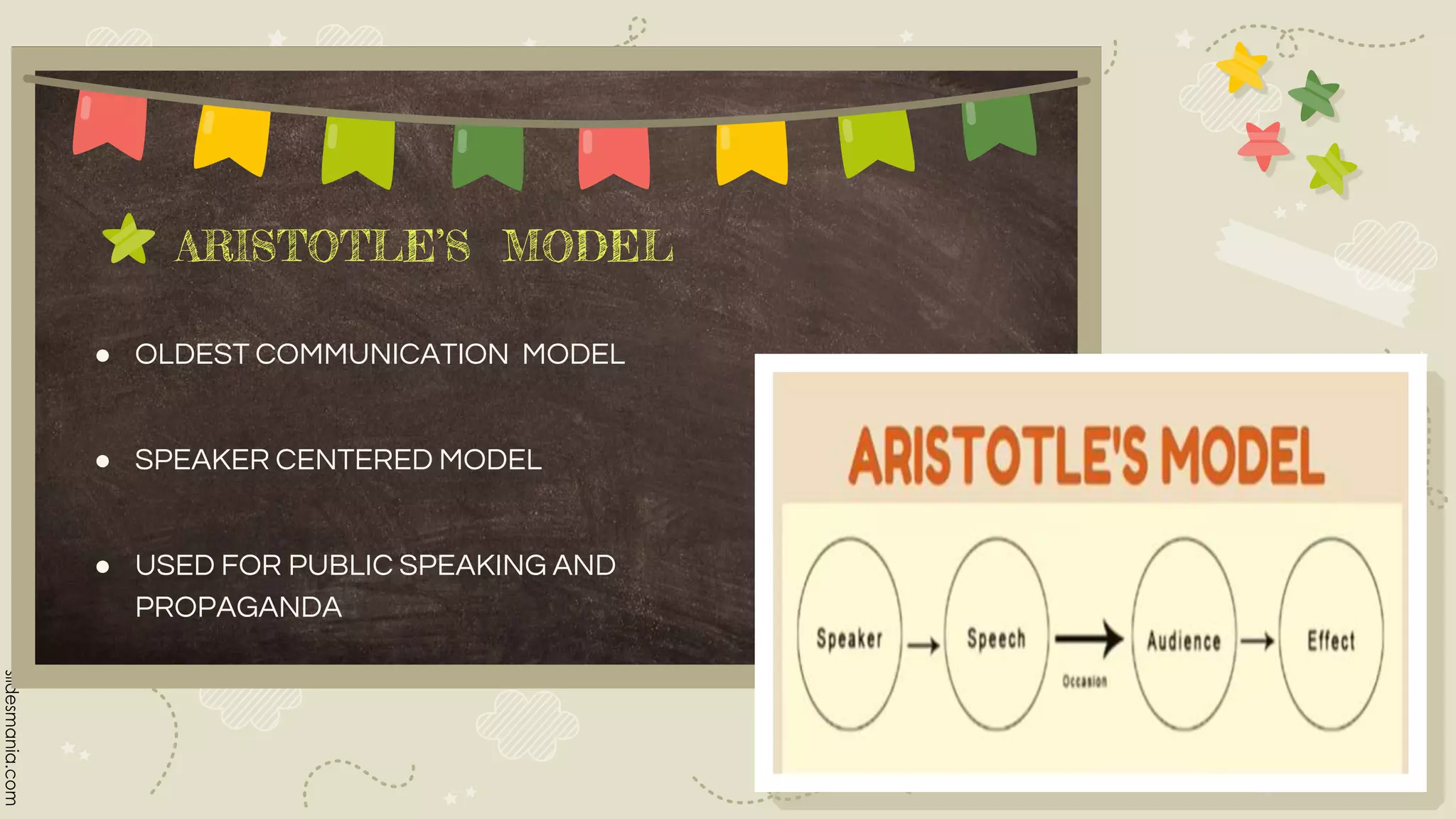
ARISTOTLE’S MODEL
● OLDESTCOMMUNICATION MODEL
● SPEAKER CENTERED MODEL
● USED FOR PUBLIC SPEAKING AND
PROPAGANDA
9.
● Known asaction model and used to analyze mass communication.
● Used as an analysis tool for evaluating the communication process and components.
● Describes which channel is used to convey messages, to whom the message is aim at, and
what effects the message has.
10.
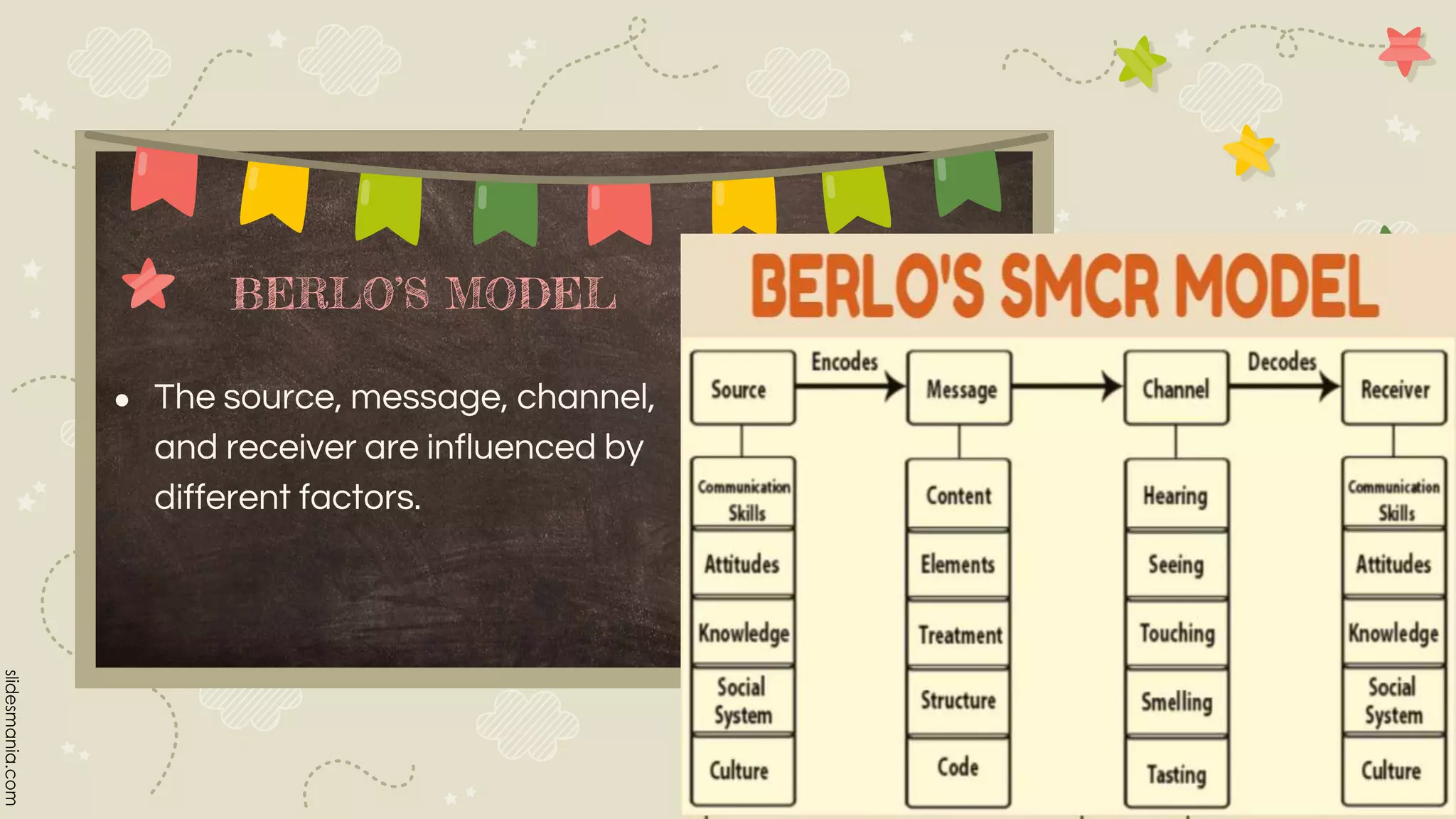
BERLO’S MODEL
● Thesource, message, channel,
and receiver are influenced by
different factors.
11.
● Known as“Mother of all communication models”
● Developed to improve technical communication in radio and
television.
12.
02. INTERACTIVE MODEL
●Known as convergence model.
● Two way communication.
● Used for new media like the internet.
● There is feedback.
● Interactive but not simultaneous.
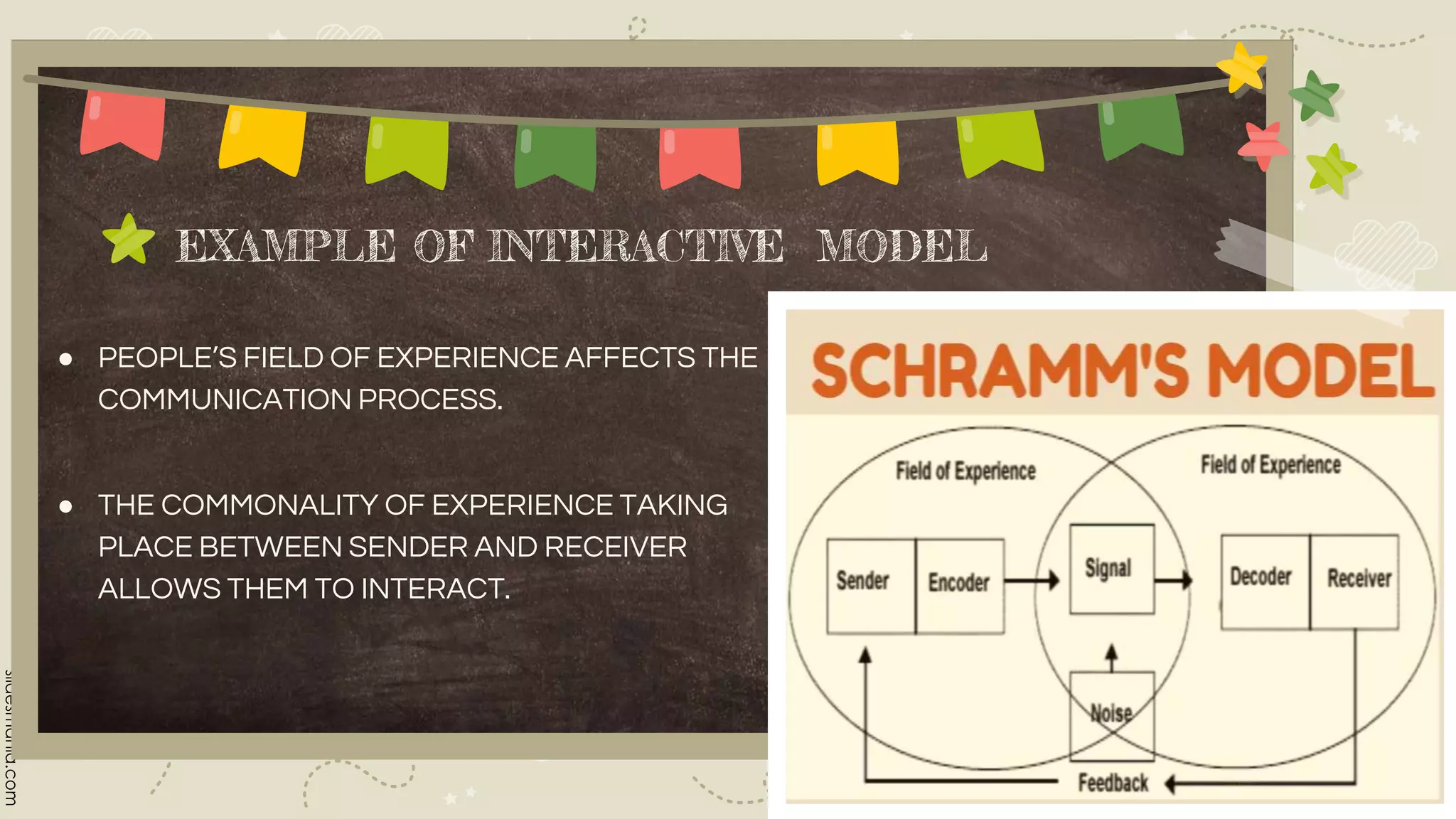
● Concept of field of experience.
14.
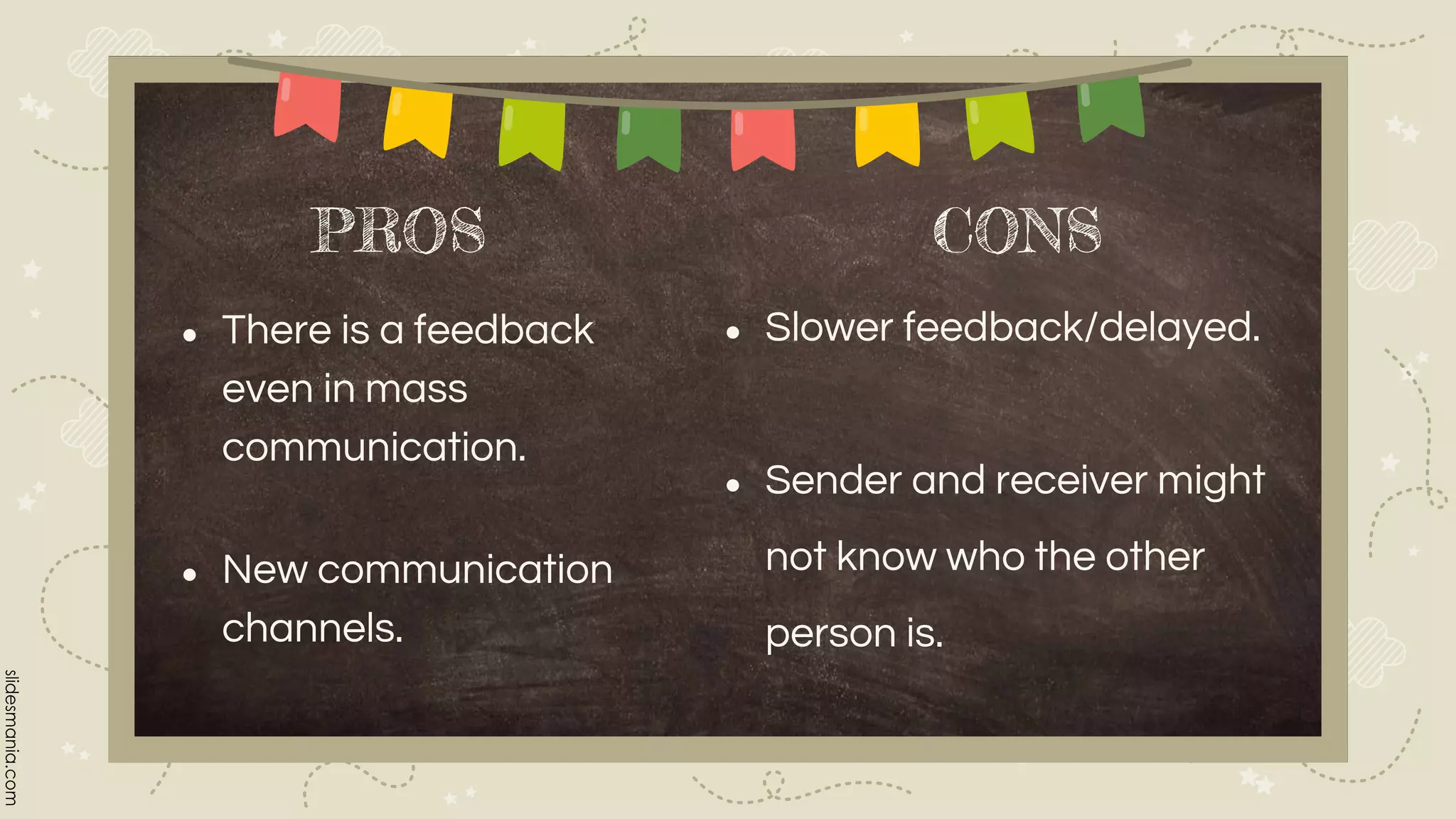
PROS
● Slower feedback/delayed.
●Sender and receiver might
not know who the other
person is.
● There is a feedback
even in mass
communication.
● New communication
channels.
CONS
15.
EXAMPLE OF INTERACTIVEMODEL
● PEOPLE’S FIELD OF EXPERIENCE AFFECTS THE
COMMUNICATION PROCESS.
● THE COMMONALITY OF EXPERIENCE TAKING
PLACE BETWEEN SENDER AND RECEIVER
ALLOWS THEM TO INTERACT.
16.
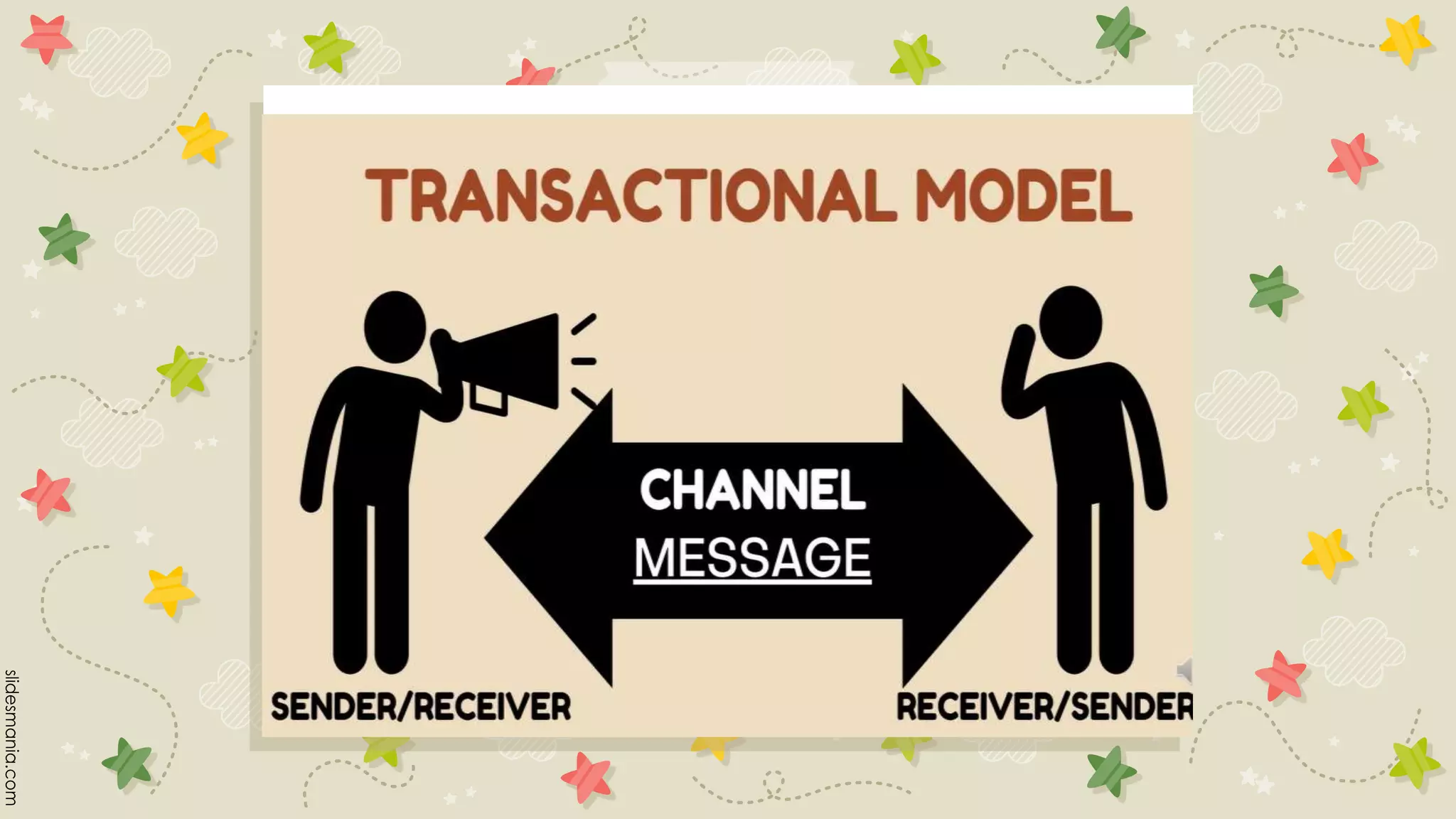
03. Transactional Model
●SENDER AND RECEVIER INTERCHANGE
ROLES.
● SIMULTANEOUS FEEDBACK.
● CONTEXT OF ENVIRONMENT AND NOISE.
18.
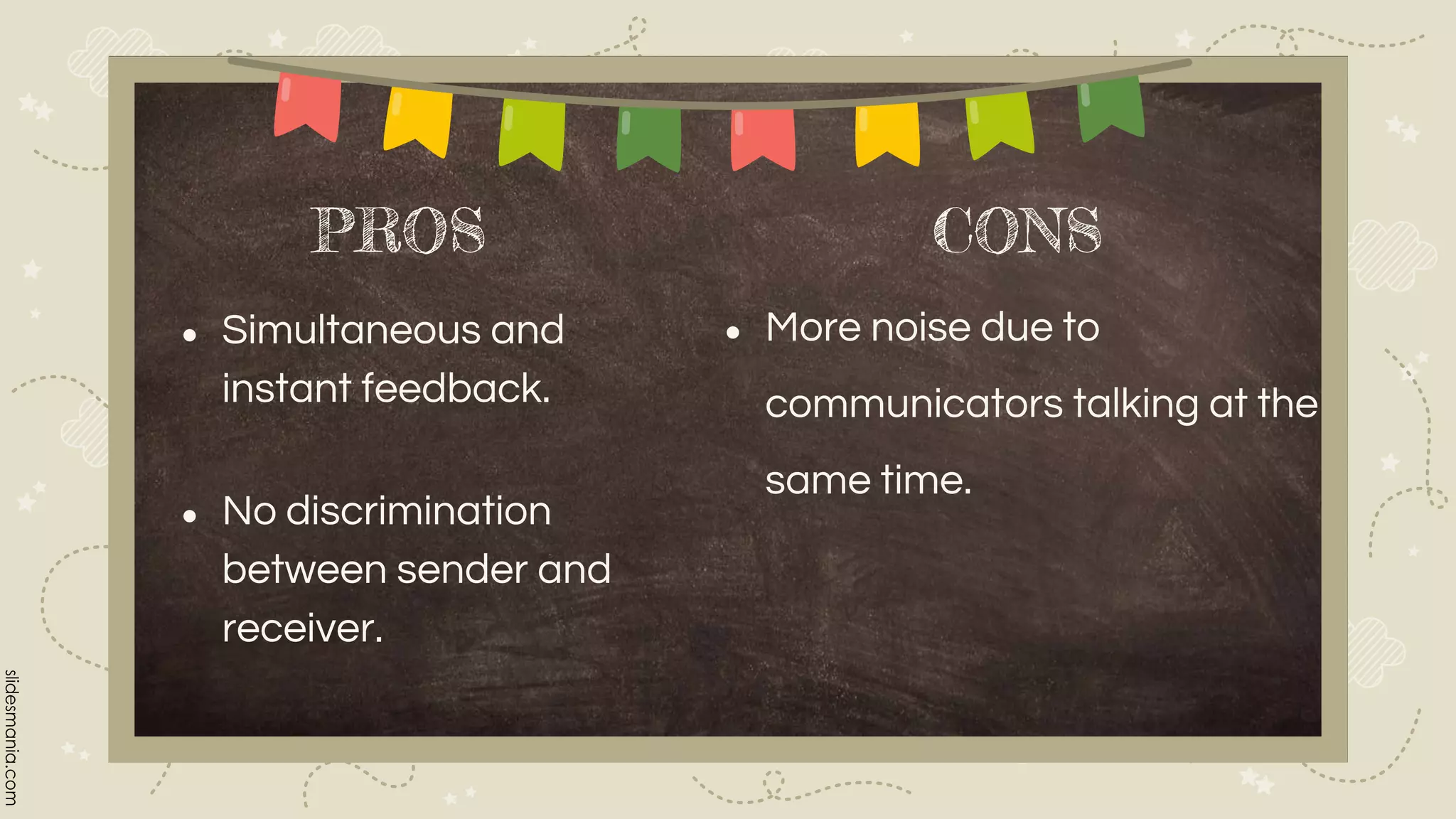
PROS
● More noisedue to
communicators talking at the
same time.
● Simultaneous and
instant feedback.
● No discrimination
between sender and
receiver.
CONS
19.
Different Models thatFollow
Transactional Model of
Communication
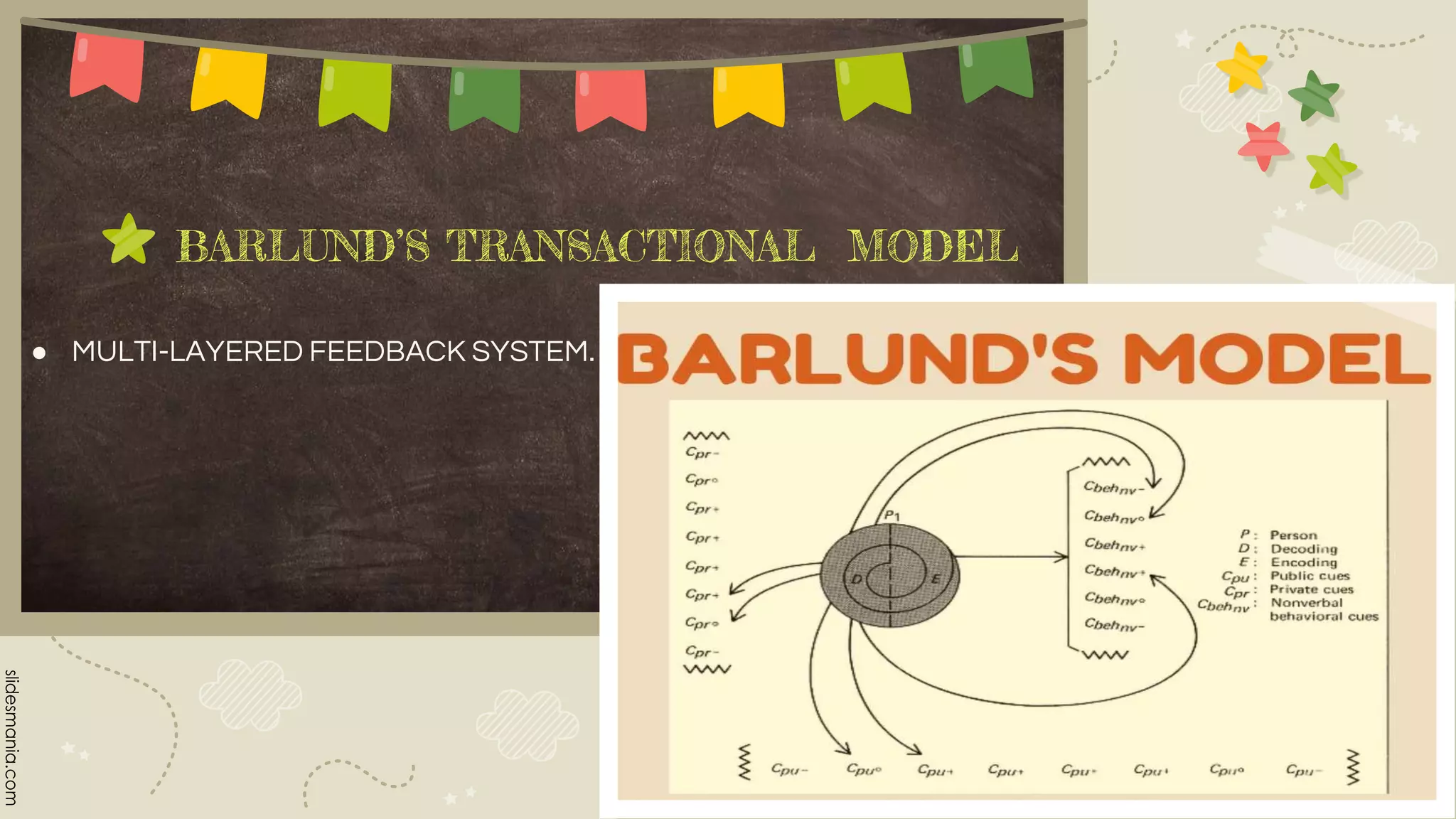
BARLUND’S TRANSACTIONAL MODEL
HELICAL MODEL