PRODUCTION MANAGEMENT
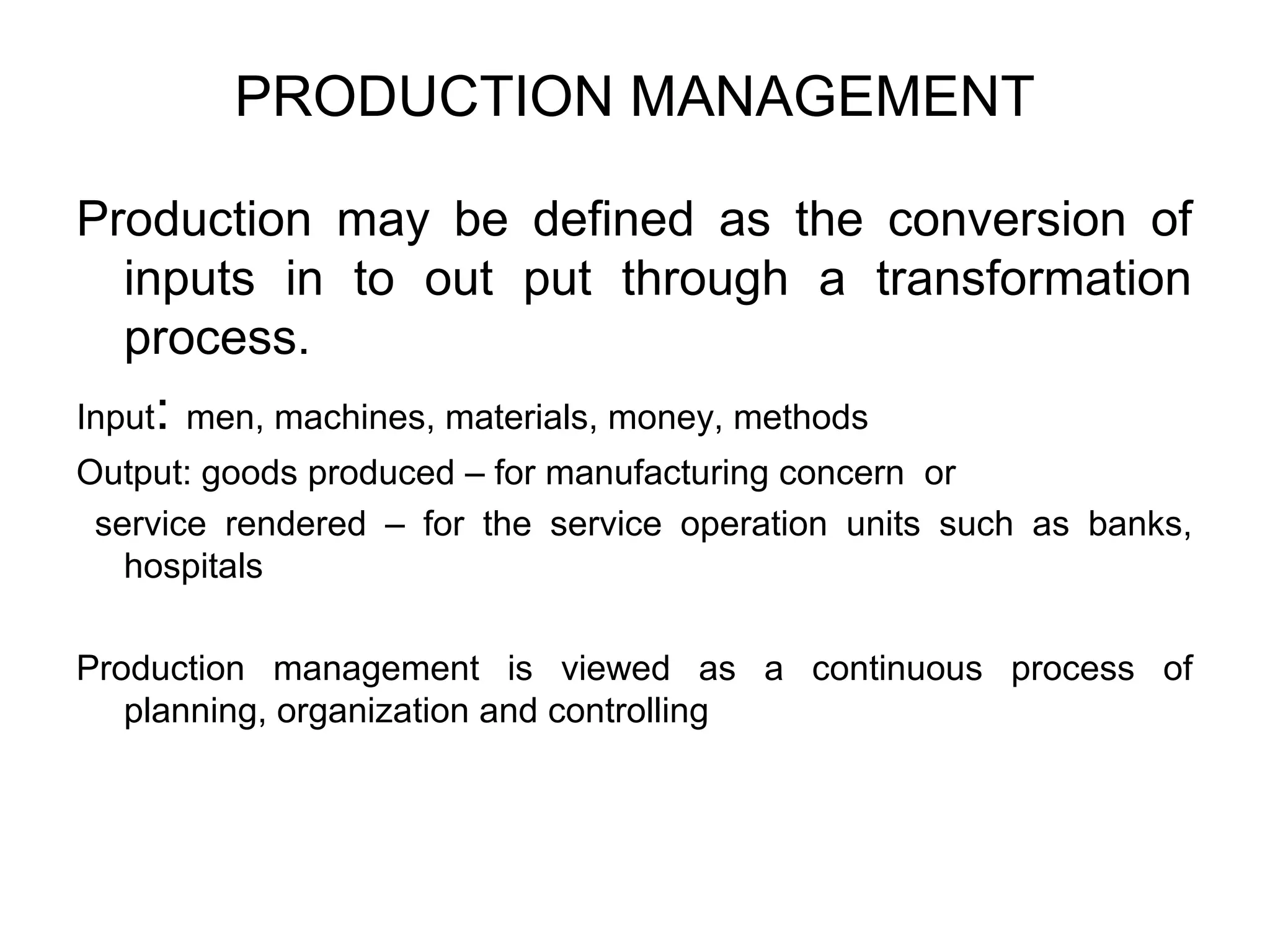
Production may be defined as the conversion of
inputs in to out put through a transformation
process.

:

Input men, machines, materials, money, methods
Output: goods produced – for manufacturing concern or
service rendered – for the service operation units such as banks,
hospitals
Production management is viewed as a continuous process of
planning, organization and controlling
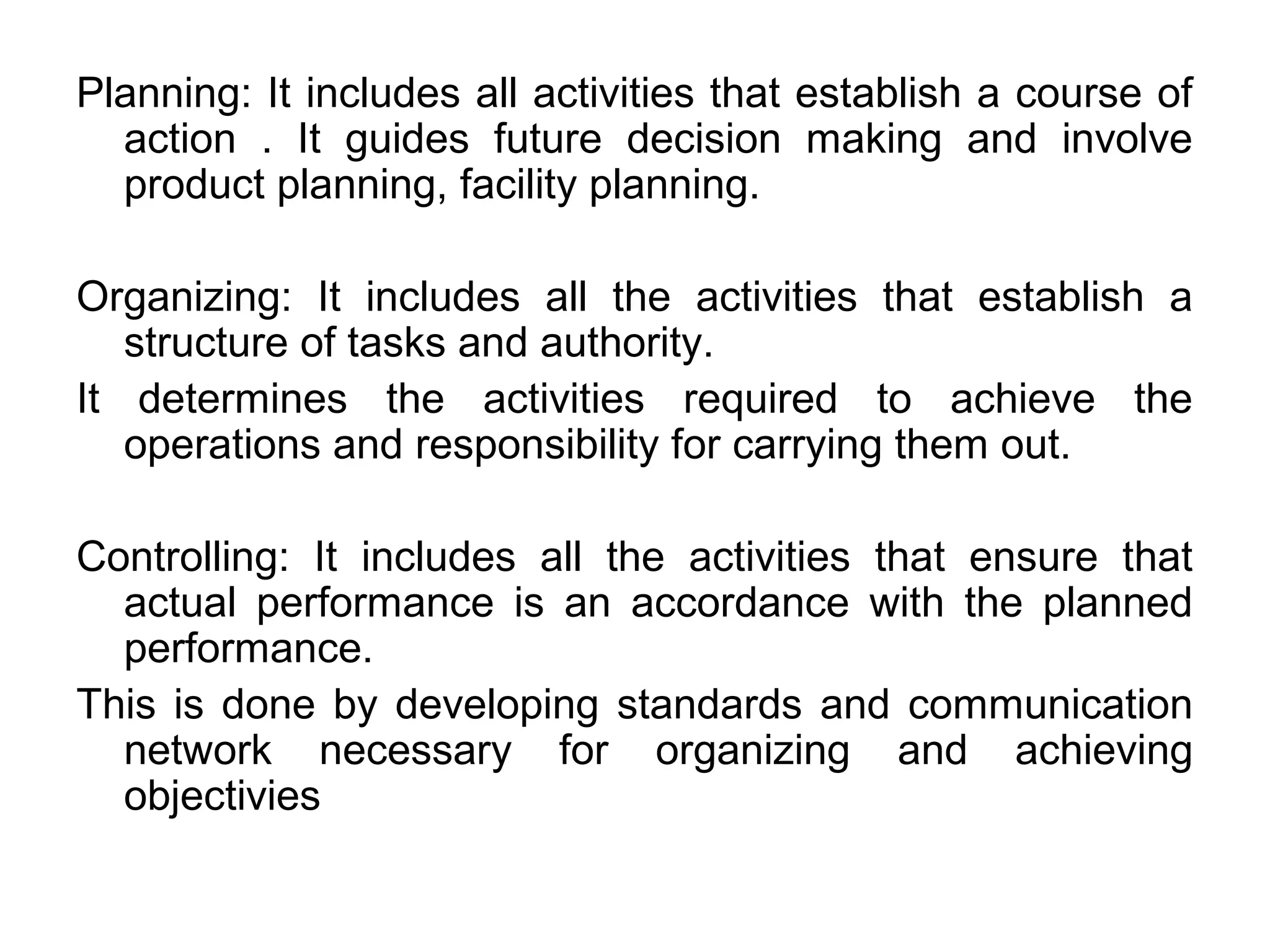
Planning: It includes all activities that establish a course of
action . It guides future decision making and involve
product planning, facility planning.
Organizing: It includes all the activities that establish a
structure of tasks and authority.
It determines the activities required to achieve the
operations and responsibility for carrying them out.
Controlling: It includes all the activities that ensure that
actual performance is an accordance with the planned
performance.
This is done by developing standards and communication
network necessary for organizing and achieving
objectivies
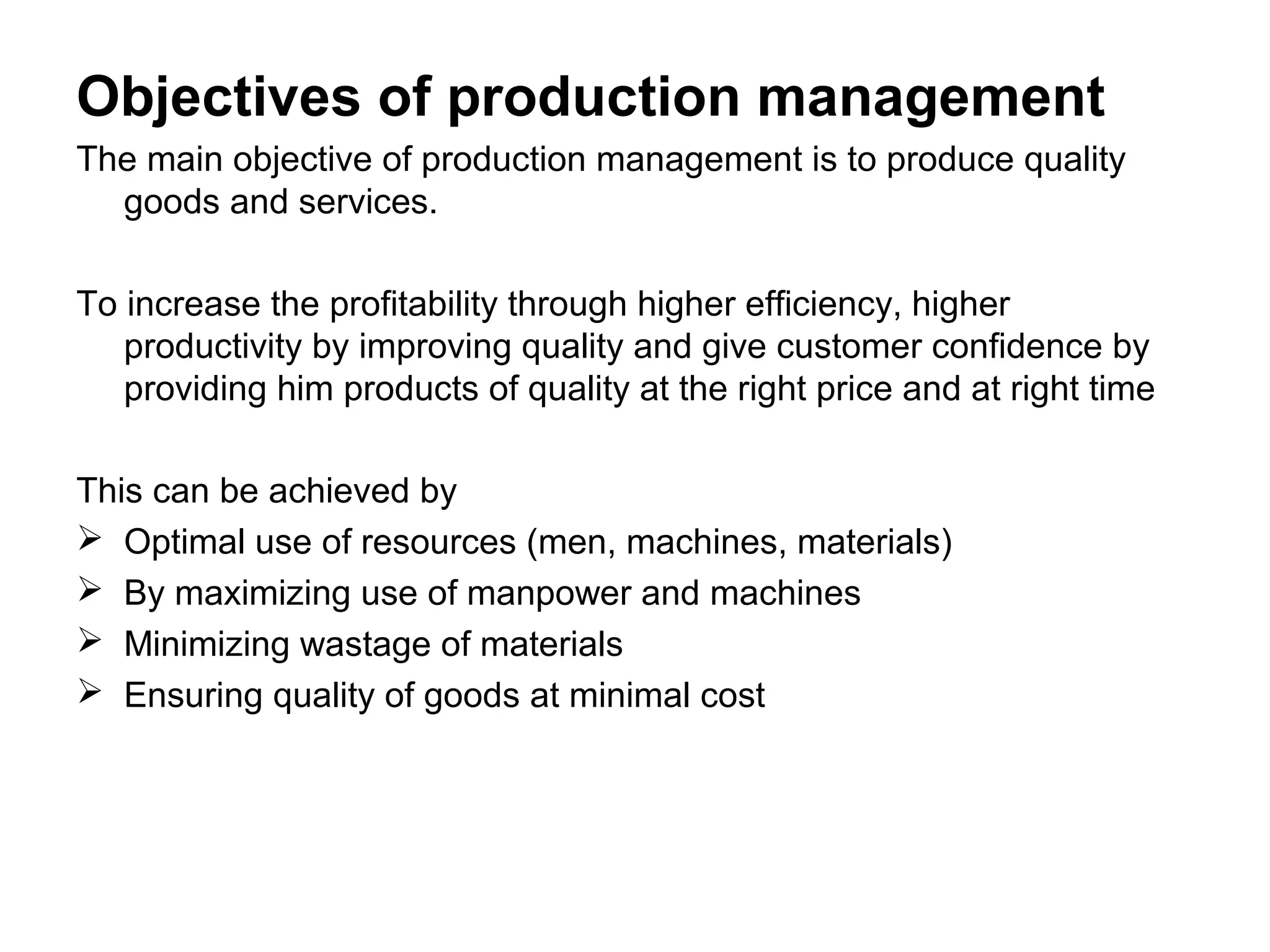
Objectives of production management
The main objective of production management is to produce quality
goods and services.
To increase the profitability through higher efficiency, higher
productivity by improving quality and give customer confidence by
providing him products of quality at the right price and at right time
This can be achieved by
 Optimal use of resources (men, machines, materials)
 By maximizing use of manpower and machines
 Minimizing wastage of materials
 Ensuring quality of goods at minimal cost
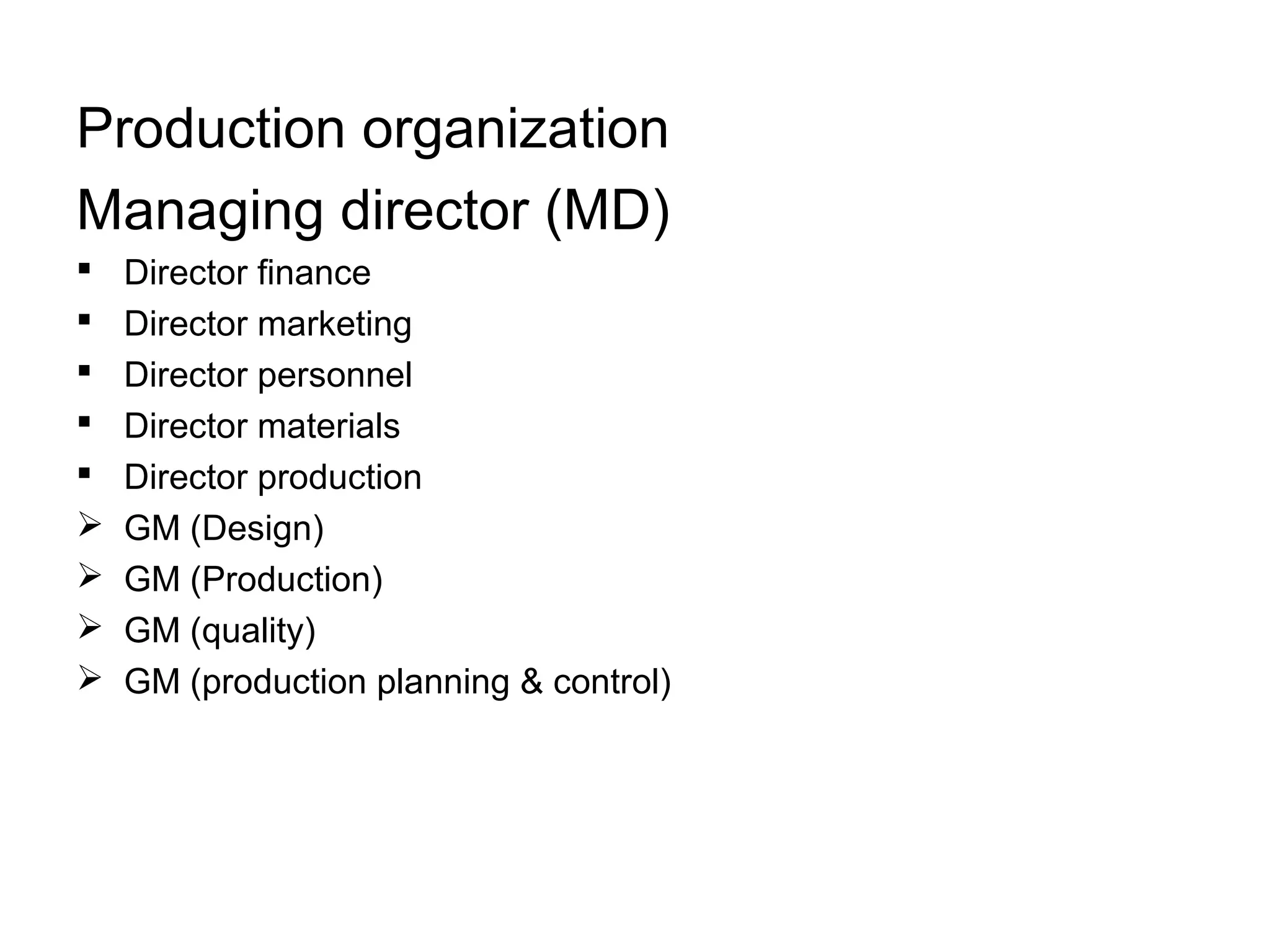
Production organization
Managing director (MD)










Director finance
Director marketing
Director personnel
Director materials
Director production
GM (Design)
GM (Production)
GM (quality)
GM (production planning & control)
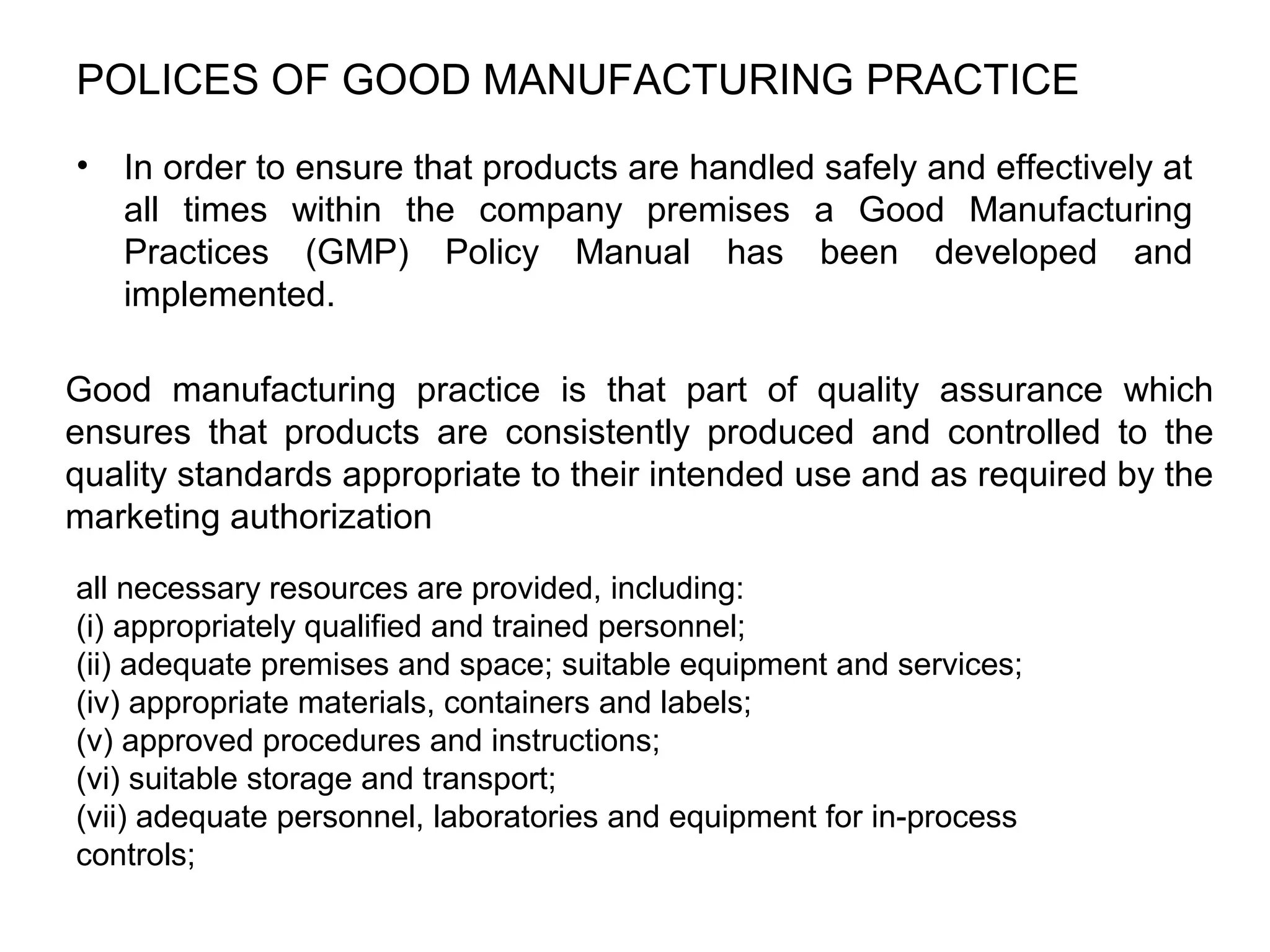
POLICES OF GOOD MANUFACTURING PRACTICE
•

In order to ensure that products are handled safely and effectively at
all times within the company premises a Good Manufacturing
Practices (GMP) Policy Manual has been developed and
implemented.

Good manufacturing practice is that part of quality assurance which
ensures that products are consistently produced and controlled to the
quality standards appropriate to their intended use and as required by the
marketing authorization
all necessary resources are provided, including:
(i) appropriately qualified and trained personnel;
(ii) adequate premises and space; suitable equipment and services;
(iv) appropriate materials, containers and labels;
(v) approved procedures and instructions;
(vi) suitable storage and transport;
(vii) adequate personnel, laboratories and equipment for in-process
controls;
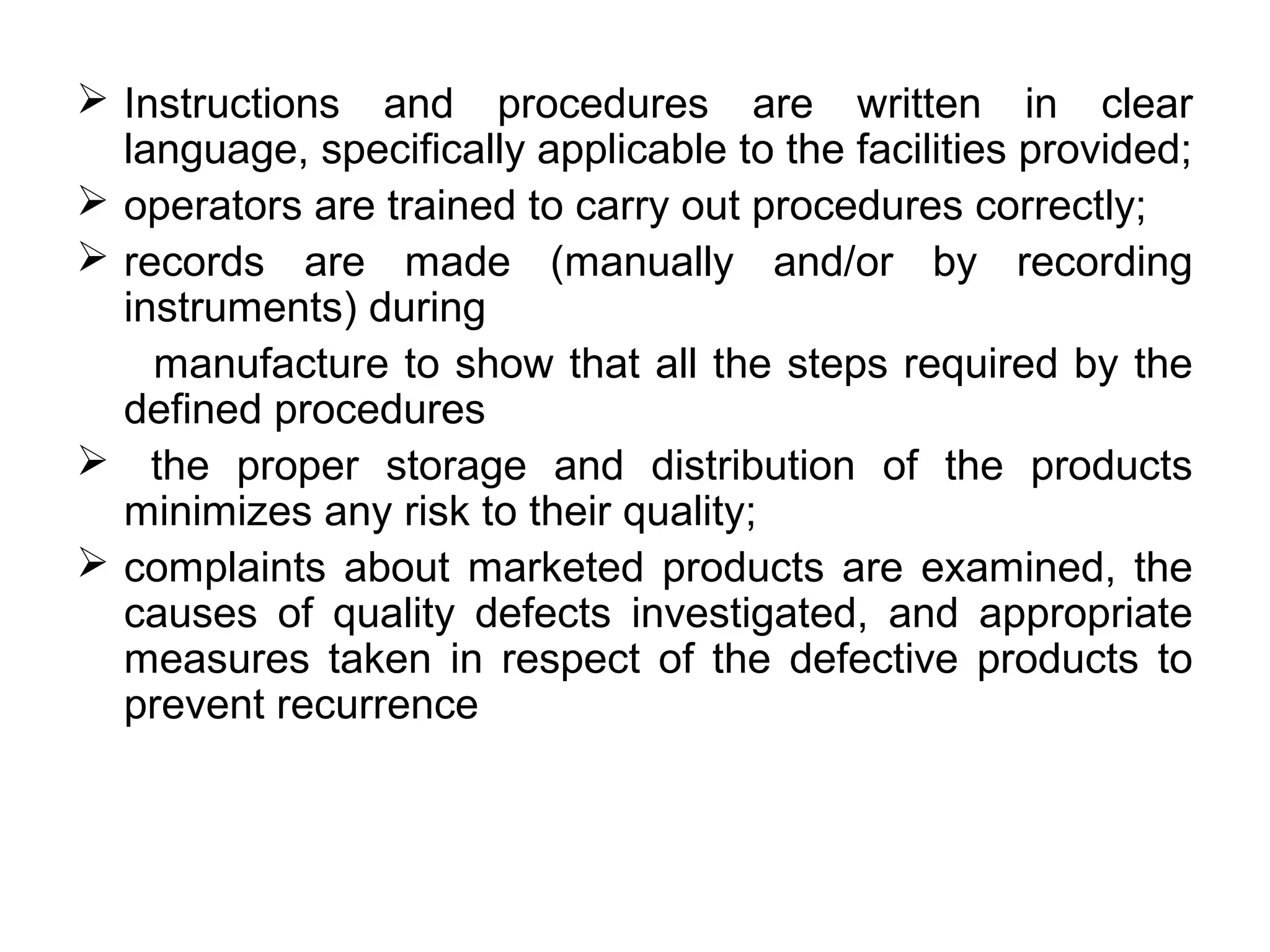
 Instructions and procedures are written in clear
language, specifically applicable to the facilities provided;
 operators are trained to carry out procedures correctly;
 records are made (manually and/or by recording
instruments) during
manufacture to show that all the steps required by the
defined procedures
 the proper storage and distribution of the products
minimizes any risk to their quality;
 complaints about marketed products are examined, the
causes of quality defects investigated, and appropriate
measures taken in respect of the defective products to
prevent recurrence
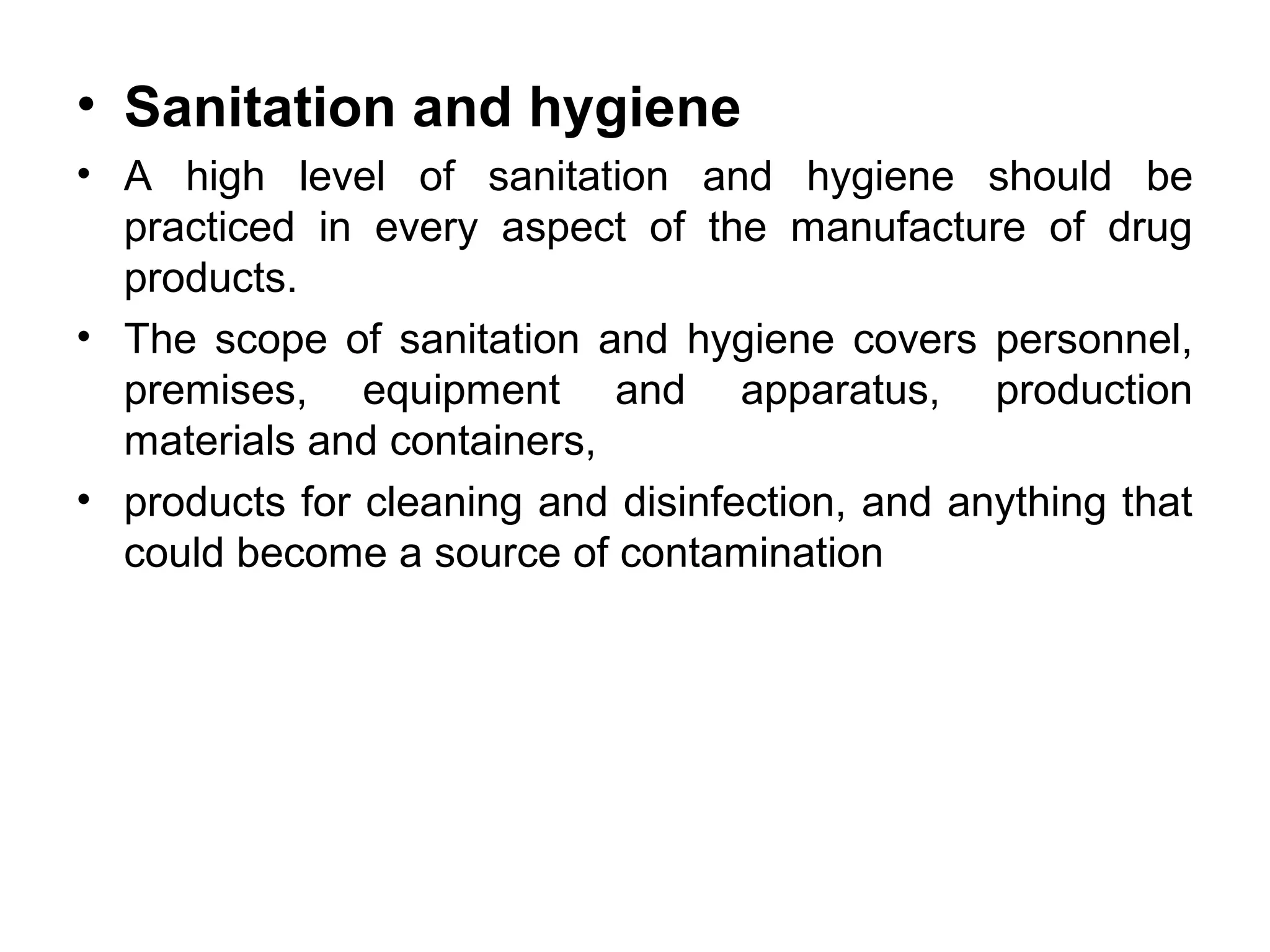
• Sanitation and hygiene
• A high level of sanitation and hygiene should be
practiced in every aspect of the manufacture of drug
products.
• The scope of sanitation and hygiene covers personnel,
premises, equipment and apparatus, production
materials and containers,
• products for cleaning and disinfection, and anything that
could become a source of contamination
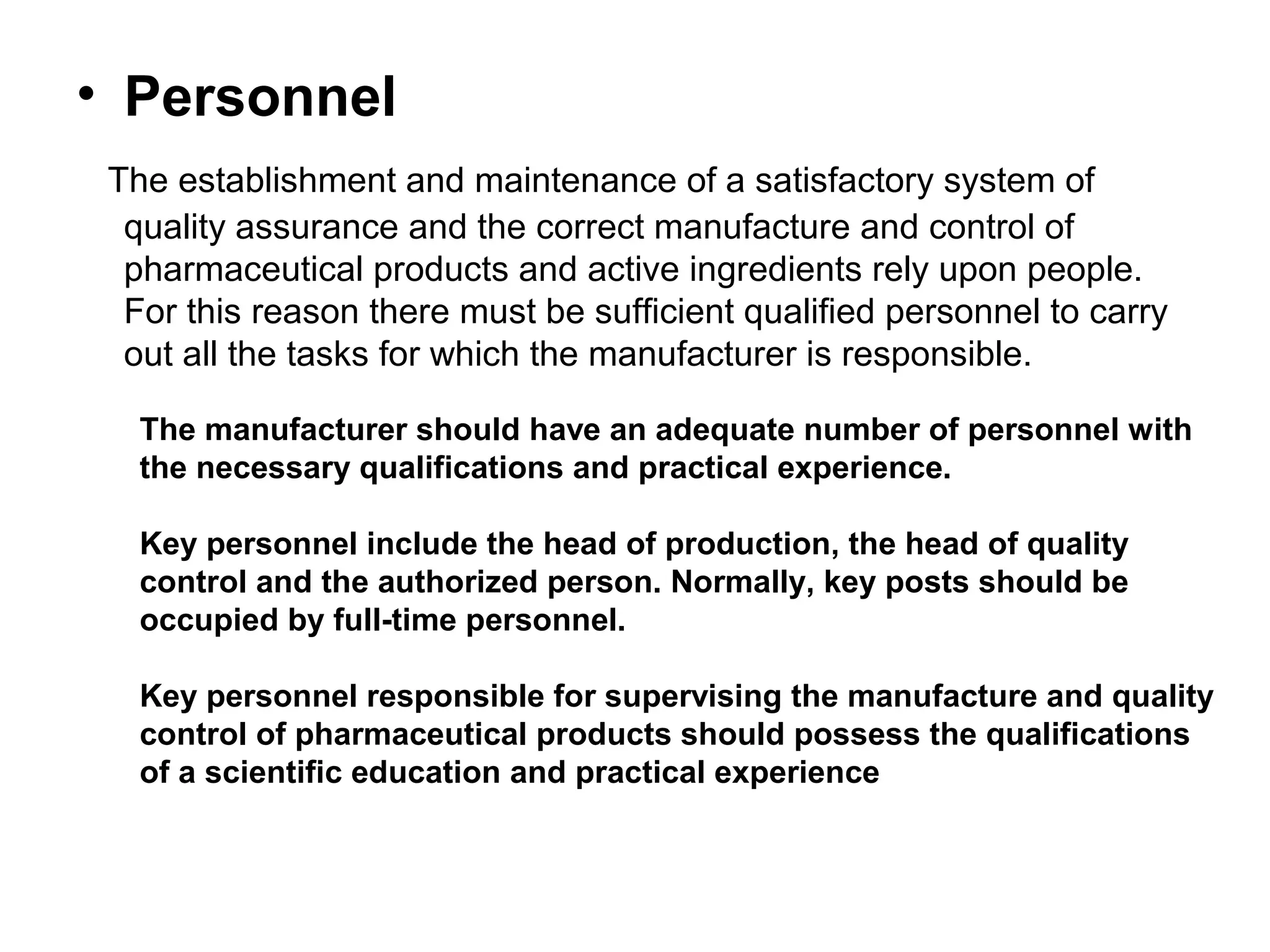
• Personnel
The establishment and maintenance of a satisfactory system of
quality assurance and the correct manufacture and control of
pharmaceutical products and active ingredients rely upon people.
For this reason there must be sufficient qualified personnel to carry
out all the tasks for which the manufacturer is responsible.
The manufacturer should have an adequate number of personnel with
the necessary qualifications and practical experience.
Key personnel include the head of production, the head of quality
control and the authorized person. Normally, key posts should be
occupied by full-time personnel.
Key personnel responsible for supervising the manufacture and quality
control of pharmaceutical products should possess the qualifications
of a scientific education and practical experience
• Premises
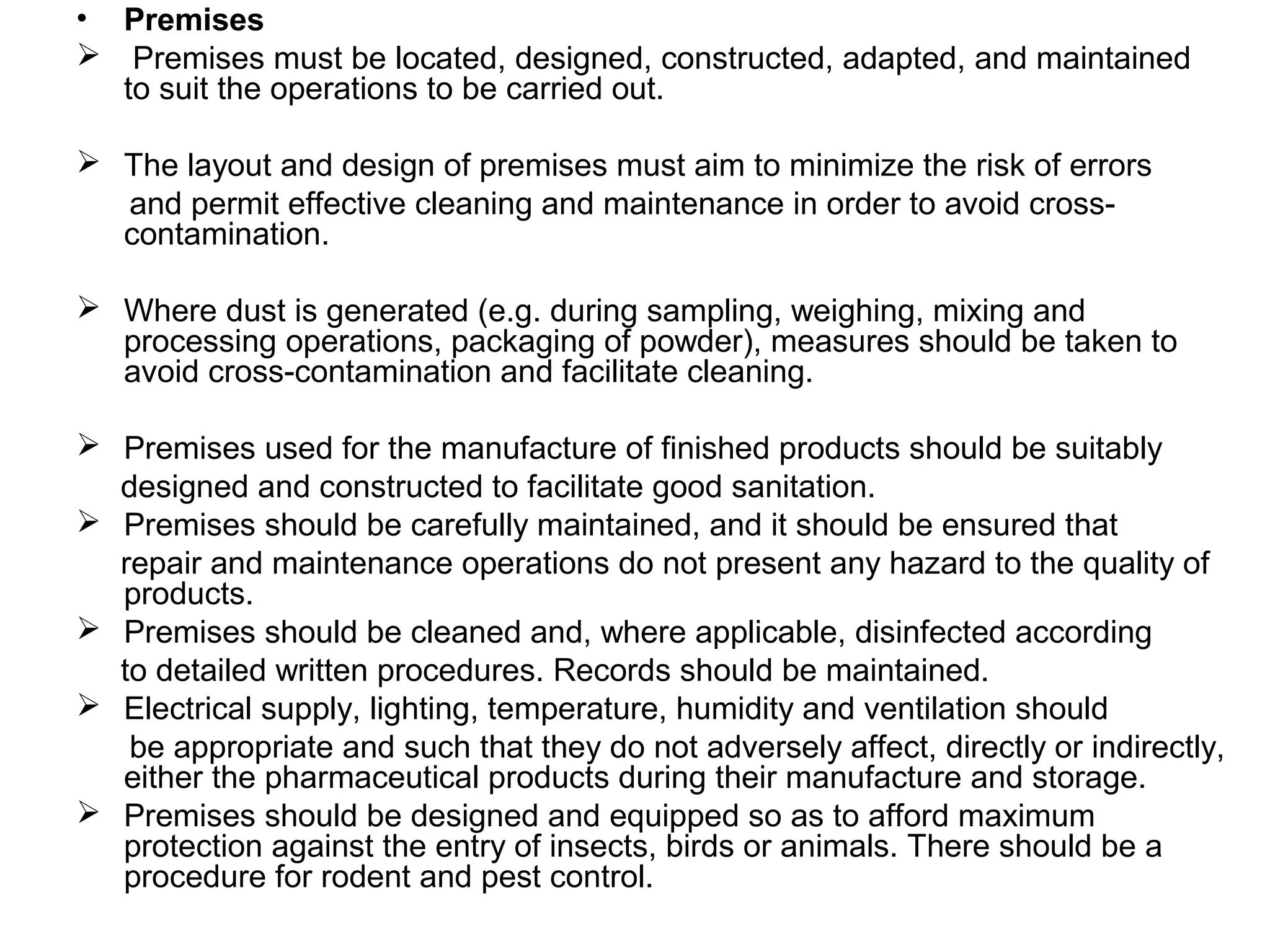
 Premises must be located, designed, constructed, adapted, and maintained
to suit the operations to be carried out.
 The layout and design of premises must aim to minimize the risk of errors
and permit effective cleaning and maintenance in order to avoid crosscontamination.
 Where dust is generated (e.g. during sampling, weighing, mixing and
processing operations, packaging of powder), measures should be taken to
avoid cross-contamination and facilitate cleaning.
 Premises used for the manufacture of finished products should be suitably
designed and constructed to facilitate good sanitation.
 Premises should be carefully maintained, and it should be ensured that
repair and maintenance operations do not present any hazard to the quality of
products.
 Premises should be cleaned and, where applicable, disinfected according
to detailed written procedures. Records should be maintained.
 Electrical supply, lighting, temperature, humidity and ventilation should
be appropriate and such that they do not adversely affect, directly or indirectly,
either the pharmaceutical products during their manufacture and storage.
 Premises should be designed and equipped so as to afford maximum
protection against the entry of insects, birds or animals. There should be a
procedure for rodent and pest control.
• Premises
 Premises must be located, designed, constructed, adapted, and maintained
to suit the operations to be carried out.
 The layout and design of premises must aim to minimize the risk of errors
and permit effective cleaning and maintenance in order to avoid crosscontamination.
 Where dust is generated (e.g. during sampling, weighing, mixing and
processing operations, packaging of powder), measures should be taken to
avoid cross-contamination and facilitate cleaning.
 Premises used for the manufacture of finished products should be suitably
designed and constructed to facilitate good sanitation.
 Premises should be carefully maintained, and it should be ensured that
repair and maintenance operations do not present any hazard to the quality of
products.
 Premises should be cleaned and, where applicable, disinfected according
to detailed written procedures. Records should be maintained.
 Electrical supply, lighting, temperature, humidity and ventilation should
be appropriate and such that they do not adversely affect, directly or indirectly,
either the pharmaceutical products during their manufacture and storage.
 Premises should be designed and equipped so as to afford maximum
protection against the entry of insects, birds or animals. There should be a
procedure for rodent and pest control.

Production organization ,objectives impppppp

  • 1.
    PRODUCTION MANAGEMENT Production maybe defined as the conversion of inputs in to out put through a transformation process. : Input men, machines, materials, money, methods Output: goods produced – for manufacturing concern or service rendered – for the service operation units such as banks, hospitals Production management is viewed as a continuous process of planning, organization and controlling
  • 2.
    Planning: It includesall activities that establish a course of action . It guides future decision making and involve product planning, facility planning. Organizing: It includes all the activities that establish a structure of tasks and authority. It determines the activities required to achieve the operations and responsibility for carrying them out. Controlling: It includes all the activities that ensure that actual performance is an accordance with the planned performance. This is done by developing standards and communication network necessary for organizing and achieving objectivies
  • 3.
    Objectives of productionmanagement The main objective of production management is to produce quality goods and services. To increase the profitability through higher efficiency, higher productivity by improving quality and give customer confidence by providing him products of quality at the right price and at right time This can be achieved by  Optimal use of resources (men, machines, materials)  By maximizing use of manpower and machines  Minimizing wastage of materials  Ensuring quality of goods at minimal cost
  • 4.
    Production organization Managing director(MD)          Director finance Director marketing Director personnel Director materials Director production GM (Design) GM (Production) GM (quality) GM (production planning & control)
  • 5.
    POLICES OF GOODMANUFACTURING PRACTICE • In order to ensure that products are handled safely and effectively at all times within the company premises a Good Manufacturing Practices (GMP) Policy Manual has been developed and implemented. Good manufacturing practice is that part of quality assurance which ensures that products are consistently produced and controlled to the quality standards appropriate to their intended use and as required by the marketing authorization all necessary resources are provided, including: (i) appropriately qualified and trained personnel; (ii) adequate premises and space; suitable equipment and services; (iv) appropriate materials, containers and labels; (v) approved procedures and instructions; (vi) suitable storage and transport; (vii) adequate personnel, laboratories and equipment for in-process controls;
  • 6.
     Instructions andprocedures are written in clear language, specifically applicable to the facilities provided;  operators are trained to carry out procedures correctly;  records are made (manually and/or by recording instruments) during manufacture to show that all the steps required by the defined procedures  the proper storage and distribution of the products minimizes any risk to their quality;  complaints about marketed products are examined, the causes of quality defects investigated, and appropriate measures taken in respect of the defective products to prevent recurrence
  • 7.
    • Sanitation andhygiene • A high level of sanitation and hygiene should be practiced in every aspect of the manufacture of drug products. • The scope of sanitation and hygiene covers personnel, premises, equipment and apparatus, production materials and containers, • products for cleaning and disinfection, and anything that could become a source of contamination
  • 8.
    • Personnel The establishmentand maintenance of a satisfactory system of quality assurance and the correct manufacture and control of pharmaceutical products and active ingredients rely upon people. For this reason there must be sufficient qualified personnel to carry out all the tasks for which the manufacturer is responsible. The manufacturer should have an adequate number of personnel with the necessary qualifications and practical experience. Key personnel include the head of production, the head of quality control and the authorized person. Normally, key posts should be occupied by full-time personnel. Key personnel responsible for supervising the manufacture and quality control of pharmaceutical products should possess the qualifications of a scientific education and practical experience
  • 9.
    • Premises  Premisesmust be located, designed, constructed, adapted, and maintained to suit the operations to be carried out.  The layout and design of premises must aim to minimize the risk of errors and permit effective cleaning and maintenance in order to avoid crosscontamination.  Where dust is generated (e.g. during sampling, weighing, mixing and processing operations, packaging of powder), measures should be taken to avoid cross-contamination and facilitate cleaning.  Premises used for the manufacture of finished products should be suitably designed and constructed to facilitate good sanitation.  Premises should be carefully maintained, and it should be ensured that repair and maintenance operations do not present any hazard to the quality of products.  Premises should be cleaned and, where applicable, disinfected according to detailed written procedures. Records should be maintained.  Electrical supply, lighting, temperature, humidity and ventilation should be appropriate and such that they do not adversely affect, directly or indirectly, either the pharmaceutical products during their manufacture and storage.  Premises should be designed and equipped so as to afford maximum protection against the entry of insects, birds or animals. There should be a procedure for rodent and pest control.
  • 10.
    • Premises  Premisesmust be located, designed, constructed, adapted, and maintained to suit the operations to be carried out.  The layout and design of premises must aim to minimize the risk of errors and permit effective cleaning and maintenance in order to avoid crosscontamination.  Where dust is generated (e.g. during sampling, weighing, mixing and processing operations, packaging of powder), measures should be taken to avoid cross-contamination and facilitate cleaning.  Premises used for the manufacture of finished products should be suitably designed and constructed to facilitate good sanitation.  Premises should be carefully maintained, and it should be ensured that repair and maintenance operations do not present any hazard to the quality of products.  Premises should be cleaned and, where applicable, disinfected according to detailed written procedures. Records should be maintained.  Electrical supply, lighting, temperature, humidity and ventilation should be appropriate and such that they do not adversely affect, directly or indirectly, either the pharmaceutical products during their manufacture and storage.  Premises should be designed and equipped so as to afford maximum protection against the entry of insects, birds or animals. There should be a procedure for rodent and pest control.

Editor's Notes