Product Life Cycle


                   Ashwin
                      Joshi
                  M.Tech.
                CAD / CAM
Two terms….

1.Product.
2.Life cycle.

What is Product ?
1.Product
   It is object .
   Any thing which you see around .
     eg. Mobile,laptop,shoes,sunglasses, …..


Next….
Life Cycle
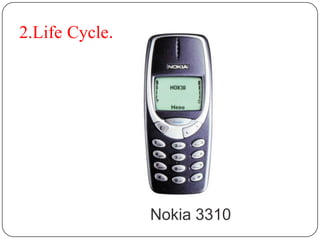
2.Life Cycle.


                Nokia 3310
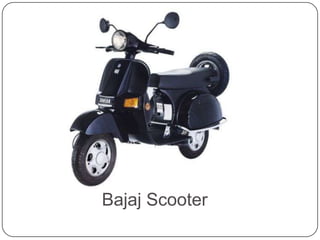
Bajaj Scooter
The life cycle refers to the period
from the product’s first launch into
the market until its final
withdrawal.

Different products have different types
of life cycles.

It is split up in phases.
Phases
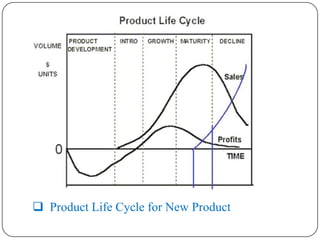
The product’s life cycle - period usually consists
of five major phases :

  1.    Product development.
  2.    Introduction.
  3.    Growth.
  4.    Maturity.
  5.    Decline.
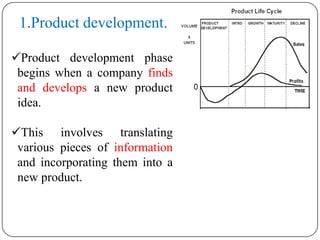
Product Life Cycle Graph
1.Product development.

Product development phase
 begins when a company finds
 and develops a new product
 idea.

This involves translating
 various pieces of information
 and incorporating them into a
 new product.
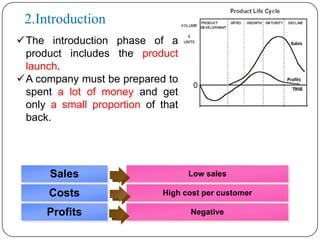
2.Introduction
The introduction phase of a
 product includes the product
 launch.
A company must be prepared to
 spent a lot of money and get
 only a small proportion of that
 back.


      Sales                        Low sales

      Costs                 High cost per customer

     Profits                       Negative
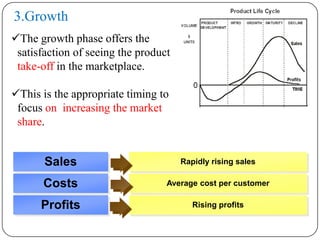
3.Growth
The growth phase offers the
 satisfaction of seeing the product
 take-off in the marketplace.

This is the appropriate timing to
 focus on increasing the market
 share.


       Sales                          Rapidly rising sales

       Costs                      Average cost per customer

      Profits                            Rising profits
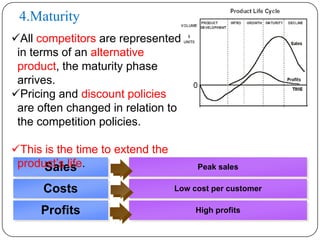
4.Maturity
All competitors are represented
 in terms of an alternative
 product, the maturity phase
 arrives.
Pricing and discount policies
 are often changed in relation to
 the competition policies.

This is the time to extend the
 product’s life.
      Sales                            Peak sales

      Costs                       Low cost per customer

     Profits                           High profits
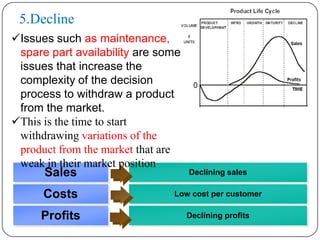
5.Decline
Issues such as maintenance,
 spare part availability are some
 issues that increase the
 complexity of the decision
 process to withdraw a product
 from the market.
This is the time to start
 withdrawing variations of the
 product from the market that are
 weak in their market position
      Sales                         Declining sales

      Costs                    Low cost per customer

     Profits                        Declining profits
 Product Life Cycle for New Product
THE END

Product Life Cycle

  • 1.
    Product Life Cycle Ashwin Joshi M.Tech. CAD / CAM
  • 2.
  • 3.
    1.Product It is object .  Any thing which you see around . eg. Mobile,laptop,shoes,sunglasses, ….. Next…. Life Cycle
  • 4.
    2.Life Cycle. Nokia 3310
  • 5.
  • 6.
    The life cyclerefers to the period from the product’s first launch into the market until its final withdrawal. Different products have different types of life cycles. It is split up in phases.
  • 7.
    Phases The product’s lifecycle - period usually consists of five major phases : 1. Product development. 2. Introduction. 3. Growth. 4. Maturity. 5. Decline.
  • 8.
  • 9.
    1.Product development. Product developmentphase begins when a company finds and develops a new product idea. This involves translating various pieces of information and incorporating them into a new product.
  • 10.
    2.Introduction The introduction phaseof a product includes the product launch. A company must be prepared to spent a lot of money and get only a small proportion of that back. Sales Low sales Costs High cost per customer Profits Negative
  • 11.
    3.Growth The growth phaseoffers the satisfaction of seeing the product take-off in the marketplace. This is the appropriate timing to focus on increasing the market share. Sales Rapidly rising sales Costs Average cost per customer Profits Rising profits
  • 12.
    4.Maturity All competitors arerepresented in terms of an alternative product, the maturity phase arrives. Pricing and discount policies are often changed in relation to the competition policies. This is the time to extend the product’s life. Sales Peak sales Costs Low cost per customer Profits High profits
  • 13.
    5.Decline Issues such asmaintenance, spare part availability are some issues that increase the complexity of the decision process to withdraw a product from the market. This is the time to start withdrawing variations of the product from the market that are weak in their market position Sales Declining sales Costs Low cost per customer Profits Declining profits
  • 14.
     Product LifeCycle for New Product
  • 15.