

By:
Afifah Nabilah Mohd
Safei
Nor Anira Binti
 Sequence of continuous or repetitive
operations or processes.
 Determine the cost per unit of product where
identical product is produced for all
customers.
 It is not possible to readily identify specific
quantities of input with each unit of output.
 Outputs produced are homogenous.
 Production process is carried on in different stages having a
continuous flow.
 Output is uniform and all units are identical
 Input will pass through 2 or more processes.
 Output of each process becomes input for the next process
until the final product is obtained.
 The output of each process may be saleable to generate some
profits.
 The input of a process may be acquire from outside sources.
 Same basic purpose: to calculate unit cost.
 Same manufacturing account.
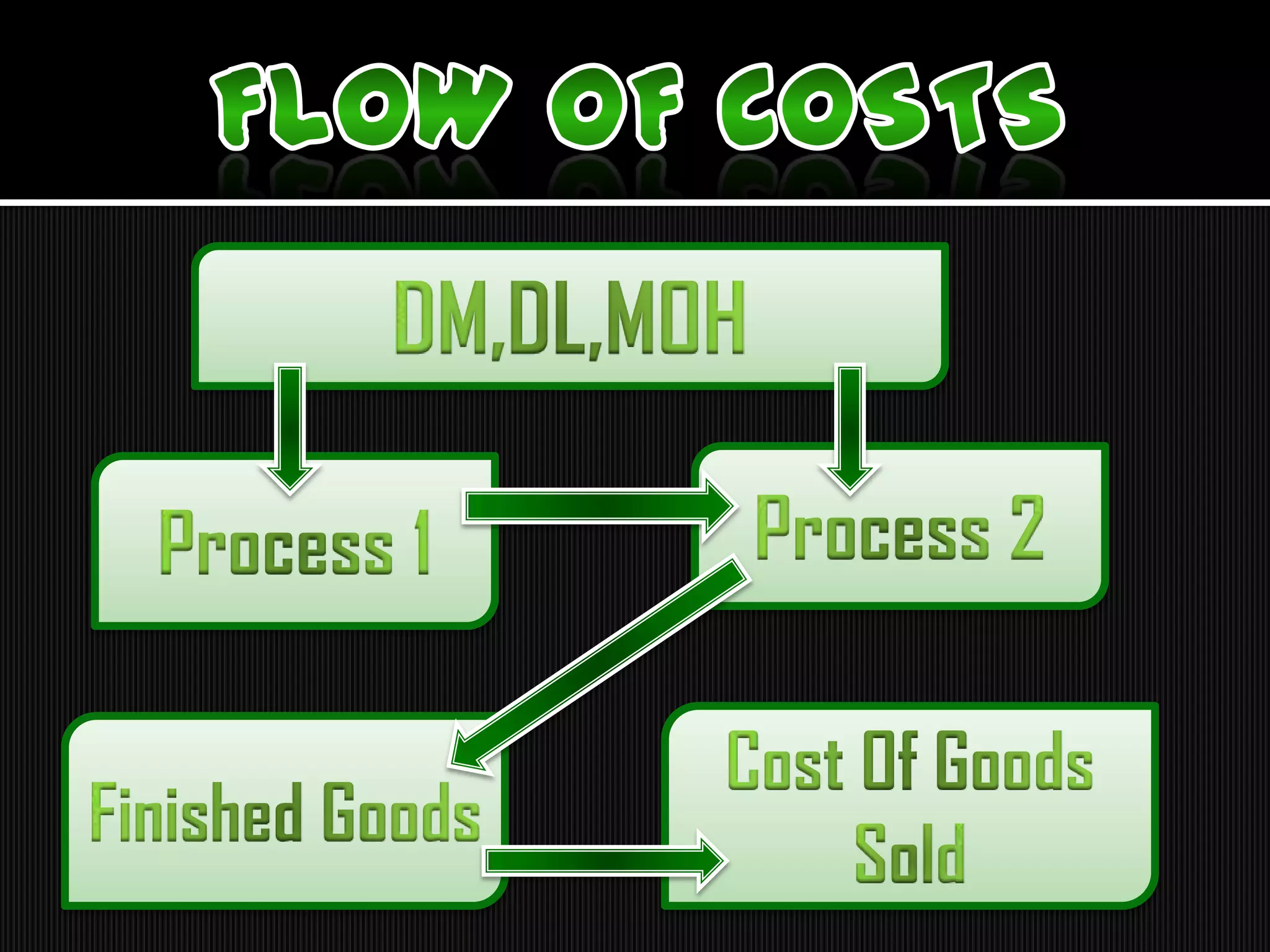
 The flow of costs through manufacturing
account is basically the same.
Similari
ties:
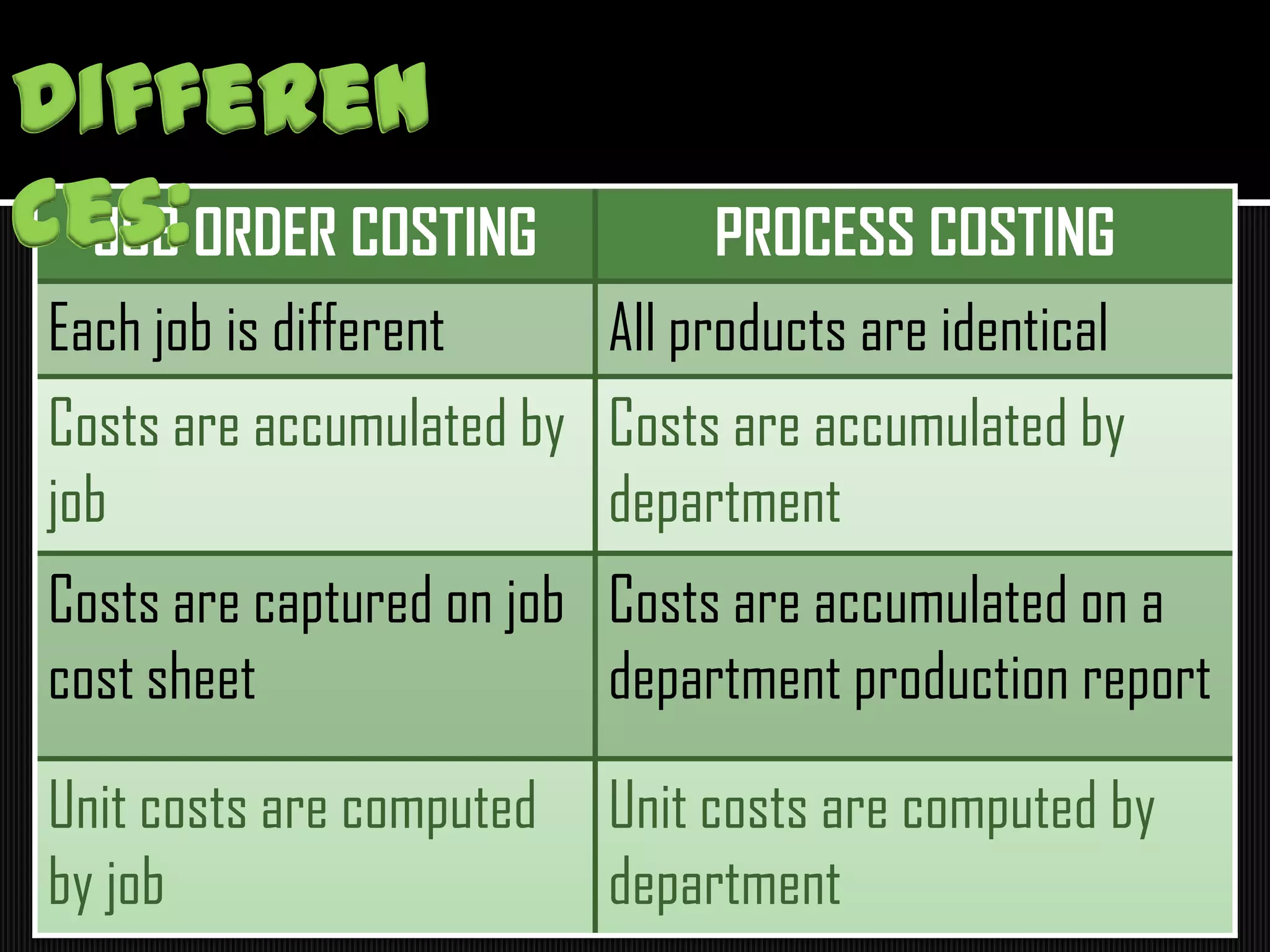
JOB ORDER COSTING PROCESS COSTING
Each job is different All products are identical
Costs are accumulated by
job
Costs are accumulated by
department
Costs are captured on job
cost sheet
Costs are accumulated on a
department production report
Unit costs are computed
by job
Unit costs are computed by
department
Differen
ces:
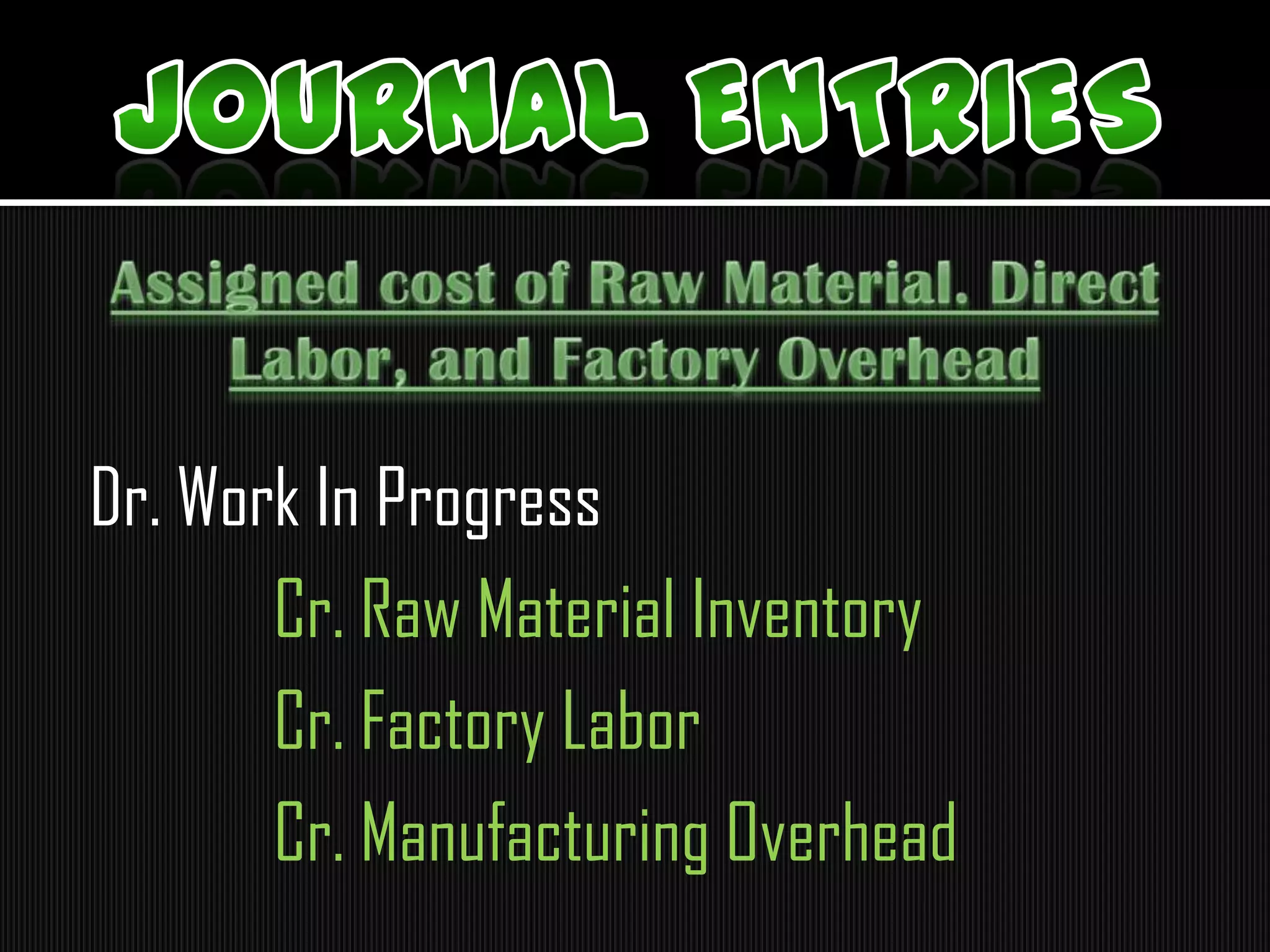
Dr. Work In Progress
Cr. Raw Material Inventory
Cr. Factory Labor
Cr. Manufacturing Overhead
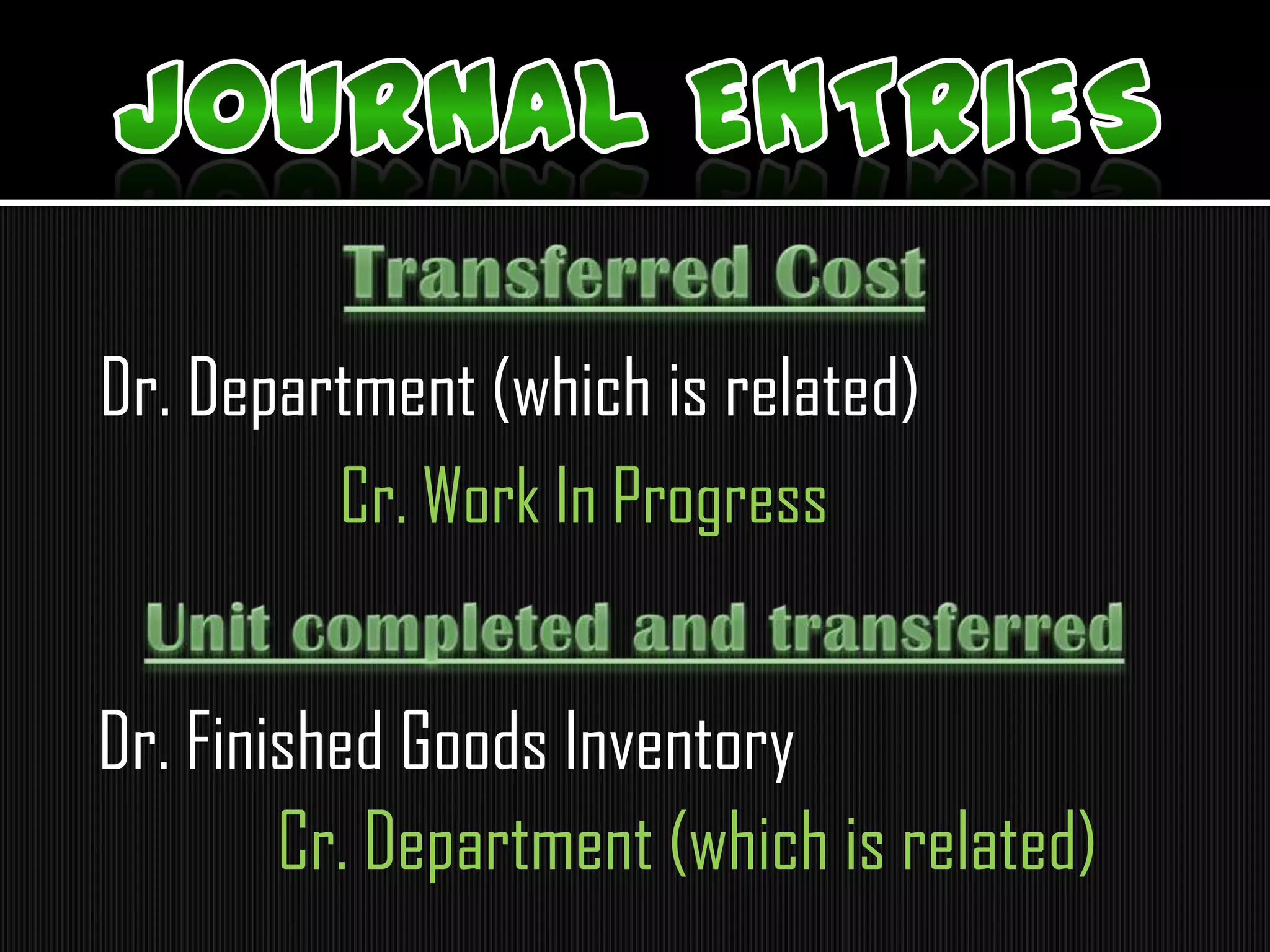
Dr. Department (which is related)
Cr. Work In Progress
Dr. Finished Goods Inventory
Cr. Department (which is related)
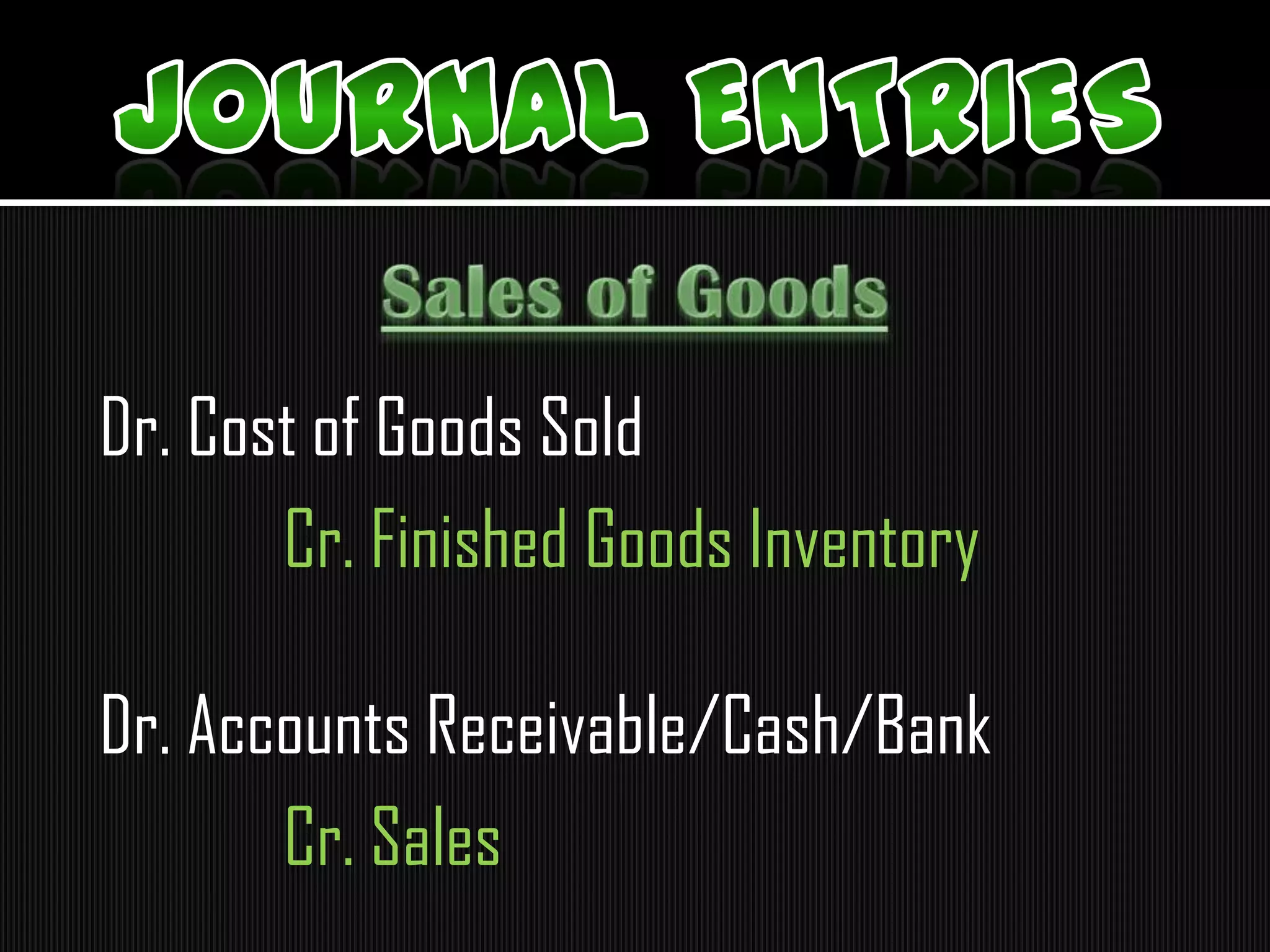
Dr. Cost of Goods Sold
Cr. Finished Goods Inventory
Dr. Accounts Receivable/Cash/Bank
Cr. Sales
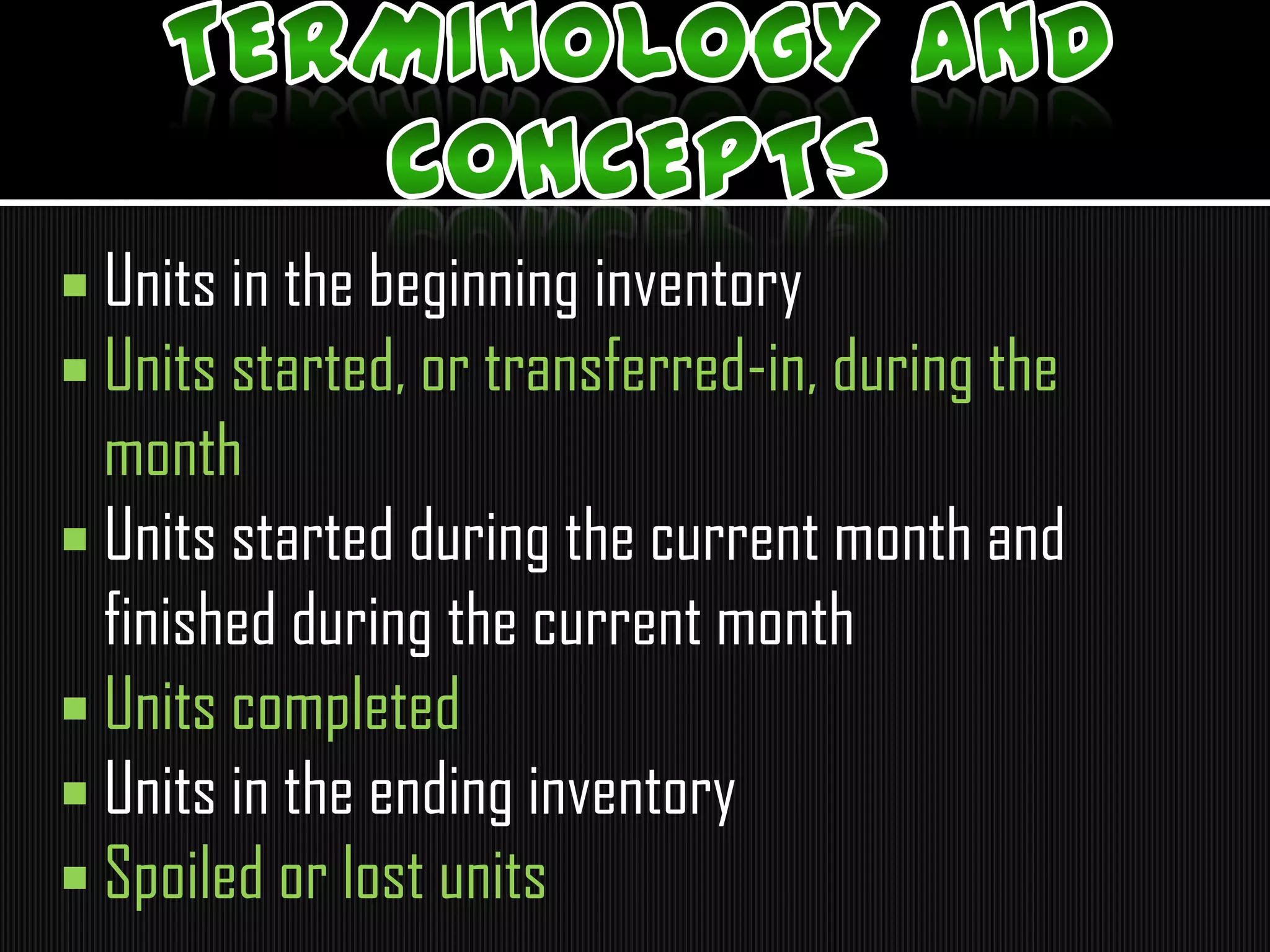
 Units in the beginning inventory
 Units started, or transferred-in, during the
month
 Units started during the current month and
finished during the current month
 Units completed
 Units in the ending inventory
 Spoiled or lost units
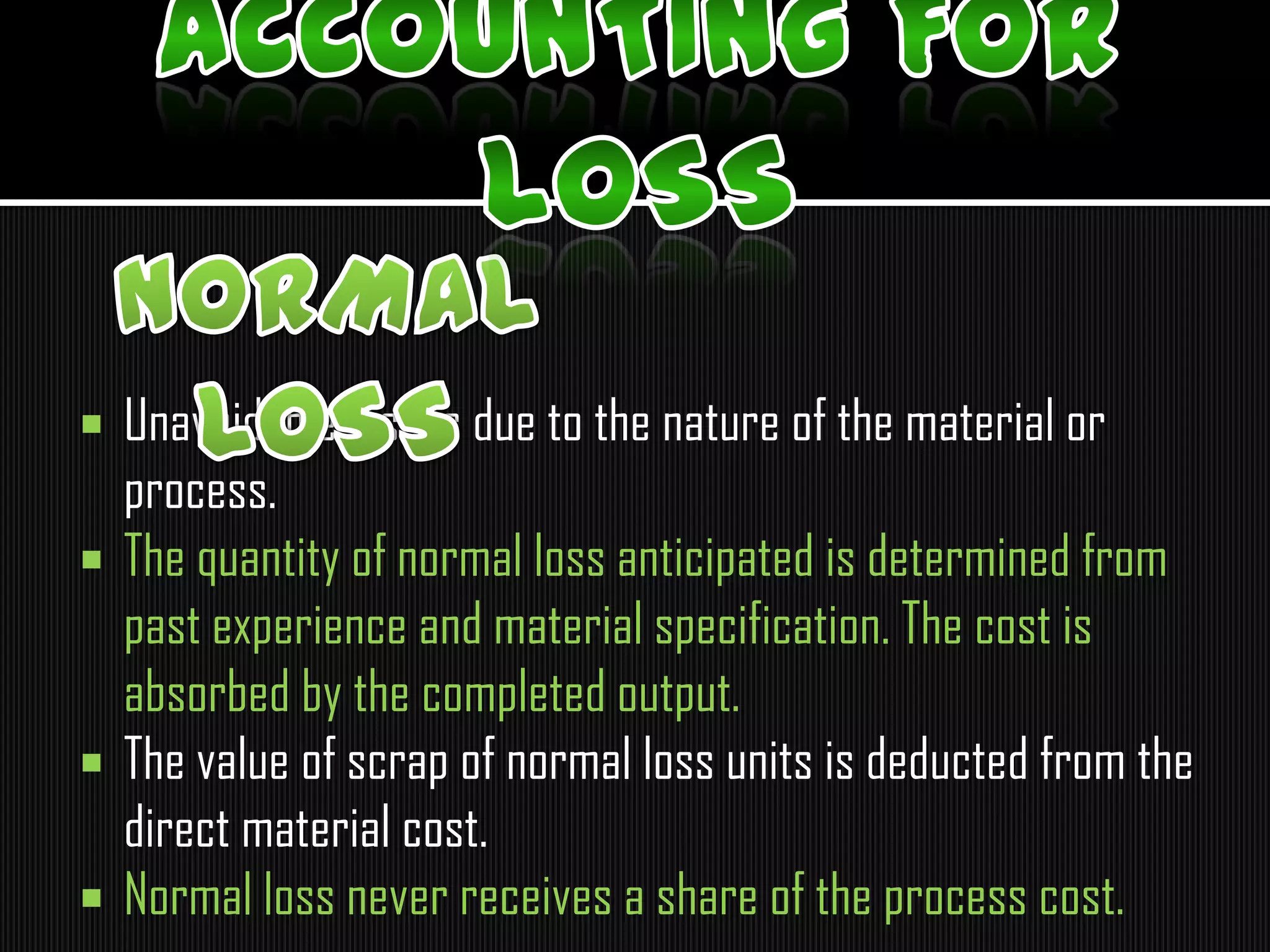
 Unavoidable losses due to the nature of the material or
process.
 The quantity of normal loss anticipated is determined from
past experience and material specification. The cost is
absorbed by the completed output.
 The value of scrap of normal loss units is deducted from the
direct material cost.
 Normal loss never receives a share of the process cost.
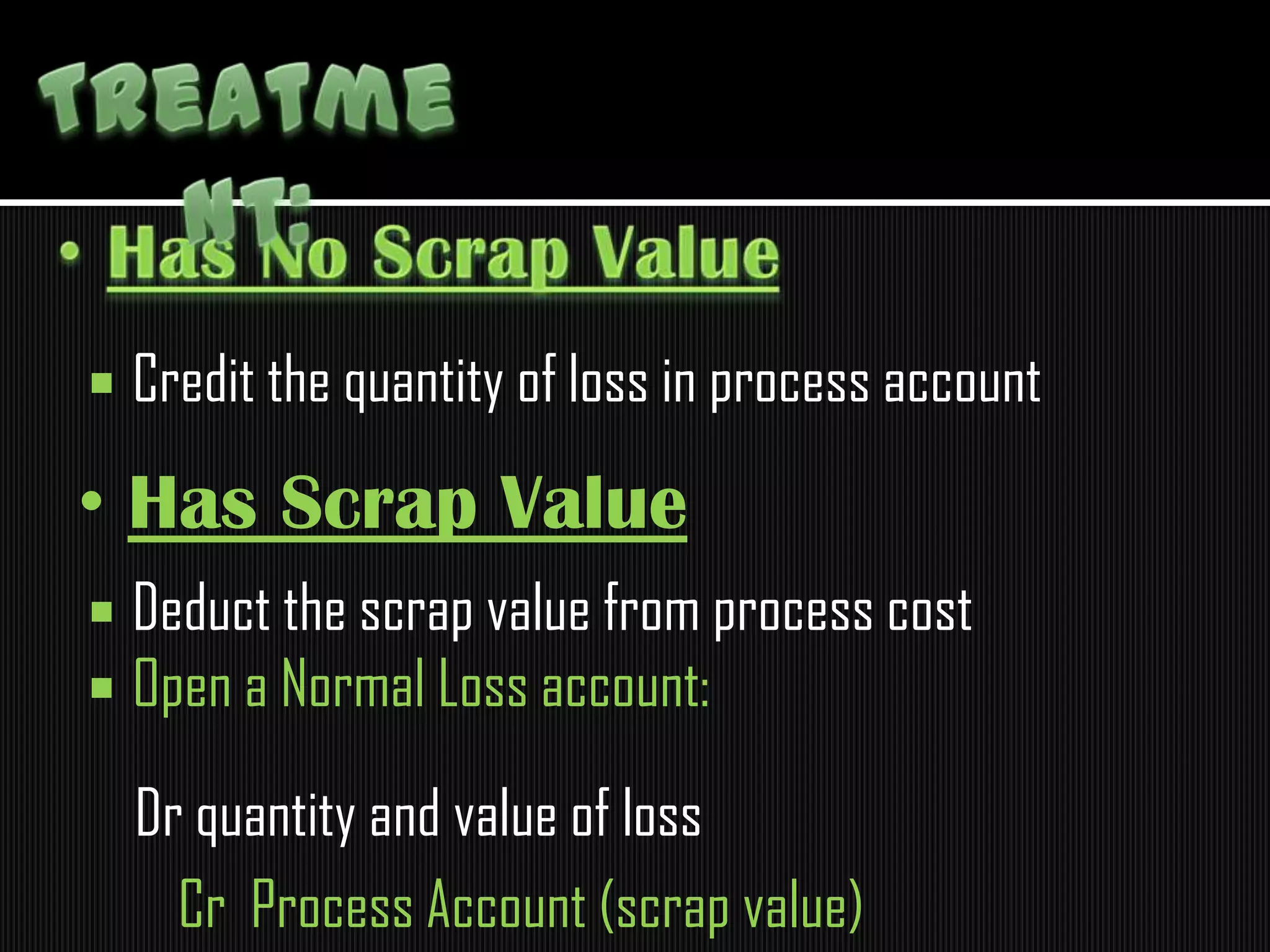
 Credit the quantity of loss in process account
 Deduct the scrap value from process cost
 Open a Normal Loss account:
Dr quantity and value of loss
Cr Process Account (scrap value)
• Has Scrap Value
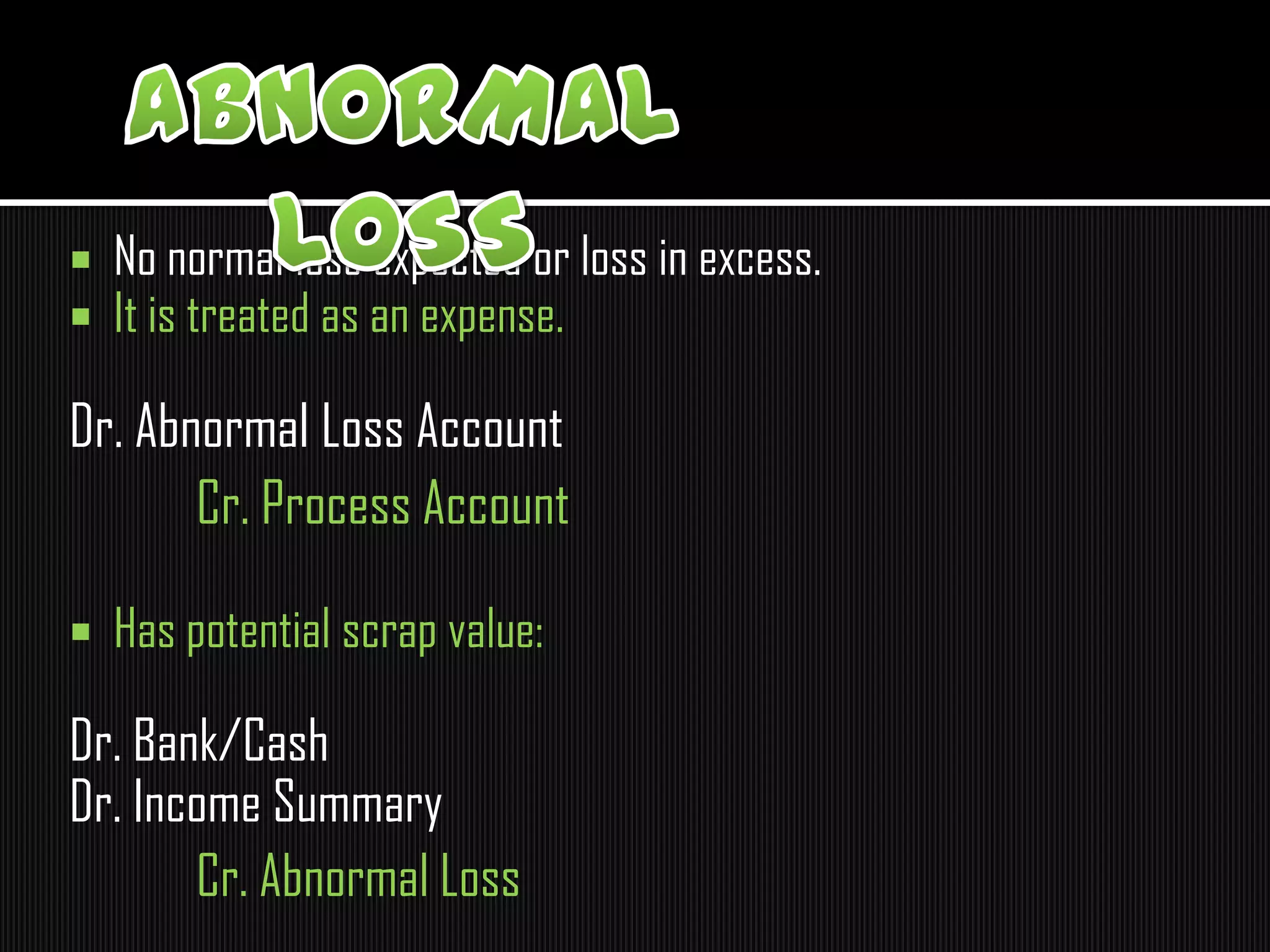
 No normal loss expected or loss in excess.
 It is treated as an expense.
Dr. Abnormal Loss Account
Cr. Process Account
 Has potential scrap value:
Dr. Bank/Cash
Dr. Income Summary
Cr. Abnormal Loss
 Actual loss is less than the expected loss.
 Debited to process account and valued
exactly as the same cost per unit of output
transferred.
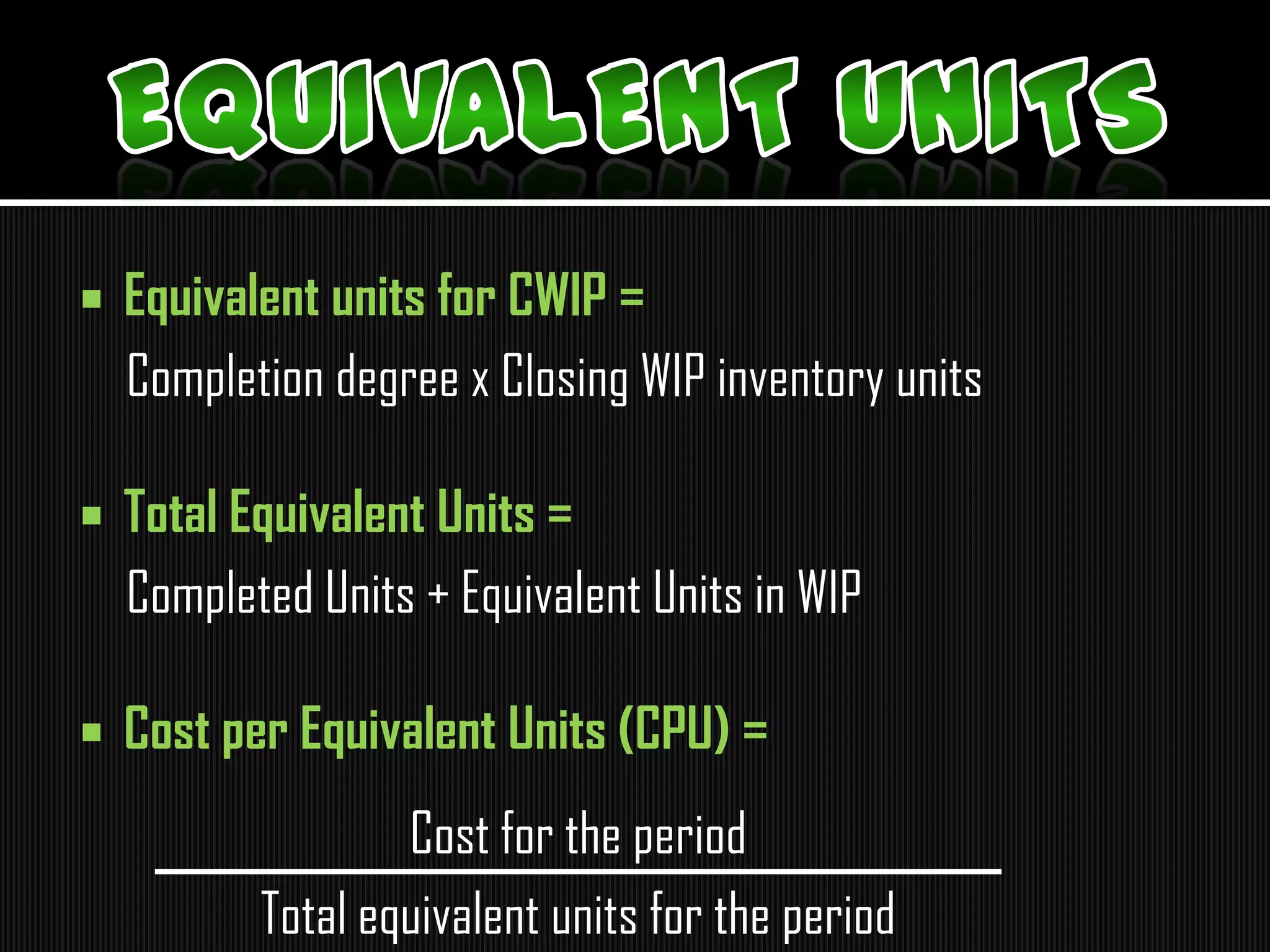
 Equivalent units for CWIP =
Completion degree x Closing WIP inventory units
 Total Equivalent Units =
Completed Units + Equivalent Units in WIP
 Cost per Equivalent Units (CPU) =
Cost for the period
Total equivalent units for the period
Process costing

Process costing

  • 1.
  • 2.
     Sequence ofcontinuous or repetitive operations or processes.  Determine the cost per unit of product where identical product is produced for all customers.  It is not possible to readily identify specific quantities of input with each unit of output.
  • 3.
     Outputs producedare homogenous.  Production process is carried on in different stages having a continuous flow.  Output is uniform and all units are identical  Input will pass through 2 or more processes.  Output of each process becomes input for the next process until the final product is obtained.  The output of each process may be saleable to generate some profits.  The input of a process may be acquire from outside sources.
  • 4.
     Same basicpurpose: to calculate unit cost.  Same manufacturing account.  The flow of costs through manufacturing account is basically the same. Similari ties:
  • 5.
    JOB ORDER COSTINGPROCESS COSTING Each job is different All products are identical Costs are accumulated by job Costs are accumulated by department Costs are captured on job cost sheet Costs are accumulated on a department production report Unit costs are computed by job Unit costs are computed by department Differen ces:
  • 7.
    Dr. Work InProgress Cr. Raw Material Inventory Cr. Factory Labor Cr. Manufacturing Overhead
  • 8.
    Dr. Department (whichis related) Cr. Work In Progress Dr. Finished Goods Inventory Cr. Department (which is related)
  • 9.
    Dr. Cost ofGoods Sold Cr. Finished Goods Inventory Dr. Accounts Receivable/Cash/Bank Cr. Sales
  • 10.
     Units inthe beginning inventory  Units started, or transferred-in, during the month  Units started during the current month and finished during the current month  Units completed  Units in the ending inventory  Spoiled or lost units
  • 11.
     Unavoidable lossesdue to the nature of the material or process.  The quantity of normal loss anticipated is determined from past experience and material specification. The cost is absorbed by the completed output.  The value of scrap of normal loss units is deducted from the direct material cost.  Normal loss never receives a share of the process cost.
  • 12.
     Credit thequantity of loss in process account  Deduct the scrap value from process cost  Open a Normal Loss account: Dr quantity and value of loss Cr Process Account (scrap value) • Has Scrap Value
  • 13.
     No normalloss expected or loss in excess.  It is treated as an expense. Dr. Abnormal Loss Account Cr. Process Account  Has potential scrap value: Dr. Bank/Cash Dr. Income Summary Cr. Abnormal Loss
  • 14.
     Actual lossis less than the expected loss.  Debited to process account and valued exactly as the same cost per unit of output transferred.
  • 15.
     Equivalent unitsfor CWIP = Completion degree x Closing WIP inventory units  Total Equivalent Units = Completed Units + Equivalent Units in WIP  Cost per Equivalent Units (CPU) = Cost for the period Total equivalent units for the period