This document discusses process-aware information systems (PAIS) and their importance in managing operational processes involving people, applications, and information sources based on process models. It provides an overview of PAIS definitions, history and tools, and the contents of the book, which includes concepts, modeling languages, techniques, standards and tools related to PAIS. It focuses on using the Unified Modeling Language (UML) to model workflow and processes, covering actions and control flow, data and object flow, organizational structure, and business partner interactions.
2
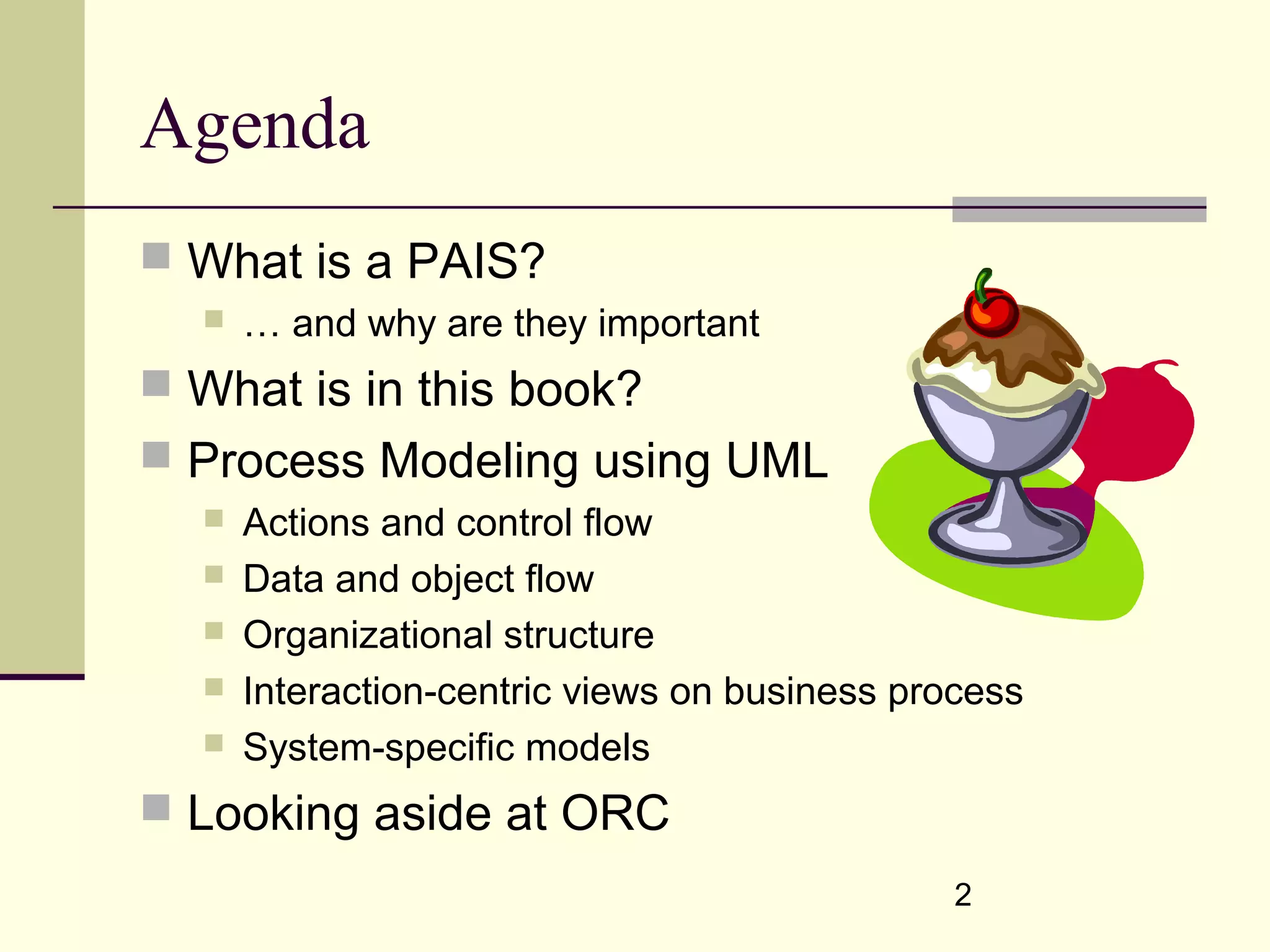
Agenda
What isa PAIS?
… and why are they important
What is in this book?
Process Modeling using UML
Actions and control flow
Data and object flow
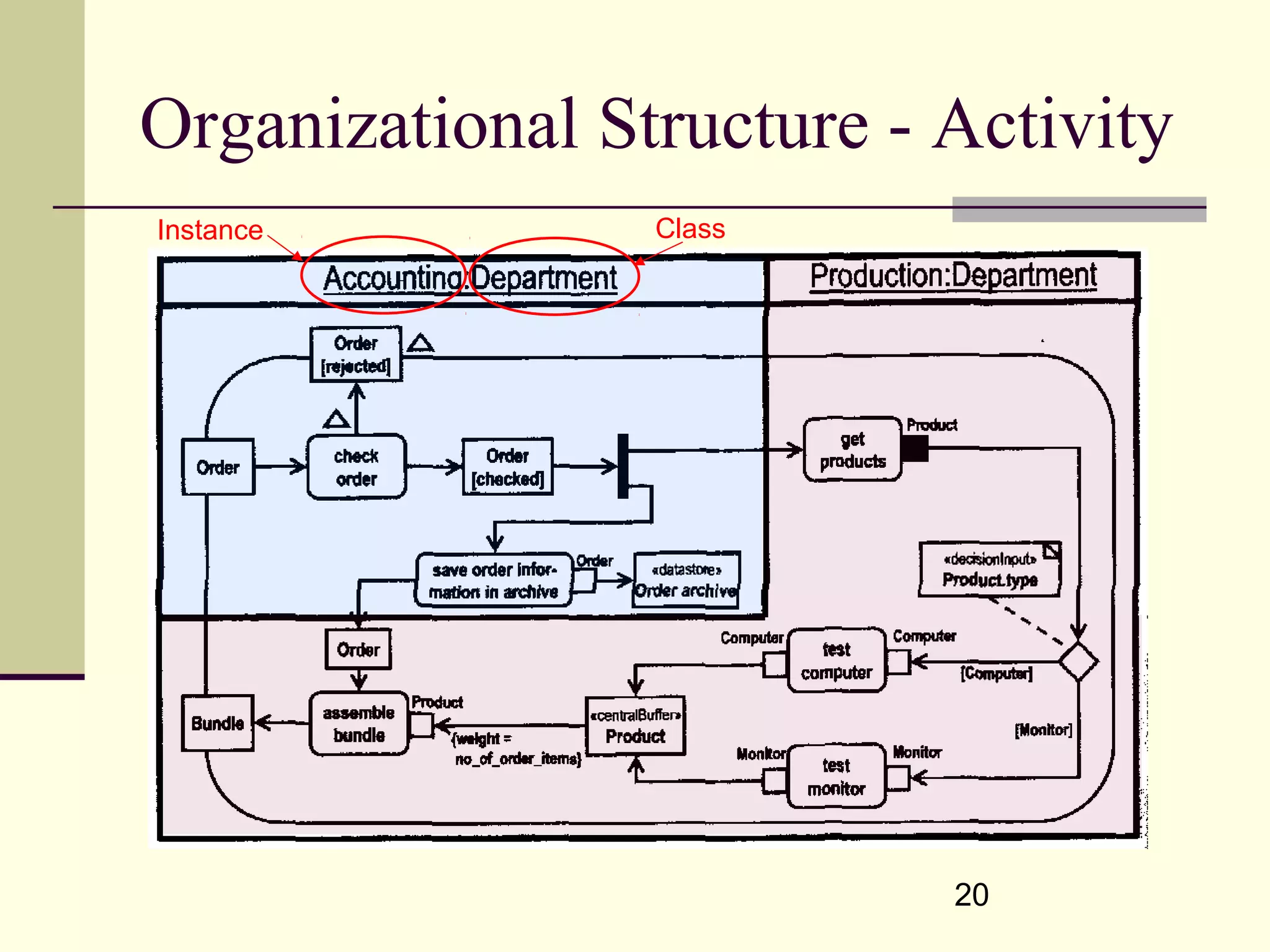
Organizational structure
Interaction-centric views on business process
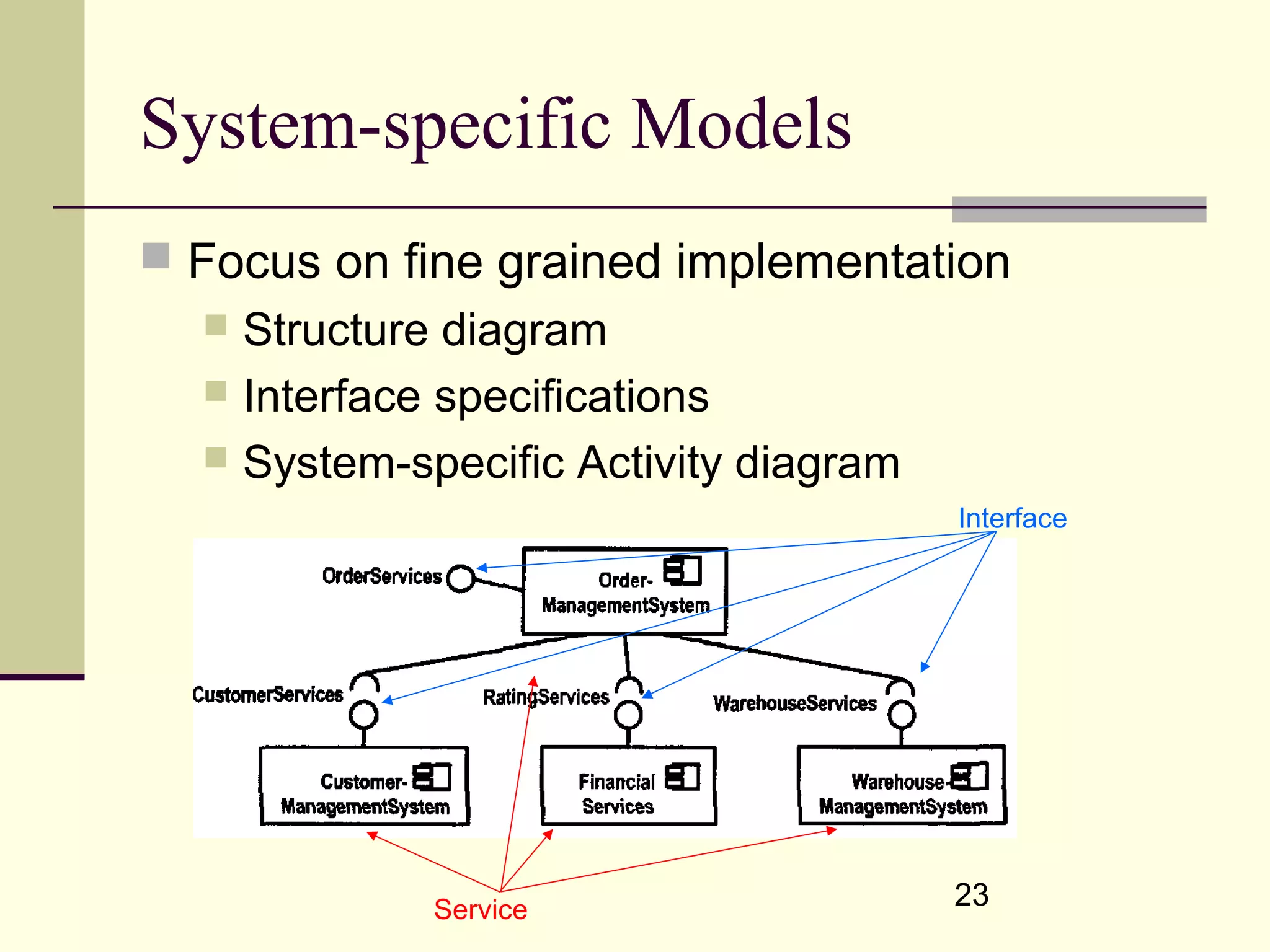
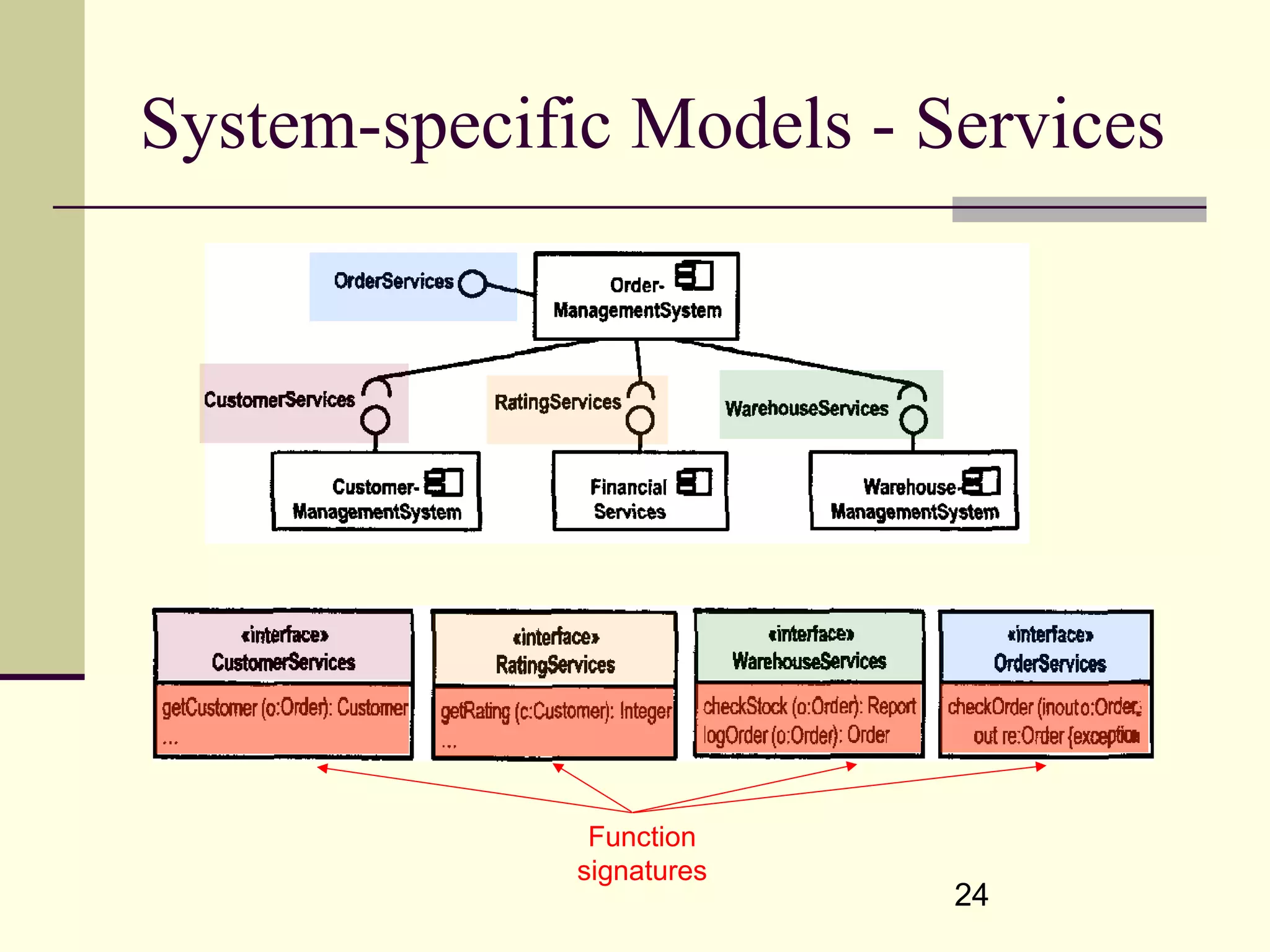
System-specific models
Looking aside at ORC
3.
3
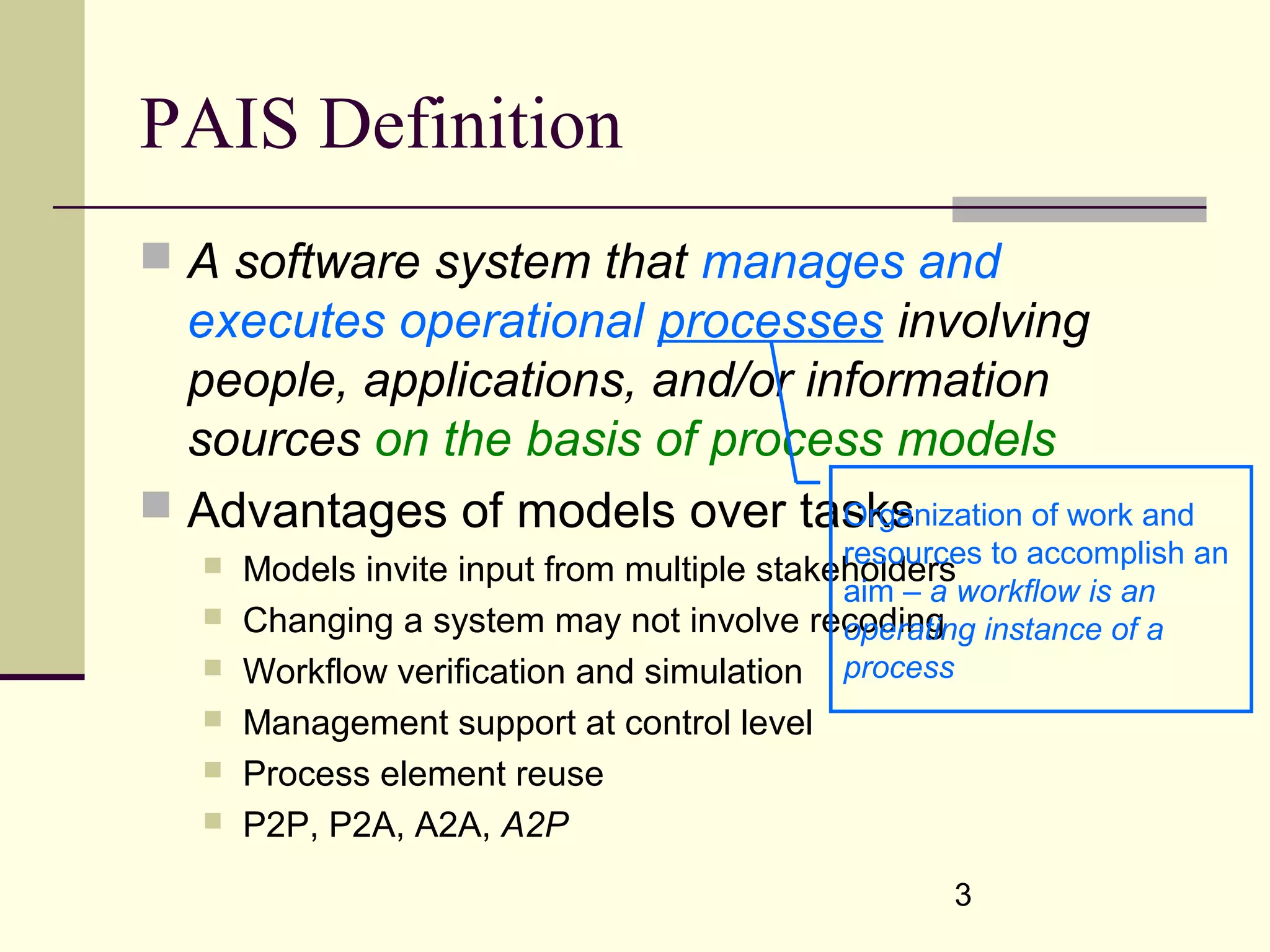
PAIS Definition
Asoftware system that manages and
executes operational processes involving
people, applications, and/or information
sources on the basis of process models
Advantages of models over tasks
Models invite input from multiple stakeholders
Changing a system may not involve recoding
Workflow verification and simulation
Management support at control level
Process element reuse
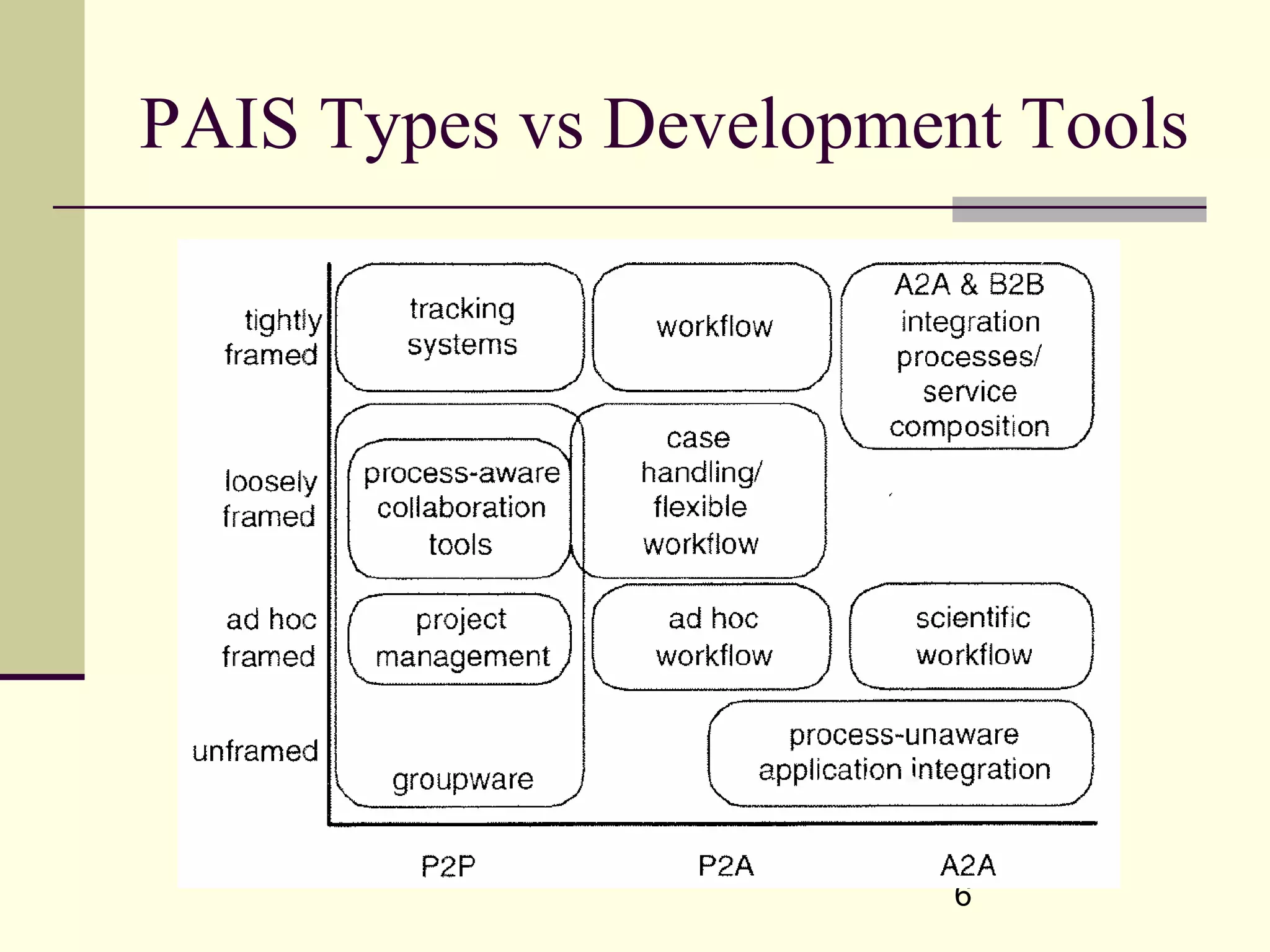
P2P, P2A, A2A, A2P
Organization of work and
resources to accomplish an
aim – a workflow is an
operating instance of a
process
4.
4
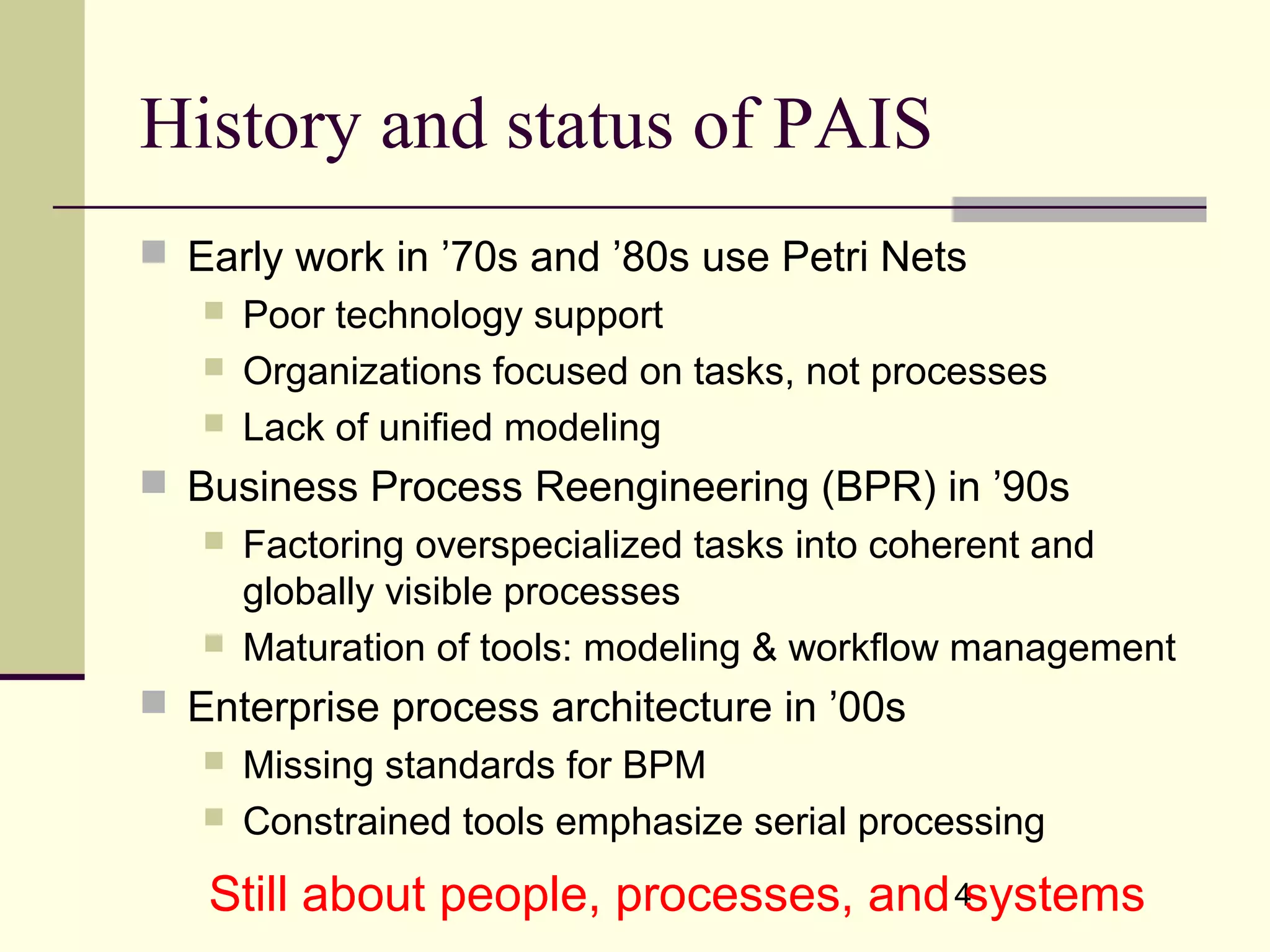
History and statusof PAIS
Early work in ’70s and ’80s use Petri Nets
Poor technology support
Organizations focused on tasks, not processes
Lack of unified modeling
Business Process Reengineering (BPR) in ’90s
Factoring overspecialized tasks into coherent and
globally visible processes
Maturation of tools: modeling & workflow management
Enterprise process architecture in ’00s
Missing standards for BPM
Constrained tools emphasize serial processing
Still about people, processes, and systems
5.
5
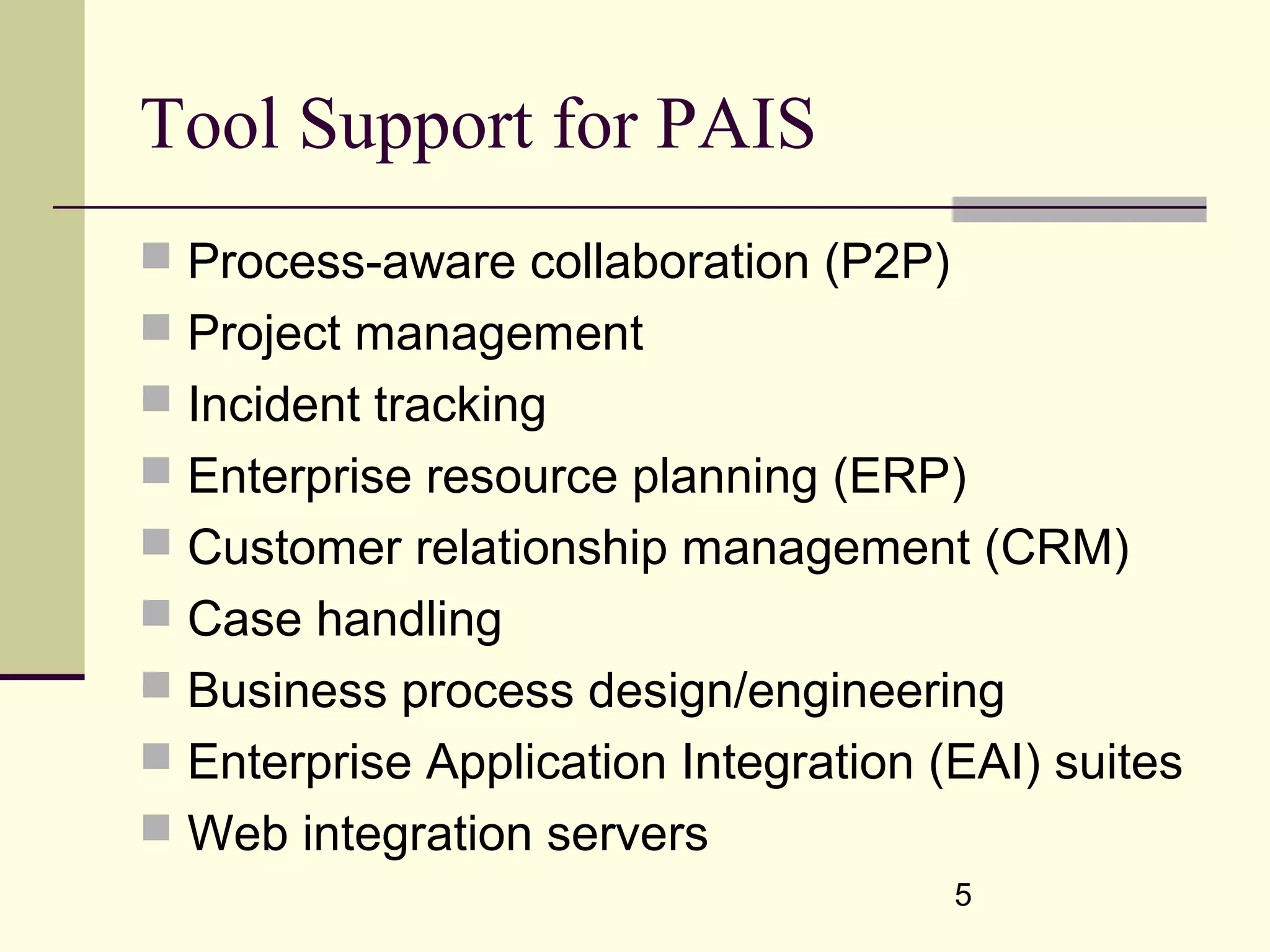
Tool Support forPAIS
Process-aware collaboration (P2P)
Project management
Incident tracking
Enterprise resource planning (ERP)
Customer relationship management (CRM)
Case handling
Business process design/engineering
Enterprise Application Integration (EAI) suites
Web integration servers
7
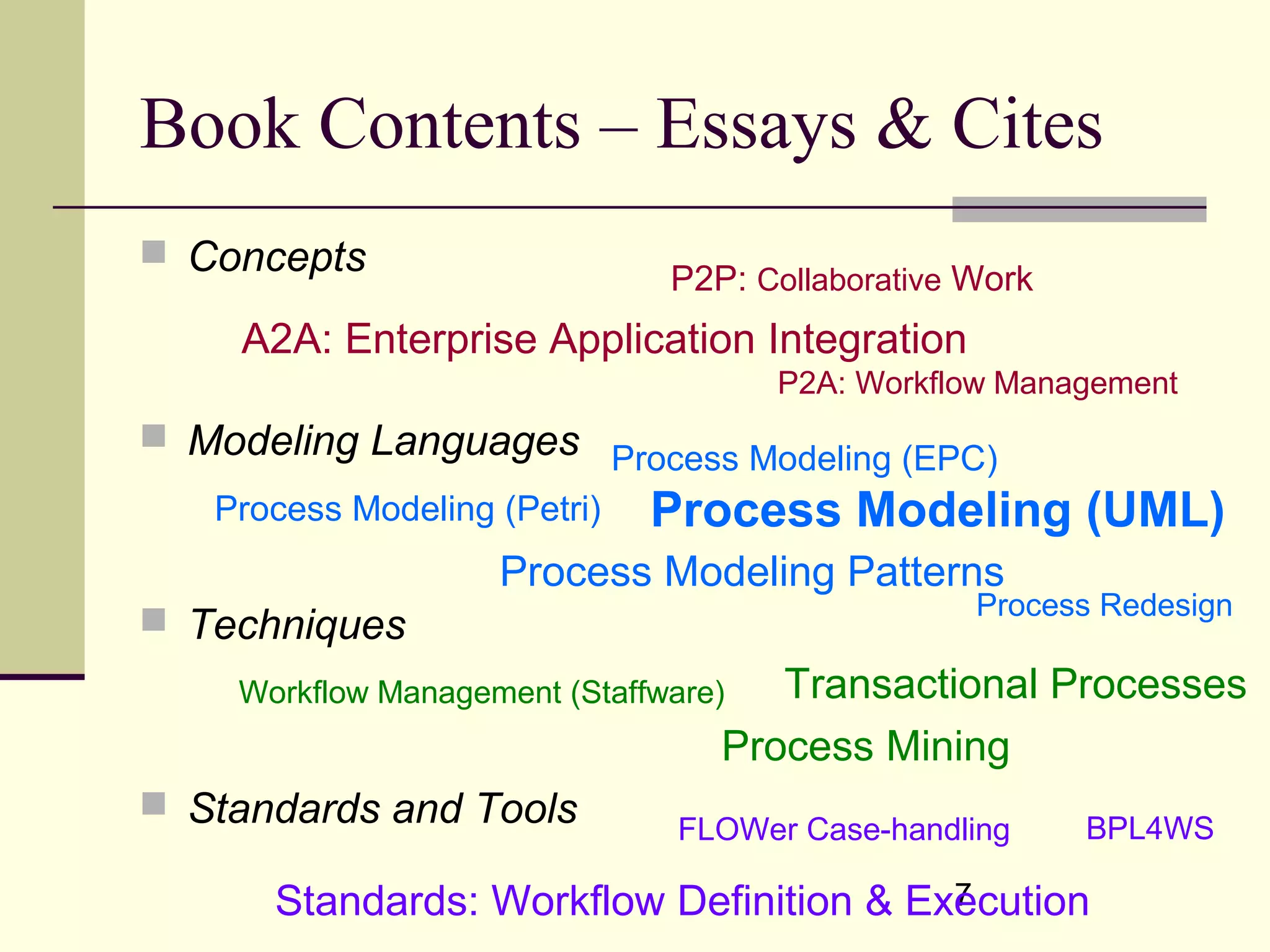
Book Contents –Essays & Cites
Concepts
Modeling Languages
Techniques
Standards and Tools
P2A: Workflow Management
P2P: Collaborative Work
A2A: Enterprise Application Integration
Process Modeling (UML)
Process Modeling (EPC)
Process Modeling (Petri)
Process Modeling Patterns
Process Redesign
Process Mining
Transactional Processes
Standards: Workflow Definition & Execution
BPL4WS
Workflow Management (Staffware)
FLOWer Case-handling
8.
8
Workflow Modeling Perspectives(ch2)
Resources and resource management
Organizational units
Tasks and task management
Data and data flow
Temporal aspects
Applications
Business rules
Exception handling
Interorganizational cooperation
9.
9
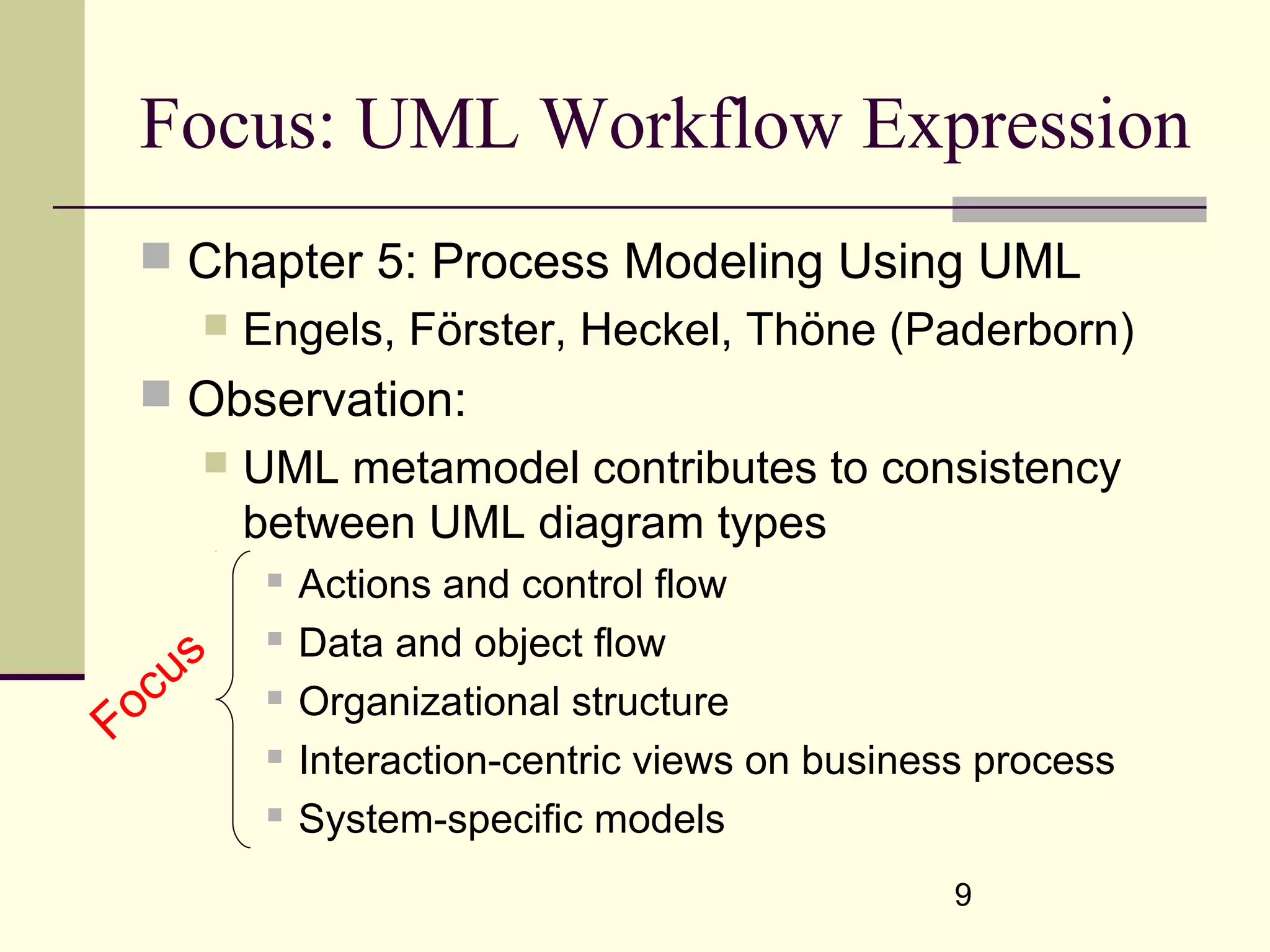
Focus: UML WorkflowExpression
Chapter 5: Process Modeling Using UML
Engels, Förster, Heckel, Thöne (Paderborn)
Observation:
UML metamodel contributes to consistency
between UML diagram types
Actions and control flow
Data and object flow
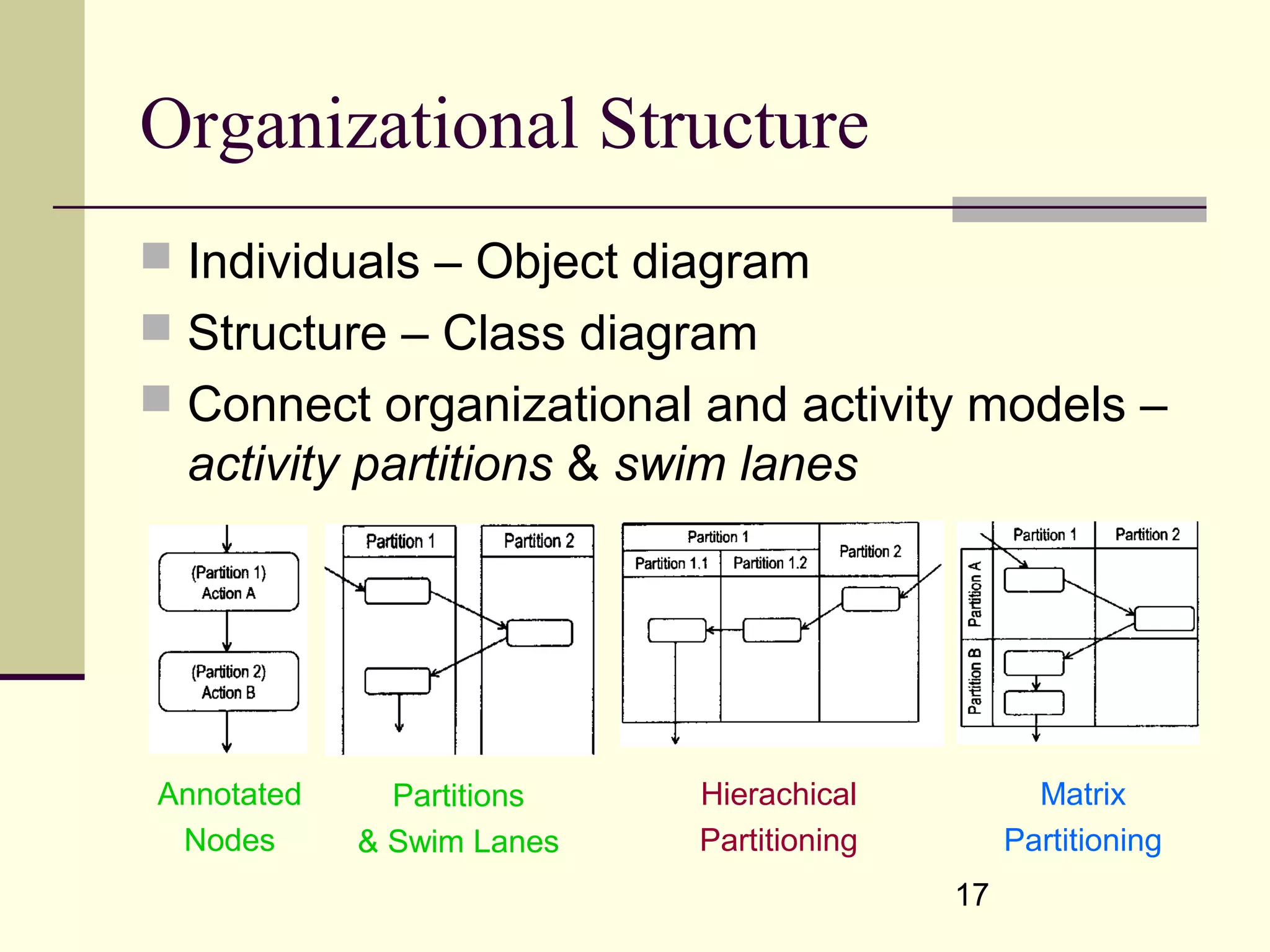
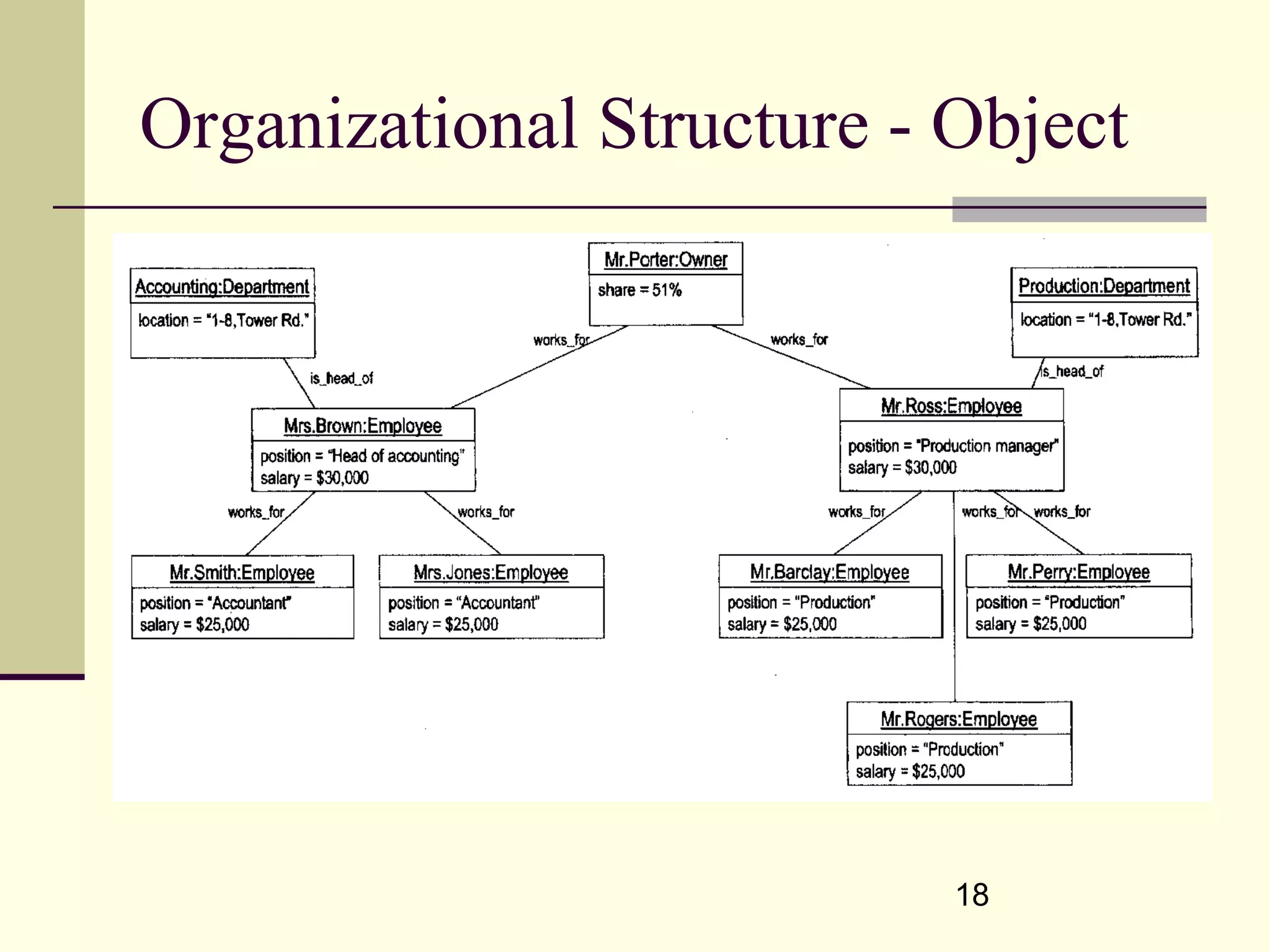
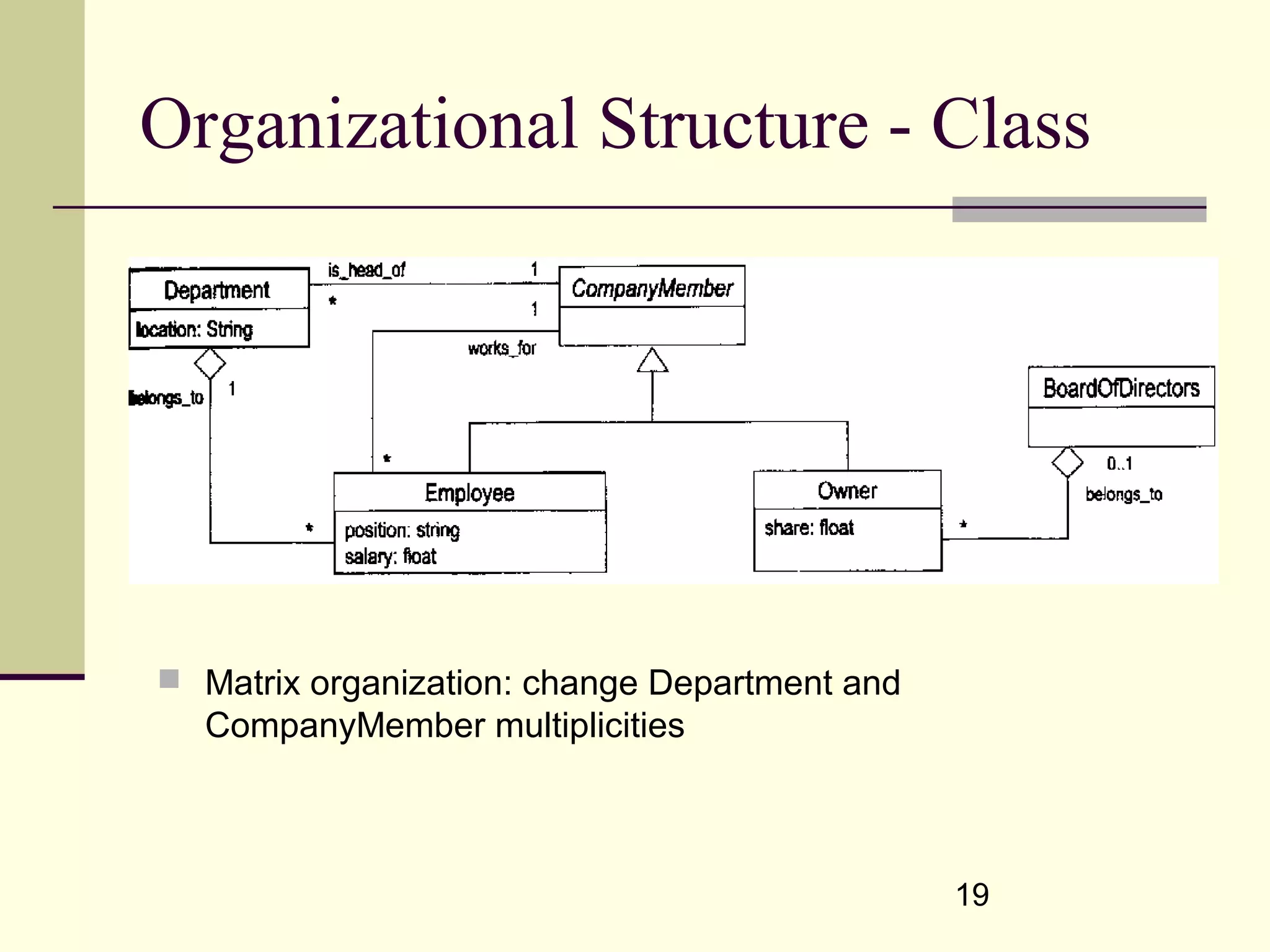
Organizational structure
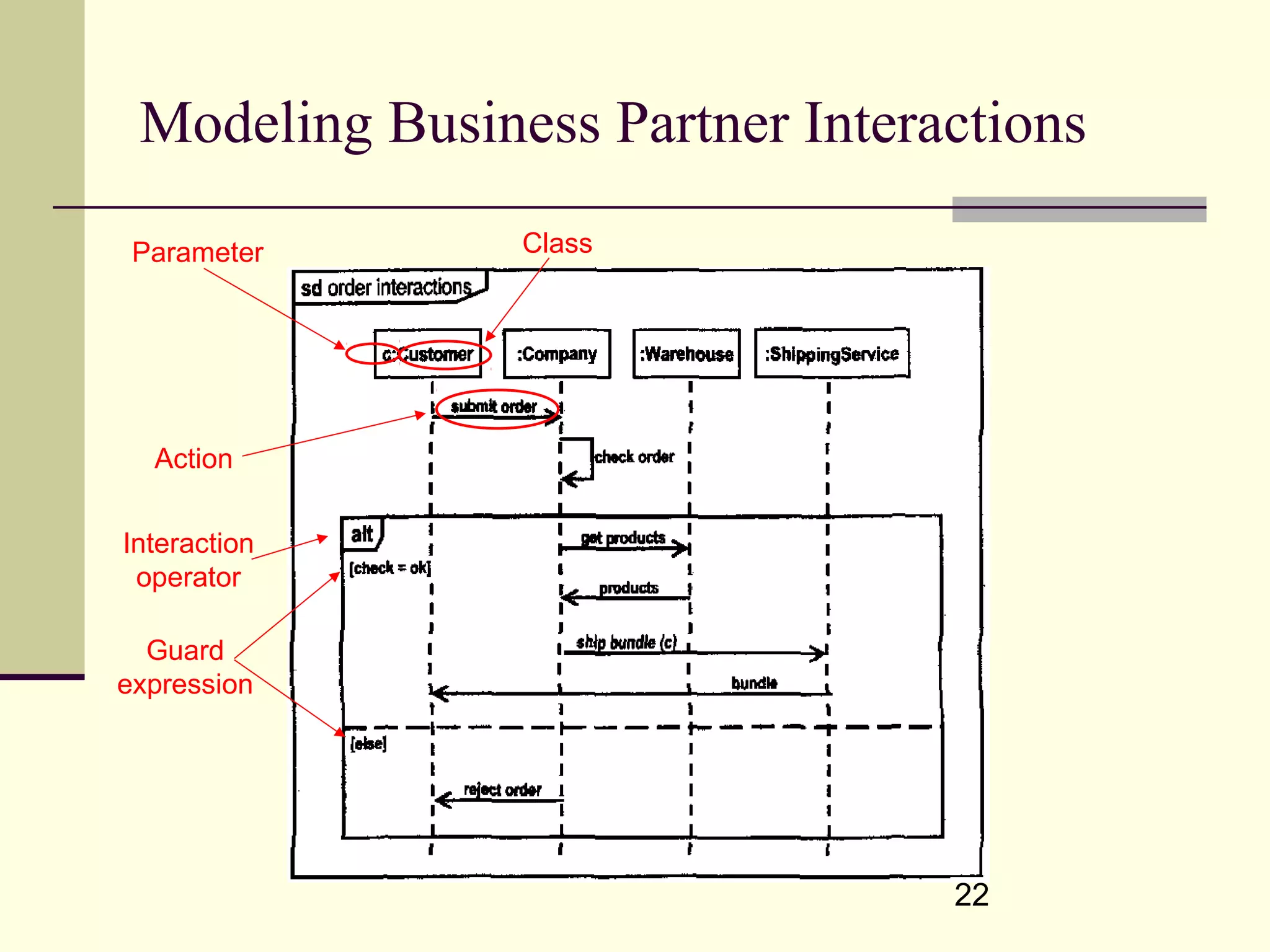
Interaction-centric views on business process
System-specific models
Focus
10.
10
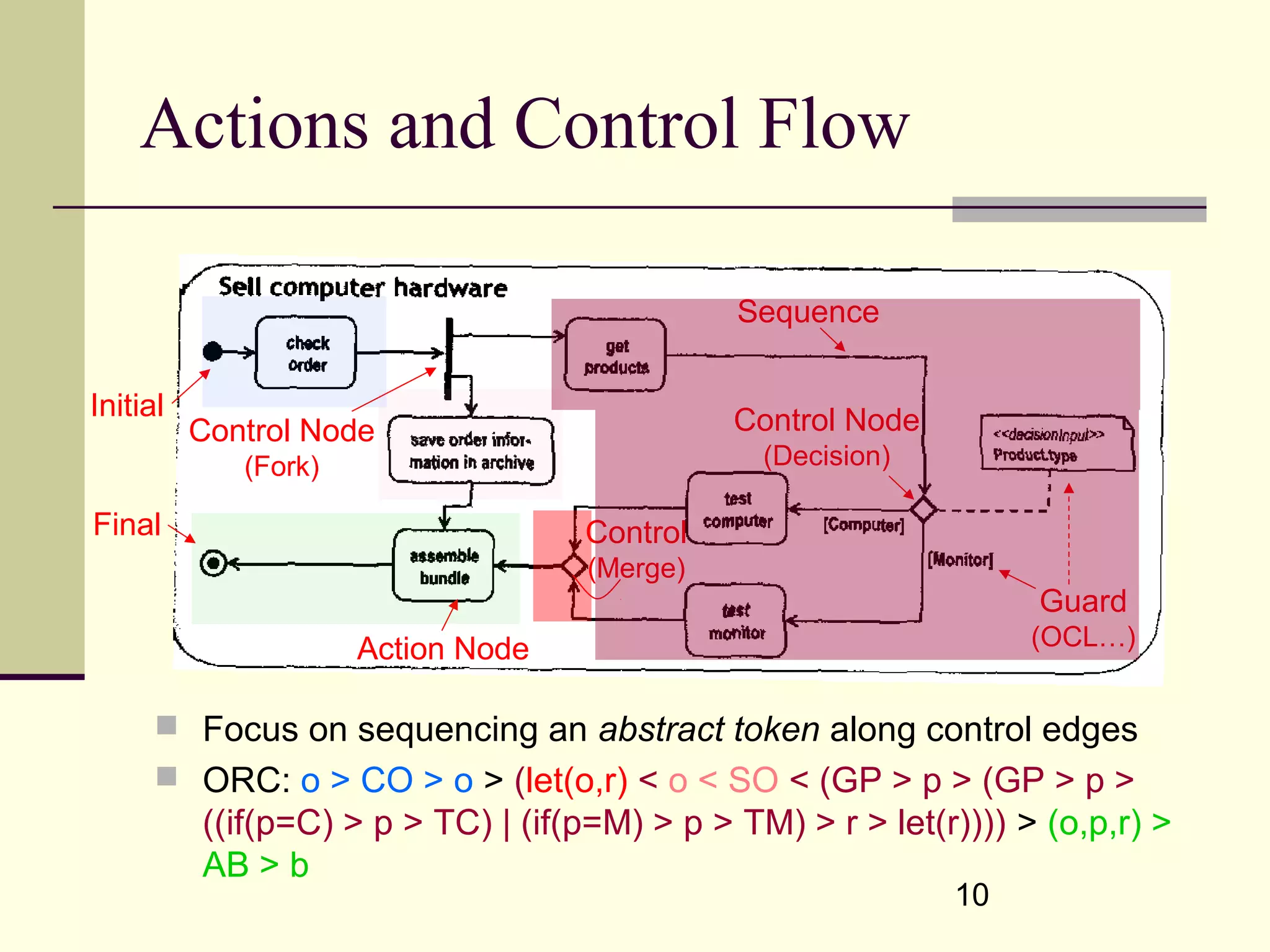
Actions and ControlFlow
Action Node
Sequence
Control Node
(Decision)
Focus on sequencing an abstract token along control edges
ORC: o > CO > o > (let(o,r) < o < SO < (GP > p > (GP > p >
((if(p=C) > p > TC) | (if(p=M) > p > TM) > r > let(r)))) > (o,p,r) >
AB > b
Control
(Merge)
Guard
(OCL…)
Control Node
(Fork)
Initial
Final
11.
11
<<Precondition>> and<<postcondition>>
Edge weights {weight=10}
Hierarchical process composition
Connectors
Process interaction/signaling
Exception handling
Actions and Control Flow Addons
A A
send signal A
await
signal A
[…]
12.
12
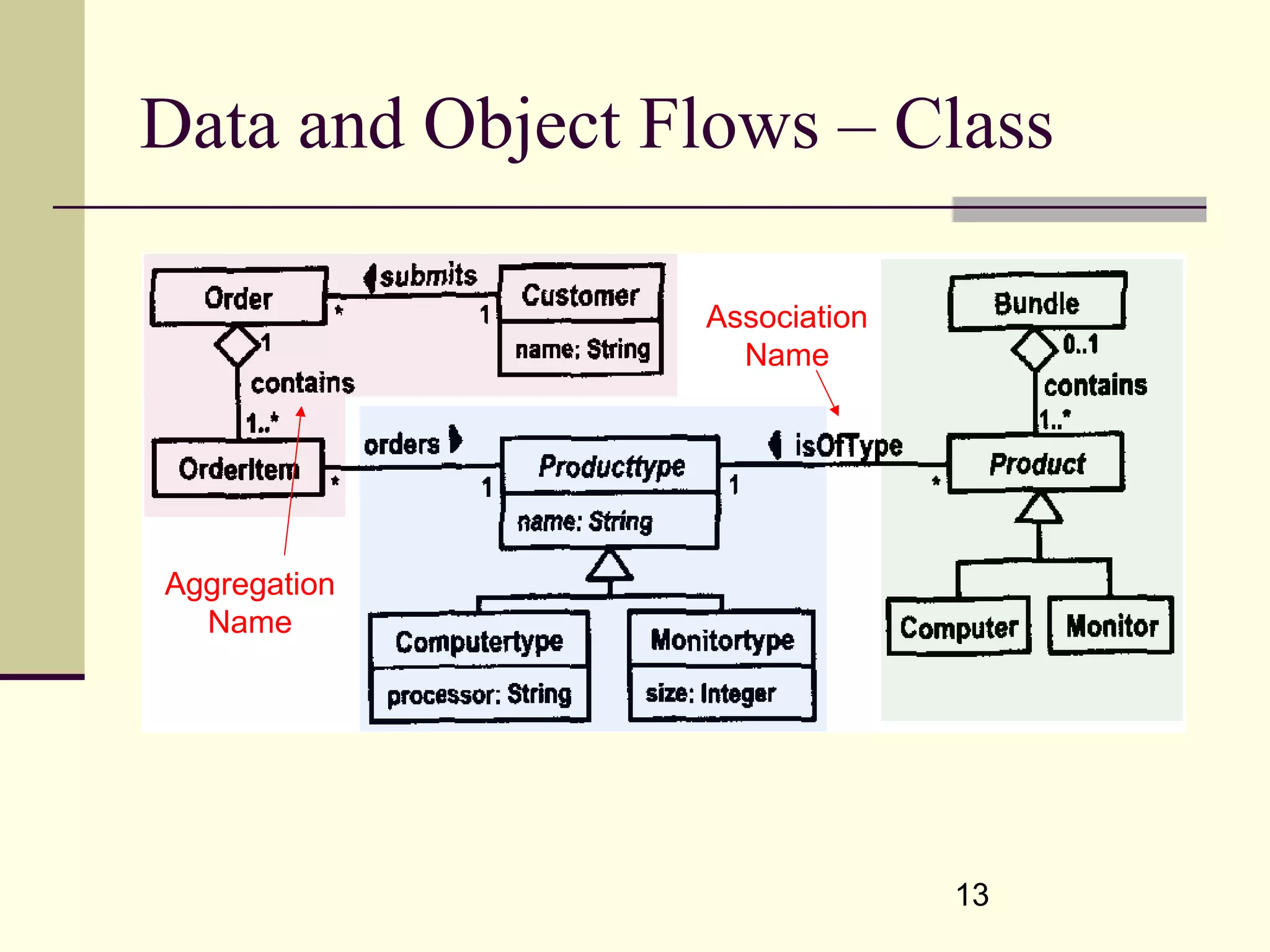
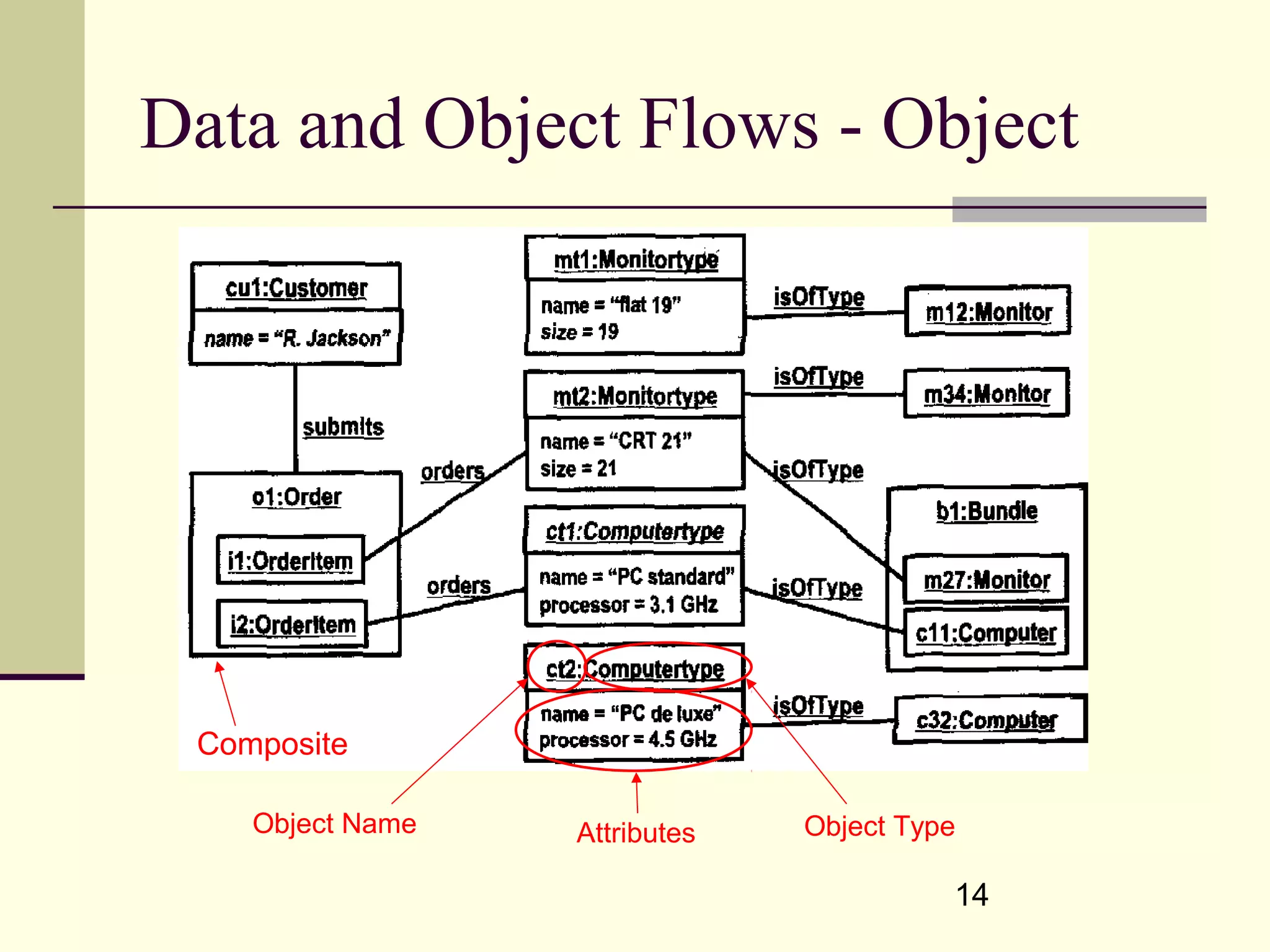
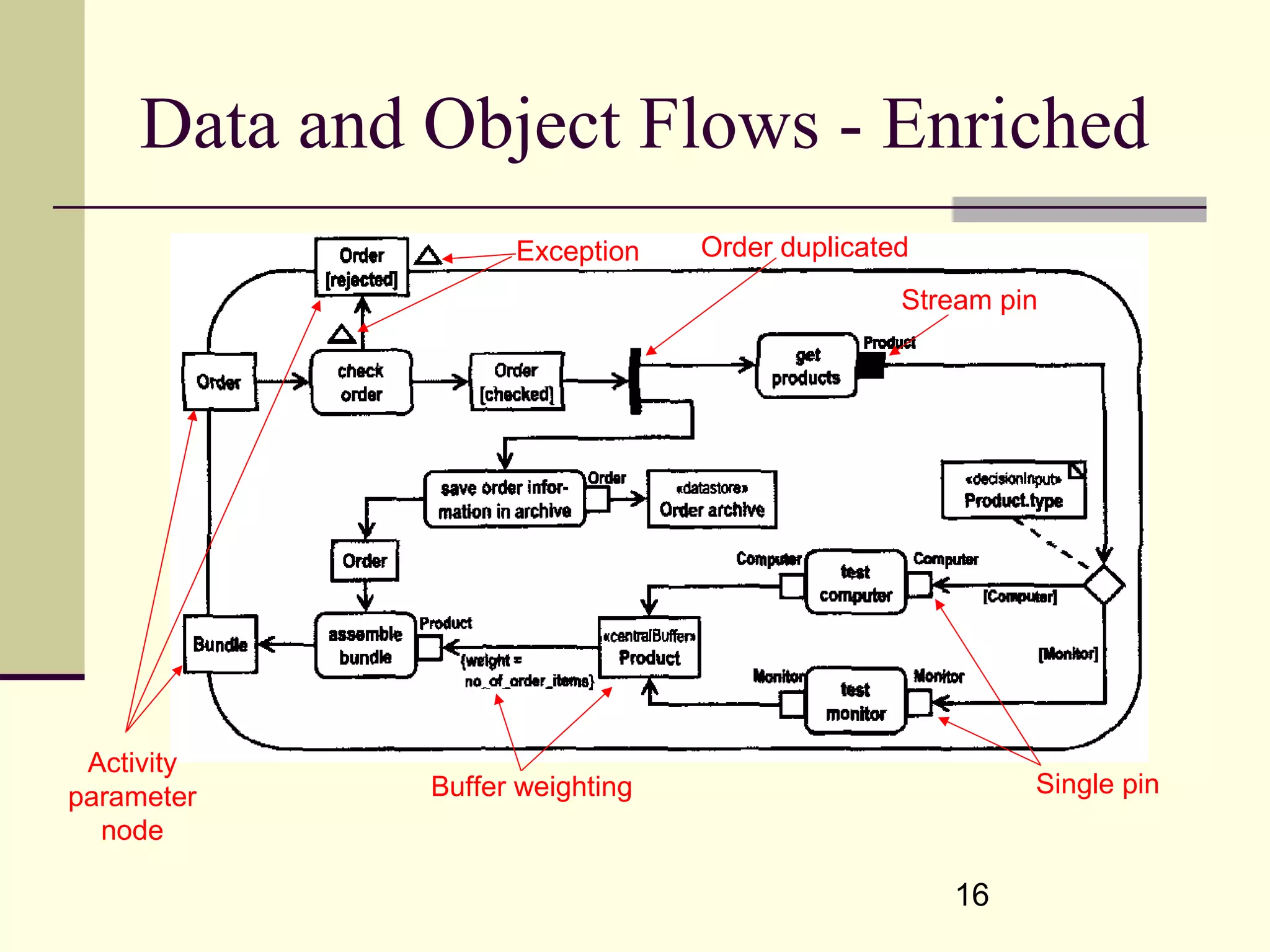
Data and ObjectFlows
Models
Data structures, object types, & relationships
Individual objects & concrete properties
Dependencies between objects & actions
21
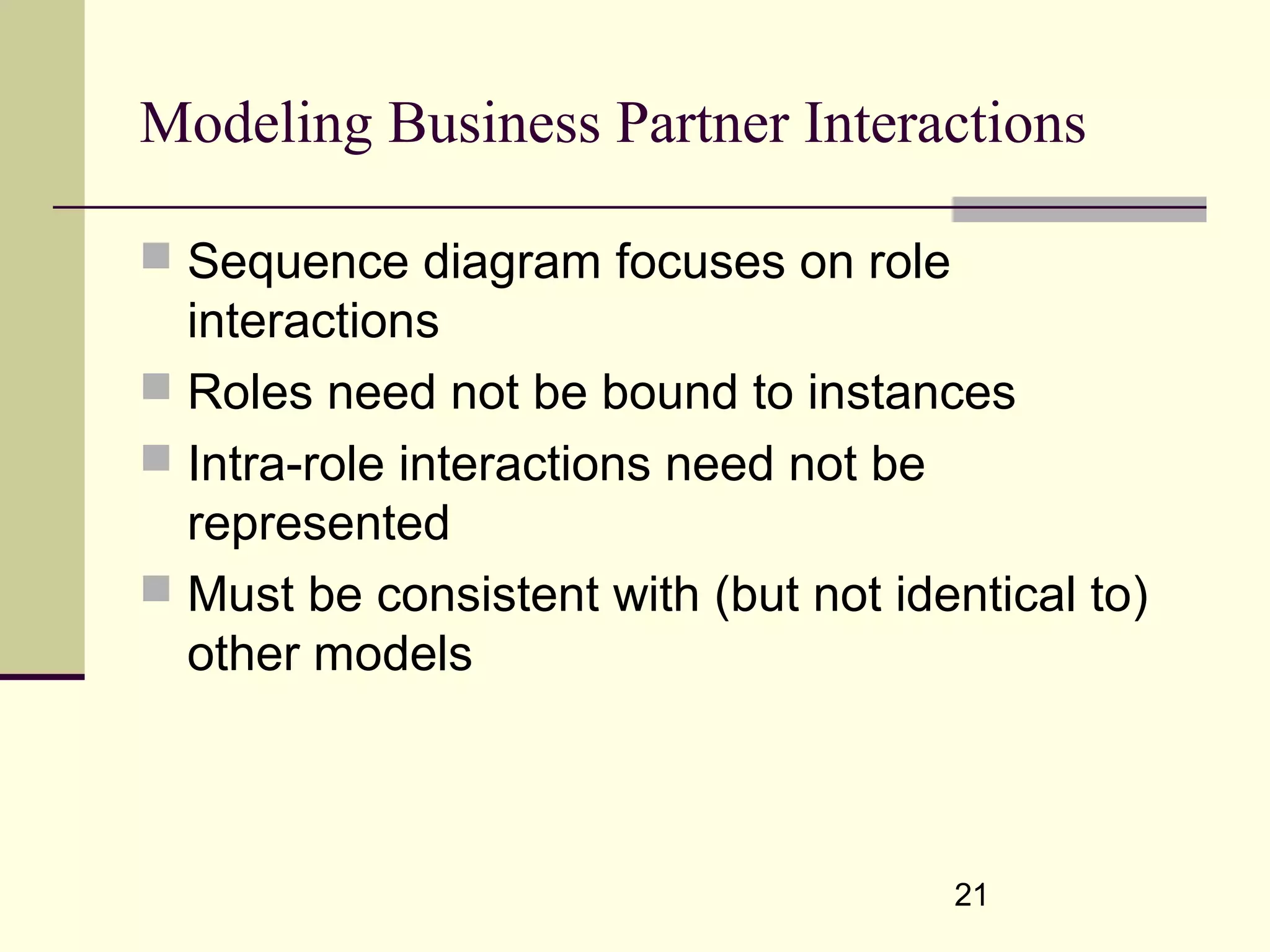
Modeling Business PartnerInteractions
Sequence diagram focuses on role
interactions
Roles need not be bound to instances
Intra-role interactions need not be
represented
Must be consistent with (but not identical to)
other models
25
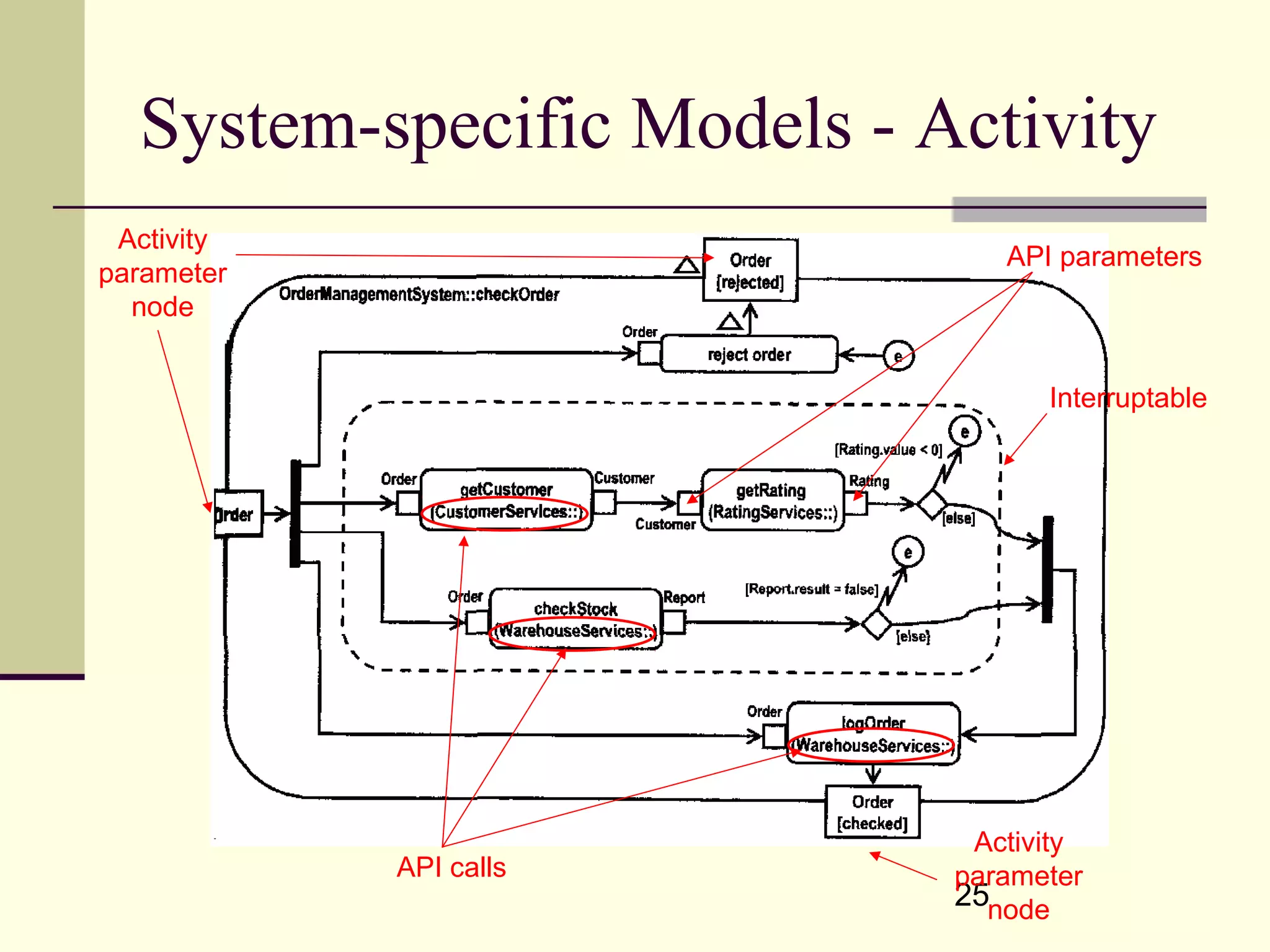
System-specific Models -Activity
API calls
Activity
parameter
node
Activity
parameter
node
API parameters
Interruptable
26.
26
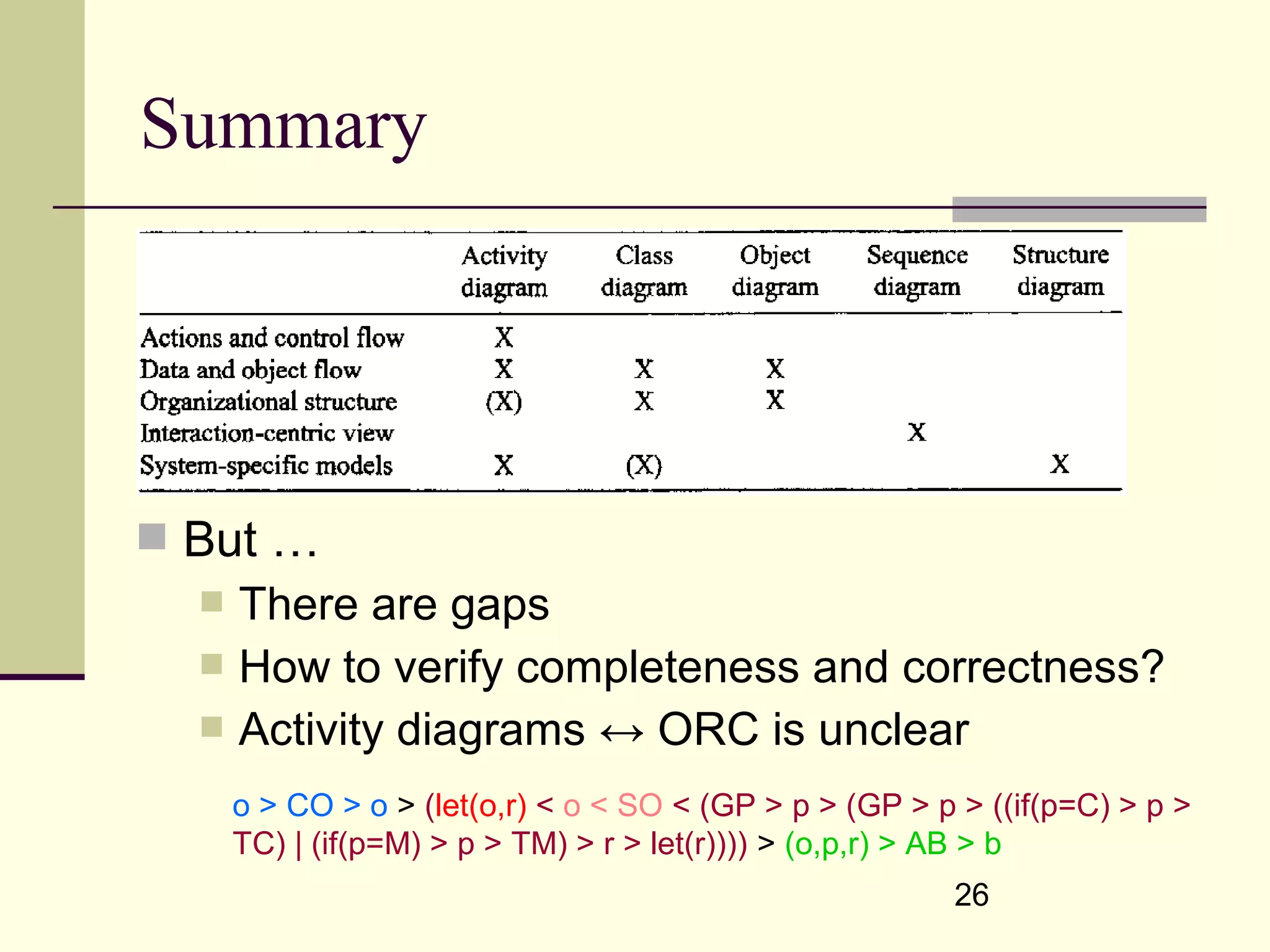
Summary
But …
There are gaps
How to verify completeness and correctness?
Activity diagrams ↔ ORC is unclear
o > CO > o > (let(o,r) < o < SO < (GP > p > (GP > p > ((if(p=C) > p >
TC) | (if(p=M) > p > TM) > r > let(r)))) > (o,p,r) > AB > b
27.
27
Future Topics
CompareWebLogic, WebSphere, BizTalk, Office
Integration regarding system integration support for
EAI & B2B p77
Present DAML-S, WSMO, WSML, and WSMX
(semantic service execution) p77
Patterns of process modeling vs ORC p181
Process mining p237
Transactional business processes p257
Standard workflow definition and execution vs ORC
p281
Workflow Management Coalition standards p30
#4 P2P is important because is focuses on sociotechnical issues – i.e., strong cyberinfrastructure connection
P2P is especially about complex, semistructured, and dynamic processes
A2P is not discussed, but it should be … it represents Citisense and CYCORE
#5 ’80s: Poor technology support = GUI, cpu cycles, bandwidth
Lack of unified modeling -&gt; poor traceability, poor flow from modeling to implementation, inflexible systems
’90s: could support automation of individual tasks
could coordinate tasks and resources (e.g., people, physical assets, software applications)
(e.g., Peregrine Systems)
Maturation of tools: modeling & workflow management = ARIS for SAP, FlowMark, Staffware
#6 Process-aware collaboration (P2P) = Caramba (chapter 2)
Project management = MS-Project, AMS Realtime
Incident tracking = JobPro Centeral
Enterprise resource planning (ERP) = SAP, PeopleSoft
Case handling = FLOWer
Business process design/engineering = ARIS and Protos
Enterprise Application Integration (EAI) suites = TIBCO ActiveEnterprise, Microsoft BizTalk
Web integration servers = BEA WebLogic, IBM Websphere MQ
#9 Different stakeholders have different perspectives
Resources and resource management = classes and objects needed to perform a task
Organizational units = departments and their individuals
Tasks and task management = description of tasks
Data and data flow = application data, schemas, historical data, internal administrative data
Temporal aspects = deadlines, durations, lags, rates
Applications = input, output, behavior
Business rules = policies and principles
Exception handling
Interorganizational cooperation = rules for task allocation, firewalling
#11 This tracks abstract tokens through a sequence
Missing:
Exceptions
Token precision
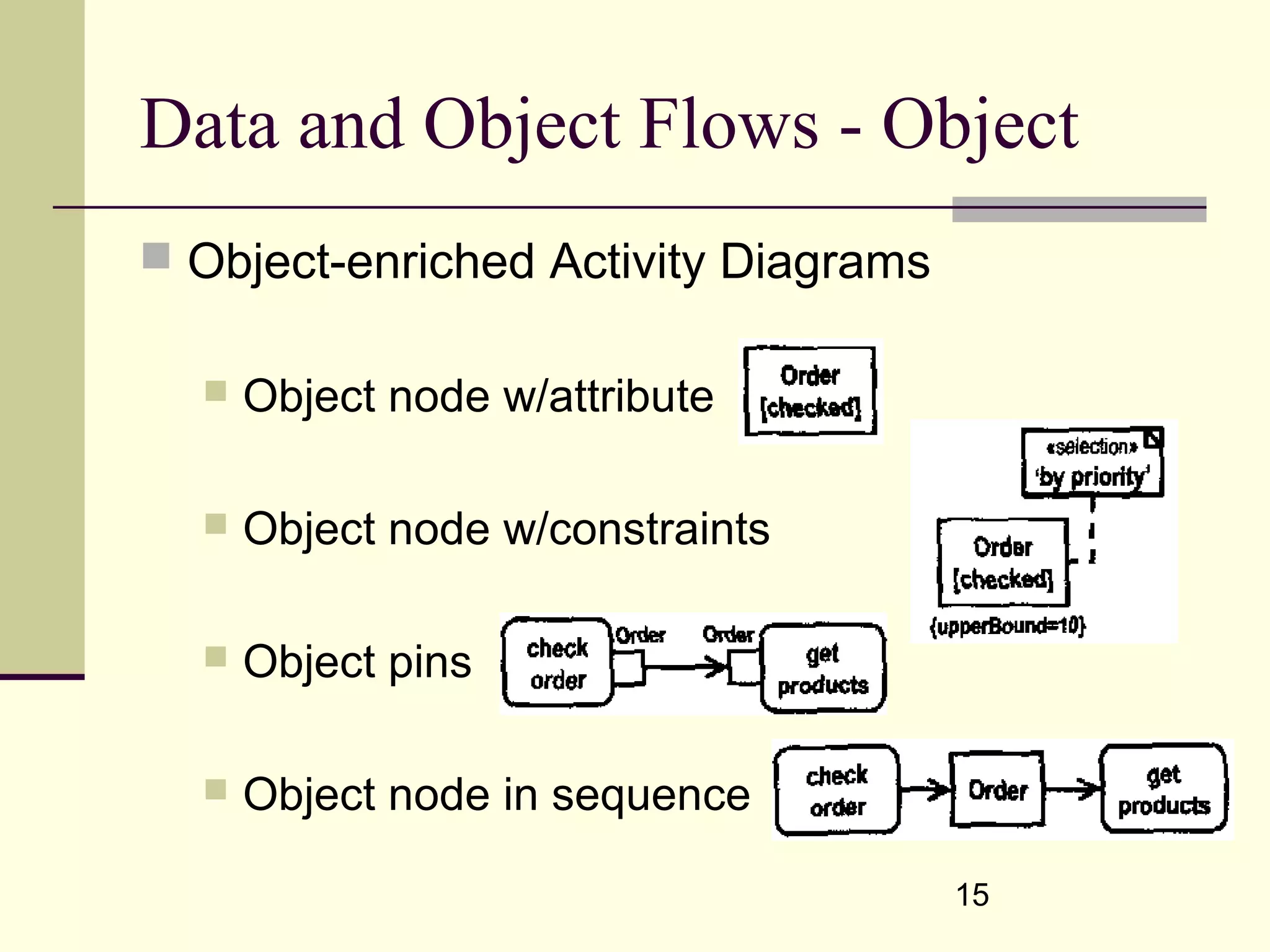
#15 Why do this??
Because a normal Activity diagram sequences abstract tokens.
This creates concrete tokens that allow more precision in sequencing, including type enforcement
#16 Semantics
A) Token has Object type with particular attributes
B) Token flows according to specification
C) Only tokens of particular type flow
D) Substitute for (C)
Note:Action node can have multiple outbound and inbound arrows
inbound = Action proceeds once all inputs are available
outbound = Different types go to different sequences (perhaps nondeterministically)
![11
<<Precondition>> and <<postcondition>>
Edge weights {weight=10}
Hierarchical process composition
Connectors
Process interaction/signaling
Exception handling
Actions and Control Flow Addons
A A
send signal A
await
signal A
[…]](https://image.slidesharecdn.com/processawareinformationsystems-151112002848-lva1-app6891/75/Process-aware-information-systems-11-2048.jpg)