ART OF SEDATION & ANALGESIA IN
ICU
Dr. Ashish Ranjan
Senior resident
ESICPGIMSR,New Delhi
LEARNING OBJECTIVES
 Definitions of Pain agitation and delirium
 How to monitor these
 Drugs and their dosing
 Adverse reactions
 Pain,Agitaion,Delirium(PAD) bundles
PAIN
 Pain is defined as “an unpleasant sensory or
emotional experience”, which highlights the
subjective nature of pain.
 The pain sensation can be described in terms of
intensity, duration, location, and quality
 but pain intensity is the parameter most often
monitored because it reflects the “unpleasantness”
of pain.
MONITORING OF PAIN
 Pain Intensity Scales
There are 6 different pain intensity scales.2 are
important
 1. When patients can reliably self-report pain, the
Numerical Ranking Scale can be used for pain
assessment
 2. When patients are sedated and on a ventilator,
the Behavioral Pain Scale (BPS) recommended for
pain assessments
 Adequate pain control = SCORE 5
NUMERICAL RATING SCALE
BEHAVIOURAL PAIN SCALE
OPOID ANALGESIA
 Stimulation of opioid receptors produces a variety
of effects, including analgesia, Sedation, euphoria,
pupillary constriction Respiratory depression,
bradycardia, constipation, nausea, vomiting, urinary
retention, and pruritis
 Fentanyl has replaced morphine as the most
popular opioid analgesic in ICUs
 The advantages of fentanyl over morphine include
a more rapid onset of action (because fentanyl is
600 times more lipid soluble than morphine), less
risk of hypotension (because fentanyl does not
promote histamine release) and the absence of
active metabolites.
REMIFENTANIL
 Remifentanil is an ultra-short acting opioid that is given by
continuous intravenous Infusion
 Dosing Regimen: 1.5 μg/kg as a loading dose, followed by a
continuous infusion at 0.5– 15 μg/kg/hr
 Analgesic effects are lost within 10 minutes after stopping the
drug infusion.
 The short duration of action is B/C it is broken down by
nonspecific esterases in plasma. Because drug metabolism
does not take place in the liver or kidneys, dose adjustments
are not necessary in renal or hepatic failure.
 Short duration of action is most advantageous in conditions
that require frequent evaluations of cerebral function (e.g.,
traumatic head injuries).
 The abrupt cessation of opioid activity can precipitate acute
opioid withdrawal which can be prevented by combining
remifentanil with a longer-acting opioid.
PCA
For patients who are awake and capable of
drug self-administration, patient-controlled
analgesia (PCA) can be an effective method
of pain control, and may be superior to
intermittent opioid dosing.
The PCA method uses an electronic
infusion pump that can be activated by the
patient. When pain is sensed, the patient
presses a button connected to the pump to
receive a small intravenous bolus of drug.
After each bolus, the pump is disabled for a
mandatory time period called the “lockout
interval,” to prevent overdosing.
When writing orders for PCA, one must
specify the initial loading dose (if any), the
lockout interval, and the repeat bolus dose.
PCA can be used alone or in conjunction with
a low dose opioid infusion.
ADVERSE EFFECTS
 Respiratory depression
 Hypotension ,bradycardia
 Intestinal hypomotility-Opioid-induced bowel
hypomotility can be partially reversed with enteral
naloxone (8 mg every 6 hours) without affecting
opioid analgesia
 Vomiting and nausea
NON OPOID ANALGESIA
 Only three drugs: acetaminophen, ketorolac, and
ibuprofen are used primarily for pain control in the
early postoperative period.
 They can be used alone for mild pain, but are used
in combination with an opioid analgesic for
moderate-to-severe pain.
 The goal of combination analgesic therapy is to
reduce the opioid dose (“opioid sparing” effect) and
hence reduce the risk of an opioid-related adverse
effect.
ANXIETY, AGITATION
 Anxiety and related disorders (agitation ) are
observed in as many as 85% of patients in the ICU
.
 These disorders can be defined as follows.
1. Anxiety is characterized by exaggerated
feelings of fear or apprehension that are sustained
by internal mechanisms more than external events.
2. Agitation is a state of anxiety that is
accompanied by increased motor activity.
.
 The common denominator in these disorders is the
absence of a sense of well-being.
SEDATION
 Sedation is the process of relieving anxiety and
establishing a state of calm. This process includes
general supportive measures (like frequent
communication with patients and families), and
drug therapy.
 Initial management- conservatively managing the
identifiable cause of distress
 Non-pharmacologic management: Reassurance,
interaction with the patient and reorientation,
family visits, cognitive behaviour therapy
 Sedation: when these are not effective in
controlling the distress
AGENTS OF SEDATION IN ICU
Agents causing sedation by their direct effect
 (a)GABA agonists (GABA is one of the most important CNS
inhibitory
system)
(1) Benzodiazepines (diazepam, lorazepam, midazolam)
(2) Propofol
 (b)Alpha 2 agonist
(1) Dexmedetomidine
Agents causing sedation as an adverse effect
 (a) Antipsychotics
(1) Typical – haloperidol
(2) Atypical – risperidone, olanzapine
 (b) Opioids
BZD
 GABA- A central nervous system receptors
• Metabolized by the liver, excreted through kidneys
• Reduced clearance in hepatic dysfunction except for
Lorazepam
• Long half life in renal failure- prolonged effect
• Elderly patients clear more slowly
• S/E - respiratory depression and hypotension
Prolonged sedation
ADVANTAGES AND DISADVANTAGES
Advantages
 1.Benzodiazepines have a dose-dependent
amnestic effect (antegrade amnesia),
2. Benzodiazepines have anticonvulsant effects
3. Benzodiazepines are the sedatives of choice for
drug withdrawal syndromes, including alcohol,
opiate, and benzodiazepine withdrawal.
 Disadvantages
(a) drug accumulation with prolonged sedation,
and
(b) the apparent tendency for benzodiazepines to
promote delirium.
SOLUTION FOR PROLONGED SEDATION
 1.Daily interruption of benzodiazepine infusions
(until the patient awakens) curtails drug
accumulation, and has been shown to shorten the
duration of mechanical ventilation,and reduce the
length of stay in the ICU ).
 2. Titration of benzodiazepine infusions to maintain
light levels of sedation, using routine monitoring
with a sedation scale (SAS or RASS), a standard
practice.
 3. The final solution to the problem is to avoid
benzodiazepines for sedation
LORAZEPAM
 Propylene glycol (1,2-propanediol) is the solvent
used
to deliver lorazepam and diazepam IV
Close monitoring of all patients receiving IV
lorazepam or diazepam for early evidence of
propylene glycol toxicity is warranted
 Life threatening iatrogenic complication that is
preventable
 – unexplained anion gap
 – unexplained metabolic acidosis
 – hyperosmolality
 – clinical deterioration
PROPOFOL
 Activates GABA receptors & inhibits NMDA
glutamate receptors
 Rapid onset and offset of sedation
 Helpful in patients requiring frequent awakenings
for neurologic assessments and it may facilitate
daily sedation interruption protocols
 Not dependent on hepatic and renal function
PRIS
 Propofol infusion syndrome is a rare and poorly
understood condition that is characterized by the
abrupt onset of bradycardic heart failure, lactic
acidosis, rhabdomyolysis, and acute renal failure
 This syndrome almost always occurs during
prolonged, high-dose propofol infusions (>4–6
mg/kg/hr for longer than 24–48 hrs) (53).
 The mortality rate is 30% . Avoiding propofol
infusion rates above 5 mg/kg/hr for longer than 48
hrs is recommended to reduce the risk of this
condition
WHICH AGENT TO USE
 Individualize based on patient factors
 Expected duration of ventilation
 Presence of organ failures, hypersensitivity to
drugs
 Clinical pharmacology of the drug in use must be
considered
 Hypoalbuminemia
 Drug interaction due to polypharmacy
 Altered pharmacokinetics and dynamics – drug
accumulation
 Cost and cost-effectiveness
HOW TO MONITOR
 Sedation Agitation Scale (SAS)
 Richmond Agitation-Sedation Scale (RASS)
 Observer’s assessment of alertness/sedation scale
 (OAA/S)
 Ramsay sedation scale
 New Sheffield sedation scale
 Sedation Intensive Care Score (SEDIC)
 Motor Activity Assessment Score (MAAS)
 Adaption to Intensive care environment (ATICE)
 Minnesota Sedation Assessment Tool (MSAT)
 Vancouver Interaction and Calmness Scale (VICS)
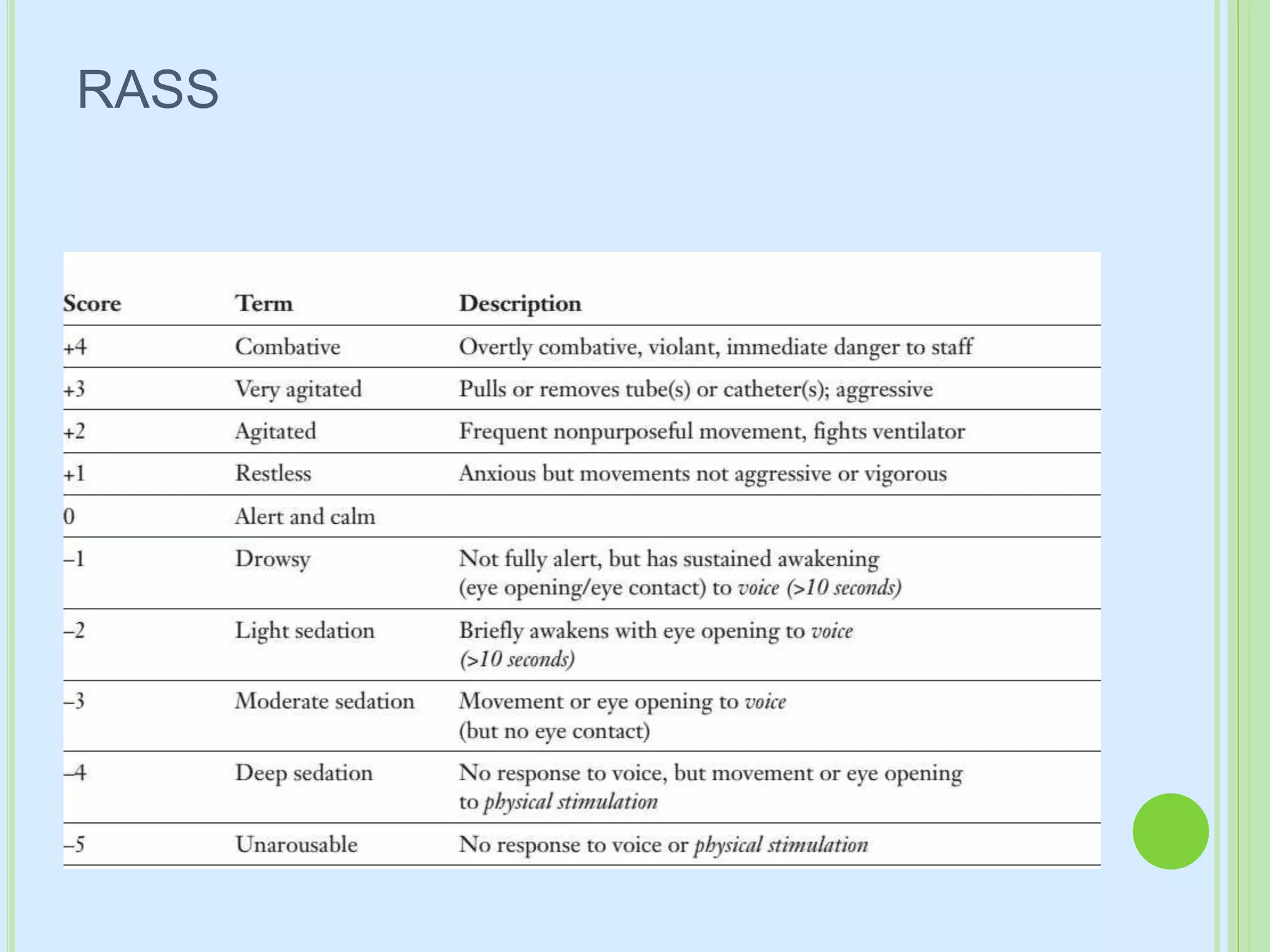
RASS
 Light sedation improves outcome (RASS -2 to +1 in
many studies. Varies from trial to trial)
 Shorter ICU stay and ventilation days
 Though light sedation may increase some
physiologic Stress, (increased catecholamine
levels and oxygen consumption) may not be
associated with negative clinical outcomes
 No difference in post ICU psychological outcome
based on
the depth of sedation
INTERRUPTION OF SEDATION
 Daily sedation interruption (DSI) defined as short-term
suspension, hold, discontinuation, cessation, or interruption of
intravenous sedatives(continuous infusions or fixed dose
bolus) and, in some cases, analgesic medications”
 To prevent drug bioaccumulation
 Awake state
 Assess whether liberation is possible or not and neurologic
status
 Interruption is done till patient becomes awake, and can obey
simple commands
 Daily interruption of sedation (DSI) may reduce the total
duration of ventilation
Burry L et al. Cochrane Database of Systematic Reviews 2014,
Issue 7. Art. No.:
CD009176
DEXMEDETOMIDINE
 Alpha 2 adrenergic agonist
 Similar to clonidine, but more specific
 Does not act on GABA receptors
 Acts on locus ceruleus
 No respiratory depression
 Recent meta-analysis: 28 studies (27 publications)
 Trials in general ICU setting – 13
 Loading dose 1 mcg/kg followed by infusion
ranging from 0.1 to 2.5 mcg/kg have been in used
in majority (18 trials)
 Six different comparators: propofol in 11 study,
midazolam in 10, placebo in 5, morphine in 2,
haloperidol and lorazepam in one each
Pasin L, et al. PloS one. 2013;8(12):e82913
ADVERSE EFFECT
 Decreases sympathetic activity – may increase
adverse cardiac events Especially in individuals
with autonomic disturbance, elderly, diabetics,
chronic hypertension. Valvular heart disease, heart
blocks, severe CAD, hypotension/ hypovolemia
DELIRIUM
 Four domains of delirium: disturbance of
consciousness, change in cognition, development
over a short period, and fluctuation.
 Delirium is defined by the National Institutes of
Health as “sudden severe confusion and rapid
changes in brain function that occur with physical or
mental illness.”
 The most common feature of delirium, thought by
many to be its cardinal sign, is inattention.
 Delirium is a nonspecific but generally reversible
manifestation of acute illness that appears to have
many causes, including recovery from a sedated or
oversedated state
 Forms of delirium,
1.Hypoactive and
2.Aagitated (or hyperactive).
3.Mixed delirium.
 The hypoactive form is characterized by inattention,
disordered thinking, and a decreased level of
consciousness without agitation.
 Although the association between delirium and a worse
outcome is clear, a causal relationship has not been
established.
 A diagnosis of delirium is associated with increased
mortality (estimated as a 10% increase in the relative
risk of death for each day of delirium
INTENSIVE CARE DELIRIUM SCREENING CHECKLIST
 • Patient must show at least a response to mild or
moderate stimulation. Then score 1 point for each of the
following features :
 – Anything other than “normal wakefulness”
 – Inattention
 – Disorientation
 – Hallucination
 – Psychomotor agitation
 – Inappropriate speech or mood
 – Disturbance in sleep or wake cycle
 – Fluctuation in symptoms
 A score of ≥4 is positive for delirium (with scores of 1 to
3 termed “subsyndromal delirium”)
HALOPERIDOL
 Haloperidol produces its sedative and antipsychotic
effects by blocking dopamine receptors in the
central nervous system.
 Following an intravenous bolus dose of haloperidol,
sedation is evident in 10–20 minutes, and the effect
lasts 3–4 hours.
 There is no respiratory depression, and
hypotension is unusual in the absence of
hypovolemia
HALOPERIDOL DOSING
ADVERSE EFFECT
 The adverse effects of haloperidol include: (a)
extrapyramidal reactions, (b) neuroleptic malignant
syndrome, and (c) ventricular tachycardia.
 1. Extrapyramidal reactions (e.g., rigidity, spasmodic
movements) are dose-related side effects of oral
haloperidol therapy,
 2. The neuroleptic malignant syndrome, an
idiosyncratic reaction to neuroleptic agents that consists
of hyperpyrexia, severe muscle rigidity, and
rhabdomyolysis.
 3. The most publicized risk of therapy with haloperidol is
prolongation of the QT interval on the
electrocardiogram, which can trigger a polymorphic
ventricular tachycardia (torsade de pointes).
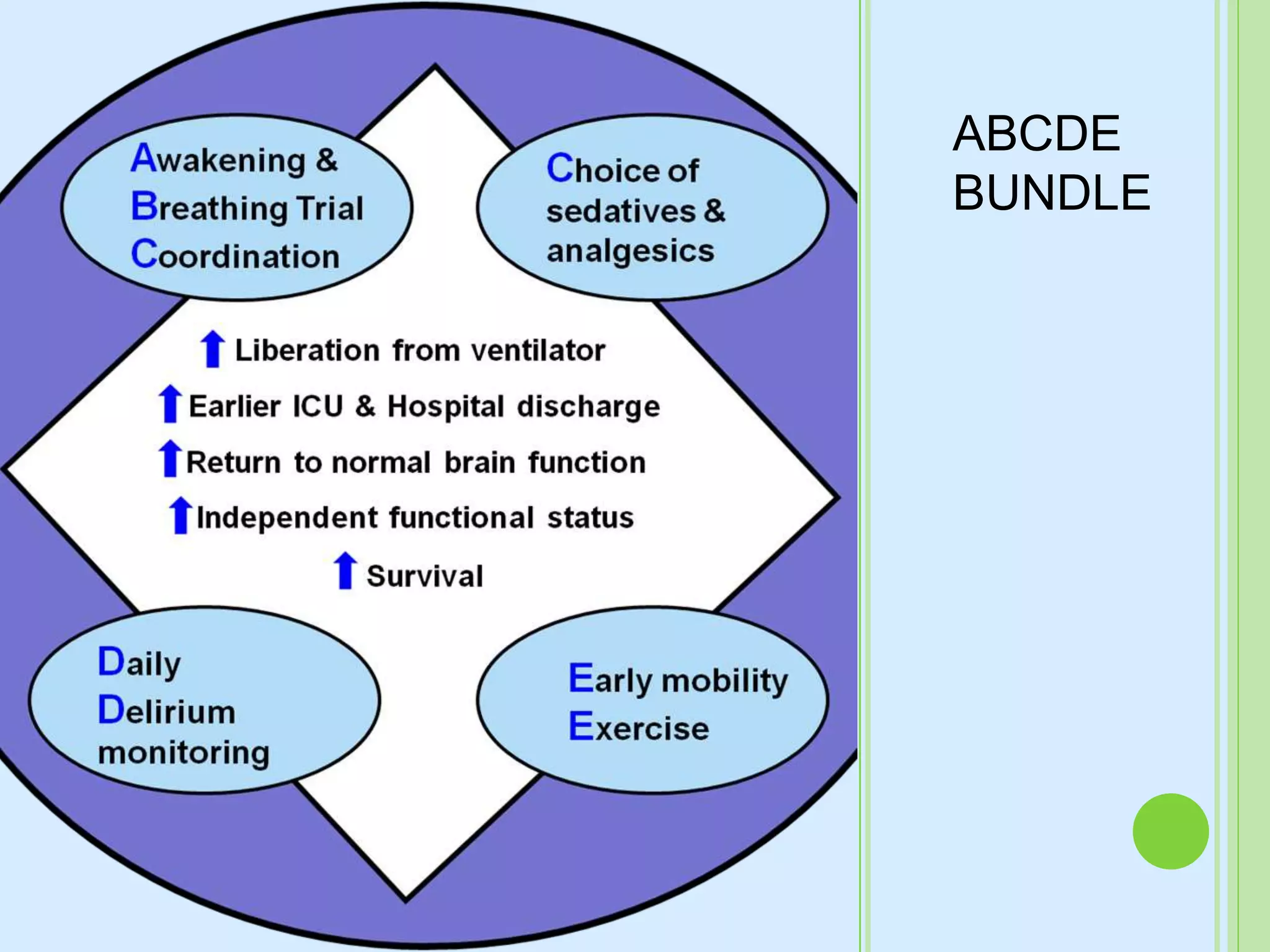
ABCDE
BUNDLE
CONCLUSION
 1. Critically ill patients experience pain in situations that
are not normally painful. This indicates that pain
control is a full-time endeavor in ICU patients.
 2. Unrelieved pain can be a source of agitation, so
make sure that pain is relieved before considering a
sedative drug for agitation.
 3. When a benzodiazepine is used for prolonged (>48
hrs) sedation, attention to preventing drug
accumulation and prolonged sedation can result in a
shorter time in the ICU.
 4. The preventive measures include daily interruption
of drug infusions, or maintaining light sedation using a
reliable sedation scale to guide adjustments in drug
dosage.
 4. Consider using dexmedetomidine for sedation,
because this drug allows the patient to be aroused
while still sedated . When arousal is no longer
needed, the patient will resume the prior level of
sedation. This is more like sleep than a drug-
induced stupor.
 5. Finally, communicate with patients (e.g., tell
them what you are going to do before doing it), and
allow some “down time” for patients to sleep.
REFERENCES
 Paul Marino,The ICU book.4th edition
 Barr J, Fraser GL, Puntillo K, et al. Clinical practice
guidelines for the management of pain. agitation,
and delirium in adult patients in the intensive care
unit. Crit Care Med 2013; 41:263–306.
 Michael C. Reade et al, Sedation and Delirium in
the Intensive Care Unit ,N Engl J Med
2014;370:444-54.
THANKS
FOR
PATIENT
HEARING

Sedation in icu

  • 1.
    ART OF SEDATION& ANALGESIA IN ICU Dr. Ashish Ranjan Senior resident ESICPGIMSR,New Delhi
  • 2.
    LEARNING OBJECTIVES  Definitionsof Pain agitation and delirium  How to monitor these  Drugs and their dosing  Adverse reactions  Pain,Agitaion,Delirium(PAD) bundles
  • 4.
    PAIN  Pain isdefined as “an unpleasant sensory or emotional experience”, which highlights the subjective nature of pain.  The pain sensation can be described in terms of intensity, duration, location, and quality  but pain intensity is the parameter most often monitored because it reflects the “unpleasantness” of pain.
  • 5.
    MONITORING OF PAIN Pain Intensity Scales There are 6 different pain intensity scales.2 are important  1. When patients can reliably self-report pain, the Numerical Ranking Scale can be used for pain assessment  2. When patients are sedated and on a ventilator, the Behavioral Pain Scale (BPS) recommended for pain assessments  Adequate pain control = SCORE 5
  • 6.
  • 7.
    OPOID ANALGESIA  Stimulationof opioid receptors produces a variety of effects, including analgesia, Sedation, euphoria, pupillary constriction Respiratory depression, bradycardia, constipation, nausea, vomiting, urinary retention, and pruritis  Fentanyl has replaced morphine as the most popular opioid analgesic in ICUs  The advantages of fentanyl over morphine include a more rapid onset of action (because fentanyl is 600 times more lipid soluble than morphine), less risk of hypotension (because fentanyl does not promote histamine release) and the absence of active metabolites.
  • 9.
    REMIFENTANIL  Remifentanil isan ultra-short acting opioid that is given by continuous intravenous Infusion  Dosing Regimen: 1.5 μg/kg as a loading dose, followed by a continuous infusion at 0.5– 15 μg/kg/hr  Analgesic effects are lost within 10 minutes after stopping the drug infusion.  The short duration of action is B/C it is broken down by nonspecific esterases in plasma. Because drug metabolism does not take place in the liver or kidneys, dose adjustments are not necessary in renal or hepatic failure.  Short duration of action is most advantageous in conditions that require frequent evaluations of cerebral function (e.g., traumatic head injuries).  The abrupt cessation of opioid activity can precipitate acute opioid withdrawal which can be prevented by combining remifentanil with a longer-acting opioid.
  • 10.
    PCA For patients whoare awake and capable of drug self-administration, patient-controlled analgesia (PCA) can be an effective method of pain control, and may be superior to intermittent opioid dosing. The PCA method uses an electronic infusion pump that can be activated by the patient. When pain is sensed, the patient presses a button connected to the pump to receive a small intravenous bolus of drug. After each bolus, the pump is disabled for a mandatory time period called the “lockout interval,” to prevent overdosing. When writing orders for PCA, one must specify the initial loading dose (if any), the lockout interval, and the repeat bolus dose. PCA can be used alone or in conjunction with a low dose opioid infusion.
  • 11.
    ADVERSE EFFECTS  Respiratorydepression  Hypotension ,bradycardia  Intestinal hypomotility-Opioid-induced bowel hypomotility can be partially reversed with enteral naloxone (8 mg every 6 hours) without affecting opioid analgesia  Vomiting and nausea
  • 12.
    NON OPOID ANALGESIA Only three drugs: acetaminophen, ketorolac, and ibuprofen are used primarily for pain control in the early postoperative period.  They can be used alone for mild pain, but are used in combination with an opioid analgesic for moderate-to-severe pain.  The goal of combination analgesic therapy is to reduce the opioid dose (“opioid sparing” effect) and hence reduce the risk of an opioid-related adverse effect.
  • 14.
    ANXIETY, AGITATION  Anxietyand related disorders (agitation ) are observed in as many as 85% of patients in the ICU .  These disorders can be defined as follows. 1. Anxiety is characterized by exaggerated feelings of fear or apprehension that are sustained by internal mechanisms more than external events. 2. Agitation is a state of anxiety that is accompanied by increased motor activity. .  The common denominator in these disorders is the absence of a sense of well-being.
  • 15.
    SEDATION  Sedation isthe process of relieving anxiety and establishing a state of calm. This process includes general supportive measures (like frequent communication with patients and families), and drug therapy.
  • 16.
     Initial management-conservatively managing the identifiable cause of distress  Non-pharmacologic management: Reassurance, interaction with the patient and reorientation, family visits, cognitive behaviour therapy  Sedation: when these are not effective in controlling the distress
  • 17.
    AGENTS OF SEDATIONIN ICU Agents causing sedation by their direct effect  (a)GABA agonists (GABA is one of the most important CNS inhibitory system) (1) Benzodiazepines (diazepam, lorazepam, midazolam) (2) Propofol  (b)Alpha 2 agonist (1) Dexmedetomidine Agents causing sedation as an adverse effect  (a) Antipsychotics (1) Typical – haloperidol (2) Atypical – risperidone, olanzapine  (b) Opioids
  • 19.
    BZD  GABA- Acentral nervous system receptors • Metabolized by the liver, excreted through kidneys • Reduced clearance in hepatic dysfunction except for Lorazepam • Long half life in renal failure- prolonged effect • Elderly patients clear more slowly • S/E - respiratory depression and hypotension Prolonged sedation
  • 20.
    ADVANTAGES AND DISADVANTAGES Advantages 1.Benzodiazepines have a dose-dependent amnestic effect (antegrade amnesia), 2. Benzodiazepines have anticonvulsant effects 3. Benzodiazepines are the sedatives of choice for drug withdrawal syndromes, including alcohol, opiate, and benzodiazepine withdrawal.  Disadvantages (a) drug accumulation with prolonged sedation, and (b) the apparent tendency for benzodiazepines to promote delirium.
  • 21.
    SOLUTION FOR PROLONGEDSEDATION  1.Daily interruption of benzodiazepine infusions (until the patient awakens) curtails drug accumulation, and has been shown to shorten the duration of mechanical ventilation,and reduce the length of stay in the ICU ).  2. Titration of benzodiazepine infusions to maintain light levels of sedation, using routine monitoring with a sedation scale (SAS or RASS), a standard practice.  3. The final solution to the problem is to avoid benzodiazepines for sedation
  • 22.
    LORAZEPAM  Propylene glycol(1,2-propanediol) is the solvent used to deliver lorazepam and diazepam IV Close monitoring of all patients receiving IV lorazepam or diazepam for early evidence of propylene glycol toxicity is warranted  Life threatening iatrogenic complication that is preventable  – unexplained anion gap  – unexplained metabolic acidosis  – hyperosmolality  – clinical deterioration
  • 23.
    PROPOFOL  Activates GABAreceptors & inhibits NMDA glutamate receptors  Rapid onset and offset of sedation  Helpful in patients requiring frequent awakenings for neurologic assessments and it may facilitate daily sedation interruption protocols  Not dependent on hepatic and renal function
  • 24.
    PRIS  Propofol infusionsyndrome is a rare and poorly understood condition that is characterized by the abrupt onset of bradycardic heart failure, lactic acidosis, rhabdomyolysis, and acute renal failure  This syndrome almost always occurs during prolonged, high-dose propofol infusions (>4–6 mg/kg/hr for longer than 24–48 hrs) (53).  The mortality rate is 30% . Avoiding propofol infusion rates above 5 mg/kg/hr for longer than 48 hrs is recommended to reduce the risk of this condition
  • 25.
    WHICH AGENT TOUSE  Individualize based on patient factors  Expected duration of ventilation  Presence of organ failures, hypersensitivity to drugs  Clinical pharmacology of the drug in use must be considered  Hypoalbuminemia  Drug interaction due to polypharmacy  Altered pharmacokinetics and dynamics – drug accumulation  Cost and cost-effectiveness
  • 26.
    HOW TO MONITOR Sedation Agitation Scale (SAS)  Richmond Agitation-Sedation Scale (RASS)  Observer’s assessment of alertness/sedation scale  (OAA/S)  Ramsay sedation scale  New Sheffield sedation scale  Sedation Intensive Care Score (SEDIC)  Motor Activity Assessment Score (MAAS)  Adaption to Intensive care environment (ATICE)  Minnesota Sedation Assessment Tool (MSAT)  Vancouver Interaction and Calmness Scale (VICS)
  • 28.
  • 29.
     Light sedationimproves outcome (RASS -2 to +1 in many studies. Varies from trial to trial)  Shorter ICU stay and ventilation days  Though light sedation may increase some physiologic Stress, (increased catecholamine levels and oxygen consumption) may not be associated with negative clinical outcomes  No difference in post ICU psychological outcome based on the depth of sedation
  • 30.
    INTERRUPTION OF SEDATION Daily sedation interruption (DSI) defined as short-term suspension, hold, discontinuation, cessation, or interruption of intravenous sedatives(continuous infusions or fixed dose bolus) and, in some cases, analgesic medications”  To prevent drug bioaccumulation  Awake state  Assess whether liberation is possible or not and neurologic status  Interruption is done till patient becomes awake, and can obey simple commands  Daily interruption of sedation (DSI) may reduce the total duration of ventilation Burry L et al. Cochrane Database of Systematic Reviews 2014, Issue 7. Art. No.: CD009176
  • 31.
    DEXMEDETOMIDINE  Alpha 2adrenergic agonist  Similar to clonidine, but more specific  Does not act on GABA receptors  Acts on locus ceruleus  No respiratory depression
  • 32.
     Recent meta-analysis:28 studies (27 publications)  Trials in general ICU setting – 13  Loading dose 1 mcg/kg followed by infusion ranging from 0.1 to 2.5 mcg/kg have been in used in majority (18 trials)  Six different comparators: propofol in 11 study, midazolam in 10, placebo in 5, morphine in 2, haloperidol and lorazepam in one each Pasin L, et al. PloS one. 2013;8(12):e82913
  • 35.
    ADVERSE EFFECT  Decreasessympathetic activity – may increase adverse cardiac events Especially in individuals with autonomic disturbance, elderly, diabetics, chronic hypertension. Valvular heart disease, heart blocks, severe CAD, hypotension/ hypovolemia
  • 37.
    DELIRIUM  Four domainsof delirium: disturbance of consciousness, change in cognition, development over a short period, and fluctuation.  Delirium is defined by the National Institutes of Health as “sudden severe confusion and rapid changes in brain function that occur with physical or mental illness.”  The most common feature of delirium, thought by many to be its cardinal sign, is inattention.  Delirium is a nonspecific but generally reversible manifestation of acute illness that appears to have many causes, including recovery from a sedated or oversedated state
  • 38.
     Forms ofdelirium, 1.Hypoactive and 2.Aagitated (or hyperactive). 3.Mixed delirium.  The hypoactive form is characterized by inattention, disordered thinking, and a decreased level of consciousness without agitation.  Although the association between delirium and a worse outcome is clear, a causal relationship has not been established.  A diagnosis of delirium is associated with increased mortality (estimated as a 10% increase in the relative risk of death for each day of delirium
  • 40.
    INTENSIVE CARE DELIRIUMSCREENING CHECKLIST  • Patient must show at least a response to mild or moderate stimulation. Then score 1 point for each of the following features :  – Anything other than “normal wakefulness”  – Inattention  – Disorientation  – Hallucination  – Psychomotor agitation  – Inappropriate speech or mood  – Disturbance in sleep or wake cycle  – Fluctuation in symptoms  A score of ≥4 is positive for delirium (with scores of 1 to 3 termed “subsyndromal delirium”)
  • 41.
    HALOPERIDOL  Haloperidol producesits sedative and antipsychotic effects by blocking dopamine receptors in the central nervous system.  Following an intravenous bolus dose of haloperidol, sedation is evident in 10–20 minutes, and the effect lasts 3–4 hours.  There is no respiratory depression, and hypotension is unusual in the absence of hypovolemia
  • 42.
  • 43.
    ADVERSE EFFECT  Theadverse effects of haloperidol include: (a) extrapyramidal reactions, (b) neuroleptic malignant syndrome, and (c) ventricular tachycardia.  1. Extrapyramidal reactions (e.g., rigidity, spasmodic movements) are dose-related side effects of oral haloperidol therapy,  2. The neuroleptic malignant syndrome, an idiosyncratic reaction to neuroleptic agents that consists of hyperpyrexia, severe muscle rigidity, and rhabdomyolysis.  3. The most publicized risk of therapy with haloperidol is prolongation of the QT interval on the electrocardiogram, which can trigger a polymorphic ventricular tachycardia (torsade de pointes).
  • 46.
  • 47.
    CONCLUSION  1. Criticallyill patients experience pain in situations that are not normally painful. This indicates that pain control is a full-time endeavor in ICU patients.  2. Unrelieved pain can be a source of agitation, so make sure that pain is relieved before considering a sedative drug for agitation.  3. When a benzodiazepine is used for prolonged (>48 hrs) sedation, attention to preventing drug accumulation and prolonged sedation can result in a shorter time in the ICU.  4. The preventive measures include daily interruption of drug infusions, or maintaining light sedation using a reliable sedation scale to guide adjustments in drug dosage.
  • 48.
     4. Considerusing dexmedetomidine for sedation, because this drug allows the patient to be aroused while still sedated . When arousal is no longer needed, the patient will resume the prior level of sedation. This is more like sleep than a drug- induced stupor.  5. Finally, communicate with patients (e.g., tell them what you are going to do before doing it), and allow some “down time” for patients to sleep.
  • 49.
    REFERENCES  Paul Marino,TheICU book.4th edition  Barr J, Fraser GL, Puntillo K, et al. Clinical practice guidelines for the management of pain. agitation, and delirium in adult patients in the intensive care unit. Crit Care Med 2013; 41:263–306.  Michael C. Reade et al, Sedation and Delirium in the Intensive Care Unit ,N Engl J Med 2014;370:444-54.
  • 50.