Presentation On
Recombinant Protein Technology
By Group 4
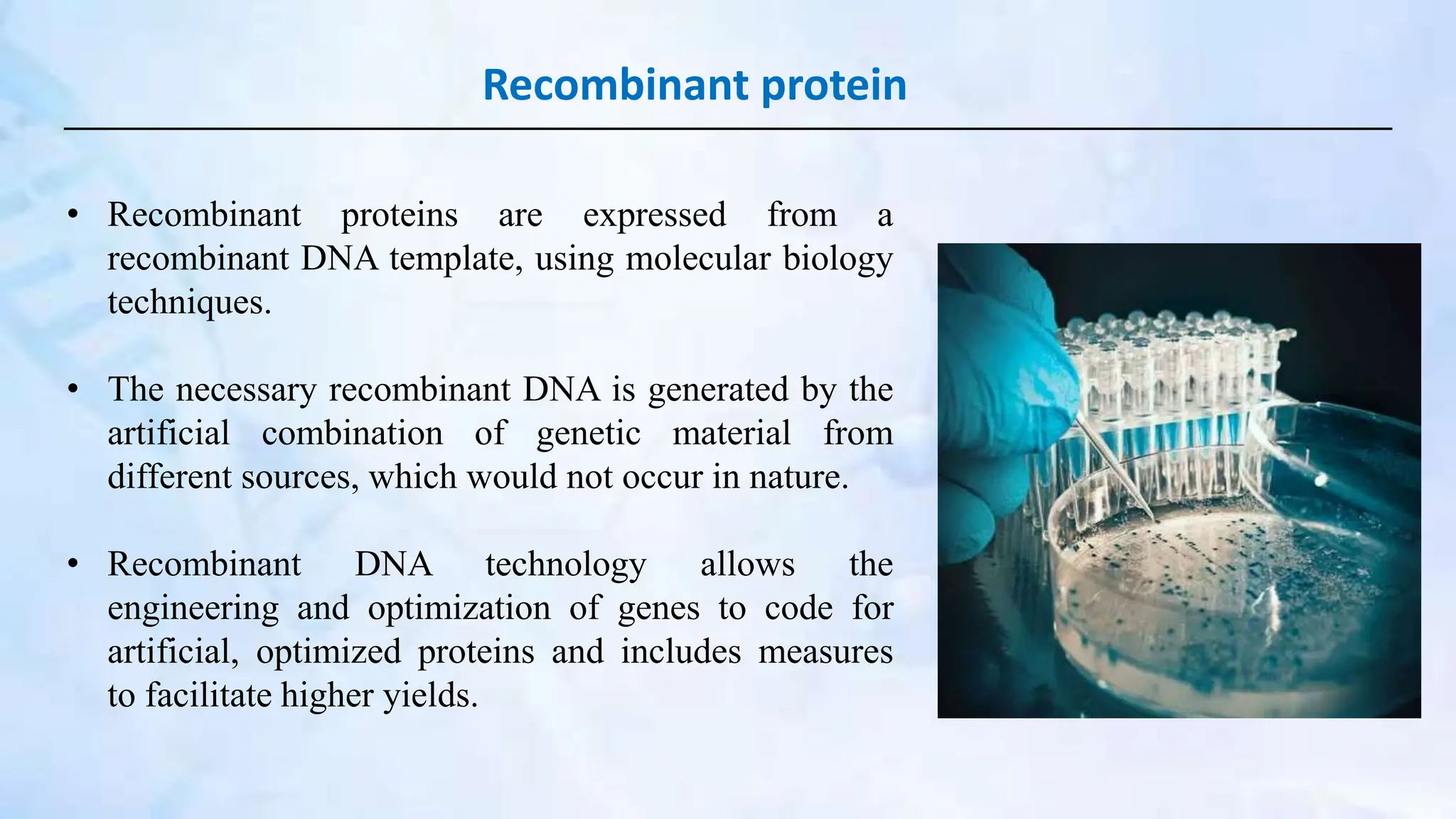
• Recombinant proteins are expressed from a
recombinant DNA template, using molecular biology
techniques.
• The necessary recombinant DNA is generated by the
artificial combination of genetic material from
different sources, which would not occur in nature.
• Recombinant DNA technology allows the
engineering and optimization of genes to code for
artificial, optimized proteins and includes measures
to facilitate higher yields.
Recombinant protein
Types of recombinant proteins
There are several types of recombinant proteins, each with distinctive fields of
application. Frequent recombinant protein types in a clinical setting are:
 Interferons
 Recombinant hormones
 Tumor necrosis factors
 Interleukins
 Thrombolytic drugs
 Blood clotting factors 1
Examples of Recombinant protein
Examples for recombinant proteins are:
 Human insulin: treatment against diabetes
 Human growth factors: treatment for growth hormone deficiency
 Factor VIII: treatment for hemophilia
 Therapeutic monoclonal antibodies, e.g. as treatment for cancer or viral
Infections such as SARS-COV-2
 Various research reagents for e.g. ELISA and fluorescence assays,
Inhibitors, receptors for small molecules, protein folding and many more
History of Recombinent Protein Technology
Herbert Boyer
Stanley Cohen
Recombinant protein production techniques include:
● genetic engineering: DNA cloning and vector design.
● transfection of host cells (bacterial, yeast, mammalian)
● protein expression and purification.
Recombinant protein production method
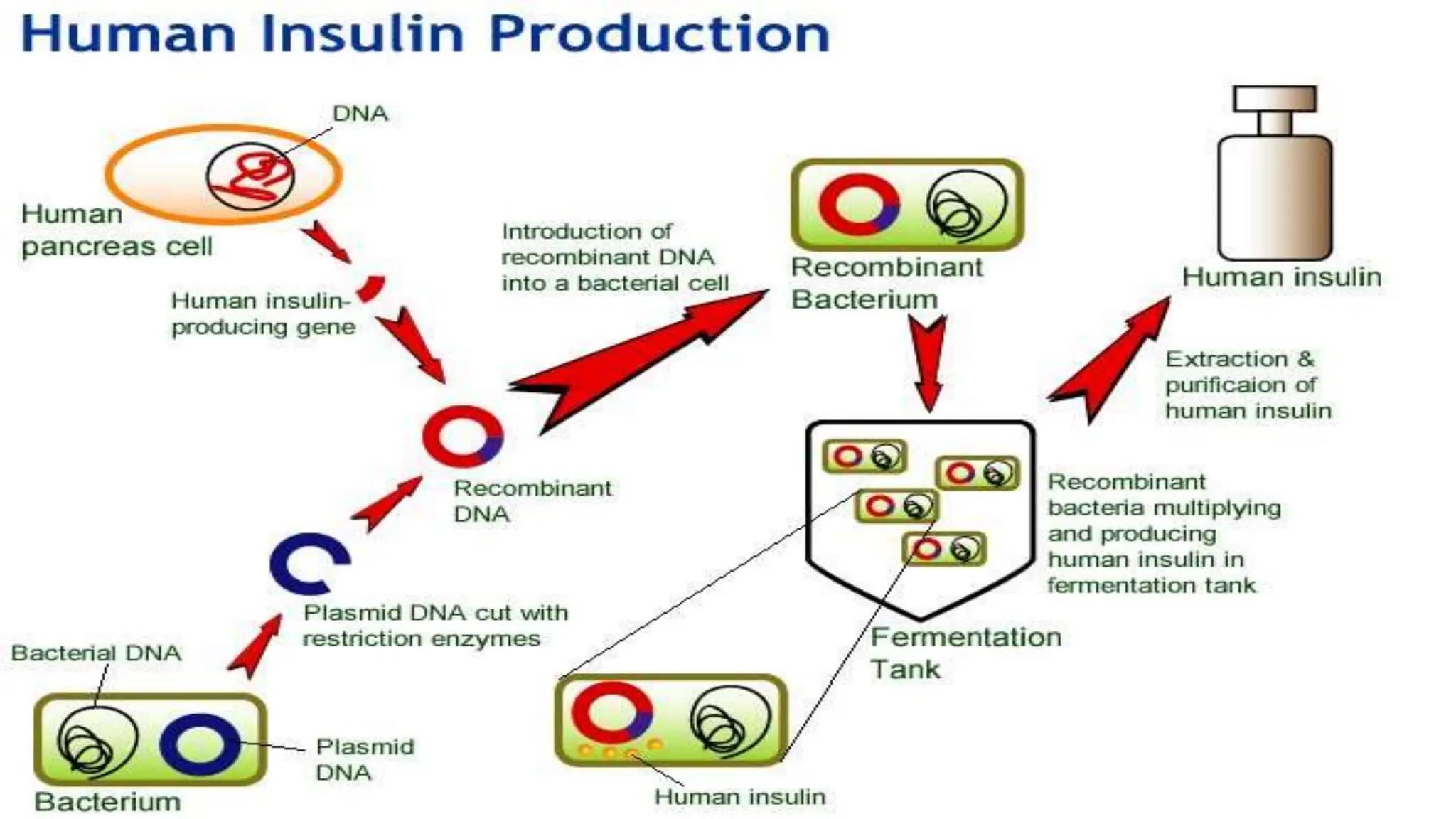
Steps of Producing Recombinant Protein
Equipment for Recombinant Technology
 Target Gene  PCR Machine
 Vector  Centrifuges
 Host ( Bacteria)  Incubator
 Expression System  Spectrophotometer
 Chromatography system  Freeze Dryers
Host & Vector PCR Machine Spectrophotometer
Incubator
Gene Isolation: Identify and isolate the gene encoding
the
desired protein.
Gene Cloning: Isolate the gene of interest. Insert it into
a cloning vector (like a plasmid).
 DNA cloning is the process of making identical
copies (clones) of a DNA sequence. It involves the
insertion of a target DNA
 fragment into a vector, often a plasmid, to replicate
the DNA in a host organism.
 Introduce the vector into a host organism.
Method
Host Culture:
 Grow the host cells (e.g., bacteria, yeast,
mammalian cells) in a suitable culture medium.
 Ensure the host cells replicate, expressing the recombinant
gene.
CONT”D
Expression:
 Induce the expression of the recombinant gene using
promoters inducible system.
 Cells start producing the desired protein.
 Different types of expression system -
CONT”D
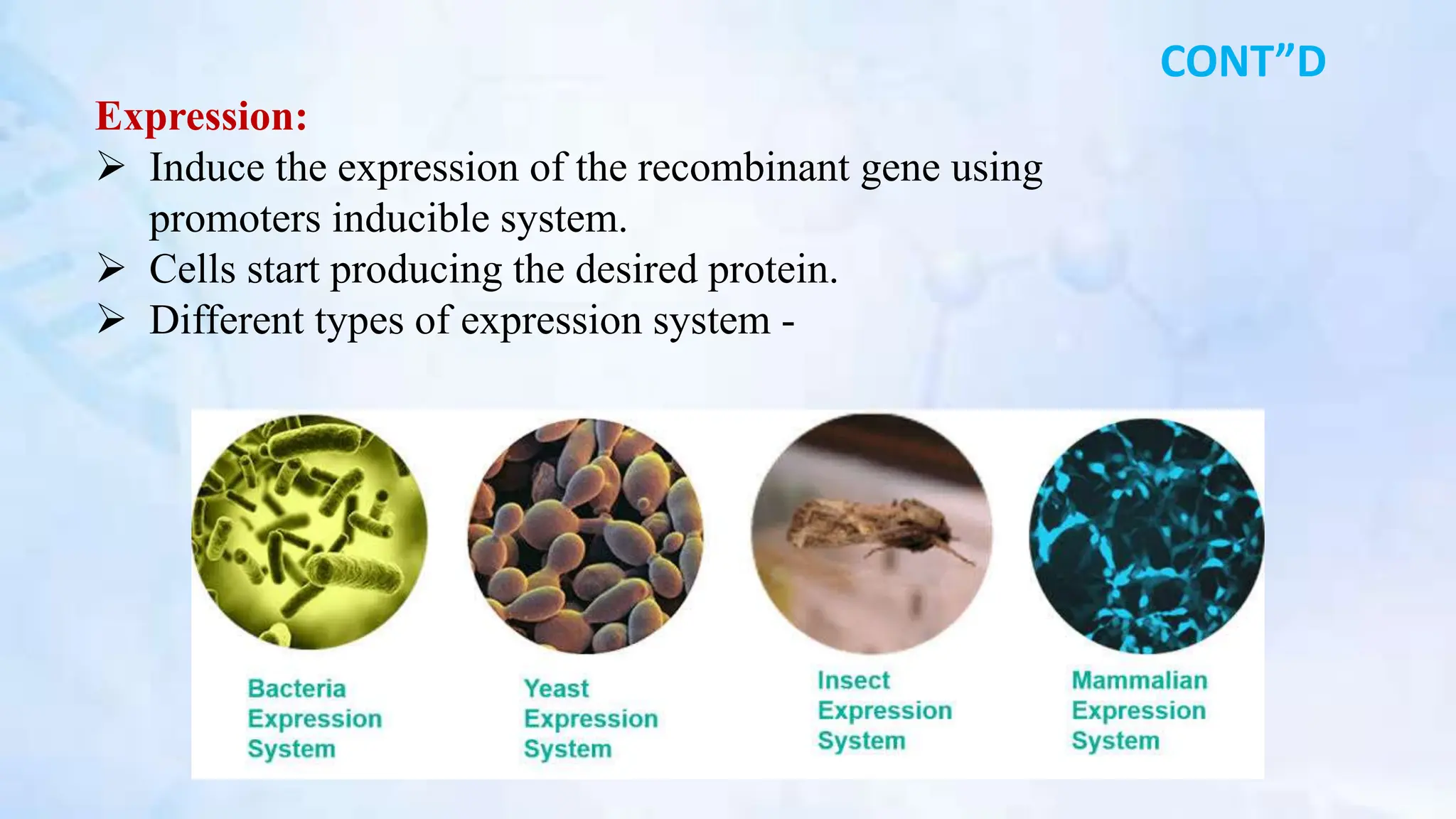
Bacterial Expression Systems
Advantages: Fast growth, cost-effective.
Common Hosts: Escherichia coli (E. coli).
Limitations: Lack of eukaryotic post-
translational modifications
Mammalian Cell Expression
Systems
Advantages: Authentic eukaryotic post-translational
modifications, proper protein folding.
Common Hosts: CHO cells, HEK293 cells.
Limitations: Higher cost and longer production times.
Yeast Expression Systems:
Advantages: Eukaryotic post-translational
modifications, simple cultivation.
Common Hosts: Pichia pastoris
Limitations: Limited glycosylation compared to
higher eukaryotes
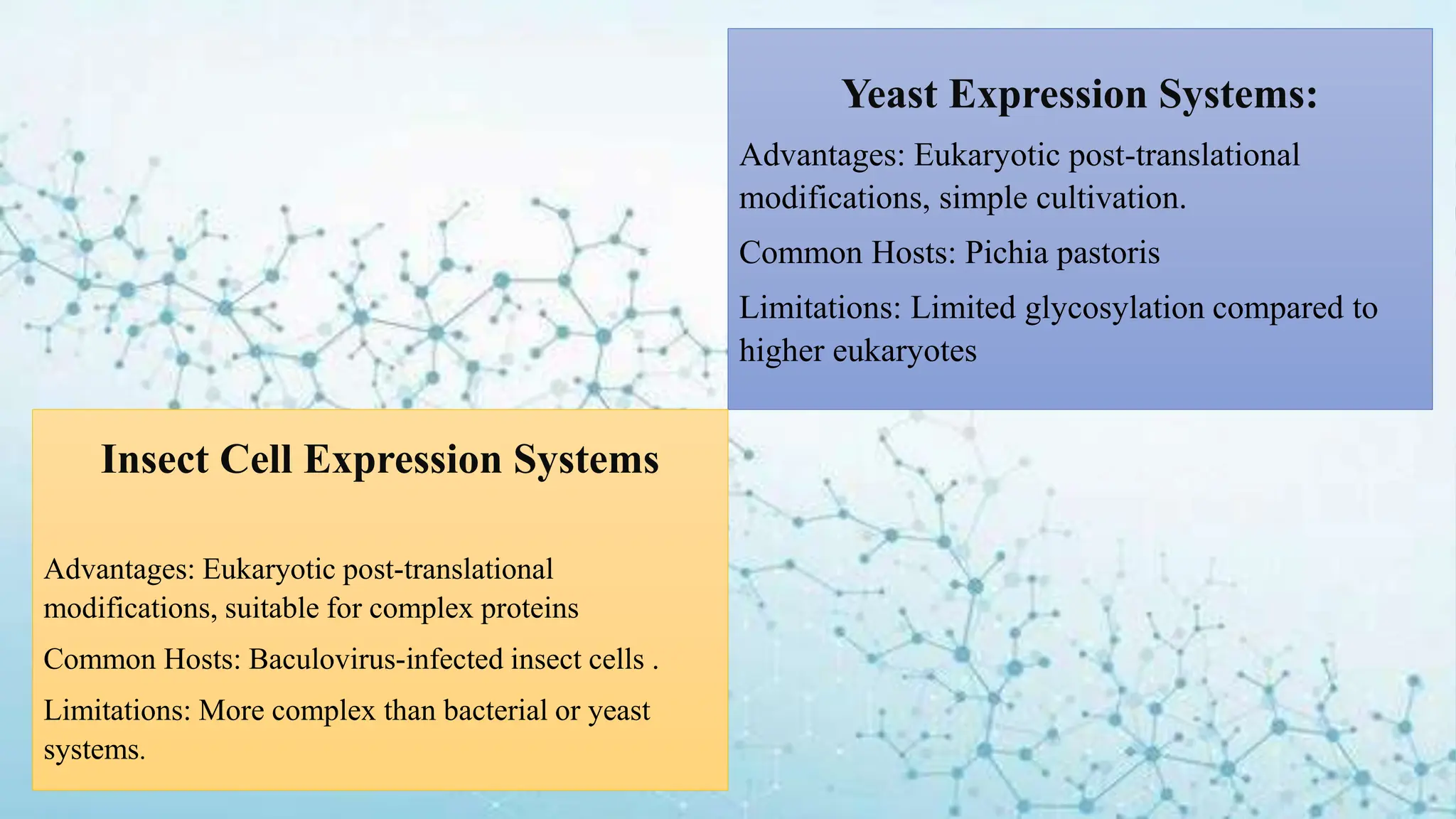
Insect Cell Expression Systems
Advantages: Eukaryotic post-translational
modifications, suitable for complex proteins
Common Hosts: Baculovirus-infected insect cells .
Limitations: More complex than bacterial or yeast
systems.
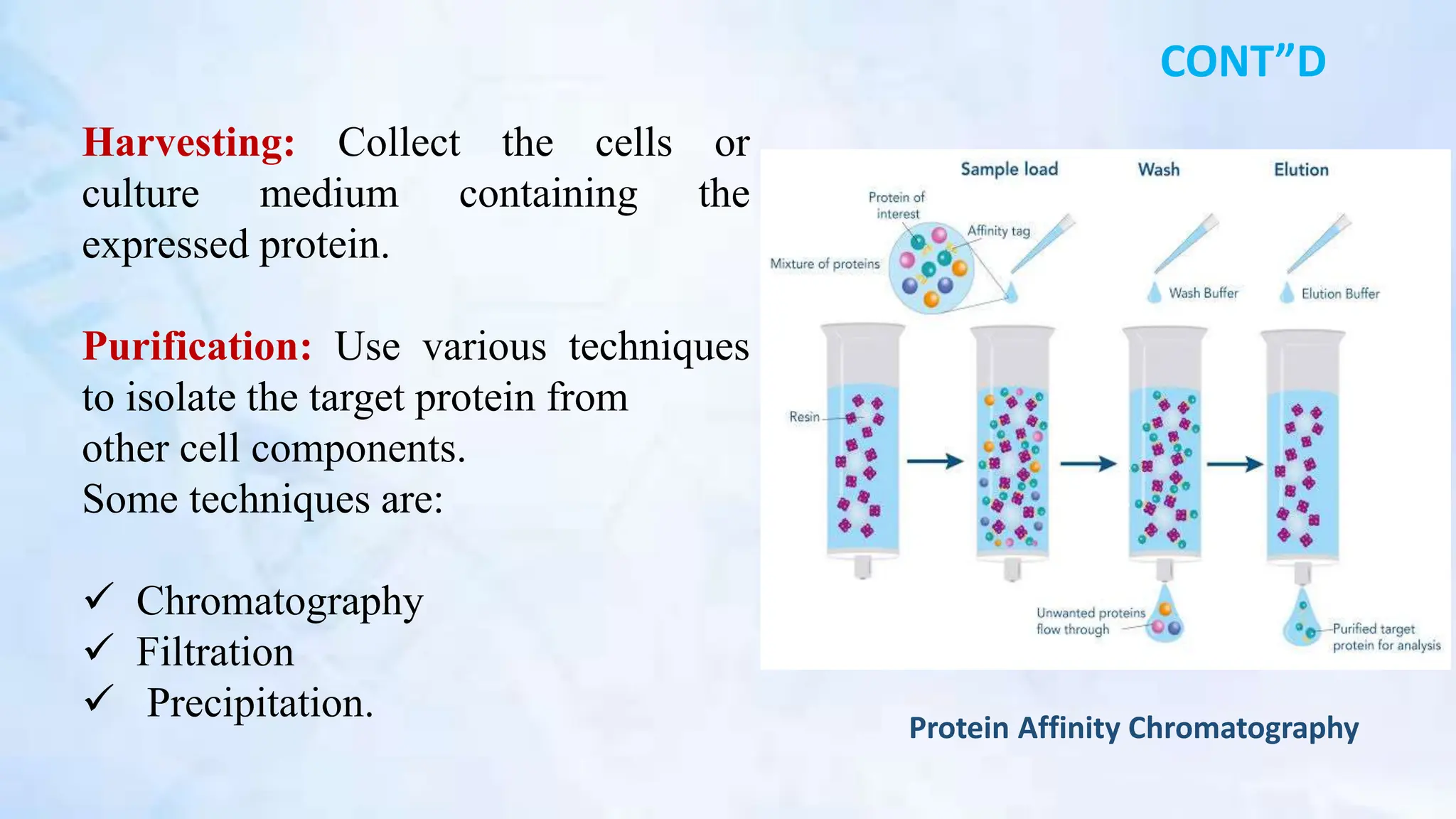
Harvesting: Collect the cells or
culture medium containing the
expressed protein.
Purification: Use various techniques
to isolate the target protein from
other cell components.
Some techniques are:
 Chromatography
 Filtration
 Precipitation.
CONT”D
Protein Affinity Chromatography
1. *Medical Therapeutics:*
- Insulin: Recombinant human insulin is used to treat
diabetes.
- Hormones: Production of growth hormone,
erythropoietin, and other therapeutic proteins.
- Vaccines: Recombinant technology is employed in
vaccine development, such as hepatitis B vaccine.
2. *Research and Diagnostic Tools:*
- Recombinant Enzymes: DNA polymerases, ligases, and
restriction enzymes for molecular biology research.
- Reporter Proteins: Used in assays to monitor gene
expression and cellular processes.
Applications of Recombinant Protein Technology
3. *Industrial Enzymes:*
- Detergents and Textiles: Enzymes for stain removal
and fabric processing.
- Food Industry: Enzymes for food processing and
production.
4. *Agriculture:*
- Genetically Modified Crops: Development of crops
with enhanced nutritional content or resistance to pests.
5. *Environmental Applications:*
- Bioremediation: Use of recombinant
microorganisms for environmental cleanup.
CONT”D
8. *Antigen Production:*
- Diagnostic Tests: Recombinant proteins are used as antigens for diagnostic assays.
9. *Gene Therapy:*
- Vector Development: Recombinant viruses or other vectors are engineered for
delivering therapeutic genes.
10. *Production of Industrial Chemicals:*
- Biofuels: Recombinant microorganisms are used to produce biofuels.
11. *Antiviral Drugs:*
- HIV Treatments: Recombinant technology contributes to the development of
antiretroviral drugs.
CONT”D
Disadvantage of Recombinant Technology
• Recombinant technology is mostly used in production of
insulin, human growth hormone, vaccines ,Interferons etc.
Recombinant proteins are used in medical applications,
particularly as medications and vaccines.
• Recombinant technology is that it allows introduction of
modifications into proteins at desired positions.
CONCLUSION
Recombinant Protein Technology in laboratory .pptx

Recombinant Protein Technology in laboratory .pptx

  • 1.
  • 2.
    • Recombinant proteinsare expressed from a recombinant DNA template, using molecular biology techniques. • The necessary recombinant DNA is generated by the artificial combination of genetic material from different sources, which would not occur in nature. • Recombinant DNA technology allows the engineering and optimization of genes to code for artificial, optimized proteins and includes measures to facilitate higher yields. Recombinant protein
  • 3.
    Types of recombinantproteins There are several types of recombinant proteins, each with distinctive fields of application. Frequent recombinant protein types in a clinical setting are:  Interferons  Recombinant hormones  Tumor necrosis factors  Interleukins  Thrombolytic drugs  Blood clotting factors 1
  • 4.
    Examples of Recombinantprotein Examples for recombinant proteins are:  Human insulin: treatment against diabetes  Human growth factors: treatment for growth hormone deficiency  Factor VIII: treatment for hemophilia  Therapeutic monoclonal antibodies, e.g. as treatment for cancer or viral Infections such as SARS-COV-2  Various research reagents for e.g. ELISA and fluorescence assays, Inhibitors, receptors for small molecules, protein folding and many more
  • 5.
    History of RecombinentProtein Technology Herbert Boyer Stanley Cohen
  • 6.
    Recombinant protein productiontechniques include: ● genetic engineering: DNA cloning and vector design. ● transfection of host cells (bacterial, yeast, mammalian) ● protein expression and purification. Recombinant protein production method
  • 7.
    Steps of ProducingRecombinant Protein
  • 8.
    Equipment for RecombinantTechnology  Target Gene  PCR Machine  Vector  Centrifuges  Host ( Bacteria)  Incubator  Expression System  Spectrophotometer  Chromatography system  Freeze Dryers Host & Vector PCR Machine Spectrophotometer Incubator
  • 9.
    Gene Isolation: Identifyand isolate the gene encoding the desired protein. Gene Cloning: Isolate the gene of interest. Insert it into a cloning vector (like a plasmid).  DNA cloning is the process of making identical copies (clones) of a DNA sequence. It involves the insertion of a target DNA  fragment into a vector, often a plasmid, to replicate the DNA in a host organism.  Introduce the vector into a host organism. Method
  • 10.
    Host Culture:  Growthe host cells (e.g., bacteria, yeast, mammalian cells) in a suitable culture medium.  Ensure the host cells replicate, expressing the recombinant gene. CONT”D
  • 11.
    Expression:  Induce theexpression of the recombinant gene using promoters inducible system.  Cells start producing the desired protein.  Different types of expression system - CONT”D
  • 12.
    Bacterial Expression Systems Advantages:Fast growth, cost-effective. Common Hosts: Escherichia coli (E. coli). Limitations: Lack of eukaryotic post- translational modifications Mammalian Cell Expression Systems Advantages: Authentic eukaryotic post-translational modifications, proper protein folding. Common Hosts: CHO cells, HEK293 cells. Limitations: Higher cost and longer production times.
  • 13.
    Yeast Expression Systems: Advantages:Eukaryotic post-translational modifications, simple cultivation. Common Hosts: Pichia pastoris Limitations: Limited glycosylation compared to higher eukaryotes Insect Cell Expression Systems Advantages: Eukaryotic post-translational modifications, suitable for complex proteins Common Hosts: Baculovirus-infected insect cells . Limitations: More complex than bacterial or yeast systems.
  • 14.
    Harvesting: Collect thecells or culture medium containing the expressed protein. Purification: Use various techniques to isolate the target protein from other cell components. Some techniques are:  Chromatography  Filtration  Precipitation. CONT”D Protein Affinity Chromatography
  • 16.
    1. *Medical Therapeutics:* -Insulin: Recombinant human insulin is used to treat diabetes. - Hormones: Production of growth hormone, erythropoietin, and other therapeutic proteins. - Vaccines: Recombinant technology is employed in vaccine development, such as hepatitis B vaccine. 2. *Research and Diagnostic Tools:* - Recombinant Enzymes: DNA polymerases, ligases, and restriction enzymes for molecular biology research. - Reporter Proteins: Used in assays to monitor gene expression and cellular processes. Applications of Recombinant Protein Technology
  • 17.
    3. *Industrial Enzymes:* -Detergents and Textiles: Enzymes for stain removal and fabric processing. - Food Industry: Enzymes for food processing and production. 4. *Agriculture:* - Genetically Modified Crops: Development of crops with enhanced nutritional content or resistance to pests. 5. *Environmental Applications:* - Bioremediation: Use of recombinant microorganisms for environmental cleanup. CONT”D
  • 18.
    8. *Antigen Production:* -Diagnostic Tests: Recombinant proteins are used as antigens for diagnostic assays. 9. *Gene Therapy:* - Vector Development: Recombinant viruses or other vectors are engineered for delivering therapeutic genes. 10. *Production of Industrial Chemicals:* - Biofuels: Recombinant microorganisms are used to produce biofuels. 11. *Antiviral Drugs:* - HIV Treatments: Recombinant technology contributes to the development of antiretroviral drugs. CONT”D
  • 19.
  • 20.
    • Recombinant technologyis mostly used in production of insulin, human growth hormone, vaccines ,Interferons etc. Recombinant proteins are used in medical applications, particularly as medications and vaccines. • Recombinant technology is that it allows introduction of modifications into proteins at desired positions. CONCLUSION