Downloaded 22 times
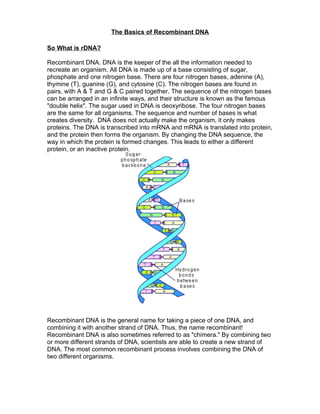
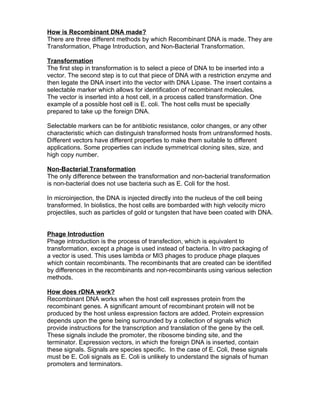

Recombinant DNA is created by combining DNA from two different organisms. There are three main methods to create recombinant DNA - transformation, phage introduction, and non-bacterial transformation. Transformation involves inserting DNA into a vector, which is then taken up by a host cell like E. coli. Recombinant DNA works by the host cell expressing proteins from the recombinant genes. Recombinant DNA technology has important applications including developing better crops, vaccines, and treatments for genetic diseases.


