ARMY COLLEGE OF NURSING
TOPIC – PROBLEM
SOLVING
SUBMITTED TO –MRS NAVJOT
KAUR
SUBMITTED BY –ANJALI
CHAUHAN
BSC(N)7TH
SEMESTER
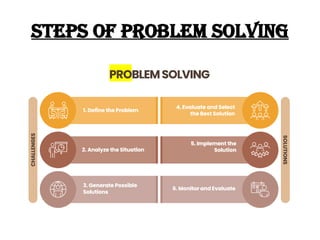
PROBLEM SOLVING
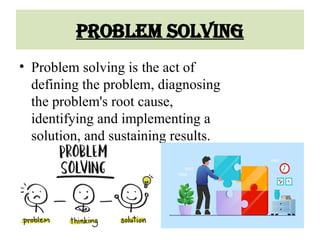
• Problem solving is the act of
defining the problem, diagnosing
the problem's root cause,
identifying and implementing a
solution, and sustaining results.
Steps of problem solving
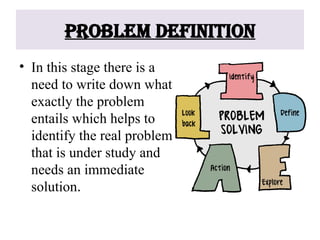
PROBLEM DEFINITION
• In this stage there is a
need to write down what
exactly the problem
entails which helps to
identify the real problem
that is under study and
needs an immediate
solution.
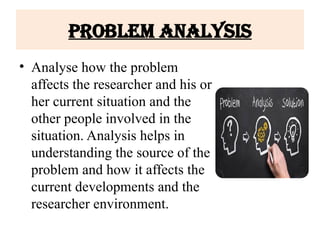
Problem analysis
• Analyse how the problem
affects the researcher and his or
her current situation and the
other people involved in the
situation. Analysis helps in
understanding the source of the
problem and how it affects the
current developments and the
researcher environment.
Generating possible solutions
• At this stage focus must be on
identifying all the generating
all the possible solutions for a
problem.
Analysing the solution
• At this stage various factors about
each of the potential solutions are
investigated where all positive
and negative aspects of each
solution are analysed.
Selecting the best solution
• At this stage an attempt is made to compare
the available solutions and eventually the best
solution is selected based on the careful
judgement which is supposed to solve the
problem swiftly and smoothly.
Implementation and evaluation
• The final step of the problem solving process
is to practically solve the problem by
implementing the selected solutions and
• An evaluation is judge the effectiveness of the
solution in resolving the problem.
SUMMARIZATION
• Problem solving process
• Problem solving steps
problem solving.presentation slideshow bsc nursing

problem solving.presentation slideshow bsc nursing

  • 1.
    ARMY COLLEGE OFNURSING TOPIC – PROBLEM SOLVING SUBMITTED TO –MRS NAVJOT KAUR SUBMITTED BY –ANJALI CHAUHAN BSC(N)7TH SEMESTER
  • 2.
    PROBLEM SOLVING • Problemsolving is the act of defining the problem, diagnosing the problem's root cause, identifying and implementing a solution, and sustaining results.
  • 3.
  • 4.
    PROBLEM DEFINITION • Inthis stage there is a need to write down what exactly the problem entails which helps to identify the real problem that is under study and needs an immediate solution.
  • 5.
    Problem analysis • Analysehow the problem affects the researcher and his or her current situation and the other people involved in the situation. Analysis helps in understanding the source of the problem and how it affects the current developments and the researcher environment.
  • 6.
    Generating possible solutions •At this stage focus must be on identifying all the generating all the possible solutions for a problem.
  • 7.
    Analysing the solution •At this stage various factors about each of the potential solutions are investigated where all positive and negative aspects of each solution are analysed.
  • 8.
    Selecting the bestsolution • At this stage an attempt is made to compare the available solutions and eventually the best solution is selected based on the careful judgement which is supposed to solve the problem swiftly and smoothly.
  • 9.
    Implementation and evaluation •The final step of the problem solving process is to practically solve the problem by implementing the selected solutions and • An evaluation is judge the effectiveness of the solution in resolving the problem.
  • 10.
    SUMMARIZATION • Problem solvingprocess • Problem solving steps