Download as PDF, PPTX
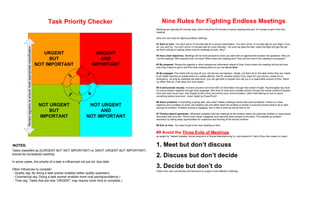
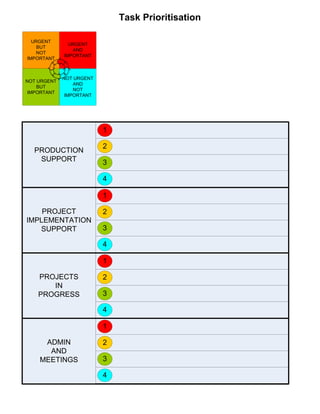

This document provides guidance on prioritizing tasks and making meetings more effective. It introduces a task priority checker that categorizes tasks as urgent/not urgent and important/not important. Tasks that are urgent but not important or not urgent but important should be considered carefully. Other factors like quality, commercial impacts, and time requirements also influence priority. The document then lists nine rules for effective meetings: start and end on time; have clear objectives and agenda; come prepared; stay engaged by avoiding phones/laptops; communicate visually; focus on solving problems; hold meetings near the problem location when possible; and avoid meetings that don't discuss, decide, or lead to action. Following these rules can make meetings more productive.


![[Infographic] How Simulations accelerate change management (5 stages).](https://cdn.slidesharecdn.com/ss_thumbnails/infographic-howbusinesssimulationsacceleraterealchange-160606134552-thumbnail.jpg?width=640&height=640&fit=bounds)


