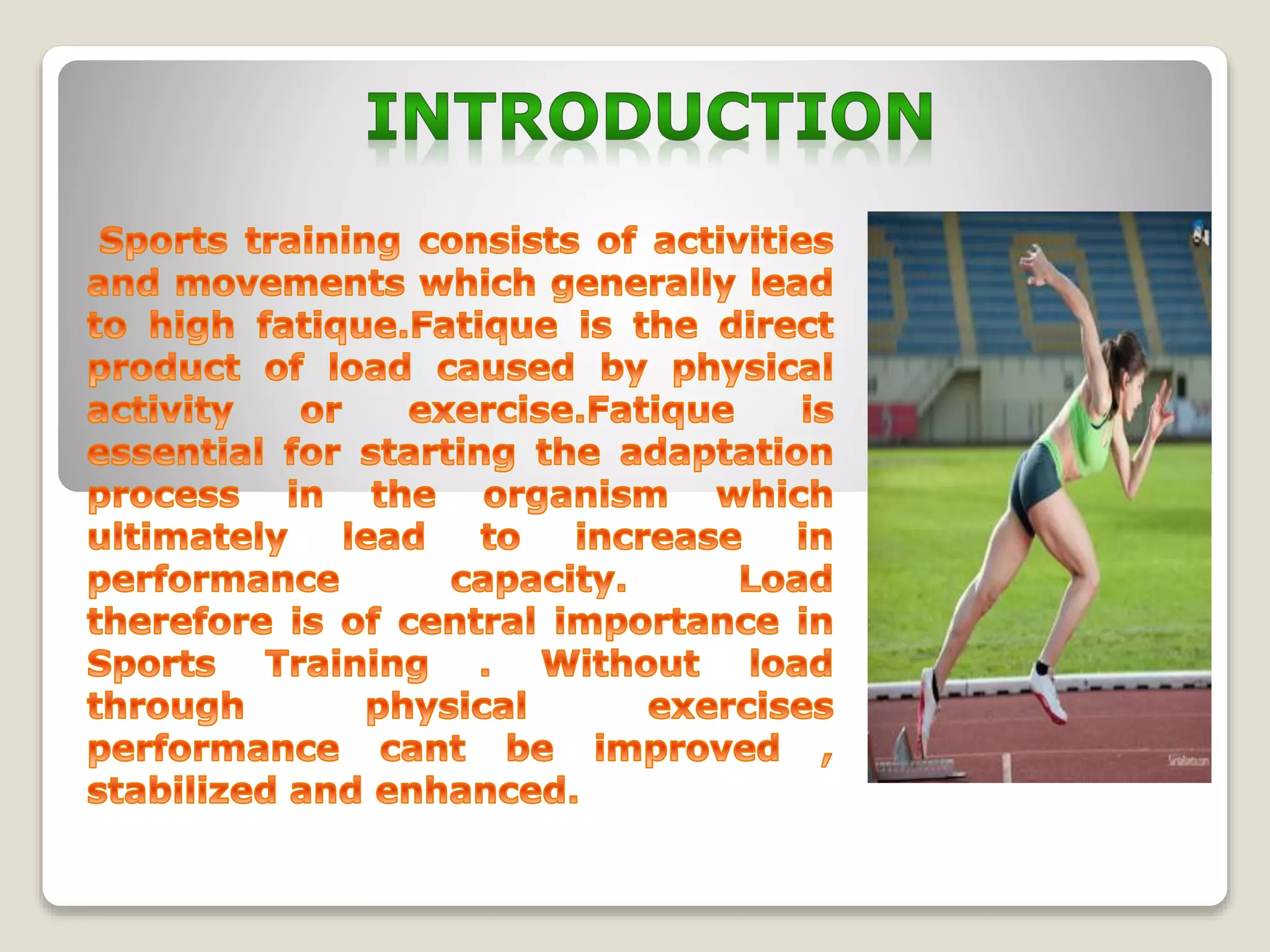
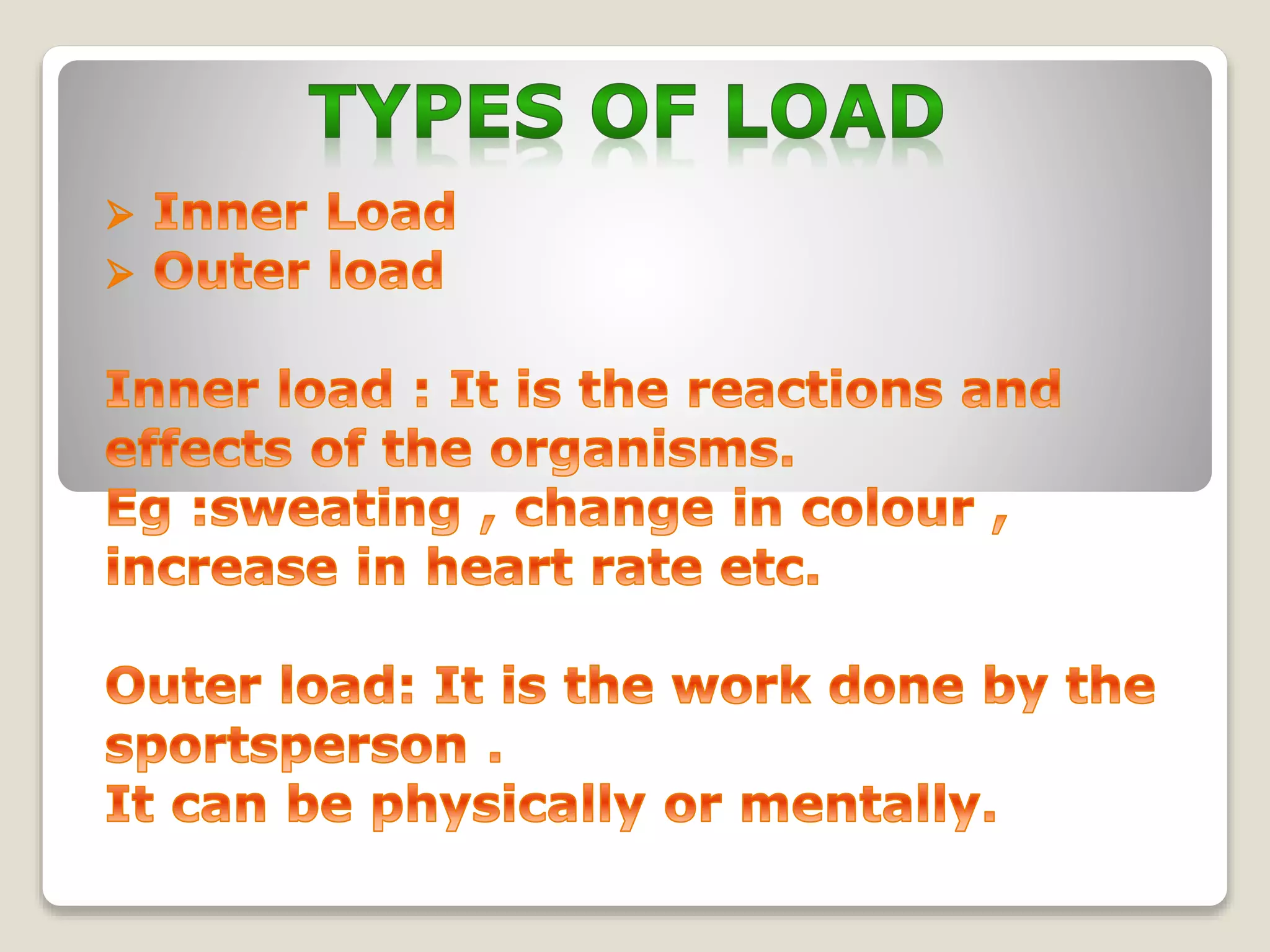
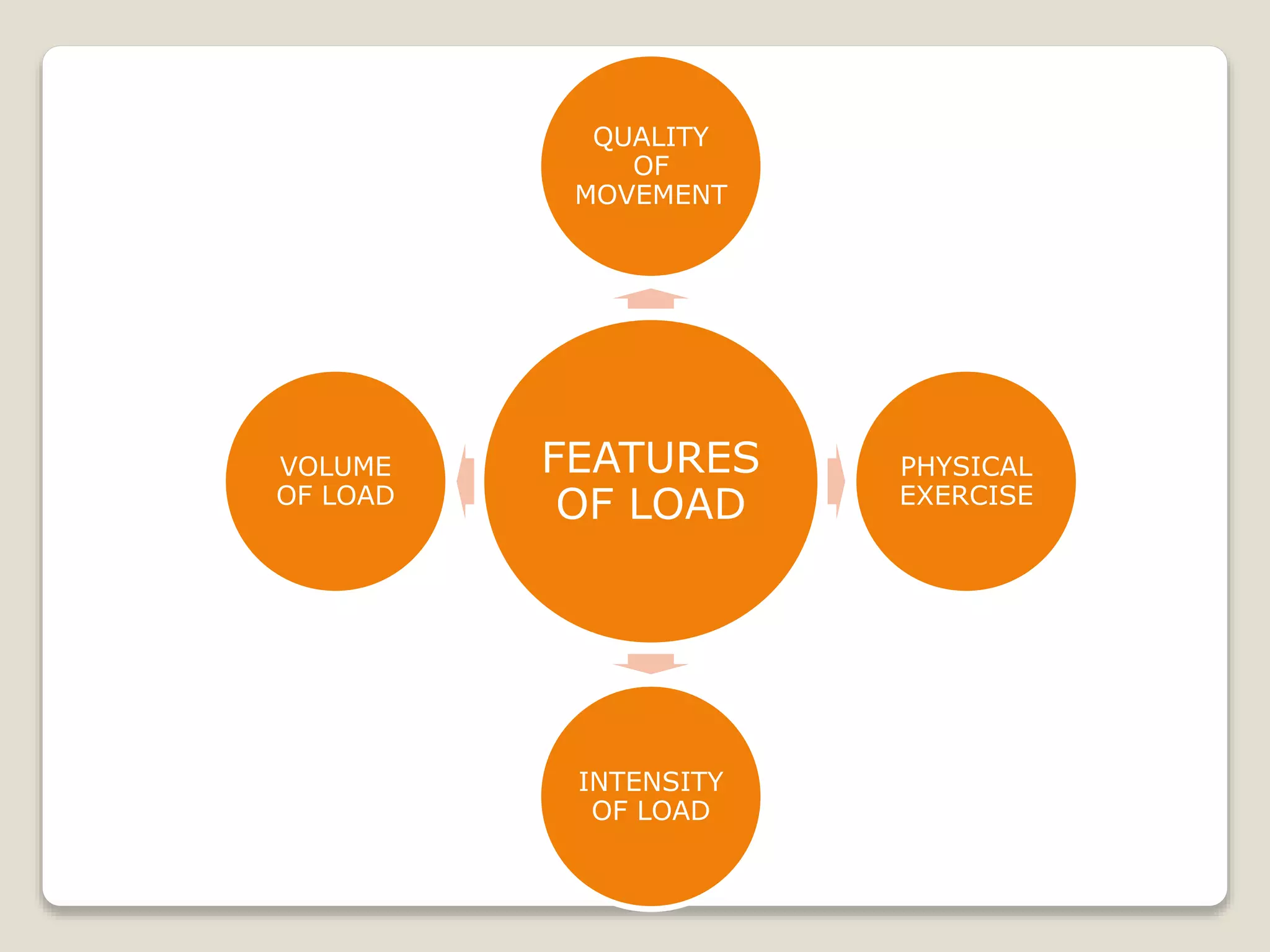
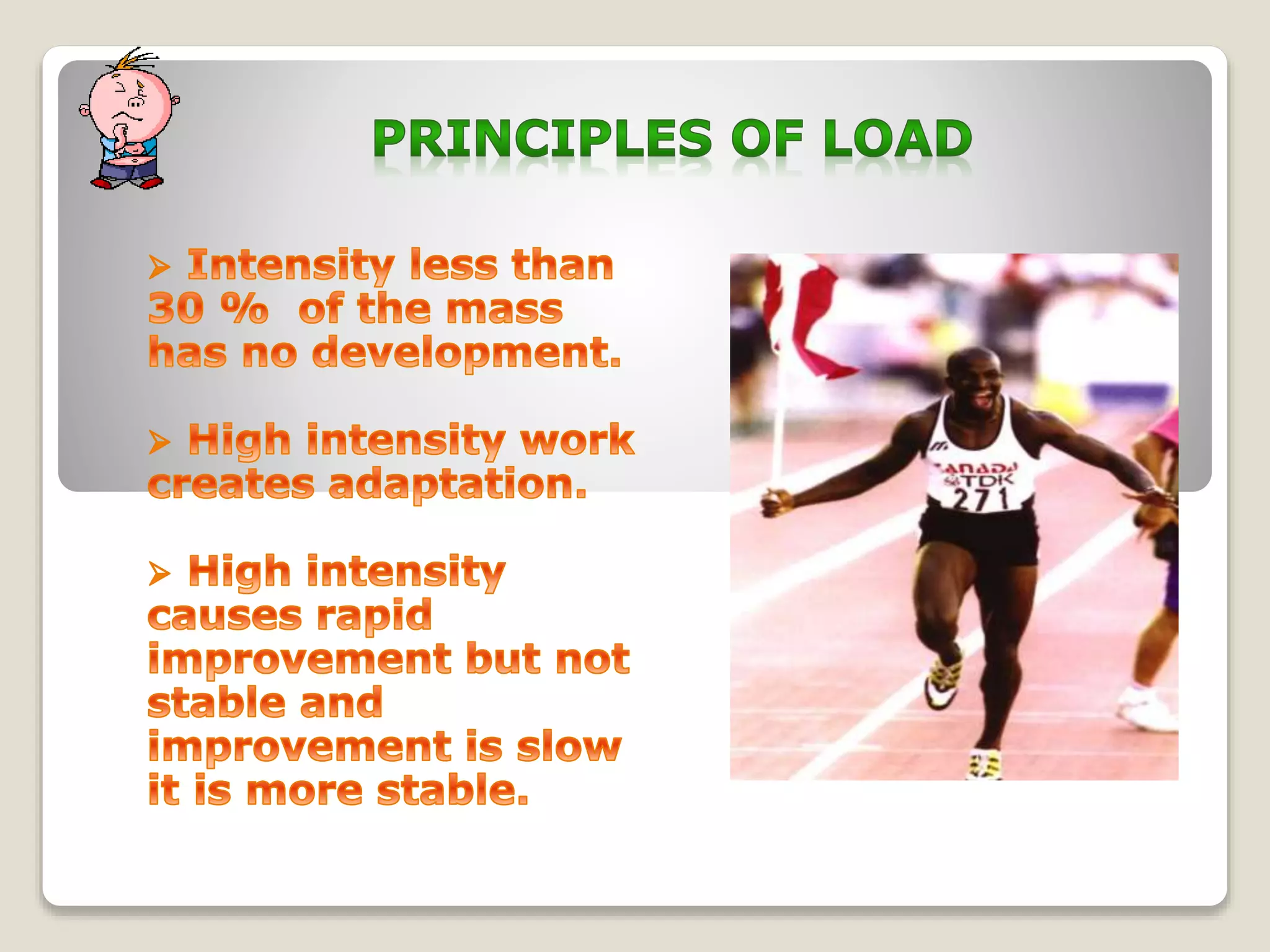
The document discusses the balance between training load and recovery for optimal adaptation in athletes, emphasizing that both intensity and volume of load are crucial for improvement in performance and tolerance. It highlights the risks of overload caused by faulty training methods, insufficient recovery, and life or health factors, alongside psychological and performance-related symptoms. To address overload, coaches should monitor athletes closely, reduce training loads, and incorporate recovery strategies while seeking professional guidance.
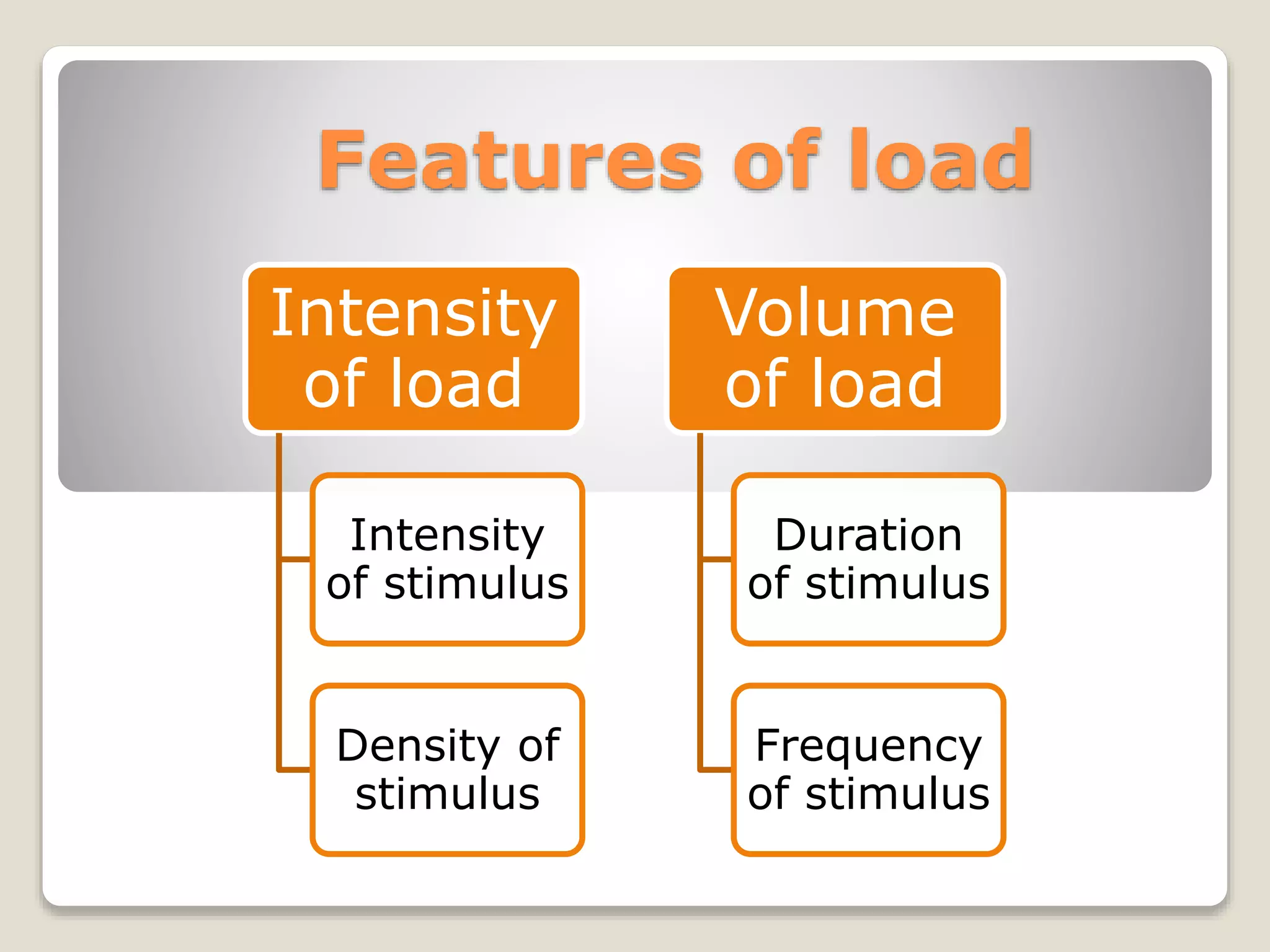
Features of load
Intensity
ofload
Intensity
of stimulus
Density of
stimulus
Volume
of load
Duration
of stimulus
Frequency
of stimulus
10.
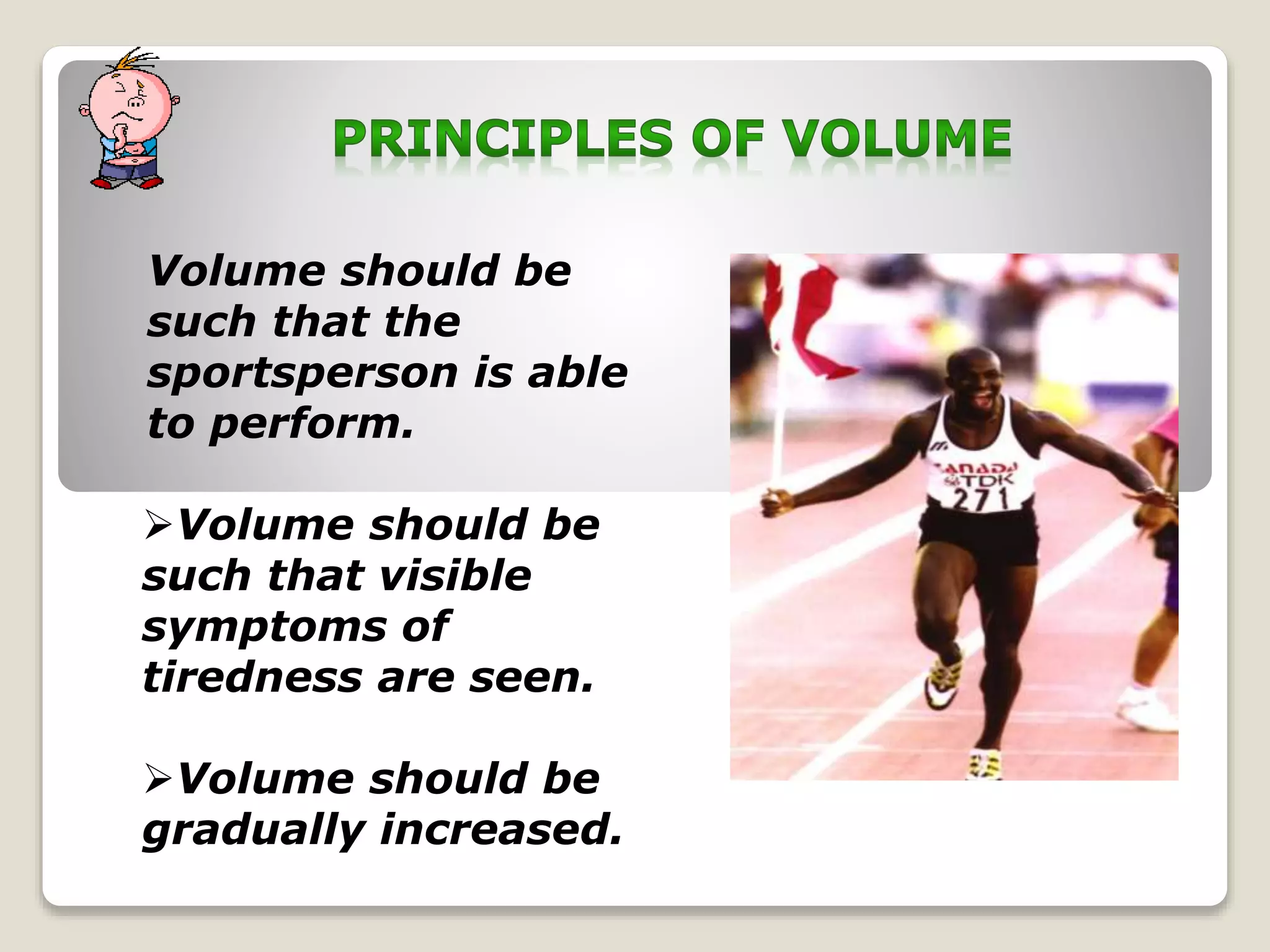
Volume should be
suchthat the
sportsperson is able
to perform.
Volume should be
such that visible
symptoms of
tiredness are seen.
Volume should be
gradually increased.
12.
ADAPTATION
This issimply a functional adjustment but if the
homeostasis is optimally disturbed repeatedly for a
number of days then the human body responds by
causing structural and metabolic changes which enables
the body to tolerate load more easily. This is called
adaptation.
The nature and actual process of adaptation, which is
psychic and physiological.
The adaptation takes place in all the organs, systems
and functions which are affected by the process of
tackling the training and competition demands.
13.
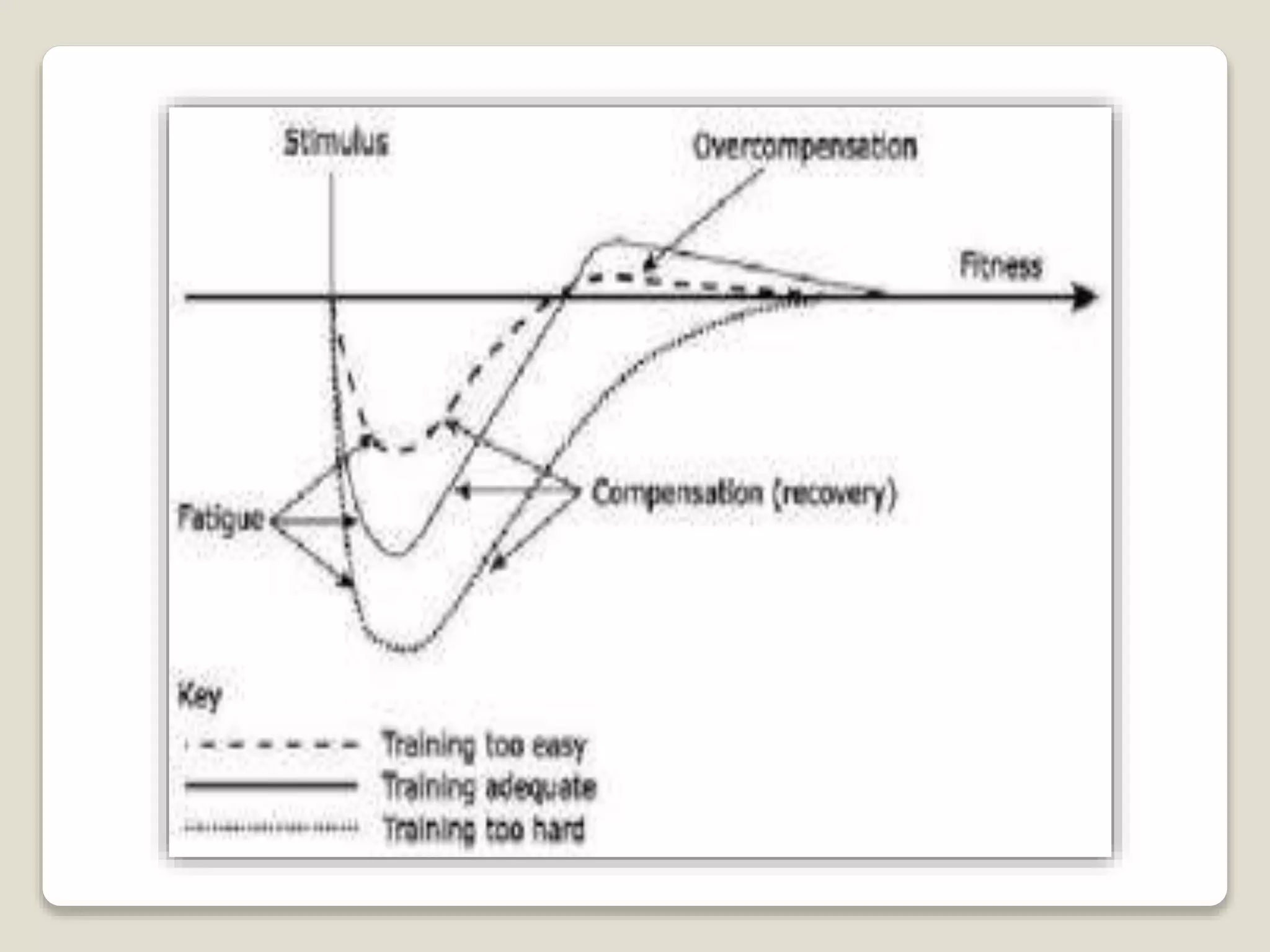
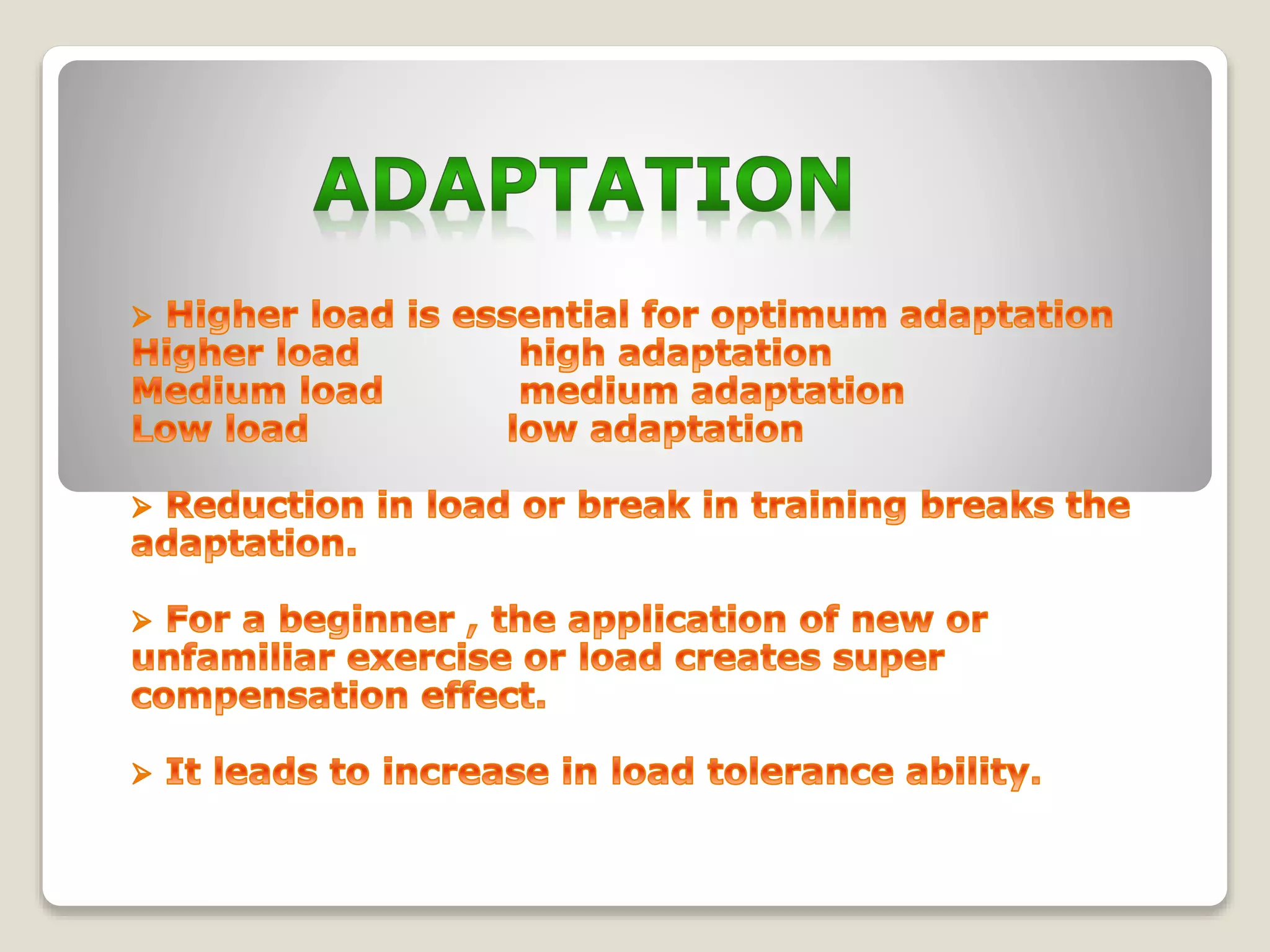
The adaptation processesare set in motion only
when the load is optimum. For achieving
adaptation the load must have certain minimum of
intensity and volume. This is true for both psychic
and physiological adaptation. If the load is less
then the adaptation processes are not started and
if the load is too much then recovery processes are
delayed considerably.
The adaptation to load not only results in
improvement of performance capacity but it also
leads to increase in the load tolerance ability. With
improved training state the sportsman is able to
tolerate higher loads. The improvement in
performance and in load tolerance, however, does
not have linear relationship. The ability to tolerate
load improves at a slower pace.
15.
1.Proper relationship b/wload and
recovery.
2.Improper relationship b/w load
and recovery.
3.High load and short recovery.
16.
Proper Relationship
Load phaseRecovery
phase
Load - initial level of performance capacity
Phase of super
fatigue compensation
19.
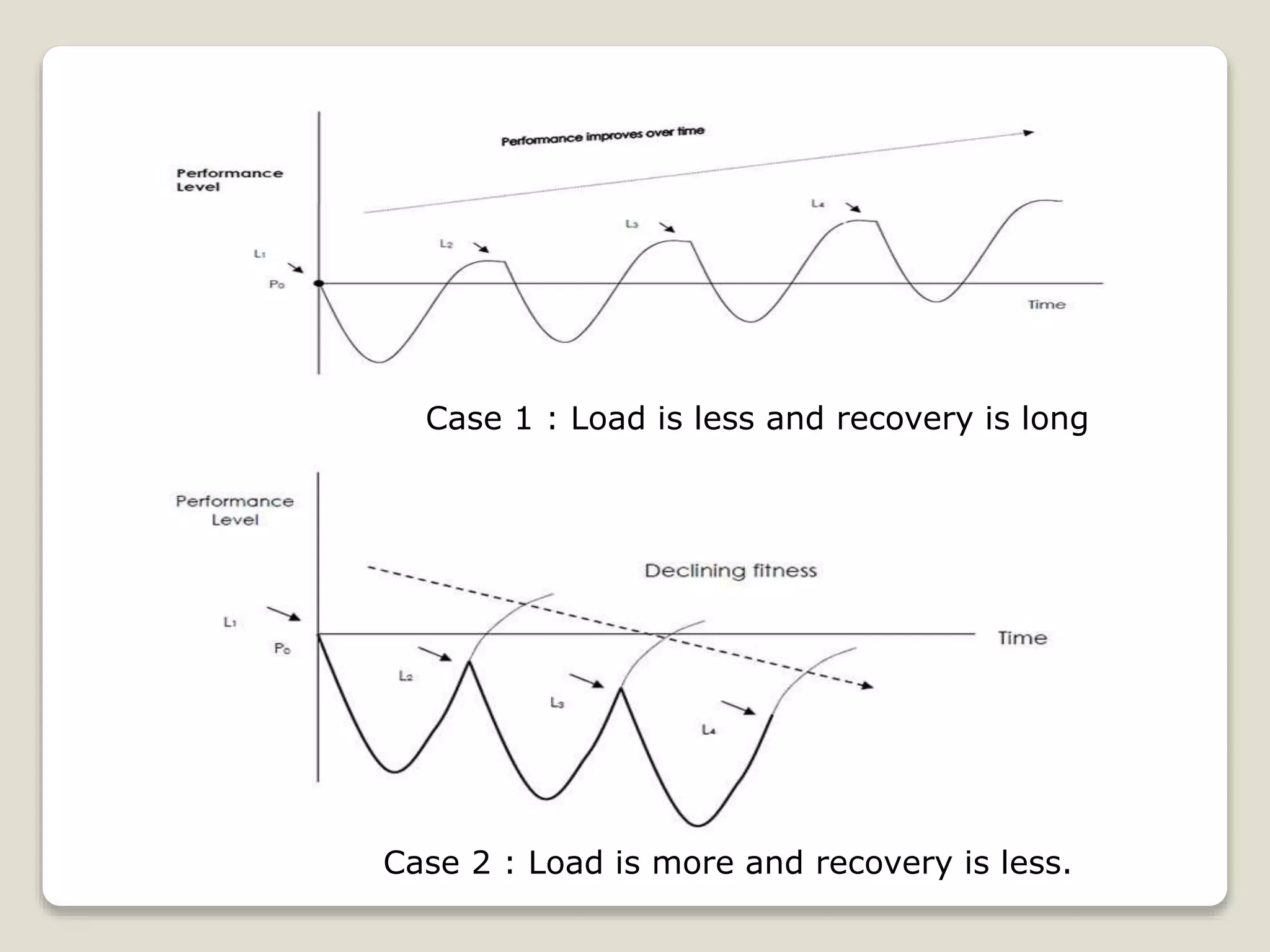
Case 1 :Load is less and recovery is long
Case 2 : Load is more and recovery is less.
21.
OVER LOAD
whenthe physical and psychic daily load of life
exceeds the loading capacity of the individual the
load is called overload. The other system of body
are also unable to perform to the best of their
efficiency.
22.
CAUSES OF OVERLOAD
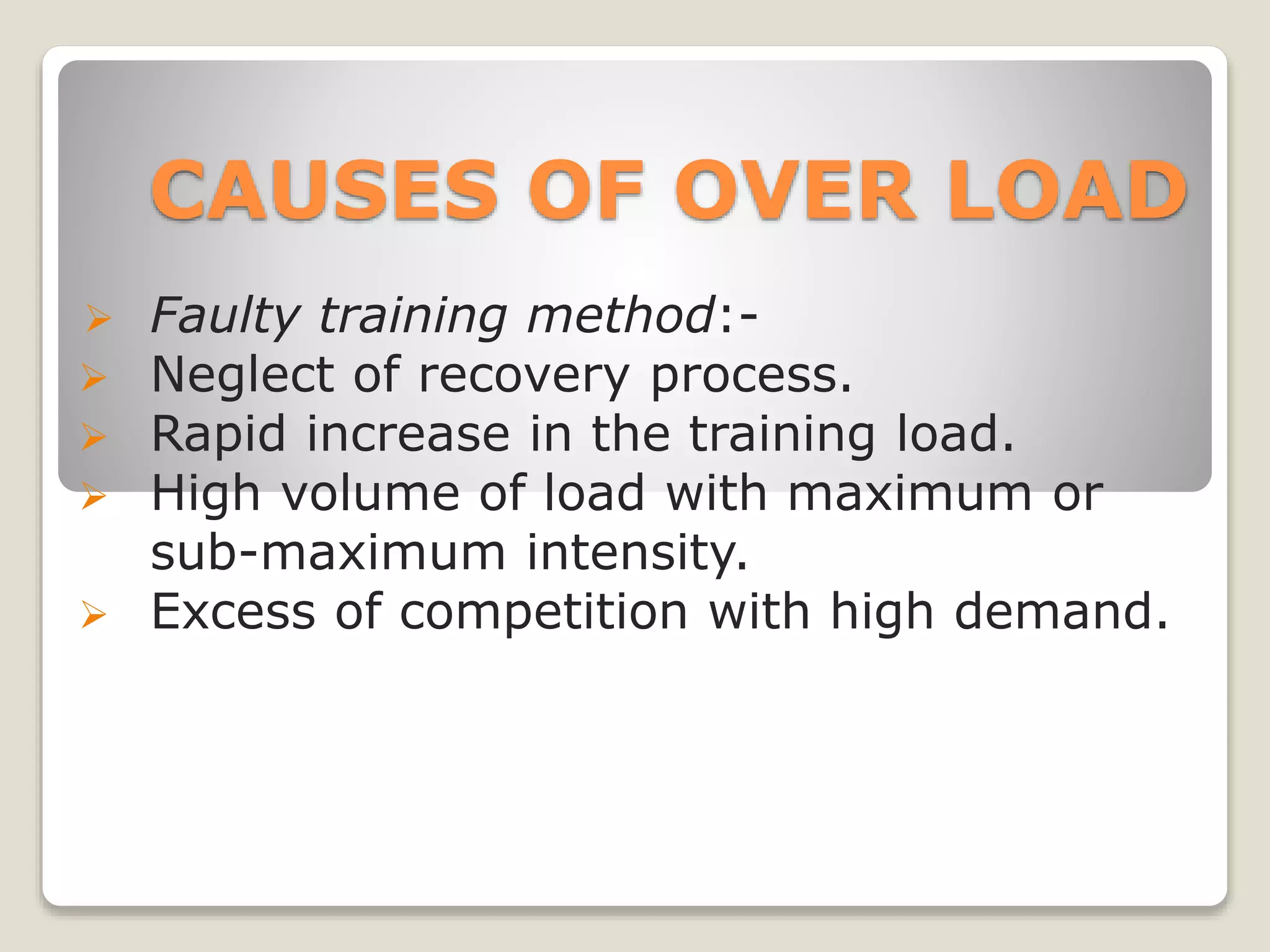
Faulty training method:-
Neglect of recovery process.
Rapid increase in the training load.
High volume of load with maximum or
sub-maximum intensity.
Excess of competition with high demand.
23.
Life factor:-
a.Insufficient night rest
b. Use of alcohol and nicotine
c. Quarrel in the family
Health factor:-
a. Fever
b. Bad stomach
c. Infectious disease
d. injuries
24.
SYMPTOMS OF LOAD
Psychologicalsymptoms:-
a. Increased excitability
b. Less contact with coach
c. Depression
d. Loss of confidence
e. Loss of motivation
25.
Performance symptoms:-
a. Increaseerror in technique
b.Decreased concentration
c. Decrease in strength , speed and
endurance abilities
d.Slow recovery
26.
HOW TO TACKLEOVER LOAD
The coach should recognize the state of
over loading as early as possible by
carefully observing the sportsperson
during each training session. The coach
should look for the psychological
symptoms because it appear first.
27.
As soon ascoach is convinced that there
are sign of over load the following four
things should be done:-
I. The training load should be reduced.
II. Additional means i.e. good diet ,
physiotherapy etc should be adopted
to accelerate recovery.
III.Guidance of sports doctor or
psychologist.
IV.Meeting with parents or other
important persons be arranged.
The training should be restarted with a
revised plan.










![Managing training load for sport performance [le meur madrid 2014]](https://cdn.slidesharecdn.com/ss_thumbnails/managingtrainingloadforsportperformancelemeurmadrid2014-141013085530-conversion-gate01-thumbnail.jpg?width=640&height=640&fit=bounds)


