

PRINCIPLES OF TEACHING: THE
ELEMENTS OF TEACHING AND
LEARNING
By:
JOHN ROBBY L. ARROGANTE
AB – Philosophy
Bachelor of Secondary Education
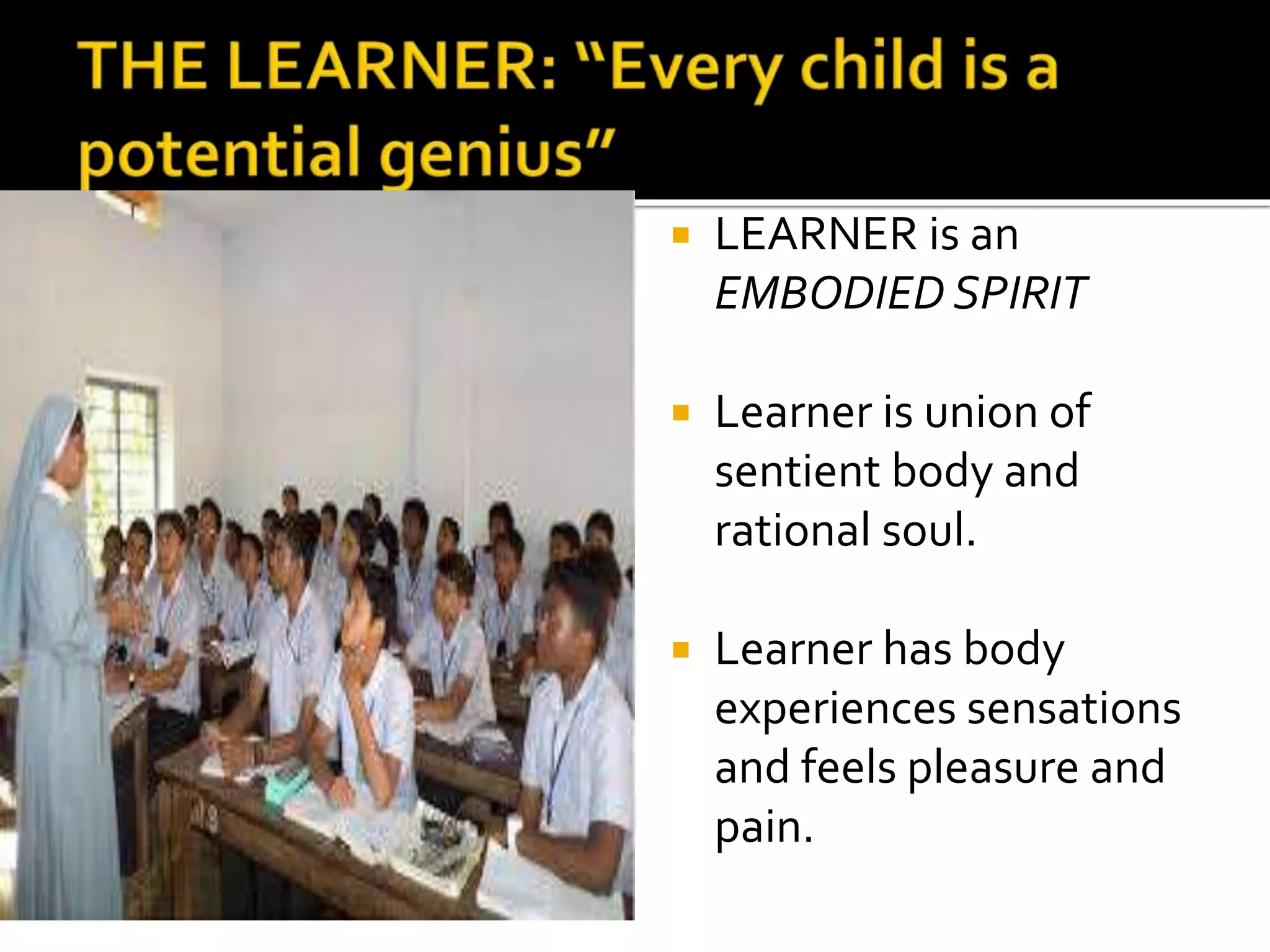
 LEARNER is an
EMBODIED SPIRIT
 Learner is union of
sentient body and
rational soul.
 Learner has body
experiences sensations
and feels pleasure and
pain.
 Soul is the principle of
spiritual acts
 Source of intellectual
abstraction and self
reflection and free will
volition.
 Body and soul exist in
mutual dependence
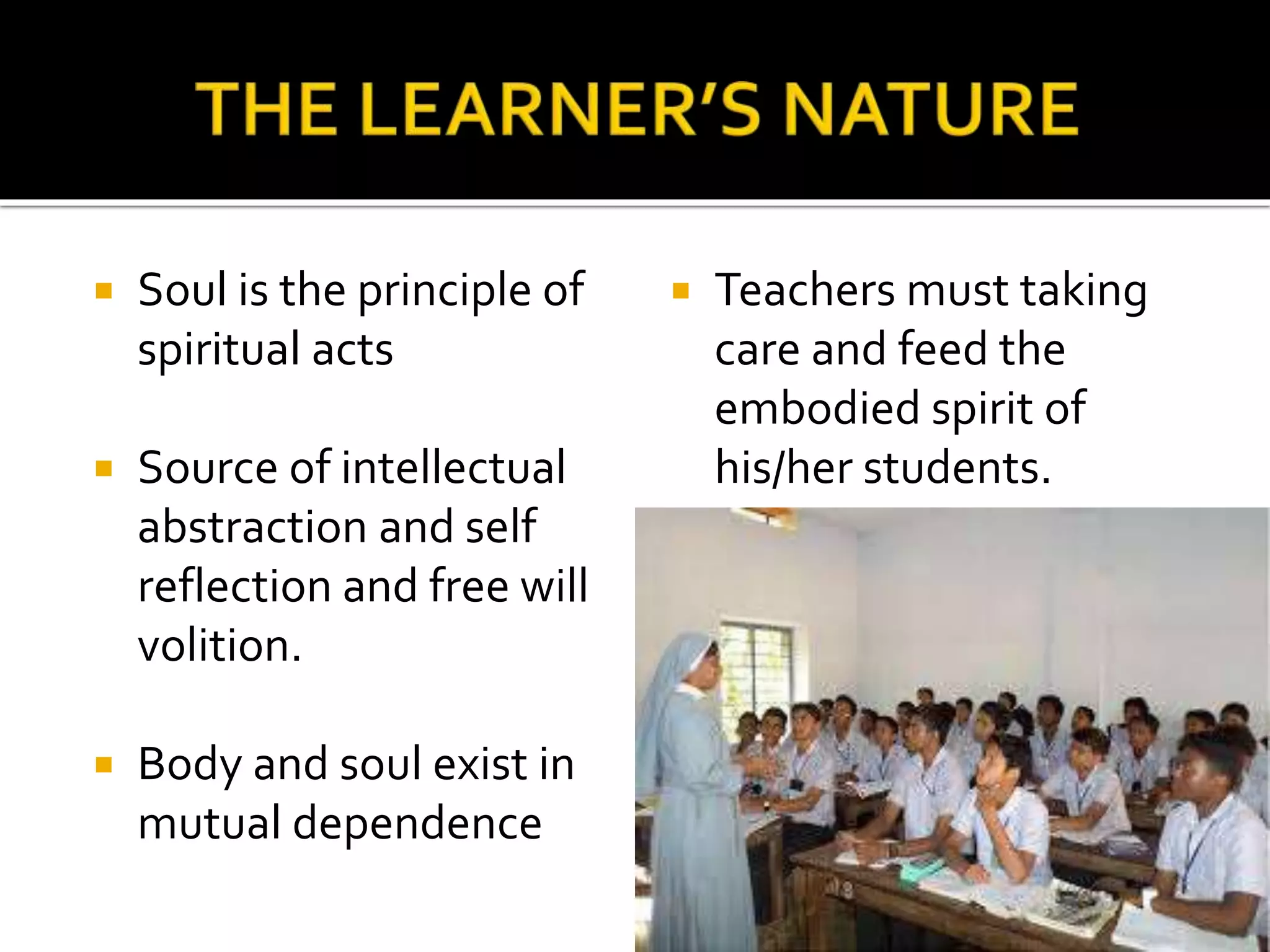
 Teachers must taking
care and feed the
embodied spirit of
his/her students.
 School cannot ignore
the learner’s physical
needs.
 It is very important to
every school that there
must be: FEEDING
PROGRAM
 Teachers is helped by a
team of health
personnel.
 They visits every school
to check on the health
condition of the
students.
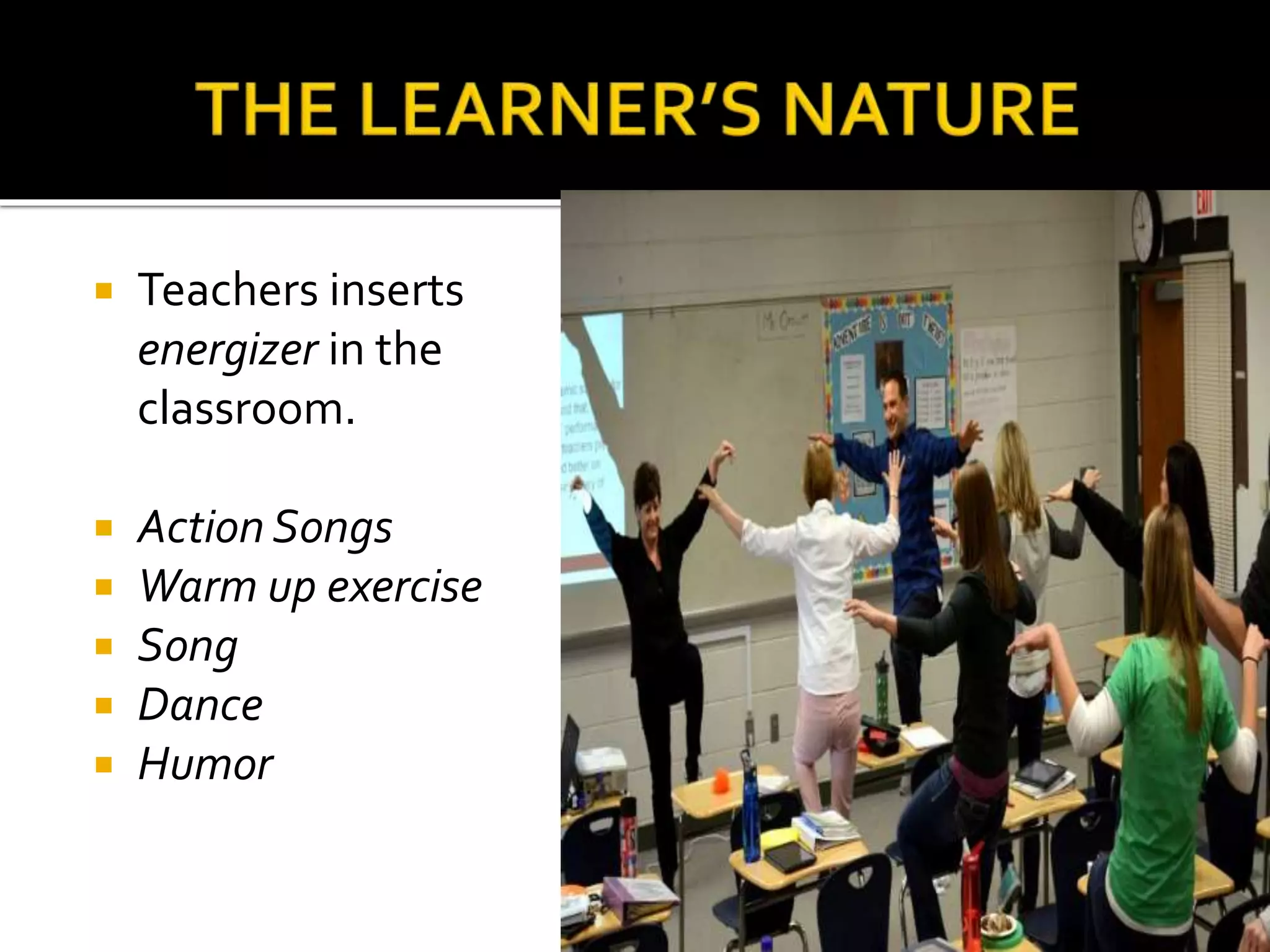
 Teachers inserts
energizer in the
classroom.
 Action Songs
 Warm up exercise
 Song
 Dance
 Humor
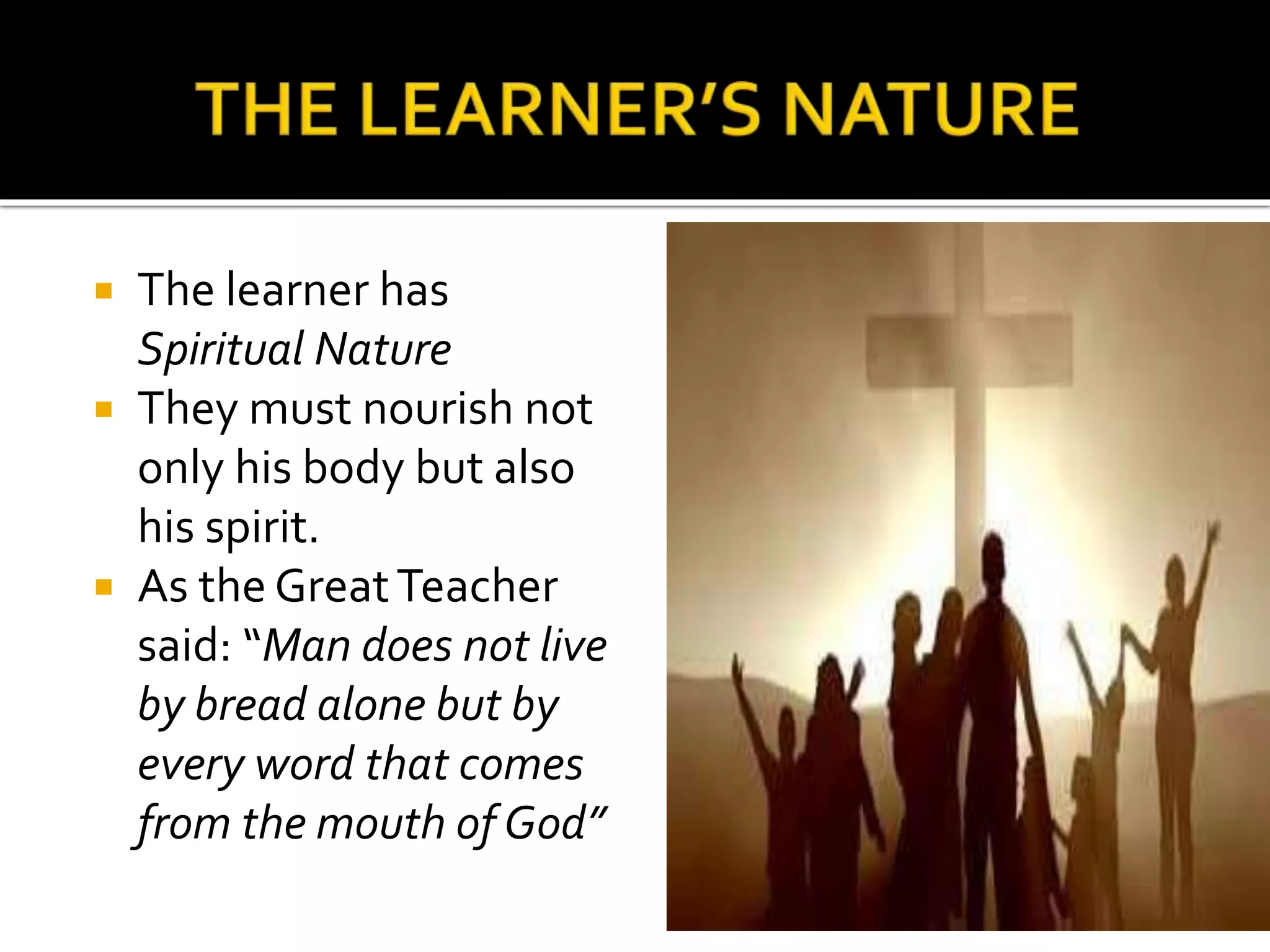
 The learner has
Spiritual Nature
 They must nourish not
only his body but also
his spirit.
 As the GreatTeacher
said: “Man does not live
by bread alone but by
every word that comes
from the mouth of God”
 Learners needs
inspirational words
 When the teachers
nourished all of his/her
pupils both physical
and spiritual they can
complete his/her very
nature.
 The learner is equipped with cognitive
faculties as well as appetitive faculties.
 COGNITIVE FACULTIES includes:
 FIVE SENSES: Instinct, Imagination, Memory,
Intellect
 APPETITIVE FACULTIES includes:
 Feeling and Emotion
 Will
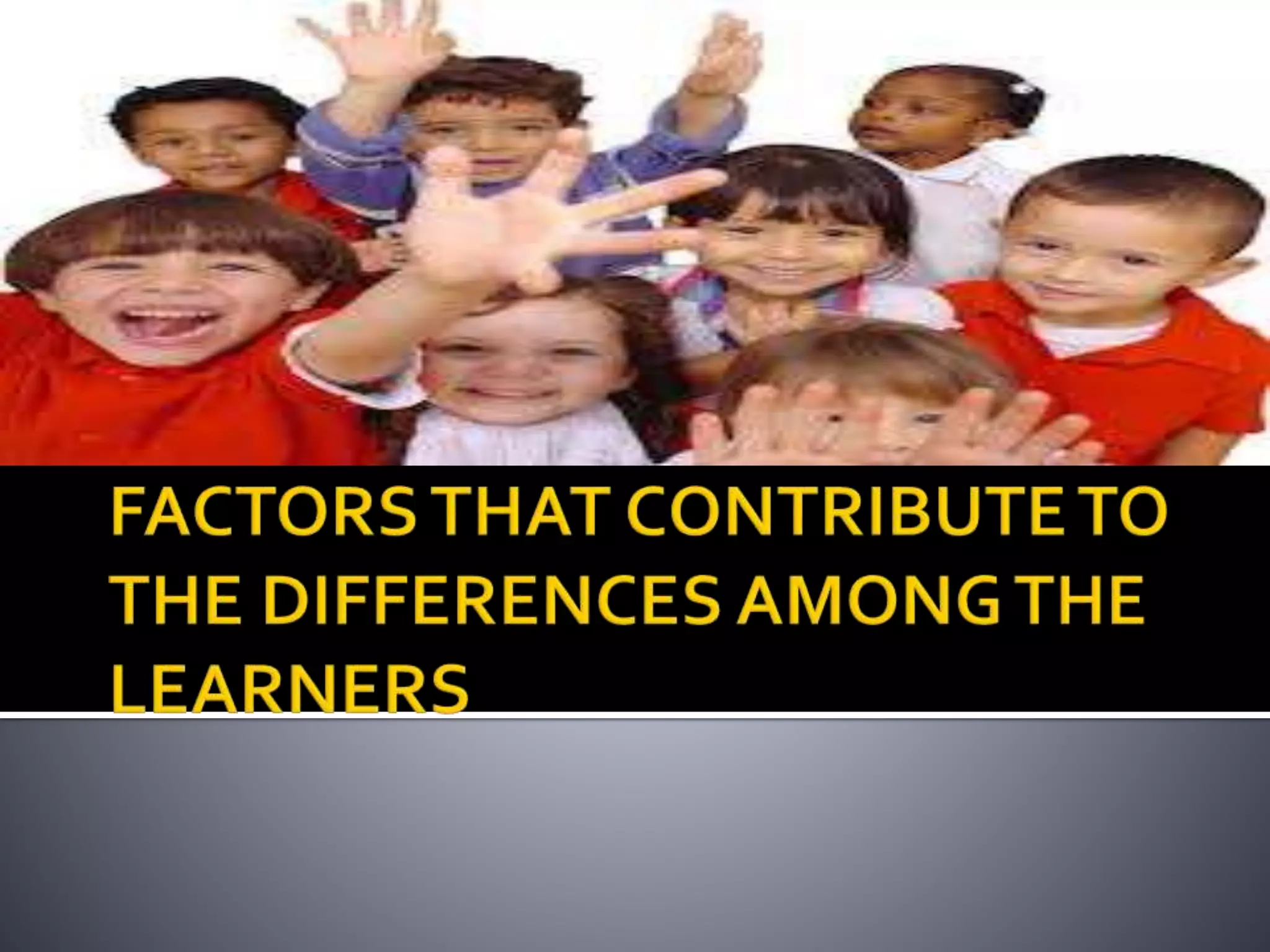
 FACTORSTHAT CONTRIBUTETOTHE
DIFFERENCES AMONG LEARNERS
includes:
 Ability, Aptitude, Interests, Family and cultural
background, Attitudes and values.
 1.) INSTINCTS
 Derived from the Latin word instinctus
 Which means Impulse.
 It means that the learner has a natural or
inherent capacity or tendency to respond to
environmental stimuli such as
 Danger signs for survival or self preservation.
 2.) IMAGINATION
 Another cognitive faculty
 It is the ability to form a mental image of
something that is not perceived through the
senses.
 It is the ability of the mind to build mental
scenes, objects, events that do not exists.
 Teachers must help the learner to develop his
power of imagination to be creative, to form
new ideas, and explore old ideas.
 3.) MEMORY
 It is the cognitive faculty of retaining
 Recalling past experience
 Memory work is the basic in learning but we
do not encourage memorizing without
understanding.
 The learning must therefore, be helped to
commit things to memory.
 How?
 “Repititio mater studiorum est”
 Repetition is the mother of all learning!
 It is one of the secret in successful studies in
life.
 4.) INTELLECT
 It is another cognitive faculty of the learner.
 The learner can engage in cognitive process
such as forming ideas or concepts, reasoning
and making judgement.
 For example:
 All men are rational. Paul is a man.Therefore,
Pedro is rational.
 It is characterized by a natural desire to
satisfy bodily needs.
 1.) FEELINGS and EMOTION
 It is an affective state of consciousness in
which joy, sorrow, fear, hate, or like is
experienced.
 Positive feelings make the teaching – learning
process as an exciting and joyful, fruitful
learning.
 Negative feelings and emotion make the
same process a burden.
 Negative emotions affect the cognitive
processes of recalling, imagining, analyzing,
reasoning, judging, evaluating and
synthesizing.
 Facing with frustration, despair, worry,
sadness, or shame, learners lose access to
their own memory, reasoning and capacity to
make connections.
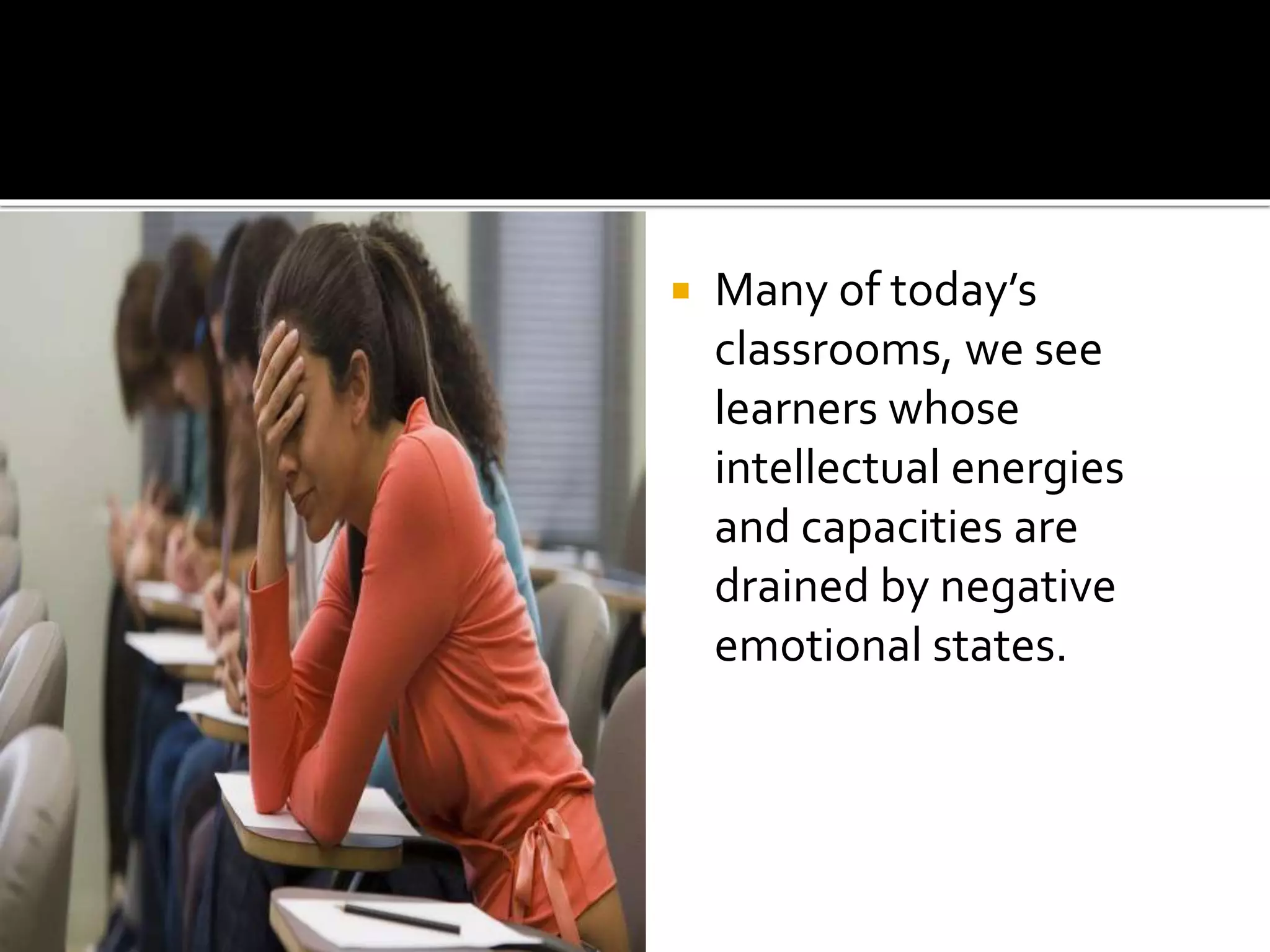
 Many of today’s
classrooms, we see
learners whose
intellectual energies
and capacities are
drained by negative
emotional states.
 2. LEARNER’S WILL
 It serves as guiding force
 Main integrating force in
his/her character.
 It is makes the learner
free to choose or not to
choose to do the good as
presented by his
intellect.
 It is this free will that will
not allow the learner to
be totally determined by
his/her environment.
 This means that the
degree to which the
learner is influenced by
the environment
depends ultimately on
the strength of his/her
will.
 If the learners will is
weak he/she will easily
succumb to the bad
influence of his/her peer
group.
 If the will is strong,
he/she can resist the
temptation.
 Therefore, the focus of
Values Education should
be the strengthening of
theWill.
 Teacher’s must remind
their students to have a
goals in life.
 Have a FIRM DECISION!
 Value their life and
dignity!
 It dictates the
prospects of success in
any purposeful activity.
 It determines the
learners capacity to
understand and
assimilate information.
 Others are labeled
high, moderate, and
slow achievers.
 They can be
categorized into:
Superior, Above
average, average, and
below average.
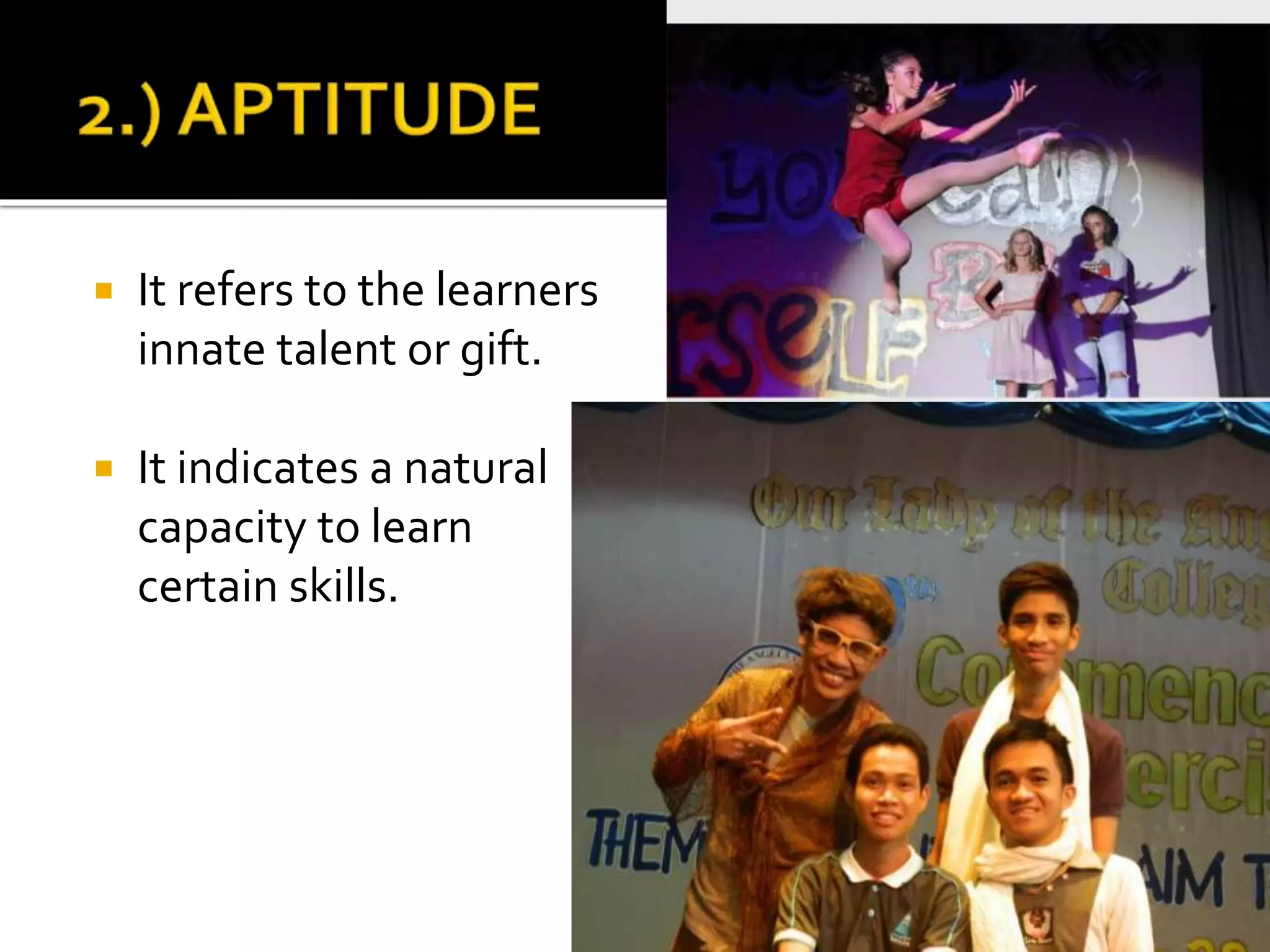
 It refers to the learners
innate talent or gift.
 It indicates a natural
capacity to learn
certain skills.
 Learners interest in
learning makes no
longer a task.
 But a PLEASURE!
 The learner’s cognitive
faculties of sensorial
experience, memory,
imagination, concept,
formation, reasoning
 And judgement are the
height
 When learners
interests are also peak.
 Learners have varied
interests.
 Interests are not
inherited.They are
developed!
 Students who come
from different
socioeconomic
background manifest a
wide range of
behavior.
 Due to differences in
upbringing practices.
 Some families allow
their members to
express their:
 Preferences
 Self discipline
 Home regulations
 Their participation in
classroom activities are
influenced by their home
training and experiences.
 Is the way a person:
 Processes
 Internalizes
 Studies new
 Challenging material
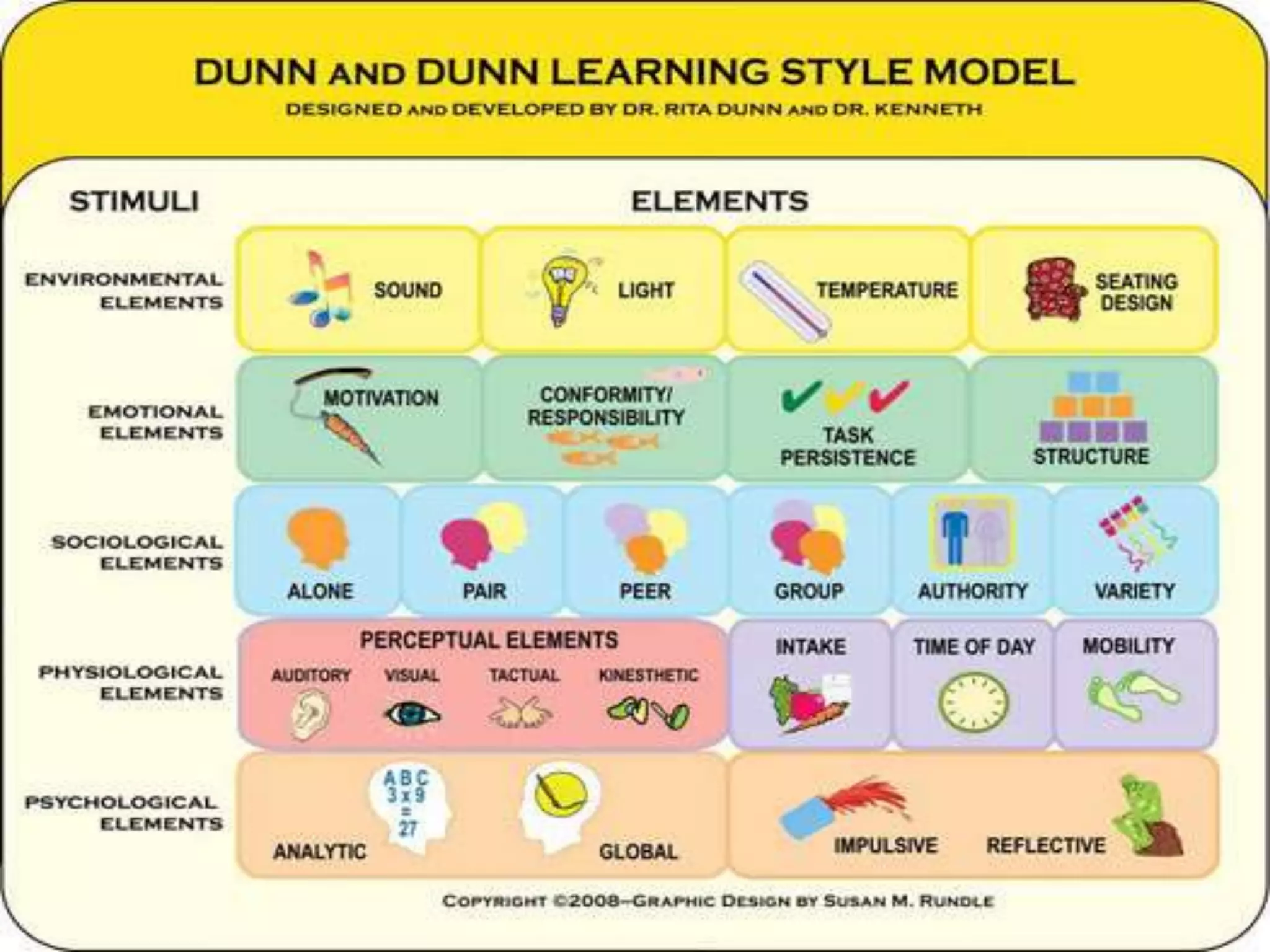
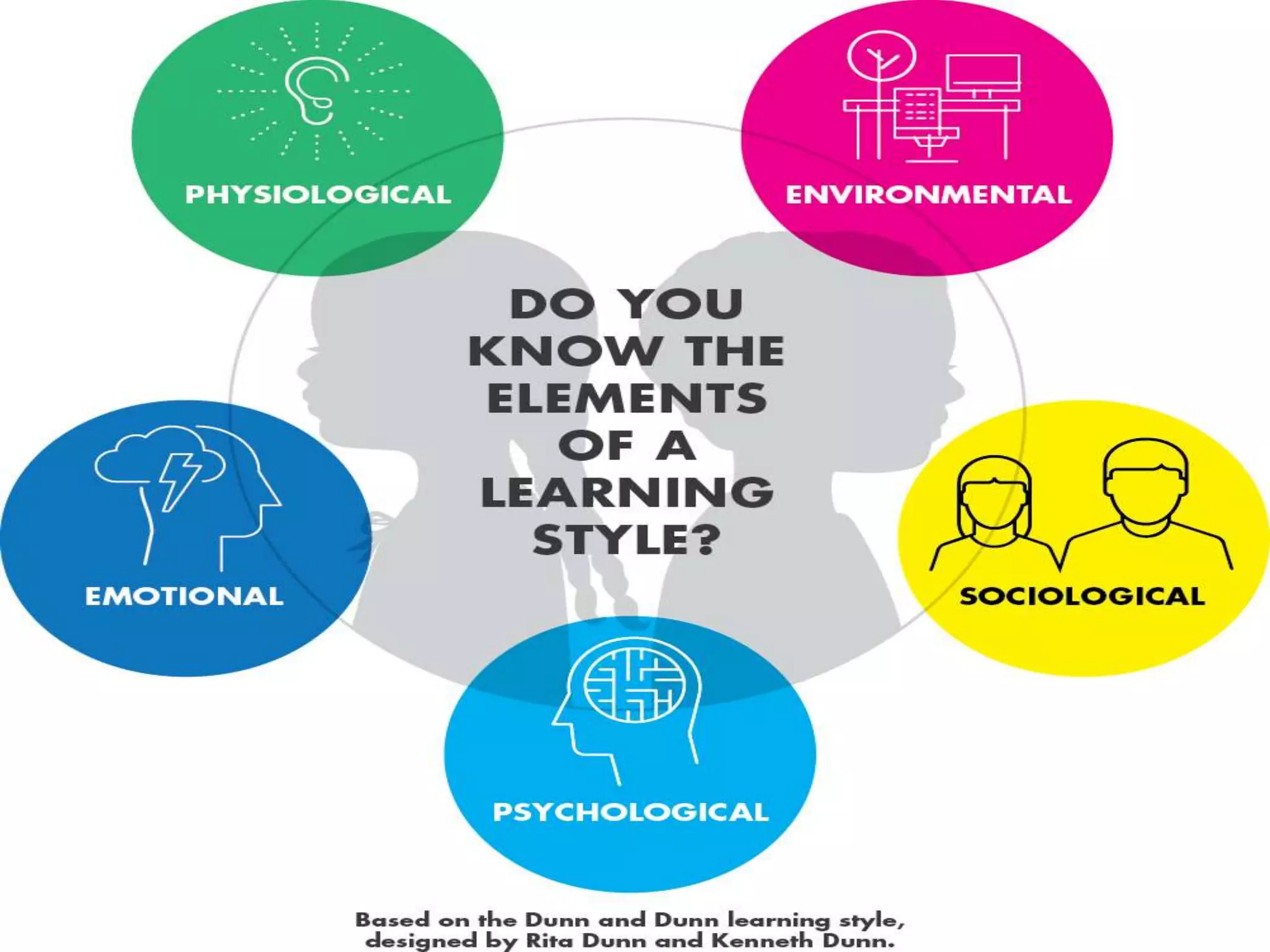
 Dunn and Dunn
present different
learning style
according five groups
of stimuli (Dunn, 2000)
Principles teaching 1: The Nature of Learners

Principles teaching 1: The Nature of Learners

  • 1.
    PRINCIPLES OF TEACHING:THE ELEMENTS OF TEACHING AND LEARNING By: JOHN ROBBY L. ARROGANTE AB – Philosophy Bachelor of Secondary Education
  • 2.
     LEARNER isan EMBODIED SPIRIT  Learner is union of sentient body and rational soul.  Learner has body experiences sensations and feels pleasure and pain.
  • 3.
     Soul isthe principle of spiritual acts  Source of intellectual abstraction and self reflection and free will volition.  Body and soul exist in mutual dependence  Teachers must taking care and feed the embodied spirit of his/her students.
  • 4.
     School cannotignore the learner’s physical needs.  It is very important to every school that there must be: FEEDING PROGRAM  Teachers is helped by a team of health personnel.  They visits every school to check on the health condition of the students.
  • 5.
     Teachers inserts energizerin the classroom.  Action Songs  Warm up exercise  Song  Dance  Humor
  • 6.
     The learnerhas Spiritual Nature  They must nourish not only his body but also his spirit.  As the GreatTeacher said: “Man does not live by bread alone but by every word that comes from the mouth of God”
  • 7.
     Learners needs inspirationalwords  When the teachers nourished all of his/her pupils both physical and spiritual they can complete his/her very nature.
  • 8.
     The learneris equipped with cognitive faculties as well as appetitive faculties.  COGNITIVE FACULTIES includes:  FIVE SENSES: Instinct, Imagination, Memory, Intellect
  • 9.
     APPETITIVE FACULTIESincludes:  Feeling and Emotion  Will  FACTORSTHAT CONTRIBUTETOTHE DIFFERENCES AMONG LEARNERS includes:  Ability, Aptitude, Interests, Family and cultural background, Attitudes and values.
  • 10.
     1.) INSTINCTS Derived from the Latin word instinctus  Which means Impulse.  It means that the learner has a natural or inherent capacity or tendency to respond to environmental stimuli such as  Danger signs for survival or self preservation.
  • 11.
     2.) IMAGINATION Another cognitive faculty  It is the ability to form a mental image of something that is not perceived through the senses.  It is the ability of the mind to build mental scenes, objects, events that do not exists.  Teachers must help the learner to develop his power of imagination to be creative, to form new ideas, and explore old ideas.
  • 12.
     3.) MEMORY It is the cognitive faculty of retaining  Recalling past experience  Memory work is the basic in learning but we do not encourage memorizing without understanding.  The learning must therefore, be helped to commit things to memory.  How?
  • 13.
     “Repititio materstudiorum est”  Repetition is the mother of all learning!  It is one of the secret in successful studies in life.
  • 14.
     4.) INTELLECT It is another cognitive faculty of the learner.  The learner can engage in cognitive process such as forming ideas or concepts, reasoning and making judgement.  For example:  All men are rational. Paul is a man.Therefore, Pedro is rational.
  • 15.
     It ischaracterized by a natural desire to satisfy bodily needs.  1.) FEELINGS and EMOTION  It is an affective state of consciousness in which joy, sorrow, fear, hate, or like is experienced.  Positive feelings make the teaching – learning process as an exciting and joyful, fruitful learning.
  • 16.
     Negative feelingsand emotion make the same process a burden.  Negative emotions affect the cognitive processes of recalling, imagining, analyzing, reasoning, judging, evaluating and synthesizing.  Facing with frustration, despair, worry, sadness, or shame, learners lose access to their own memory, reasoning and capacity to make connections.
  • 18.
     Many oftoday’s classrooms, we see learners whose intellectual energies and capacities are drained by negative emotional states.
  • 19.
     2. LEARNER’SWILL  It serves as guiding force  Main integrating force in his/her character.  It is makes the learner free to choose or not to choose to do the good as presented by his intellect.  It is this free will that will not allow the learner to be totally determined by his/her environment.  This means that the degree to which the learner is influenced by the environment depends ultimately on the strength of his/her will.
  • 20.
     If thelearners will is weak he/she will easily succumb to the bad influence of his/her peer group.  If the will is strong, he/she can resist the temptation.  Therefore, the focus of Values Education should be the strengthening of theWill.  Teacher’s must remind their students to have a goals in life.  Have a FIRM DECISION!  Value their life and dignity!
  • 23.
     It dictatesthe prospects of success in any purposeful activity.  It determines the learners capacity to understand and assimilate information.  Others are labeled high, moderate, and slow achievers.  They can be categorized into: Superior, Above average, average, and below average.
  • 24.
     It refersto the learners innate talent or gift.  It indicates a natural capacity to learn certain skills.
  • 26.
     Learners interestin learning makes no longer a task.  But a PLEASURE!  The learner’s cognitive faculties of sensorial experience, memory, imagination, concept, formation, reasoning  And judgement are the height  When learners interests are also peak.  Learners have varied interests.  Interests are not inherited.They are developed!
  • 27.
     Students whocome from different socioeconomic background manifest a wide range of behavior.  Due to differences in upbringing practices.  Some families allow their members to express their:  Preferences  Self discipline  Home regulations  Their participation in classroom activities are influenced by their home training and experiences.
  • 35.
     Is theway a person:  Processes  Internalizes  Studies new  Challenging material  Dunn and Dunn present different learning style according five groups of stimuli (Dunn, 2000)