Principle of Modern
dressing, type and indication
Dr. Khadijah Nordin
Principle of Modern dressing
Wound dressings
• The material which is applied to the surface of the wound to cover it
is called a dressing.
• Primary dressing
– dressing which touches the wound
• Secondary dressing
– dressing used to cover the primary dressing
Ideal wound dressing
• Dressings are applied to wounds for the following reasons;
• To provide a protective cover
• To maintain moisture
• To reduce pain
• To absorb exudates
• In addition an ideal dressing have the following features;
• does not induce pain or itching
• easy to change
• Allows gaseous exchange
• Cheap
• Freely available
How to Choose dressing product:
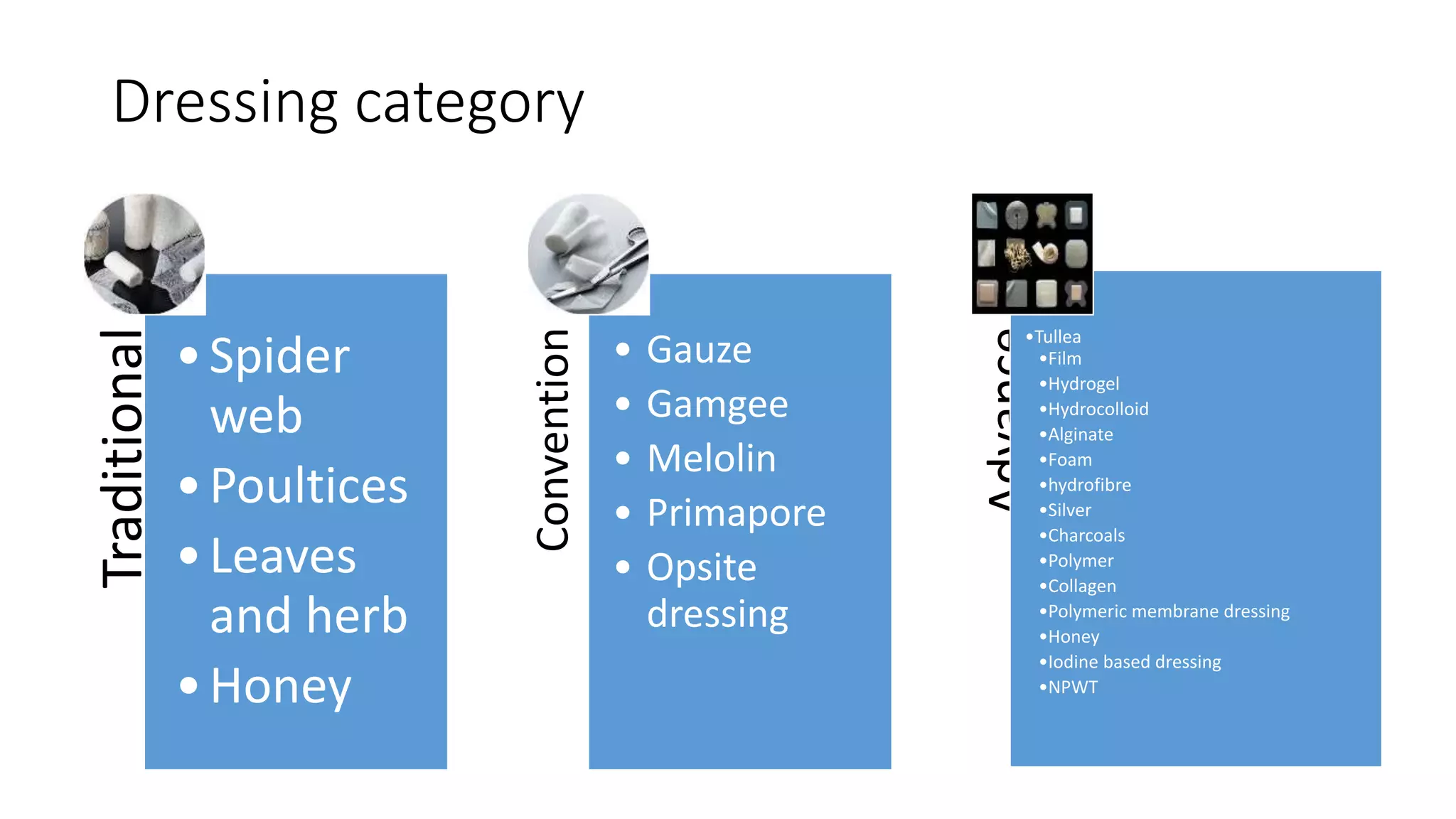
Dressing categoryTraditional
•Spider
web
•Poultices
•Leaves
and herb
•Honey
Convention
• Gauze
• Gamgee
• Melolin
• Primapore
• Opsite
dressing
Advance
•Tullea
•Film
•Hydrogel
•Hydrocolloid
•Alginate
•Foam
•hydrofibre
•Silver
•Charcoals
•Polymer
•Collagen
•Polymeric membrane dressing
•Honey
•Iodine based dressing
•NPWT
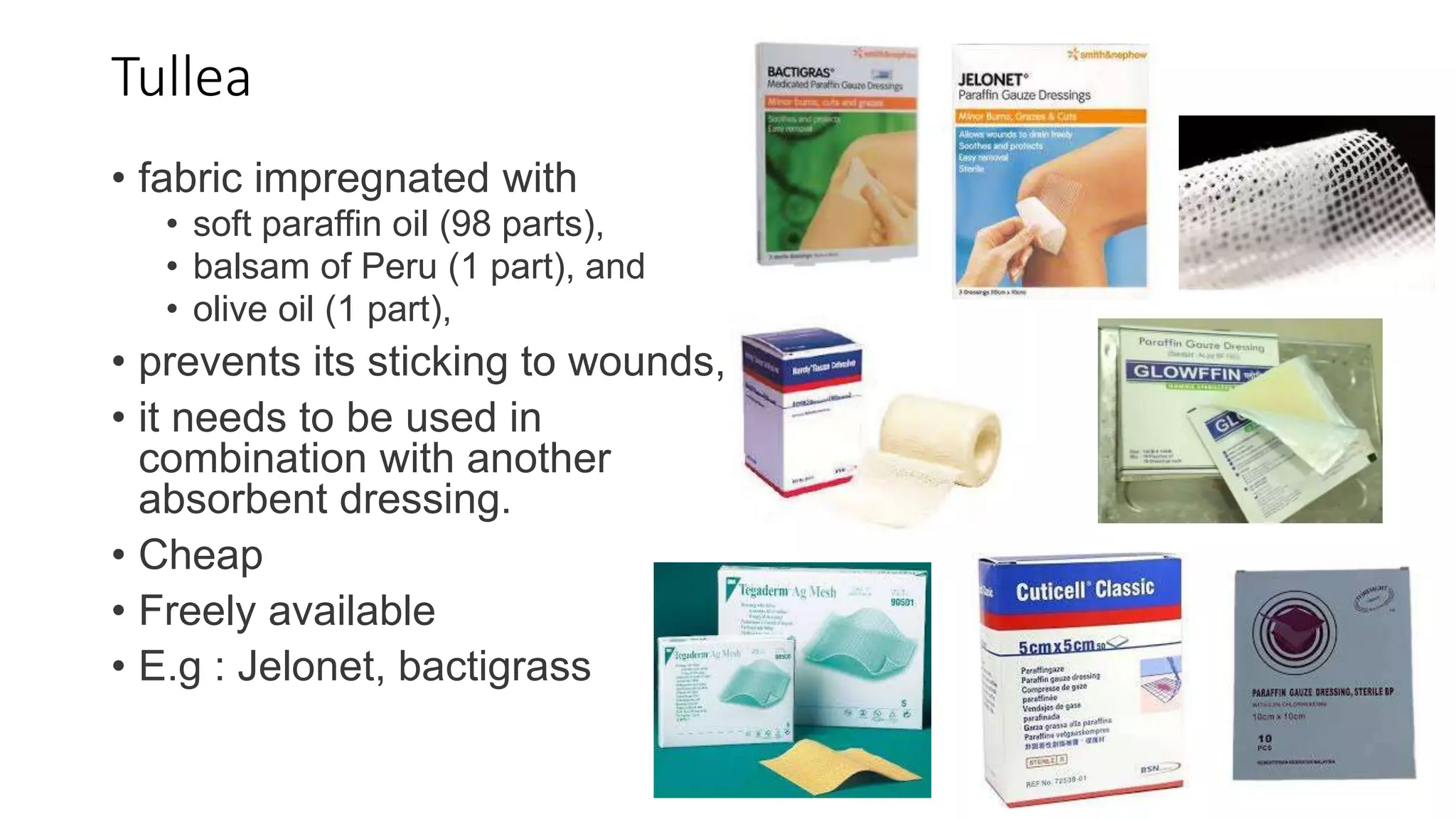
Tullea
• fabric impregnated with
• soft paraffin oil (98 parts),
• balsam of Peru (1 part), and
• olive oil (1 part),
• prevents its sticking to wounds,
• it needs to be used in
combination with another
absorbent dressing.
• Cheap
• Freely available
• E.g : Jelonet, bactigrass
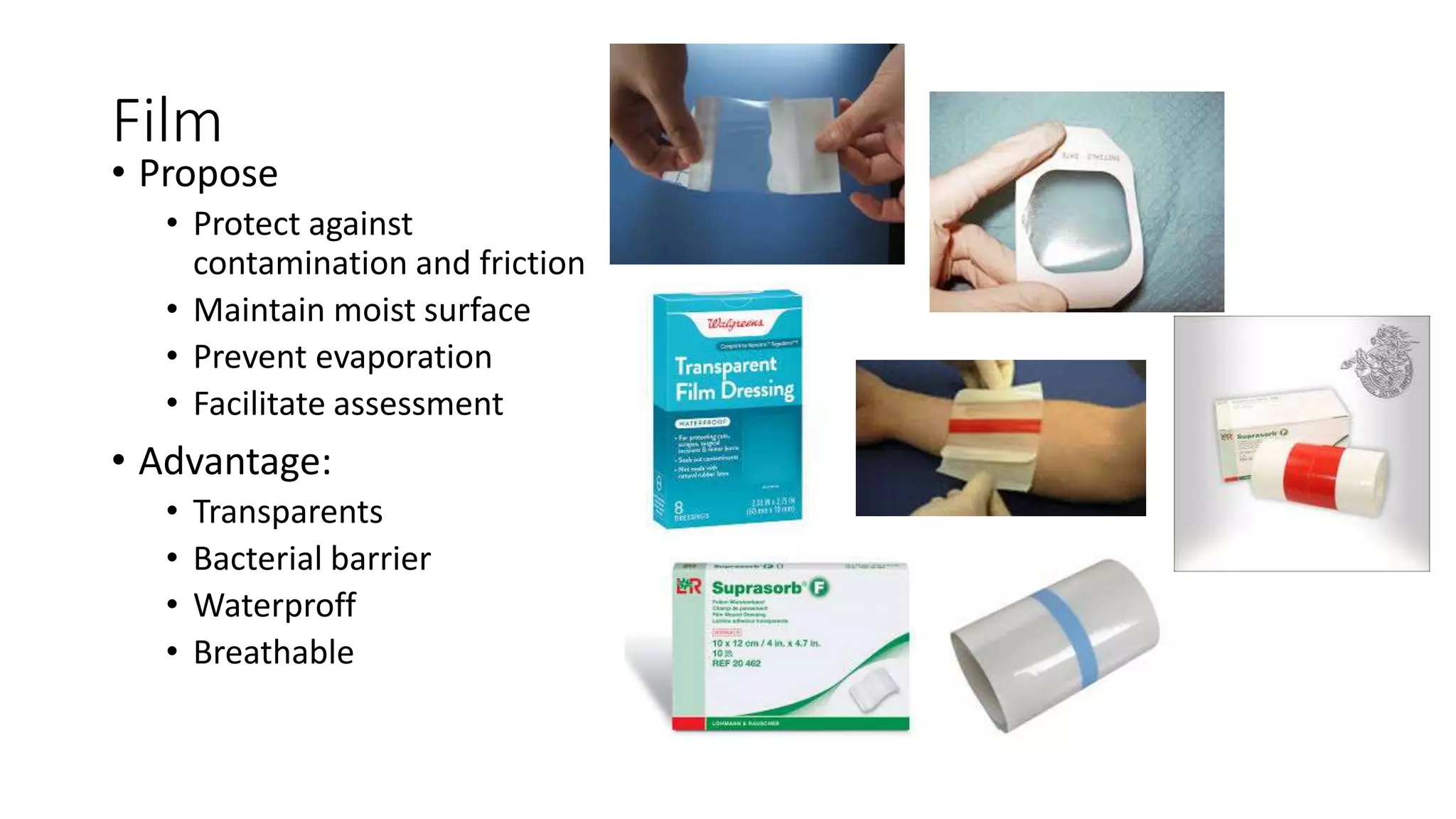
Film
• Propose
• Protect against
contamination and friction
• Maintain moist surface
• Prevent evaporation
• Facilitate assessment
• Advantage:
• Transparents
• Bacterial barrier
• Waterproff
• Breathable
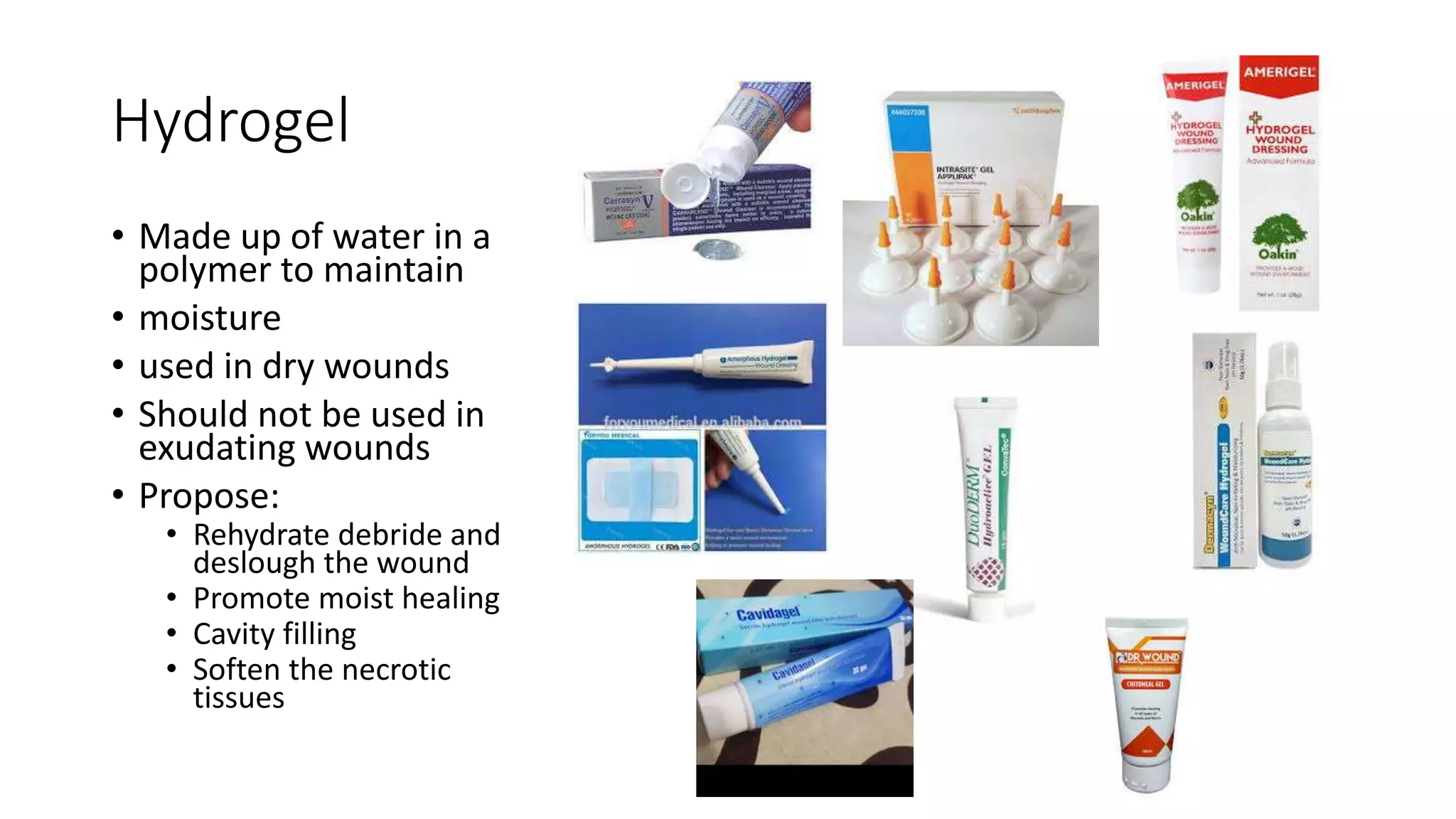
Hydrogel
• Made up of water in a
polymer to maintain
• moisture
• used in dry wounds
• Should not be used in
exudating wounds
• Propose:
• Rehydrate debride and
deslough the wound
• Promote moist healing
• Cavity filling
• Soften the necrotic
tissues
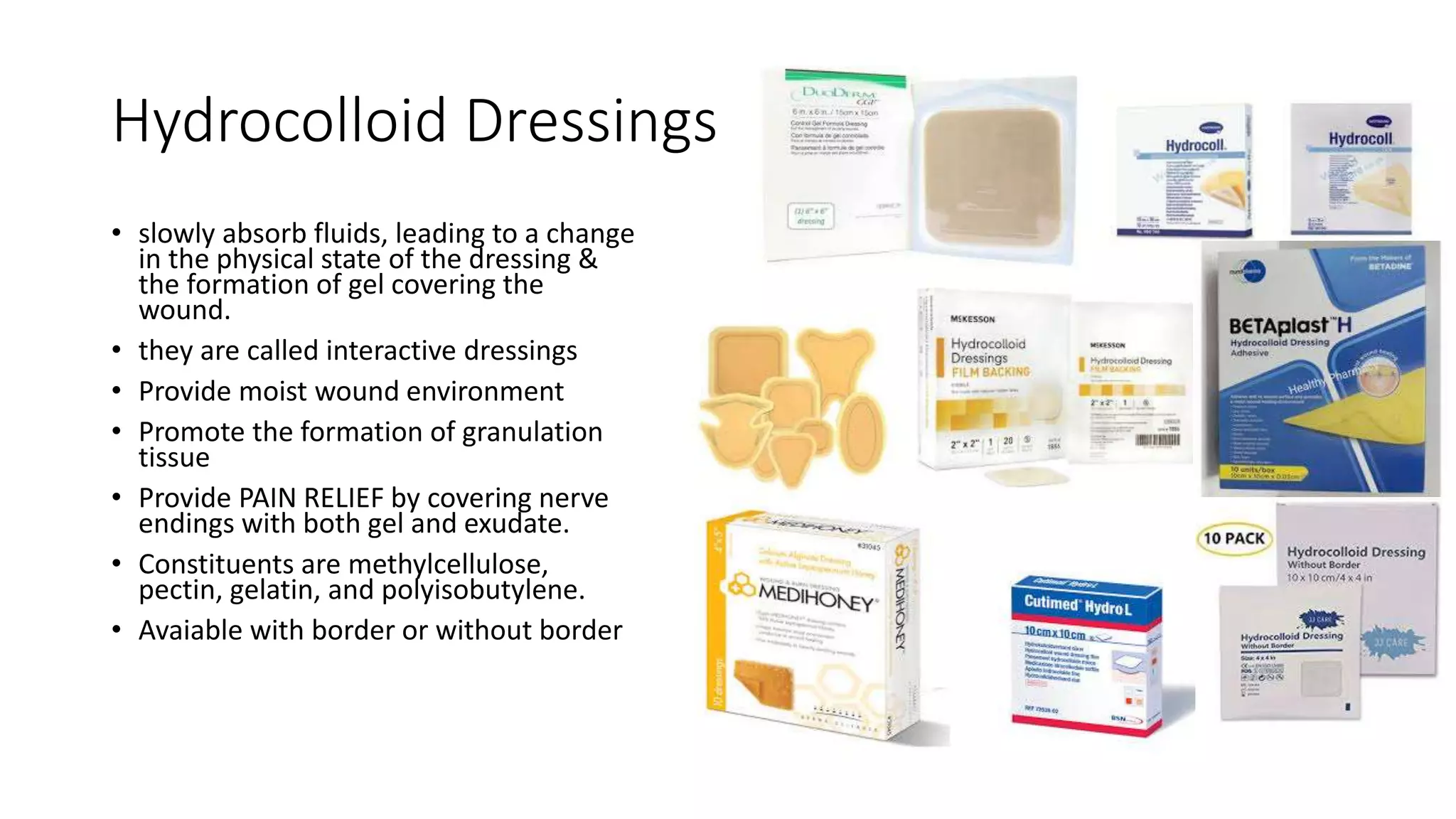
Hydrocolloid Dressings
• slowly absorb fluids, leading to a change
in the physical state of the dressing &
the formation of gel covering the
wound.
• they are called interactive dressings
• Provide moist wound environment
• Promote the formation of granulation
tissue
• Provide PAIN RELIEF by covering nerve
endings with both gel and exudate.
• Constituents are methylcellulose,
pectin, gelatin, and polyisobutylene.
• Avaiable with border or without border
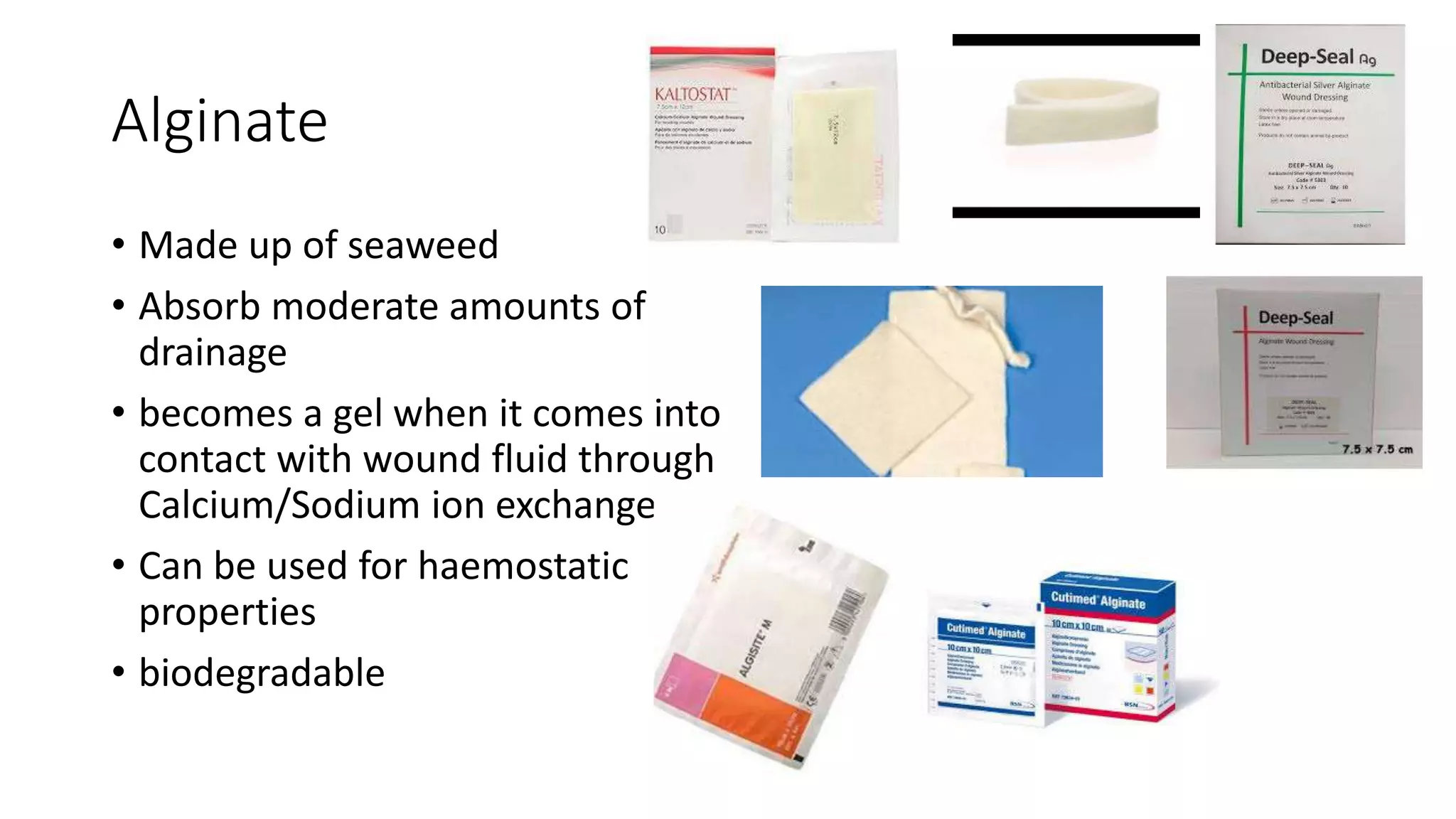
Alginate
• Made up of seaweed
• Absorb moderate amounts of
drainage
• becomes a gel when it comes into
contact with wound fluid through
Calcium/Sodium ion exchange
• Can be used for haemostatic
properties
• biodegradable
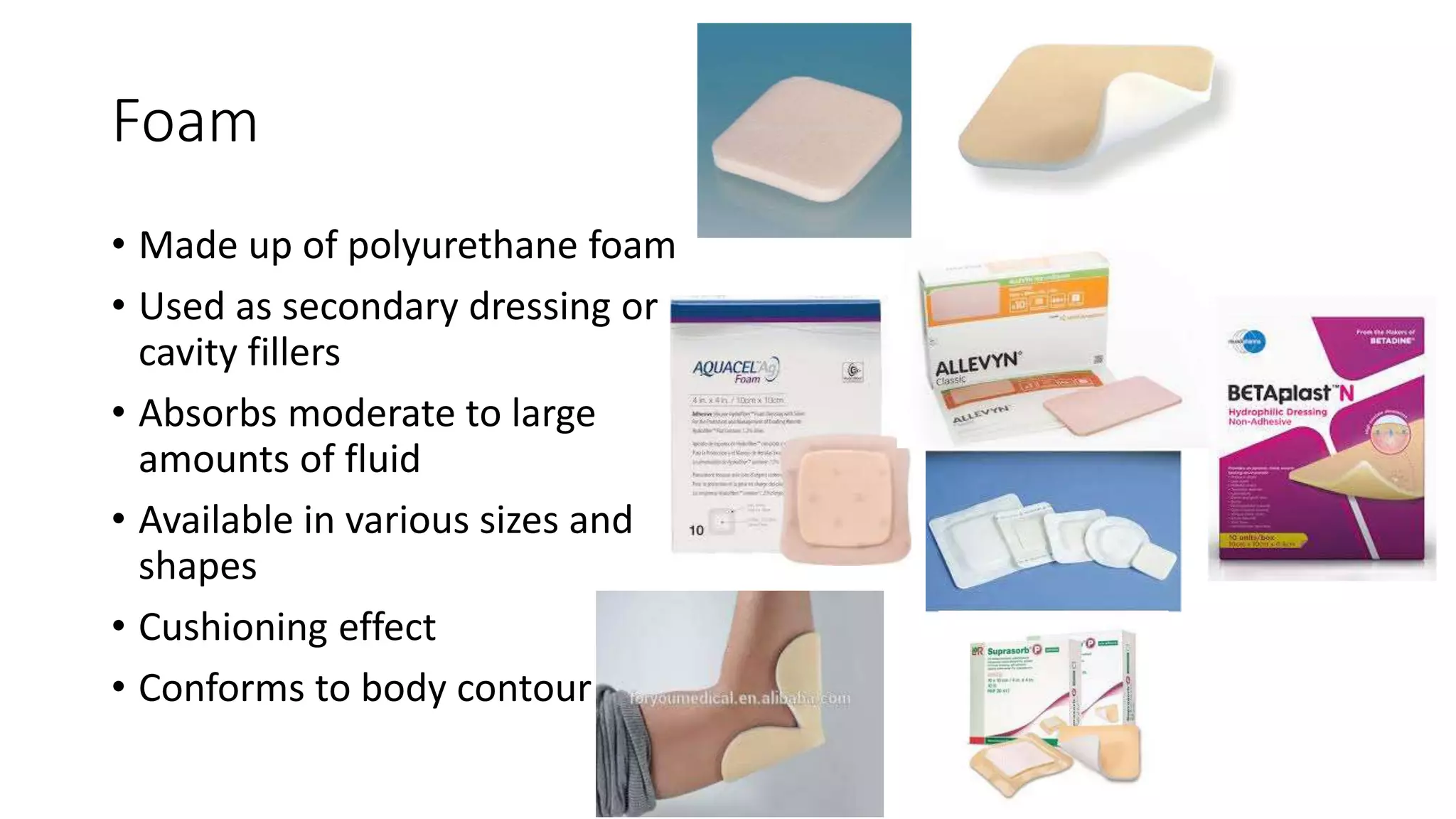
Foam
• Made up of polyurethane foam
• Used as secondary dressing or
cavity fillers
• Absorbs moderate to large
amounts of fluid
• Available in various sizes and
shapes
• Cushioning effect
• Conforms to body contour
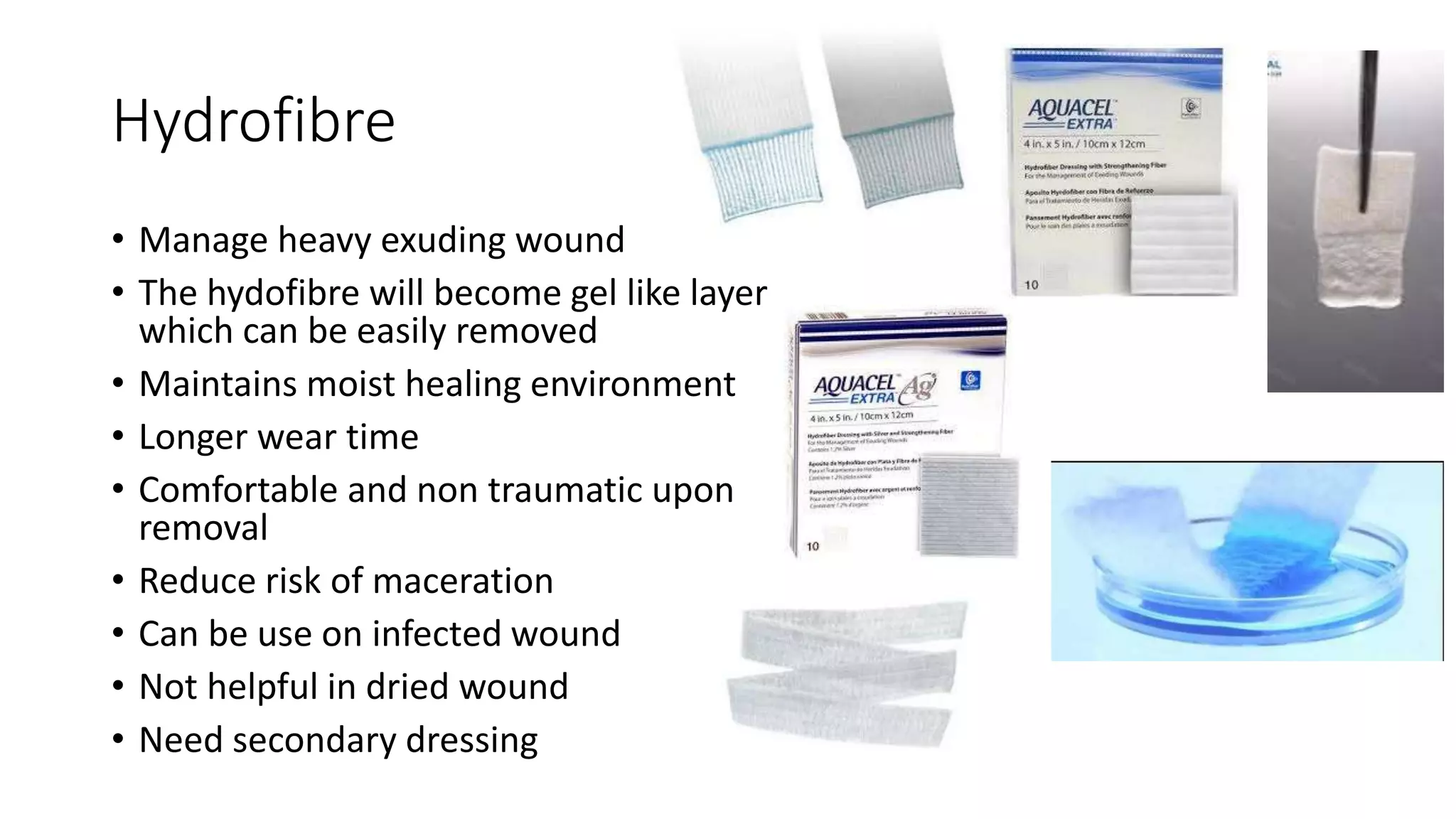
Hydrofibre
• Manage heavy exuding wound
• The hydofibre will become gel like layer
which can be easily removed
• Maintains moist healing environment
• Longer wear time
• Comfortable and non traumatic upon
removal
• Reduce risk of maceration
• Can be use on infected wound
• Not helpful in dried wound
• Need secondary dressing
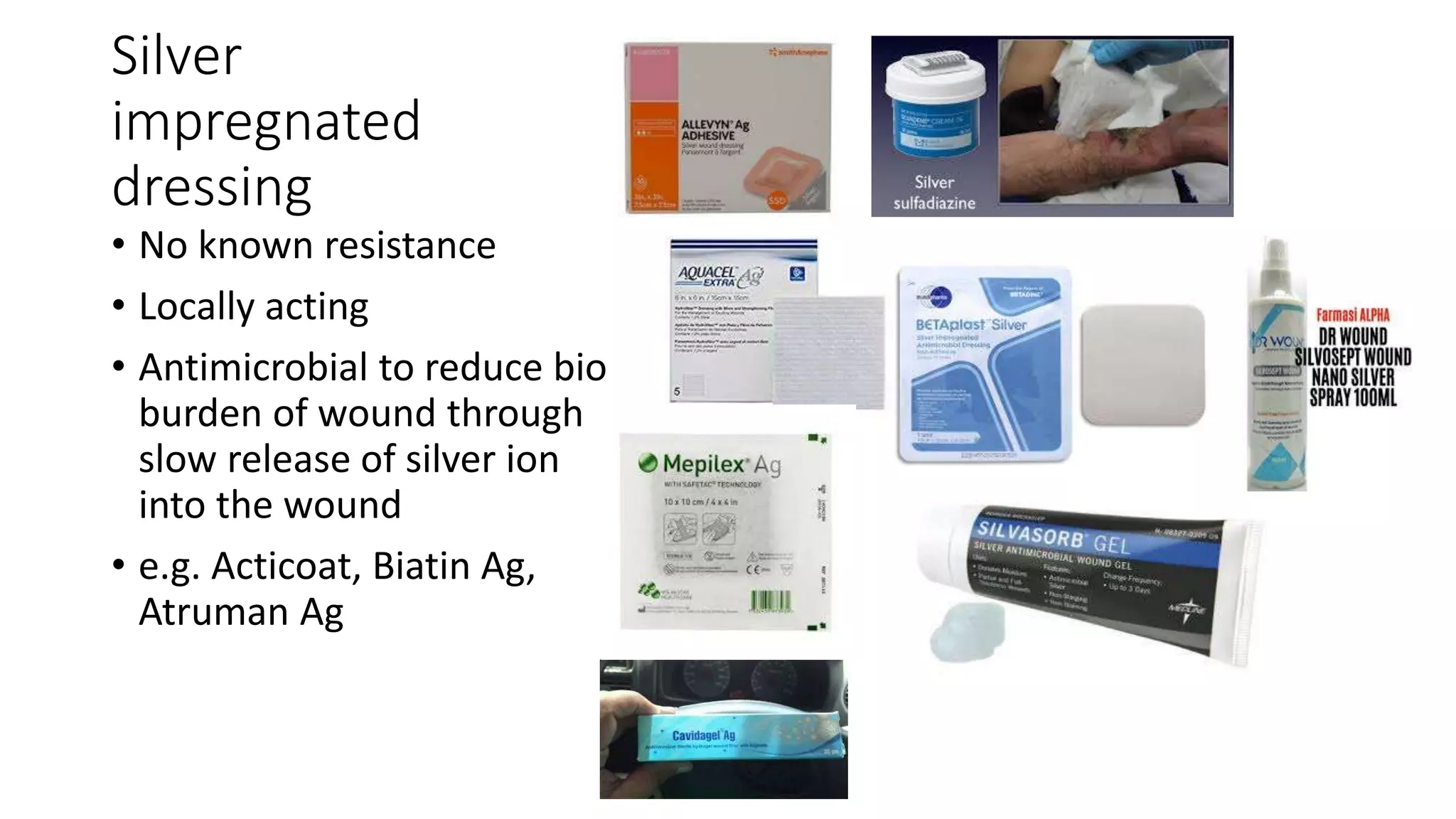
Silver
impregnated
dressing
• No known resistance
• Locally acting
• Antimicrobial to reduce bio
burden of wound through
slow release of silver ion
into the wound
• e.g. Acticoat, Biatin Ag,
Atruman Ag
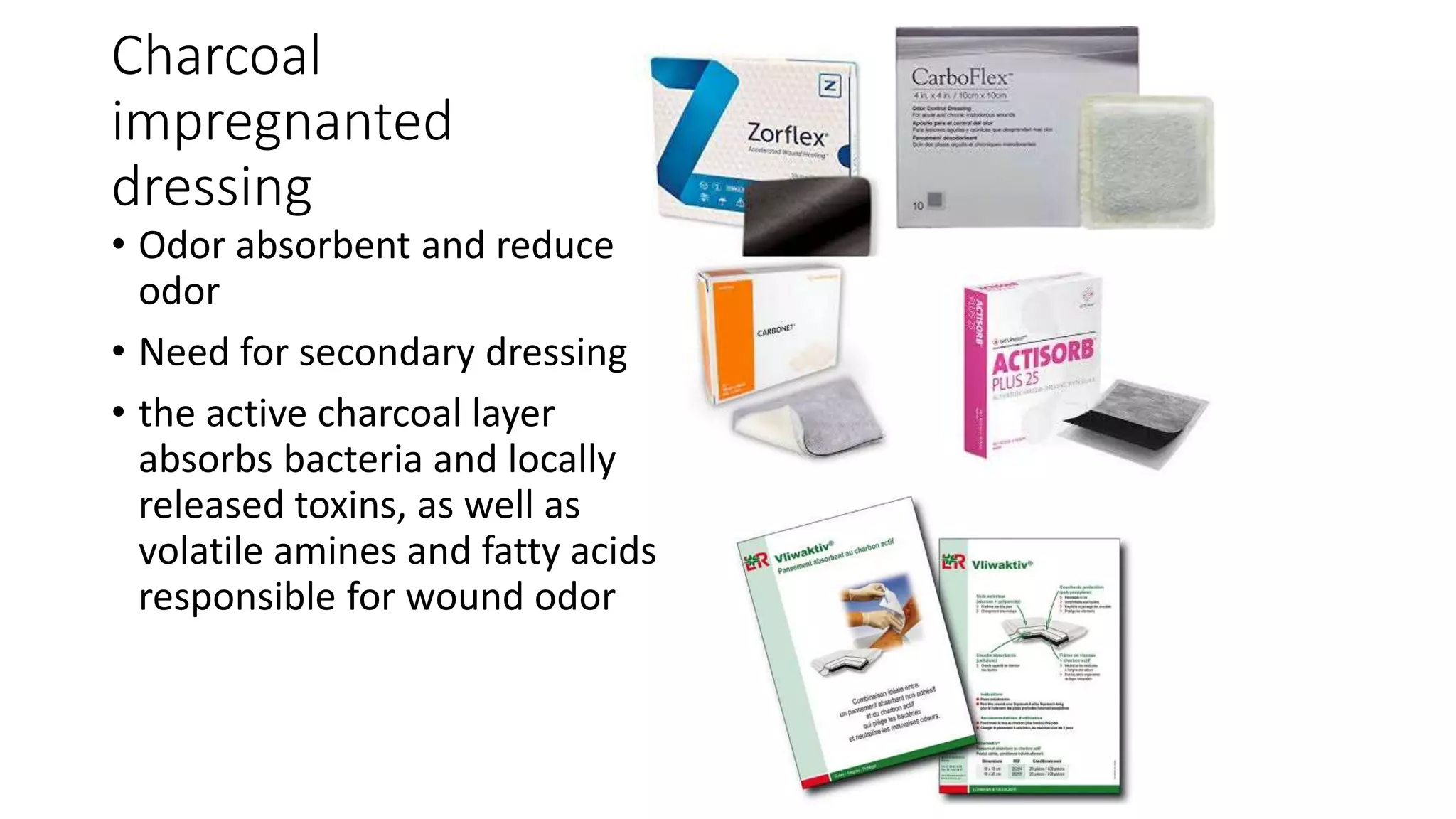
Charcoal
impregnanted
dressing
• Odor absorbent and reduce
odor
• Need for secondary dressing
• the active charcoal layer
absorbs bacteria and locally
released toxins, as well as
volatile amines and fatty acids
responsible for wound odor
NPWT(negative pressure wound therapy)
• therapeutic technique using a vacuum dressing to promote healing in
acute or chronic wounds
• promotes wound healing by applying a vacuum drainage through a
special sealed dressing
MECHANISM OF ACTION
APPLICATION PRESSURE ON VAC
• Neonates : - 50 mmHg.
• Children < 2 years : -50 to -75 mmHg
• Children > 2 years : -75 to -125 mmHg
• Adults : -125mmHg
TERMINATION OF NPWT
•Adequate granulation base allowing for:
•Changing to conventional dressing
• Split-thickness skin graft
• Flap closure
Thank You

Principle of modern dressing, type and indication

  • 1.
    Principle of Modern dressing,type and indication Dr. Khadijah Nordin
  • 2.
  • 3.
    Wound dressings • Thematerial which is applied to the surface of the wound to cover it is called a dressing. • Primary dressing – dressing which touches the wound • Secondary dressing – dressing used to cover the primary dressing
  • 4.
    Ideal wound dressing •Dressings are applied to wounds for the following reasons; • To provide a protective cover • To maintain moisture • To reduce pain • To absorb exudates • In addition an ideal dressing have the following features; • does not induce pain or itching • easy to change • Allows gaseous exchange • Cheap • Freely available
  • 5.
    How to Choosedressing product:
  • 6.
    Dressing categoryTraditional •Spider web •Poultices •Leaves and herb •Honey Convention •Gauze • Gamgee • Melolin • Primapore • Opsite dressing Advance •Tullea •Film •Hydrogel •Hydrocolloid •Alginate •Foam •hydrofibre •Silver •Charcoals •Polymer •Collagen •Polymeric membrane dressing •Honey •Iodine based dressing •NPWT
  • 7.
    Tullea • fabric impregnatedwith • soft paraffin oil (98 parts), • balsam of Peru (1 part), and • olive oil (1 part), • prevents its sticking to wounds, • it needs to be used in combination with another absorbent dressing. • Cheap • Freely available • E.g : Jelonet, bactigrass
  • 8.
    Film • Propose • Protectagainst contamination and friction • Maintain moist surface • Prevent evaporation • Facilitate assessment • Advantage: • Transparents • Bacterial barrier • Waterproff • Breathable
  • 9.
    Hydrogel • Made upof water in a polymer to maintain • moisture • used in dry wounds • Should not be used in exudating wounds • Propose: • Rehydrate debride and deslough the wound • Promote moist healing • Cavity filling • Soften the necrotic tissues
  • 10.
    Hydrocolloid Dressings • slowlyabsorb fluids, leading to a change in the physical state of the dressing & the formation of gel covering the wound. • they are called interactive dressings • Provide moist wound environment • Promote the formation of granulation tissue • Provide PAIN RELIEF by covering nerve endings with both gel and exudate. • Constituents are methylcellulose, pectin, gelatin, and polyisobutylene. • Avaiable with border or without border
  • 11.
    Alginate • Made upof seaweed • Absorb moderate amounts of drainage • becomes a gel when it comes into contact with wound fluid through Calcium/Sodium ion exchange • Can be used for haemostatic properties • biodegradable
  • 12.
    Foam • Made upof polyurethane foam • Used as secondary dressing or cavity fillers • Absorbs moderate to large amounts of fluid • Available in various sizes and shapes • Cushioning effect • Conforms to body contour
  • 13.
    Hydrofibre • Manage heavyexuding wound • The hydofibre will become gel like layer which can be easily removed • Maintains moist healing environment • Longer wear time • Comfortable and non traumatic upon removal • Reduce risk of maceration • Can be use on infected wound • Not helpful in dried wound • Need secondary dressing
  • 15.
    Silver impregnated dressing • No knownresistance • Locally acting • Antimicrobial to reduce bio burden of wound through slow release of silver ion into the wound • e.g. Acticoat, Biatin Ag, Atruman Ag
  • 16.
    Charcoal impregnanted dressing • Odor absorbentand reduce odor • Need for secondary dressing • the active charcoal layer absorbs bacteria and locally released toxins, as well as volatile amines and fatty acids responsible for wound odor
  • 17.
    NPWT(negative pressure woundtherapy) • therapeutic technique using a vacuum dressing to promote healing in acute or chronic wounds • promotes wound healing by applying a vacuum drainage through a special sealed dressing
  • 18.
  • 20.
    APPLICATION PRESSURE ONVAC • Neonates : - 50 mmHg. • Children < 2 years : -50 to -75 mmHg • Children > 2 years : -75 to -125 mmHg • Adults : -125mmHg
  • 22.
    TERMINATION OF NPWT •Adequategranulation base allowing for: •Changing to conventional dressing • Split-thickness skin graft • Flap closure
  • 24.