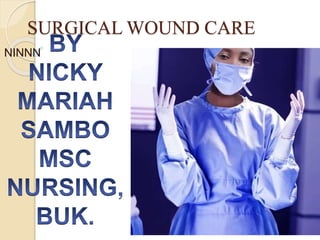
SURGICAL WOUND CARE
NINNN
OUTLINE
 Definitions
 Classifications of surgical wound
 Risk factors for surgical wound complications
 Types of wound dressings & when to use
 Types of lotions use for wound dressing
 Steps to wound dressing
 Signs of infection
 References
DEFINITIONS
 A surgical wound is an incision or a cut in the
skin that is made by a scalpel during surgery. A
surgical wound can also be the result of a drain
placed during surgery.
 Surgical wounds vary greatly in size. They are
usually closed with sutures, but are sometimes
left open to heal.
(1) Luo K.E, and De Pietro M. (2017)
Surgical Wound Classifications
 Surgical wounds are classified by degree of contaminants
present at time of the procedure.
 The classification allows for appropriate risk stratification for
development of complications and guide with appropriate care
and treatment.
 (2) Surgical wound 101 (2018)
Surgical Wound Classifications cont…
 Clean or Class I
 Clean-Contaminated or Class II
 Contaminated or Class III
 Dirty-Infected or Class IV
 (2) Surgical wound 101 (2018)
Risk Factors for Surgical Wound
Complications
 Advanced surgical
wound classification
 Malnutrition
 Altered states of
perfusion
 Radiation therapy
 Unintentional weight loss
 Longer duration of
surgical procedure
(greater than two hours)
 Immunocompromised
state
 Generalized debility
 Female sex
 Obesity
 Emergency procedure
 Pre-operative sepsis
Types of wound dressings & when
to use (6&7)
 The process of wound healing, is vital to
ensure that healing is fast and effective , for
this using the right dressing is crucial.
 The type of dressing used for dressing a
wound depends on various factors, such as
the type of injury, the size, location, and
severity.
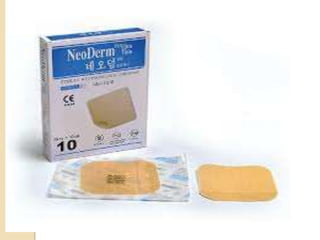
Hydrocolloid Dressing
 These are non-breathable dressings that are self-
adhesive. They are flexible ,comfortable to wear and
suitable for even sensitive skin types.
 These dressings work is by creating moist conditions
that helps certain wounds
 The surface is coated with a substance which
contains polysaccharides and other polymers which
absorb water and form a gel, promote healing by
keeping the wound clean and protecting it from
infection.
 Impermeable to bacteria, long-lasting,
biodegradable, and easy to apply
 Can be used on burns, wounds that are emitting
liquid, necrotic wounds, pressure ulcers, and venous
ulcers.
Transparent Dressing
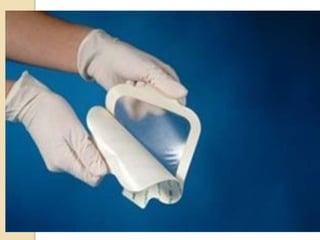
 Transparent dressings are useful when the
professionals want to monitor wound healing,
as these dressings cover the wound with a
clear film. These make identifying potential
complications much easier, such as by making
infections easier to spot at an earlier time.
 These kinds of dressings are often used on
surgical incision sites, on burns and ulcers, and
on IV sites.
 They are also flexible, which makes them
Alginate
Dressings
 These dressings Contain sodium and
seaweed fibres, they are able to absorb high
amounts of fluid create a gel that helps to heal
the wound or burn more quickly and are
biodegradable.
 These dressings require changing around
every two days or more, due to the amount of
liquid they absorb and nature of the wound.
Changing them too often could cause dryness
or exposure to bacteria.
 They are made for wounds that have high
amounts of drainage, burns, venous ulcers,
Collagen dressings
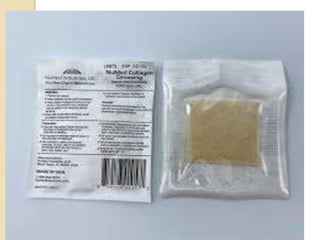
 Collagen, which is produced by fibroblasts, is the most
abundant protein in the human body. A natural structural
protein, collagen is involved in all 3 phases of the
wound-healing cascade. It stimulates cellular migration
and contributes to new tissue development.(7)
 It target chronic wounds pressure sores, surgical
wounds, ulcers, burns, or injuries with a large surface
area.
 It removes dead tissue, aid growth of new blood
vessels,analgesic effects and helping to bring the wound
edges together, effectively speeding up healing.(6&7)
 Collagen dressings are formulated with bovine, avian, or
porcine collagen. Oxidized regenerated cellulose, a
plant-based material, has been combined with collagen
to produce a dressing capable of binding to and
protecting growth factors by binding and inactivating
matrix metalloproteinases in the wound environment (7)
Hydrogel dressings
 Hydrogel dressings maximize patient
comfort and reduce pain while helping to
heal wounds or burns and fight infection. It
has cooling gel like burn soothe which
makes them so effective at reducing pain
and speeding up the healing process.
 Can be used for a range of wounds that are
leaking little or no fluid, and are painful or
necrotic, pressure ulcers or donor sites.
 Hydrogel can also be used for second-
degree burns and infected wounds.
Composites dressings
 Composites or combination dressings may be
used as the primary dressing or as a
secondary dressing. Made from any
combination of dressing types, but are merely
a combination of a moisture retentive dressing
and a gauze dressing.
 Use on: a wide variety of wounds, depending
on the dressing type.
 Pros: widely available; simple for clinicians.
 Cons: may be more expensive and difficult to
store; less flexible in indications for use.
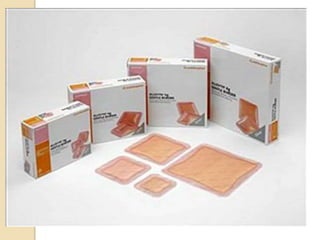
Foam Dressing
 Foam dressing, can work for varying
injuries that exhibit odours. Foam dressings
absorb exudates from the wound’s surface,
creating an environment that promotes
faster healing.
 These dressings allow water vapour to
enter, keeping the area moist, promoting
faster healing, but prevent bacteria from
entering the affected area. These dressings
come in various sizes and shapes,
Clothes Dressings
 Clothes dressings are the most commonly
used dressings, often used to protect open
wounds or areas of broken skin. They are
suitable for minor injuries such as grazes,
cuts or areas of delicate skin.
 These dressings come in all shapes and
sizes, from small coverings for fingers to
larger ones.
 As well as pre-cut dressings, these also
come in a roll option that is made to be cut to
size.
Gauze Dressings (8)
 Gauze dressings are made of woven or non-
woven materials and come in a wide variety of
shapes and sizes.
 Use on: wounds which require packing, wounds
that are draining, wounds requiring very
frequent dressing changes.( infected)
 Pros: readily available, cheaper than other
dressing types, virtually used on any type of
wound.
 Cons: needs changed frequently, which may
add to overall cost; may adhere to the wound
bed; must often be combined with another
dressing type; often not effective for moist
Lotions is used for wound cleaning
 Normal Saline:
Saline is the preferred cleanser for most
wounds because it is physiologic and will
always be safe.
 It will not clean well in dirty, necrotic
wounds. Studies have shown that bacterial
growth in saline may be present within 24
hours of opening the container
Lotions is used for wound cleaning
(9) cont…
 Silver dressings are topical wound care products
derived from ionic silver. These products release a
steady amount of silver to the wound and provide
antimicrobial or antibacterial action.
 The silver is activated from the dressing to the wound's
surface based on the amount of exudate and bacteria in
the wound.
 Silver dressings may be used as primary or secondary
dressings to manage minimal, moderate, or heavy
exudate in acute and chronic wounds e.g diabetic foot
ulcers, pressure ulcers, and leg ulcers
 May cause staining on wound and intact skin
 May cause stinging or sensitization
Lotions is used for wound cleaning
(10) cont…
 Antiseptic solutions, such as
 Chlorhexidine,
 Povidone-iodine, and
 Hydrogen peroxide
Are some of the lotions use in clean infected
or newly contaminated wounds.
Be aware that antiseptic solutions may
damage healthy tissue and delay wound
healing.
Process of wound dressing (11)
 When applying or changing dressings,
an aseptic technique is used in order
to avoid introducing infections into a
wound.
 Even if a wound is already infected,
an aseptic technique is important that
no further infection is introduced. This
technique should be used when the
patient has a surgical or non-surgical
wound
What you will need
 A stainless steel trolley. Big enough for the
dressing pack to be opened on
 A sterile dressing/procedure pack
 Access to hand washing sink or alcohol hand
wash
 Non-sterile gloves to remove old dressing
 Apron
 Appropriate dressings
 Appropriate solution for cleaning the wound,
if needed.
Preparation
 Introduce yourself to the patient and explain the
procedure.
 Provide privacy.
 Position the patient and ensure surrounding area is clean
and tidy before starting.
 Update yourself on any changes in the patient's condition
and ensure dressing is due to be change from patients
notes.
 Wash hands and put on an apron.
 Disinfectant the trolley . From top of the trolley and work
down to the bottom legs of the trolley using single strokes
with damp cloth.
 Place the sterile dressing/procedure pack on the top shelf
of the trolley.
 Open the sterile dressing pack on top.
 Open any other sterile items needed onto the sterile field
without touching them.
Removing an old dressing
 Wash your hands and put on non-sterile gloves
(to protect yourself) before removing an old
dressing. Dispose of this dressing in a separate
dirty clinical waste bag.
 Complete a wound assessment; a visual check
and comparing and evaluating the smell,
amount of blood or ooze and their colour, and
the size of the wound.
 If the site has not improved as expected, then
the treating physician or senior charge nurse
must be informed so they too can evaluate it
and consider changing the care plan.
Cleaning and dressing the wound
 Select the correct dressing type and size as per the care
plan.
 Wash hands and put on sterile gloves.
 Start from the clean area and then move out to the dirty
area. Be very careful when doing this as the tissue or skin
may be tender and there may also be sutures in place.
Clean the area without causing further damage or distress
 Make sure you do not re-introduce dirt or ooze by
ensuring that cleaning materials are not over-used. Change
them regularly (use once only if possible)
 Make sure that you have selected the correct dressing type
and materials needed to provide full and appropriate
coverage for the type, size and location of the wound,
according to the care plan.
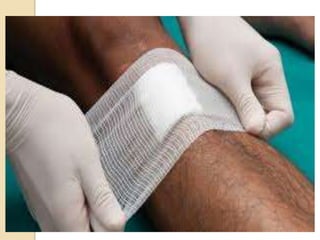
 Dress the wound as per instructions
After the procedure
 Fold up the dressing/procedure pack and place all
contaminated material in a clinical waste bag
 All sharps are removed and disposed of in a
sharps container.
 Remove gloves and place in waste bag.
 Wash hands.
 Clean the trolley with disinfectant solution as
before.
 Record /document on the patient's chart your
wound assessment, the dressing change and the
care given.
 Provide the patient with some dressing
management education and answer any
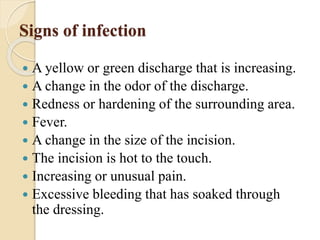
Signs of infection
 A yellow or green discharge that is increasing.
 A change in the odor of the discharge.
 Redness or hardening of the surrounding area.
 Fever.
 A change in the size of the incision.
 The incision is hot to the touch.
 Increasing or unusual pain.
 Excessive bleeding that has soaked through
the dressing.
REFERENCES
1.Luo K.E, and De Pietro M. (2017) surgical wound
2.Surgical wound 101 (2018) wound source accelerators blog
3. Centers for Disease Control and Prevention (CDC). Surgical
site infection (SSI) event: procedure-associated module.
2016.
4. Canadian Agency for Drugs and Technologies in Health.(
2014.) Antibacterial sutures for wound closure after surgery: a
review of clinical and cost-effectiveness and guidelines for
use.
5.Wiseman JT, Fernandez-Taylor S, Barnes M, et al.
(2015)Predictors of surgical site infection after hospital
discharge in patients undergoing major vascular surgery.
6. CLH Healthcare (2017) .7 Types Of Wound Dressings &
When To Use Each
REFERENCES
7. Fleck, C. A., & Simman, R. (2011). Modern
collagen wound dressings: function and
purpose. The journal of the American
College of Certified Wound Specialists.
8. Laurie Swezey RN (2011). Wound Dressing
Selection: Types and Usage.wound source.
9. Hess, Cathy Thomas RN, (2003)
Advances in Skin & Wound Care: silver
dressing
REFERENCES
10. Basic wound cleaning step by step,
Nursing Made Incredibly Easy!:2008 -
Volume 6 - Issue 5 - p 30-31
11. Pickering, D., & Marsden, J. (2015).
Techniques for aseptic dressing and
procedures. Community eye
health, 28(89), 17.
Surgical wound care

Surgical wound care

  • 1.
  • 2.
    OUTLINE  Definitions  Classificationsof surgical wound  Risk factors for surgical wound complications  Types of wound dressings & when to use  Types of lotions use for wound dressing  Steps to wound dressing  Signs of infection  References
  • 3.
    DEFINITIONS  A surgicalwound is an incision or a cut in the skin that is made by a scalpel during surgery. A surgical wound can also be the result of a drain placed during surgery.  Surgical wounds vary greatly in size. They are usually closed with sutures, but are sometimes left open to heal. (1) Luo K.E, and De Pietro M. (2017)
  • 4.
    Surgical Wound Classifications Surgical wounds are classified by degree of contaminants present at time of the procedure.  The classification allows for appropriate risk stratification for development of complications and guide with appropriate care and treatment.  (2) Surgical wound 101 (2018)
  • 5.
    Surgical Wound Classificationscont…  Clean or Class I  Clean-Contaminated or Class II  Contaminated or Class III  Dirty-Infected or Class IV  (2) Surgical wound 101 (2018)
  • 6.
    Risk Factors forSurgical Wound Complications  Advanced surgical wound classification  Malnutrition  Altered states of perfusion  Radiation therapy  Unintentional weight loss  Longer duration of surgical procedure (greater than two hours)  Immunocompromised state  Generalized debility  Female sex  Obesity  Emergency procedure  Pre-operative sepsis
  • 7.
    Types of wounddressings & when to use (6&7)  The process of wound healing, is vital to ensure that healing is fast and effective , for this using the right dressing is crucial.  The type of dressing used for dressing a wound depends on various factors, such as the type of injury, the size, location, and severity.
  • 8.
    Hydrocolloid Dressing  Theseare non-breathable dressings that are self- adhesive. They are flexible ,comfortable to wear and suitable for even sensitive skin types.  These dressings work is by creating moist conditions that helps certain wounds  The surface is coated with a substance which contains polysaccharides and other polymers which absorb water and form a gel, promote healing by keeping the wound clean and protecting it from infection.  Impermeable to bacteria, long-lasting, biodegradable, and easy to apply  Can be used on burns, wounds that are emitting liquid, necrotic wounds, pressure ulcers, and venous ulcers.
  • 10.
    Transparent Dressing  Transparentdressings are useful when the professionals want to monitor wound healing, as these dressings cover the wound with a clear film. These make identifying potential complications much easier, such as by making infections easier to spot at an earlier time.  These kinds of dressings are often used on surgical incision sites, on burns and ulcers, and on IV sites.  They are also flexible, which makes them
  • 12.
    Alginate Dressings  These dressingsContain sodium and seaweed fibres, they are able to absorb high amounts of fluid create a gel that helps to heal the wound or burn more quickly and are biodegradable.  These dressings require changing around every two days or more, due to the amount of liquid they absorb and nature of the wound. Changing them too often could cause dryness or exposure to bacteria.  They are made for wounds that have high amounts of drainage, burns, venous ulcers,
  • 14.
    Collagen dressings  Collagen,which is produced by fibroblasts, is the most abundant protein in the human body. A natural structural protein, collagen is involved in all 3 phases of the wound-healing cascade. It stimulates cellular migration and contributes to new tissue development.(7)  It target chronic wounds pressure sores, surgical wounds, ulcers, burns, or injuries with a large surface area.  It removes dead tissue, aid growth of new blood vessels,analgesic effects and helping to bring the wound edges together, effectively speeding up healing.(6&7)  Collagen dressings are formulated with bovine, avian, or porcine collagen. Oxidized regenerated cellulose, a plant-based material, has been combined with collagen to produce a dressing capable of binding to and protecting growth factors by binding and inactivating matrix metalloproteinases in the wound environment (7)
  • 16.
    Hydrogel dressings  Hydrogeldressings maximize patient comfort and reduce pain while helping to heal wounds or burns and fight infection. It has cooling gel like burn soothe which makes them so effective at reducing pain and speeding up the healing process.  Can be used for a range of wounds that are leaking little or no fluid, and are painful or necrotic, pressure ulcers or donor sites.  Hydrogel can also be used for second- degree burns and infected wounds.
  • 18.
    Composites dressings  Compositesor combination dressings may be used as the primary dressing or as a secondary dressing. Made from any combination of dressing types, but are merely a combination of a moisture retentive dressing and a gauze dressing.  Use on: a wide variety of wounds, depending on the dressing type.  Pros: widely available; simple for clinicians.  Cons: may be more expensive and difficult to store; less flexible in indications for use.
  • 19.
    Foam Dressing  Foamdressing, can work for varying injuries that exhibit odours. Foam dressings absorb exudates from the wound’s surface, creating an environment that promotes faster healing.  These dressings allow water vapour to enter, keeping the area moist, promoting faster healing, but prevent bacteria from entering the affected area. These dressings come in various sizes and shapes,
  • 21.
    Clothes Dressings  Clothesdressings are the most commonly used dressings, often used to protect open wounds or areas of broken skin. They are suitable for minor injuries such as grazes, cuts or areas of delicate skin.  These dressings come in all shapes and sizes, from small coverings for fingers to larger ones.  As well as pre-cut dressings, these also come in a roll option that is made to be cut to size.
  • 22.
    Gauze Dressings (8) Gauze dressings are made of woven or non- woven materials and come in a wide variety of shapes and sizes.  Use on: wounds which require packing, wounds that are draining, wounds requiring very frequent dressing changes.( infected)  Pros: readily available, cheaper than other dressing types, virtually used on any type of wound.  Cons: needs changed frequently, which may add to overall cost; may adhere to the wound bed; must often be combined with another dressing type; often not effective for moist
  • 23.
    Lotions is usedfor wound cleaning  Normal Saline: Saline is the preferred cleanser for most wounds because it is physiologic and will always be safe.  It will not clean well in dirty, necrotic wounds. Studies have shown that bacterial growth in saline may be present within 24 hours of opening the container
  • 24.
    Lotions is usedfor wound cleaning (9) cont…  Silver dressings are topical wound care products derived from ionic silver. These products release a steady amount of silver to the wound and provide antimicrobial or antibacterial action.  The silver is activated from the dressing to the wound's surface based on the amount of exudate and bacteria in the wound.  Silver dressings may be used as primary or secondary dressings to manage minimal, moderate, or heavy exudate in acute and chronic wounds e.g diabetic foot ulcers, pressure ulcers, and leg ulcers  May cause staining on wound and intact skin  May cause stinging or sensitization
  • 25.
    Lotions is usedfor wound cleaning (10) cont…  Antiseptic solutions, such as  Chlorhexidine,  Povidone-iodine, and  Hydrogen peroxide Are some of the lotions use in clean infected or newly contaminated wounds. Be aware that antiseptic solutions may damage healthy tissue and delay wound healing.
  • 26.
    Process of wounddressing (11)  When applying or changing dressings, an aseptic technique is used in order to avoid introducing infections into a wound.  Even if a wound is already infected, an aseptic technique is important that no further infection is introduced. This technique should be used when the patient has a surgical or non-surgical wound
  • 27.
    What you willneed  A stainless steel trolley. Big enough for the dressing pack to be opened on  A sterile dressing/procedure pack  Access to hand washing sink or alcohol hand wash  Non-sterile gloves to remove old dressing  Apron  Appropriate dressings  Appropriate solution for cleaning the wound, if needed.
  • 28.
    Preparation  Introduce yourselfto the patient and explain the procedure.  Provide privacy.  Position the patient and ensure surrounding area is clean and tidy before starting.  Update yourself on any changes in the patient's condition and ensure dressing is due to be change from patients notes.  Wash hands and put on an apron.  Disinfectant the trolley . From top of the trolley and work down to the bottom legs of the trolley using single strokes with damp cloth.  Place the sterile dressing/procedure pack on the top shelf of the trolley.  Open the sterile dressing pack on top.  Open any other sterile items needed onto the sterile field without touching them.
  • 29.
    Removing an olddressing  Wash your hands and put on non-sterile gloves (to protect yourself) before removing an old dressing. Dispose of this dressing in a separate dirty clinical waste bag.  Complete a wound assessment; a visual check and comparing and evaluating the smell, amount of blood or ooze and their colour, and the size of the wound.  If the site has not improved as expected, then the treating physician or senior charge nurse must be informed so they too can evaluate it and consider changing the care plan.
  • 30.
    Cleaning and dressingthe wound  Select the correct dressing type and size as per the care plan.  Wash hands and put on sterile gloves.  Start from the clean area and then move out to the dirty area. Be very careful when doing this as the tissue or skin may be tender and there may also be sutures in place. Clean the area without causing further damage or distress  Make sure you do not re-introduce dirt or ooze by ensuring that cleaning materials are not over-used. Change them regularly (use once only if possible)  Make sure that you have selected the correct dressing type and materials needed to provide full and appropriate coverage for the type, size and location of the wound, according to the care plan.  Dress the wound as per instructions
  • 31.
    After the procedure Fold up the dressing/procedure pack and place all contaminated material in a clinical waste bag  All sharps are removed and disposed of in a sharps container.  Remove gloves and place in waste bag.  Wash hands.  Clean the trolley with disinfectant solution as before.  Record /document on the patient's chart your wound assessment, the dressing change and the care given.  Provide the patient with some dressing management education and answer any
  • 33.
    Signs of infection A yellow or green discharge that is increasing.  A change in the odor of the discharge.  Redness or hardening of the surrounding area.  Fever.  A change in the size of the incision.  The incision is hot to the touch.  Increasing or unusual pain.  Excessive bleeding that has soaked through the dressing.
  • 34.
    REFERENCES 1.Luo K.E, andDe Pietro M. (2017) surgical wound 2.Surgical wound 101 (2018) wound source accelerators blog 3. Centers for Disease Control and Prevention (CDC). Surgical site infection (SSI) event: procedure-associated module. 2016. 4. Canadian Agency for Drugs and Technologies in Health.( 2014.) Antibacterial sutures for wound closure after surgery: a review of clinical and cost-effectiveness and guidelines for use. 5.Wiseman JT, Fernandez-Taylor S, Barnes M, et al. (2015)Predictors of surgical site infection after hospital discharge in patients undergoing major vascular surgery. 6. CLH Healthcare (2017) .7 Types Of Wound Dressings & When To Use Each
  • 35.
    REFERENCES 7. Fleck, C.A., & Simman, R. (2011). Modern collagen wound dressings: function and purpose. The journal of the American College of Certified Wound Specialists. 8. Laurie Swezey RN (2011). Wound Dressing Selection: Types and Usage.wound source. 9. Hess, Cathy Thomas RN, (2003) Advances in Skin & Wound Care: silver dressing
  • 36.
    REFERENCES 10. Basic woundcleaning step by step, Nursing Made Incredibly Easy!:2008 - Volume 6 - Issue 5 - p 30-31 11. Pickering, D., & Marsden, J. (2015). Techniques for aseptic dressing and procedures. Community eye health, 28(89), 17.