Floor Covering
Dr. Deepa Swamy
Associate Professor
Govt Arts Girls College, Kota
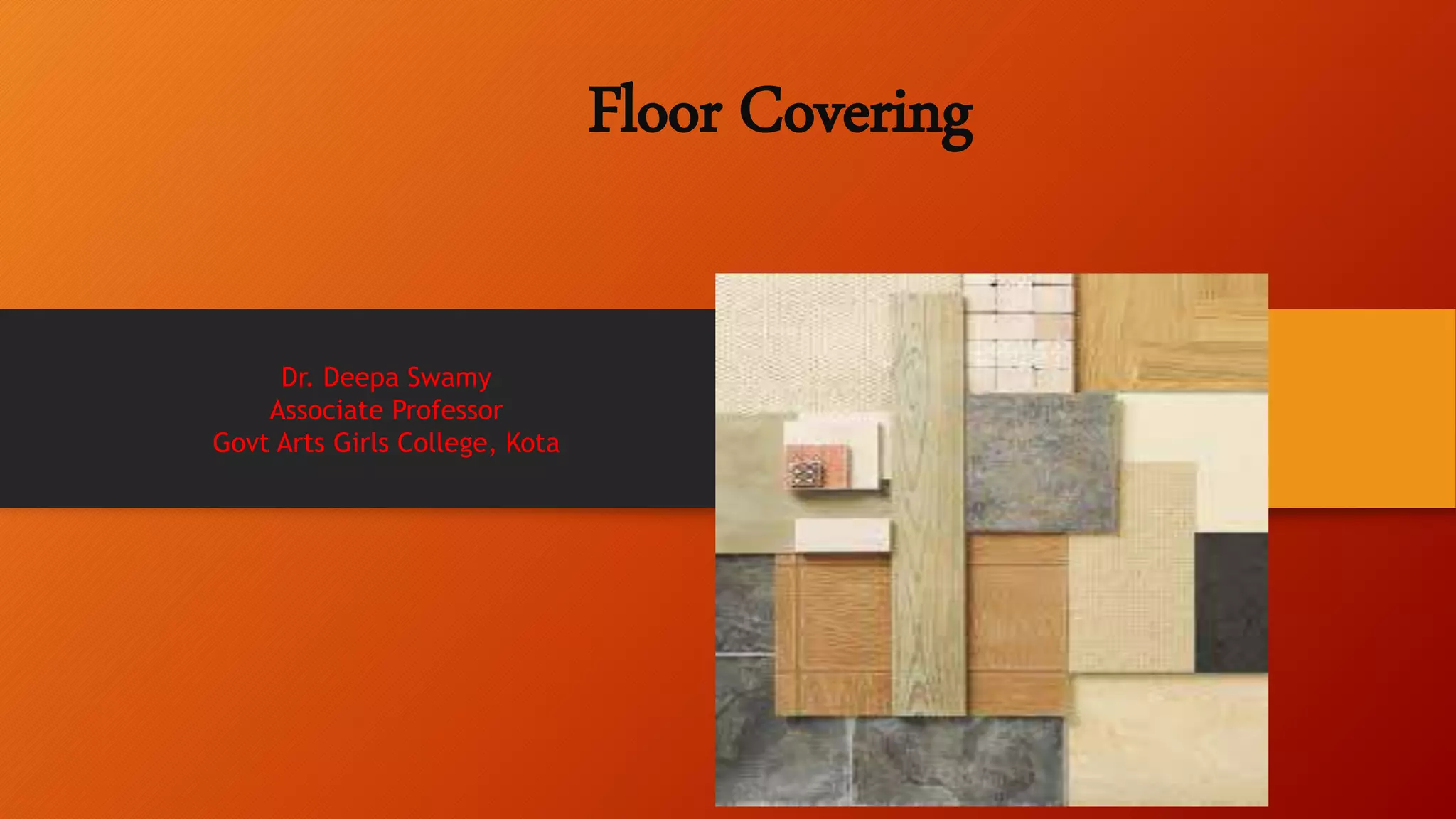
Floor Covering
• The floor covering are used on the base floor.
• Floor covering makes the room comfortable and gives a finished appearance.
• It adds visual and actual warmth to the floor
• It helps in reduction foot fatigue
• It can be used to divide space, suggest traffic pattern.
• Floor covering reduce the amount of noise produce while walking on it.
Selection of Floor Covering
• Durability
• Economy of Upkeep
• Resilience
• Warmth
• Light Reflection
• Sound Abs oration
• Appearance
• Beauty and character of room
• Use
• Individuality
• cost
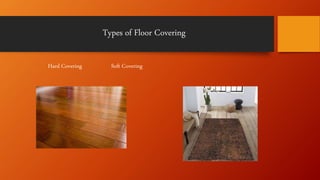
Types of Floor Covering
Hard Covering Soft Covering
Hard Covering
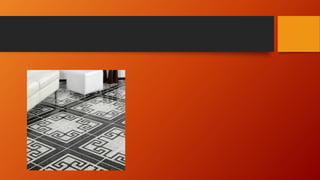
• Asphalt Tiles
• Cork Tiles
• Vinyl tile
• Linoleum
• Rubber Tile
• Wood
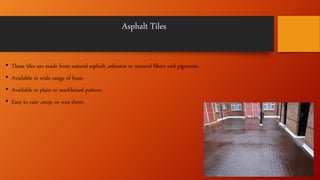
Asphalt Tiles
• These tiles are made from natural asphalt ,asbestos or mineral fibers and pigments.
• Available in wide range of hues.
• Available in plain or marbleized pattern.
• Easy to care ,mop, or wax them.
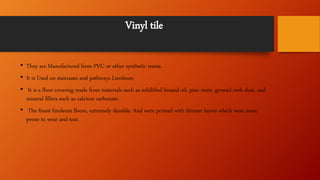
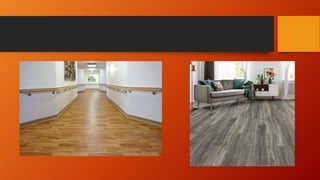
Vinyl tile
• They are Manufactured from PVC or other synthetic resins.
• It is Used on staircases and pathways Linoleum
• It is a floor covering made from materials such as solidified linseed oil, pine rosin, ground cork dust, and
mineral fillers such as calcium carbonate.
• The finest linoleum floors, extremely durable. And were printed with thinner layers which were more
prone to wear and tear.
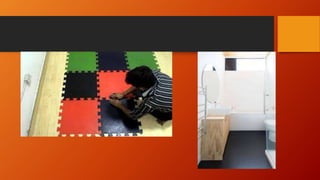
Rubber Tiles
• They are made up of 25% of rubber and 75% of mineral and cotton fibres
• Rubber floors are nonporous, waterproof surfaces.
• They are used in areas like bars and bathrooms
• • They are noise free .
• Limited in color.
• Directly laid on concrete base.
• They are attractive floor but twice as expensive
Cork Tiles
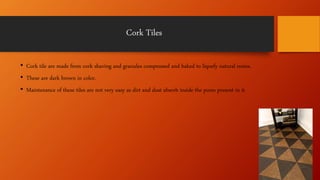
• Cork tile are made from cork shaving and granules compressed and baked to liquefy natural resins.
• These are dark brown in color.
• Maintenance of these tiles are not very easy as dirt and dust absorb inside the pores present in it.
Linoleum
• It is a floor covering made from materials such as solidified linseed oil, pine rosin, ground cork dust, and mineral fillers
such as calcium carbonate.
• The finest linoleum floors, extremely durable.
• They were printed with thinner layers which were more prone to wear and tear.
• It is attractive ,flexible, quiet and moderate in cost.
• It require frequent waxing for durability
Wood Tile
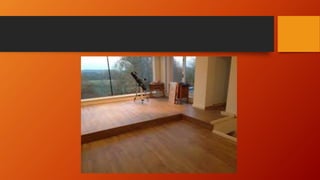
• The wood generally used are oak, brich, beech, maple.
• The natural grain and color of wood provides the pattern.
• Variety can be obtained by arranging them in various pattern.
• They are hard and noisy.
• They give beauty and warmth
Soft Covering
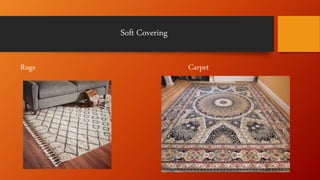
Rugs Carpet
Soft Covering
• It adds warmth and visual softness to floor.
• It gives texture to a floor.
• Provides resilience and quietness to floor
• It also give furnished look at the room.
• It can divide the space of the room without wall.
Carpets
• Carpet is typically installed wall-to-wall to eliminate the maintenance of hard flooring surfaces around the
edge of a carpet.
•categorized by
• construction,
• patterns
• types of yarn used.
.
Uses of carpet in House
• slipping
• provides an additional source of insulation
• lower noise levels;
• most resilient of all floor coverings,
• which is a major benefit to individuals who must remain on their feet for extended periods.
Sizes of Carpets
• Broadloom carpets – 12 feet in width, but can be ordered up to 15 feet in width.
• Carpet runners – 2 feet to 9 feet in width.
• Carpet squares or tiles – 18 square inches
Rugs
• , on the other hand, are often used to accentuate a tile or wood floor.
• In areas where there is heavy foot traffic, rugs can be used to equalize wear and help prevent tracking onto other
floor coverings.
• Types of Rugs • Tufted Rugs • Needle Felted Rugs • Knotted Rugs • Hooked Rugs • Flat weave Rugs •
Embroidered Rugs • Moroccan Rugs • Scandinavian Rugs • Persian Esfahan Rug
Rugs
• Rugs are made as a handicraft
• The hooked rug is a style in which pieces of material are drawn through a burlap backing to create a simple rug.
• Hooked Rugs Flat weave Rugs Sometimes, hobbyists make flat weave rugs out of strips of old pieces of clothing, such as
jeans.
Difference between Rugs and Carpet
• A “rug” is cut to standard sizes and are usually not fastened to floors where as “Carpets” come sin yard in width
s ranging from 21” to 18”.
• a “rug” is a woven fabric that is used to cover a specific area of the floor. Where as "carpet”, which is generally
but not invariably used to refer to carpeting that extend wall-to-wall, or are fixed to the floor.
Floor coverning

Floor coverning

  • 1.
    Floor Covering Dr. DeepaSwamy Associate Professor Govt Arts Girls College, Kota
  • 2.
    Floor Covering • Thefloor covering are used on the base floor. • Floor covering makes the room comfortable and gives a finished appearance. • It adds visual and actual warmth to the floor • It helps in reduction foot fatigue • It can be used to divide space, suggest traffic pattern. • Floor covering reduce the amount of noise produce while walking on it.
  • 3.
    Selection of FloorCovering • Durability • Economy of Upkeep • Resilience • Warmth • Light Reflection • Sound Abs oration • Appearance • Beauty and character of room • Use • Individuality • cost
  • 4.
    Types of FloorCovering Hard Covering Soft Covering
  • 5.
    Hard Covering • AsphaltTiles • Cork Tiles • Vinyl tile • Linoleum • Rubber Tile • Wood
  • 6.
    Asphalt Tiles • Thesetiles are made from natural asphalt ,asbestos or mineral fibers and pigments. • Available in wide range of hues. • Available in plain or marbleized pattern. • Easy to care ,mop, or wax them.
  • 7.
    Vinyl tile • Theyare Manufactured from PVC or other synthetic resins. • It is Used on staircases and pathways Linoleum • It is a floor covering made from materials such as solidified linseed oil, pine rosin, ground cork dust, and mineral fillers such as calcium carbonate. • The finest linoleum floors, extremely durable. And were printed with thinner layers which were more prone to wear and tear.
  • 9.
    Rubber Tiles • Theyare made up of 25% of rubber and 75% of mineral and cotton fibres • Rubber floors are nonporous, waterproof surfaces. • They are used in areas like bars and bathrooms • • They are noise free . • Limited in color. • Directly laid on concrete base. • They are attractive floor but twice as expensive
  • 11.
    Cork Tiles • Corktile are made from cork shaving and granules compressed and baked to liquefy natural resins. • These are dark brown in color. • Maintenance of these tiles are not very easy as dirt and dust absorb inside the pores present in it.
  • 12.
    Linoleum • It isa floor covering made from materials such as solidified linseed oil, pine rosin, ground cork dust, and mineral fillers such as calcium carbonate. • The finest linoleum floors, extremely durable. • They were printed with thinner layers which were more prone to wear and tear. • It is attractive ,flexible, quiet and moderate in cost. • It require frequent waxing for durability
  • 14.
    Wood Tile • Thewood generally used are oak, brich, beech, maple. • The natural grain and color of wood provides the pattern. • Variety can be obtained by arranging them in various pattern. • They are hard and noisy. • They give beauty and warmth
  • 16.
  • 17.
    Soft Covering • Itadds warmth and visual softness to floor. • It gives texture to a floor. • Provides resilience and quietness to floor • It also give furnished look at the room. • It can divide the space of the room without wall.
  • 18.
    Carpets • Carpet istypically installed wall-to-wall to eliminate the maintenance of hard flooring surfaces around the edge of a carpet. •categorized by • construction, • patterns • types of yarn used. .
  • 19.
    Uses of carpetin House • slipping • provides an additional source of insulation • lower noise levels; • most resilient of all floor coverings, • which is a major benefit to individuals who must remain on their feet for extended periods.
  • 20.
    Sizes of Carpets •Broadloom carpets – 12 feet in width, but can be ordered up to 15 feet in width. • Carpet runners – 2 feet to 9 feet in width. • Carpet squares or tiles – 18 square inches
  • 21.
    Rugs • , onthe other hand, are often used to accentuate a tile or wood floor. • In areas where there is heavy foot traffic, rugs can be used to equalize wear and help prevent tracking onto other floor coverings. • Types of Rugs • Tufted Rugs • Needle Felted Rugs • Knotted Rugs • Hooked Rugs • Flat weave Rugs • Embroidered Rugs • Moroccan Rugs • Scandinavian Rugs • Persian Esfahan Rug
  • 22.
    Rugs • Rugs aremade as a handicraft • The hooked rug is a style in which pieces of material are drawn through a burlap backing to create a simple rug. • Hooked Rugs Flat weave Rugs Sometimes, hobbyists make flat weave rugs out of strips of old pieces of clothing, such as jeans.
  • 23.
    Difference between Rugsand Carpet • A “rug” is cut to standard sizes and are usually not fastened to floors where as “Carpets” come sin yard in width s ranging from 21” to 18”. • a “rug” is a woven fabric that is used to cover a specific area of the floor. Where as "carpet”, which is generally but not invariably used to refer to carpeting that extend wall-to-wall, or are fixed to the floor.