Department of Plant Pathology
College of Agriculture SK Rajasthan Agricultural University
Bikaner 334 006
Speaker
Hansraj Dhakar
Ph. D (Scholar)
Seminar Incharge
Dr. Data Ram Kumhar
Professor & Head
Credit seminar
on
Defense Mechanisms of Plants against
plant pathogens
What is defense mechanisms
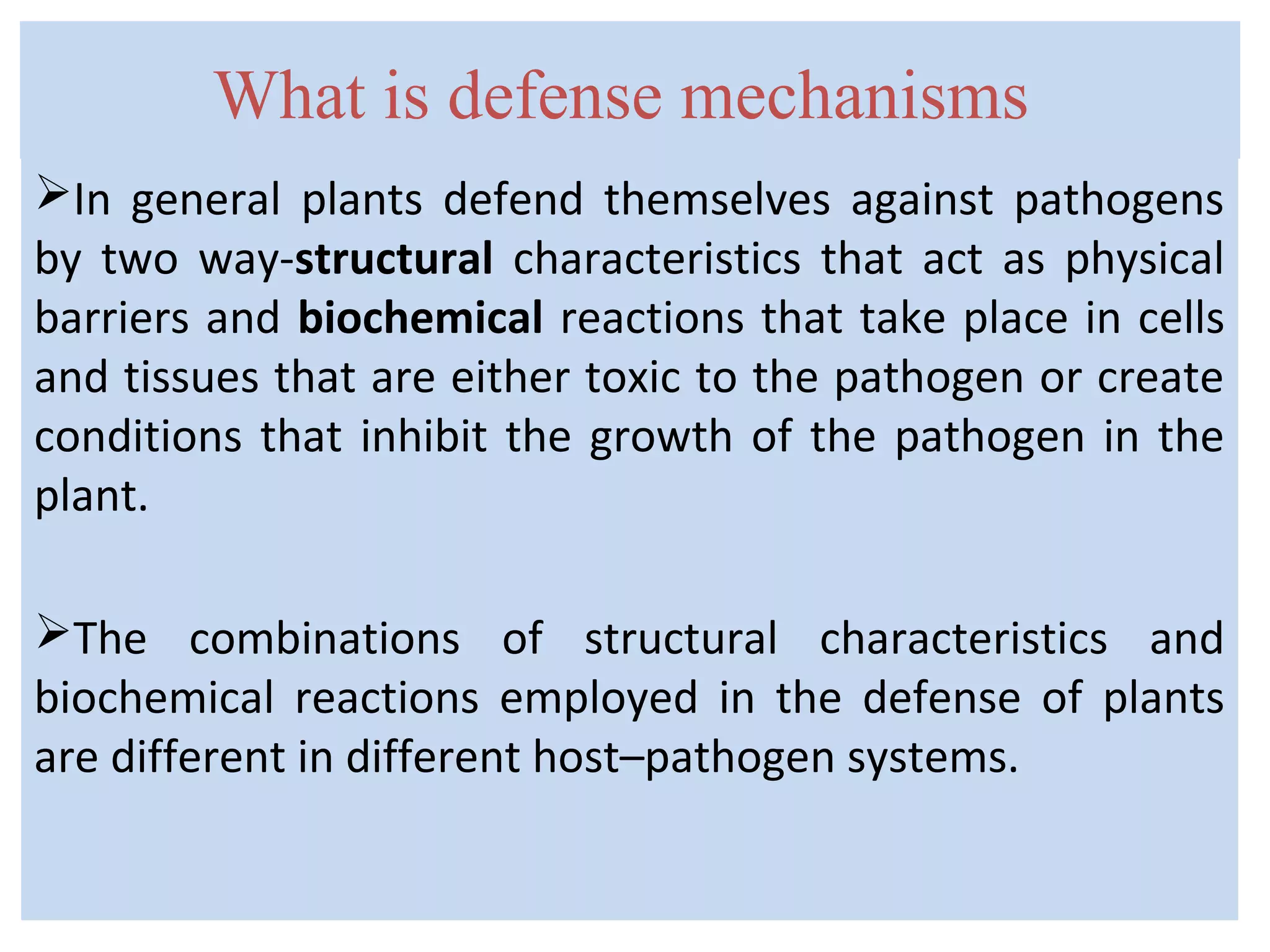
In general plants defend themselves against pathogens
by two way-structural characteristics that act as physical
barriers and biochemical reactions that take place in cells
and tissues that are either toxic to the pathogen or create
conditions that inhibit the growth of the pathogen in the
plant.
The combinations of structural characteristics and
biochemical reactions employed in the defense of plants
are different in different host–pathogen systems.
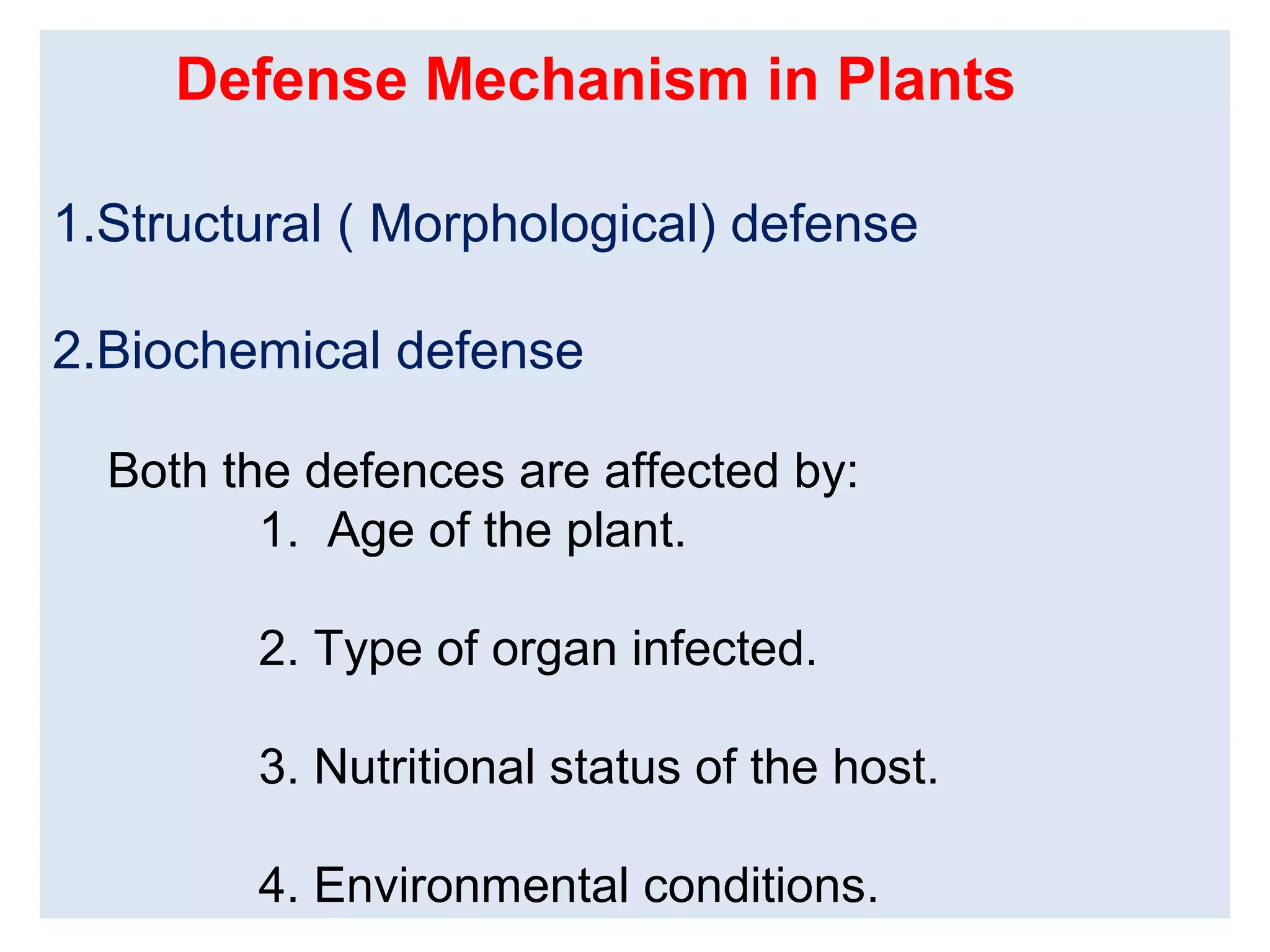
Defense Mechanism in Plants
1.Structural ( Morphological) defense
2.Biochemical defense
Both the defences are affected by:
1. Age of the plant.
2. Type of organ infected.
3. Nutritional status of the host.
4. Environmental conditions.
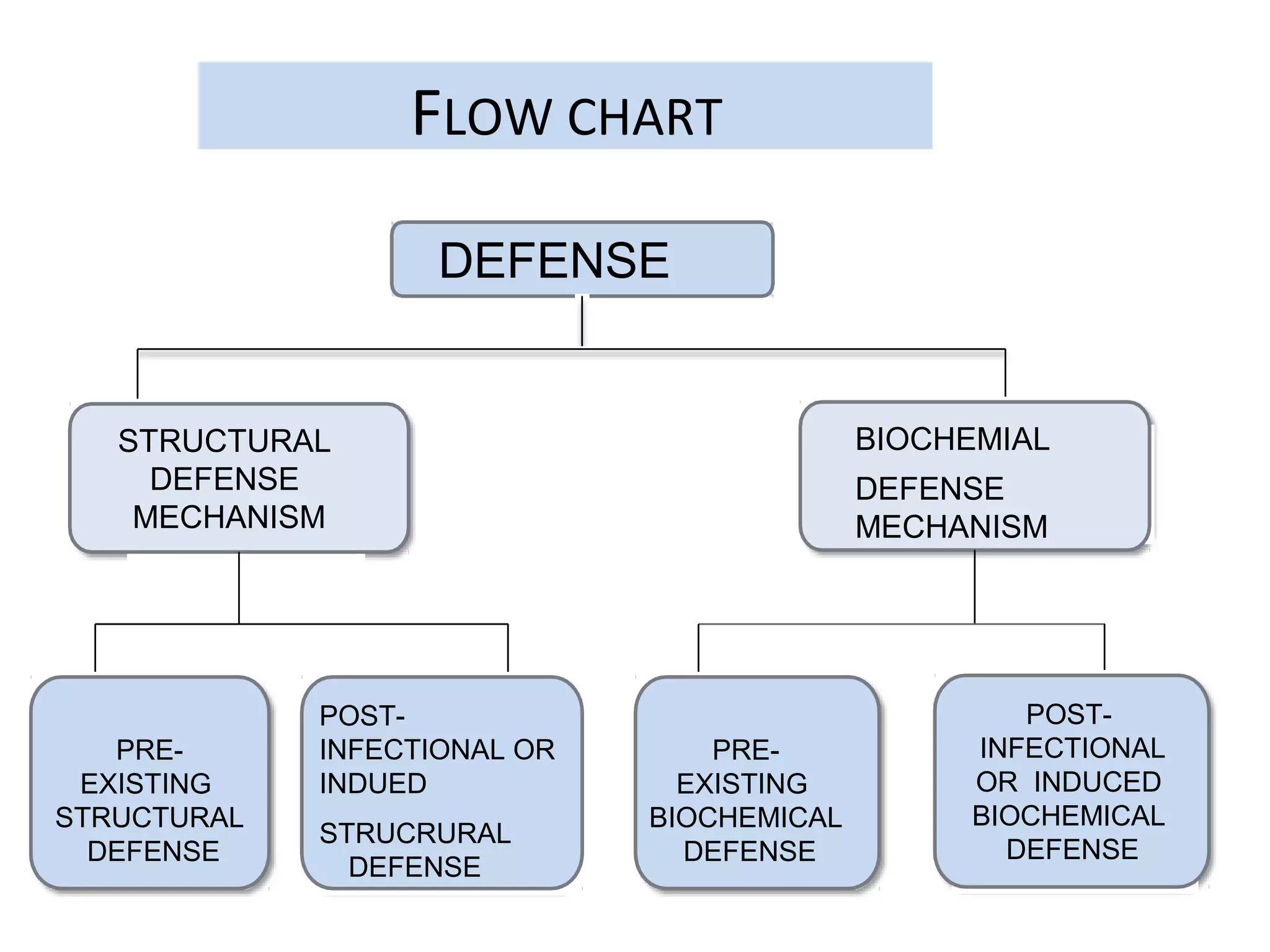
FLOW CHART
DEFENSE
STRUCTURAL
DEFENSE
MECHANISM
BIOCHEMIAL
DEFENSE
MECHANISM
PRE-
EXISTING
STRUCTURAL
DEFENSE
POST-
INFECTIONAL OR
INDUED
STRUCRURAL
DEFENSE
PRE-
EXISTING
BIOCHEMICAL
DEFENSE
POST-
INFECTIONAL
OR INDUCED
BIOCHEMICAL
DEFENSE
STRUCTURAL DEFENSE MECHANISM
 The surface of the plant or host is first line of defense against the
pathogen.
 The pathogen must adhere to the surface and penetrate, if it is to
cause infection.
 Structural defense mechanism are mainly two type:-
1. Pre-existing structural defense mechanism
2. Post-infectional or induced structural defense mechanism
 Pre-existing structural defense
Wax
Thick cuticle
Thickness and toughness of the outer wall of epidermal cells
Stomata
Sclerenchyma cells
Lenticel
 Induced structural defense
 Cellular defense structure
Hyphal sheathing
 Histological defense structure
Formation of cork layer
Formation of abscission layer
Formation of tyloses
Deposition of gums
pre-EXISTING STRUCTURAL DEFENSE
 It includes:
 Amount and quality of wax and cuticle.
 Shapes, size and locations of natural openings (stomata and
lenticels).
 Presence of thick walled cells in the tissues of the plant that hinder
the advance of pathogen.
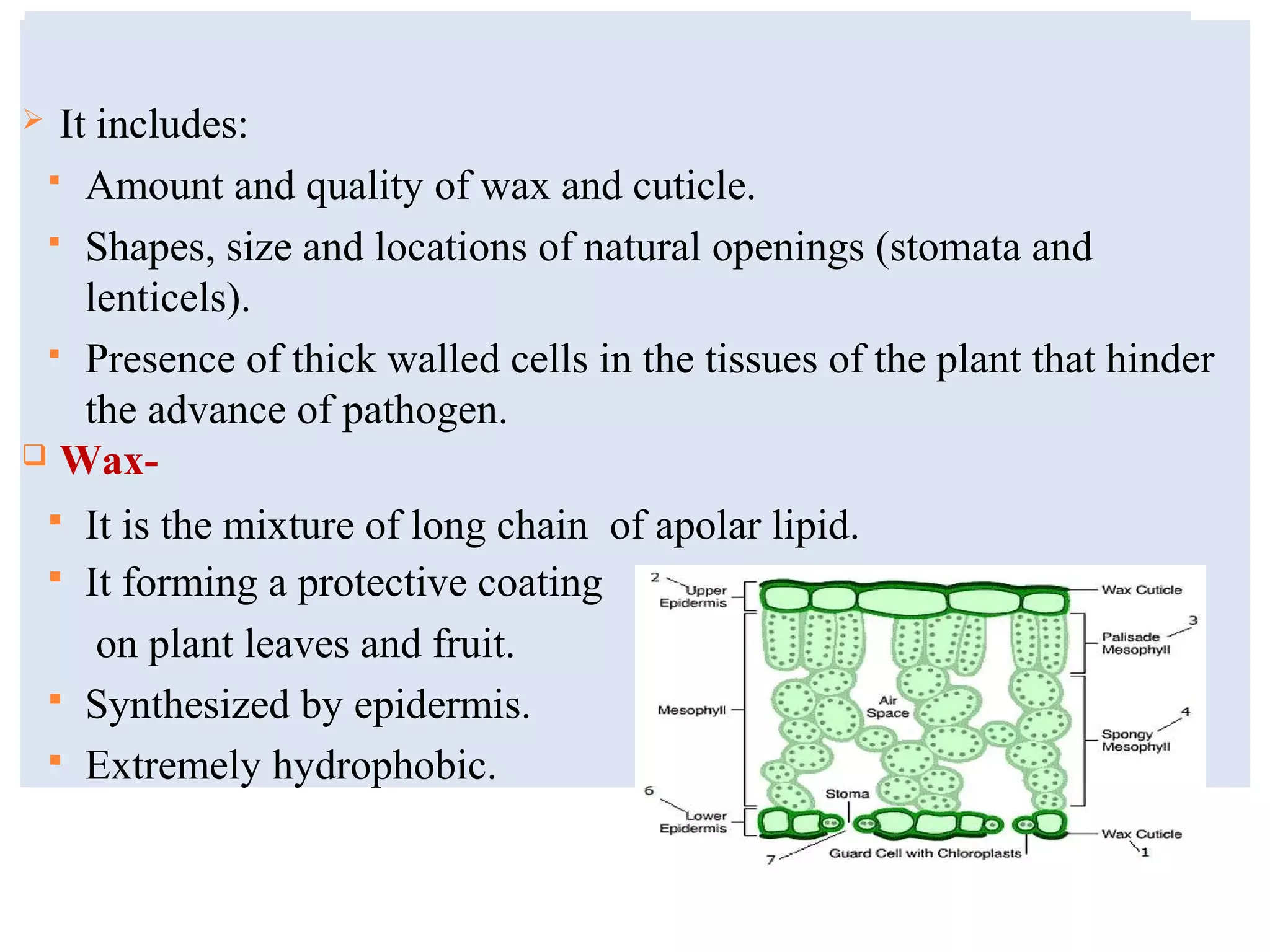
 Wax-
 It is the mixture of long chain of apolar lipid.
 It forming a protective coating
on plant leaves and fruit.
 Synthesized by epidermis.
 Extremely hydrophobic.
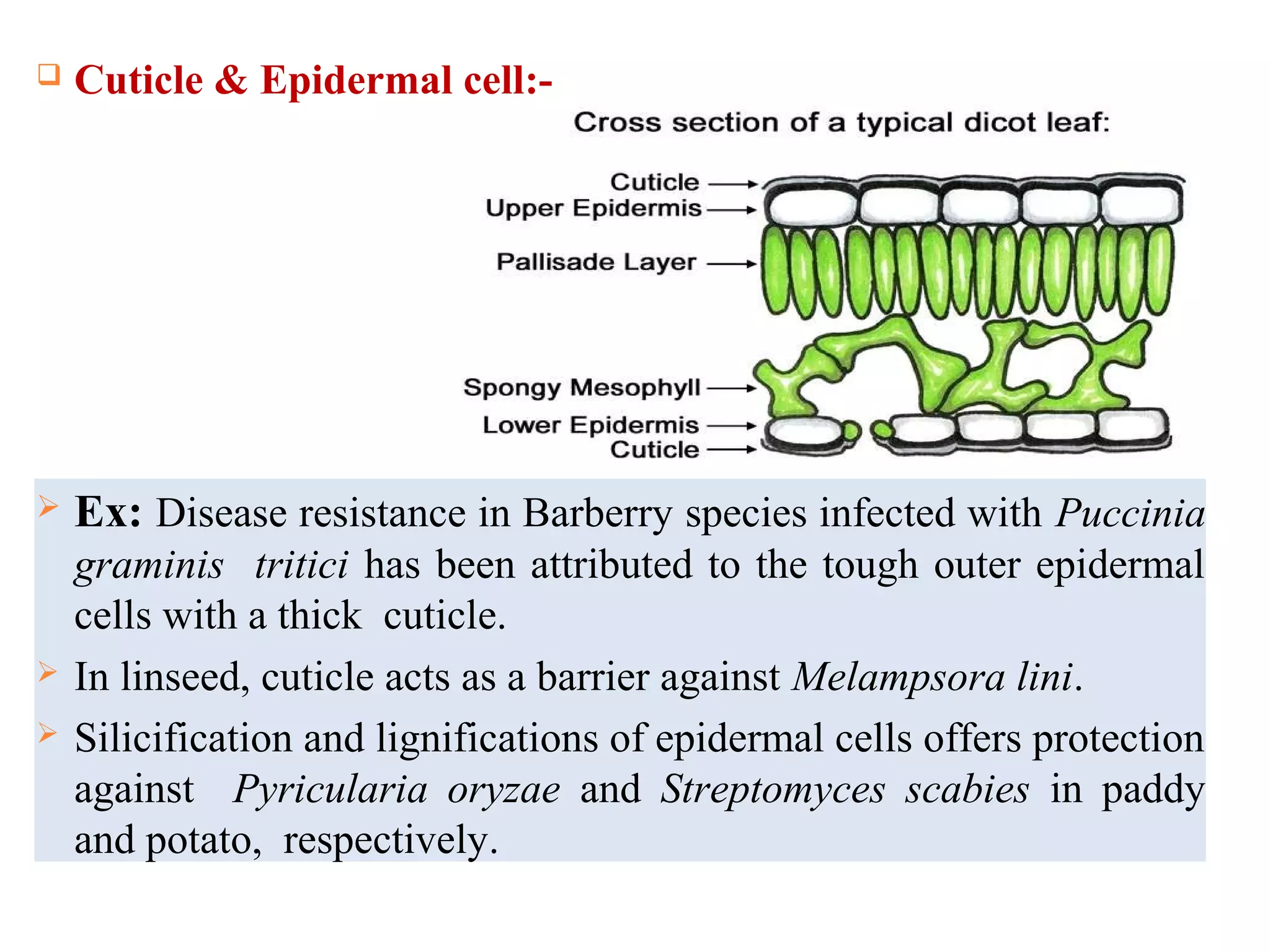
 Cuticle & Epidermal cell:-
 Ex: Disease resistance in Barberry species infected with Puccinia
graminis tritici has been attributed to the tough outer epidermal
cells with a thick cuticle.
 In linseed, cuticle acts as a barrier against Melampsora lini.
 Silicification and lignifications of epidermal cells offers protection
against Pyricularia oryzae and Streptomyces scabies in paddy
and potato, respectively.
 Sclerenchyma cells:-
 It composed of thickened walls of lignin.
 Sclerenchyma cells is present in stem and leaf veins.
 Brittle cells help in mechanical support of the plant.
 Effectively block the spread of some fungal and bacterial
pathogens that cause angular leaf spot.
 Structure of natural opening:-
A. Stomata:-
Most of pathogen enter plants through natural opening.
Some pathogen like stem rust of wheat (Puccinia graminis
f.sp. tritici) can enters its host only when the stomata are
open.
Structure of stomata provides resistance to penetration by
certain plant pathogenic bacteria.
 Ex: Citrus variety, szinkum, is resistant to citrus canker.
Lenticels :-
 Lenticels are openings on fruit, stem and tubers that are filled
with loosely connected cells that allow the passage of air.
 Shape and internal structure of lenticels can increase or decrease
the incidence of fruit diseases.
 Ex. Small and suberised lenticels will offer resistance to potato
scab pathogen, Streptomyces scabies.
Potato
POST-INFECTIONAL/INDUCED STRUCTURAL DEFENSE MECHANISM
 Most pathogen manage to penetrate their hosts through wounds
and natural opening and to produce various degree of infection.
 Pathogen penetration the host surface, induced the structural
defense mechanism in the host cells.
 These may be regarded as:-
 Histological defense barriers (cork layer, abscission layers and
tyloses formation)
 Cellular defense structures (hyphal sheathing).
HISTOLOGICAL DEFENSE STRUCTURES
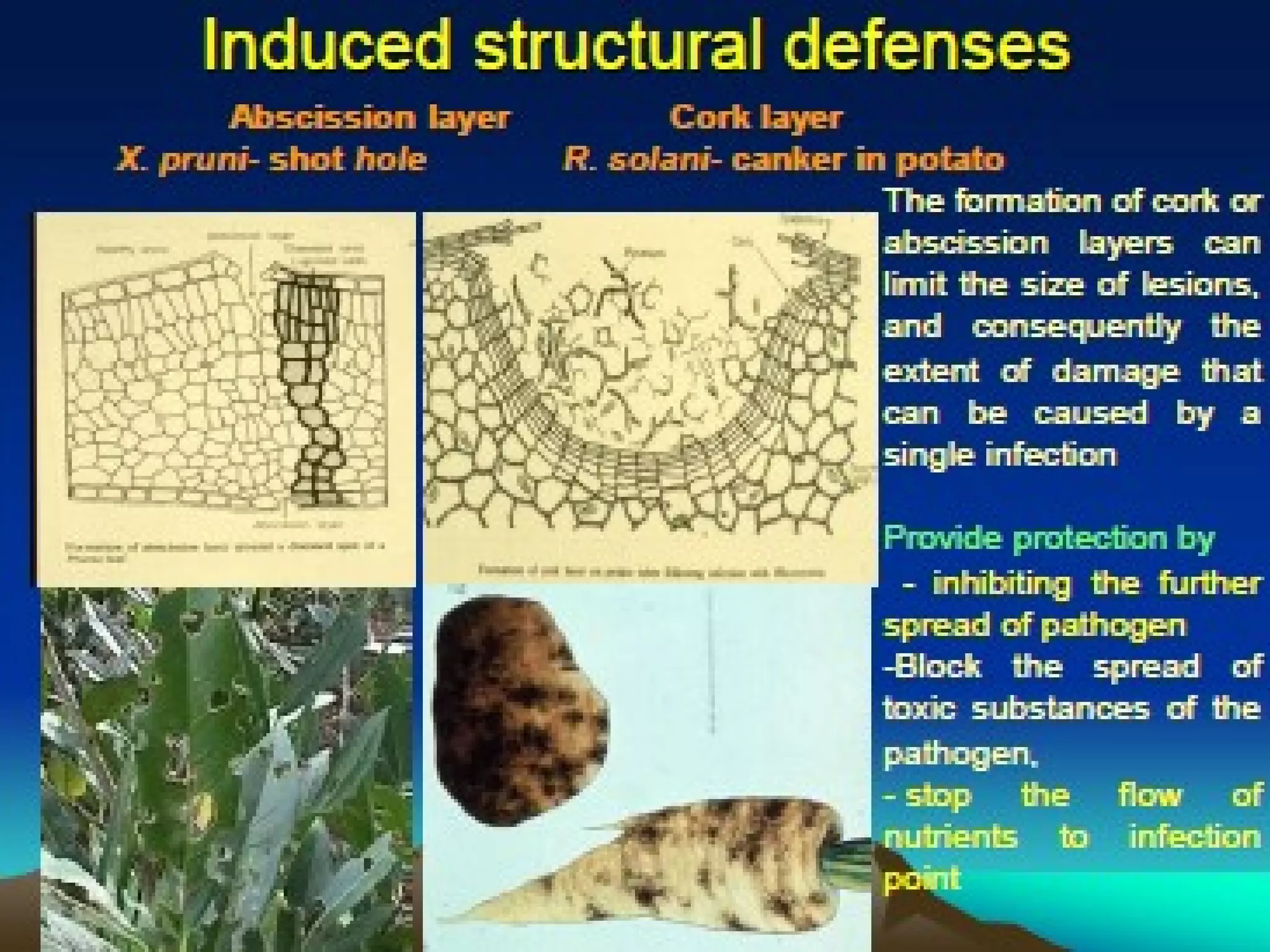
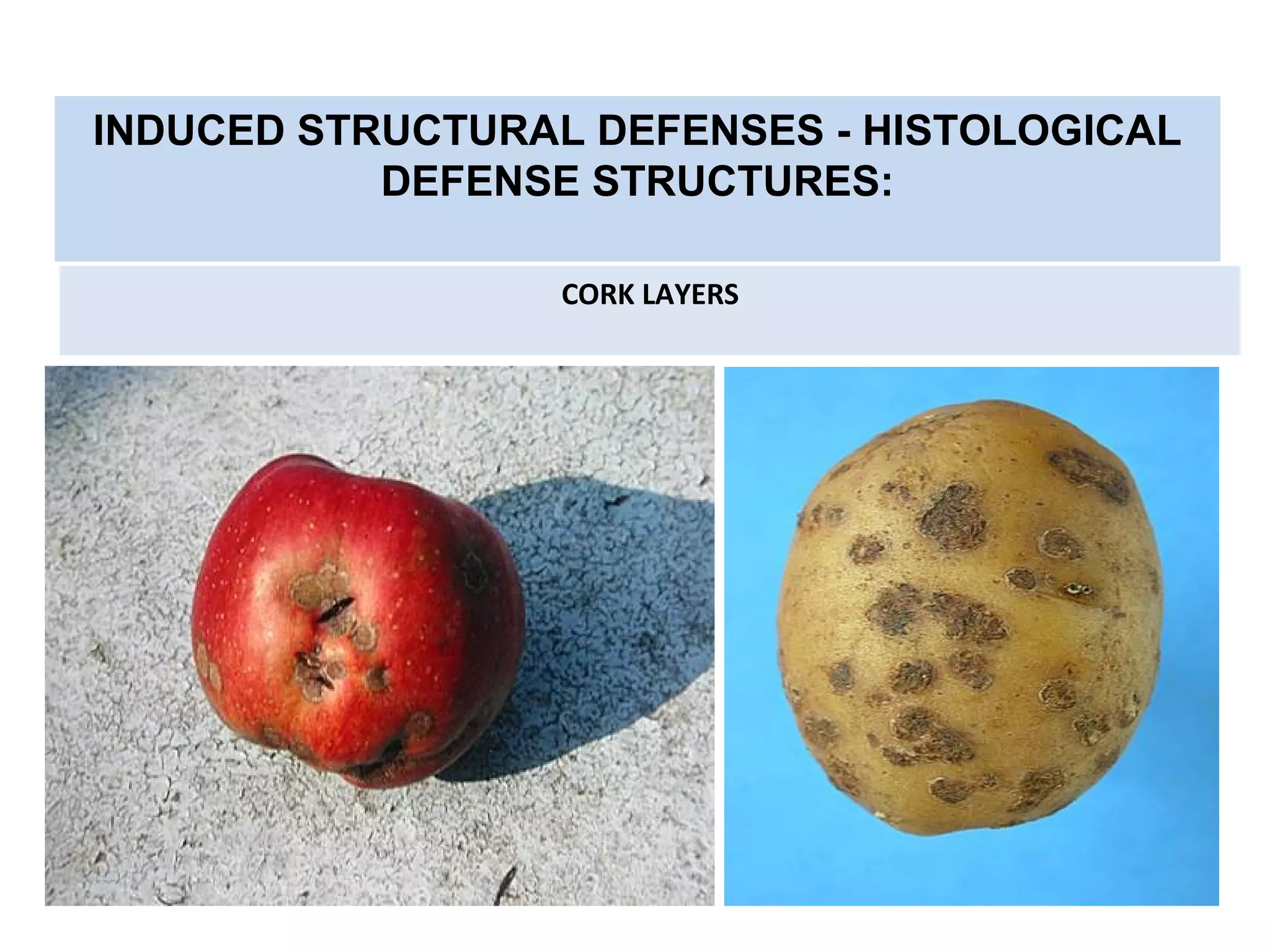
 Cork layer :-
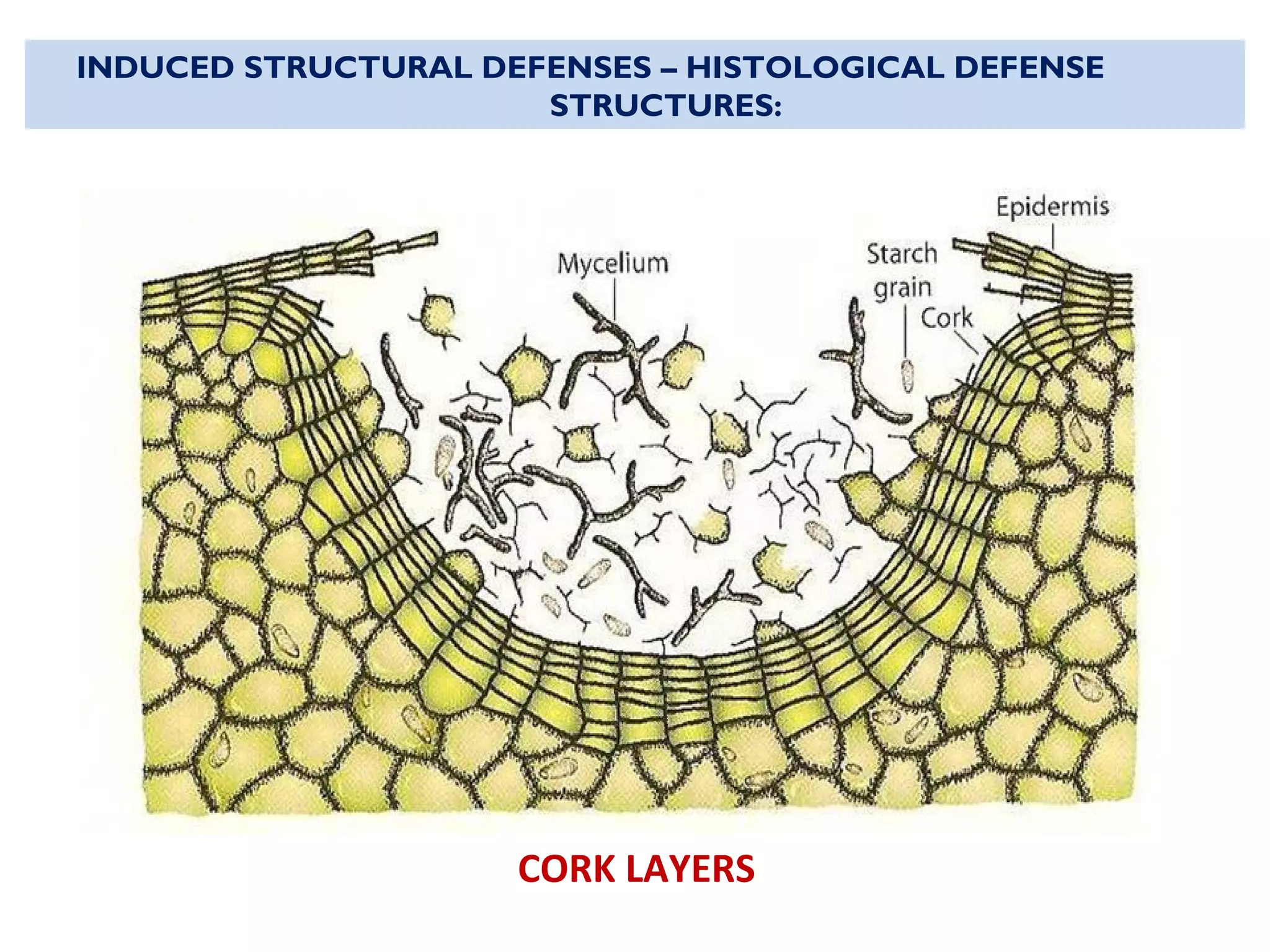
 Infection by fungi, bacteria, some viruses and nematodes induce
plants to form several layers of cork cells beyond the point of
infection.
 These cork cells inhibits the further invasion by the pathogen
beyond the initial lesion and also blocks the spread of toxin
substances secreted by the pathogen.
 It also stop the flow of nutrients and water from the healthy to
the infected area and deprive the pathogen of nourishment.
INDUCED STRUCTURAL DEFENSES – HISTOLOGICAL DEFENSE
STRUCTURES:
CORK LAYERS
INDUCED STRUCTURAL DEFENSES - HISTOLOGICAL
DEFENSE STRUCTURES:
CORK LAYERS
 ABSCISSION LAYERS
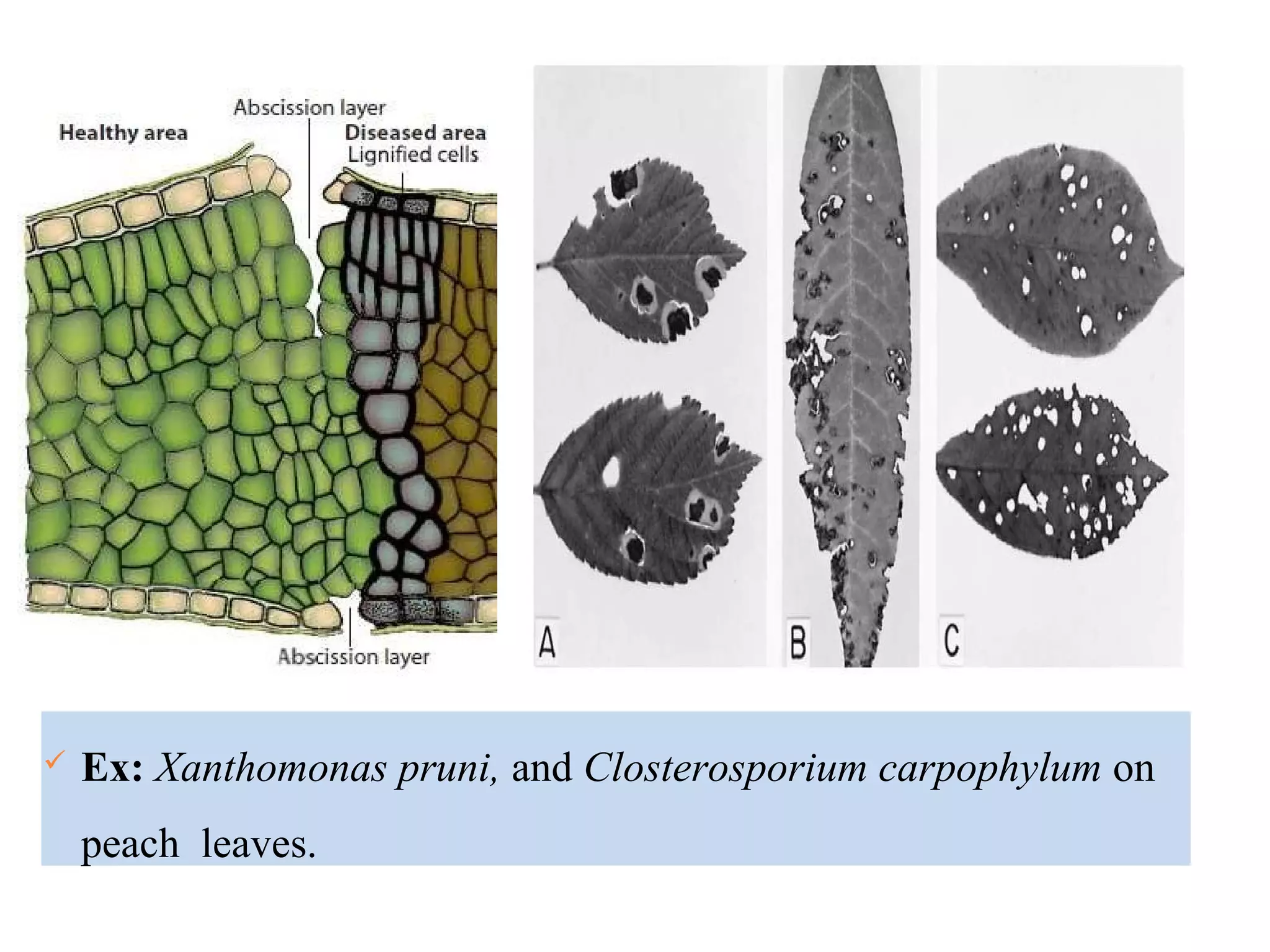
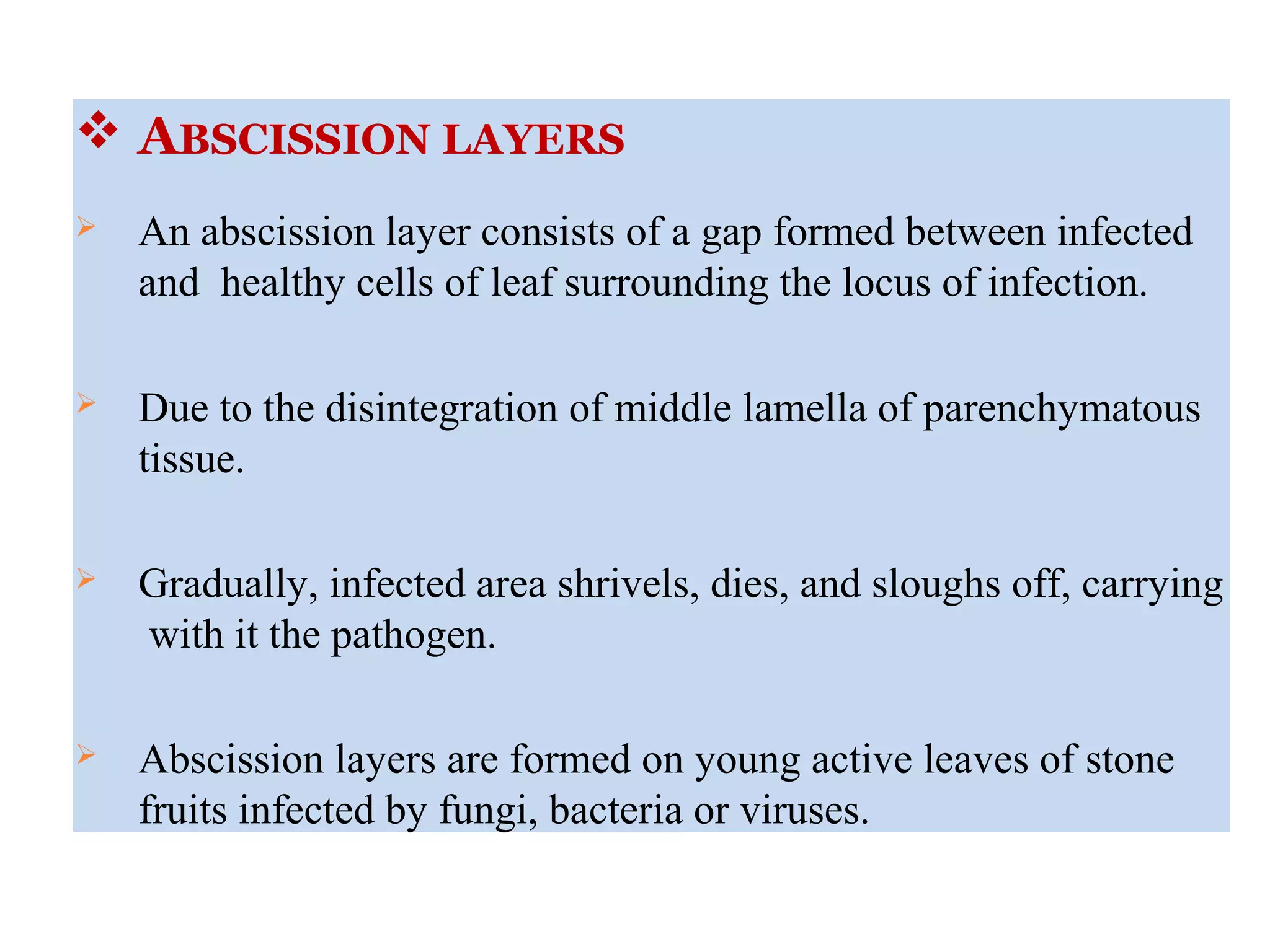
 An abscission layer consists of a gap formed between infected
and healthy cells of leaf surrounding the locus of infection.
 Due to the disintegration of middle lamella of parenchymatous
tissue.
 Gradually, infected area shrivels, dies, and sloughs off, carrying
with it the pathogen.
 Abscission layers are formed on young active leaves of stone
fruits infected by fungi, bacteria or viruses.

 Ex: Xanthomonas pruni, and Closterosporium carpophylum on
peach leaves.
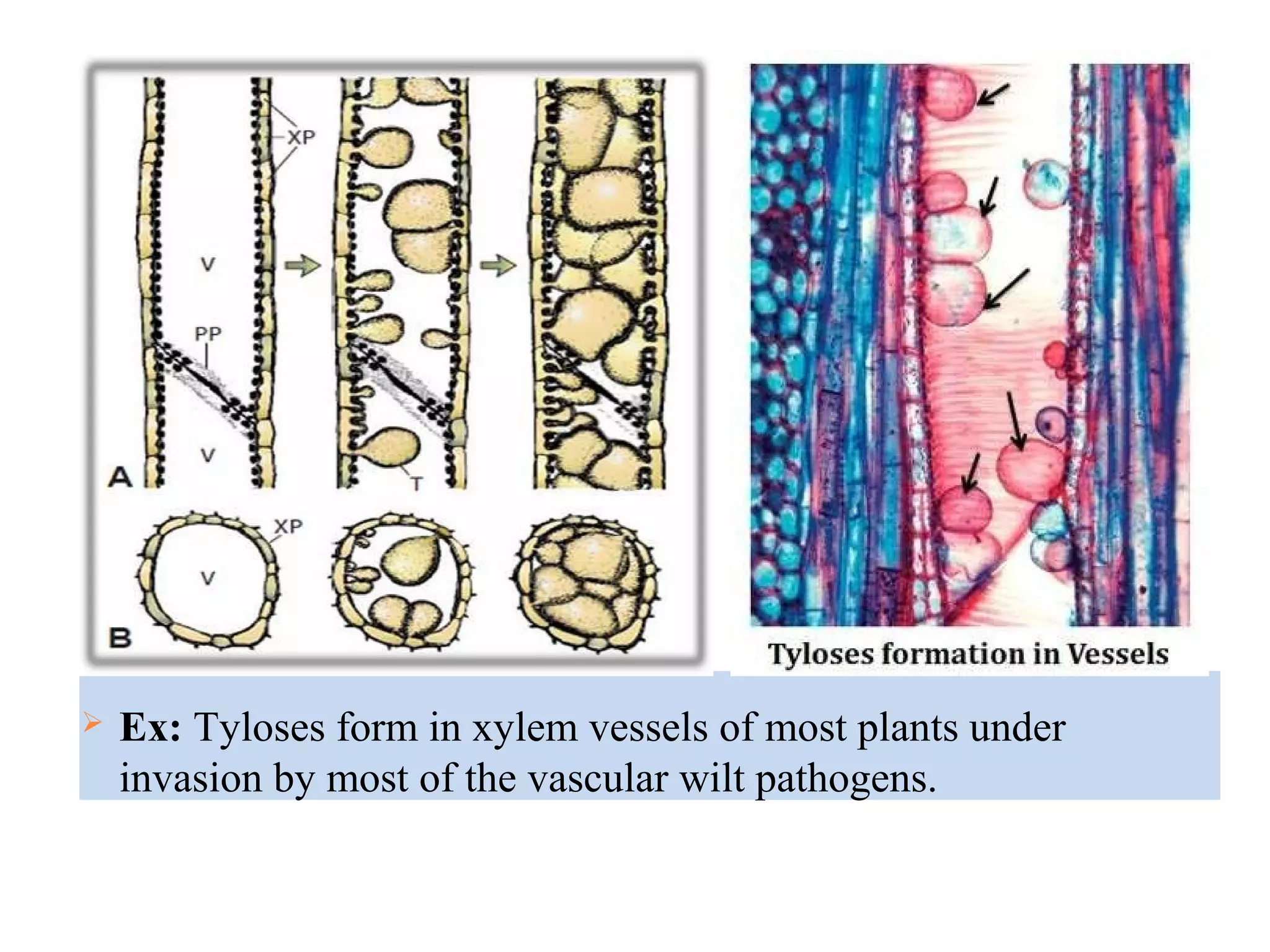
 TYLOSES
 Tyloses are the overgrowths of the protoplast of adjacent
living parenchymatous cells, which protrude into xylem
vessels through pits.
 Tyloses have cellulosic walls.
 It formed quickly ahead of the pathogen and may clog the
xylem vessels completely blocking the further advance of the
pathogen in resistant varieties.
 Ex: Tyloses form in xylem vessels of most plants under
invasion by most of the vascular wilt pathogens.
 GUM DEPOSITION-
 Various types of gums are produced by many plants around
lesions after infection by pathogen or injury.
 Gums secretion is most common in
stone fruit trees but occurs in most plants.
 Generally these gums are exudated by plant under stressed
condition.
 Gummosis is the process in which gum produced by the plants
and trees.
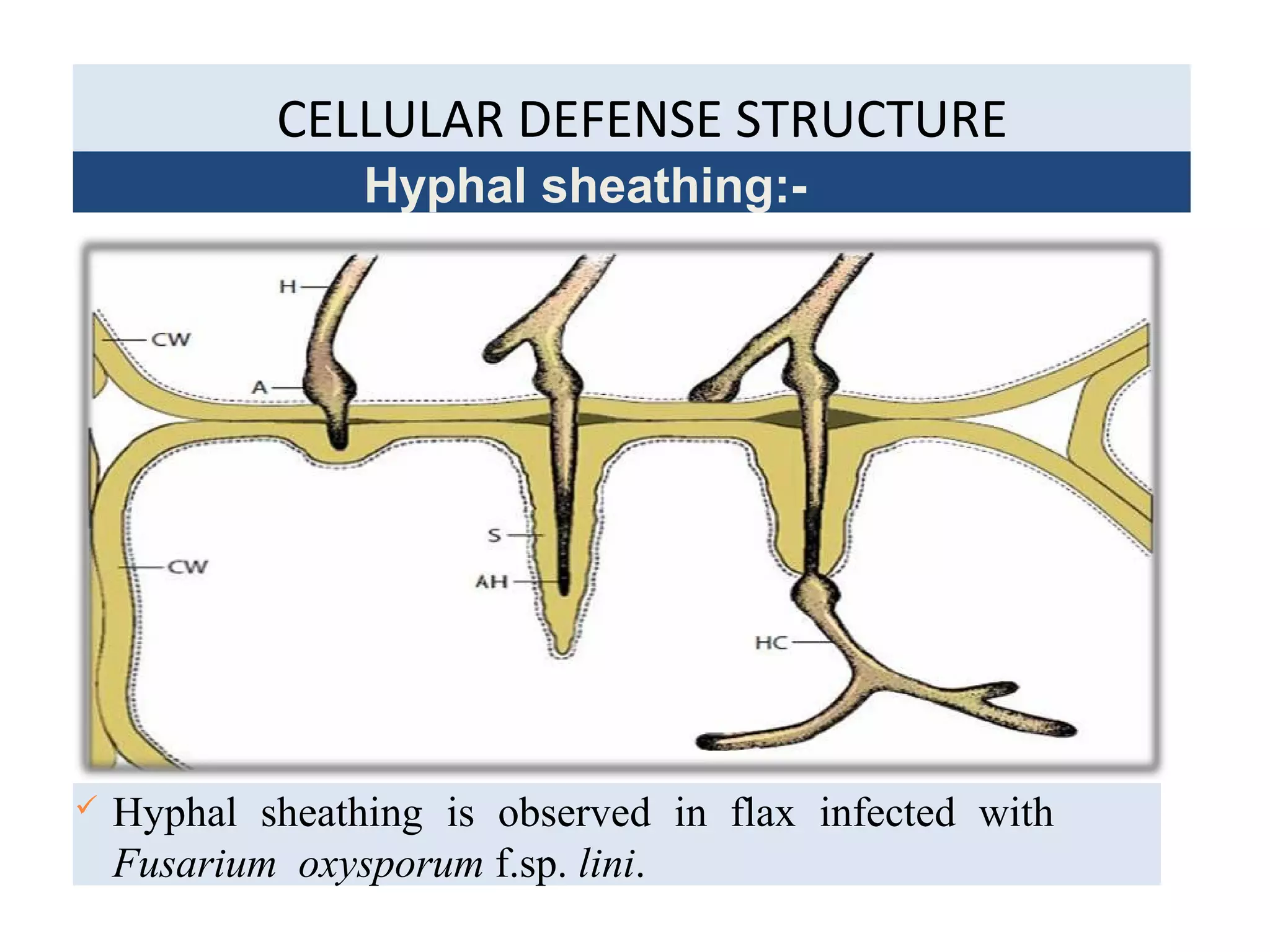
CELLULAR DEFENSE STRUCTURE
Hyphal sheathing:-
 Hyphal sheathing is observed in flax infected with
Fusarium oxysporum f.sp. lini.
BIOCHEMICAL DEFENSE MECHANISM
 Pre-existing chemical defense
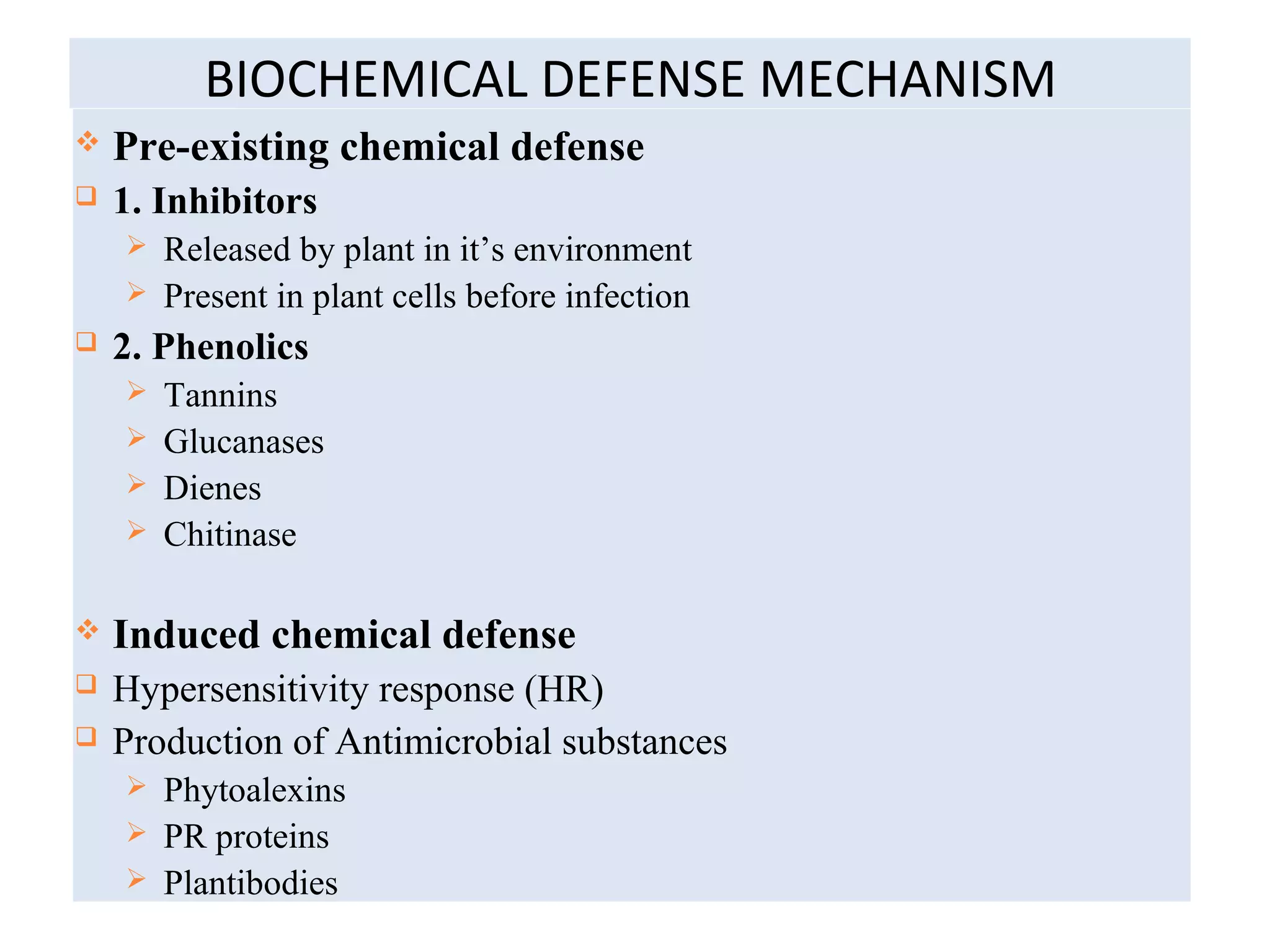
 1. Inhibitors
 Released by plant in it’s environment
 Present in plant cells before infection
 2. Phenolics
 Tannins
 Glucanases
 Dienes
 Chitinase
 Induced chemical defense
 Hypersensitivity response (HR)
 Production of Antimicrobial substances
 Phytoalexins
 PR proteins
 Plantibodies
PRE-EXISTING CHEMICAL DEFENSE
 Although structural characteristics may provide a plant with
various degree of defense against attacking pathogens.
 It is clear that the resistance of a plant against pathogen attack
depends not so much on its structural barriers as on the
substances produced in its cell before or after infection.
 Before infection or penetration of pathogens, host released
some chemicals to defend themselves.
 Plants exude a variety of substances through the surface of their
above ground parts as well as through the surface of their roots.
 Inhibitory substances directly affect micro-organisms or
encourage certain groups to dominate the environment which
may act as antagonists to pathogens.
 Ex 1: Root exudates of marigold contain α-terthinyl which is
inhibitory to nematodes.
 Ex 2: In Cicer arietinum (chickpea), the Ascochyta blight
resistant varieties have more glandular hairs which have
maleic acid which inhibit spore germination.
INHIBITORS RELEASED BY THE PLANTS in It Sʼ
ENVIRONMENT
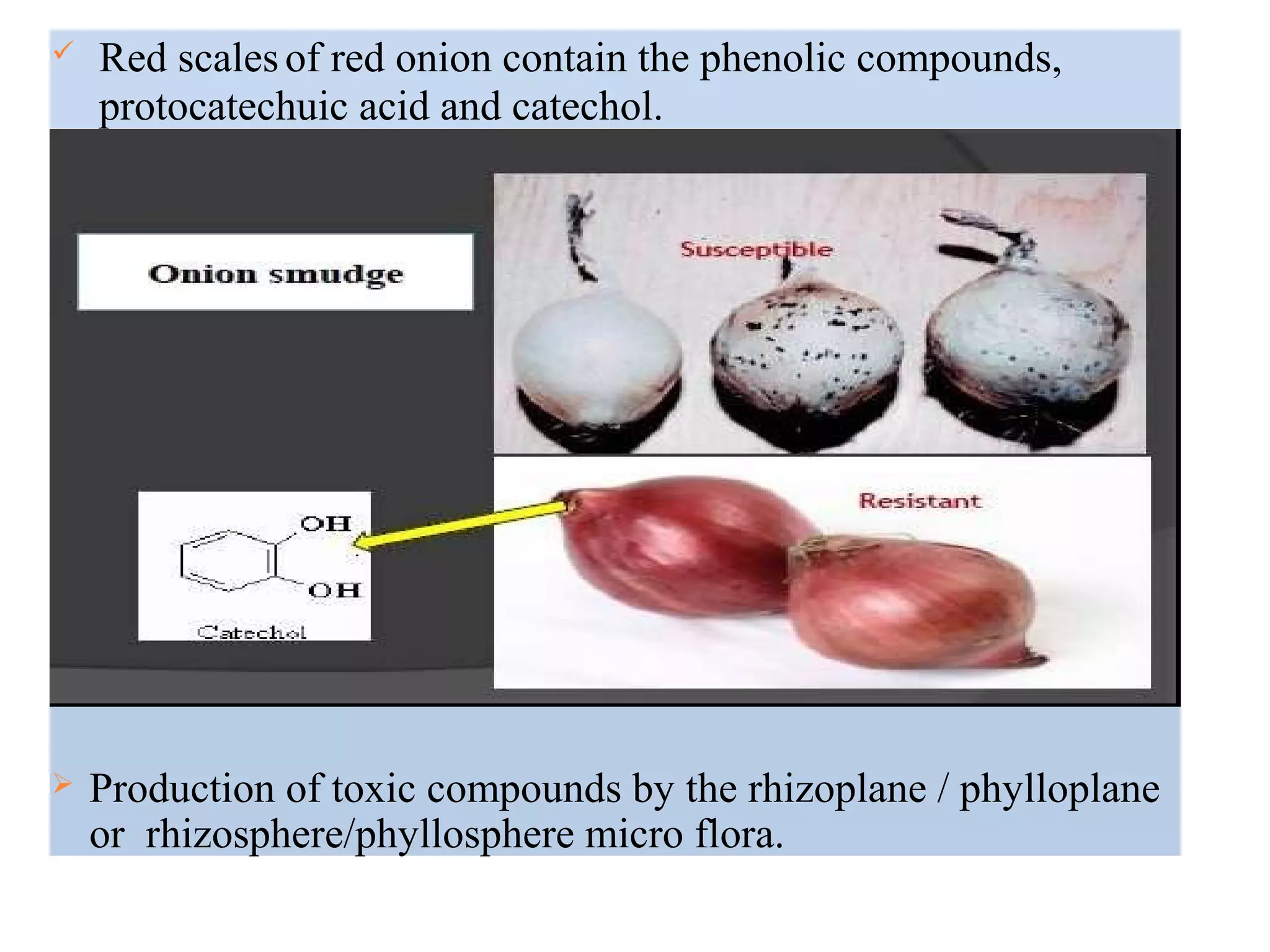
 Red scalesof red onion contain the phenolic compounds,
protocatechuic acid and catechol.
 Production of toxic compounds by the rhizoplane / phylloplane
or rhizosphere/phyllosphere micro flora.
 It is becoming increasingly apparent that some plants are
resistant to disease caused by certain pathogens of an inhibitory
compound present in the cell before infection.
 It stored in vacuoles of plant cells.
 Phenolics – onion (catechol and protocatechuic acid ).
 Tannins, and some fatty acid-like compound such as
dienes,which are present in high concentrations in cells of
young fruits, leaves or seeds.
 These compounds are potent inhibitors of many hydrolytic
enzymes.
 Ex: Chlorogenic acid in potato inhibits scab bacteria,
Streptomyces scabies,and to wilt pathogen, Verticillium
alboatrum
INHIBITORS PRESENT IN PLANT CELLS BEFORE
INFECTION
 Saponins:-
 It have antifungal membranolytic activity.
 Ex: Tomatine in tomato and Avenacin in oats.
 Lactins:-
 They are protiens.
 Bindspecifically to certain sugars and occur in large
concentrations in many types of seeds, cause “lysis” and growth
inhibition of many fungi.
 Hydrolytic enzymes:-
 “Glucanases” and “chitinases” enzymes.
 It may cause breakdown of pathogen cell wall.
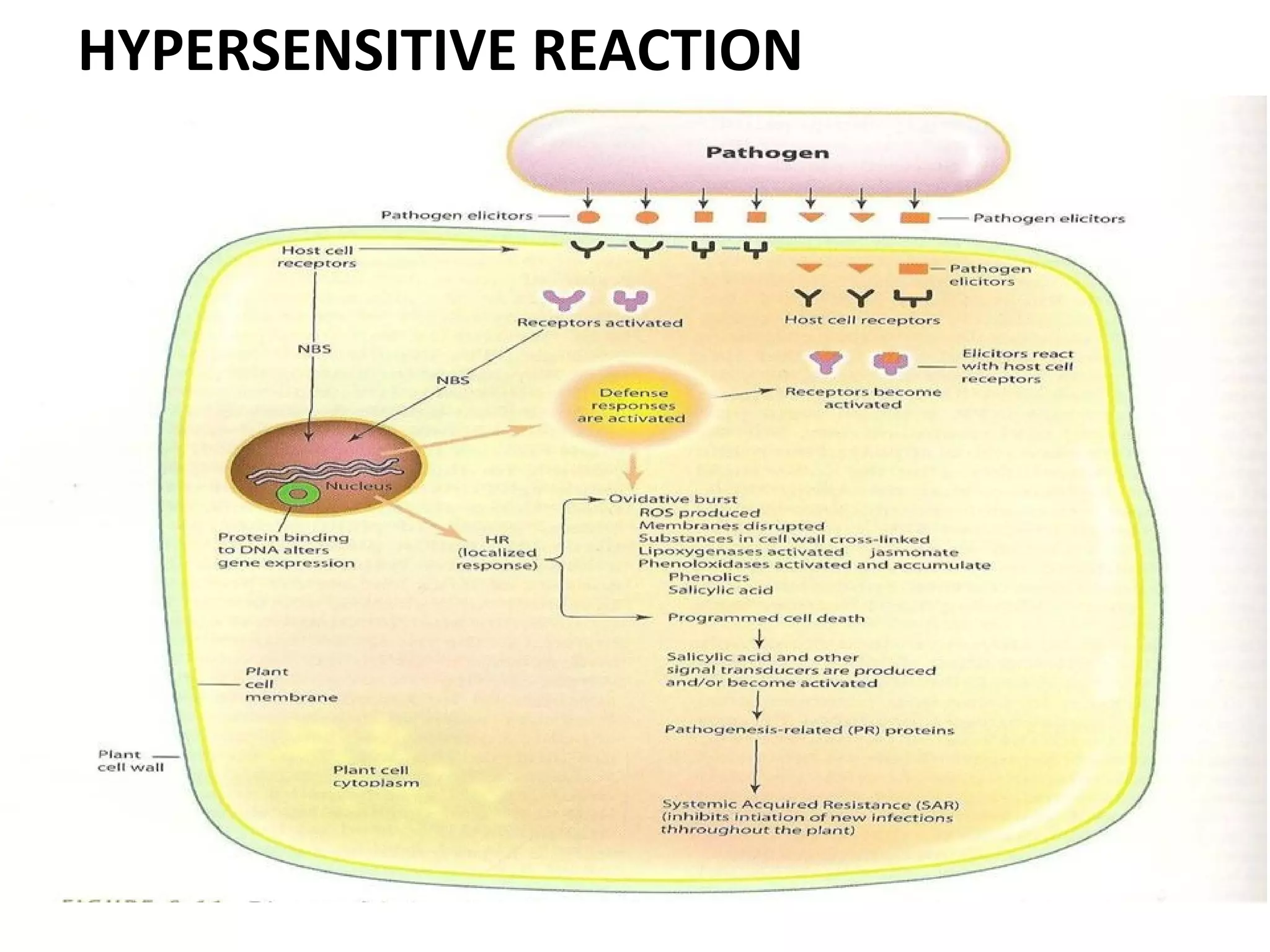
HYPERSENSITIVE REACTION
INDUCED CHEMICAL DEFENSE
 Phytoalexins:- (Phyton = plant; alexin = to ward off)
 Muller and Borger (1940) first used the term phytoalexins
for fungistatic compounds produced by plants in response to
injury (mechanical or chemical) or infection.
 Phytoalexens are toxic antimicrobial substances.
 It produced in appreciable amounts in plants only after
stimulation by micro-organisms or by chemical or mechanical
injury.
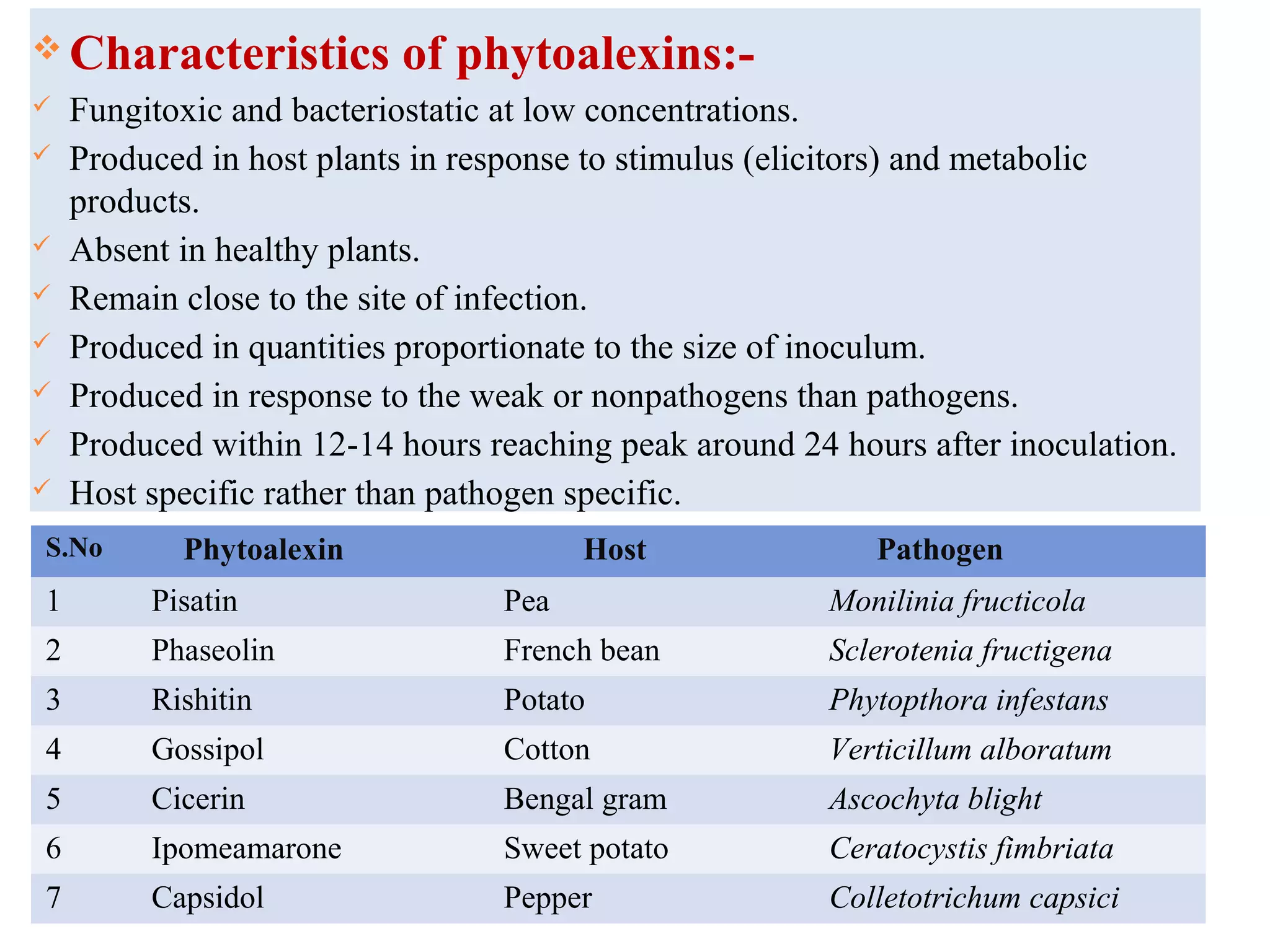
 Characteristics of phytoalexins:-
 Fungitoxic and bacteriostatic at low concentrations.
 Produced in host plants in response to stimulus (elicitors) and metabolic
products.
 Absent in healthy plants.
 Remain close to the site of infection.
 Produced in quantities proportionate to the size of inoculum.
 Produced in response to the weak or nonpathogens than pathogens.
 Produced within 12-14 hours reaching peak around 24 hours after inoculation.
 Host specific rather than pathogen specific.
S.No Phytoalexin Host Pathogen
1 Pisatin Pea Monilinia fructicola
2 Phaseolin French bean Sclerotenia fructigena
3 Rishitin Potato Phytopthora infestans
4 Gossipol Cotton Verticillum alboratum
5 Cicerin Bengal gram Ascochyta blight
6 Ipomeamarone Sweet potato Ceratocystis fimbriata
7 Capsidol Pepper Colletotrichum capsici
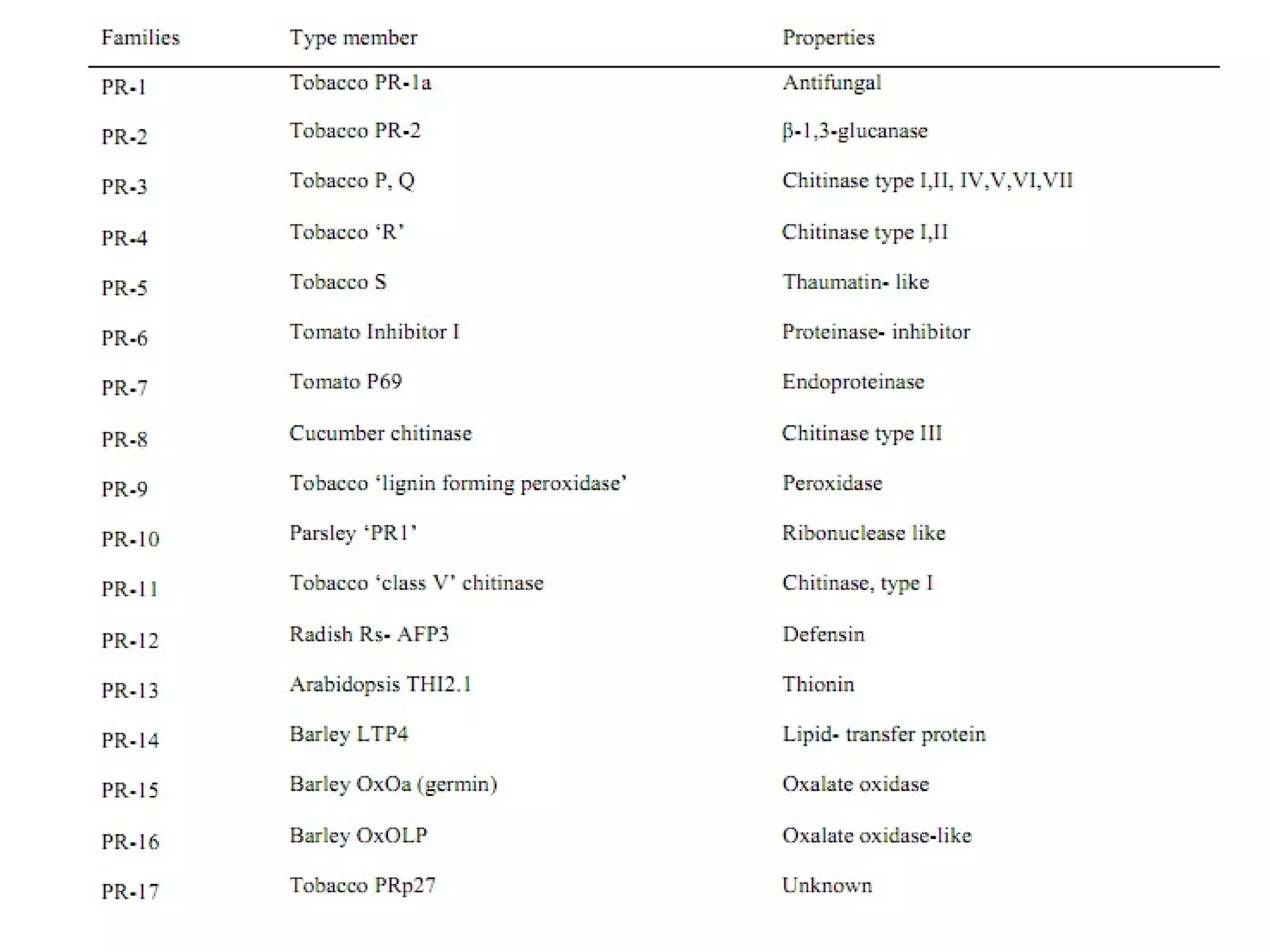
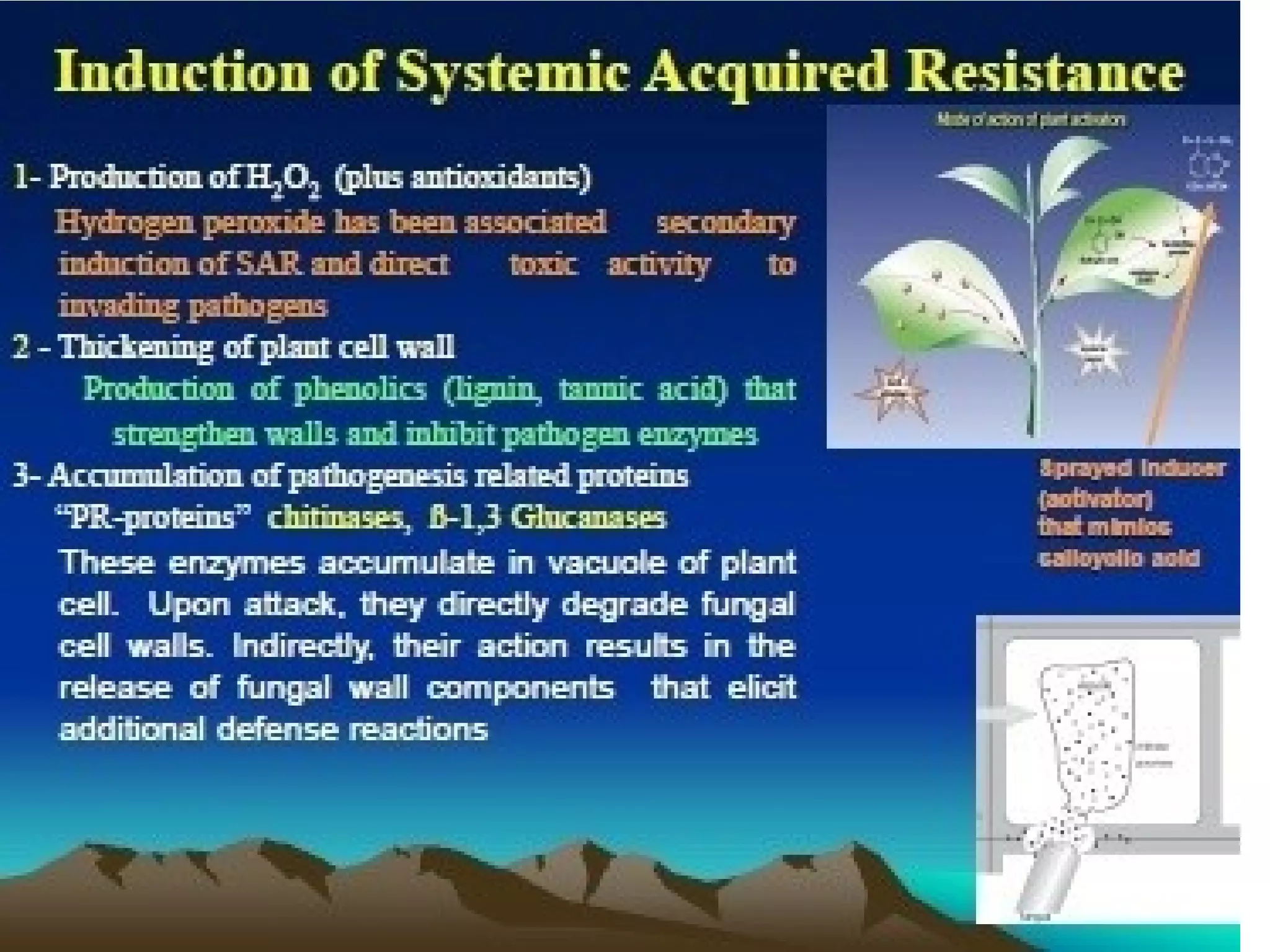
Pathogenesis-Related Proteins
Pathogenesis-related proteins, often called PR proteins, are a
structurally diverse group of plant proteins that are toxic to invading
fungal pathogens.
They are widely distributed in plants in trace amounts, but are
produced in much greater concentration following pathogen attack or
stress.
PR proteins exist in plant cells intracellularly and also in the
intercellular spaces, particularly in the cell walls of different tissues.
In humans and animals, defenses against pathogens are often activated by
natural or artificial immunization, i.e., by a subminimal natural infection with
the pathogen or by an artificial injection of pathogen proteins and other
antigenic substances.
Both events result in the production of antibodies against the pathogen and,
thereby, in subsequent prolonged protection (immunity) of the human or
animal from infection by any later attacks of the pathogen.
Plantibodies
Plants, of course, do not have an immune system like that of humans and animals,
i.e., they do not produce antibodies. In the early 1990s, however, transgenic plants
were produced that were genetically engineered to incorporate in their genome, and
to express, foreign genes, such as mouse genes that produce antibodies against certain
plant pathogens.
Such antibodies, encoded by animal genes but produced in and by the plant, are
called plantibodies. It has already been shown that transgenic plants producing
plantibodies against coat proteins of viruses, e.g., artichoke mottle crinkle virus,
to which they are susceptible, can defend themselves and show some resistance to
infection by these viruses
CONLCLUSION
Structural characteristics act as physical barriers and
inhibit the pathogen from gaining entrance and spreading
through the plant.
Biochemical reactions that take place in the cells and
tissues of the plant and produce substances that either are
toxic to the pathogen or create conditions that inhibit
Defence mechanism.ppt new

Defence mechanism.ppt new

  • 1.
      Department of PlantPathology College of Agriculture SK Rajasthan Agricultural University Bikaner 334 006 Speaker Hansraj Dhakar Ph. D (Scholar) Seminar Incharge Dr. Data Ram Kumhar Professor & Head Credit seminar on Defense Mechanisms of Plants against plant pathogens
  • 2.
    What is defensemechanisms In general plants defend themselves against pathogens by two way-structural characteristics that act as physical barriers and biochemical reactions that take place in cells and tissues that are either toxic to the pathogen or create conditions that inhibit the growth of the pathogen in the plant. The combinations of structural characteristics and biochemical reactions employed in the defense of plants are different in different host–pathogen systems.
  • 3.
    Defense Mechanism inPlants 1.Structural ( Morphological) defense 2.Biochemical defense Both the defences are affected by: 1. Age of the plant. 2. Type of organ infected. 3. Nutritional status of the host. 4. Environmental conditions.
  • 4.
  • 5.
    STRUCTURAL DEFENSE MECHANISM The surface of the plant or host is first line of defense against the pathogen.  The pathogen must adhere to the surface and penetrate, if it is to cause infection.  Structural defense mechanism are mainly two type:- 1. Pre-existing structural defense mechanism 2. Post-infectional or induced structural defense mechanism
  • 6.
     Pre-existing structuraldefense Wax Thick cuticle Thickness and toughness of the outer wall of epidermal cells Stomata Sclerenchyma cells Lenticel  Induced structural defense  Cellular defense structure Hyphal sheathing  Histological defense structure Formation of cork layer Formation of abscission layer Formation of tyloses Deposition of gums
  • 7.
    pre-EXISTING STRUCTURAL DEFENSE It includes:  Amount and quality of wax and cuticle.  Shapes, size and locations of natural openings (stomata and lenticels).  Presence of thick walled cells in the tissues of the plant that hinder the advance of pathogen.  Wax-  It is the mixture of long chain of apolar lipid.  It forming a protective coating on plant leaves and fruit.  Synthesized by epidermis.  Extremely hydrophobic.
  • 8.
     Cuticle &Epidermal cell:-  Ex: Disease resistance in Barberry species infected with Puccinia graminis tritici has been attributed to the tough outer epidermal cells with a thick cuticle.  In linseed, cuticle acts as a barrier against Melampsora lini.  Silicification and lignifications of epidermal cells offers protection against Pyricularia oryzae and Streptomyces scabies in paddy and potato, respectively.
  • 9.
     Sclerenchyma cells:- It composed of thickened walls of lignin.  Sclerenchyma cells is present in stem and leaf veins.  Brittle cells help in mechanical support of the plant.  Effectively block the spread of some fungal and bacterial pathogens that cause angular leaf spot.  Structure of natural opening:- A. Stomata:- Most of pathogen enter plants through natural opening. Some pathogen like stem rust of wheat (Puccinia graminis f.sp. tritici) can enters its host only when the stomata are open. Structure of stomata provides resistance to penetration by certain plant pathogenic bacteria.
  • 10.
     Ex: Citrusvariety, szinkum, is resistant to citrus canker.
  • 11.
    Lenticels :-  Lenticelsare openings on fruit, stem and tubers that are filled with loosely connected cells that allow the passage of air.  Shape and internal structure of lenticels can increase or decrease the incidence of fruit diseases.  Ex. Small and suberised lenticels will offer resistance to potato scab pathogen, Streptomyces scabies. Potato
  • 12.
    POST-INFECTIONAL/INDUCED STRUCTURAL DEFENSEMECHANISM  Most pathogen manage to penetrate their hosts through wounds and natural opening and to produce various degree of infection.  Pathogen penetration the host surface, induced the structural defense mechanism in the host cells.  These may be regarded as:-  Histological defense barriers (cork layer, abscission layers and tyloses formation)  Cellular defense structures (hyphal sheathing).
  • 13.
    HISTOLOGICAL DEFENSE STRUCTURES Cork layer :-  Infection by fungi, bacteria, some viruses and nematodes induce plants to form several layers of cork cells beyond the point of infection.  These cork cells inhibits the further invasion by the pathogen beyond the initial lesion and also blocks the spread of toxin substances secreted by the pathogen.  It also stop the flow of nutrients and water from the healthy to the infected area and deprive the pathogen of nourishment.
  • 15.
    INDUCED STRUCTURAL DEFENSES– HISTOLOGICAL DEFENSE STRUCTURES: CORK LAYERS
  • 16.
    INDUCED STRUCTURAL DEFENSES- HISTOLOGICAL DEFENSE STRUCTURES: CORK LAYERS
  • 17.
     ABSCISSION LAYERS An abscission layer consists of a gap formed between infected and healthy cells of leaf surrounding the locus of infection.  Due to the disintegration of middle lamella of parenchymatous tissue.  Gradually, infected area shrivels, dies, and sloughs off, carrying with it the pathogen.  Abscission layers are formed on young active leaves of stone fruits infected by fungi, bacteria or viruses.
  • 18.
      Ex: Xanthomonaspruni, and Closterosporium carpophylum on peach leaves.
  • 19.
     TYLOSES  Tylosesare the overgrowths of the protoplast of adjacent living parenchymatous cells, which protrude into xylem vessels through pits.  Tyloses have cellulosic walls.  It formed quickly ahead of the pathogen and may clog the xylem vessels completely blocking the further advance of the pathogen in resistant varieties.
  • 20.
     Ex: Tylosesform in xylem vessels of most plants under invasion by most of the vascular wilt pathogens.
  • 21.
     GUM DEPOSITION- Various types of gums are produced by many plants around lesions after infection by pathogen or injury.  Gums secretion is most common in stone fruit trees but occurs in most plants.  Generally these gums are exudated by plant under stressed condition.  Gummosis is the process in which gum produced by the plants and trees.
  • 22.
    CELLULAR DEFENSE STRUCTURE Hyphalsheathing:-  Hyphal sheathing is observed in flax infected with Fusarium oxysporum f.sp. lini.
  • 23.
    BIOCHEMICAL DEFENSE MECHANISM Pre-existing chemical defense  1. Inhibitors  Released by plant in it’s environment  Present in plant cells before infection  2. Phenolics  Tannins  Glucanases  Dienes  Chitinase  Induced chemical defense  Hypersensitivity response (HR)  Production of Antimicrobial substances  Phytoalexins  PR proteins  Plantibodies
  • 24.
    PRE-EXISTING CHEMICAL DEFENSE Although structural characteristics may provide a plant with various degree of defense against attacking pathogens.  It is clear that the resistance of a plant against pathogen attack depends not so much on its structural barriers as on the substances produced in its cell before or after infection.  Before infection or penetration of pathogens, host released some chemicals to defend themselves.
  • 25.
     Plants exudea variety of substances through the surface of their above ground parts as well as through the surface of their roots.  Inhibitory substances directly affect micro-organisms or encourage certain groups to dominate the environment which may act as antagonists to pathogens.  Ex 1: Root exudates of marigold contain α-terthinyl which is inhibitory to nematodes.  Ex 2: In Cicer arietinum (chickpea), the Ascochyta blight resistant varieties have more glandular hairs which have maleic acid which inhibit spore germination. INHIBITORS RELEASED BY THE PLANTS in It Sʼ ENVIRONMENT
  • 26.
     Red scalesofred onion contain the phenolic compounds, protocatechuic acid and catechol.  Production of toxic compounds by the rhizoplane / phylloplane or rhizosphere/phyllosphere micro flora.
  • 27.
     It isbecoming increasingly apparent that some plants are resistant to disease caused by certain pathogens of an inhibitory compound present in the cell before infection.  It stored in vacuoles of plant cells.  Phenolics – onion (catechol and protocatechuic acid ).  Tannins, and some fatty acid-like compound such as dienes,which are present in high concentrations in cells of young fruits, leaves or seeds.  These compounds are potent inhibitors of many hydrolytic enzymes.  Ex: Chlorogenic acid in potato inhibits scab bacteria, Streptomyces scabies,and to wilt pathogen, Verticillium alboatrum INHIBITORS PRESENT IN PLANT CELLS BEFORE INFECTION
  • 28.
     Saponins:-  Ithave antifungal membranolytic activity.  Ex: Tomatine in tomato and Avenacin in oats.  Lactins:-  They are protiens.  Bindspecifically to certain sugars and occur in large concentrations in many types of seeds, cause “lysis” and growth inhibition of many fungi.  Hydrolytic enzymes:-  “Glucanases” and “chitinases” enzymes.  It may cause breakdown of pathogen cell wall.
  • 30.
  • 31.
    INDUCED CHEMICAL DEFENSE Phytoalexins:- (Phyton = plant; alexin = to ward off)  Muller and Borger (1940) first used the term phytoalexins for fungistatic compounds produced by plants in response to injury (mechanical or chemical) or infection.  Phytoalexens are toxic antimicrobial substances.  It produced in appreciable amounts in plants only after stimulation by micro-organisms or by chemical or mechanical injury.
  • 32.
     Characteristics ofphytoalexins:-  Fungitoxic and bacteriostatic at low concentrations.  Produced in host plants in response to stimulus (elicitors) and metabolic products.  Absent in healthy plants.  Remain close to the site of infection.  Produced in quantities proportionate to the size of inoculum.  Produced in response to the weak or nonpathogens than pathogens.  Produced within 12-14 hours reaching peak around 24 hours after inoculation.  Host specific rather than pathogen specific. S.No Phytoalexin Host Pathogen 1 Pisatin Pea Monilinia fructicola 2 Phaseolin French bean Sclerotenia fructigena 3 Rishitin Potato Phytopthora infestans 4 Gossipol Cotton Verticillum alboratum 5 Cicerin Bengal gram Ascochyta blight 6 Ipomeamarone Sweet potato Ceratocystis fimbriata 7 Capsidol Pepper Colletotrichum capsici
  • 33.
    Pathogenesis-Related Proteins Pathogenesis-related proteins,often called PR proteins, are a structurally diverse group of plant proteins that are toxic to invading fungal pathogens. They are widely distributed in plants in trace amounts, but are produced in much greater concentration following pathogen attack or stress. PR proteins exist in plant cells intracellularly and also in the intercellular spaces, particularly in the cell walls of different tissues.
  • 35.
    In humans andanimals, defenses against pathogens are often activated by natural or artificial immunization, i.e., by a subminimal natural infection with the pathogen or by an artificial injection of pathogen proteins and other antigenic substances. Both events result in the production of antibodies against the pathogen and, thereby, in subsequent prolonged protection (immunity) of the human or animal from infection by any later attacks of the pathogen. Plantibodies
  • 36.
    Plants, of course,do not have an immune system like that of humans and animals, i.e., they do not produce antibodies. In the early 1990s, however, transgenic plants were produced that were genetically engineered to incorporate in their genome, and to express, foreign genes, such as mouse genes that produce antibodies against certain plant pathogens. Such antibodies, encoded by animal genes but produced in and by the plant, are called plantibodies. It has already been shown that transgenic plants producing plantibodies against coat proteins of viruses, e.g., artichoke mottle crinkle virus, to which they are susceptible, can defend themselves and show some resistance to infection by these viruses
  • 39.
    CONLCLUSION Structural characteristics actas physical barriers and inhibit the pathogen from gaining entrance and spreading through the plant. Biochemical reactions that take place in the cells and tissues of the plant and produce substances that either are toxic to the pathogen or create conditions that inhibit