
PRIMARY
HYPERPARATHYROIDISM
BY : SYED MOHAMMAD ARISH AYUB
PARATHYROID GLAND
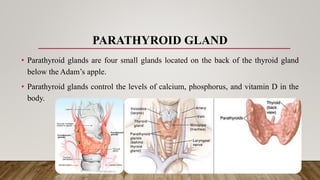
• Parathyroid glands are four small glands located on the back of the thyroid gland
below the Adam’s apple.
• Parathyroid glands control the levels of calcium, phosphorus, and vitamin D in the
body.
• PTH also reduces the amount of calcium lost in urine
• Sometimes, one or more of the glands becomes enlarged then it
produces too much PTH.
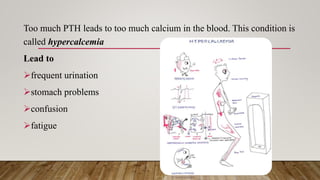
Too much PTH leads to too much calcium in the blood. This condition is
called hypercalcemia
Lead to
frequent urination
stomach problems
confusion
fatigue
Elevated PTH
Elevated blood Calcium
Elevated alkaline Phosphatase
Low levels of Phosphorus
CAUSES
• Adenoma
An adenoma is a noncancerous tumor on one of these glands. These
tumors are the most common cause of primary hyperparathyroidism.
• Parathyroid gland enlargement
In other cases, enlargement of at least two of the parathyroid glands
can lead to hyperparathyroidism.
• Parathyroid cancer
Parathyroid cancer may cause enlargement of one or more of the
parathyroid glands. These tumors can cause hyperparathyroidism.
SYMPTOMS
• Muscle weakness
• Lethargy
• Fatigue
• Pain in muscles
• Depression
If the condition is more severe,
then it leads to:
• kidney stones
• abdominal, or stomach, pain
• nausea and vomiting
• confusion
• impaired memory
• constipation
• bone thinning and fractures
• coma (in rare cases)
DIAGNOSIS
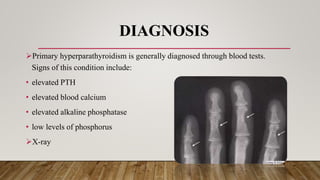
Primary hyperparathyroidism is generally diagnosed through blood tests.
Signs of this condition include:
• elevated PTH
• elevated blood calcium
• elevated alkaline phosphatase
• low levels of phosphorus
X-ray
TREATMENT
surgery is the most common treatment
Medications:
• Bisphosphonates, such as Alendronate (Fosamax),
help decrease bone turnover.
• Cinacalcet (Sensipar) helps normalize calcium
levels in the blood.
• Estrogen therapy may be prescribed for
postmenopausal women.
Thank you

Primary hyperparathyroidism

  • 1.
  • 2.
    PARATHYROID GLAND • Parathyroidglands are four small glands located on the back of the thyroid gland below the Adam’s apple. • Parathyroid glands control the levels of calcium, phosphorus, and vitamin D in the body.
  • 3.
    • PTH alsoreduces the amount of calcium lost in urine • Sometimes, one or more of the glands becomes enlarged then it produces too much PTH.
  • 4.
    Too much PTHleads to too much calcium in the blood. This condition is called hypercalcemia Lead to frequent urination stomach problems confusion fatigue
  • 5.
    Elevated PTH Elevated bloodCalcium Elevated alkaline Phosphatase Low levels of Phosphorus
  • 6.
    CAUSES • Adenoma An adenomais a noncancerous tumor on one of these glands. These tumors are the most common cause of primary hyperparathyroidism. • Parathyroid gland enlargement In other cases, enlargement of at least two of the parathyroid glands can lead to hyperparathyroidism. • Parathyroid cancer Parathyroid cancer may cause enlargement of one or more of the parathyroid glands. These tumors can cause hyperparathyroidism.
  • 7.
    SYMPTOMS • Muscle weakness •Lethargy • Fatigue • Pain in muscles • Depression
  • 8.
    If the conditionis more severe, then it leads to: • kidney stones • abdominal, or stomach, pain • nausea and vomiting • confusion • impaired memory • constipation • bone thinning and fractures • coma (in rare cases)
  • 9.
    DIAGNOSIS Primary hyperparathyroidism isgenerally diagnosed through blood tests. Signs of this condition include: • elevated PTH • elevated blood calcium • elevated alkaline phosphatase • low levels of phosphorus X-ray
  • 10.
    TREATMENT surgery is themost common treatment Medications: • Bisphosphonates, such as Alendronate (Fosamax), help decrease bone turnover. • Cinacalcet (Sensipar) helps normalize calcium levels in the blood. • Estrogen therapy may be prescribed for postmenopausal women.
  • 11.

Editor's Notes

  • #3 PTH helps regulate the amount of calcium in the body. If the calcium level in body becomes too low, PTH helps bring more calcium into the blood. It does this by increasing the reabsorption of calcium from the intestines and from the bones.
  • #4 . In other cases, a growth on one of these glands can cause it to produce increased amounts of PTH.
  • #9 kidney stones due to increased calcium levels and can also leads to kidney stones in body
  • #10 When the doctor suspects hyperparathyroidism, they’ll probably check the bone density. Having too much PTH raises the levels of calcium in the blood, then body draws this calcium from the bones. X-rays can help the doctor identify bone problems, such as fractures and thinning.
  • #11 surgery is the most common treatment, Only the glands that are affected are removed. If all four glands are enlarged, a portion of one of the glands will be left in the body so the patient still have parathyroid tissue that is functioning