Hypo & Hypercalcemia
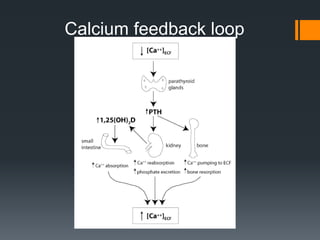
Calcium feedback loop
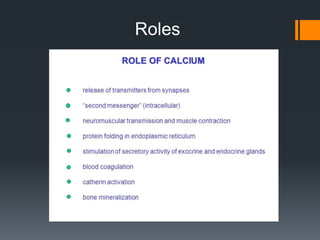
Roles
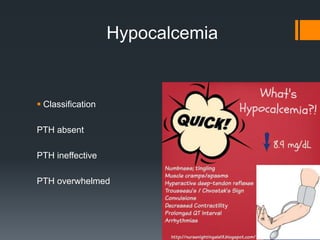
Hypocalcemia
 Classification
PTH absent
PTH ineffective
PTH overwhelmed
1) PTH absent
 hereditary Vs. acquired hypoparathyroidism
hereditary-
Syndromic, in association with other abnormalities
More common to appear in the first decade of life.
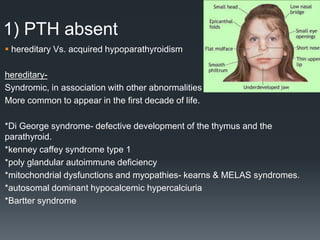
*Di George syndrome- defective development of the thymus and the
parathyroid.
*kenney caffey syndrome type 1
*poly glandular autoimmune deficiency
*mitochondrial dysfunctions and myopathies- kearns & MELAS syndromes.
*autosomal dominant hypocalcemic hypercalciuria
*Bartter syndrome
Acquired-
Surgery of the neck
Rare- radiation therapy
glandular damage in patients with hemochromatosis or hemosiderosis
Transient hypoparathyroidism- function of the gland is regained months after
surgery/
*****Therapy-
Vit D and high oral doses of calcium.
Calcitriol Vs. vit D
Problem- this therapy does not reverse reduced calcium renal reabsorption and
therefor increases the risk of nephrocalcinosis and CKD.
Solution- thiazide diuretics.
Hypomagnesemia
<0.4 mmol/l
mg PTH
mg  PTH
This effect is like the effect of calcium but less powerful.
There is a paradox existing in severe hypomagnesemia- secretion of PTH is
reduced.
Therapy: parenteral administration of mg.
2) PTH ineffective
CKD
Calcium elevating action of PTH is impaired
Impaired synthesis of vit D
Ureic state- impaired intestinal absorption of
calcium
phos calcium by few mechanisms
Therapy:
Dialysis, phos diet restriction, aluminum containing anti acids
Oral calcium and vit D also for monoclonal growth of the parathyroid in CKD
patients= autonomeous HPT
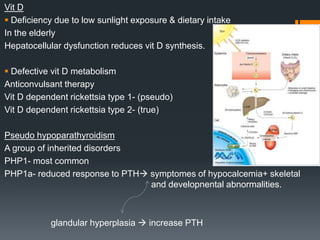
Vit D
 Deficiency due to low sunlight exposure & dietary intake
In the elderly
Hepatocellular dysfunction reduces vit D synthesis.
 Defective vit D metabolism
Anticonvulsant therapy
Vit D dependent rickettsia type 1- (pseudo)
Vit D dependent rickettsia type 2- (true)
Pseudo hypoparathyroidism
A group of inherited disorders
PHP1- most common
PHP1a- reduced response to PTH symptomes of hypocalcemia+ skeletal
a and developnental abnormalities.
glandular hyperplasia  increase PTH
3) PTH overwhelmed
Loss of calcium from ECF is so severe that PTH cant compensate.
Ex- severe acute hyperphosphatemia- extensive tissue damage and cell
d destruction
increase phos from muscle
reduced ability of kidney to excrete phos
Treatment- phos binding anti acids, dialysis
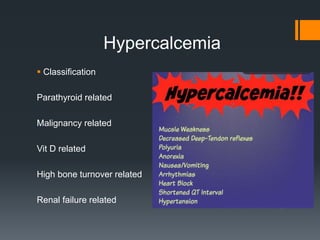
Hypercalcemia
 Classification
Parathyroid related
Malignancy related
Vit D related
High bone turnover related
Renal failure related
1) Parathyroid related
Primary hyperparathyroidism
PTH  Ca + phos
Symptoms- recurrent nephrolithiasis
peptic ulcers
bone resorption (osteitis fibrosa cystics)
*hypercalcemic parathyroid crisis- sudden worsening, dehydration and coma.
Etiology- parathyroid tumors- isolated adenomas
hereditary syndromes- MEN, hyperparathyroid
jaw syndrome, non
symptomatic familial
isolated HPT.
secondary to underlying disease (renal)
excessive stimulation (lithium therapy)
 Diagnosis-
detection of elevated immunoreactive PTH in patients with asymptomatic
hypercalcemia.
Phos maybe be low/normal.
 Therapy:
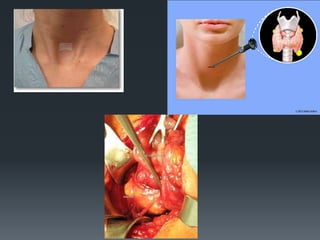
Definitive therapy- surgical excision of the abnormal parathyroid tissue.
2 methods- conventional and new.
Elderly with mild symptoms- surveillance if preferred.
Multiple glandular hyperplasia- 2 surgical methods
Decrease in calcium occurs within 24h after a successful surgery. It remains
low for 3-5d until the remaining tissue resumes its action.
Lithium therapy
Causes hypercalcemia in 10% of the patients.
Higher calcium levels are needed to lower PTH.
Long term stimulation of the gland by lithium may predispose development of
adenomas.
familial hypocalciuric hypercalcemia- AD
Increased secretion of PTH
Jansen’s disease- AD
Constitutive activation of PTH R1.
Short limbed dwarfism
Adults- multiple cystic resorptive areas in the bone
2) Malignancy related
Hypercalcemia in 20% of cancer patients.
Usually severe and difficult to manage.
Histology of the tumor is more important than its distribution.
Elaboration of malignant cells by humoral mediators= PTHrP
2 mechanisms- for solid tumors
for hematological malignancies
Diagnostic problem- levels of PTH are extremely low
Therapy- tumor control, reduction of its mass
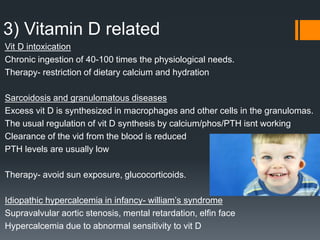
3) Vitamin D related
Vit D intoxication
Chronic ingestion of 40-100 times the physiological needs.
Therapy- restriction of dietary calcium and hydration
Sarcoidosis and granulomatous diseases
Excess vit D is synthesized in macrophages and other cells in the granulomas.
The usual regulation of vit D synthesis by calcium/phos/PTH isnt working
Clearance of the vid from the blood is reduced
PTH levels are usually low
Therapy- avoid sun exposure, glucocorticoids.
Idiopathic hypercalcemia in infancy- william’s syndrome
Supravalvular aortic stenosis, mental retardation, elfin face
Hypercalcemia due to abnormal sensitivity to vit D
4) High bone turnover
Hyperthyroidism
20% of the patients have hypercalcemia but hypercalciuria is more common.
Immobilization-
Children and adolescents after spinal cord surgery
Thiazides-
Chronic administration  reduction in urinary Ca increased PCT
reabsorption of Na and Ca.
Vit A intoxication-
10-20 times the physiological need
X ray- periosteal calcification in the hands
5) Renal failure related
Severe secondary hyperparathyroidism-
Resistance to normal levels of PTH  hypocalcemia parathyroid stimulation
Increased FGF23 by osteoclasts decreased vit D
Symptoms- bone pain, ectopic calcification, pruritus
Primary Vs. Secondary HPT
Treatment-
Reduction of excessive blood phos
Calcitriol
Switch to calcium carbonate antacids over aluminum.
***tertiary HPT- CKD patients with HPT that no longer responds to therapy and
has extra skeletal calcifications  surgery.
Aluminum intoxication
In chronic dialysis patients (less common today)
Symptoms- acute dementia
unresponsiveness
osteomalacia
multiple non healing fractures
The hypercalcemia appears when this patient is treated with calcitriol
Aluminum is present at the site of osteoid mineralization
Osteoblast activity is minimal
Calcium incorporation into the skeleton is minimal
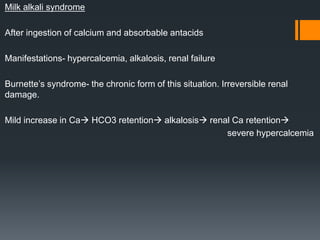
Milk alkali syndrome
After ingestion of calcium and absorbable antacids
Manifestations- hypercalcemia, alkalosis, renal failure
Burnette’s syndrome- the chronic form of this situation. Irreversible renal
damage.
Mild increase in Ca HCO3 retention alkalosis renal Ca retention
severe hypercalcemia
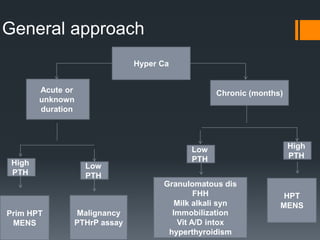
General approach
Hyper Ca
Acute or
unknown
duration
Chronic (months)
High
PTH
Low
PTH
Low
PTH
High
PTH
Prim HPT
MENS
Malignancy
PTHrP assay
Granulomatous dis
FHH
Milk alkali syn
Immobilization
Vit A/D intox
hyperthyroidism
HPT
MENS
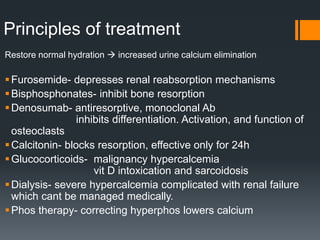
Principles of treatment
Restore normal hydration  increased urine calcium elimination
Furosemide- depresses renal reabsorption mechanisms
Bisphosphonates- inhibit bone resorption
Denosumab- antiresorptive, monoclonal Ab
inhibits differentiation. Activation, and function of
osteoclasts
Calcitonin- blocks resorption, effective only for 24h
Glucocorticoids- malignancy hypercalcemia
vit D intoxication and sarcoidosis
Dialysis- severe hypercalcemia complicated with renal failure
which cant be managed medically.
Phos therapy- correcting hyperphos lowers calcium

hypercalcemia and hypocalcemia

  • 1.
  • 2.
  • 3.
  • 4.
  • 5.
    1) PTH absent hereditary Vs. acquired hypoparathyroidism hereditary- Syndromic, in association with other abnormalities More common to appear in the first decade of life. *Di George syndrome- defective development of the thymus and the parathyroid. *kenney caffey syndrome type 1 *poly glandular autoimmune deficiency *mitochondrial dysfunctions and myopathies- kearns & MELAS syndromes. *autosomal dominant hypocalcemic hypercalciuria *Bartter syndrome
  • 6.
    Acquired- Surgery of theneck Rare- radiation therapy glandular damage in patients with hemochromatosis or hemosiderosis Transient hypoparathyroidism- function of the gland is regained months after surgery/ *****Therapy- Vit D and high oral doses of calcium. Calcitriol Vs. vit D Problem- this therapy does not reverse reduced calcium renal reabsorption and therefor increases the risk of nephrocalcinosis and CKD. Solution- thiazide diuretics.
  • 7.
    Hypomagnesemia <0.4 mmol/l mg PTH mg PTH This effect is like the effect of calcium but less powerful. There is a paradox existing in severe hypomagnesemia- secretion of PTH is reduced. Therapy: parenteral administration of mg.
  • 8.
    2) PTH ineffective CKD Calciumelevating action of PTH is impaired Impaired synthesis of vit D Ureic state- impaired intestinal absorption of calcium phos calcium by few mechanisms Therapy: Dialysis, phos diet restriction, aluminum containing anti acids Oral calcium and vit D also for monoclonal growth of the parathyroid in CKD patients= autonomeous HPT
  • 9.
    Vit D  Deficiencydue to low sunlight exposure & dietary intake In the elderly Hepatocellular dysfunction reduces vit D synthesis.  Defective vit D metabolism Anticonvulsant therapy Vit D dependent rickettsia type 1- (pseudo) Vit D dependent rickettsia type 2- (true) Pseudo hypoparathyroidism A group of inherited disorders PHP1- most common PHP1a- reduced response to PTH symptomes of hypocalcemia+ skeletal a and developnental abnormalities. glandular hyperplasia  increase PTH
  • 10.
    3) PTH overwhelmed Lossof calcium from ECF is so severe that PTH cant compensate. Ex- severe acute hyperphosphatemia- extensive tissue damage and cell d destruction increase phos from muscle reduced ability of kidney to excrete phos Treatment- phos binding anti acids, dialysis
  • 11.
    Hypercalcemia  Classification Parathyroid related Malignancyrelated Vit D related High bone turnover related Renal failure related
  • 12.
    1) Parathyroid related Primaryhyperparathyroidism PTH  Ca + phos Symptoms- recurrent nephrolithiasis peptic ulcers bone resorption (osteitis fibrosa cystics) *hypercalcemic parathyroid crisis- sudden worsening, dehydration and coma. Etiology- parathyroid tumors- isolated adenomas hereditary syndromes- MEN, hyperparathyroid jaw syndrome, non symptomatic familial isolated HPT. secondary to underlying disease (renal) excessive stimulation (lithium therapy)
  • 13.
     Diagnosis- detection ofelevated immunoreactive PTH in patients with asymptomatic hypercalcemia. Phos maybe be low/normal.  Therapy: Definitive therapy- surgical excision of the abnormal parathyroid tissue. 2 methods- conventional and new. Elderly with mild symptoms- surveillance if preferred. Multiple glandular hyperplasia- 2 surgical methods Decrease in calcium occurs within 24h after a successful surgery. It remains low for 3-5d until the remaining tissue resumes its action.
  • 15.
    Lithium therapy Causes hypercalcemiain 10% of the patients. Higher calcium levels are needed to lower PTH. Long term stimulation of the gland by lithium may predispose development of adenomas. familial hypocalciuric hypercalcemia- AD Increased secretion of PTH Jansen’s disease- AD Constitutive activation of PTH R1. Short limbed dwarfism Adults- multiple cystic resorptive areas in the bone
  • 16.
    2) Malignancy related Hypercalcemiain 20% of cancer patients. Usually severe and difficult to manage. Histology of the tumor is more important than its distribution. Elaboration of malignant cells by humoral mediators= PTHrP 2 mechanisms- for solid tumors for hematological malignancies Diagnostic problem- levels of PTH are extremely low Therapy- tumor control, reduction of its mass
  • 17.
    3) Vitamin Drelated Vit D intoxication Chronic ingestion of 40-100 times the physiological needs. Therapy- restriction of dietary calcium and hydration Sarcoidosis and granulomatous diseases Excess vit D is synthesized in macrophages and other cells in the granulomas. The usual regulation of vit D synthesis by calcium/phos/PTH isnt working Clearance of the vid from the blood is reduced PTH levels are usually low Therapy- avoid sun exposure, glucocorticoids. Idiopathic hypercalcemia in infancy- william’s syndrome Supravalvular aortic stenosis, mental retardation, elfin face Hypercalcemia due to abnormal sensitivity to vit D
  • 18.
    4) High boneturnover Hyperthyroidism 20% of the patients have hypercalcemia but hypercalciuria is more common. Immobilization- Children and adolescents after spinal cord surgery Thiazides- Chronic administration  reduction in urinary Ca increased PCT reabsorption of Na and Ca. Vit A intoxication- 10-20 times the physiological need X ray- periosteal calcification in the hands
  • 19.
    5) Renal failurerelated Severe secondary hyperparathyroidism- Resistance to normal levels of PTH  hypocalcemia parathyroid stimulation Increased FGF23 by osteoclasts decreased vit D Symptoms- bone pain, ectopic calcification, pruritus Primary Vs. Secondary HPT Treatment- Reduction of excessive blood phos Calcitriol Switch to calcium carbonate antacids over aluminum. ***tertiary HPT- CKD patients with HPT that no longer responds to therapy and has extra skeletal calcifications  surgery.
  • 20.
    Aluminum intoxication In chronicdialysis patients (less common today) Symptoms- acute dementia unresponsiveness osteomalacia multiple non healing fractures The hypercalcemia appears when this patient is treated with calcitriol Aluminum is present at the site of osteoid mineralization Osteoblast activity is minimal Calcium incorporation into the skeleton is minimal
  • 21.
    Milk alkali syndrome Afteringestion of calcium and absorbable antacids Manifestations- hypercalcemia, alkalosis, renal failure Burnette’s syndrome- the chronic form of this situation. Irreversible renal damage. Mild increase in Ca HCO3 retention alkalosis renal Ca retention severe hypercalcemia
  • 22.
    General approach Hyper Ca Acuteor unknown duration Chronic (months) High PTH Low PTH Low PTH High PTH Prim HPT MENS Malignancy PTHrP assay Granulomatous dis FHH Milk alkali syn Immobilization Vit A/D intox hyperthyroidism HPT MENS
  • 23.
    Principles of treatment Restorenormal hydration  increased urine calcium elimination Furosemide- depresses renal reabsorption mechanisms Bisphosphonates- inhibit bone resorption Denosumab- antiresorptive, monoclonal Ab inhibits differentiation. Activation, and function of osteoclasts Calcitonin- blocks resorption, effective only for 24h Glucocorticoids- malignancy hypercalcemia vit D intoxication and sarcoidosis Dialysis- severe hypercalcemia complicated with renal failure which cant be managed medically. Phos therapy- correcting hyperphos lowers calcium

Editor's Notes

  • #7 Calcitriol is the active form of vit D
  • #9 Phos foods –meat, fish, beans