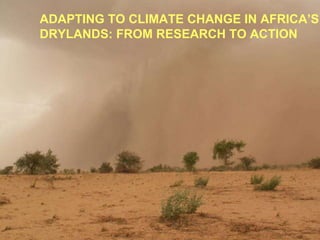
ADAPTING TO CLIMATE CHANGE IN AFRICA’S  DRYLANDS: FROM RESEARCH TO ACTION
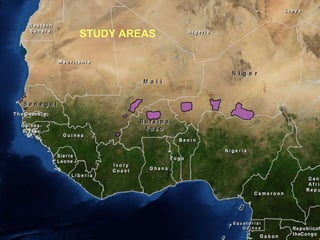
STUDY AREAS
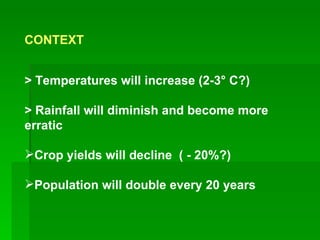
CONTEXT   > Temperatures will increase (2-3° C?) > Rainfall will diminish and become more erratic Crop yields will decline  ( - 20%?) Population will double every 20 years
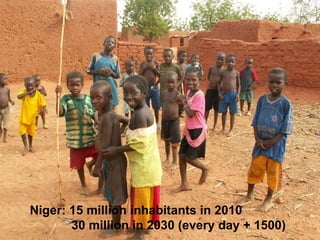
Niger: 15 million inhabitants in 2010 30 million in 2030 (every day + 1500)
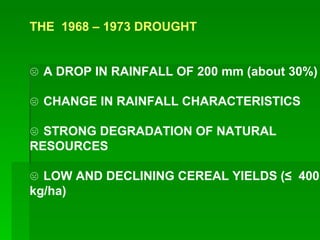
THE  1968 – 1973 DROUGHT ☹  A DROP IN RAINFALL OF  200 mm (about 30%) ☹  CHANGE IN RAINFALL CHARACTERISTICS ☹  STRONG  DEGRADATION OF NATURAL RESOURCES ☹  LOW AND DECLINING CEREAL YIELDS (≤  400 kg/ha)
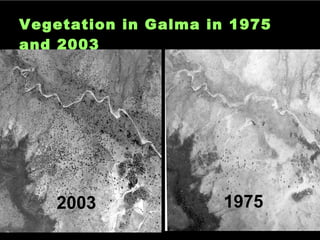
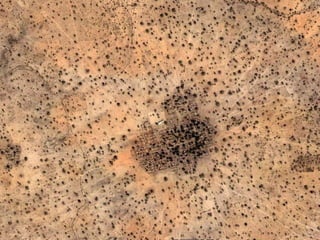
Vegetation in Galma in 1975 and 2003 2003 1975
 
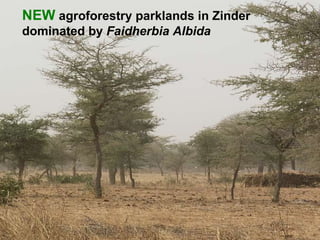
NEW  agroforestry parklands in Zinder  dominated by  Faidherbia Albida
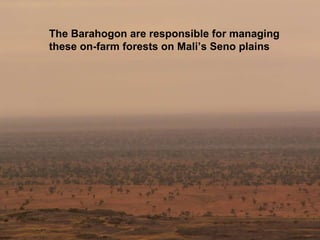
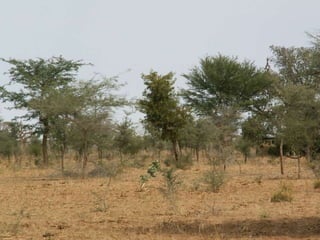
The Barahogon are responsible for managing  these on-farm forests on Mali’s Seno plains
 
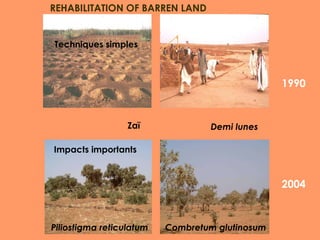
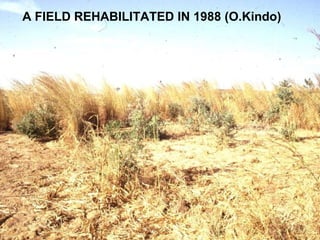
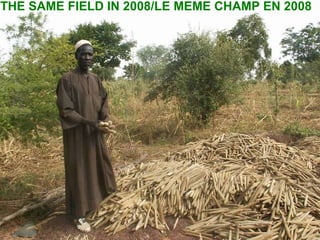
1990 REHABILITATION OF BARREN LAND   2004 Demi lunes Combretum glutinosum Zaï Techniques simples   Piliostigma reticulatum Impacts importants
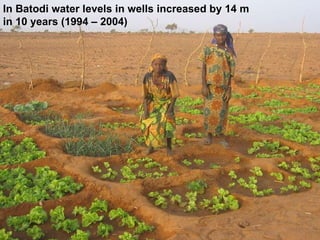
In Batodi water levels in wells increased by 14 m  in 10 years (1994 – 2004)
A FIELD REHABILITATED IN 1988 (O.Kindo)
THE SAME FIELD IN 2008/LE MEME CHAMP EN 2008
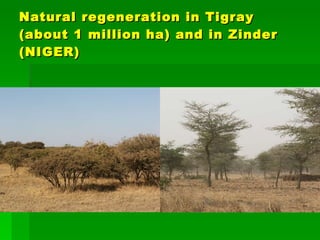
Natural regeneration in Tigray (about 1 million ha) and in Zinder (NIGER)
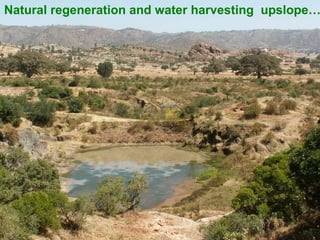
Natural regeneration and water harvesting  upslope……
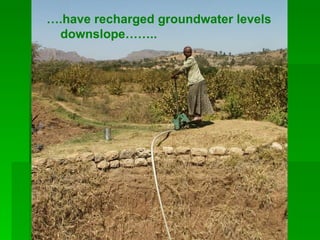
… .have recharged groundwater levels downslope……..
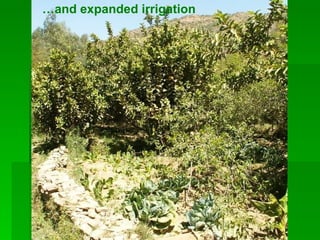
… and expanded irrigation
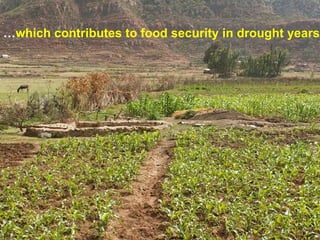
… which contributes to food security in drought years
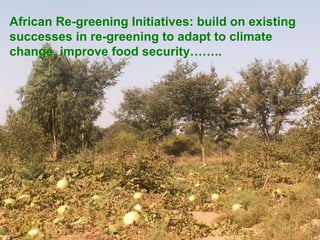
African Re-greening Initiatives: build on existing  successes in re-greening to adapt to climate change, improve food security……..
AFRICAN RE-GREENING INITIATIVES  OPERATIONAL IN: BURKINA FASO (since June 2009) MALI (since June 2009) SOON OPERATIONAL IN: NIGER (2010) ETHIOPIA (2010)
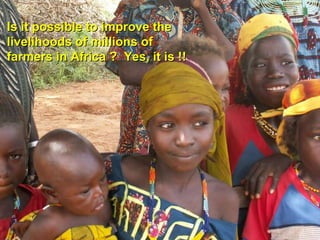
Is it possible to improve the  livelihoods of millions of  farmers in Africa ?  Yes, it is !!

Adapting to Climate Change in Africa's Drylands: From Research to Action