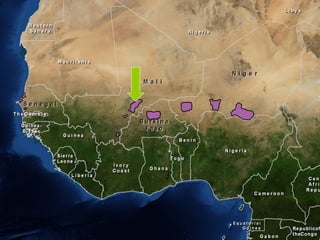
Brussels Briefing n. 30
   Agricultural Resilience in the Face of Crises and Shocks
                        4th March 2013
                 http://brusselsbriefings.net

Resilience-building in the Sahel: Regreening the Sahel
      Chris Reij, SLM specialist, Senior Fellow, World
                    Resources Institute
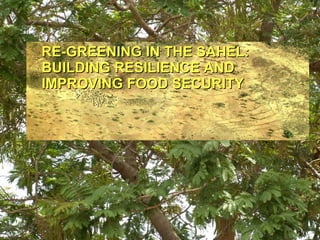
RE-GREENING IN THE SAHEL:
BUILDING RESILIENCE AND
IMPROVING FOOD SECURITY
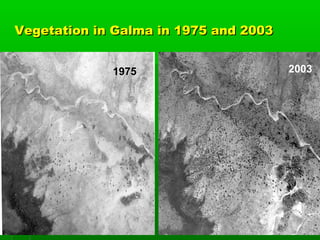
Vegetation in Galma in 1975 and 2003


             1975                      2003
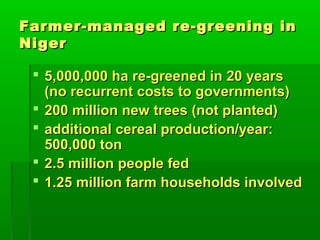
Farmer-managed re-greening in
Niger

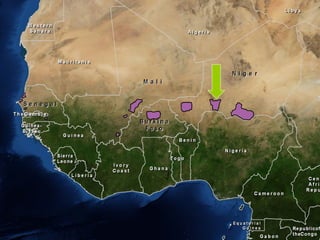
  5,000,000 ha re-greened in 20 years
   (no recurrent costs to governments)
  200 million new trees (not planted)
  additional cereal production/year:
   500,000 ton
  2.5 million people fed
  1.25 million farm households involved
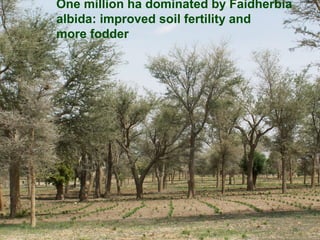
One million ha dominated by Faidherbia
albida: improved soil fertility and
more fodder
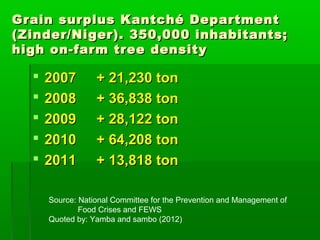
Grain surplus Kantché Department
(Zinder/Niger). 350,000 inhabitants;
high on-farm tree density

     2007        + 21,230 ton
     2008        + 36,838 ton
     2009        + 28,122 ton
     2010        + 64,208 ton
     2011        + 13,818 ton

      Source: National Committee for the Prevention and Management of
              Food Crises and FEWS
      Quoted by: Yamba and sambo (2012)
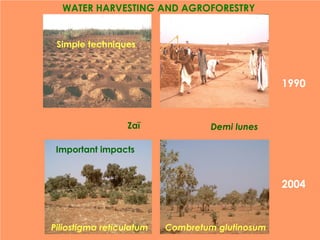
WATER HARVESTING AND AGROFORESTRY


 Simple techniques


                                                 1990


                  Zaï              Demi lunes

 Important impacts


                                                 2004


Piliostigma reticulatum   Combretum glutinosum
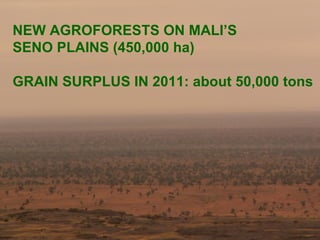
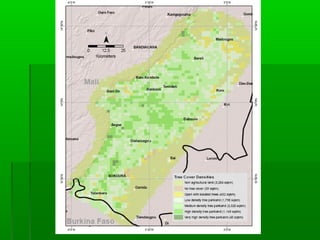
NEW AGROFORESTS ON MALI’S
SENO PLAINS (450,000 ha)

GRAIN SURPLUS IN 2011: about 50,000 tons
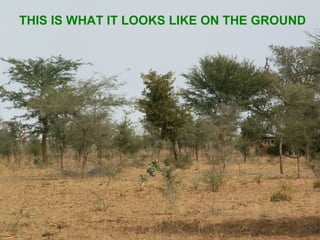
THIS IS WHAT IT LOOKS LIKE ON THE GROUND
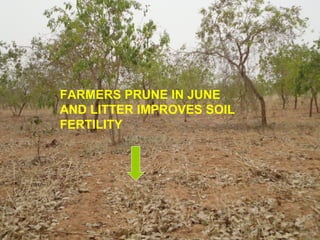
FARMERS PRUNE IN JUNE
AND LITTER IMPROVES SOIL
FERTILITY
MULTIPLE IMPACTS OF RE-GREENING
INCLUDE:

☛   IMPROVED FOOD SECURITY
☛   ADAPTATION TO CLIMATE CHANGE
☛   MITIGATION OF CLIMATE CHANGE
☛   POVERTY REDUCTION
☛   MORE FIREWOOD
☛   MORE FODDER
☛   REDUCTION OF CONFLICTS
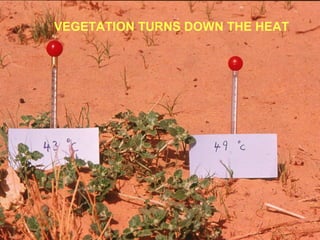
VEGETATION TURNS DOWN THE HEAT
Some lessons


  Farmers invest in on-farm trees when
   they have exclusive rights to their trees
  Vital contribution from governments:
   lowering barriers to millions of farmers to
   invest in trees (national legislation,
   policies, incentives)
  More people, more trees
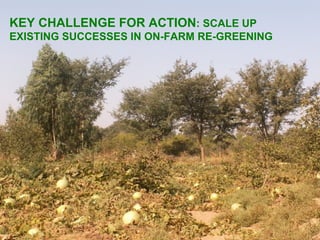
KEY CHALLENGE FOR ACTION: SCALE UP
EXISTING SUCCESSES IN ON-FARM RE-GREENING
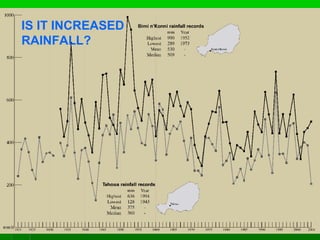
IS IT INCREASED
RAINFALL?
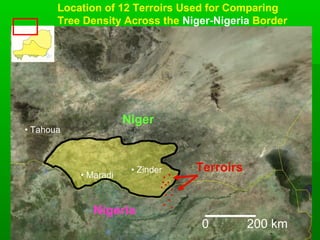
Location of 12 Terroirs Used for Comparing
       Tree Density Across the Niger-Nigeria Border


                      Niger
• Tahoua


                       • Zinder               Terroirs
           • Maradi             ■
                                      ■

                               ■ ■
                                 ■
                              ■
                                          ■
                                  ■       ■
                                      ■
                                  ■

              Nigeria                     ■


                                               0         200 km
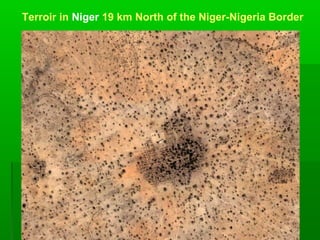
Terroir in Niger 19 km North of the Niger-Nigeria Border


 Source: Google Earth, 2005
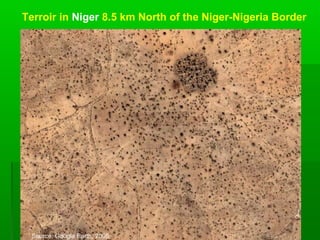
Terroir in Niger 8.5 km North of the Niger-Nigeria Border


 Source: Google Earth, 2005
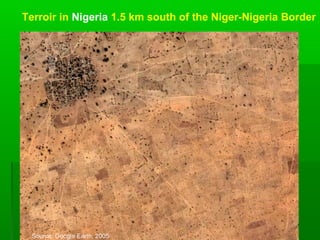
Terroir in Nigeria 1.5 km south of the Niger-Nigeria Border


 Source: Google Earth, 2005
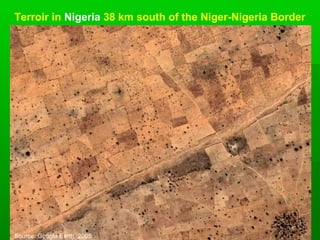
Terroir in Nigeria 38 km south of the Niger-Nigeria Border


Source: Google Earth, 2005
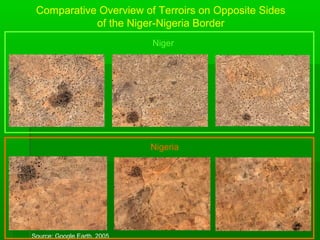
Comparative Overview of Terroirs on Opposite Sides
            of the Niger-Nigeria Border
                             Niger


                             Nigeria


Source: Google Earth, 2005

30thBrussels Briefing on Agricultural Resilience- 6. Chris Reij: Resilience-building in the Sahel- Regreening the Sahel

  • 1.
    Brussels Briefing n.30 Agricultural Resilience in the Face of Crises and Shocks 4th March 2013 http://brusselsbriefings.net Resilience-building in the Sahel: Regreening the Sahel Chris Reij, SLM specialist, Senior Fellow, World Resources Institute
  • 2.
    RE-GREENING IN THESAHEL: BUILDING RESILIENCE AND IMPROVING FOOD SECURITY
  • 4.
    Vegetation in Galmain 1975 and 2003 1975 2003
  • 5.
    Farmer-managed re-greening in Niger  5,000,000 ha re-greened in 20 years (no recurrent costs to governments)  200 million new trees (not planted)  additional cereal production/year: 500,000 ton  2.5 million people fed  1.25 million farm households involved
  • 6.
    One million hadominated by Faidherbia albida: improved soil fertility and more fodder
  • 7.
    Grain surplus KantchéDepartment (Zinder/Niger). 350,000 inhabitants; high on-farm tree density  2007 + 21,230 ton  2008 + 36,838 ton  2009 + 28,122 ton  2010 + 64,208 ton  2011 + 13,818 ton Source: National Committee for the Prevention and Management of Food Crises and FEWS Quoted by: Yamba and sambo (2012)
  • 8.
    WATER HARVESTING ANDAGROFORESTRY Simple techniques 1990 Zaï Demi lunes Important impacts 2004 Piliostigma reticulatum Combretum glutinosum
  • 10.
    NEW AGROFORESTS ONMALI’S SENO PLAINS (450,000 ha) GRAIN SURPLUS IN 2011: about 50,000 tons
  • 12.
    THIS IS WHATIT LOOKS LIKE ON THE GROUND
  • 13.
    FARMERS PRUNE INJUNE AND LITTER IMPROVES SOIL FERTILITY
  • 14.
    MULTIPLE IMPACTS OFRE-GREENING INCLUDE: ☛ IMPROVED FOOD SECURITY ☛ ADAPTATION TO CLIMATE CHANGE ☛ MITIGATION OF CLIMATE CHANGE ☛ POVERTY REDUCTION ☛ MORE FIREWOOD ☛ MORE FODDER ☛ REDUCTION OF CONFLICTS
  • 15.
  • 16.
    Some lessons Farmers invest in on-farm trees when they have exclusive rights to their trees  Vital contribution from governments: lowering barriers to millions of farmers to invest in trees (national legislation, policies, incentives)  More people, more trees
  • 17.
    KEY CHALLENGE FORACTION: SCALE UP EXISTING SUCCESSES IN ON-FARM RE-GREENING
  • 18.
  • 19.
    Location of 12Terroirs Used for Comparing Tree Density Across the Niger-Nigeria Border Niger • Tahoua • Zinder Terroirs • Maradi ■ ■ ■ ■ ■ ■ ■ ■ ■ ■ ■ Nigeria ■ 0 200 km
  • 20.
    Terroir in Niger19 km North of the Niger-Nigeria Border Source: Google Earth, 2005
  • 21.
    Terroir in Niger8.5 km North of the Niger-Nigeria Border Source: Google Earth, 2005
  • 22.
    Terroir in Nigeria1.5 km south of the Niger-Nigeria Border Source: Google Earth, 2005
  • 23.
    Terroir in Nigeria38 km south of the Niger-Nigeria Border Source: Google Earth, 2005
  • 24.
    Comparative Overview ofTerroirs on Opposite Sides of the Niger-Nigeria Border Niger Nigeria Source: Google Earth, 2005