PRESENTATION ON
   INTERNET
WHAT IS INTERNET


The      Internet     is   a    global    system     of
interconnected computer networks that use the
standard Internet protocol suite (often called
TCP/IP, although not all applications use TCP) to serve
billions of users worldwide. .
Type of internet connection

 Moderm
 Broadband cable
 Digital subscriber line
 Satellite broadband
 Isdn and t-line
 Wireless connection
Application of internet

 E-mail
 www
 Remote loging using telent
 File tranfer using ftp
 wais
 Internet telephony
 Video conferening
Feature of internet

 Geographic distribution
 Robust architecture
 Near light speed
 Internet growth rate
 The digits advantage
Advantages

 Faster Communication
 Information Resources
 Entertainment
 Social Networking
 e-commerce
Disadvantages

 Theft of Personal Information
 Spamming
 Virus
 Pornography
 Social
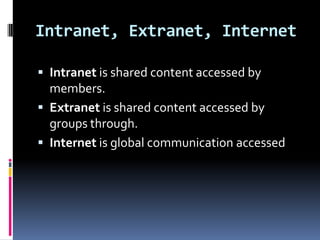
Intranet, Extranet, Internet

 Intranet is shared content accessed by
  members.
 Extranet is shared content accessed by
  groups through.
 Internet is global communication accessed
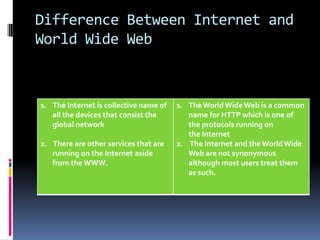
Difference Between Internet and
World Wide Web


1. The Internet is collective name of   1. The World Wide Web is a common
   all the devices that consist the        name for HTTP which is one of
   global network                          the protocols running on
                                           the Internet
2. There are other services that are    2. The Internet and the World Wide
   running on the Internet aside           Web are not synonymous
   from the WWW.                           although most users treat them
                                           as such.
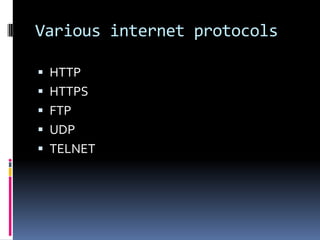
Various internet protocols

 HTTP
 HTTPS
 FTP
 UDP
 TELNET
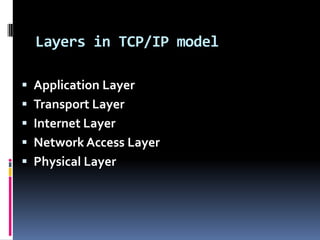
Layers in TCP/IP model

 Application Layer
 Transport Layer
 Internet Layer
 Network Access Layer
 Physical Layer
Internet mail protocol

 SMTP
 POP3
 IMAP
 MIME
Presentation12

Presentation12

  • 1.
  • 2.
    WHAT IS INTERNET The Internet is a global system of interconnected computer networks that use the standard Internet protocol suite (often called TCP/IP, although not all applications use TCP) to serve billions of users worldwide. .
  • 3.
    Type of internetconnection  Moderm  Broadband cable  Digital subscriber line  Satellite broadband  Isdn and t-line  Wireless connection
  • 4.
    Application of internet E-mail  www  Remote loging using telent  File tranfer using ftp  wais  Internet telephony  Video conferening
  • 5.
    Feature of internet Geographic distribution  Robust architecture  Near light speed  Internet growth rate  The digits advantage
  • 6.
    Advantages  Faster Communication Information Resources  Entertainment  Social Networking  e-commerce
  • 7.
    Disadvantages  Theft ofPersonal Information  Spamming  Virus  Pornography  Social
  • 8.
    Intranet, Extranet, Internet Intranet is shared content accessed by members.  Extranet is shared content accessed by groups through.  Internet is global communication accessed
  • 9.
    Difference Between Internetand World Wide Web 1. The Internet is collective name of 1. The World Wide Web is a common all the devices that consist the name for HTTP which is one of global network the protocols running on the Internet 2. There are other services that are 2. The Internet and the World Wide running on the Internet aside Web are not synonymous from the WWW. although most users treat them as such.
  • 10.
    Various internet protocols HTTP  HTTPS  FTP  UDP  TELNET
  • 11.
    Layers in TCP/IPmodel  Application Layer  Transport Layer  Internet Layer  Network Access Layer  Physical Layer
  • 12.
    Internet mail protocol SMTP  POP3  IMAP  MIME