Group Members
 KHADIJA (31)
 FAIZA ASLAM (55)
 ANAM SANA (48)
 MARIA YOUNAS (62)
Structure of PROTEIN
What are proteins?
Proteins are most abundant organic compounds to be
found in cells and composed of long chain of amino
acids.
The name protein derived from Greek word “ Proteiose ’’
meaning of Prime importance.
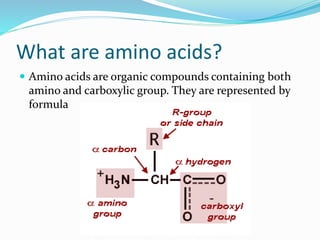
What are amino acids?
 Amino acids are organic compounds containing both
amino and carboxylic group. They are represented by
formula
Types of amino acid
 Essential amino acid
 Non essential amino acid
 Amino acids are linked together to form polypeptide
proteins. Two amino acids join and a water molecule is
released.
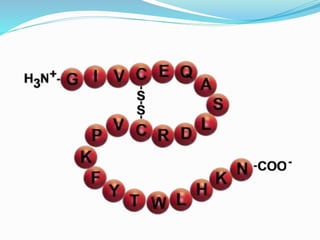
Primary structure of protein
 The primary structure comprises the no. and sequence
of amino acid in a protein molecule.
 F.sanger determined the sequence of amino acid in a
protein molecule.
 Example
 Insulin is composed of 51 amino acids in 2 chains.
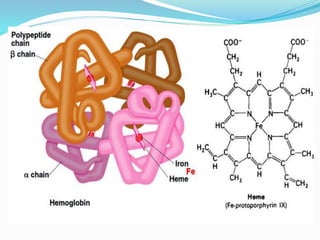
 Haemoglobin is composed of 4 chains of 2 α,2 β
chains.
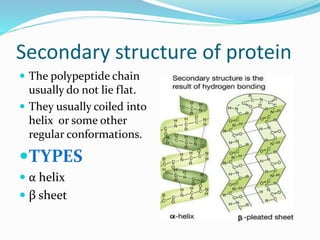
Secondary structure of protein
 The polypeptide chain
usually do not lie flat.
 They usually coiled into
helix or some other
regular conformations.
TYPES
 α helix
 β sheet
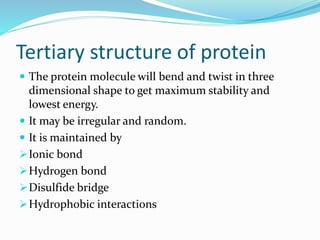
Tertiary structure of protein
 The protein molecule will bend and twist in three
dimensional shape to get maximum stability and
lowest energy.
 It may be irregular and random.
 It is maintained by
Ionic bond
Hydrogen bond
Disulfide bridge
Hydrophobic interactions
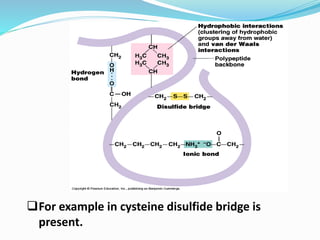
For example in cysteine disulfide bridge is
present.
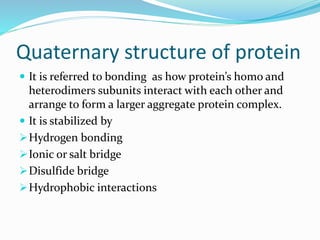
Quaternary structure of protein
 It is referred to bonding as how protein’s homo and
heterodimers subunits interact with each other and
arrange to form a larger aggregate protein complex.
 It is stabilized by
Hydrogen bonding
Ionic or salt bridge
Disulfide bridge
Hydrophobic interactions
Protein stability
 Protein are very sensitive to
pH
Temperature
this is because of its weak interactions in
tertiary and quaternary structure (egg
albumin) as compared to primary and
secondary structures e.g; human hair
Functions of proteins
As antibody
• immunoglobin
As enzymes
• pepsin
As messenger
• hormones
As structural component
• Actin and myosin
As transport or storage
• Haemoglobin
Blood clotting proteins
• fibrin
Protoplasm
Nucleoproteins
• ribosomes
STRUCTURE AND FUNCTIONS
OF NUCLIEC ACID
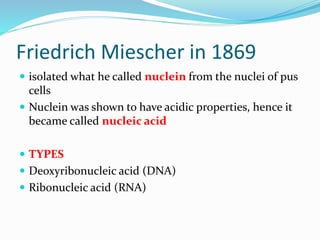
Friedrich Miescher in 1869
 isolated what he called nuclein from the nuclei of pus
cells
 Nuclein was shown to have acidic properties, hence it
became called nucleic acid
 TYPES
 Deoxyribonucleic acid (DNA)
 Ribonucleic acid (RNA)
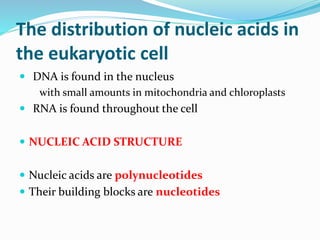
The distribution of nucleic acids in
the eukaryotic cell
 DNA is found in the nucleus
with small amounts in mitochondria and chloroplasts
 RNA is found throughout the cell
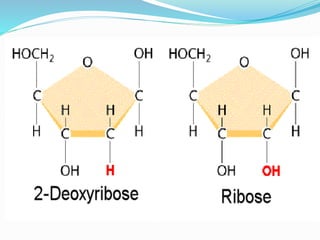
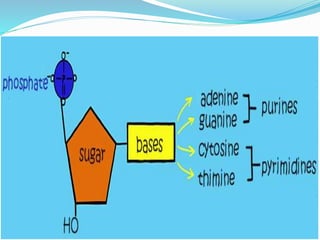
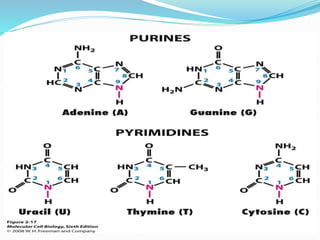
 NUCLEIC ACID STRUCTURE
 Nucleic acids are polynucleotides
 Their building blocks are nucleotides
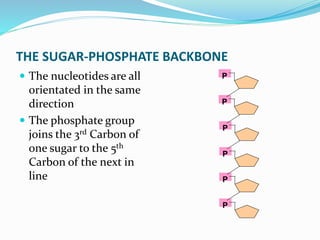
 The nucleotides are all
orientated in the same
direction
 The phosphate group
joins the 3rd Carbon of
one sugar to the 5th
Carbon of the next in
line
P
P
P
P
P
P
THE SUGAR-PHOSPHATE BACKBONE
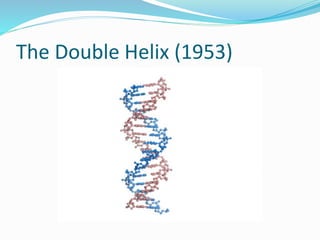
The Double Helix (1953)
DNA IS MADE OF TWO STRANDS OF
POLYNUCLEOTIDE
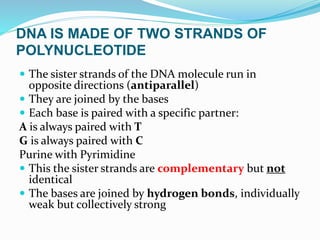
 The sister strands of the DNA molecule run in
opposite directions (antiparallel)
 They are joined by the bases
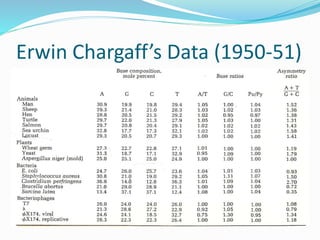
 Each base is paired with a specific partner:
A is always paired with T
G is always paired with C
Purine with Pyrimidine
 This the sister strands are complementary but not
identical
 The bases are joined by hydrogen bonds, individually
weak but collectively strong
Erwin Chargaff’s Data (1950-51)
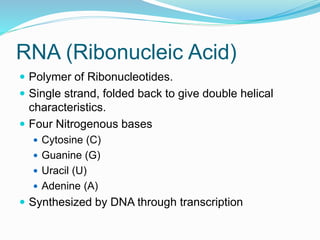
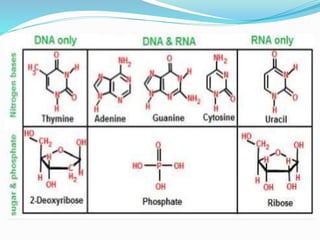
RNA (Ribonucleic Acid)
 Polymer of Ribonucleotides.
 Single strand, folded back to give double helical
characteristics.
 Four Nitrogenous bases
 Cytosine (C)
 Guanine (G)
 Uracil (U)
 Adenine (A)
 Synthesized by DNA through transcription
Functions of Nucleic Acid
 Store and transfer genetic information.
 Use genetic information for the synthesis of new protein.
 Deoxyribonucleic Acid is a storage of genetic information
 DNA controls the synthesis of RNA
 In DNA backbone, sequence of nitrogenous bases
determines the protein synthesis.
 DNA double helix prevents the disorders occurring during
genetic information damage.
 mRNA takes genetic message from RNA.
 tRNA transfers activated amino acids to the sites of
protein synthesis
 rRNA are responsible for stability of mRNA
Presentation1

Presentation1

  • 3.
    Group Members  KHADIJA(31)  FAIZA ASLAM (55)  ANAM SANA (48)  MARIA YOUNAS (62)
  • 4.
    Structure of PROTEIN Whatare proteins? Proteins are most abundant organic compounds to be found in cells and composed of long chain of amino acids. The name protein derived from Greek word “ Proteiose ’’ meaning of Prime importance.
  • 5.
    What are aminoacids?  Amino acids are organic compounds containing both amino and carboxylic group. They are represented by formula
  • 6.
    Types of aminoacid  Essential amino acid  Non essential amino acid  Amino acids are linked together to form polypeptide proteins. Two amino acids join and a water molecule is released.
  • 7.
    Primary structure ofprotein  The primary structure comprises the no. and sequence of amino acid in a protein molecule.  F.sanger determined the sequence of amino acid in a protein molecule.  Example  Insulin is composed of 51 amino acids in 2 chains.  Haemoglobin is composed of 4 chains of 2 α,2 β chains.
  • 9.
    Secondary structure ofprotein  The polypeptide chain usually do not lie flat.  They usually coiled into helix or some other regular conformations. TYPES  α helix  β sheet
  • 10.
    Tertiary structure ofprotein  The protein molecule will bend and twist in three dimensional shape to get maximum stability and lowest energy.  It may be irregular and random.  It is maintained by Ionic bond Hydrogen bond Disulfide bridge Hydrophobic interactions
  • 11.
    For example incysteine disulfide bridge is present.
  • 12.
    Quaternary structure ofprotein  It is referred to bonding as how protein’s homo and heterodimers subunits interact with each other and arrange to form a larger aggregate protein complex.  It is stabilized by Hydrogen bonding Ionic or salt bridge Disulfide bridge Hydrophobic interactions
  • 14.
    Protein stability  Proteinare very sensitive to pH Temperature this is because of its weak interactions in tertiary and quaternary structure (egg albumin) as compared to primary and secondary structures e.g; human hair
  • 15.
    Functions of proteins Asantibody • immunoglobin As enzymes • pepsin As messenger • hormones
  • 16.
    As structural component •Actin and myosin As transport or storage • Haemoglobin Blood clotting proteins • fibrin Protoplasm Nucleoproteins • ribosomes
  • 17.
  • 18.
    Friedrich Miescher in1869  isolated what he called nuclein from the nuclei of pus cells  Nuclein was shown to have acidic properties, hence it became called nucleic acid  TYPES  Deoxyribonucleic acid (DNA)  Ribonucleic acid (RNA)
  • 19.
    The distribution ofnucleic acids in the eukaryotic cell  DNA is found in the nucleus with small amounts in mitochondria and chloroplasts  RNA is found throughout the cell  NUCLEIC ACID STRUCTURE  Nucleic acids are polynucleotides  Their building blocks are nucleotides
  • 23.
     The nucleotidesare all orientated in the same direction  The phosphate group joins the 3rd Carbon of one sugar to the 5th Carbon of the next in line P P P P P P THE SUGAR-PHOSPHATE BACKBONE
  • 24.
  • 25.
    DNA IS MADEOF TWO STRANDS OF POLYNUCLEOTIDE  The sister strands of the DNA molecule run in opposite directions (antiparallel)  They are joined by the bases  Each base is paired with a specific partner: A is always paired with T G is always paired with C Purine with Pyrimidine  This the sister strands are complementary but not identical  The bases are joined by hydrogen bonds, individually weak but collectively strong
  • 26.
  • 27.
    RNA (Ribonucleic Acid) Polymer of Ribonucleotides.  Single strand, folded back to give double helical characteristics.  Four Nitrogenous bases  Cytosine (C)  Guanine (G)  Uracil (U)  Adenine (A)  Synthesized by DNA through transcription
  • 29.
    Functions of NucleicAcid  Store and transfer genetic information.  Use genetic information for the synthesis of new protein.  Deoxyribonucleic Acid is a storage of genetic information  DNA controls the synthesis of RNA  In DNA backbone, sequence of nitrogenous bases determines the protein synthesis.  DNA double helix prevents the disorders occurring during genetic information damage.  mRNA takes genetic message from RNA.  tRNA transfers activated amino acids to the sites of protein synthesis  rRNA are responsible for stability of mRNA