ABDUL BASIT SIPRA
Presented To Our Respected Teacher
SIR. RAZA ALI SHEIKH
Hazrat Umar Ibn Al Khattab
Administration in Islam
Hazrat Umar(RA)’s Administration
22nd of Jamadi-uth-Thani 13 Hijri – 26 Dhul Hijjah 23 Hijri
Challenges
His Own Image
Super Powers
(Persian Empire & Byzantine Empire)
Famine
Plague
Basic Principles of Hazrat Umar’s Reign
 Self Accountability
 No Private Business for Government
Officials
Same LAW for all
Self Accountability
Examples
1.Old Woman
2.Hazrat Umar (RA)’s Son
No Private Business for Government
Officials
Same LAW for all
Examples
1.Hazrat Ayaz Bin Ghanam (RA)
2.Amar Bin Aas (RA)’s Son
Important Conquests of Hazrat Umar(RA)’s Reign
Conquest of Damascus
Conquest of Saida, Irqah
and Beirut (Lebanon today)
Campaigns in Iraq
The Conquest of
2/3 of Byzantie
 The Battle of Qaadisiyah
Conquest of the Persian
capital
Conquest of Jerusalem
The Conquest of Egypt
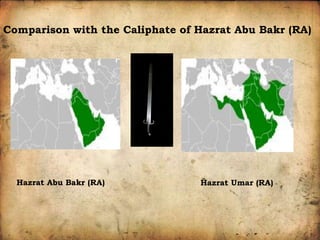
Comparison with the Caliphate of Hazrat Abu Bakr (RA)
Hazrat Abu Bakr (RA) Hazrat Umar (RA)
Pact in Jerusalem
o The inhabitants' life, property and churches were given
protection
o Islam was not to be forced on them
o The inhabitants were to pay the “Jizya" or poll tax
o The Greeks were to be turned out of the City
Reforms of Hazrat Umar(RA) during his Administration
"Awliat-i-Umar
Formal Bayt ul Mal
Trading Reforms
Taxes Reforms
Departments
Other Institutions
Agriculture
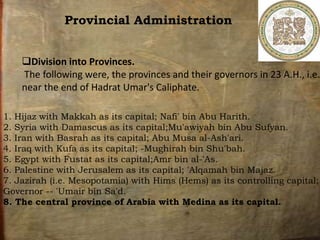
Provincial Administration
Division into Provinces.
The following were, the provinces and their governors in 23 A.H., i.e.
near the end of Hadrat Umar's Caliphate.
1. Hijaz with Makkah as its capital; Nafi' bin Abu Harith.
2. Syria with Damascus as its capital;Mu'awiyah bin Abu Sufyan.
3. Iran with Basrah as its capital; Abu Musa al-Ash'ari.
4. Iraq with Kufa as its capital; -Mughirah bin Shu'bah.
5. Egypt with Fustat as its capital;Amr bin al-'As.
6. Palestine with Jerusalem as its capital; 'Alqamah bin Majaz.
7. Jazirah (i.e. Mesopotamia) with Hims (Hems) as its controlling capital;
Governor -- 'Umair bin Sa'd.
8. The central province of Arabia with Medina as its capital.
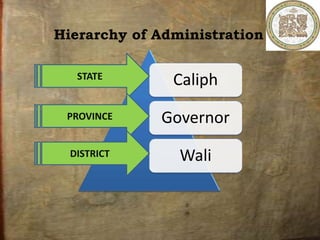
Hierarchy of Administration
Caliph
Governor
Wali
STATE
PROVINCE
DISTRICT
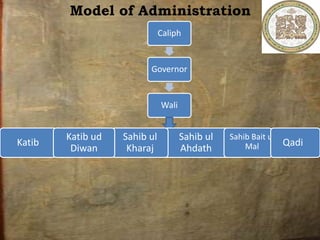
Model of Administration
Caliph
Governor
Wali
Sahib ul
Ahdath
Katib
Sahib ul
Kharaj
Katib ud
Diwan
Sahib Bait ul
Mal Qadi
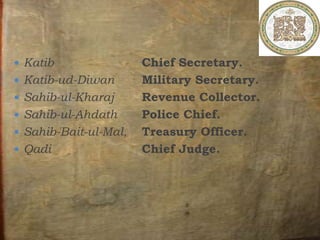
 Katib Chief Secretary.
 Katib-ud-Diwan Military Secretary.
 Sahib-ul-Kharaj Revenue Collector.
 Sahib-ul-Ahdath Police Chief.
 Sahib-Bait-ul-Mal, Treasury Officer.
 Qadi Chief Judge.
Departments
Military Department
Tax Deptartments
Education Department
Police Deparmtment
Financial Department
Military Department
Different Ranks
Cantt Areas
Fixed Salaries
Check Posts (Conquered Cities)
Appointment of Head of Military
Military in Different Cities
Taxes In Hazrat Umar’s
Administrtion
Jizya (Indemnity or Defence Tax)
Diwan al Kharaj
Non Muslims
48 24 12
(Zakat(Poor Tax) Diwan al-Zakah
Khiraj(Land Tax); Diwan al Kharaj
Ushr (Special land Tax);
Taxes In Hazrat Umar’s
Administrtion
War Booty –Ghanima
(Income from the conquered places)-Diwan al-
Jund
Ushoor
10 percent Resident Non Muslim 5 %
Reekaz
Tax on Land Mines and Treasure Troves
Ushoor & Reekaz (Diwan al Bareed & Diwan
al Khatm)
Education Department
Schools
Salaries for Teachers
Educational Developments all over the State
Police Department
First one to introduce Police Force
Prison
Fixed Salaries
Financial Department
Ghanima
Bayt ul Maal
Salaries
Collection of revenue
Salaries for Financial Department Employees
Construction Canals
Populated Cities
He was also the first to make use of the whip for
corporal punishment and set up a prison.
 He introduced a system of collecting direct information
concerning the State.
He established a secret intelligence service.
He had wells bored, built houses
Fixed a daily payment for the destitute among the
Christians and the Jews.
Develpoments
Introductions
Hijri Calendar
Fixed Salaries for Men involved in voluntary
service
Census system,
 Measuring of the land and keeping its record
 He was first to allow traders of rival countries
to enter Muslim territories for the purpose of
business.
Formal Taraweeh Prayers
Departments
Military Department
Tax Deptartments
Education Department
Police Deparmtment
Financial Department
Shurah (Advisory Council)
 Higher Advisory Council
General Advisory Council
3rd Advisory Council
Between The Higher & General Advisory Council
Departments
Military Department
Tax Deptartments
Education Department
Police Deparmtment
Financial Department
Higher Advisory Council
 Important Decisions of the State
Permanent Members
Hadrat Uthman, Ali, 'Abdur Rahman bin Auf, Mu'adh bin Jabal,
Ubayy bin Ka'b, Zaid bin Thabit, Talha and Zubair (Raziallah Anho).
General Advisory Council
General Matters
Ansar & Muhajireens
The Companions who participated in the battle of Badr were given
priority in this "Shura.In this "Shura" were also included the chiefs
of various clans and tribes.
Departments
Military Department
Tax Deptartments
Education Department
Police Deparmtment
Financial Department
3rd Advisory Council
 Ranked between the other two Shuras
Some selected Companions among the Muhajirin and Ansar
Matter of Special Interest
The Way to call the Shura:
As-Salatu Jami'ah," in the Prophet's Masjid
Summary
"Amongst the nations before your time, there have been inspired
people (who were not Prophets), and if there is one amongst my
Ummah, he is Umar".
- (Bukhari and Muslim)
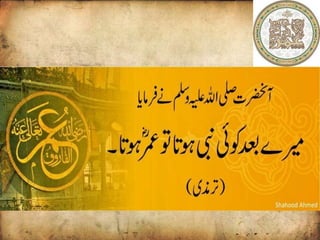
Saying of Hazrat Muhammad (SAWW) about Hazrat Umar (RA)

Hazrat Umer (RA) - the great administrator

  • 2.
  • 3.
    Presented To OurRespected Teacher SIR. RAZA ALI SHEIKH
  • 4.
    Hazrat Umar IbnAl Khattab
  • 6.
  • 7.
    Hazrat Umar(RA)’s Administration 22ndof Jamadi-uth-Thani 13 Hijri – 26 Dhul Hijjah 23 Hijri
  • 8.
    Challenges His Own Image SuperPowers (Persian Empire & Byzantine Empire) Famine Plague
  • 9.
    Basic Principles ofHazrat Umar’s Reign  Self Accountability  No Private Business for Government Officials Same LAW for all
  • 10.
    Self Accountability Examples 1.Old Woman 2.HazratUmar (RA)’s Son No Private Business for Government Officials Same LAW for all Examples 1.Hazrat Ayaz Bin Ghanam (RA) 2.Amar Bin Aas (RA)’s Son
  • 11.
    Important Conquests ofHazrat Umar(RA)’s Reign Conquest of Damascus Conquest of Saida, Irqah and Beirut (Lebanon today) Campaigns in Iraq The Conquest of 2/3 of Byzantie  The Battle of Qaadisiyah Conquest of the Persian capital Conquest of Jerusalem The Conquest of Egypt
  • 12.
    Comparison with theCaliphate of Hazrat Abu Bakr (RA) Hazrat Abu Bakr (RA) Hazrat Umar (RA)
  • 13.
    Pact in Jerusalem oThe inhabitants' life, property and churches were given protection o Islam was not to be forced on them o The inhabitants were to pay the “Jizya" or poll tax o The Greeks were to be turned out of the City
  • 14.
    Reforms of HazratUmar(RA) during his Administration "Awliat-i-Umar Formal Bayt ul Mal Trading Reforms Taxes Reforms Departments Other Institutions Agriculture
  • 15.
    Provincial Administration Division intoProvinces. The following were, the provinces and their governors in 23 A.H., i.e. near the end of Hadrat Umar's Caliphate. 1. Hijaz with Makkah as its capital; Nafi' bin Abu Harith. 2. Syria with Damascus as its capital;Mu'awiyah bin Abu Sufyan. 3. Iran with Basrah as its capital; Abu Musa al-Ash'ari. 4. Iraq with Kufa as its capital; -Mughirah bin Shu'bah. 5. Egypt with Fustat as its capital;Amr bin al-'As. 6. Palestine with Jerusalem as its capital; 'Alqamah bin Majaz. 7. Jazirah (i.e. Mesopotamia) with Hims (Hems) as its controlling capital; Governor -- 'Umair bin Sa'd. 8. The central province of Arabia with Medina as its capital.
  • 16.
  • 17.
    Model of Administration Caliph Governor Wali Sahibul Ahdath Katib Sahib ul Kharaj Katib ud Diwan Sahib Bait ul Mal Qadi
  • 18.
     Katib ChiefSecretary.  Katib-ud-Diwan Military Secretary.  Sahib-ul-Kharaj Revenue Collector.  Sahib-ul-Ahdath Police Chief.  Sahib-Bait-ul-Mal, Treasury Officer.  Qadi Chief Judge.
  • 19.
    Departments Military Department Tax Deptartments EducationDepartment Police Deparmtment Financial Department
  • 20.
    Military Department Different Ranks CanttAreas Fixed Salaries Check Posts (Conquered Cities) Appointment of Head of Military Military in Different Cities
  • 21.
    Taxes In HazratUmar’s Administrtion Jizya (Indemnity or Defence Tax) Diwan al Kharaj Non Muslims 48 24 12 (Zakat(Poor Tax) Diwan al-Zakah Khiraj(Land Tax); Diwan al Kharaj Ushr (Special land Tax);
  • 22.
    Taxes In HazratUmar’s Administrtion War Booty –Ghanima (Income from the conquered places)-Diwan al- Jund Ushoor 10 percent Resident Non Muslim 5 % Reekaz Tax on Land Mines and Treasure Troves Ushoor & Reekaz (Diwan al Bareed & Diwan al Khatm)
  • 23.
    Education Department Schools Salaries forTeachers Educational Developments all over the State
  • 24.
    Police Department First oneto introduce Police Force Prison Fixed Salaries
  • 25.
    Financial Department Ghanima Bayt ulMaal Salaries Collection of revenue Salaries for Financial Department Employees
  • 26.
    Construction Canals Populated Cities Hewas also the first to make use of the whip for corporal punishment and set up a prison.  He introduced a system of collecting direct information concerning the State. He established a secret intelligence service. He had wells bored, built houses Fixed a daily payment for the destitute among the Christians and the Jews. Develpoments
  • 27.
    Introductions Hijri Calendar Fixed Salariesfor Men involved in voluntary service Census system,  Measuring of the land and keeping its record  He was first to allow traders of rival countries to enter Muslim territories for the purpose of business. Formal Taraweeh Prayers
  • 28.
    Departments Military Department Tax Deptartments EducationDepartment Police Deparmtment Financial Department Shurah (Advisory Council)  Higher Advisory Council General Advisory Council 3rd Advisory Council Between The Higher & General Advisory Council
  • 29.
    Departments Military Department Tax Deptartments EducationDepartment Police Deparmtment Financial Department Higher Advisory Council  Important Decisions of the State Permanent Members Hadrat Uthman, Ali, 'Abdur Rahman bin Auf, Mu'adh bin Jabal, Ubayy bin Ka'b, Zaid bin Thabit, Talha and Zubair (Raziallah Anho). General Advisory Council General Matters Ansar & Muhajireens The Companions who participated in the battle of Badr were given priority in this "Shura.In this "Shura" were also included the chiefs of various clans and tribes.
  • 30.
    Departments Military Department Tax Deptartments EducationDepartment Police Deparmtment Financial Department 3rd Advisory Council  Ranked between the other two Shuras Some selected Companions among the Muhajirin and Ansar Matter of Special Interest The Way to call the Shura: As-Salatu Jami'ah," in the Prophet's Masjid
  • 32.
  • 33.
    "Amongst the nationsbefore your time, there have been inspired people (who were not Prophets), and if there is one amongst my Ummah, he is Umar". - (Bukhari and Muslim) Saying of Hazrat Muhammad (SAWW) about Hazrat Umar (RA)