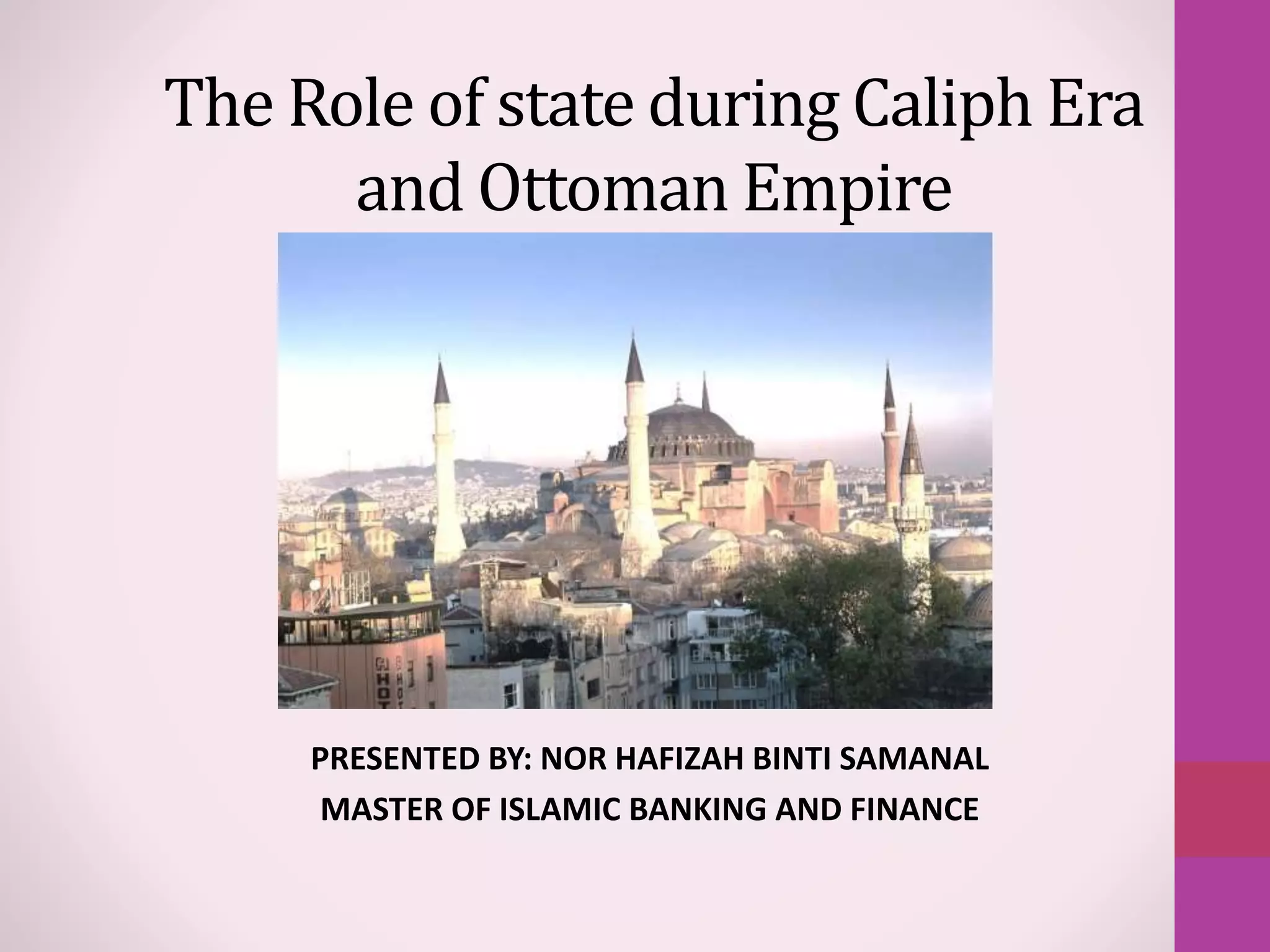
The Role of state during Caliph Era
and Ottoman Empire
PRESENTED BY: NOR HAFIZAH BINTI SAMANAL
MASTER OF ISLAMIC BANKING AND FINANCE
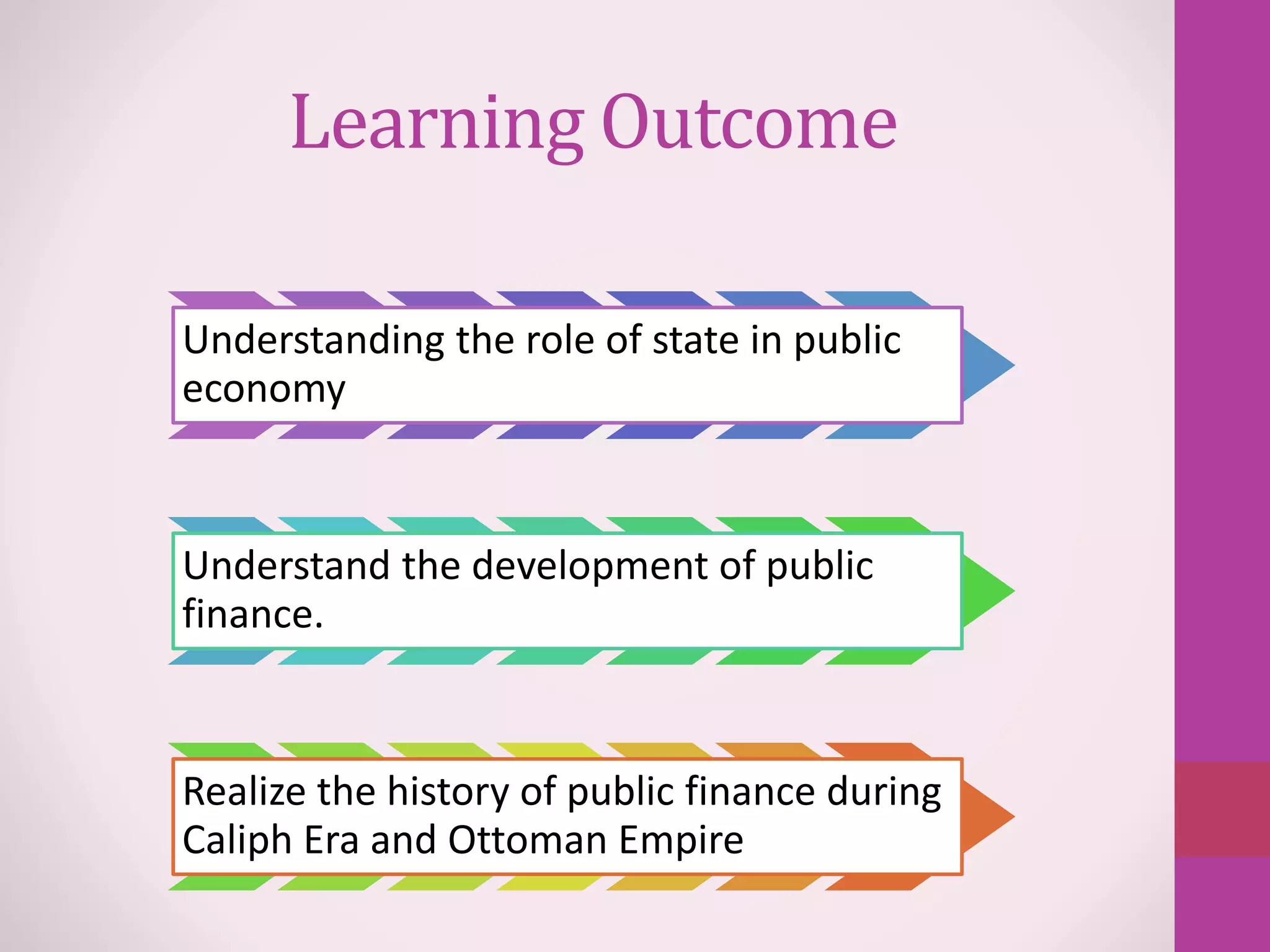
Understanding the role of state in public
economy
Understand the development of public
finance.
Realize the history of public finance during
Caliph Era and Ottoman Empire
Learning Outcome
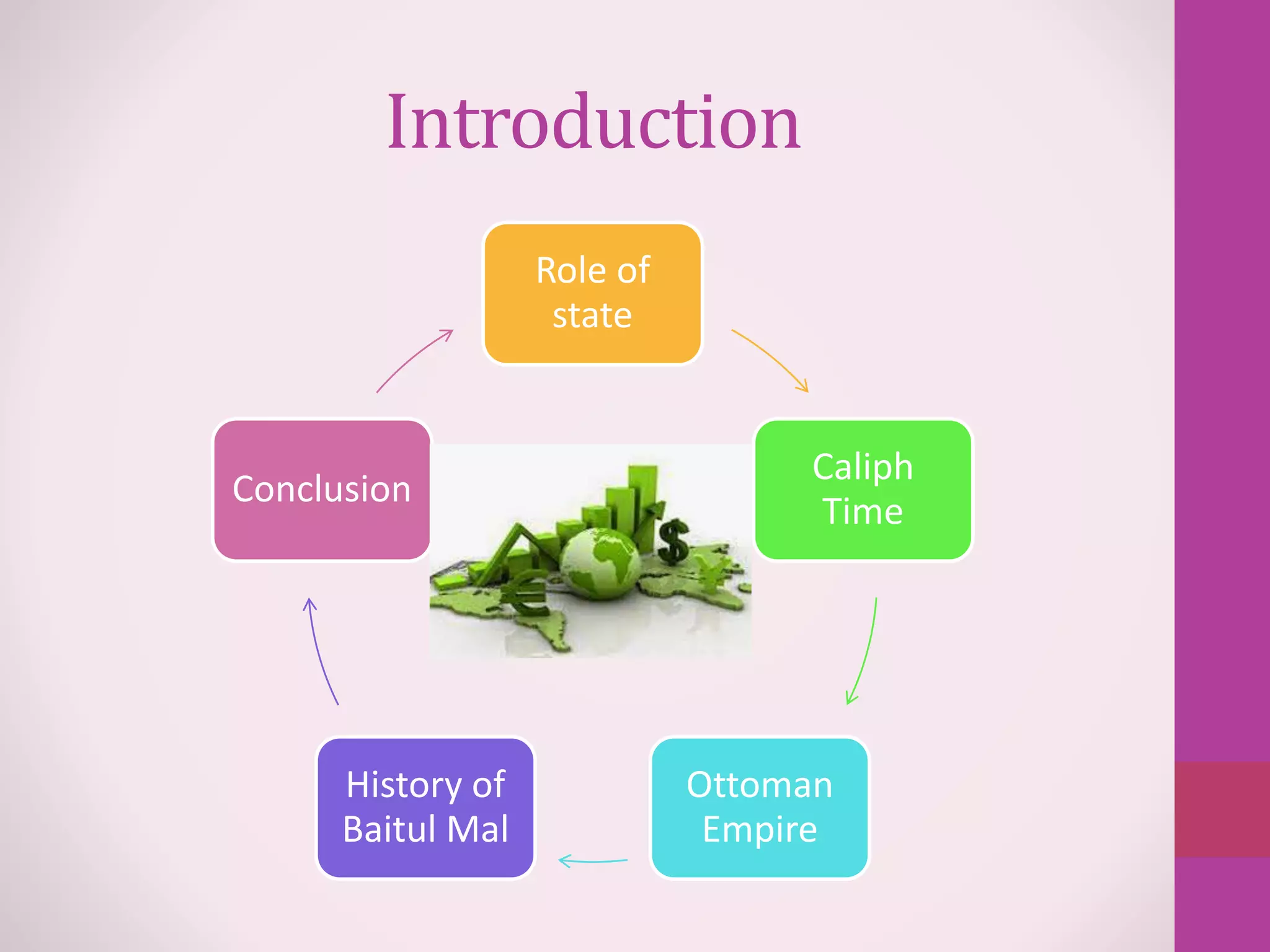
Introduction
Role of
state
Caliph
Time
Ottoman
Empire
History of
Baitul Mal
Conclusion
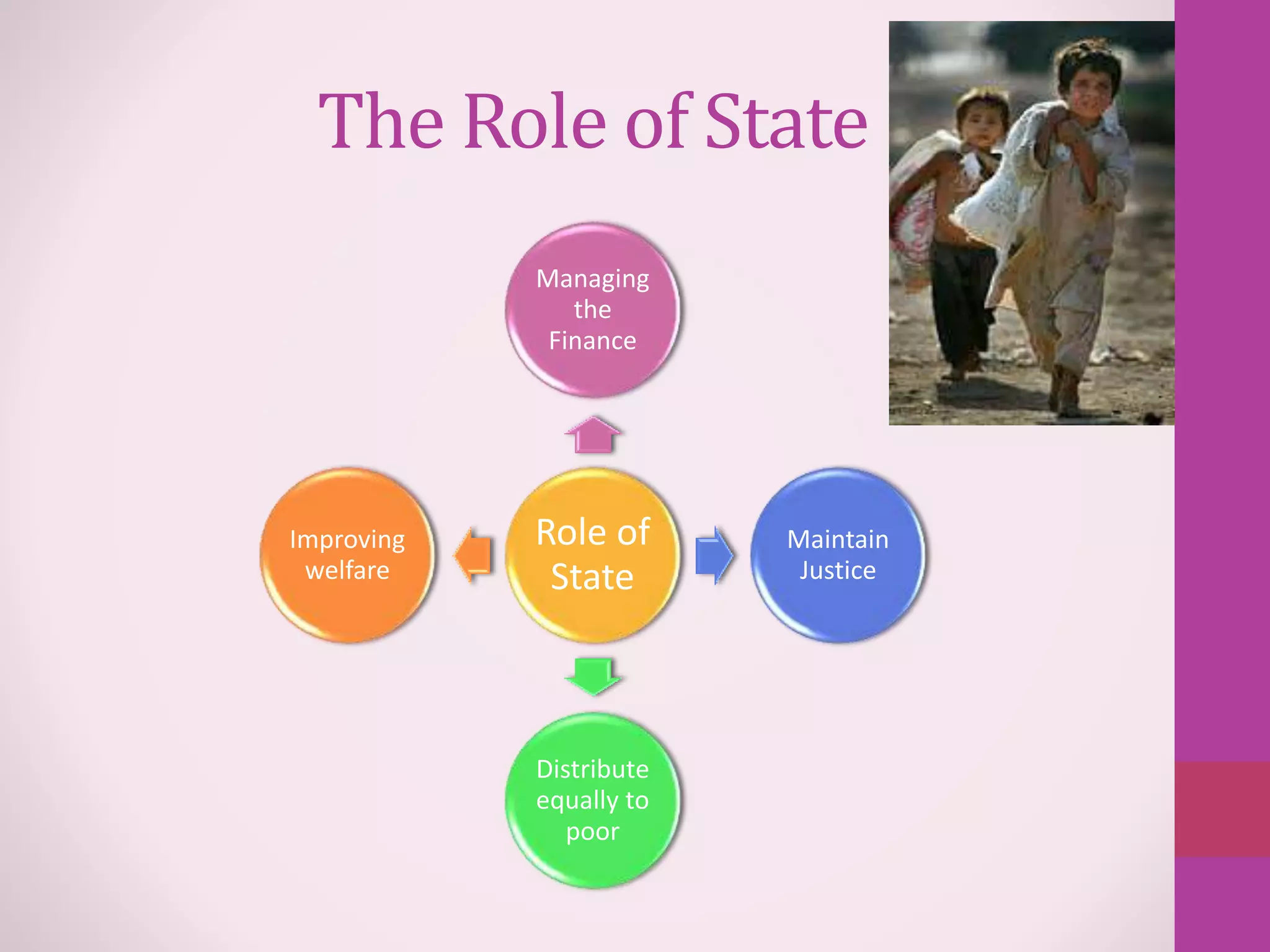
The Role of State
Role of
State
Managing
the
Finance
Maintain
Justice
Distribute
equally to
poor
Improving
welfare
History of Public Finance
Abu Bakar
As-siddiq
(632-634 C)
Umar Al-
Khattab
(634-644 A.C)
Uthman
Bin Affan
(644-645 A.C)
Ali bin Abi
Talib
(656-661 A.C)
Abu Bakar As-siddiq (632-634c)
• Abu Bakar is Abdullah Ibn Abu Quhafah al-
Tamimi
• His management is just for two year
• Source of revenue which are zakat, ushr,
kharaj, jiziyyah and fay’
• Other revenue include gold, silver, metal.
• He is the greatest people in managing
economy organization in Islamic state.
Umar Al-Khattab (634-644 A.C)
• Second Caliph in Islamic state
• He instituted two taxes, the kharaj and jizyah.
• He conquered Damascus in 635 and Jerusalem in
637, both from Syria in the Byzantine Empire.
• Umar bin Al- Khattab decided to establish Baitul
Mal as Central of Treasury
• He appointed Abdullah bin Arqam as the officer
of Treasury and Abdur Rahman as assistant
Uthman bin Affan (644-645
A.C)
• Longest period in management during his
management.
• There are some resources of the state which are
Zakat, Ushr’, Kharaj, Jizyah, Fay’ and Ghanimah.
• He said that zakat are only able to pay after the
payer deducted all their debt.
• He also divided soil of the state to individual
until the income received is from 5 million up to
41 million dirham
Ali bin Abi Talib
• Manages the administration of baitul-mal in the
state with smooth management
• Caliph Ali used the principle of fairness.
• The fund from baitul-mal should distributed to
all Muslim without see their background.
• Implementation taxation which the system
where must be able and willing to pay the taxes
based on their ability.
• He always care and aware about people who is
in need like widow and orphans.
Ottoman Empire
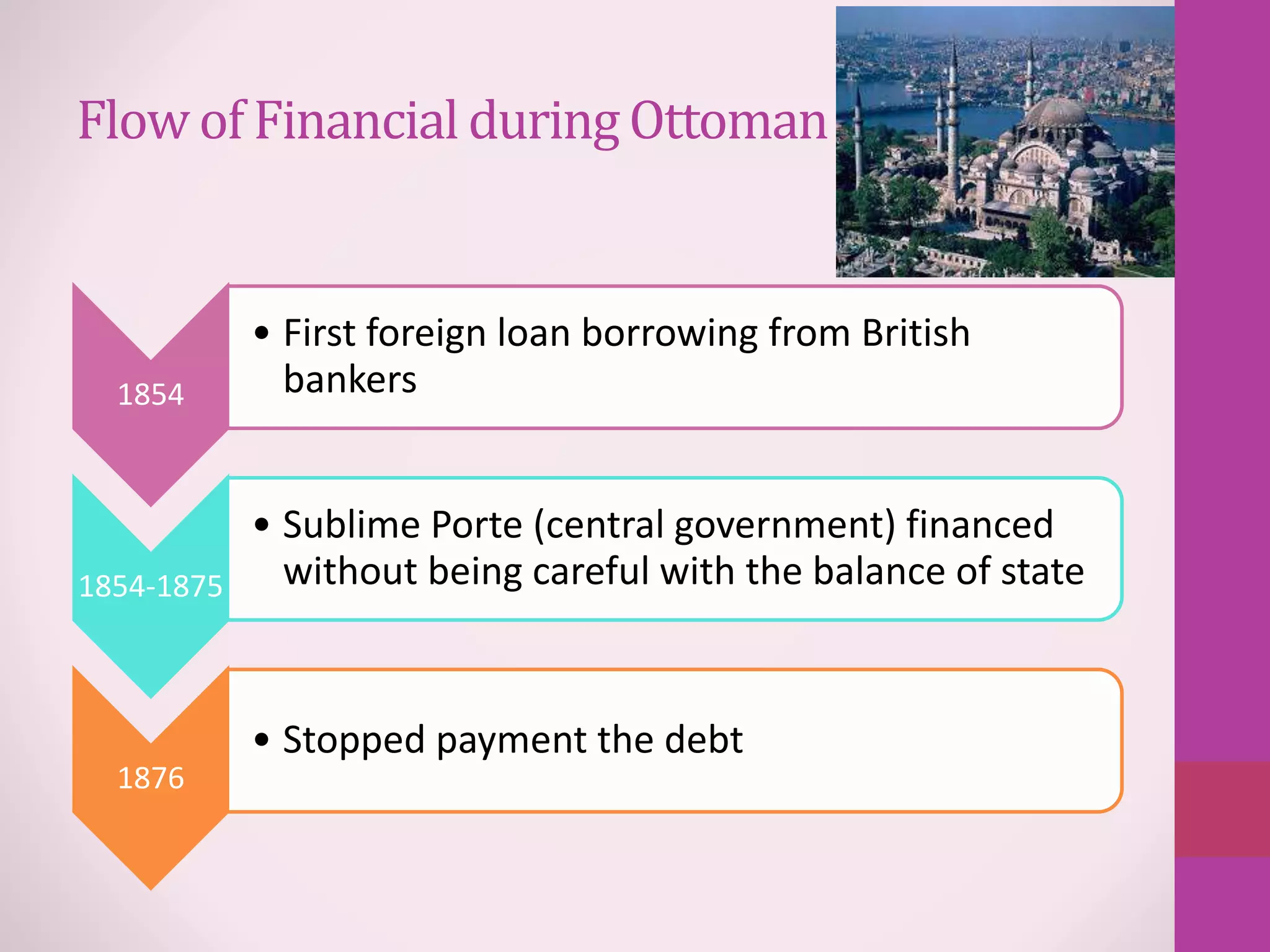
Flow of FinancialduringOttoman
1854
• First foreign loan borrowing from British
bankers
1854-1875
• Sublime Porte (central government) financed
without being careful with the balance of state
1876
• Stopped payment the debt
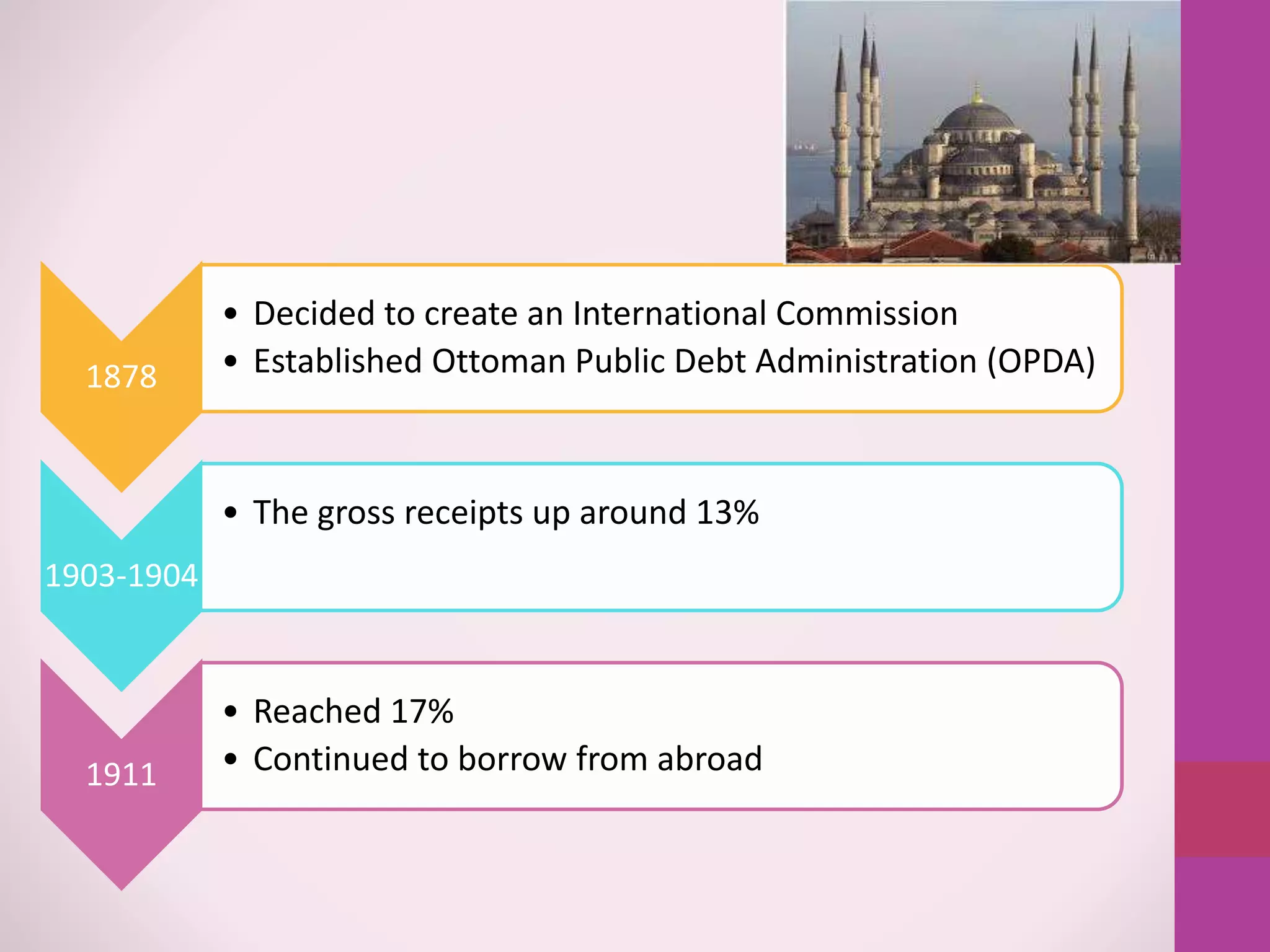
1878
• Decided to create an International Commission
• Established Ottoman Public Debt Administration (OPDA)
1903-1904
• The gross receipts up around 13%
1911
• Reached 17%
• Continued to borrow from abroad
Conclusion
Managing
sources and
expense
Public
development
Eradication
of poor

The role of state during caliph and ottoman

  • 1.
    The Role ofstate during Caliph Era and Ottoman Empire PRESENTED BY: NOR HAFIZAH BINTI SAMANAL MASTER OF ISLAMIC BANKING AND FINANCE
  • 2.
    Understanding the roleof state in public economy Understand the development of public finance. Realize the history of public finance during Caliph Era and Ottoman Empire Learning Outcome
  • 3.
  • 4.
    The Role ofState Role of State Managing the Finance Maintain Justice Distribute equally to poor Improving welfare
  • 5.
    History of PublicFinance Abu Bakar As-siddiq (632-634 C) Umar Al- Khattab (634-644 A.C) Uthman Bin Affan (644-645 A.C) Ali bin Abi Talib (656-661 A.C)
  • 6.
    Abu Bakar As-siddiq(632-634c) • Abu Bakar is Abdullah Ibn Abu Quhafah al- Tamimi • His management is just for two year • Source of revenue which are zakat, ushr, kharaj, jiziyyah and fay’ • Other revenue include gold, silver, metal. • He is the greatest people in managing economy organization in Islamic state.
  • 7.
    Umar Al-Khattab (634-644A.C) • Second Caliph in Islamic state • He instituted two taxes, the kharaj and jizyah. • He conquered Damascus in 635 and Jerusalem in 637, both from Syria in the Byzantine Empire. • Umar bin Al- Khattab decided to establish Baitul Mal as Central of Treasury • He appointed Abdullah bin Arqam as the officer of Treasury and Abdur Rahman as assistant
  • 8.
    Uthman bin Affan(644-645 A.C) • Longest period in management during his management. • There are some resources of the state which are Zakat, Ushr’, Kharaj, Jizyah, Fay’ and Ghanimah. • He said that zakat are only able to pay after the payer deducted all their debt. • He also divided soil of the state to individual until the income received is from 5 million up to 41 million dirham
  • 9.
    Ali bin AbiTalib • Manages the administration of baitul-mal in the state with smooth management • Caliph Ali used the principle of fairness. • The fund from baitul-mal should distributed to all Muslim without see their background. • Implementation taxation which the system where must be able and willing to pay the taxes based on their ability. • He always care and aware about people who is in need like widow and orphans.
  • 10.
  • 11.
    Flow of FinancialduringOttoman 1854 •First foreign loan borrowing from British bankers 1854-1875 • Sublime Porte (central government) financed without being careful with the balance of state 1876 • Stopped payment the debt
  • 12.
    1878 • Decided tocreate an International Commission • Established Ottoman Public Debt Administration (OPDA) 1903-1904 • The gross receipts up around 13% 1911 • Reached 17% • Continued to borrow from abroad
  • 13.