
By Motaz ibrahim
R&D comitte
Aapg sc su
 Communication is simply the act of transferring






information from one place to another , this could be:
vocally (using voice).
written (using printed or digital media such as books,
magazines, websites or emails)
visually (using logos, maps, charts or graphs)
non-verbally (using body language, gestures and the
tone and pitch of voice).
 Communication skills are important since they help

individuals get more inspired to work harder since
they now have a clear understanding of what is
required.
 Good communication skills also help to reduce
mistakes and misunderstandings among employees.
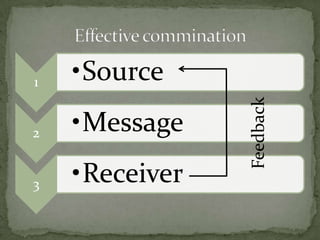
•Source

2

•Message

3

•Receiver

Feedback

1
 Communication skills : It is the individual’s skill to

communicate (ability to read, write, speak, listen , etc )
 Attitudes – The attitude towards the audience,
subject and towards one self
 Knowledge- The knowledge about the subject one is
going to communicate for
 Social system – The Social system includes the
various aspects in society like values, beliefs, culture,
religion and general understanding of society. It is
were the communication takes place
 Message is the most important element of

communication process
 Elements of the message
It includes various things like language, gestures, body
language , Sound pitch etc .
 The effective communication happen when the

receiver have all the thinks like the source.
 Listening skills is important for receiver .
 Be good listener

Listening is not the same as hearing; learn to listen not
only to the words being spoken but how they are being
spoken and the non-verbal messages sent with them.
Be Aware of Others' Emotions
 Encourage
Offer words and actions of encouragement, as well as
praise, to others. Make other people feel welcome,
wanted, valued and appreciated in your
communications. If you let others know that they are
valued, they are much more likely to give you their best
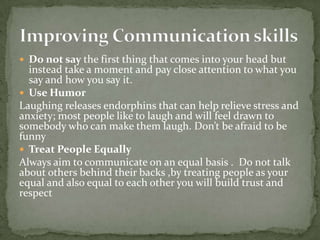
 Do not say the first thing that comes into your head but

instead take a moment and pay close attention to what you
say and how you say it.
 Use Humor
Laughing releases endorphins that can help relieve stress and
anxiety; most people like to laugh and will feel drawn to
somebody who can make them laugh. Don’t be afraid to be
funny
 Treat People Equally
Always aim to communicate on an equal basis . Do not talk
about others behind their backs ,by treating people as your
equal and also equal to each other you will build trust and
respect
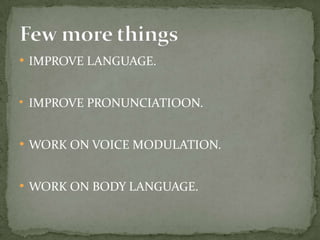
• IMPROVE LANGUAGE.
• IMPROVE PRONUNCIATIOON.

• WORK ON VOICE MODULATION.
• WORK ON BODY LANGUAGE.
•
•
•
•
•

•
•
•
•

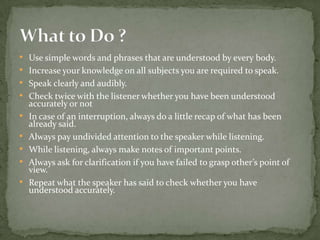
Use simple words and phrases that are understood by every body.
Increase your knowledge on all subjects you are required to speak.
Speak clearly and audibly.
Check twice with the listener whether you have been understood
accurately or not
In case of an interruption, always do a little recap of what has been
already said.
Always pay undivided attention to the speaker while listening.
While listening, always make notes of important points.
Always ask for clarification if you have failed to grasp other’s point of
view.
Repeat what the speaker has said to check whether you have
understood accurately.
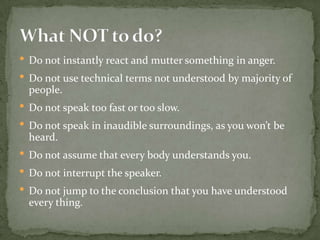
• Do not instantly react and mutter something in anger.
• Do not use technical terms not understood by majority of
people.

• Do not speak too fast or too slow.
• Do not speak in inaudible surroundings, as you won’t be
heard.

• Do not assume that every body understands you.
• Do not interrupt the speaker.
• Do not jump to the conclusion that you have understood
every thing.
Communication skills -

Communication skills -

  • 1.
    By Motaz ibrahim R&Dcomitte Aapg sc su
  • 2.
     Communication issimply the act of transferring     information from one place to another , this could be: vocally (using voice). written (using printed or digital media such as books, magazines, websites or emails) visually (using logos, maps, charts or graphs) non-verbally (using body language, gestures and the tone and pitch of voice).
  • 3.
     Communication skillsare important since they help individuals get more inspired to work harder since they now have a clear understanding of what is required.  Good communication skills also help to reduce mistakes and misunderstandings among employees.
  • 4.
  • 5.
     Communication skills: It is the individual’s skill to communicate (ability to read, write, speak, listen , etc )  Attitudes – The attitude towards the audience, subject and towards one self  Knowledge- The knowledge about the subject one is going to communicate for  Social system – The Social system includes the various aspects in society like values, beliefs, culture, religion and general understanding of society. It is were the communication takes place
  • 6.
     Message isthe most important element of communication process  Elements of the message It includes various things like language, gestures, body language , Sound pitch etc .
  • 7.
     The effectivecommunication happen when the receiver have all the thinks like the source.  Listening skills is important for receiver .
  • 8.
     Be goodlistener Listening is not the same as hearing; learn to listen not only to the words being spoken but how they are being spoken and the non-verbal messages sent with them. Be Aware of Others' Emotions  Encourage Offer words and actions of encouragement, as well as praise, to others. Make other people feel welcome, wanted, valued and appreciated in your communications. If you let others know that they are valued, they are much more likely to give you their best
  • 9.
     Do notsay the first thing that comes into your head but instead take a moment and pay close attention to what you say and how you say it.  Use Humor Laughing releases endorphins that can help relieve stress and anxiety; most people like to laugh and will feel drawn to somebody who can make them laugh. Don’t be afraid to be funny  Treat People Equally Always aim to communicate on an equal basis . Do not talk about others behind their backs ,by treating people as your equal and also equal to each other you will build trust and respect
  • 10.
    • IMPROVE LANGUAGE. •IMPROVE PRONUNCIATIOON. • WORK ON VOICE MODULATION. • WORK ON BODY LANGUAGE.
  • 11.
    • • • • • • • • • Use simple wordsand phrases that are understood by every body. Increase your knowledge on all subjects you are required to speak. Speak clearly and audibly. Check twice with the listener whether you have been understood accurately or not In case of an interruption, always do a little recap of what has been already said. Always pay undivided attention to the speaker while listening. While listening, always make notes of important points. Always ask for clarification if you have failed to grasp other’s point of view. Repeat what the speaker has said to check whether you have understood accurately.
  • 12.
    • Do notinstantly react and mutter something in anger. • Do not use technical terms not understood by majority of people. • Do not speak too fast or too slow. • Do not speak in inaudible surroundings, as you won’t be heard. • Do not assume that every body understands you. • Do not interrupt the speaker. • Do not jump to the conclusion that you have understood every thing.