• Made from Agave plant which contain pina.
• Primarily made in the city of Tequila in Jalisco,
Mexico.
• Developed in the region with volcanic soil.
• Highland agave are Large and sweet in aroma and
taste
• Lowland agave are more herbaceous fragrance and
flavor.
• Contain about 38 % alcohol. But can range between
31-55%. In U.S it must contain atleast 40% alcohol.
ORIGIN
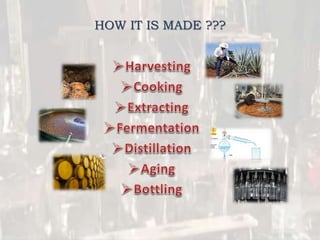
HOW IT IS MADE ???
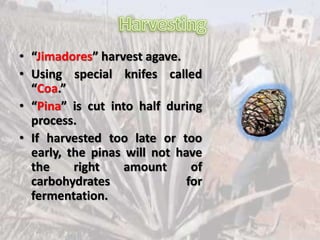
• “Jimadores” harvest agave.
• Using special knifes called
“Coa.”
• “Pina” is cut into half during
process.
• If harvested too late or too
early, the pinas will not have
the right amount of
carbohydrates for
fermentation.
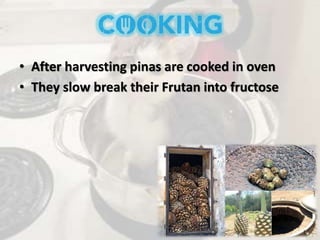
• After harvesting pinas are cooked in oven
• They slow break their Frutan into fructose
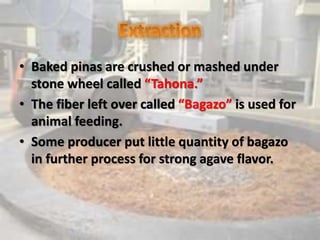
• Baked pinas are crushed or mashed under
stone wheel called “Tahona.”
• The fiber left over called “Bagazo” is used for
animal feeding.
• Some producer put little quantity of bagazo
in further process for strong agave flavor.
• Tequila is distillation, in which
ferments are separated by heat and
steam pressure within stainless steel
pot stills or distillation towers.
• While some tequilas are distilled
three times, the majority are only
distilled twice
• First distillation – For few hours –
20% Alcohol
• Second distillation – For 3-4 hours –
55% Alcohol
• Aging are French or American white oak barrels that
have previously been used to age bourbon.
• The longer the tequila ages, the more color and
tannins the final product will have.
• The condition of the barrels (such as their age,
previous use and if their interiors have been burnt or
toasted) will also affect the tequila’s taste.
• All 100% agave tequilas must be bottled in the
designated Mexican regions and must bear on their
labels “Hecho en Mexico / Made in Mexico.”
• Non-100% agave tequila, or “mixtos,” can be sold
and bottled anywhere throughout the world.
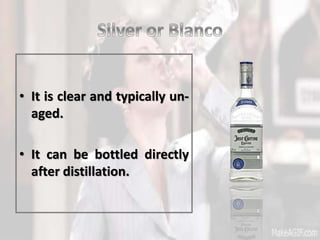
• It is clear and typically un-
aged.
• It can be bottled directly
after distillation.
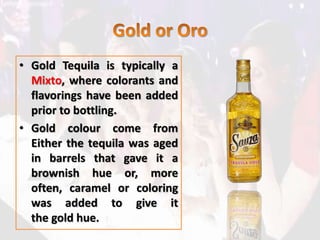
• Gold Tequila is typically a
Mixto, where colorants and
flavorings have been added
prior to bottling.
• Gold colour come from
Either the tequila was aged
in barrels that gave it a
brownish hue or, more
often, caramel or coloring
was added to give it
the gold hue.
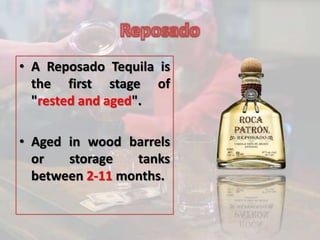
• A Reposado Tequila is
the first stage of
"rested and aged".
• Aged in wood barrels
or storage tanks
between 2-11 months.
• Aging for at least one
year
• Barrels do not exceed
600 liters.
• Darkens the Tequila to
an Amber color, and
the flavor can become
smoother, richer, and
more complex.
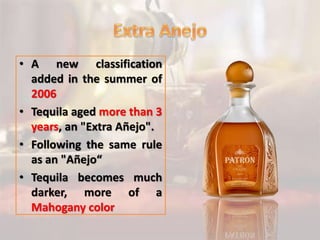
• A new classification
added in the summer of
2006
• Tequila aged more than 3
years, an "Extra Añejo".
• Following the same rule
as an "Añejo“
• Tequila becomes much
darker, more of a
Mahogany color
Presentation on Tequila

Presentation on Tequila

  • 2.
    • Made fromAgave plant which contain pina. • Primarily made in the city of Tequila in Jalisco, Mexico. • Developed in the region with volcanic soil. • Highland agave are Large and sweet in aroma and taste • Lowland agave are more herbaceous fragrance and flavor. • Contain about 38 % alcohol. But can range between 31-55%. In U.S it must contain atleast 40% alcohol.
  • 3.
  • 4.
    HOW IT ISMADE ???
  • 5.
    • “Jimadores” harvestagave. • Using special knifes called “Coa.” • “Pina” is cut into half during process. • If harvested too late or too early, the pinas will not have the right amount of carbohydrates for fermentation.
  • 6.
    • After harvestingpinas are cooked in oven • They slow break their Frutan into fructose
  • 7.
    • Baked pinasare crushed or mashed under stone wheel called “Tahona.” • The fiber left over called “Bagazo” is used for animal feeding. • Some producer put little quantity of bagazo in further process for strong agave flavor.
  • 9.
    • Tequila isdistillation, in which ferments are separated by heat and steam pressure within stainless steel pot stills or distillation towers. • While some tequilas are distilled three times, the majority are only distilled twice • First distillation – For few hours – 20% Alcohol • Second distillation – For 3-4 hours – 55% Alcohol
  • 10.
    • Aging areFrench or American white oak barrels that have previously been used to age bourbon. • The longer the tequila ages, the more color and tannins the final product will have. • The condition of the barrels (such as their age, previous use and if their interiors have been burnt or toasted) will also affect the tequila’s taste.
  • 11.
    • All 100%agave tequilas must be bottled in the designated Mexican regions and must bear on their labels “Hecho en Mexico / Made in Mexico.” • Non-100% agave tequila, or “mixtos,” can be sold and bottled anywhere throughout the world.
  • 13.
    • It isclear and typically un- aged. • It can be bottled directly after distillation.
  • 14.
    • Gold Tequilais typically a Mixto, where colorants and flavorings have been added prior to bottling. • Gold colour come from Either the tequila was aged in barrels that gave it a brownish hue or, more often, caramel or coloring was added to give it the gold hue.
  • 15.
    • A ReposadoTequila is the first stage of "rested and aged". • Aged in wood barrels or storage tanks between 2-11 months.
  • 16.
    • Aging forat least one year • Barrels do not exceed 600 liters. • Darkens the Tequila to an Amber color, and the flavor can become smoother, richer, and more complex.
  • 17.
    • A newclassification added in the summer of 2006 • Tequila aged more than 3 years, an "Extra Añejo". • Following the same rule as an "Añejo“ • Tequila becomes much darker, more of a Mahogany color