TEQUILA
Created by:
Jesus Javed Medrano - Ernesto Casillas Garcia
Rafael Rodriguez Zarate - Sebastian Solorio Diaz
INDEX
1. Introduction
1. Elaboration
1. Marketing
1. Exports
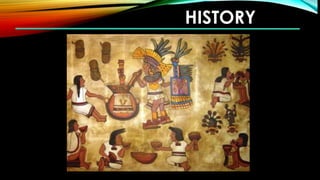
HISTORY
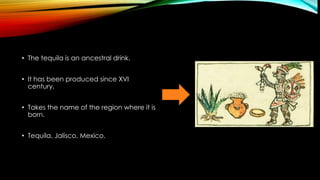
• The tequila is an ancestral drink.
• It has been produced since XVI
century.
• Takes the name of the region where it is
born.
• Tequila, Jalisco, Mexico.
WHAT DOES TEQUILA MEAN?
• It comes from Nahuatl dialect.
• Tecatli. A tool made of obsidian stones.
• Tecuilo. Person who use/work with the tecatli.
• Tecuilo sounds similar to Tequila
That’s why the place where tequila was born took that name.
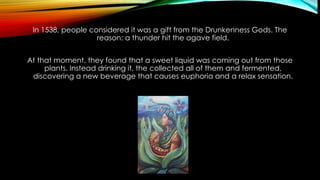
In 1538, people considered it was a gift from the Drunkenness Gods. The
reason: a thunder hit the agave field.
At that moment, they found that a sweet liquid was coming out from those
plants. Instead drinking it, the collected all of them and fermented,
discovering a new beverage that causes euphoria and a relax sensation.
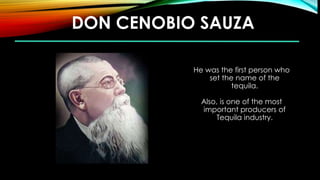
DON CENOBIO SAUZA
He was the first person who
set the name of the
tequila.
Also, is one of the most
important producers of
Tequila industry.
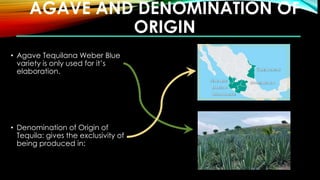
AGAVE AND DENOMINATION OF
ORIGIN
• Agave Tequilana Weber Blue
variety is only used for it’s
elaboration.
• Denomination of Origin of
Tequila: gives the exclusivity of
being produced in:
Definition
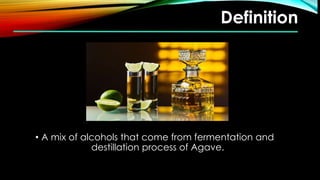
• A mix of alcohols that come from fermentation and
destillation process of Agave.
Clasification
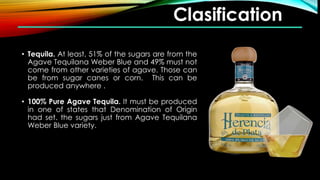
• Tequila. At least, 51% of the sugars are from the
Agave Tequilana Weber Blue and 49% must not
come from other varieties of agave. Those can
be from sugar canes or corn. This can be
produced anywhere .
• 100% Pure Agave Tequila. It must be produced
in one of states that Denomination of Origin
had set. the sugars just from Agave Tequilana
Weber Blue variety.
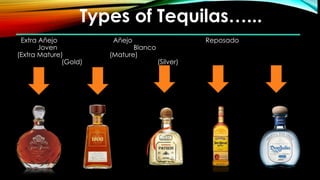
Extra Añejo Añejo Reposado
Joven Blanco
(Extra Mature) (Mature)
(Gold) (Silver)
Types of Tequilas…...
1. Extra Añejo (Extra Mature). Tequila that surpasses 3 years of maturation.
2. Añejo (Mature). This one is slighty aged.
3. Reposado. Aged in White Oaks Barrels from 2 to 12 months.
4. Joven (Gold). Mix of Silver tequila and Mature tequila.
5. Blanco (Silver). It’s the result of the 2nd destillation process.
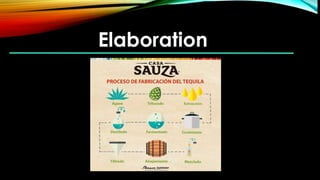
Elaboration
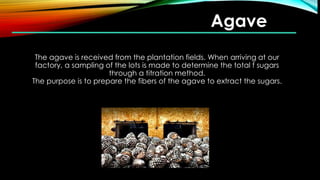
Agave
The agave is received from the plantation fields. When arriving at our
factory, a sampling of the lots is made to determine the total f sugars
through a titration method.
The purpose is to prepare the fibers of the agave to extract the sugars.
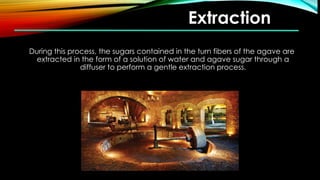
Extraction
During this process, the sugars contained in the turn fibers of the agave are
extracted in the form of a solution of water and agave sugar through a
diffuser to perform a gentle extraction process.
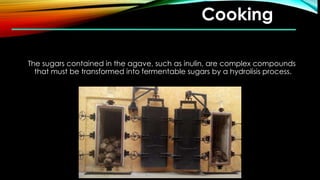
Cooking
The sugars contained in the agave, such as inulin, are complex compounds
that must be transformed into fermentable sugars by a hydrolisis process.
Fermentation
Anaerobic fermentation is carried out in stainless steel tanks using a
propietary blend of yeast and nutrients.
Destillation
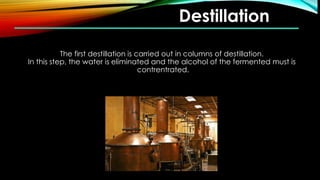
The first destillation is carried out in columns of destillation.
In this step, the water is eliminated and the alcohol of the fermented must is
contrentrated.
Filtration
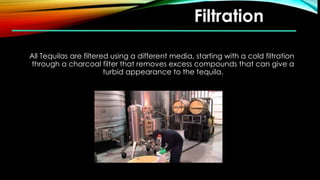
All Tequilas are filtered using a different media, starting with a cold filtration
through a charcoal filter that removes excess compounds that can give a
turbid appearance to the tequila.
Adjustment
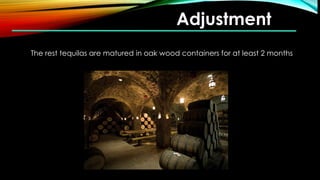
The rest tequilas are matured in oak wood containers for at least 2 months
Marketing
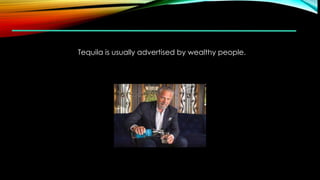
Tequila is usually advertised by wealthy people.
This doesn’t mean that young and not so rich people can also buy and
consume it.
Exports
Mexico’s excellent climate offers favorable
conditions for producing tequila year -
round. There is one month of the year the
tequila trade reaches its peak. It is in
september, due to the demand generated
during Mexican National Holidays.
Mexico’s main organizations that regulate
the exportation of tequila are:
• Tequila Regulatory Board
• Mezcal Regulatory Board
Bottled or Bulk?
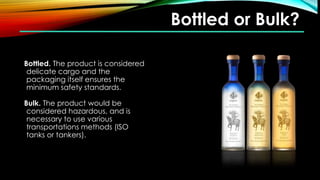
Bottled. The product is considered
delicate cargo and the
packaging itself ensures the
minimum safety standards.
Bulk. The product would be
considered hazardous, and is
necessary to use various
transportations methods (ISO
tanks or tankers).
Small or Large Quantity?
The quantity of products is crucial to ensure the success.
There are only two categories of end clients in the
tequila business, based on the size of the export: major
self-service outlets and smaller retail merchants
Large exporters. These merchants face less restrictive
standards at the destination with regards of operations,
making it easier to ship several full containers.
Small exporters. These exporters experience more
restrictions and commonly need to use multiple
shipments
Europe, the Americas or Asia?
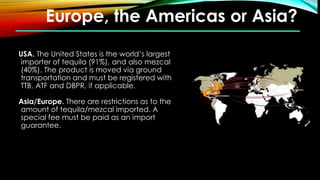
USA. The United States is the world’s largest
importer of tequila (91%), and also mezcal
(40%). The product is moved via ground
transportation and must be registered with
TTB, ATF and DBPR, if applicable.
Asia/Europe. There are restrictions as to the
amount of tequila/mezcal imported. A
special fee must be paid as an import
guarantee.
Bibliography
Proceso de Fabricación del Tequila en Casa Sauza. (18 de Octubre de 2017). Obtenido de Casa
Sauza: http://www.casasauza.com/fabricacion-tequila
Sánchez, K. (13 de Febrero de 2017). ¿Cuándo nació el tequila y desde cuándo existe?
Recuperado el 18 de Octubre de 2017, de Casa Sauza: http://www.casasauza.com/todo-sobre-
tequila/cuando-nacio-tequila-desde-cuando-existe
Una bebida llamada Tequila. (s.f.). Recuperado el 18 de Octubre de 2017, de México desconocido:
https://www.mexicodesconocido.com.mx/una-bebida-llamada-tequila.html
Considerations for exporting tequila. (14 de Septiembre de 2016). Recuperado el 2017 de
Octubre de 2017, de TIBA Mexico: http://www.tibagroup.com/mx/en/considerations-for-exporting-
tequila

Tequila

  • 1.
    TEQUILA Created by: Jesus JavedMedrano - Ernesto Casillas Garcia Rafael Rodriguez Zarate - Sebastian Solorio Diaz
  • 2.
  • 3.
  • 4.
    • The tequilais an ancestral drink. • It has been produced since XVI century. • Takes the name of the region where it is born. • Tequila, Jalisco, Mexico.
  • 5.
    WHAT DOES TEQUILAMEAN? • It comes from Nahuatl dialect. • Tecatli. A tool made of obsidian stones. • Tecuilo. Person who use/work with the tecatli. • Tecuilo sounds similar to Tequila That’s why the place where tequila was born took that name.
  • 6.
    In 1538, peopleconsidered it was a gift from the Drunkenness Gods. The reason: a thunder hit the agave field. At that moment, they found that a sweet liquid was coming out from those plants. Instead drinking it, the collected all of them and fermented, discovering a new beverage that causes euphoria and a relax sensation.
  • 7.
    DON CENOBIO SAUZA Hewas the first person who set the name of the tequila. Also, is one of the most important producers of Tequila industry.
  • 8.
    AGAVE AND DENOMINATIONOF ORIGIN • Agave Tequilana Weber Blue variety is only used for it’s elaboration. • Denomination of Origin of Tequila: gives the exclusivity of being produced in:
  • 9.
    Definition • A mixof alcohols that come from fermentation and destillation process of Agave.
  • 10.
    Clasification • Tequila. Atleast, 51% of the sugars are from the Agave Tequilana Weber Blue and 49% must not come from other varieties of agave. Those can be from sugar canes or corn. This can be produced anywhere . • 100% Pure Agave Tequila. It must be produced in one of states that Denomination of Origin had set. the sugars just from Agave Tequilana Weber Blue variety.
  • 11.
    Extra Añejo AñejoReposado Joven Blanco (Extra Mature) (Mature) (Gold) (Silver) Types of Tequilas…...
  • 12.
    1. Extra Añejo(Extra Mature). Tequila that surpasses 3 years of maturation. 2. Añejo (Mature). This one is slighty aged. 3. Reposado. Aged in White Oaks Barrels from 2 to 12 months. 4. Joven (Gold). Mix of Silver tequila and Mature tequila. 5. Blanco (Silver). It’s the result of the 2nd destillation process.
  • 13.
  • 14.
    Agave The agave isreceived from the plantation fields. When arriving at our factory, a sampling of the lots is made to determine the total f sugars through a titration method. The purpose is to prepare the fibers of the agave to extract the sugars.
  • 15.
    Extraction During this process,the sugars contained in the turn fibers of the agave are extracted in the form of a solution of water and agave sugar through a diffuser to perform a gentle extraction process.
  • 16.
    Cooking The sugars containedin the agave, such as inulin, are complex compounds that must be transformed into fermentable sugars by a hydrolisis process.
  • 17.
    Fermentation Anaerobic fermentation iscarried out in stainless steel tanks using a propietary blend of yeast and nutrients.
  • 18.
    Destillation The first destillationis carried out in columns of destillation. In this step, the water is eliminated and the alcohol of the fermented must is contrentrated.
  • 19.
    Filtration All Tequilas arefiltered using a different media, starting with a cold filtration through a charcoal filter that removes excess compounds that can give a turbid appearance to the tequila.
  • 20.
    Adjustment The rest tequilasare matured in oak wood containers for at least 2 months
  • 21.
  • 22.
    Tequila is usuallyadvertised by wealthy people.
  • 23.
    This doesn’t meanthat young and not so rich people can also buy and consume it.
  • 24.
  • 25.
    Mexico’s excellent climateoffers favorable conditions for producing tequila year - round. There is one month of the year the tequila trade reaches its peak. It is in september, due to the demand generated during Mexican National Holidays. Mexico’s main organizations that regulate the exportation of tequila are: • Tequila Regulatory Board • Mezcal Regulatory Board
  • 26.
    Bottled or Bulk? Bottled.The product is considered delicate cargo and the packaging itself ensures the minimum safety standards. Bulk. The product would be considered hazardous, and is necessary to use various transportations methods (ISO tanks or tankers).
  • 27.
    Small or LargeQuantity? The quantity of products is crucial to ensure the success. There are only two categories of end clients in the tequila business, based on the size of the export: major self-service outlets and smaller retail merchants Large exporters. These merchants face less restrictive standards at the destination with regards of operations, making it easier to ship several full containers. Small exporters. These exporters experience more restrictions and commonly need to use multiple shipments
  • 28.
    Europe, the Americasor Asia? USA. The United States is the world’s largest importer of tequila (91%), and also mezcal (40%). The product is moved via ground transportation and must be registered with TTB, ATF and DBPR, if applicable. Asia/Europe. There are restrictions as to the amount of tequila/mezcal imported. A special fee must be paid as an import guarantee.
  • 29.
    Bibliography Proceso de Fabricacióndel Tequila en Casa Sauza. (18 de Octubre de 2017). Obtenido de Casa Sauza: http://www.casasauza.com/fabricacion-tequila Sánchez, K. (13 de Febrero de 2017). ¿Cuándo nació el tequila y desde cuándo existe? Recuperado el 18 de Octubre de 2017, de Casa Sauza: http://www.casasauza.com/todo-sobre- tequila/cuando-nacio-tequila-desde-cuando-existe Una bebida llamada Tequila. (s.f.). Recuperado el 18 de Octubre de 2017, de México desconocido: https://www.mexicodesconocido.com.mx/una-bebida-llamada-tequila.html Considerations for exporting tequila. (14 de Septiembre de 2016). Recuperado el 2017 de Octubre de 2017, de TIBA Mexico: http://www.tibagroup.com/mx/en/considerations-for-exporting- tequila