DFLP 2008 CREATING DIGITAL AUDIO July 2008 Otago Polytechnic Dunedin [email_address]
Audio content . . .   when designing course delivery, educational resources and assessment schedules using audio can enhance interaction, increase level of participation, foster individualism by valuing diversity.
In formal educational environments learning  aurally  can be overlooked  as an enabling and maximal experience for learners with diverse needs and individual learning styles. Increasing and varying formal learning experiences  within  specific learning context s can help with uptake and assimilation of information and have specific advantages for students with disabilities or literacy needs.
This “participatory culture of learner generated curriculum and content"
The subject area Digital media can now be created by learners and published or shared across public social networks.  The use digital audio with in combination other media can be a creatively rewarding process that can produce great results.
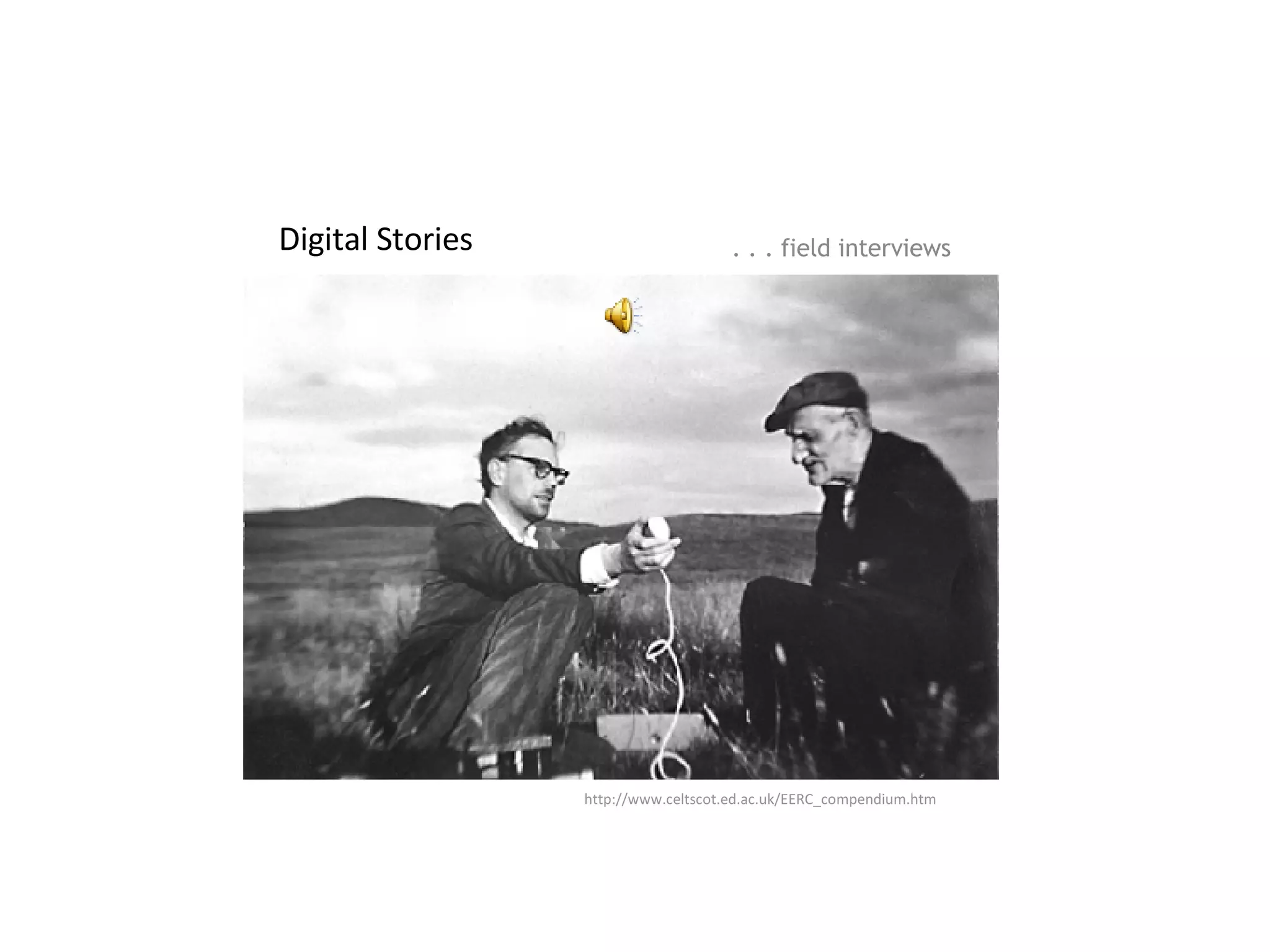
Digital Stories http://www.celtscot.ed.ac.uk/EERC_compendium.htm . . . field interviews
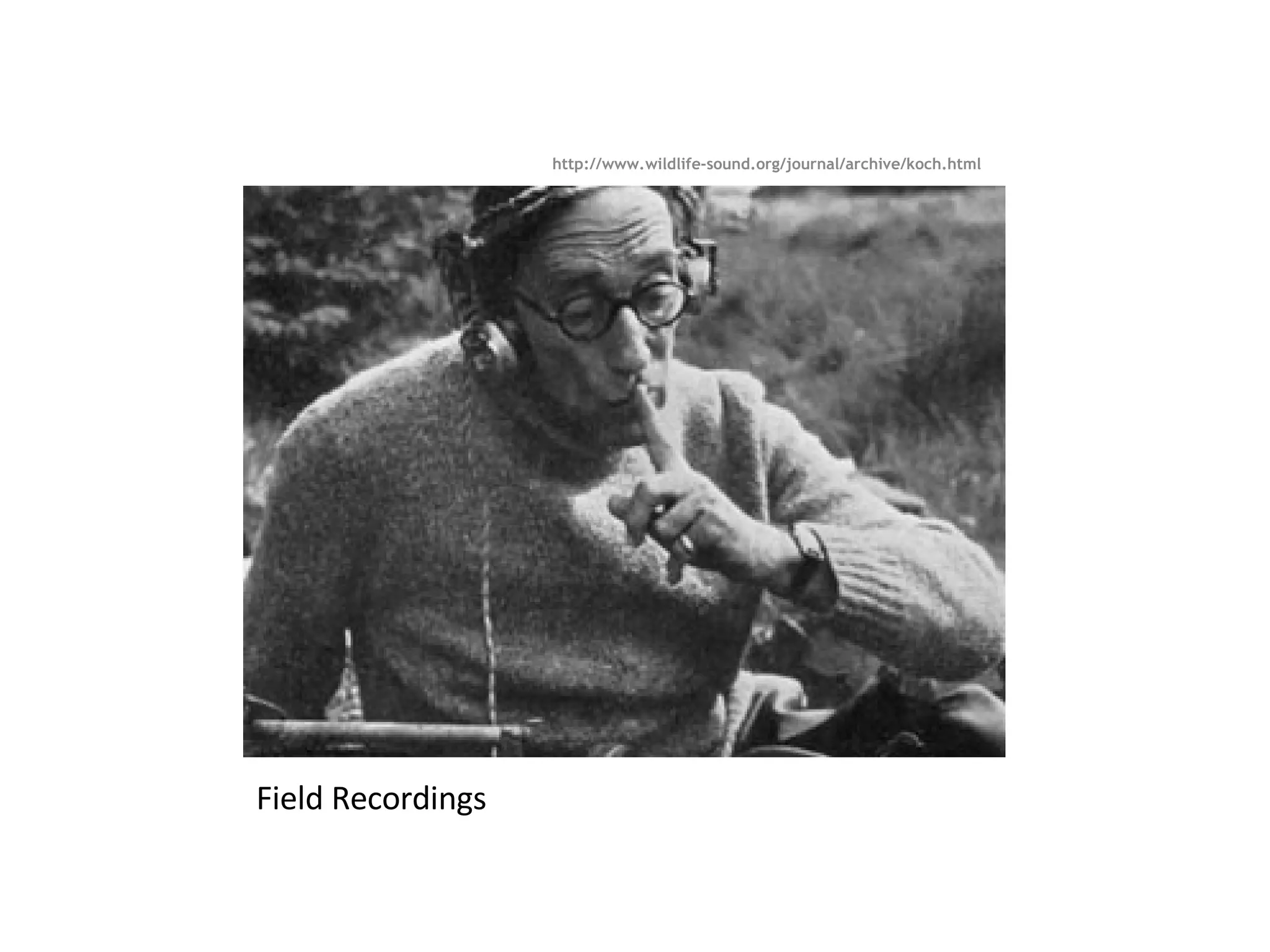
Field Recordings   http://www.wildlife-sound.org/journal/archive/koch.html
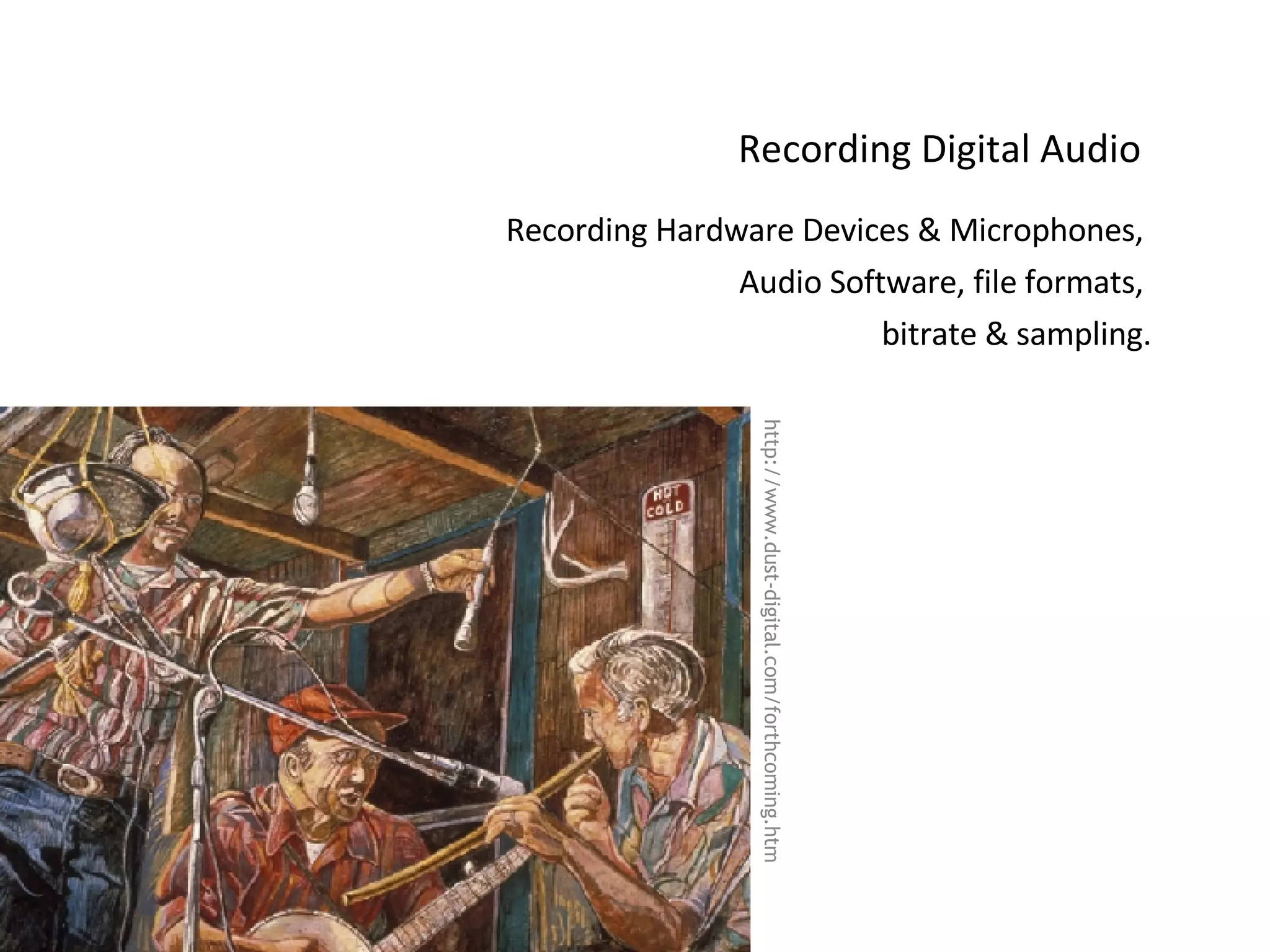
Recording Digital Audio Recording Hardware Devices & Microphones,  Audio Software, file formats,  bitrate & sampling. http://www.dust-digital.com/forthcoming.htm
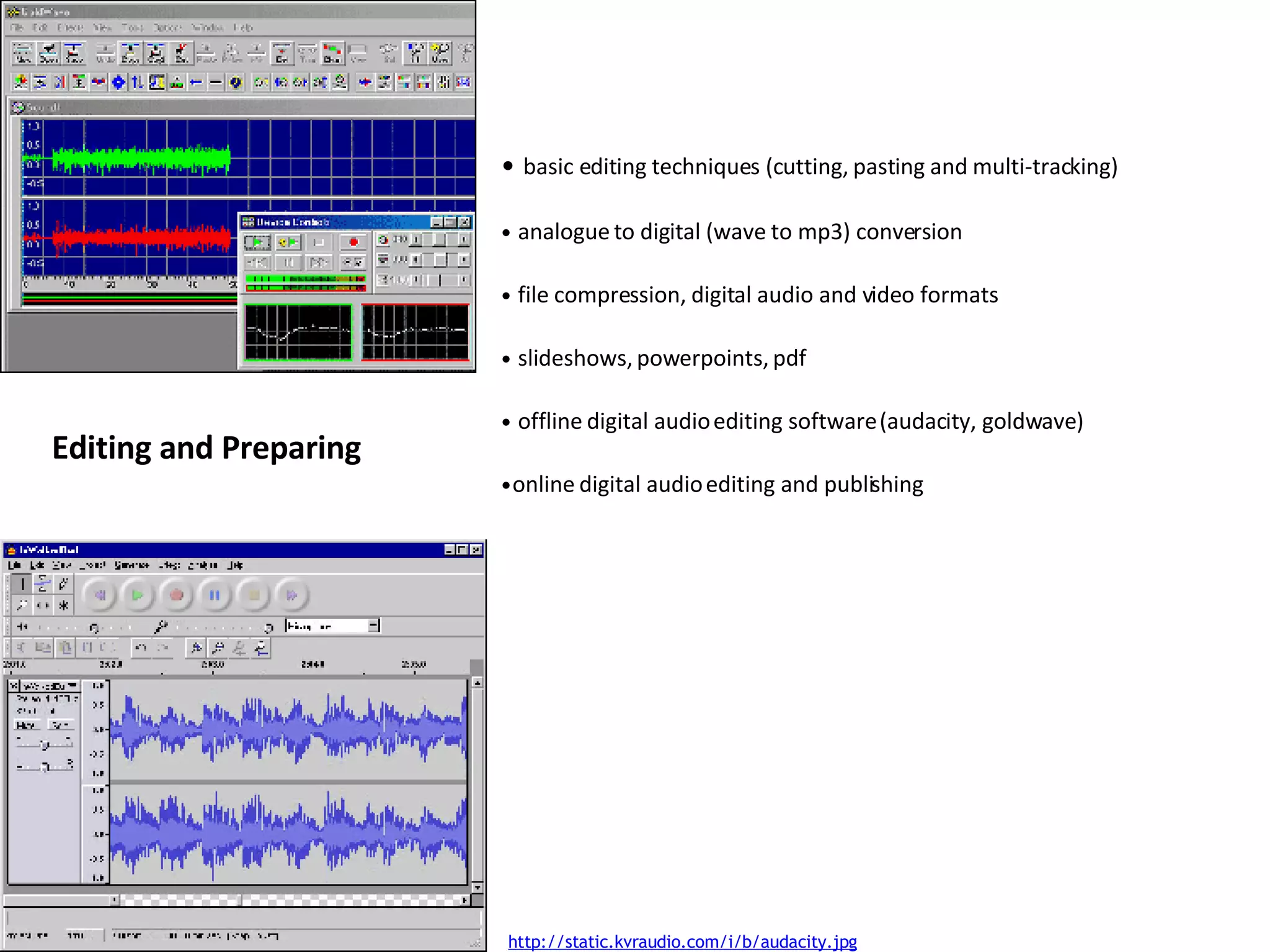
Editing and Preparing basic editing techniques (cutting, pasting and multi-tracking) analogue to digital (wave to mp3) conversion  file compression, digital audio and video formats  slideshows, powerpoints, pdf offline digital audio editing software (audacity, goldwave) online digital audio editing and publishing http://static.kvraudio.com/i/b/audacity.jpg
Publishing audio archiving open source audio with  creative commons license sharing and reusing audio with creative commons attribution rss feeds ( podcasting ) Archiving & linkng, embedding audio,
Social networks Weblogs &   wikispaces wikiversity- wikieducator Open educational resources myspace
...we will continue to develop our courses for flexible delivery to facilitate learning in regional centres, in workplaces and in people’s homes (Otago Polytechnic Charter 2007 p.9). Flexible learning design for a digital audio course
Open educational resources There is a recognised need for greater flexibility in curriculum and distributed methods of delivery beyond the limitations of a closed Learning Management environment posed a strategic challenge to the Otago Polytechnic.
This Flexible strategy d emonstrates flexible features related to  Time:  Content:  Entry requirements:  Instructional approach: Resources and delivery:
Flexible Learning Objectives Flexiblity related to time: starting and finishing course.  Offering this course online would mean variable start and finish dates, pace, submitting assignments and feedback.
Flexiblity related to  content: Flexibility related to  access : Flexibility related to  delivery:   Flexiblity related to  instruction: Methodologies include Universal and Self-instructional design
Flexible Design Analysis  Access and equity: Resource student technical training and promote peer support  formal and informal participation in course that provide alternative ways to approach and present content  acknowledge if these times and course assessment may extend beyond that estimated. Disability
Cultural diversity curriculum justification of flexible learning issues Identify learner strengths as an individual and in a collaborative group dynamic Identify and gather evidence about areas to offer advice about ways to improve student and course outcomes
Objectives   1. invite both individual and collaborative projects. 2. promote a design for a blended delivery of online and face to face. 3. direct participants through activities handbook that uses a wiki to present the questions and activities. .
Develop facilities and systems which support flexible teaching, learning and work practices. Reuse and fair use of open educational resources and use of technology by facilitating ways of  learning that are self-replicating and sustainable.  Otago Polytechnics  priorities
Student  retention S uccess and satisfaction levels, self-efficacy indicators.  Informal and formal assessment along with  satisfaction surveys on the course and  tutors and measuring course qualifications against others for external validation.  Media Support and Consultation  Indicate the types of services which already exist that compliment and/or compete with this course
Economic sustainability Develop more flexible pathways and learning opportunities for learners, including learning in the workplace Connectivity utilise connectivity technological fluency and, self-efficacy. Practice makes perfect but what else leads to a realistic  balance  of content versus process while still maximising successive success .
Support  Create an outstanding experience for learners in a supportive, inspiring and stimulating environment.   Community  A network focused on the collaborative development of open educational resources fosters partnerships for developing learning materials and extending their use to others.
Ha ha ha ha ha
Tail wagging the dog
 

Presentation Of Dflp

  • 1.
    DFLP 2008 CREATINGDIGITAL AUDIO July 2008 Otago Polytechnic Dunedin [email_address]
  • 2.
    Audio content .. . when designing course delivery, educational resources and assessment schedules using audio can enhance interaction, increase level of participation, foster individualism by valuing diversity.
  • 3.
    In formal educationalenvironments learning aurally can be overlooked as an enabling and maximal experience for learners with diverse needs and individual learning styles. Increasing and varying formal learning experiences within specific learning context s can help with uptake and assimilation of information and have specific advantages for students with disabilities or literacy needs.
  • 4.
    This “participatory cultureof learner generated curriculum and content"
  • 5.
    The subject areaDigital media can now be created by learners and published or shared across public social networks. The use digital audio with in combination other media can be a creatively rewarding process that can produce great results.
  • 6.
  • 7.
    Field Recordings  http://www.wildlife-sound.org/journal/archive/koch.html
  • 8.
    Recording Digital AudioRecording Hardware Devices & Microphones, Audio Software, file formats, bitrate & sampling. http://www.dust-digital.com/forthcoming.htm
  • 9.
    Editing and Preparingbasic editing techniques (cutting, pasting and multi-tracking) analogue to digital (wave to mp3) conversion file compression, digital audio and video formats slideshows, powerpoints, pdf offline digital audio editing software (audacity, goldwave) online digital audio editing and publishing http://static.kvraudio.com/i/b/audacity.jpg
  • 10.
    Publishing audio archivingopen source audio with creative commons license sharing and reusing audio with creative commons attribution rss feeds ( podcasting ) Archiving & linkng, embedding audio,
  • 11.
    Social networks Weblogs& wikispaces wikiversity- wikieducator Open educational resources myspace
  • 12.
    ...we will continueto develop our courses for flexible delivery to facilitate learning in regional centres, in workplaces and in people’s homes (Otago Polytechnic Charter 2007 p.9). Flexible learning design for a digital audio course
  • 13.
    Open educational resourcesThere is a recognised need for greater flexibility in curriculum and distributed methods of delivery beyond the limitations of a closed Learning Management environment posed a strategic challenge to the Otago Polytechnic.
  • 14.
    This Flexible strategyd emonstrates flexible features related to Time: Content: Entry requirements: Instructional approach: Resources and delivery:
  • 15.
    Flexible Learning ObjectivesFlexiblity related to time: starting and finishing course. Offering this course online would mean variable start and finish dates, pace, submitting assignments and feedback.
  • 16.
    Flexiblity related to content: Flexibility related to access : Flexibility related to delivery: Flexiblity related to instruction: Methodologies include Universal and Self-instructional design
  • 17.
    Flexible Design Analysis Access and equity: Resource student technical training and promote peer support formal and informal participation in course that provide alternative ways to approach and present content acknowledge if these times and course assessment may extend beyond that estimated. Disability
  • 18.
    Cultural diversity curriculumjustification of flexible learning issues Identify learner strengths as an individual and in a collaborative group dynamic Identify and gather evidence about areas to offer advice about ways to improve student and course outcomes
  • 19.
    Objectives 1. invite both individual and collaborative projects. 2. promote a design for a blended delivery of online and face to face. 3. direct participants through activities handbook that uses a wiki to present the questions and activities. .
  • 20.
    Develop facilities andsystems which support flexible teaching, learning and work practices. Reuse and fair use of open educational resources and use of technology by facilitating ways of learning that are self-replicating and sustainable. Otago Polytechnics priorities
  • 21.
    Student retentionS uccess and satisfaction levels, self-efficacy indicators. Informal and formal assessment along with satisfaction surveys on the course and tutors and measuring course qualifications against others for external validation. Media Support and Consultation Indicate the types of services which already exist that compliment and/or compete with this course
  • 22.
    Economic sustainability Developmore flexible pathways and learning opportunities for learners, including learning in the workplace Connectivity utilise connectivity technological fluency and, self-efficacy. Practice makes perfect but what else leads to a realistic balance of content versus process while still maximising successive success .
  • 23.
    Support Createan outstanding experience for learners in a supportive, inspiring and stimulating environment. Community A network focused on the collaborative development of open educational resources fosters partnerships for developing learning materials and extending their use to others.
  • 24.
    Ha ha haha ha
  • 25.
  • 26.