Agritourism product principles
Agritourism is tourism that:
1) includes an agricultural based activity that will attract
visitors to a farm
2) contains the opportunity to meet farmers and to know
how food is produced
3) involves visitors actively in farming and/or rural life
Steps in planning & development
1) THINK
 concept, “master-product”, planning, research
2) MAKE
 product development, training, organization
3) DO
 executing, day-to-day management, marketing
4) GROW
 adding new products, innovation, consolidation
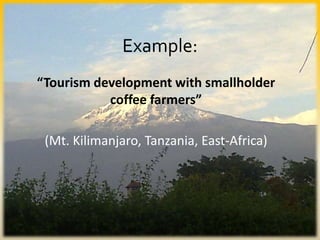
Example:
“Tourism development with smallholder
coffee farmers”
(Mt. Kilimanjaro, Tanzania, East-Africa)
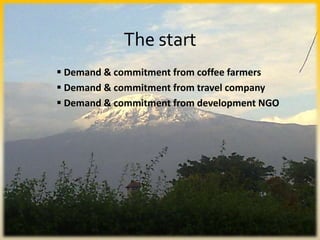
 Demand & commitment from coffee farmers
 Demand & commitment from travel company
 Demand & commitment from development NGO
The start
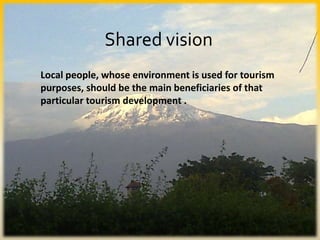
Local people, whose environment is used for tourism
purposes, should be the main beneficiaries of that
particular tourism development .
Shared vision
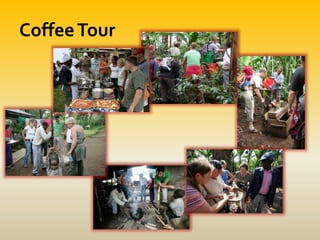
CoffeeTour
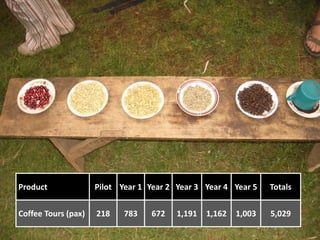
Product Pilot Year 1 Year 2 Year 3 Year 4 Year 5 Totals
Coffee Tours (pax) 218 783 672 1,191 1,162 1,003 5,029
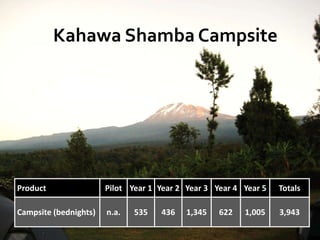
Kahawa Shamba Campsite
Product Pilot Year 1 Year 2 Year 3 Year 4 Year 5 Totals
Campsite (bednights) n.a. 535 436 1,345 622 1,005 3,943
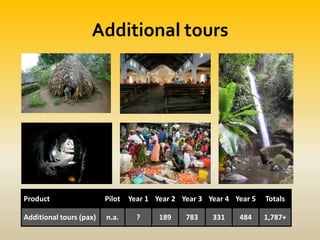
Additional tours
Product Pilot Year 1 Year 2 Year 3 Year 4 Year 5 Totals
Additional tours (pax) n.a. ? 189 783 331 484 1,787+
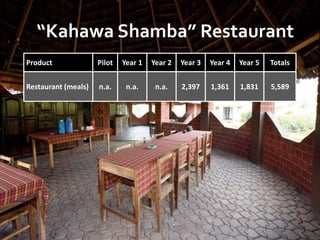
“Kahawa Shamba” Restaurant
Product Pilot Year 1 Year 2 Year 3 Year 4 Year 5 Totals
Restaurant (meals) n.a. n.a. n.a. 2,397 1,361 1,831 5,589
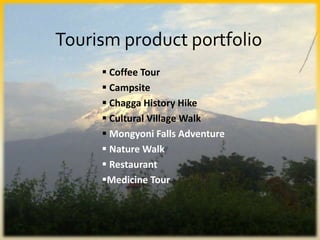
Tourism product portfolio
 Coffee Tour
 Campsite
 Chagga History Hike
 Cultural Village Walk
 Mongyoni Falls Adventure
 Nature Walk
 Restaurant
Medicine Tour
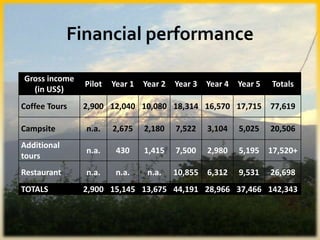
Financial performance
Gross income
(in US$)
Pilot Year 1 Year 2 Year 3 Year 4 Year 5 Totals
Coffee Tours 2,900 12,040 10,080 18,314 16,570 17,715 77,619
Campsite n.a. 2,675 2,180 7,522 3,104 5,025 20,506
Additional
tours
n.a. 430 1,415 7,500 2,980 5,195 17,520+
Restaurant n.a. n.a. n.a. 10,855 6,312 9,531 26,698
TOTALS 2,900 15,145 13,675 44,191 28,966 37,466 142,343
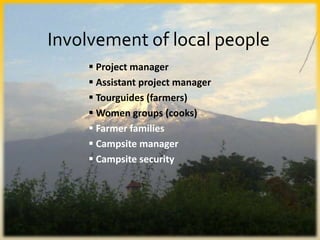
 Project manager
 Assistant project manager
 Tourguides (farmers)
 Women groups (cooks)
 Farmer families
 Campsite manager
 Campsite security
Involvement of local people
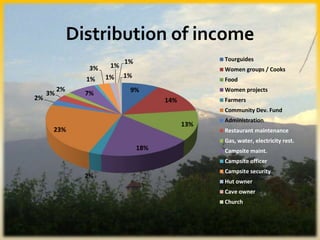
Distribution of income
9%
14%
13%
18%
2%
23%
2%
3%
2%
7%
1%
3%
1%
1%
1%
1%
Tourguides
Women groups / Cooks
Food
Women projects
Farmers
Community Dev. Fund
Administration
Restaurant maintenance
Gas, water, electricity rest.
Campsite maint.
Campsite officer
Campsite security
Hut owner
Cave owner
Church

Presentation Agri-Tourism example

  • 1.
    Agritourism product principles Agritourismis tourism that: 1) includes an agricultural based activity that will attract visitors to a farm 2) contains the opportunity to meet farmers and to know how food is produced 3) involves visitors actively in farming and/or rural life
  • 2.
    Steps in planning& development 1) THINK  concept, “master-product”, planning, research 2) MAKE  product development, training, organization 3) DO  executing, day-to-day management, marketing 4) GROW  adding new products, innovation, consolidation
  • 3.
    Example: “Tourism development withsmallholder coffee farmers” (Mt. Kilimanjaro, Tanzania, East-Africa)
  • 4.
     Demand &commitment from coffee farmers  Demand & commitment from travel company  Demand & commitment from development NGO The start
  • 5.
    Local people, whoseenvironment is used for tourism purposes, should be the main beneficiaries of that particular tourism development . Shared vision
  • 6.
  • 7.
    Product Pilot Year1 Year 2 Year 3 Year 4 Year 5 Totals Coffee Tours (pax) 218 783 672 1,191 1,162 1,003 5,029
  • 8.
    Kahawa Shamba Campsite ProductPilot Year 1 Year 2 Year 3 Year 4 Year 5 Totals Campsite (bednights) n.a. 535 436 1,345 622 1,005 3,943
  • 9.
    Additional tours Product PilotYear 1 Year 2 Year 3 Year 4 Year 5 Totals Additional tours (pax) n.a. ? 189 783 331 484 1,787+
  • 10.
    “Kahawa Shamba” Restaurant ProductPilot Year 1 Year 2 Year 3 Year 4 Year 5 Totals Restaurant (meals) n.a. n.a. n.a. 2,397 1,361 1,831 5,589
  • 11.
    Tourism product portfolio Coffee Tour  Campsite  Chagga History Hike  Cultural Village Walk  Mongyoni Falls Adventure  Nature Walk  Restaurant Medicine Tour
  • 12.
    Financial performance Gross income (inUS$) Pilot Year 1 Year 2 Year 3 Year 4 Year 5 Totals Coffee Tours 2,900 12,040 10,080 18,314 16,570 17,715 77,619 Campsite n.a. 2,675 2,180 7,522 3,104 5,025 20,506 Additional tours n.a. 430 1,415 7,500 2,980 5,195 17,520+ Restaurant n.a. n.a. n.a. 10,855 6,312 9,531 26,698 TOTALS 2,900 15,145 13,675 44,191 28,966 37,466 142,343
  • 13.
     Project manager Assistant project manager  Tourguides (farmers)  Women groups (cooks)  Farmer families  Campsite manager  Campsite security Involvement of local people
  • 14.
    Distribution of income 9% 14% 13% 18% 2% 23% 2% 3% 2% 7% 1% 3% 1% 1% 1% 1% Tourguides Womengroups / Cooks Food Women projects Farmers Community Dev. Fund Administration Restaurant maintenance Gas, water, electricity rest. Campsite maint. Campsite officer Campsite security Hut owner Cave owner Church

Editor's Notes

  • #4 Short introduction about Wageningen and Contour Projects
  • #5 Short introduction about Wageningen and Contour Projects
  • #6 Short introduction about Wageningen and Contour Projects
  • #12 Short introduction about Wageningen and Contour Projects
  • #13 Short introduction about Wageningen and Contour Projects
  • #14 Short introduction about Wageningen and Contour Projects
  • #15 Short introduction about Wageningen and Contour Projects