Innovative Learning
Environment (ILE)
and
Teachers’ Professional
Identity
MORE OR LESS
Being a teacher
in
the current learning environment
a relevant one
Ardian Wahyu Setiawan
Senior Editor and Manager - Prosemantic.com
Dosen – ESP (Engineering – Mechatronics and Machine Maintenance)
Program Director - SiNERGI Youth Empowerment
Founder Englishrep.net - a collaboratively built database of English
Resources
Culturaldictionary.org - Australian Cultural Dictionary
Universitas Negeri Malang (Beasiswa Gudang Garam)
Monash University (Australian Development Scholarship)
The University of Adelaide (Adelaide Scholarship International)
www.penaklausa.wordpress.com
TEACHING PROFESSION
UU Guru dan Dosen No. 14 Tahun 2005
Professional Educators (teachers and lecturers)
Professional Qualifications - S1/S2/S3/Spesialist
TECHNOLOGY
* More about technology? Click HERE
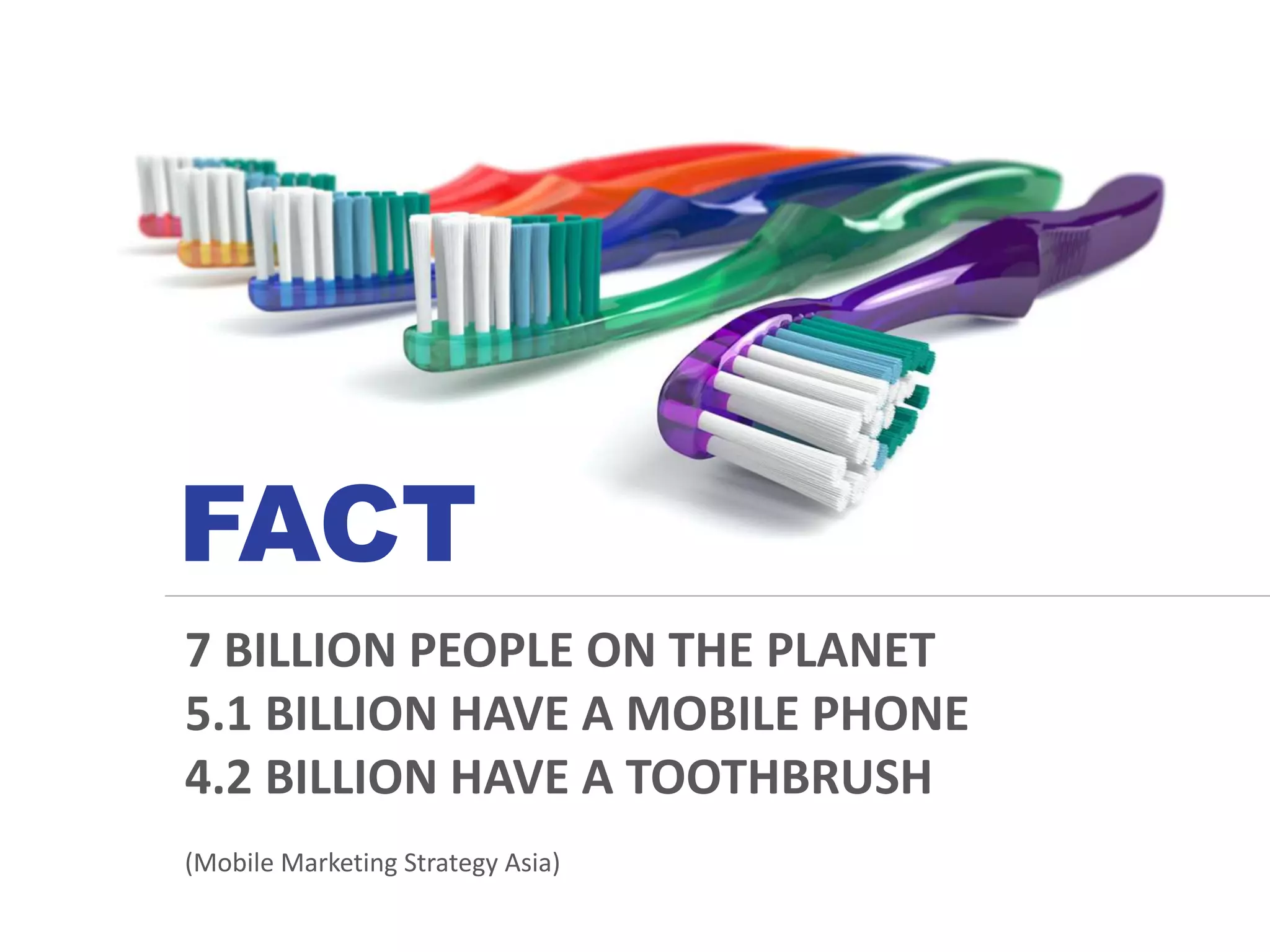
FACT
7 BILLION PEOPLE ON THE PLANET
5.1 BILLION HAVE A MOBILE PHONE
4.2 BILLION HAVE A TOOTHBRUSH
(Mobile Marketing Strategy Asia)
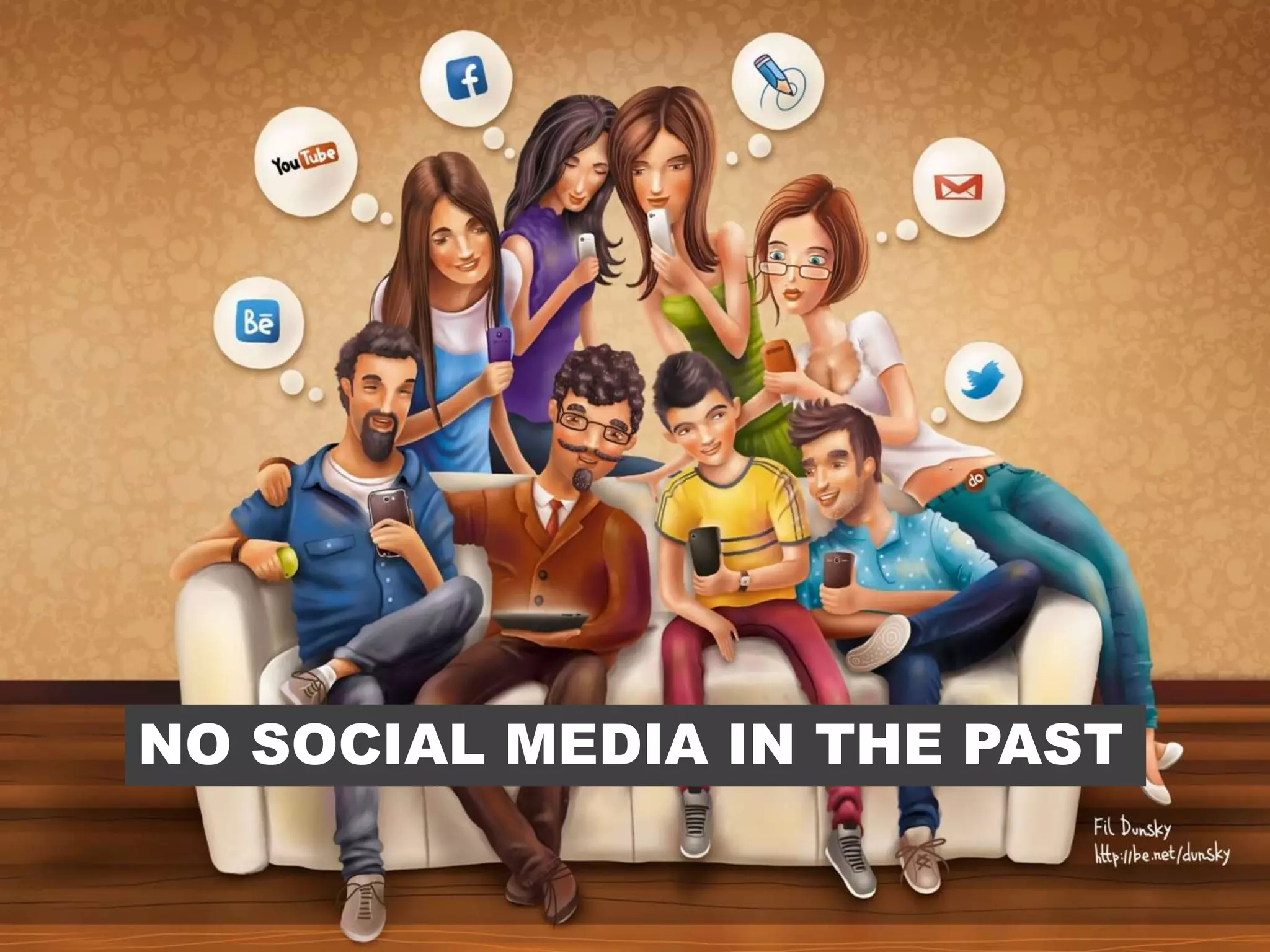
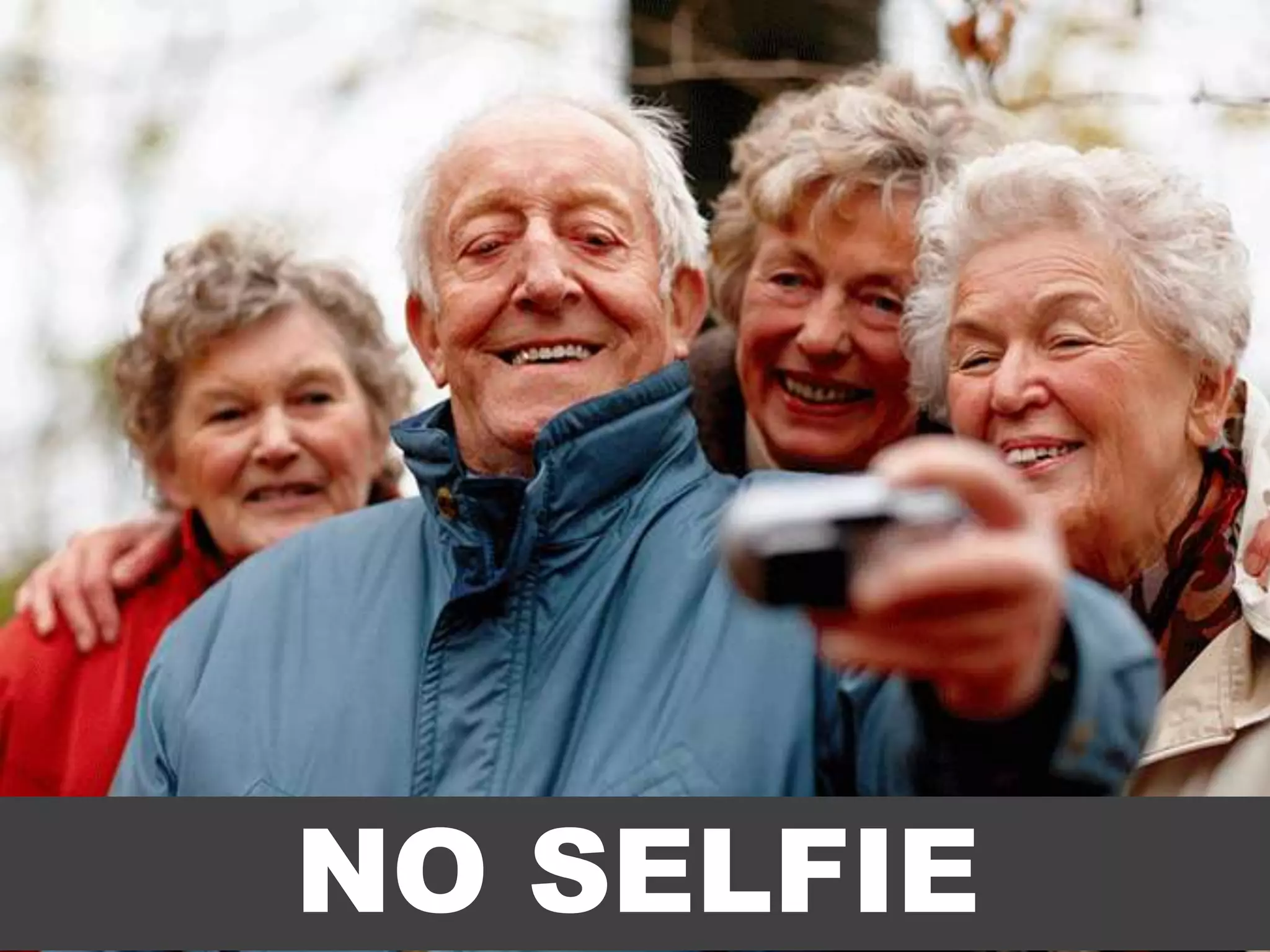
NO SOCIAL MEDIA IN THE PAST
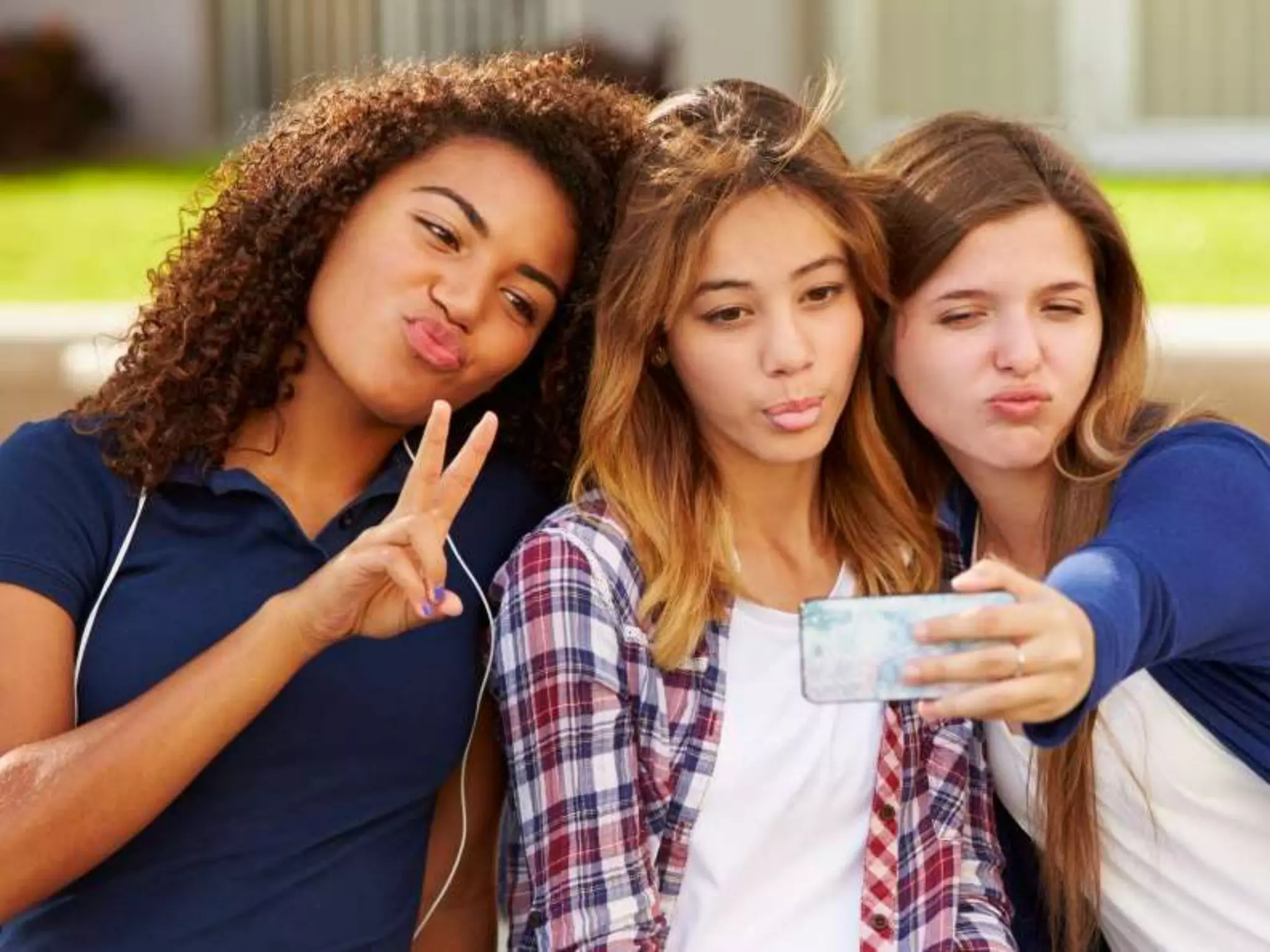
NO SELFIE
TECHNOLOGY
HAS SHAPED OUR SOCIAL ENVIRONMENT
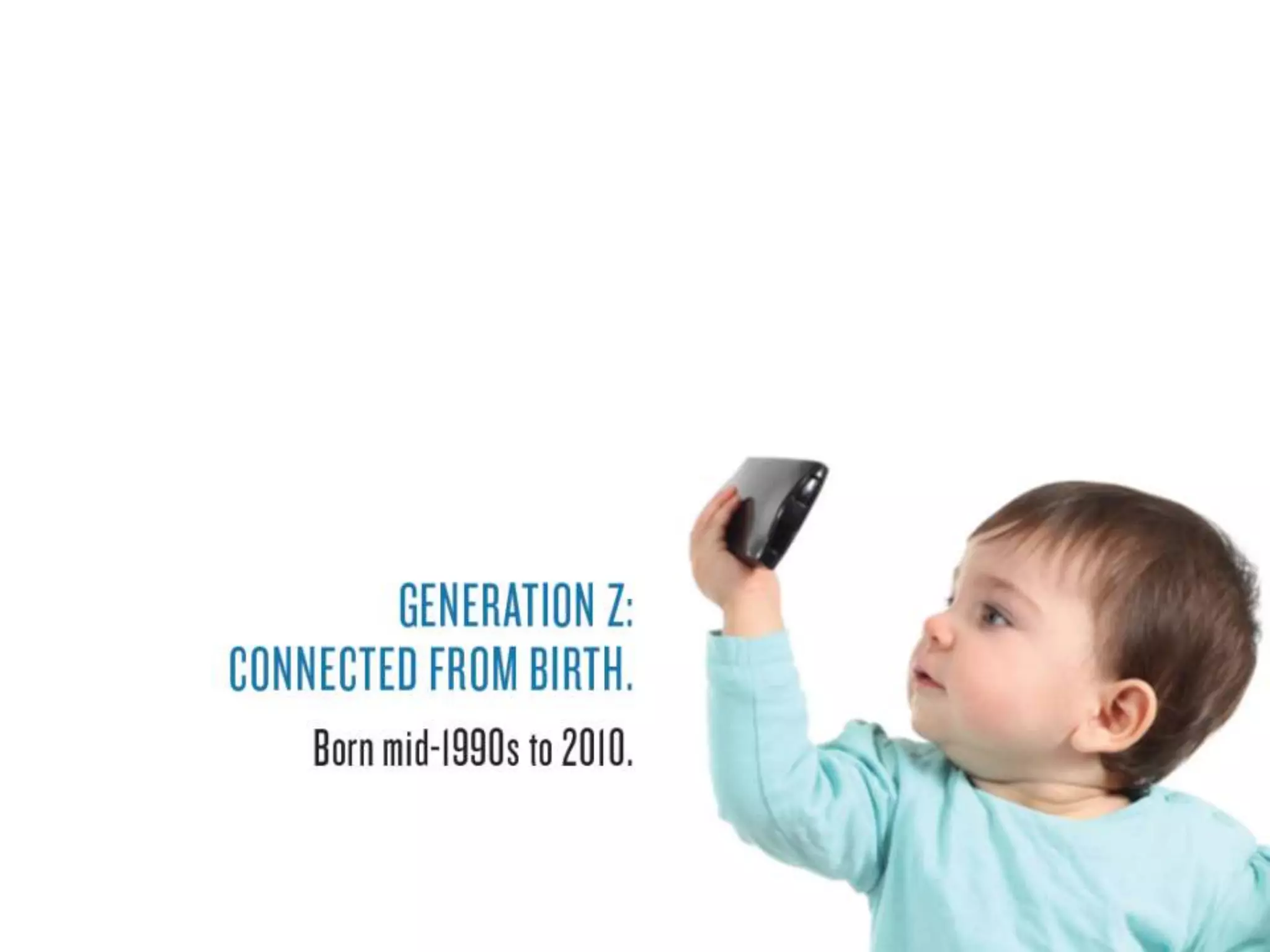
OUR GENERATIONS
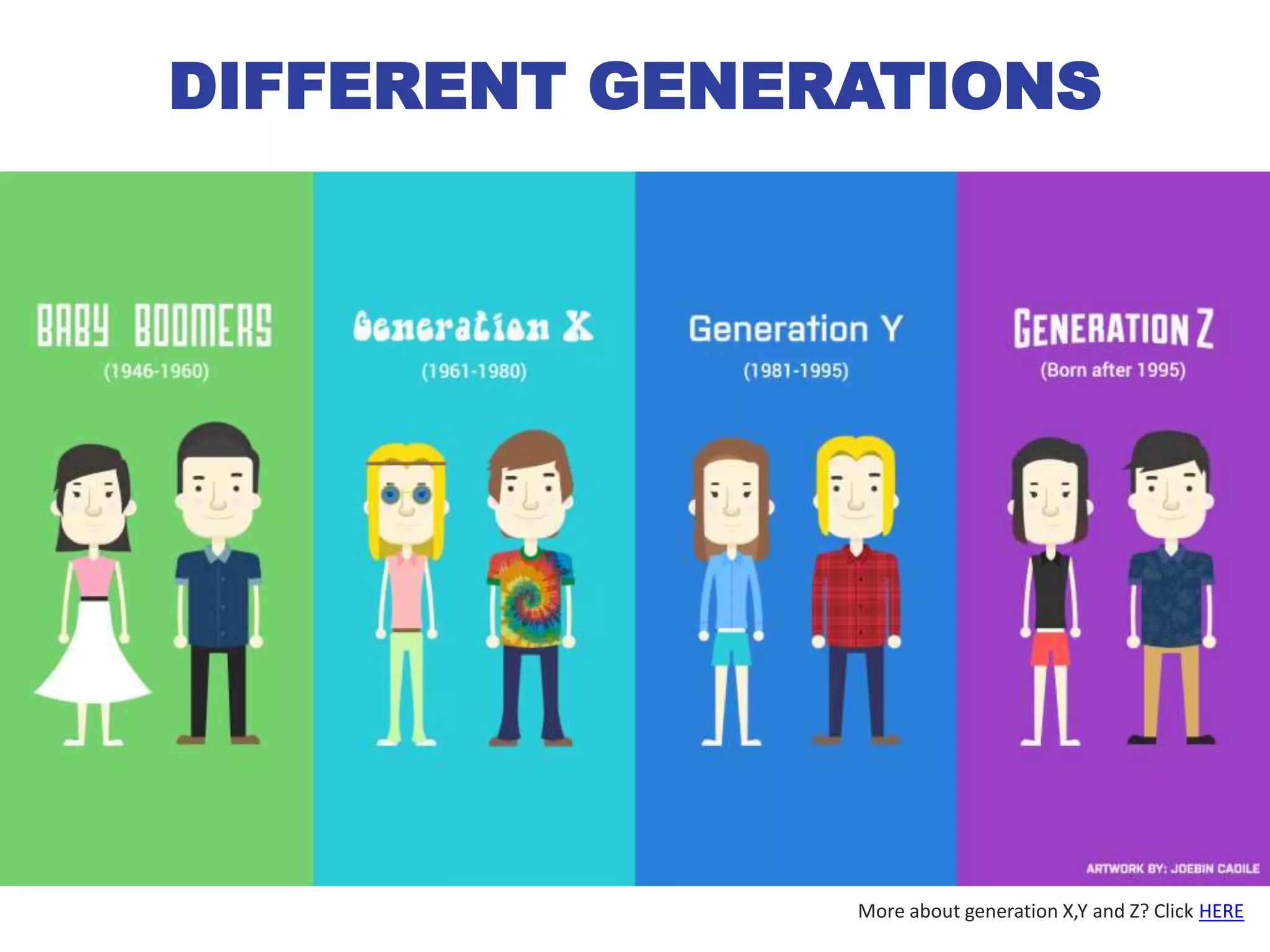
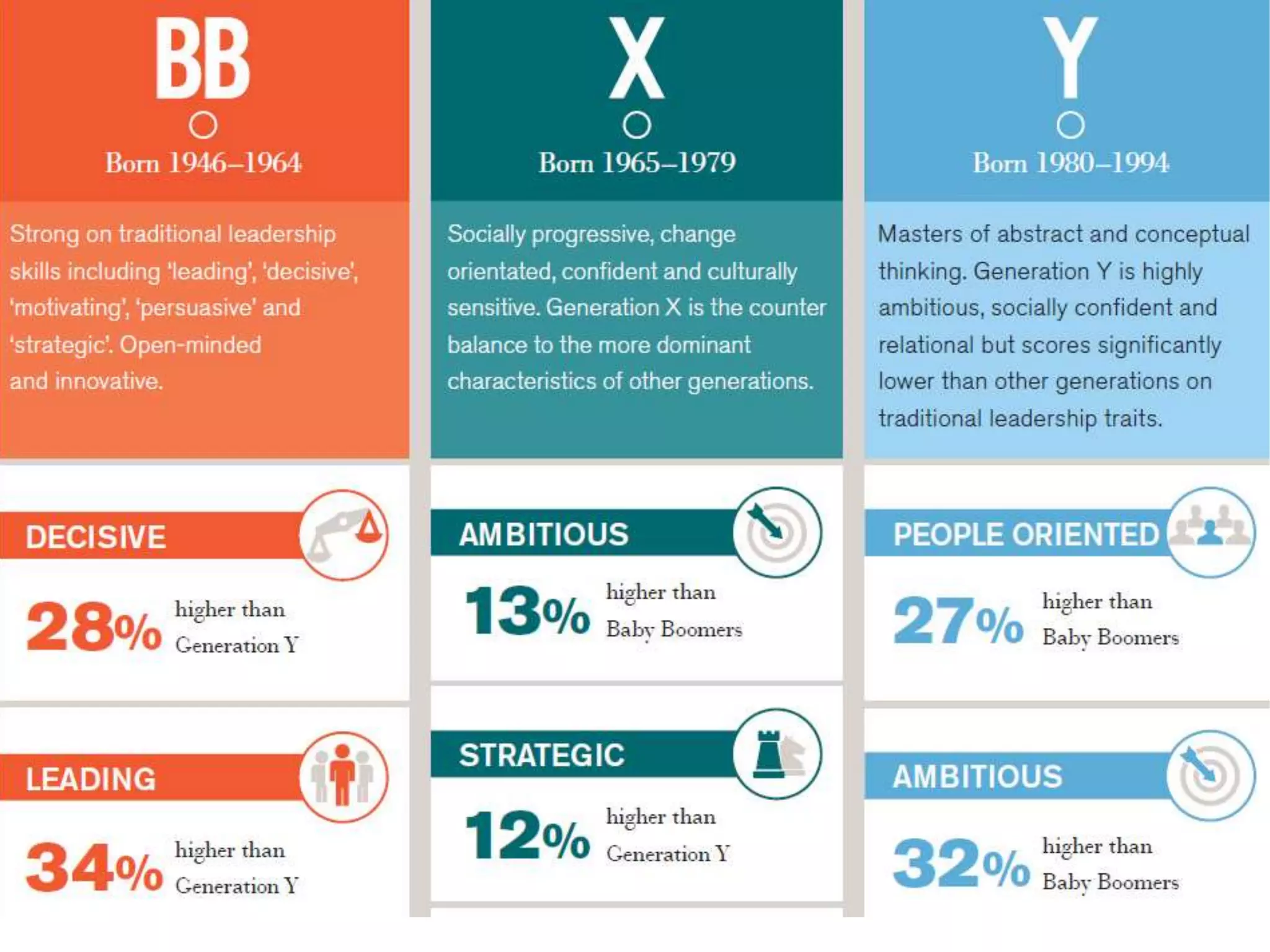
DIFFERENT GENERATIONS
More about generation X,Y and Z? Click HERE
Digital Landscape
It allows students access information and learning
experiences outside schools and classrooms
Students can access information, music and multi-media, full motion colour images from
friends and school mates, as well as people who they might have absolutely nothing to do with
normally
TECHNOLOGY
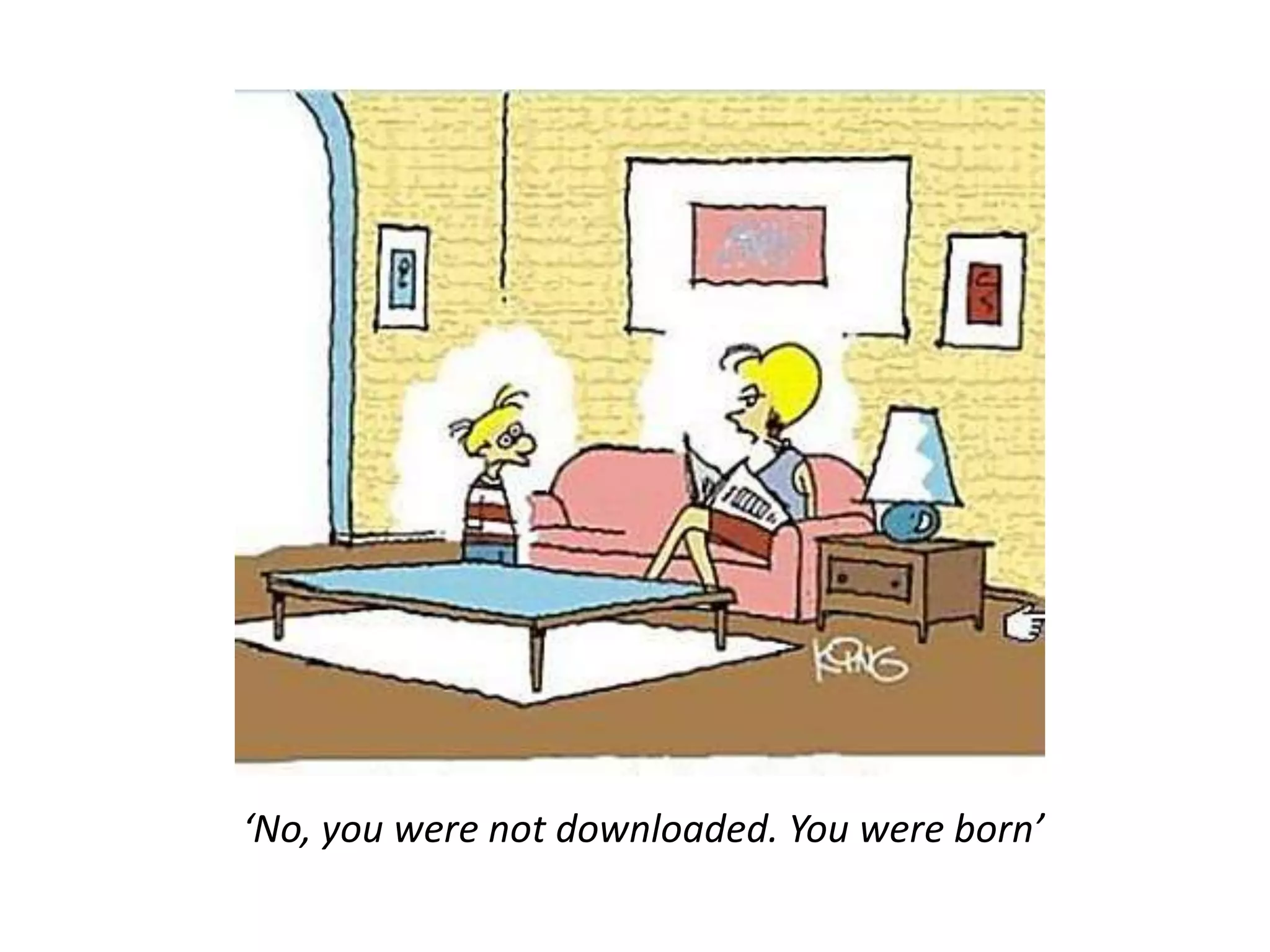
‘No, you were not downloaded. You were born’
Two Key Aspects
Understanding the Learning Environment
Becoming a professional ‘relevant’ teacher
LEARNING
FACTORY-STYLE LEARNING
Where all students learn the same things, at the same time
X
LEARNING
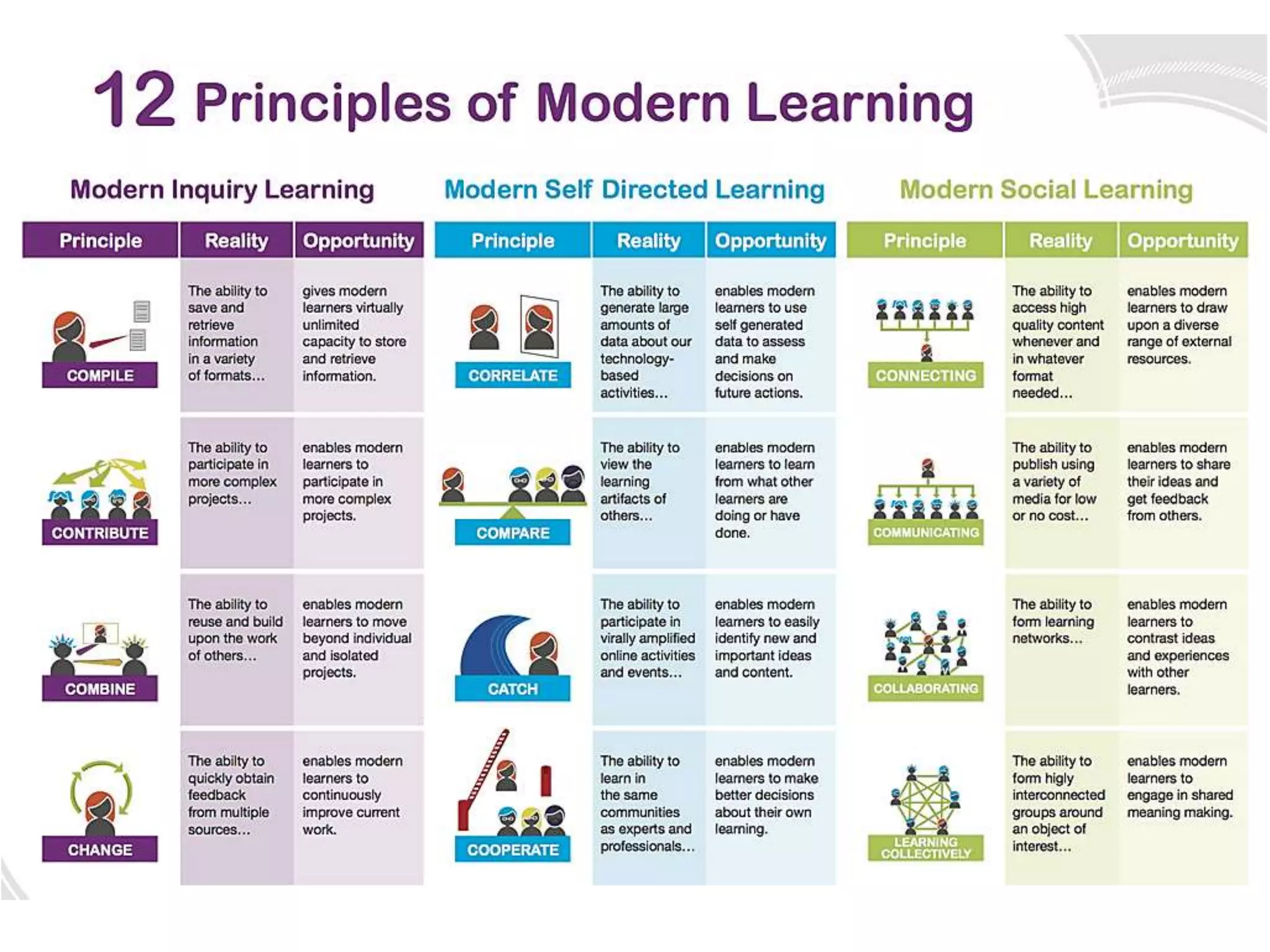
WHAT SORT OF LEARNING?
MLE / ILE
MODERN LEARNING ENVIRONMENT
INNOVATIVE LEARNING ENVIRONMENT
MLE / ILE
MLE was used in the past
ILE is more widely used – international recognition
21st Schooling – to build students’ learning capacity; to
help them develop into life-long, active, independent
learners
‘Our responsibility must be to ensure that our students no longer
need us by the time they graduate from school’
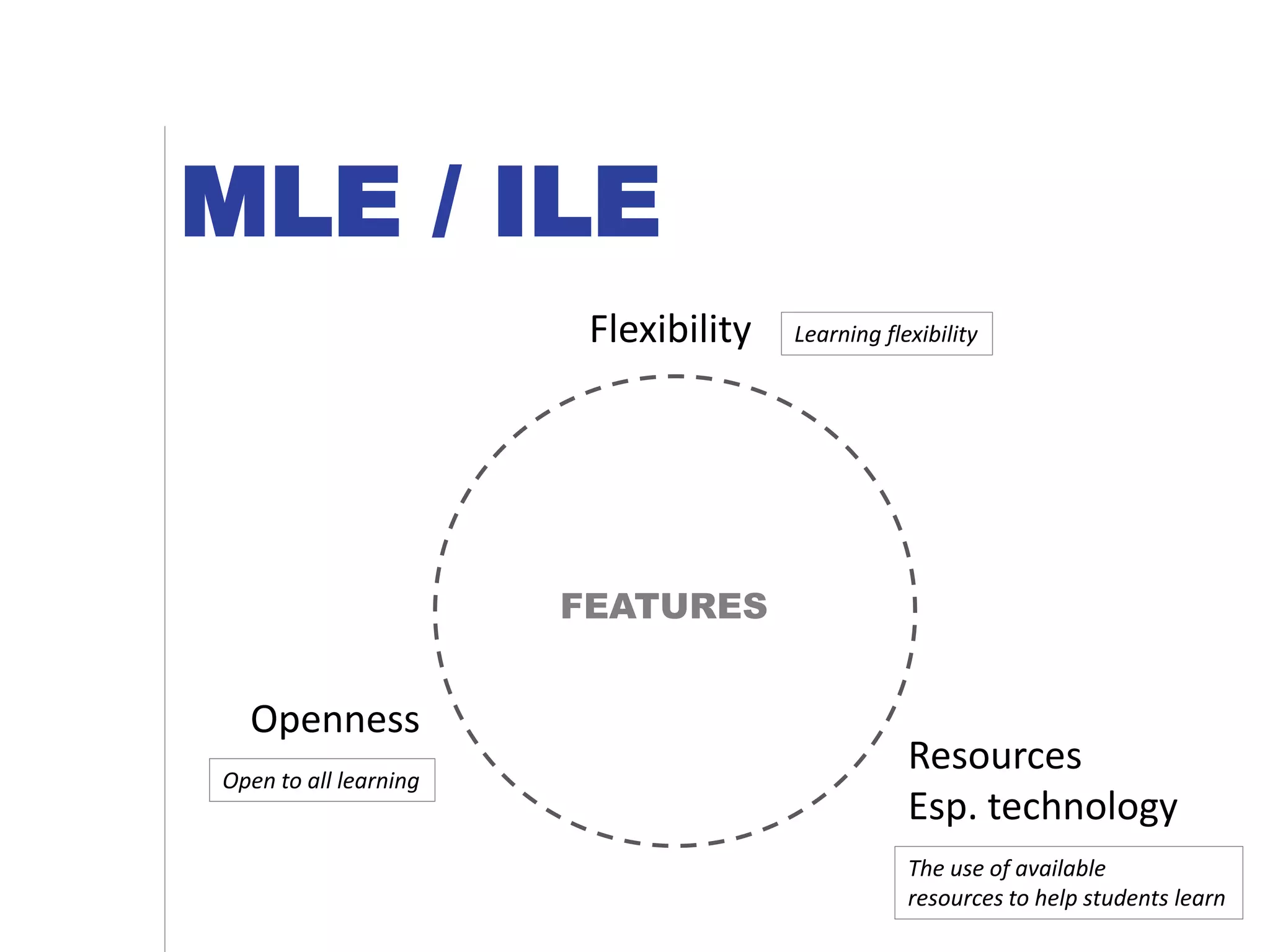
MLE / ILE
Flexibility
Openness
Resources
Esp. technology
FEATURES
Learning flexibility
The use of available
resources to help students learn
Open to all learning
MLE / ILE
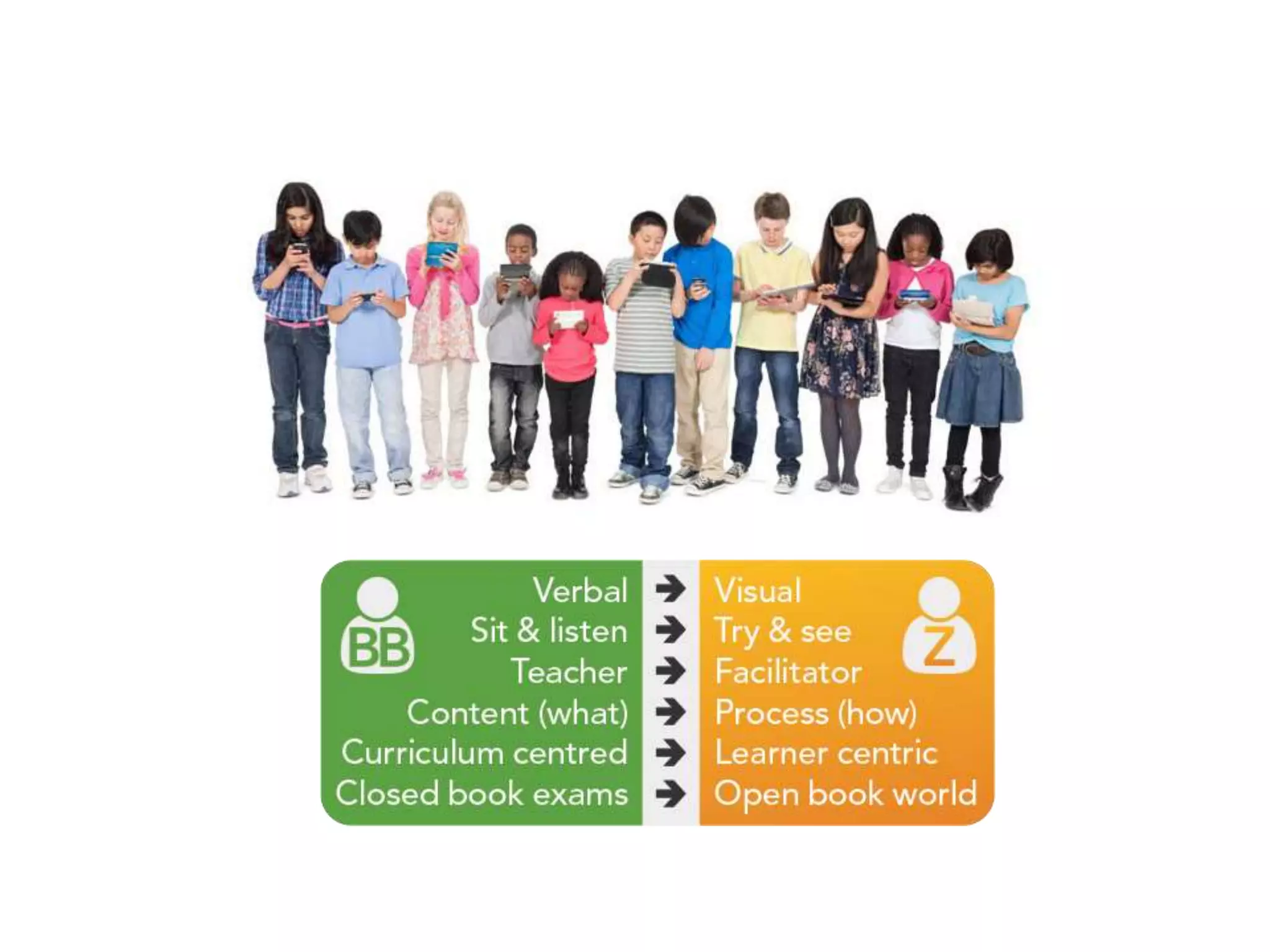
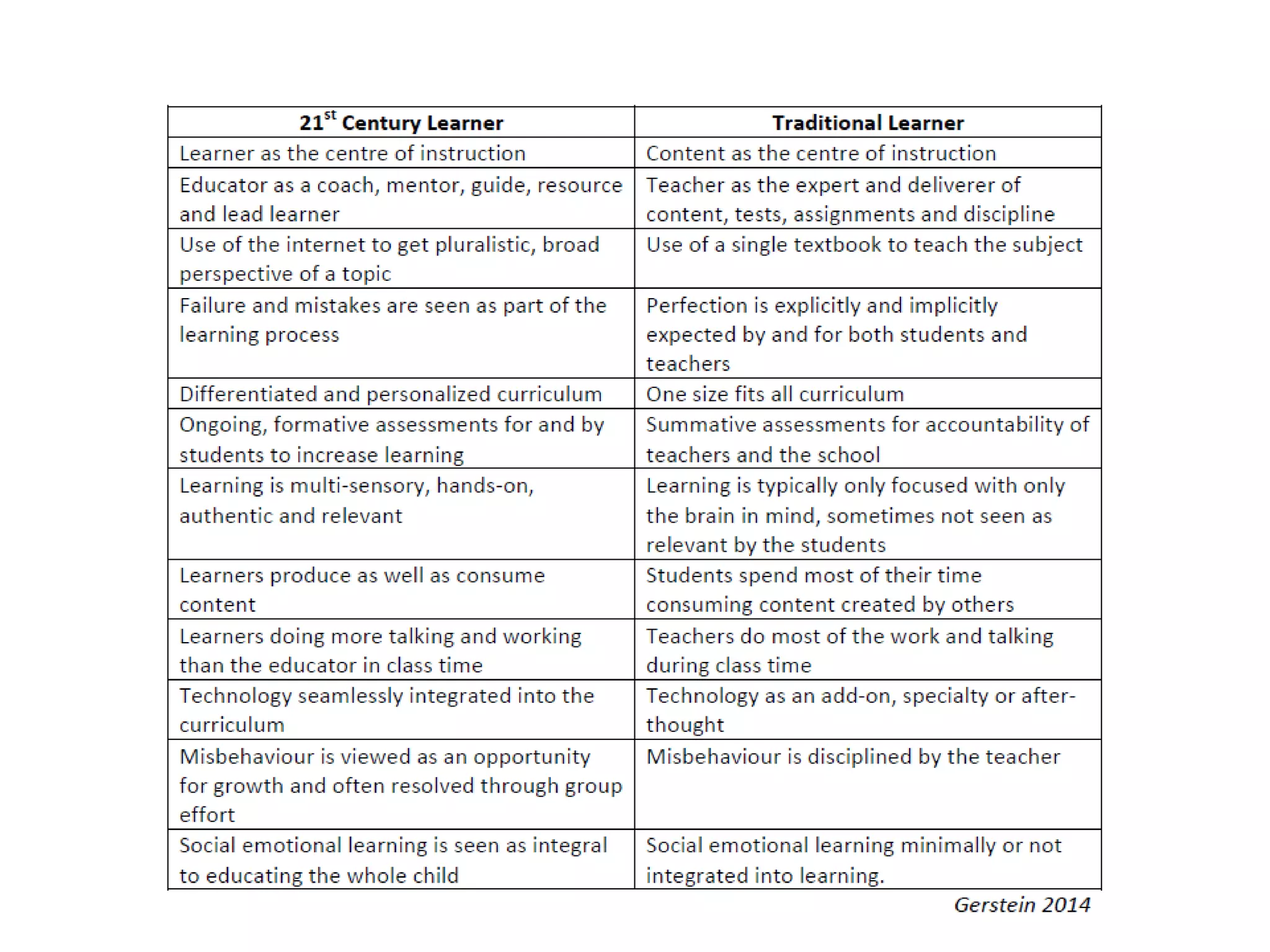
Teachers as Learning Coaches – Not only to provide
knowledge and skills
Teachers’ main role – experienced learners
Show students how to learn
Learning how to learn
* More about ‘learning how to learn’ – click here
MLE / ILE
Teachers as Models
Confidence, openness, persistence, commitment and
pleasure
* More about ‘learning how to learn’ – click here
MLE / ILE
A new orientation of teachers’ role
To support students to actively interact with knowledge and to do
things with it – to understand, critique, manipulate, create, and
transform it
* More about ‘learning how to learn’ – click here
MLE / ILE
The Paradigm of One is NOT RELEVANT
The paradigm – where you have one teacher in front of one class
doing one subject for one hour (or more)
* More about ‘learning how to learn’ – click here
HOWEVER
A necessary precursor to this is the teachers’
capacity for -and awareness of- their own
learning needs and how they could be
developed.
SO?
TEACHERS
From primary role as a dispenser of information
to orchestrator of learning and helping students
turn information into knowledge, and
knowledge into wisdom
(Leggat, 2015)
Professional Identity
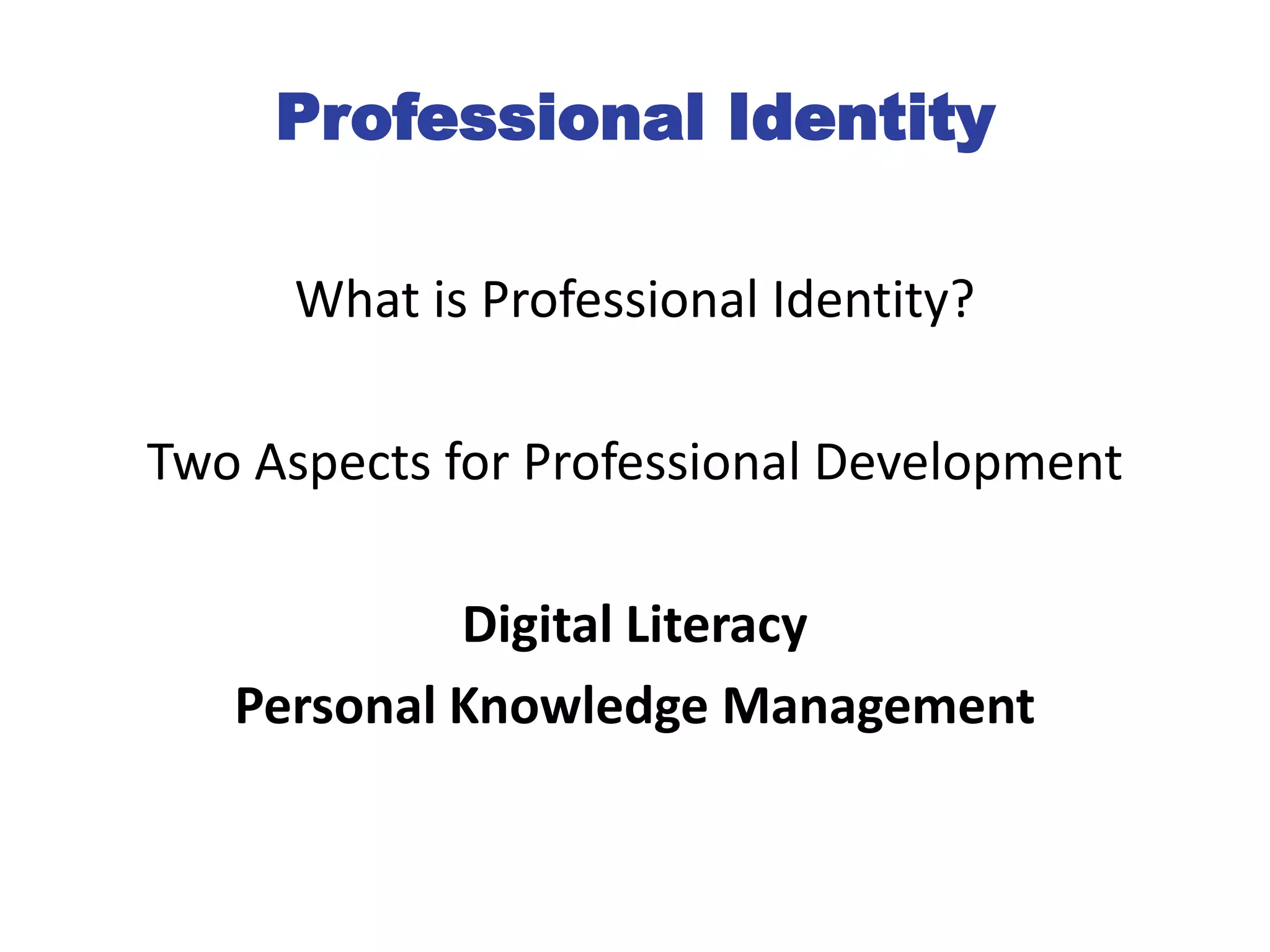
What is Professional Identity?
Two Aspects for Professional Development
Digital Literacy
Personal Knowledge Management
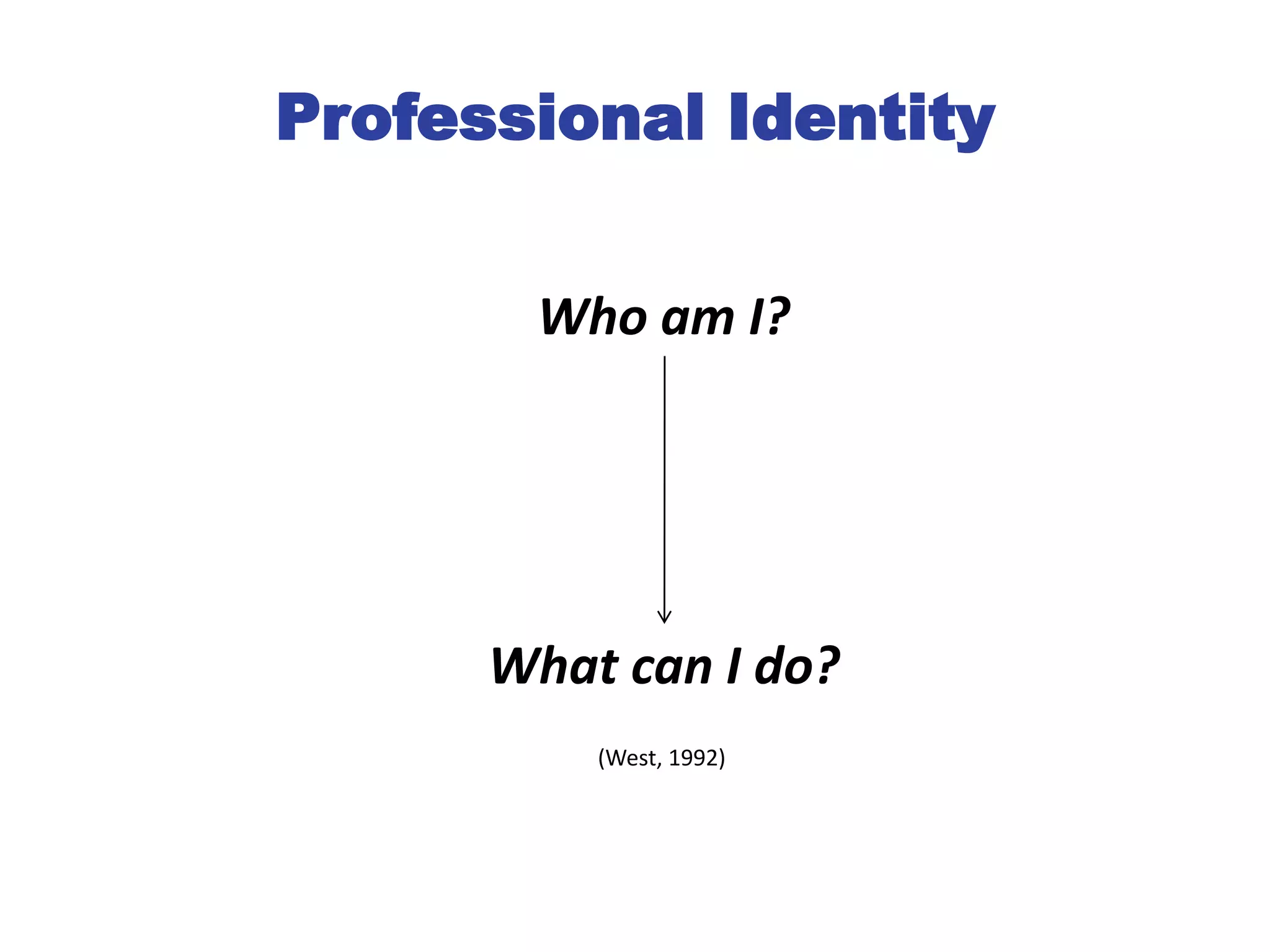
Professional Identity
Who am I?
What can I do?
(West, 1992)
DIGITAL LITERACY
“Digital literacy is the skills required to achieve
digital competence, the confident and critical
use of ICT for work, leisure, learning and
communication”
Digital literacy includes not only the ability to
use a computer for creating and retrieving files,
but also the ability to interact effectively on the
internet.
DIGITAL LITERACY
DIGITAL LITERACY
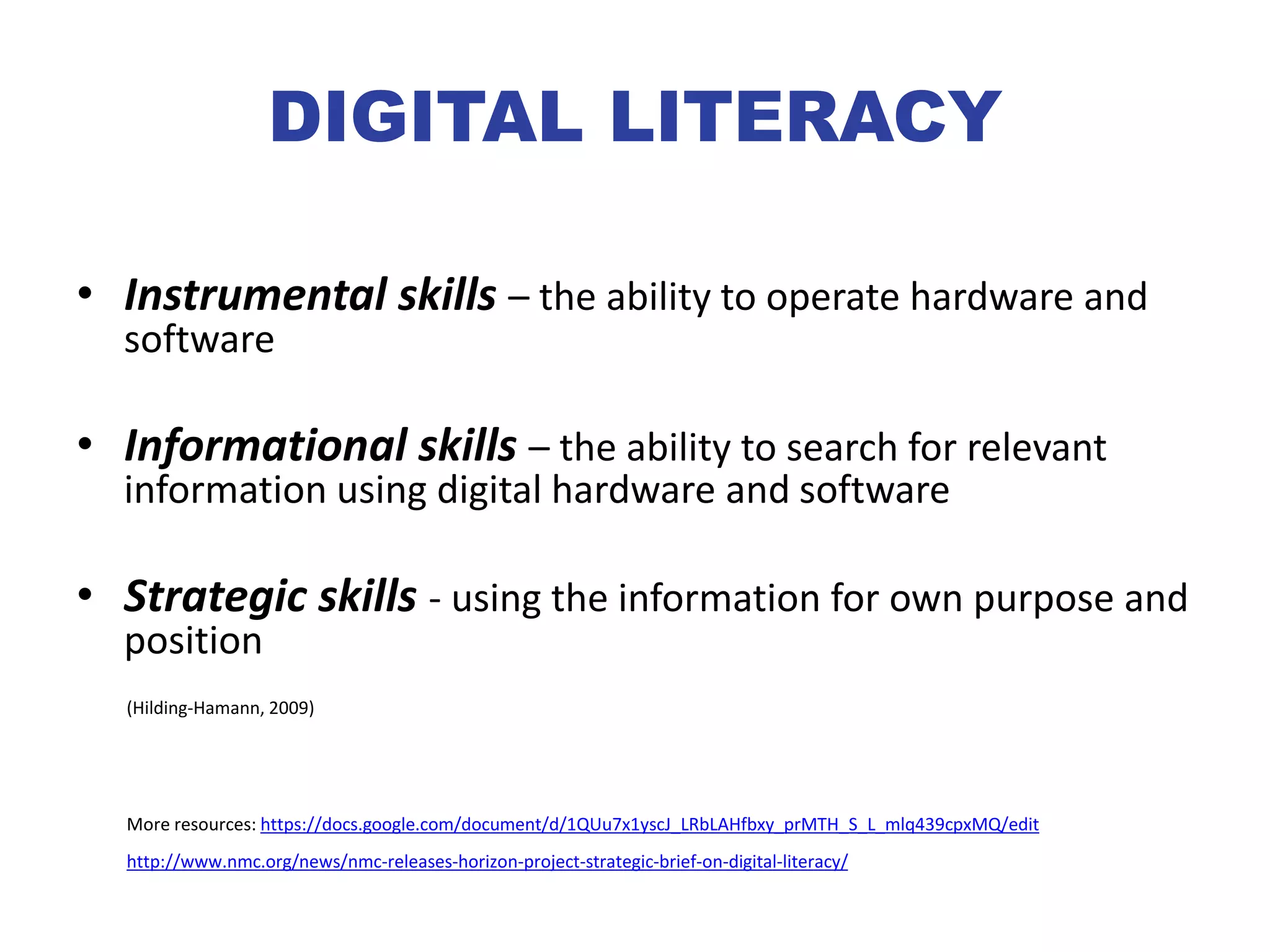
• Instrumental skills – the ability to operate hardware and
software
• Informational skills – the ability to search for relevant
information using digital hardware and software
• Strategic skills - using the information for own purpose and
position
(Hilding-Hamann, 2009)
More resources: https://docs.google.com/document/d/1QUu7x1yscJ_LRbLAHfbxy_prMTH_S_L_mlq439cpxMQ/edit
http://www.nmc.org/news/nmc-releases-horizon-project-strategic-brief-on-digital-literacy/
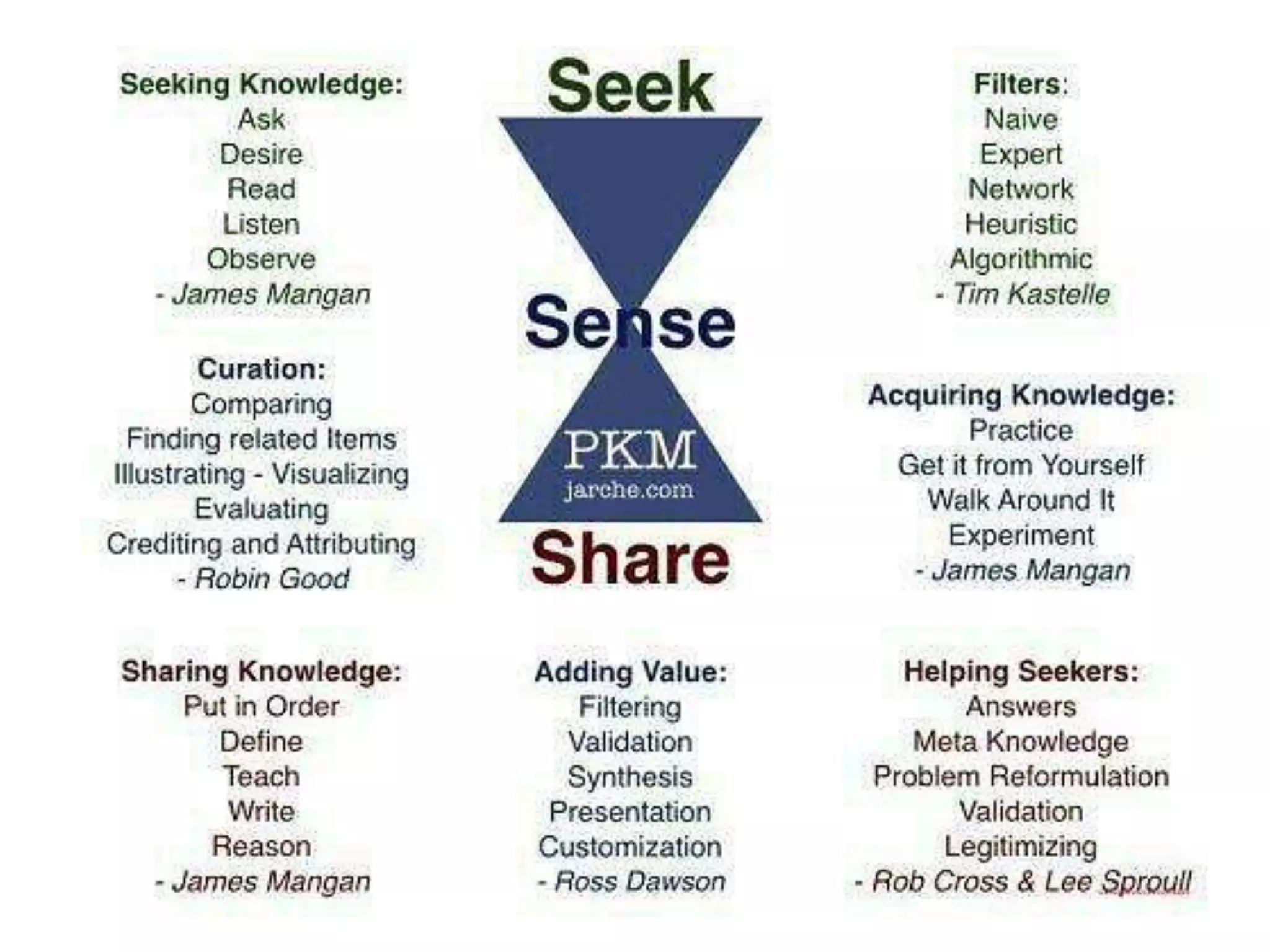
PERSONAL KNOWLEDGE
MANAGEMENT
Seek, Sense-making, Share
REFLECTION
If students can get (almost all) information from
Google, why should they attend our class?
Be a relevant teacher
Or
Google and YouTube will replace us

Innovative learning environment - ILE

  • 1.
  • 2.
    MORE OR LESS Beinga teacher in the current learning environment a relevant one
  • 3.
    Ardian Wahyu Setiawan SeniorEditor and Manager - Prosemantic.com Dosen – ESP (Engineering – Mechatronics and Machine Maintenance) Program Director - SiNERGI Youth Empowerment Founder Englishrep.net - a collaboratively built database of English Resources Culturaldictionary.org - Australian Cultural Dictionary Universitas Negeri Malang (Beasiswa Gudang Garam) Monash University (Australian Development Scholarship) The University of Adelaide (Adelaide Scholarship International) www.penaklausa.wordpress.com
  • 4.
    TEACHING PROFESSION UU Gurudan Dosen No. 14 Tahun 2005 Professional Educators (teachers and lecturers) Professional Qualifications - S1/S2/S3/Spesialist
  • 5.
    TECHNOLOGY * More abouttechnology? Click HERE
  • 6.
    FACT 7 BILLION PEOPLEON THE PLANET 5.1 BILLION HAVE A MOBILE PHONE 4.2 BILLION HAVE A TOOTHBRUSH (Mobile Marketing Strategy Asia)
  • 7.
    NO SOCIAL MEDIAIN THE PAST
  • 9.
  • 10.
    TECHNOLOGY HAS SHAPED OURSOCIAL ENVIRONMENT OUR GENERATIONS
  • 11.
    DIFFERENT GENERATIONS More aboutgeneration X,Y and Z? Click HERE
  • 14.
    Digital Landscape It allowsstudents access information and learning experiences outside schools and classrooms Students can access information, music and multi-media, full motion colour images from friends and school mates, as well as people who they might have absolutely nothing to do with normally TECHNOLOGY
  • 17.
    ‘No, you werenot downloaded. You were born’
  • 18.
    Two Key Aspects Understandingthe Learning Environment Becoming a professional ‘relevant’ teacher
  • 19.
    LEARNING FACTORY-STYLE LEARNING Where allstudents learn the same things, at the same time X
  • 20.
  • 21.
    MLE / ILE MODERNLEARNING ENVIRONMENT INNOVATIVE LEARNING ENVIRONMENT
  • 22.
    MLE / ILE MLEwas used in the past ILE is more widely used – international recognition 21st Schooling – to build students’ learning capacity; to help them develop into life-long, active, independent learners ‘Our responsibility must be to ensure that our students no longer need us by the time they graduate from school’
  • 23.
    MLE / ILE Flexibility Openness Resources Esp.technology FEATURES Learning flexibility The use of available resources to help students learn Open to all learning
  • 24.
    MLE / ILE Teachersas Learning Coaches – Not only to provide knowledge and skills Teachers’ main role – experienced learners Show students how to learn Learning how to learn * More about ‘learning how to learn’ – click here
  • 25.
    MLE / ILE Teachersas Models Confidence, openness, persistence, commitment and pleasure * More about ‘learning how to learn’ – click here
  • 26.
    MLE / ILE Anew orientation of teachers’ role To support students to actively interact with knowledge and to do things with it – to understand, critique, manipulate, create, and transform it * More about ‘learning how to learn’ – click here
  • 27.
    MLE / ILE TheParadigm of One is NOT RELEVANT The paradigm – where you have one teacher in front of one class doing one subject for one hour (or more) * More about ‘learning how to learn’ – click here
  • 29.
    HOWEVER A necessary precursorto this is the teachers’ capacity for -and awareness of- their own learning needs and how they could be developed. SO?
  • 30.
    TEACHERS From primary roleas a dispenser of information to orchestrator of learning and helping students turn information into knowledge, and knowledge into wisdom (Leggat, 2015) Professional Identity
  • 31.
    Professional Identity What isProfessional Identity? Two Aspects for Professional Development Digital Literacy Personal Knowledge Management
  • 32.
    Professional Identity Who amI? What can I do? (West, 1992)
  • 33.
    DIGITAL LITERACY “Digital literacyis the skills required to achieve digital competence, the confident and critical use of ICT for work, leisure, learning and communication”
  • 34.
    Digital literacy includesnot only the ability to use a computer for creating and retrieving files, but also the ability to interact effectively on the internet. DIGITAL LITERACY
  • 35.
    DIGITAL LITERACY • Instrumentalskills – the ability to operate hardware and software • Informational skills – the ability to search for relevant information using digital hardware and software • Strategic skills - using the information for own purpose and position (Hilding-Hamann, 2009) More resources: https://docs.google.com/document/d/1QUu7x1yscJ_LRbLAHfbxy_prMTH_S_L_mlq439cpxMQ/edit http://www.nmc.org/news/nmc-releases-horizon-project-strategic-brief-on-digital-literacy/
  • 37.
  • 38.
  • 39.
    REFLECTION If students canget (almost all) information from Google, why should they attend our class? Be a relevant teacher Or Google and YouTube will replace us

Editor's Notes

  • #2 Terima kasih
  • #3 Terima kasih
  • #4 Introduction
  • #5 Berapa banyak yang ingin menjadi guru atau dosen? Jika ingin – apa alasan ingin menjadi guru atau dosen? Jika tidak – apa alasan tidak ingin menjadi guru atau dosen? Ceritakan pengalaman sendiri Guru dan dosen – profesi: rewarding profession, menjadi salah The question – Apa yang kita perlukan untuk menjadi guru/dosen di masa sekarang? Bagaimana kita bisa menjadi guru/dosen yang baik?
  • #6 Apa yang anda lakukan ketika bangun tidur? Berapa banyak dari anda yang memegang HP/gadget lain, membuka Facebook? Whatsapp? Dll. Berapa banyak yang melakukan aktivitas sambil membuka Facebook, Whatsapp dll. https://en.wikipedia.org/wiki/Category:Technology_by_type
  • #11 Technology has shaped our social environment
  • #13 Source: http://i.cdn.turner.com/cnn/interactive/2011/05/living/infographic.boomer/boomer_graphic.jpg
  • #15 Source: http://images.humanresourcesonline.net.s3.amazonaws.com/wp-content/uploads/2014/10/Aditi-Sharma-Oct-2014-generation-hudson-report-infographic-company.jpg
  • #27 Flexibility – for students to learn collaboratively Openness – Open to all learning Resources – Using available resources to help students