By: Maria R. GarciaPresentation: 8Digestive System Terms- Colonoscopy- Cholelithiasis- Gastric Stapling- Hernioplasty
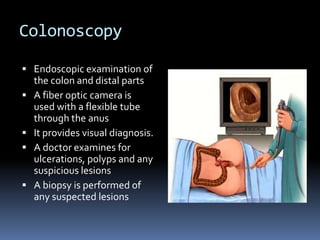
ColonoscopyEndoscopic examination of the colon and distal partsA fiber optic camera is used with a flexible tube through the anusIt provides visual diagnosis.A doctor examines for ulcerations, polyps and any suspicious lesionsA biopsy is performed of any suspected lesions
PreparationThe colon must be free of solid matter for the test to be performed properlyThe day before the colonoscopy, the patient is given a laxative preparation Since the goal of the preparation is to clear the colon of solid matter, the patient should plan to spend the day at home in comfortable surroundings the day before the test
Risks of ColonoscopyThere is a low risk of complications, 0.35% risk. Seeking an experienced doctor is bestThe most serious complication generally is gastrointestinal perforation, which is life-threatening and requires immediate major surgery for repair.As with any procedure involving anaesthesia, other complications would include cardiopulmonary complications such as a temporary drop in blood pressureColonoscopy preparation and colonoscopy procedure can cause inflammation of the bowels and diarrhea or even bowel obstructionMinor colonoscopy risks may include nausea, vomiting or allergies to the sedatives that are used
Who should have a Colonoscopy?The American Cancer Society “Guidelines for the Early Detection of Cancer” recommends beginning at age 50, both men and women for screening to find colon polyps and cancer Subsequent re-screenings are then scheduled based on the initial results found, with a five- or ten-year recall being common for colonoscopies that produce normal resultsIt is recommended, patients with a family history of colon cancer should have their first screening during their teenage years.
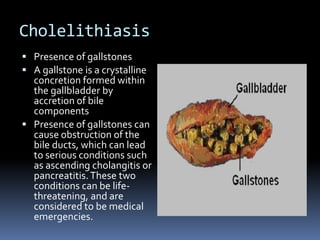
CholelithiasisPresence of gallstonesA gallstone is a crystalline concretion formed within the gallbladder by accretion of bile componentsPresence of gallstones can cause obstruction of the bile ducts, which can lead to serious conditions such as ascending cholangitis or pancreatitis. These two conditions can be life-threatening, and are considered to be medical emergencies.
Characteristics of cholelithiasisGallstones can very in size. They can range from a grain of sand to the size of a golf ballThe composition of the gallstones are affected by age, diet and ethnicityThere are types of gallstones: cholesterol stones, pigment stones and mixed stonesThe gallbladder may contain a single large stone or many small ones
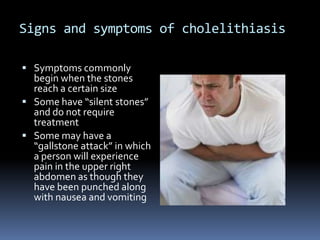
Signs and symptoms of cholelithiasisSymptoms commonly begin when the stones reach a certain sizeSome have “silent stones” and do not require treatmentSome may have a “gallstone attack” in which a person will experience pain in the upper right abdomen as though they have been punched along with nausea and vomiting
Treatment for CholelithiasisSometimes gallstones can be dissolved by oral ursodeoxycholicacidSurgical  procedure called Cholecystectomy - (gallbladder removal) it has a 99% chance of eliminating the recurrence of cholelithiasisTwo surgical options for a cholecystectomy:	1. Open cholecystectomy: This procedure is performed via an incision into the abdomen (laparotomy) below the right lower ribs. Recovery typically consists of 3–5 days	2.Laparoscopic cholecystectomy: This procedure,isperformed via three to four small puncture holes for a camera and instruments
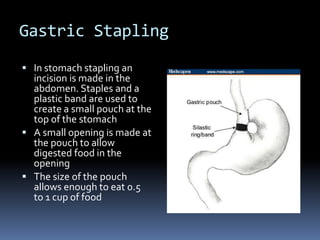
Gastric StaplingIn stomach stapling an incision is made in the abdomen. Staples and a plastic band are used to create a small pouch at the top of the stomachA small opening is made at the pouch to allow digested food in the openingThe size of the pouch allows enough to eat 0.5   to 1 cup of food
Why is gastric stapling done?Obesity is on the rise and this procedure is to help those with a body mass index of 40 or higherThis aggressive surgery can only be done if one has not been able to lose weight with other treatmentsTo be considered for this aggressive and risky surgery the following conditions must be met       -You have been obese for at least 5 years       -You have no history of alcohol abuse       -You do not have untreated depression or another     major emotional disorder        -You are between 18 and 65 years of age
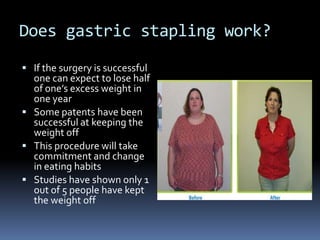
Does gastric stapling work?If the surgery is successful one can expect to lose half of one’s excess weight in one yearSome patents have been successful at keeping the weight offThis procedure will take commitment and change in eating habitsStudies have shown only 1 out of 5 people have kept the weight off
Gastric stapling risksAs with any surgery there are risks. Gastric stapling has been known to cause infection in the incision, a leak from the stomach into the abdominal cavity, a blood clot in the lung (pulmonary embolism). Some develop gallstones or a nutritional deficiency condition such as anemia or osteoporosisFewer than 10 out of 1000 people die after weight-loss surgeryA second operation may be needed because the connection between the stomach and intestines narrows, which leads to vomiting and acid reflux
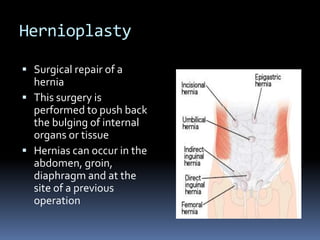
HernioplastySurgical repair of a herniaThis surgery is performed to push back the bulging of internal organs or tissue Hernias can occur in the abdomen, groin, diaphragmand at the site of a previous operation
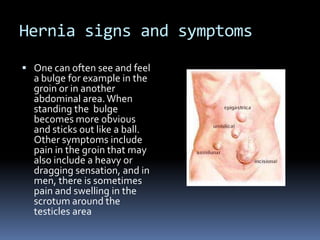
Hernia signs and symptomsOne can often see and feel a bulge for example in the groin or in another abdominal area. When standing the  bulge becomes more obvious and sticks out like a ball. Other symptoms include pain in the groin that may also include a heavy or dragging sensation, and in men, there is sometimes pain and swelling in the scrotum around the testicles area
Causes of HerniaSome causes of a hernia are due to lifting heavy items, hard coughing, weak muscles due to poor nutrition, straining during a bowels movement and obesityIf not treated the hernia can lead to strangulation, obstruction and loss of blood supplyDoctor’s suggest to not lift heavy items and not strain muscles as to avoid a hernia
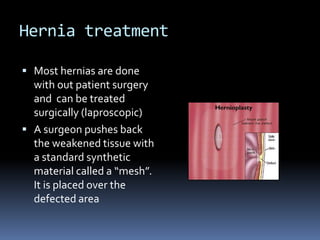
Hernia treatmentMost hernias are done with out patient surgery and  can be treated surgically (laproscopic) A surgeon pushes back the weakened tissue with a standard synthetic material called a “mesh”. It is placed over the defected area
Hernia complicationsStudies show that people have less pain after laparoscopic surgery and return to work and other activities quicklyHowever, Complications can occur post operation. One’s body can reject the mesh material and can cause infection, swelling and pain around the mesh area. Thus the mesh will need to be removed The chance of a hernia coming back after surgery ranges from 1 to 10. The risk of a hernia coming back after surgery varies depending on a surgeon's experience, type of hernia, if mesh is used, and the person's age and health.

Presentation 8 digestive system terms

  • 1.
    By: Maria R.GarciaPresentation: 8Digestive System Terms- Colonoscopy- Cholelithiasis- Gastric Stapling- Hernioplasty
  • 2.
    ColonoscopyEndoscopic examination ofthe colon and distal partsA fiber optic camera is used with a flexible tube through the anusIt provides visual diagnosis.A doctor examines for ulcerations, polyps and any suspicious lesionsA biopsy is performed of any suspected lesions
  • 3.
    PreparationThe colon mustbe free of solid matter for the test to be performed properlyThe day before the colonoscopy, the patient is given a laxative preparation Since the goal of the preparation is to clear the colon of solid matter, the patient should plan to spend the day at home in comfortable surroundings the day before the test
  • 4.
    Risks of ColonoscopyThereis a low risk of complications, 0.35% risk. Seeking an experienced doctor is bestThe most serious complication generally is gastrointestinal perforation, which is life-threatening and requires immediate major surgery for repair.As with any procedure involving anaesthesia, other complications would include cardiopulmonary complications such as a temporary drop in blood pressureColonoscopy preparation and colonoscopy procedure can cause inflammation of the bowels and diarrhea or even bowel obstructionMinor colonoscopy risks may include nausea, vomiting or allergies to the sedatives that are used
  • 5.
    Who should havea Colonoscopy?The American Cancer Society “Guidelines for the Early Detection of Cancer” recommends beginning at age 50, both men and women for screening to find colon polyps and cancer Subsequent re-screenings are then scheduled based on the initial results found, with a five- or ten-year recall being common for colonoscopies that produce normal resultsIt is recommended, patients with a family history of colon cancer should have their first screening during their teenage years.
  • 6.
    CholelithiasisPresence of gallstonesAgallstone is a crystalline concretion formed within the gallbladder by accretion of bile componentsPresence of gallstones can cause obstruction of the bile ducts, which can lead to serious conditions such as ascending cholangitis or pancreatitis. These two conditions can be life-threatening, and are considered to be medical emergencies.
  • 7.
    Characteristics of cholelithiasisGallstonescan very in size. They can range from a grain of sand to the size of a golf ballThe composition of the gallstones are affected by age, diet and ethnicityThere are types of gallstones: cholesterol stones, pigment stones and mixed stonesThe gallbladder may contain a single large stone or many small ones
  • 8.
    Signs and symptomsof cholelithiasisSymptoms commonly begin when the stones reach a certain sizeSome have “silent stones” and do not require treatmentSome may have a “gallstone attack” in which a person will experience pain in the upper right abdomen as though they have been punched along with nausea and vomiting
  • 9.
    Treatment for CholelithiasisSometimesgallstones can be dissolved by oral ursodeoxycholicacidSurgical procedure called Cholecystectomy - (gallbladder removal) it has a 99% chance of eliminating the recurrence of cholelithiasisTwo surgical options for a cholecystectomy: 1. Open cholecystectomy: This procedure is performed via an incision into the abdomen (laparotomy) below the right lower ribs. Recovery typically consists of 3–5 days 2.Laparoscopic cholecystectomy: This procedure,isperformed via three to four small puncture holes for a camera and instruments
  • 10.
    Gastric StaplingIn stomachstapling an incision is made in the abdomen. Staples and a plastic band are used to create a small pouch at the top of the stomachA small opening is made at the pouch to allow digested food in the openingThe size of the pouch allows enough to eat 0.5 to 1 cup of food
  • 11.
    Why is gastricstapling done?Obesity is on the rise and this procedure is to help those with a body mass index of 40 or higherThis aggressive surgery can only be done if one has not been able to lose weight with other treatmentsTo be considered for this aggressive and risky surgery the following conditions must be met -You have been obese for at least 5 years -You have no history of alcohol abuse -You do not have untreated depression or another major emotional disorder -You are between 18 and 65 years of age
  • 12.
    Does gastric staplingwork?If the surgery is successful one can expect to lose half of one’s excess weight in one yearSome patents have been successful at keeping the weight offThis procedure will take commitment and change in eating habitsStudies have shown only 1 out of 5 people have kept the weight off
  • 13.
    Gastric stapling risksAswith any surgery there are risks. Gastric stapling has been known to cause infection in the incision, a leak from the stomach into the abdominal cavity, a blood clot in the lung (pulmonary embolism). Some develop gallstones or a nutritional deficiency condition such as anemia or osteoporosisFewer than 10 out of 1000 people die after weight-loss surgeryA second operation may be needed because the connection between the stomach and intestines narrows, which leads to vomiting and acid reflux
  • 14.
    HernioplastySurgical repair ofa herniaThis surgery is performed to push back the bulging of internal organs or tissue Hernias can occur in the abdomen, groin, diaphragmand at the site of a previous operation
  • 15.
    Hernia signs andsymptomsOne can often see and feel a bulge for example in the groin or in another abdominal area. When standing the bulge becomes more obvious and sticks out like a ball. Other symptoms include pain in the groin that may also include a heavy or dragging sensation, and in men, there is sometimes pain and swelling in the scrotum around the testicles area
  • 16.
    Causes of HerniaSomecauses of a hernia are due to lifting heavy items, hard coughing, weak muscles due to poor nutrition, straining during a bowels movement and obesityIf not treated the hernia can lead to strangulation, obstruction and loss of blood supplyDoctor’s suggest to not lift heavy items and not strain muscles as to avoid a hernia
  • 17.
    Hernia treatmentMost herniasare done with out patient surgery and can be treated surgically (laproscopic) A surgeon pushes back the weakened tissue with a standard synthetic material called a “mesh”. It is placed over the defected area
  • 18.
    Hernia complicationsStudies showthat people have less pain after laparoscopic surgery and return to work and other activities quicklyHowever, Complications can occur post operation. One’s body can reject the mesh material and can cause infection, swelling and pain around the mesh area. Thus the mesh will need to be removed The chance of a hernia coming back after surgery ranges from 1 to 10. The risk of a hernia coming back after surgery varies depending on a surgeon's experience, type of hernia, if mesh is used, and the person's age and health.