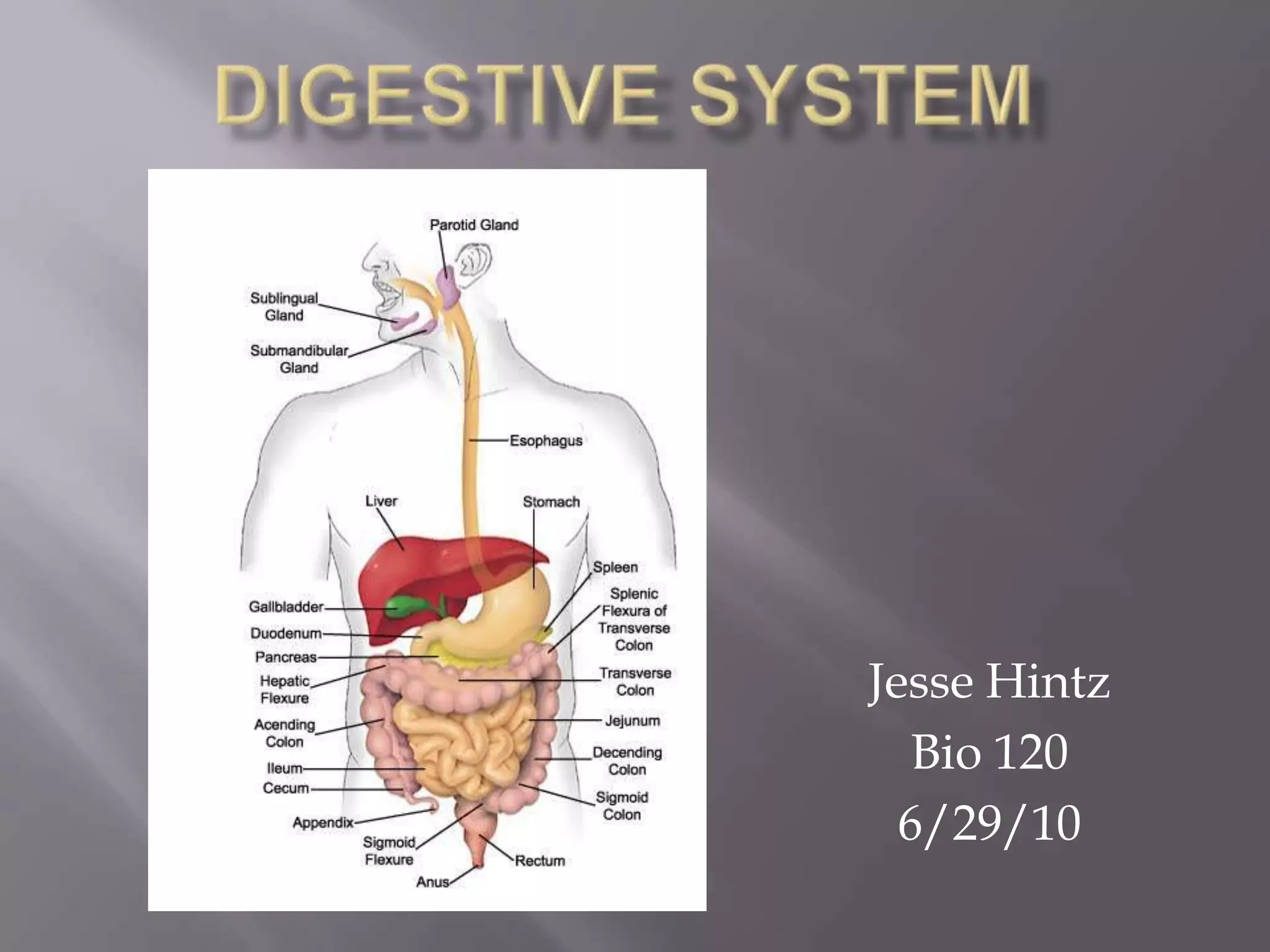
Digestive SystemJesse HintzBio 1206/29/10
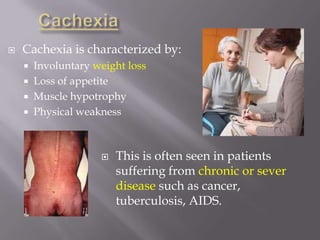
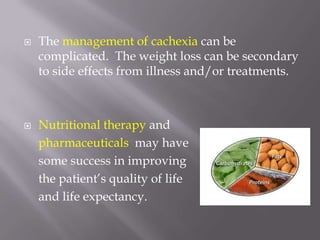
CachexiaCachexia is characterized by: Involuntary weight lossLoss of appetiteMuscle hypotrophyPhysical weaknessThis is often seen in patients suffering from chronic or sever disease such as cancer, tuberculosis, AIDS.The management of cachexiacan be  complicated.  The weight loss can be secondary to side effects from illness and/or treatments. Nutritional therapy and pharmaceuticals  may have some success in improving the patient’s quality of life and life expectancy.
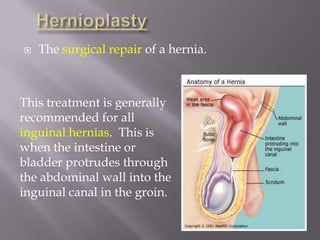
HernioplastyThe surgical repair of a hernia.	This treatment is generally recommended for all inguinal hernias.  This is when the intestine or bladder protrudes through the abdominal wall into the inguinal canal in the groin.
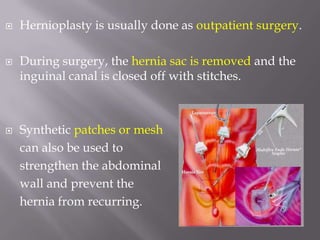
Hernioplasty is usually done as outpatient surgery.  During surgery, the hernia sac is removed and the inguinal canal is closed off with stitches. Synthetic patches or mesh 	can also be used to 	strengthen the abdominal 	wall and prevent the 	hernia from recurring.
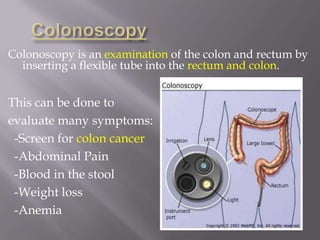
ColonoscopyColonoscopy is an examination of the colon and rectum by inserting a flexible tube into the rectum and colon.  This can be done to evaluate many symptoms: -Screen for colon cancer  -Abdominal Pain -Blood in the stool -Weight loss -Anemia
Colon cancer screening is recommended by the American Cancer Society periodically after that age of 50. While there are other methods, a colonoscopy has a 90% effectiveness rate in detecting colon cancer.Colonoscopy should bedone every 10 yearsafter the age of 50 to	check for colon cancer.
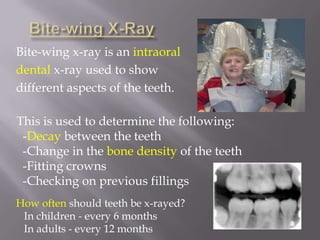
Bite-wing X-RayBite-wing x-ray is an intraoral dental x-ray used to show different aspects of the teeth.  This is used to determine the following:  -Decay between the teeth  -Change in the bone density of the teeth  -Fitting crowns  -Checking on previous fillings How often should teeth be x-rayed?   In children - every 6 months   In adults - every 12 months
Online Sourceshttp://dictionary.webmd.comhttp://www.webmd.comhttp://www.oncolink.org/resources/article.cfm?c=3&s=38&ss=156&id=349http://www.medicinenet.com/dental_x-rays_when_to_get_them/article.htm
Presentation 8 digestive system

Presentation 8 digestive system

  • 1.
  • 2.
    CachexiaCachexia is characterizedby: Involuntary weight lossLoss of appetiteMuscle hypotrophyPhysical weaknessThis is often seen in patients suffering from chronic or sever disease such as cancer, tuberculosis, AIDS.The management of cachexiacan be complicated. The weight loss can be secondary to side effects from illness and/or treatments. Nutritional therapy and pharmaceuticals may have some success in improving the patient’s quality of life and life expectancy.
  • 3.
    HernioplastyThe surgical repairof a hernia. This treatment is generally recommended for all inguinal hernias. This is when the intestine or bladder protrudes through the abdominal wall into the inguinal canal in the groin.
  • 4.
    Hernioplasty is usuallydone as outpatient surgery. During surgery, the hernia sac is removed and the inguinal canal is closed off with stitches. Synthetic patches or mesh can also be used to strengthen the abdominal wall and prevent the hernia from recurring.
  • 5.
    ColonoscopyColonoscopy is anexamination of the colon and rectum by inserting a flexible tube into the rectum and colon. This can be done to evaluate many symptoms: -Screen for colon cancer -Abdominal Pain -Blood in the stool -Weight loss -Anemia
  • 6.
    Colon cancer screeningis recommended by the American Cancer Society periodically after that age of 50. While there are other methods, a colonoscopy has a 90% effectiveness rate in detecting colon cancer.Colonoscopy should bedone every 10 yearsafter the age of 50 to check for colon cancer.
  • 7.
    Bite-wing X-RayBite-wing x-rayis an intraoral dental x-ray used to show different aspects of the teeth. This is used to determine the following: -Decay between the teeth -Change in the bone density of the teeth -Fitting crowns -Checking on previous fillings How often should teeth be x-rayed? In children - every 6 months In adults - every 12 months
  • 8.