CHAPTER 8:DIGESTIVE SYSTEMLizannAguadaJune 28, 2012Bio 120 Prod. Abdullah
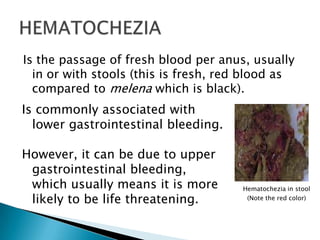
Is the passage of fresh blood per anus, usually in or with stools (this is fresh, red blood as compared to melena which is black).HEMATOCHEZIAIs commonly associated with lower gastrointestinal bleeding.However, it can be due to upper gastrointestinal bleeding, which usually means it is more likely to be life threatening.Hematochezia in stool(Note the red color)
HematocheziaCommon CausesIn Babies:in conjunction with abdominal pain associated with intussusception (a problem with the intestine in which one portion of the bowel slides into the next).In Newborn Babies:It is the result of swallowed maternal blood at the time of deliveryIn Adults:Non-life threateningHemmorrhoidsDiverticulosisLife ThreateningColorectal CancerIn Young Adults:Inflammatory bowel disease (i.e. ulcerative colitis)
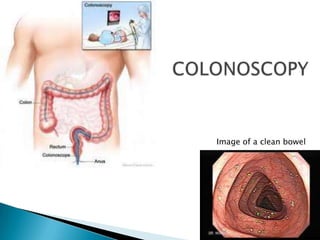
COLONOSCOPYImage of a clean bowel
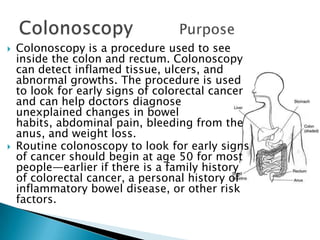
Colonoscopy is a procedure used to see inside the colon and rectum. Colonoscopy can detect inflamed tissue, ulcers, and abnormal growths. The procedure is used to look for early signs of colorectal cancer and can help doctors diagnose unexplained changes in bowel habits, abdominal pain, bleeding from the anus, and weight loss.Routine colonoscopy to look for early signs of cancer should begin at age 50 for most people—earlier if there is a family history of colorectal cancer, a personal history of inflammatory bowel disease, or other risk factors.Colonoscopy 		Purpose
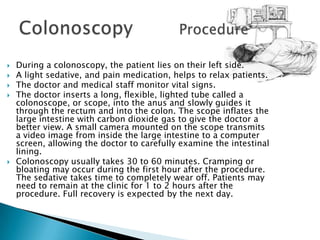
During a colonoscopy, the patient lies on their left side.A light sedative, and pain medication, helps to relax patients.The doctor and medical staff monitor vital signs.The doctor inserts a long, flexible, lighted tube called a colonoscope, or scope, into the anus and slowly guides it through the rectum and into the colon. The scope inflates the large intestine with carbon dioxide gas to give the doctor a better view. A small camera mounted on the scope transmits a video image from inside the large intestine to a computer screen, allowing the doctor to carefully examine the intestinal lining.Colonoscopy usually takes 30 to 60 minutes. Cramping or bloating may occur during the first hour after the procedure. The sedative takes time to completely wear off. Patients may need to remain at the clinic for 1 to 2 hours after the procedure. Full recovery is expected by the next day.Colonoscopy 		Procedure
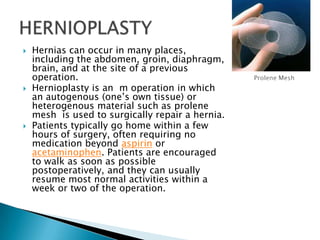
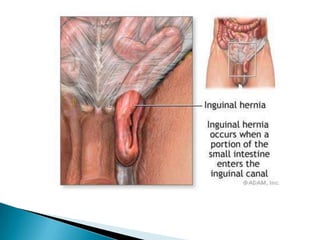
Hernias can occur in many places, including the abdomen, groin, diaphragm, brain, and at the site of a previous operation.Hernioplasty is an  m operation in which an autogenous (one’s own tissue) or heterogenous material such as prolene mesh  is used to surgically repair a hernia.Patients typically go home within a few hours of surgery, often requiring no medication beyond aspirin or acetaminophen. Patients are encouraged to walk as soon as possible postoperatively, and they can usually resume most normal activities within a week or two of the operation. HERNIOPLASTYProlene Mesh
There may be (rare) side effects that, if are not relieved after certain hours, the physician should be notified, such side effects are:severe abdominal painfeverbloody bowel movementsdizzinessweaknessColonoscopy
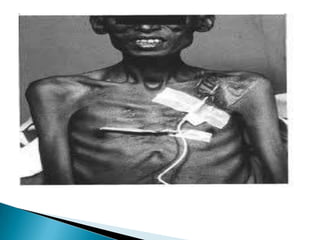
A wasting syndrome in which there is weight loss, muscle atrophy, fatigue, weakness, and a significant loss of appetite in someone who is not actively trying to lose weight.It is the loss of body mass that is irreversible even through nutrition.Cachexia is seen in patients with AIDS, chronic lung disease, congestive heart failure, tuberculosis, mercury poisoning, and end-stage cancer.It is a risk factor for death.Cachexia
Can be treated with steroids such as corticosteroids to increase appetite to help reverse weight loss but not muscle loss.Omega-3 fatty acids have been shown to be beneficial for cancer patients by also improving appetite, weight, and quality of life. Some studies done have shown that these can retain muscle mass in cancer patients.CachexiaTreatment

Ch 8 ss

  • 1.
    CHAPTER 8:DIGESTIVE SYSTEMLizannAguadaJune28, 2012Bio 120 Prod. Abdullah
  • 2.
    Is the passageof fresh blood per anus, usually in or with stools (this is fresh, red blood as compared to melena which is black).HEMATOCHEZIAIs commonly associated with lower gastrointestinal bleeding.However, it can be due to upper gastrointestinal bleeding, which usually means it is more likely to be life threatening.Hematochezia in stool(Note the red color)
  • 3.
    HematocheziaCommon CausesIn Babies:inconjunction with abdominal pain associated with intussusception (a problem with the intestine in which one portion of the bowel slides into the next).In Newborn Babies:It is the result of swallowed maternal blood at the time of deliveryIn Adults:Non-life threateningHemmorrhoidsDiverticulosisLife ThreateningColorectal CancerIn Young Adults:Inflammatory bowel disease (i.e. ulcerative colitis)
  • 4.
  • 5.
    Colonoscopy is aprocedure used to see inside the colon and rectum. Colonoscopy can detect inflamed tissue, ulcers, and abnormal growths. The procedure is used to look for early signs of colorectal cancer and can help doctors diagnose unexplained changes in bowel habits, abdominal pain, bleeding from the anus, and weight loss.Routine colonoscopy to look for early signs of cancer should begin at age 50 for most people—earlier if there is a family history of colorectal cancer, a personal history of inflammatory bowel disease, or other risk factors.Colonoscopy Purpose
  • 6.
    During a colonoscopy,the patient lies on their left side.A light sedative, and pain medication, helps to relax patients.The doctor and medical staff monitor vital signs.The doctor inserts a long, flexible, lighted tube called a colonoscope, or scope, into the anus and slowly guides it through the rectum and into the colon. The scope inflates the large intestine with carbon dioxide gas to give the doctor a better view. A small camera mounted on the scope transmits a video image from inside the large intestine to a computer screen, allowing the doctor to carefully examine the intestinal lining.Colonoscopy usually takes 30 to 60 minutes. Cramping or bloating may occur during the first hour after the procedure. The sedative takes time to completely wear off. Patients may need to remain at the clinic for 1 to 2 hours after the procedure. Full recovery is expected by the next day.Colonoscopy Procedure
  • 7.
    Hernias can occurin many places, including the abdomen, groin, diaphragm, brain, and at the site of a previous operation.Hernioplasty is an m operation in which an autogenous (one’s own tissue) or heterogenous material such as prolene mesh is used to surgically repair a hernia.Patients typically go home within a few hours of surgery, often requiring no medication beyond aspirin or acetaminophen. Patients are encouraged to walk as soon as possible postoperatively, and they can usually resume most normal activities within a week or two of the operation. HERNIOPLASTYProlene Mesh
  • 8.
    There may be(rare) side effects that, if are not relieved after certain hours, the physician should be notified, such side effects are:severe abdominal painfeverbloody bowel movementsdizzinessweaknessColonoscopy
  • 10.
    A wasting syndromein which there is weight loss, muscle atrophy, fatigue, weakness, and a significant loss of appetite in someone who is not actively trying to lose weight.It is the loss of body mass that is irreversible even through nutrition.Cachexia is seen in patients with AIDS, chronic lung disease, congestive heart failure, tuberculosis, mercury poisoning, and end-stage cancer.It is a risk factor for death.Cachexia
  • 12.
    Can be treatedwith steroids such as corticosteroids to increase appetite to help reverse weight loss but not muscle loss.Omega-3 fatty acids have been shown to be beneficial for cancer patients by also improving appetite, weight, and quality of life. Some studies done have shown that these can retain muscle mass in cancer patients.CachexiaTreatment