Challenging 
Communication in a 
Committing 
Community 2014-2016
Training to be a 
European citizen 
Prepared to be a 
Global Citizen
The purpose of the project 
①To give the students intercultural competences. 
②To develop ways of learning which are 
interesting and relevant for the students. 
③To make friends across borders and brake down 
prejustices. 
④To improve the students language skills 
⑤To strenghten the feeling of being European 
⑥To inspire teachers at our schools to make 
projects and use IT as a cooperative tool.
1. Intercultural Competences 
• The ability to communicate with others. 
• The abiliti to feel empathy – to put yourself in 
anothers place. 
• The ability to use ICT interactive. 
• The ability to cooperate in teams together 
with people from other backgrounds. 
• The ability to act independent and reflexive in 
unpredictible situations
2. To develop ways of learning which are 
interesting and relevant for the students. 
• to modernize teaching methods and techniques by 
changing typical classroom teaching into student-centered 
learning environments 
• Use IT in collaborative cross-curricular projects 
We believe this way of working will generate a feeling of 
relevance amongst our students and motivate them into 
participating and provide the students with important 
skills they can apply later in life (organizational skills, 
creativity, methodology and collaboration).
3. To make friends across borders and 
brake down prejustices. 
We live in democratic countries in different parts of Europe. The young 
people in the areas we live in are quite isolated when it comes to 
meeting people from other countries face-to-face. By innovating 
cooperative projects combined with mobility meetings we will open the 
door to Europe and help them realize that Europeans have a lot in 
common and we need each other. 
We want to arrange a mobility meeting for students and teachers every 
half year in our schools, as we believe the physical transnational 
meetings are important. You feel more committed to someone you have 
met - as a consequence the following projects after the mobility 
meetings in the classes among students and teachers will be of a higher 
quality and the participants will feel more responsible. 
By working in transnational teams the feeling of togetherness and 
acceptance between our countries will grow naturally and many 
stereotypes will be refuted. This will create a greater understanding of 
each other as well as other EU-countries.
4. To improve 
the students language skills. 
We have discovered that traditional classroom teaching has a tendency 
to be ineffective und uninspiring for some students. More and more 
students cannot see the relevance of education and fail to participate in 
lessons in an active way; others even make the choice to leave school 
early. 
Our experience from former projects is that students, who claim they 
cannot speak nor communicate in English, raise their self-confidence 
when they meet students from other countries because they get a 
feeling of achievement. It is our belief that creating an environment 
where the students are more active players will further raise the 
confidence of our pupils and give them a greater sense of self-worth. 
Ultimately the newfound success may spread to the daily classroom and 
encourage students and teachers to work differently.
5. To strenghten the feeling of being a 
European 
Letting the students work in international teams will help prepare our 
student for a future in a world that’s getting smaller and a Europe that’s 
getting more united. We feel that we as educators are responsible for 
training our students in being active participants on an international 
scale. By involving our students in a European project, we hope to 
develop their international comprehension and give them an 
experience of being a part of something bigger - the feeling of solidarity 
as members of the European Union. 
We strive to give our students a greater understanding of democracy 
and increase tolerance for different cultures by letting them with 
themes and methods that challenge their normal way of thinking and 
force them to participate in the democratic process.
6. To inspire teachers at our schools to 
make projects and use IT as a 
cooperative tool. 
Through experience we have discovered that students using ICT in a 
learning environment are more focused and eager to complete tasks 
because they use tools they find interesting. ICT tools are excellent for 
cooperation and intend to equip our students with as much knowledge 
of ICT as possible. 
We will work in student-centered learning environment where we 
create a foundation for the students to work from. The pupils will be 
problem solvers, designers, debate leaders, project managers and more 
in the different challenges they will be presented with. 
The involved teachers will provide the students with the necessary 
knowledge and know-how (various ICT tools, arts and crafts techniques 
ect.) to help and support the ideas of the students; they will inspire and 
encourage the students in the hope of building a venue for 
understanding and creativity. Most importantly the participating 
teachers will also provide the students with feedback and feed forward.
Partner Schools 
Ibni Sina Anadolu Lisesi, Turkey 
Liceul Teoretic "Dr. Mihai Ciuca", 
Romania 
Gimnazjum nr 6 w Koszalinie, 
Poland 
Agerbaek School, Denmark
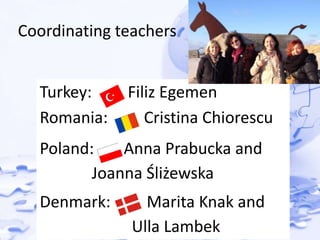
Coordinating teachers 
Turkey: Filiz Egemen 
Romania: Cristina Chiorescu 
Poland: Anna Prabucka and 
Joanna Śliżewska 
Denmark: Marita Knak and 
Ulla Lambek
The use of Twinspace, by Cristina (Ro)
Our shortcut for our long title: 
”Challenging Communication in a 
Committing Community” will be: 
”The 4 C´s”
Denmark 
First period 1.10. 2014 – 31.1.2015 
Title: ”Gyro Gearloos” 
– teens inventing and Science fiction 
In a democracy you must learn to argue and 
justify the choices you make. The students 
will practice that while they are discussing 
what they are going to invent. We want to 
raise creative students who are flexible, 
motivated and want to do their best.
Description of the activites: 
for Science fiction novels 
1. Presentation of the participating students – 
Danish students collect email addresses 
from the students and start the proces. 
2. Read Ray Bradburys: “A Sound like a 
Thunder”, 
3. Brainstorm?? – Danish students are in 
charge. 
4. Write novels in Google docs – Danish 
students are in charge. 
5. Correct novels and make illustrations
Description of the activites: 
for Gyro Geerloos 
1. Danish students start the mindmeister. 
2. In teams make brainstorm on new 
inventions. (2 from each of the four 
countries will be invited to work in the same 
Mindmeister.) 
3. To get ideas the students will be encouraged 
to ask local industries and private people if 
there are something they are missing in their 
everyday lives. 
4. Skype meeting - discuss and agree.
Poland 
Second period: 1.2.2015 – 30.6.2015 
Title: ”The big box” – All about freedom 
Prezi: (Responsible: Poland)
Romania 
Third period 15.9.2015 to 31.1.2016 
Title: ”Democracy” – about liberty and its 
limits in modern society. 
Wikispace (Responsible: Romania)
Turkey 
Fourth period 1.2.2016 to 30.6.2016 
Title: ”Expression” 
The students will exchange knowledge how different cultures express 
emotions and the sence og their identities through art. 
Mural.ly: (Responsible: Turkey)

Presentation 4c

  • 1.
    Challenging Communication ina Committing Community 2014-2016
  • 2.
    Training to bea European citizen Prepared to be a Global Citizen
  • 3.
    The purpose ofthe project ①To give the students intercultural competences. ②To develop ways of learning which are interesting and relevant for the students. ③To make friends across borders and brake down prejustices. ④To improve the students language skills ⑤To strenghten the feeling of being European ⑥To inspire teachers at our schools to make projects and use IT as a cooperative tool.
  • 4.
    1. Intercultural Competences • The ability to communicate with others. • The abiliti to feel empathy – to put yourself in anothers place. • The ability to use ICT interactive. • The ability to cooperate in teams together with people from other backgrounds. • The ability to act independent and reflexive in unpredictible situations
  • 5.
    2. To developways of learning which are interesting and relevant for the students. • to modernize teaching methods and techniques by changing typical classroom teaching into student-centered learning environments • Use IT in collaborative cross-curricular projects We believe this way of working will generate a feeling of relevance amongst our students and motivate them into participating and provide the students with important skills they can apply later in life (organizational skills, creativity, methodology and collaboration).
  • 6.
    3. To makefriends across borders and brake down prejustices. We live in democratic countries in different parts of Europe. The young people in the areas we live in are quite isolated when it comes to meeting people from other countries face-to-face. By innovating cooperative projects combined with mobility meetings we will open the door to Europe and help them realize that Europeans have a lot in common and we need each other. We want to arrange a mobility meeting for students and teachers every half year in our schools, as we believe the physical transnational meetings are important. You feel more committed to someone you have met - as a consequence the following projects after the mobility meetings in the classes among students and teachers will be of a higher quality and the participants will feel more responsible. By working in transnational teams the feeling of togetherness and acceptance between our countries will grow naturally and many stereotypes will be refuted. This will create a greater understanding of each other as well as other EU-countries.
  • 7.
    4. To improve the students language skills. We have discovered that traditional classroom teaching has a tendency to be ineffective und uninspiring for some students. More and more students cannot see the relevance of education and fail to participate in lessons in an active way; others even make the choice to leave school early. Our experience from former projects is that students, who claim they cannot speak nor communicate in English, raise their self-confidence when they meet students from other countries because they get a feeling of achievement. It is our belief that creating an environment where the students are more active players will further raise the confidence of our pupils and give them a greater sense of self-worth. Ultimately the newfound success may spread to the daily classroom and encourage students and teachers to work differently.
  • 8.
    5. To strenghtenthe feeling of being a European Letting the students work in international teams will help prepare our student for a future in a world that’s getting smaller and a Europe that’s getting more united. We feel that we as educators are responsible for training our students in being active participants on an international scale. By involving our students in a European project, we hope to develop their international comprehension and give them an experience of being a part of something bigger - the feeling of solidarity as members of the European Union. We strive to give our students a greater understanding of democracy and increase tolerance for different cultures by letting them with themes and methods that challenge their normal way of thinking and force them to participate in the democratic process.
  • 9.
    6. To inspireteachers at our schools to make projects and use IT as a cooperative tool. Through experience we have discovered that students using ICT in a learning environment are more focused and eager to complete tasks because they use tools they find interesting. ICT tools are excellent for cooperation and intend to equip our students with as much knowledge of ICT as possible. We will work in student-centered learning environment where we create a foundation for the students to work from. The pupils will be problem solvers, designers, debate leaders, project managers and more in the different challenges they will be presented with. The involved teachers will provide the students with the necessary knowledge and know-how (various ICT tools, arts and crafts techniques ect.) to help and support the ideas of the students; they will inspire and encourage the students in the hope of building a venue for understanding and creativity. Most importantly the participating teachers will also provide the students with feedback and feed forward.
  • 10.
    Partner Schools IbniSina Anadolu Lisesi, Turkey Liceul Teoretic "Dr. Mihai Ciuca", Romania Gimnazjum nr 6 w Koszalinie, Poland Agerbaek School, Denmark
  • 11.
    Coordinating teachers Turkey:Filiz Egemen Romania: Cristina Chiorescu Poland: Anna Prabucka and Joanna Śliżewska Denmark: Marita Knak and Ulla Lambek
  • 12.
    The use ofTwinspace, by Cristina (Ro)
  • 13.
    Our shortcut forour long title: ”Challenging Communication in a Committing Community” will be: ”The 4 C´s”
  • 14.
    Denmark First period1.10. 2014 – 31.1.2015 Title: ”Gyro Gearloos” – teens inventing and Science fiction In a democracy you must learn to argue and justify the choices you make. The students will practice that while they are discussing what they are going to invent. We want to raise creative students who are flexible, motivated and want to do their best.
  • 15.
    Description of theactivites: for Science fiction novels 1. Presentation of the participating students – Danish students collect email addresses from the students and start the proces. 2. Read Ray Bradburys: “A Sound like a Thunder”, 3. Brainstorm?? – Danish students are in charge. 4. Write novels in Google docs – Danish students are in charge. 5. Correct novels and make illustrations
  • 16.
    Description of theactivites: for Gyro Geerloos 1. Danish students start the mindmeister. 2. In teams make brainstorm on new inventions. (2 from each of the four countries will be invited to work in the same Mindmeister.) 3. To get ideas the students will be encouraged to ask local industries and private people if there are something they are missing in their everyday lives. 4. Skype meeting - discuss and agree.
  • 17.
    Poland Second period:1.2.2015 – 30.6.2015 Title: ”The big box” – All about freedom Prezi: (Responsible: Poland)
  • 18.
    Romania Third period15.9.2015 to 31.1.2016 Title: ”Democracy” – about liberty and its limits in modern society. Wikispace (Responsible: Romania)
  • 19.
    Turkey Fourth period1.2.2016 to 30.6.2016 Title: ”Expression” The students will exchange knowledge how different cultures express emotions and the sence og their identities through art. Mural.ly: (Responsible: Turkey)