Decoding Stem Cells for 
ALS 
ALSA 
November 7, 2014 
Dallas A Forshew, RN, BSN 
Manager, Clinical Research 
ForsheD@cpmcri.org Forbes Norris ALS Research Center 
San Francisco, CA
Overview 
 Patient perceptions 
 What are stem cells? 
 Where do they come 
from? 
 How are they 
produced? 
 What are they 
intended to do? 
 Studies 
 International 
 United States 
 Dangers???!!!! 
 The Future 
2
Wide range of ALS patient 
expectations regarding Stem Cells 
 Cure and quickly 
 Stabilize weakness 
 Regain strength 
 Give hope 
 Some patients have trached and vented in 
anticipation of a cure from stem cells 
3
What is NOT Appreciated by Most 
Patients 
 ALS will continue after stem cell 
administration 
 Supportive cells may play a key role 
 Nerves grow very slowly 
 There are many kinds of neural stem cells 
and these behave differently 
 There are applications for use of stem 
cells in drug discovery and refinement of 
sub-types of ALS 
4
Case Study 1 
 RT, 54 yr old male, leg onset 3 yrs ago 
 Bulbar and breathing normal, just started using 
motorized w/c, minimal UE weakness 
 Most ALS patients are very optimistic 
 Stem cells are the answer, nature will cure itself 
 Wants to regain walking ability 
 Too much hype from Brainstorm 
 Unrealistically heightens expectations 
 Understands that the Emory pt who regained strength was 
a fluke 
 Moved to Atlanta to have a better chance of getting stem 
cells 
5
Case Study 2 
 MG, 70 yr old male, onset 7 yrs ago 
 No use of arms or legs, minimal bulbar 
changes, some respiratory involvement 
 New science that is just beginning to be understood 
 Stem cell progress in ALS will come slowly 
 Since ALS may be a syndrome, individualized/cocktail 
therapies will be needed 
 No one knows how ALS is initiated or spreads 
 Stem cells can be used to develop treatments and 
cures 
6
Where do Patients get Information? 
 ALS Association / Muscular Dystrophy Association 
 Internet, support groups, webinars 
 NEALS (Northeast ALS Consortium) 
 Internet, webinars, yearly workshop aimed at creating patient 
research ambassadors 
 ALS World Wide 
 Internet, A Patient’s Path through the Stem Cell Maze 
 ALS TDI (Therapy Development Institute) 
 Internet, ALS 101 seminars 
 Patients Like Me 
 Patients talking with patients 
 Google “ALS and Stem Cells”: 1,290,000 hits 
7
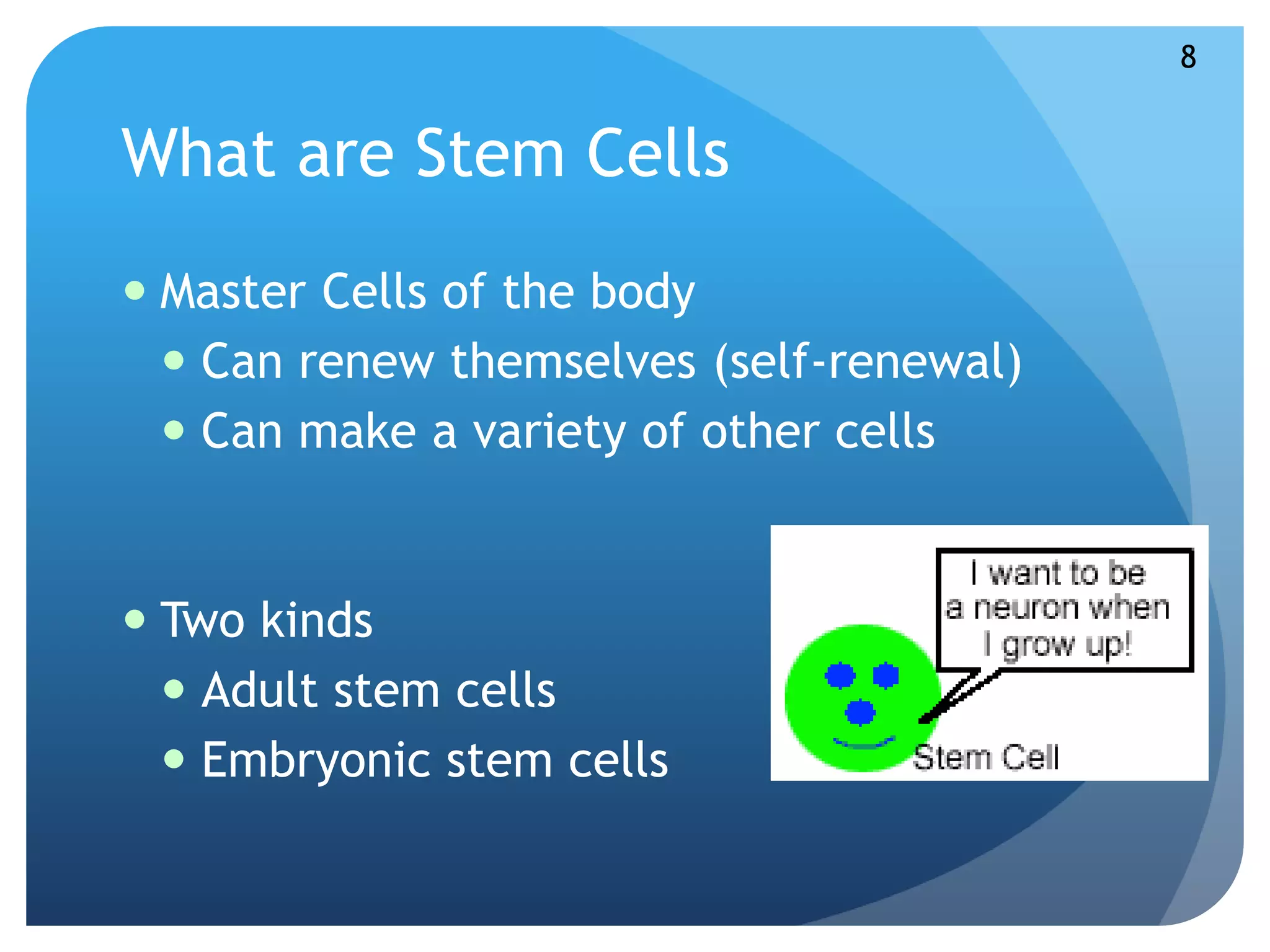
What are Stem Cells 
 Master Cells of the body 
 Can renew themselves (self-renewal) 
 Can make a variety of other cells 
 Two kinds 
 Adult stem cells 
 Embryonic stem cells 
8
Adult Stem Cells 
 Stem cells in specific tissue that replenish 
their particular tissues 
 Bone marrow, brain, adipose tissue, liver, 
skin, teeth, reproductive system 
 Multipotent 
 able to form multiple types of cells in their home 
tissue 
9
Embryonic Stem Cells 
 Origin 
 Made from embryos from fertility clinics that are 
no longer going to be used 
 Embryos that would otherwise be discarded 
 2 - 5 days old 
 Pluripotent 
 Can be manipulated to form any kind of cell 
10
Induced Pluripotent Stem Cells 
 iPS Cells 
 Share many properties with embryonic stem cells 
 Model of disease 
 ALS not just one disease 
 Drug discovery 
 Use iPS cells instead of mice 
11
A Rose is a Rose is a Rose Gertrude Stein 
 But a stem cell is not a stem cell… 
 Stem cells from different labs are very different 
 They do not turn into the same kind of cells 
 They do not behave the same 
 Each time a new stem cell line is produced, the 
FDA treats it as a new drug 
12
Purpose of Stem Cells in ALS 
 Replace nerves?? 
 Motor neurons grow very slowly 
 1 mm per day but… 
 Replace supporting cells in spinal cord 
 Astrocytes, glia cells, etc 
13
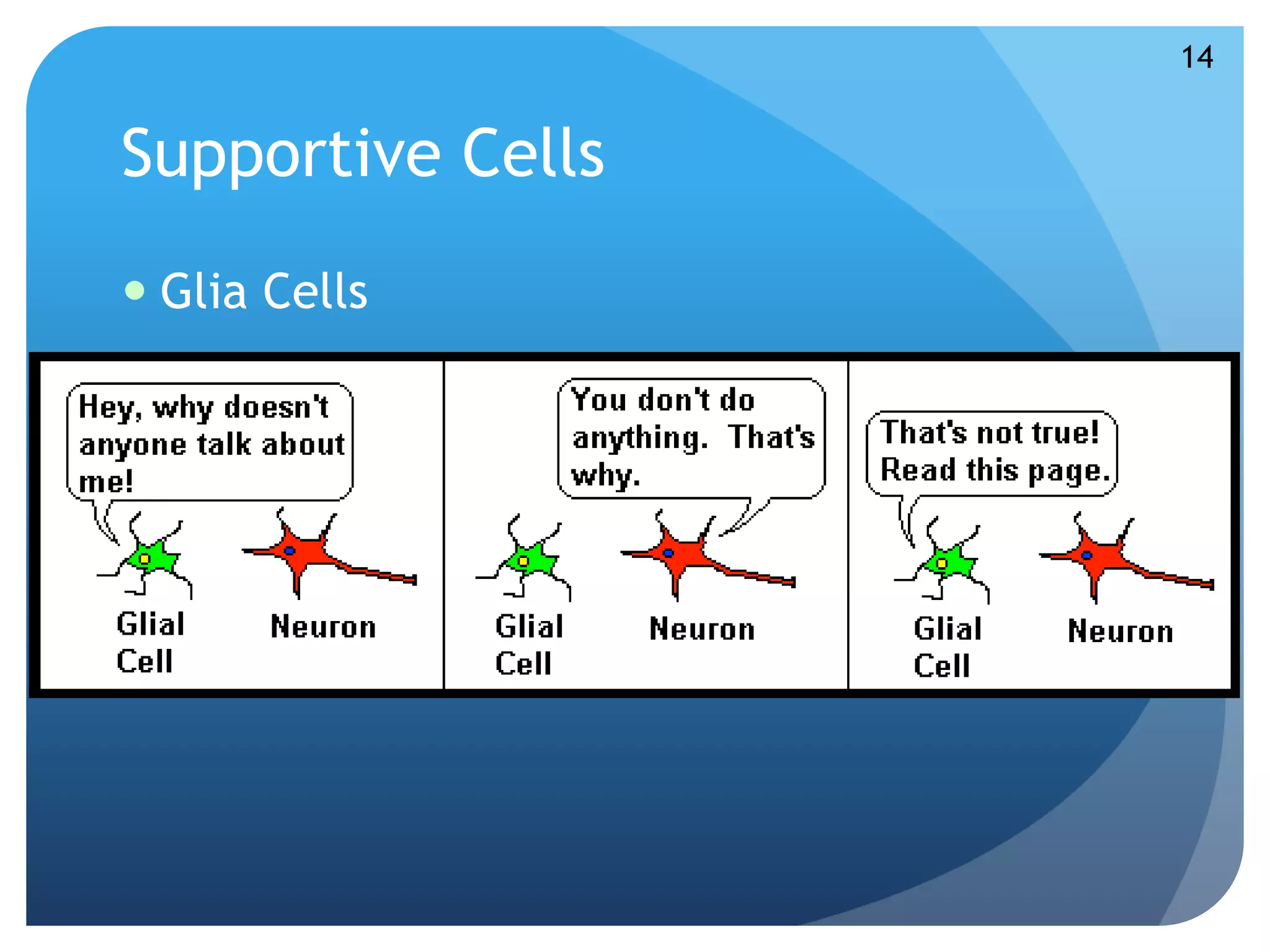
Supportive Cells 
 Glia Cells 
14
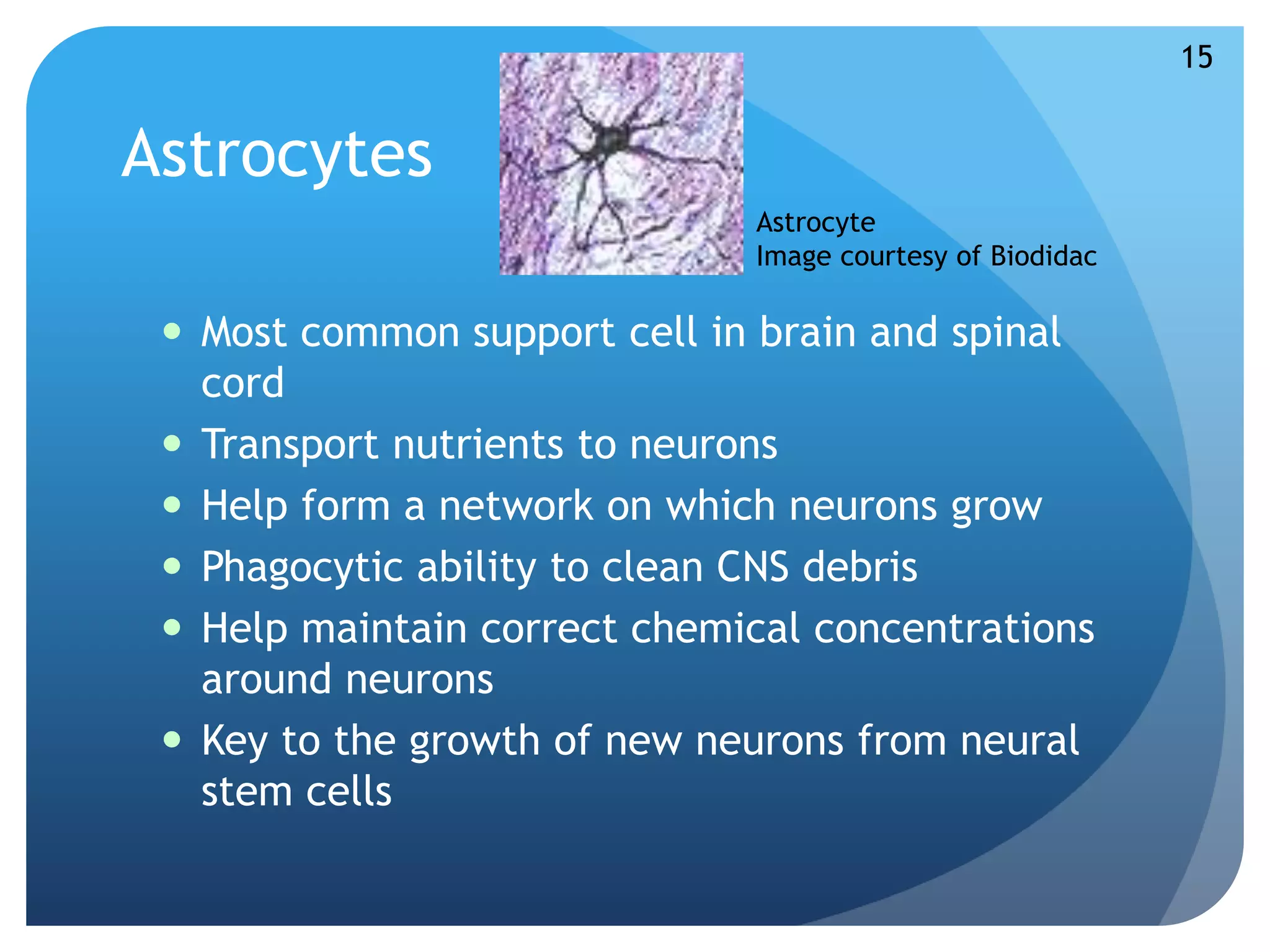
Astrocytes 
 Most common support cell in brain and spinal 
cord 
 Transport nutrients to neurons 
 Help form a network on which neurons grow 
 Phagocytic ability to clean CNS debris 
 Help maintain correct chemical concentrations 
around neurons 
 Key to the growth of new neurons from neural 
stem cells 
Astrocyte 
Image courtesy of Biodidac 
15
Other Glia Cells 
 Microglia 
 Phagocytic ability to clean CNS debris 
 Oligodenendroglia 
 Schwann cells of the CNS 
 Insulation to neurons 
 What makes white matter white 
16
Clinical Trials 
 Clinicaltrials.gov 
 21 clinical studies 
 Mexico, Iran, China, South Korea, Poland, India, 
Italy, Spain, France, Israel 
 All types of stem cells, mostly bone marrow 
 All routes of administration 
 Vein, muscle, brain, spinal fluid, spinal cord 
17
Neuralstem, Inc 
 US company 
 Commercially produced, large quantities 
 Derived from a single 8 week old aborted fetus 
 Aimed at producing human neurons and glia cells 
 Phase I trial completed 
 Emory University, Atlanta, GA 
 FDA approved implementation of Phase II trial 
September 2013 
 Emory University, Atlanta, GA 
 University of Michigan, Ann Arbor, MI 
 Mayo Clinic, Rochester, MN 
18
Neuralstem, Phase I Study 
 Emory University 
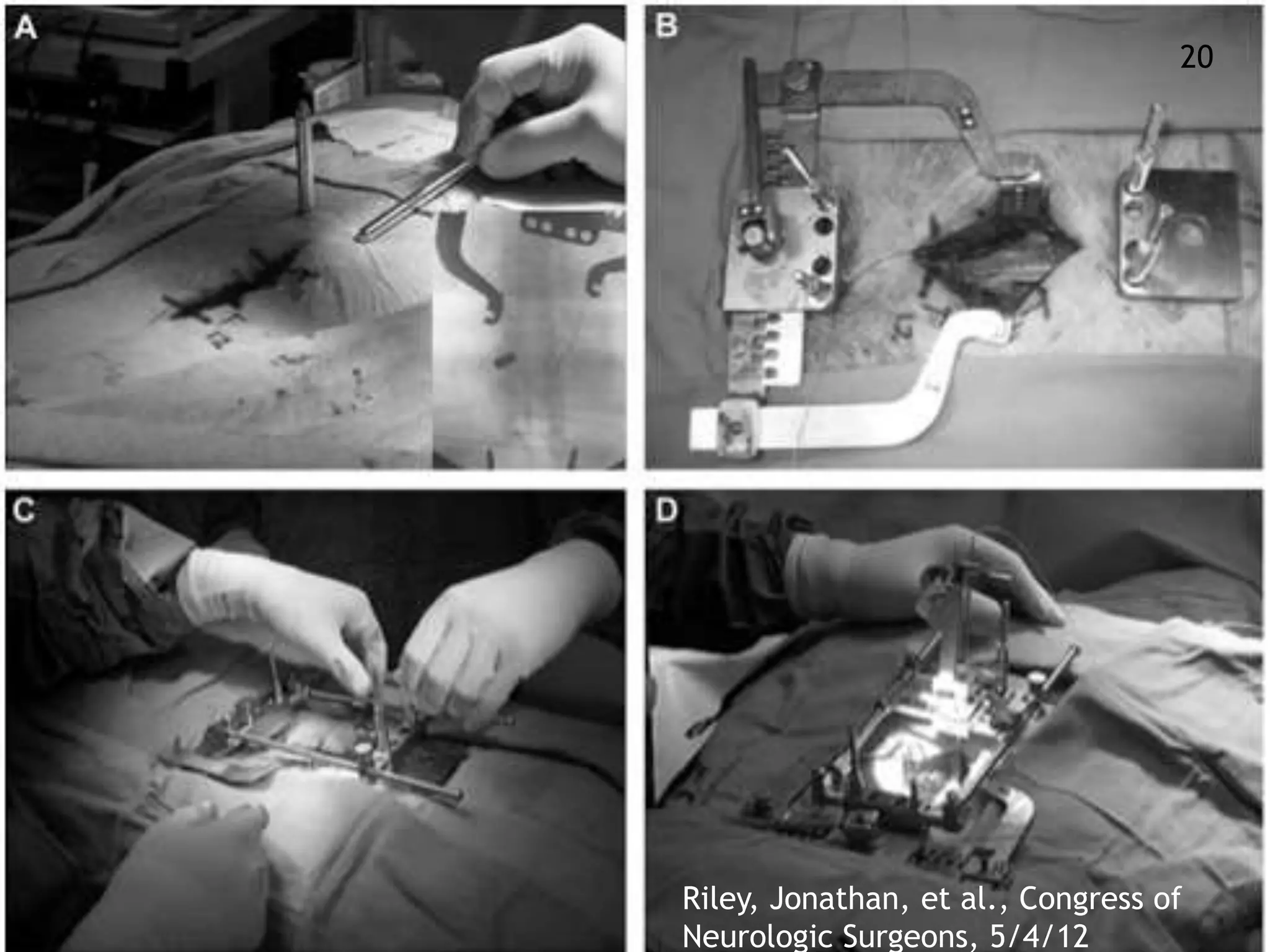
 Intrathecal injection of spinal-cord derived 
stem cells from a single 8 week old fetus 
 Phase I safety trial 
 Are these stem cells safe? 
 Is the route of administration safe? 
 18 Surgeries in 15 patients 
 Result: safe! 
19
20 
Riley, Jonathan, et al., Congress of 
Neurologic Surgeons, 5/4/12
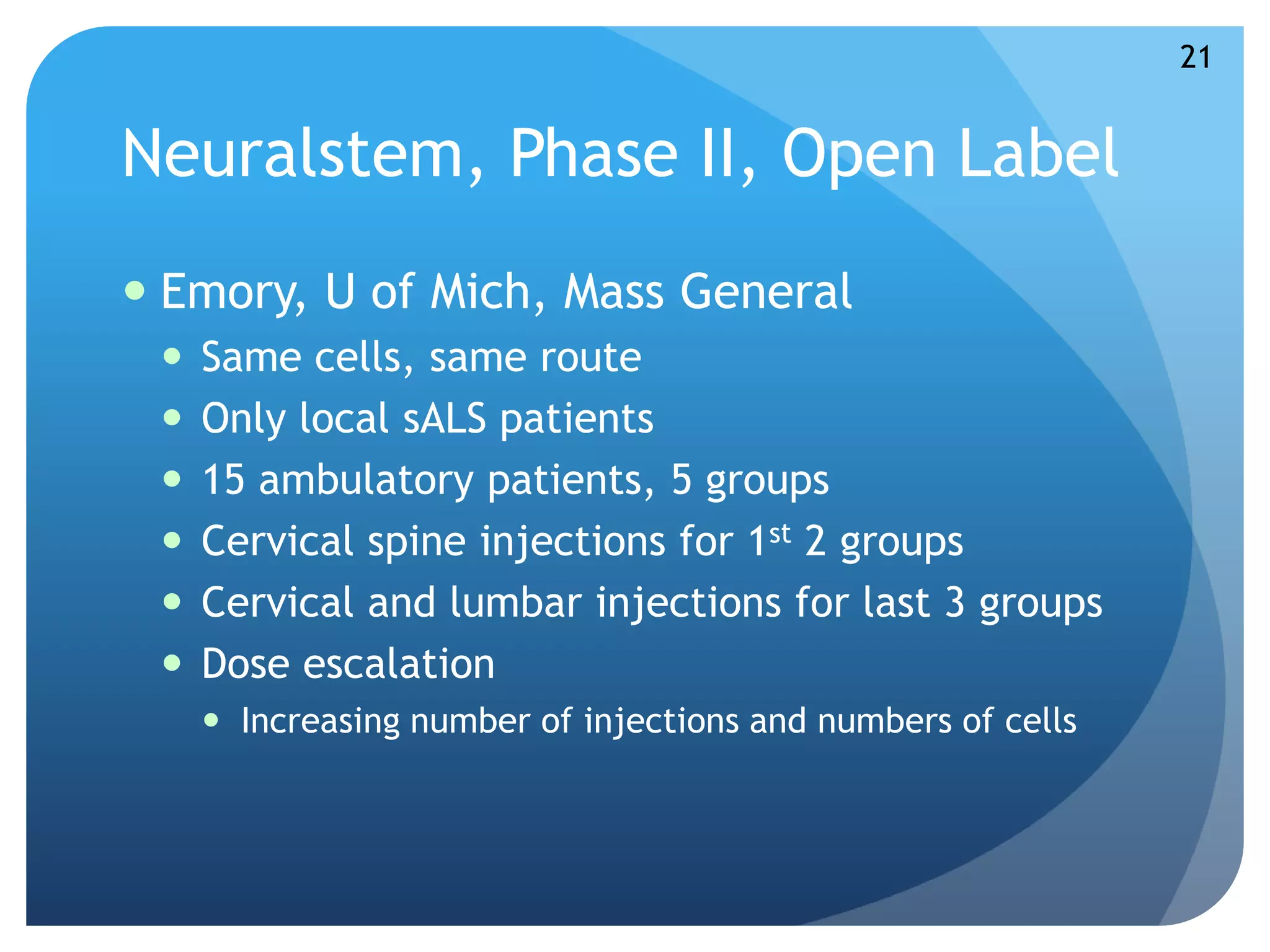
Neuralstem, Phase II, Open Label 
 Emory, U of Mich, Mass General 
 Same cells, same route 
 Only local sALS patients 
 15 ambulatory patients, 5 groups 
 Cervical spine injections for 1st 2 groups 
 Cervical and lumbar injections for last 3 groups 
 Dose escalation 
 Increasing number of injections and numbers of cells 
21
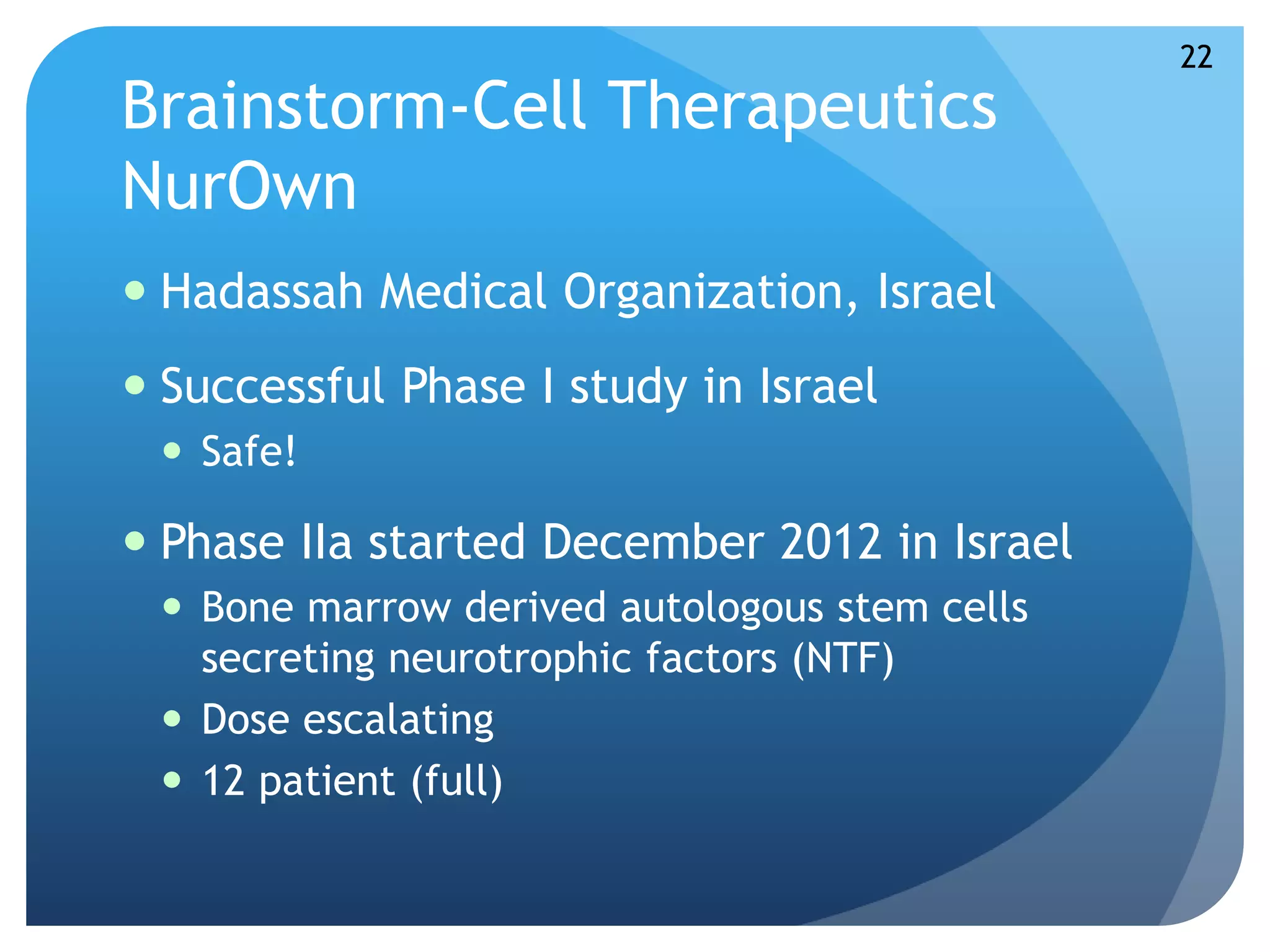
Brainstorm-Cell Therapeutics 
NurOwn 
 Hadassah Medical Organization, Israel 
 Successful Phase I study in Israel 
 Safe! 
 Phase IIa started December 2012 in Israel 
 Bone marrow derived autologous stem cells 
secreting neurotrophic factors (NTF) 
 Dose escalating 
 12 patient (full) 
22
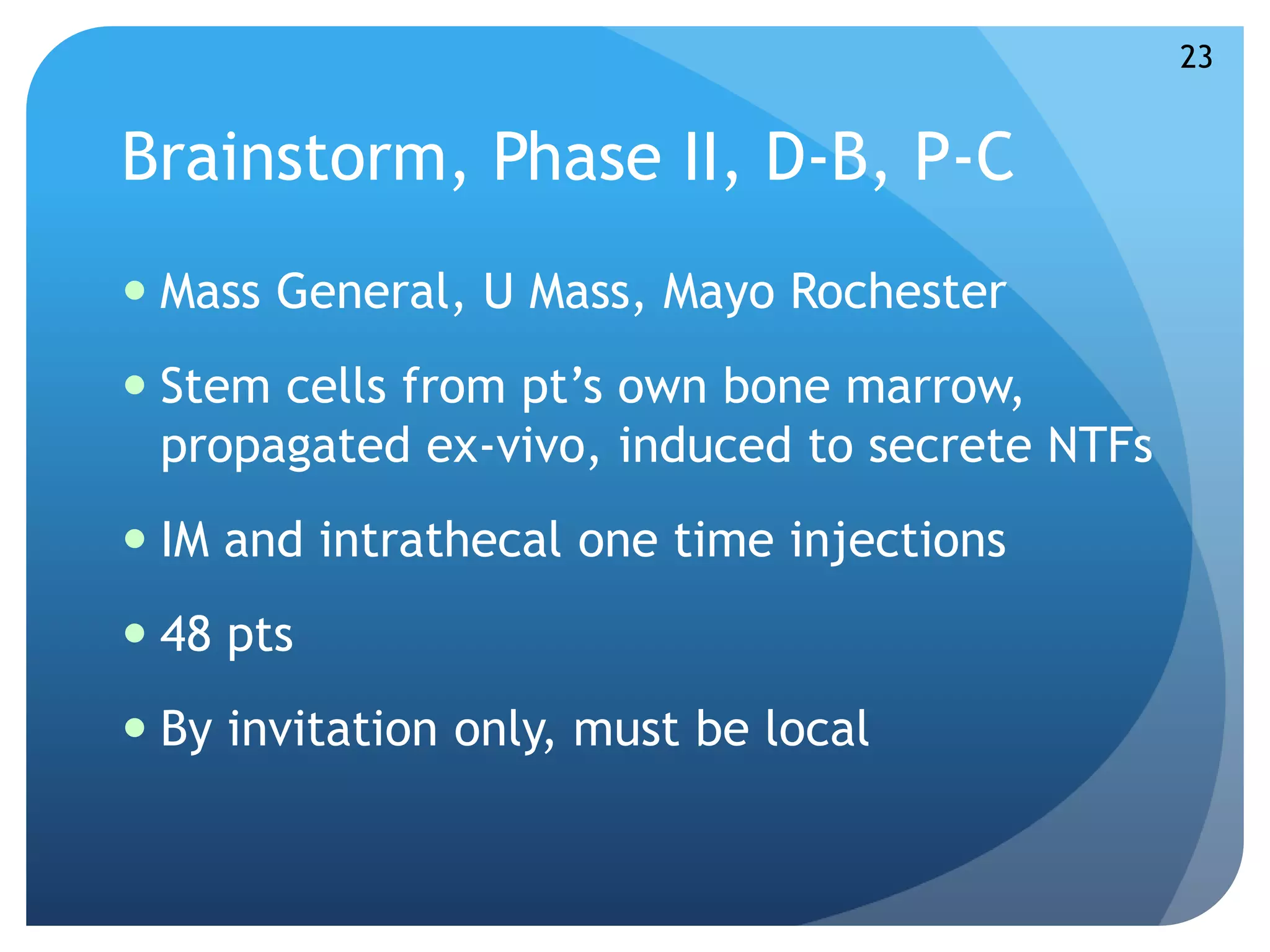
Brainstorm, Phase II, D-B, P-C 
 Mass General, U Mass, Mayo Rochester 
 Stem cells from pt’s own bone marrow, 
propagated ex-vivo, induced to secrete NTFs 
 IM and intrathecal one time injections 
 48 pts 
 By invitation only, must be local 
23
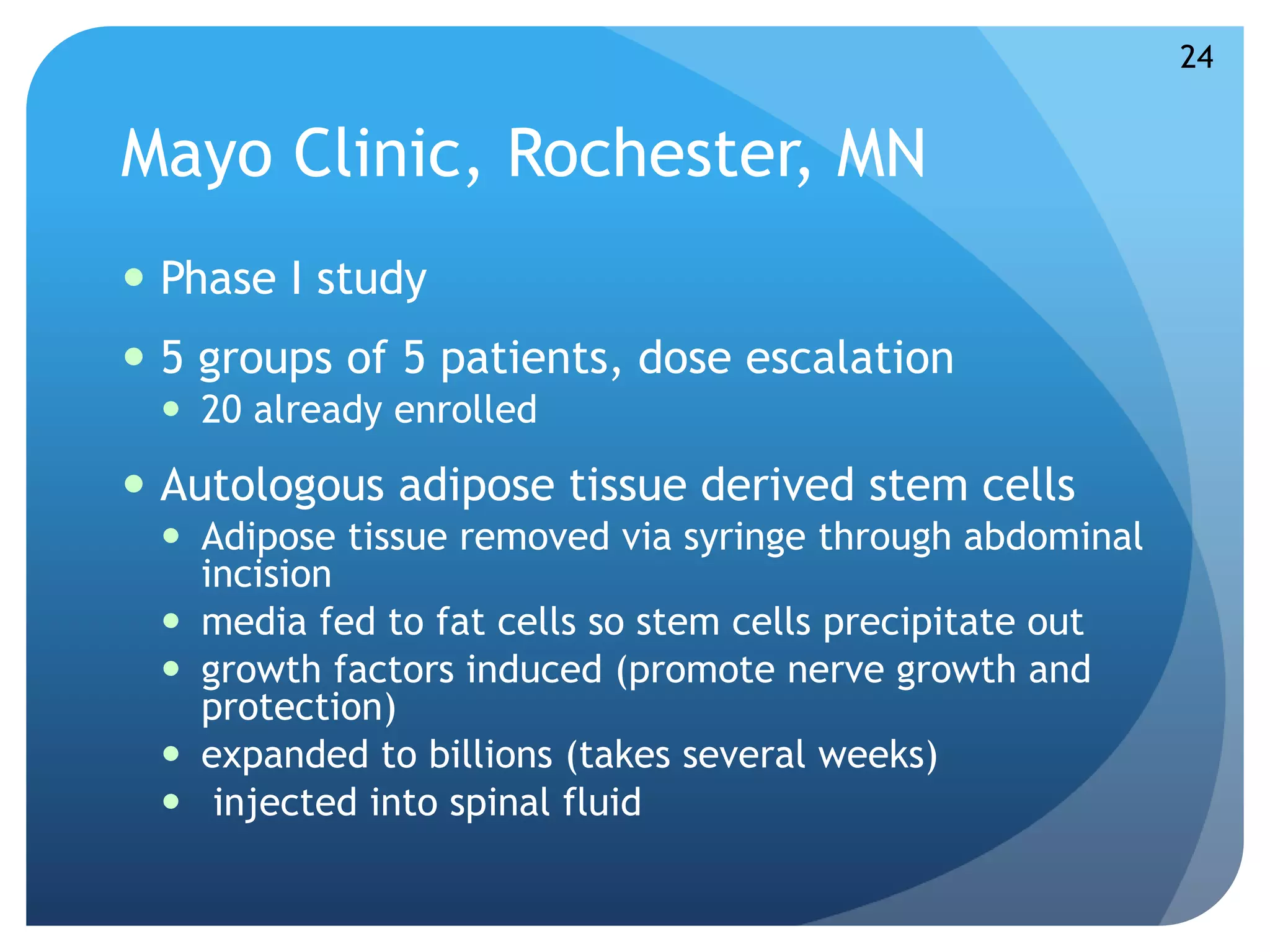
Mayo Clinic, Rochester, MN 
 Phase I study 
 5 groups of 5 patients, dose escalation 
 20 already enrolled 
 Autologous adipose tissue derived stem cells 
 Adipose tissue removed via syringe through abdominal 
incision 
 media fed to fat cells so stem cells precipitate out 
 growth factors induced (promote nerve growth and 
protection) 
 expanded to billions (takes several weeks) 
 injected into spinal fluid 
24
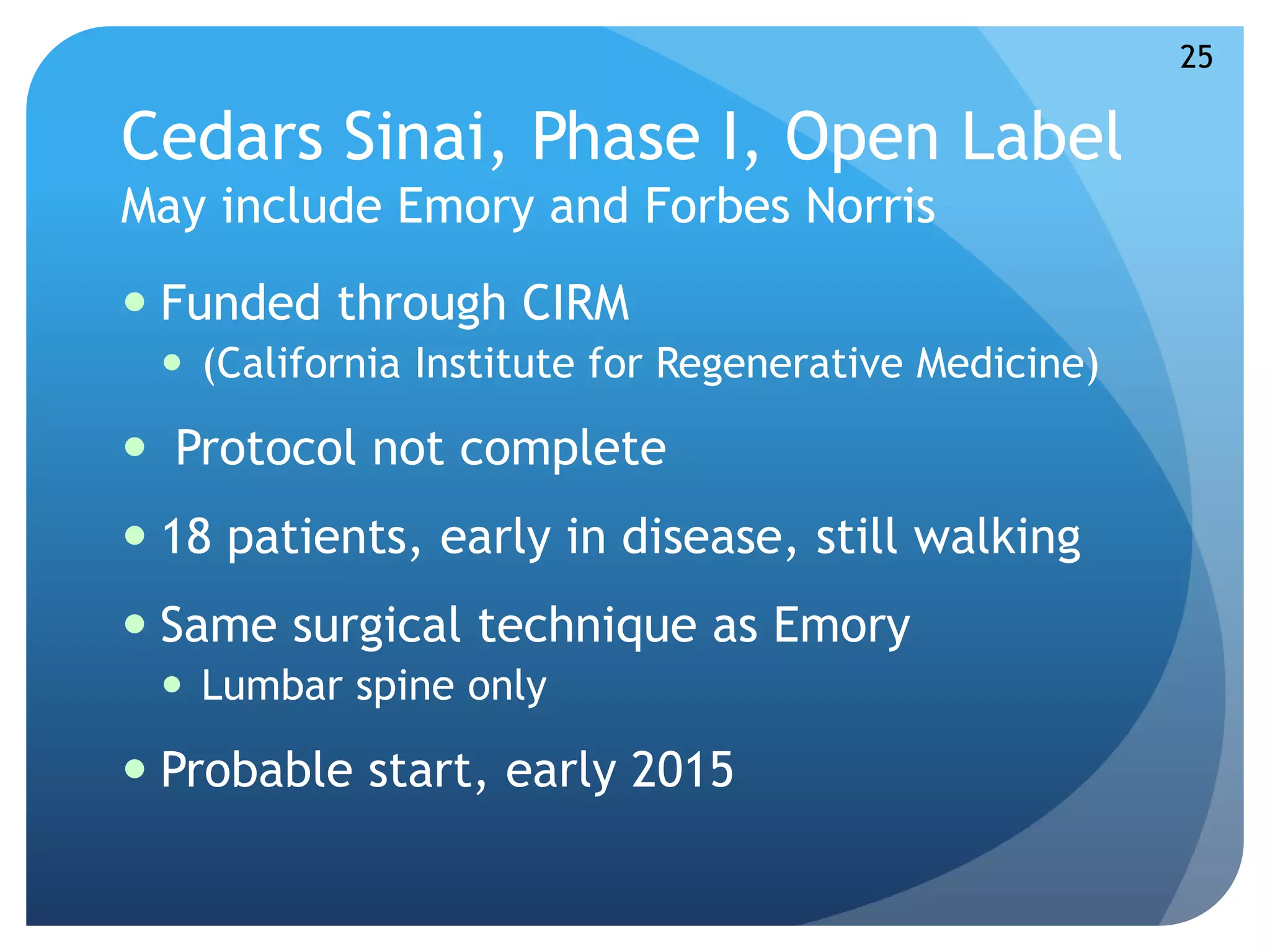
Cedars Sinai, Phase I, Open Label 
May include Emory and Forbes Norris 
 Funded through CIRM 
 (California Institute for Regenerative Medicine) 
 Protocol not complete 
 18 patients, early in disease, still walking 
 Same surgical technique as Emory 
 Lumbar spine only 
 Probable start, early 2015 
25
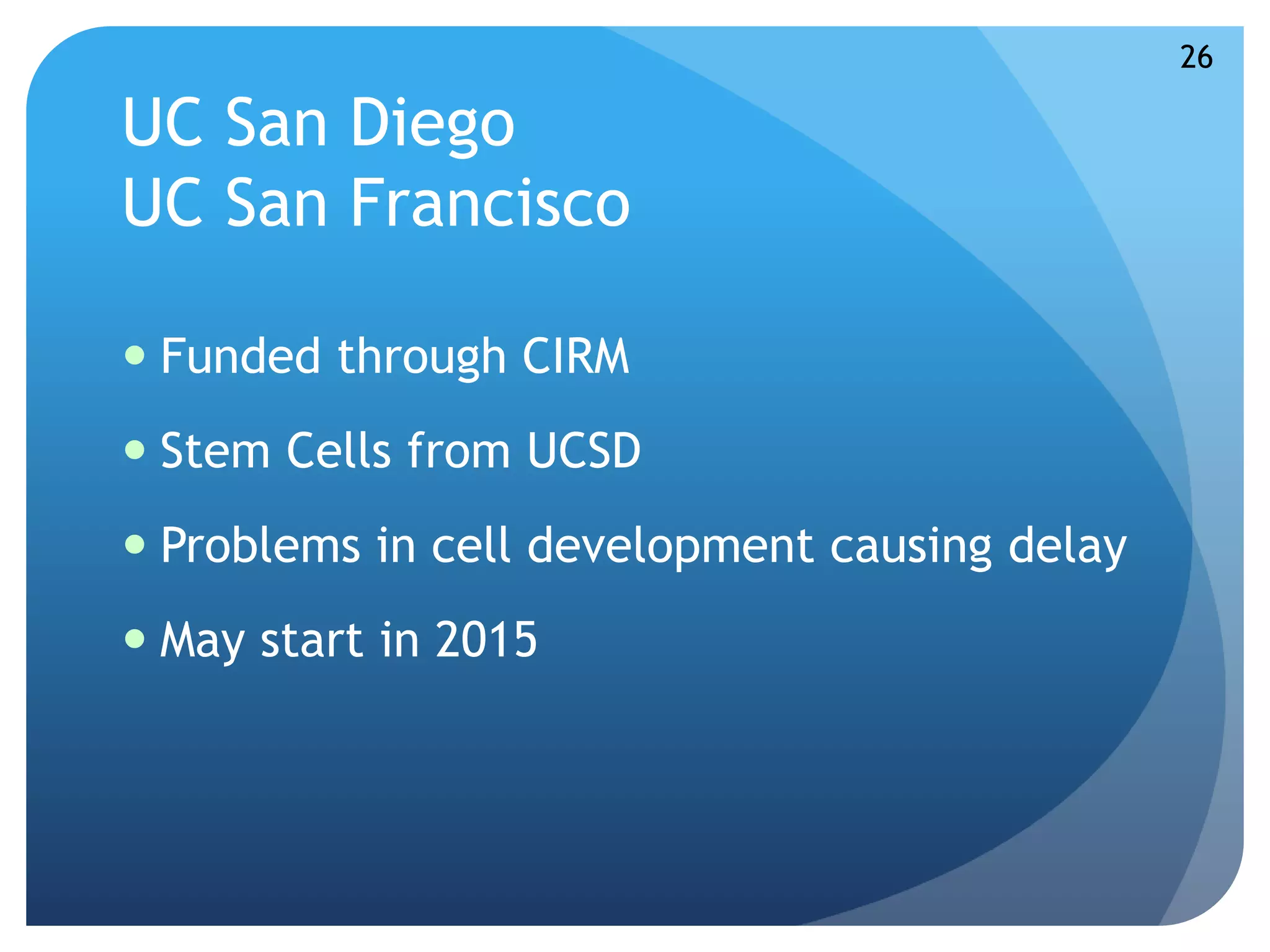
UC San Diego 
UC San Francisco 
 Funded through CIRM 
 Stem Cells from UCSD 
 Problems in cell development causing delay 
 May start in 2015 
26
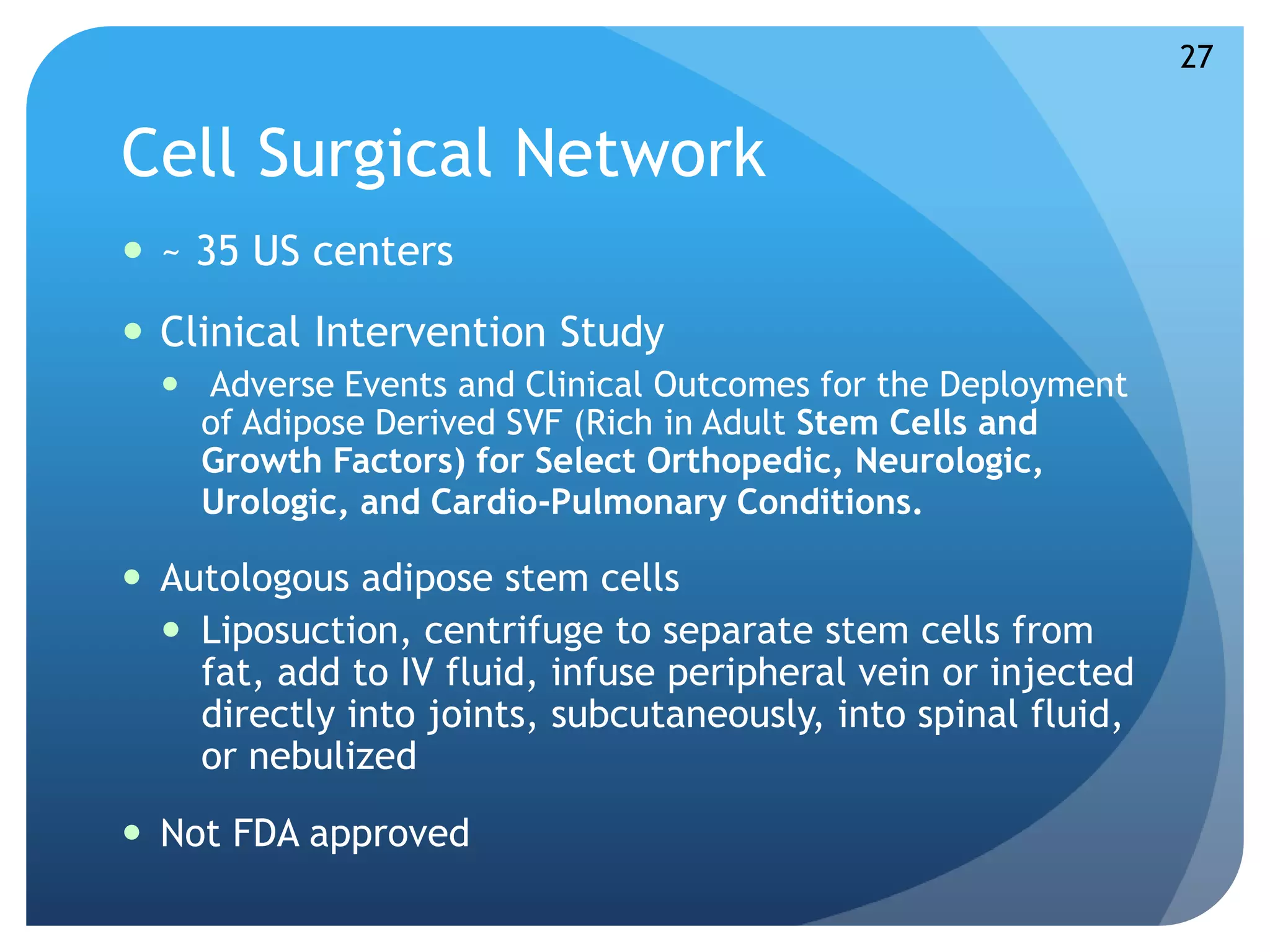
Cell Surgical Network 
 ~ 35 US centers 
 Clinical Intervention Study 
 Adverse Events and Clinical Outcomes for the Deployment 
of Adipose Derived SVF (Rich in Adult Stem Cells and 
Growth Factors) for Select Orthopedic, Neurologic, 
Urologic, and Cardio-Pulmonary Conditions. 
 Autologous adipose stem cells 
 Liposuction, centrifuge to separate stem cells from 
fat, add to IV fluid, infuse peripheral vein or injected 
directly into joints, subcutaneously, into spinal fluid, 
or nebulized 
 Not FDA approved 
27
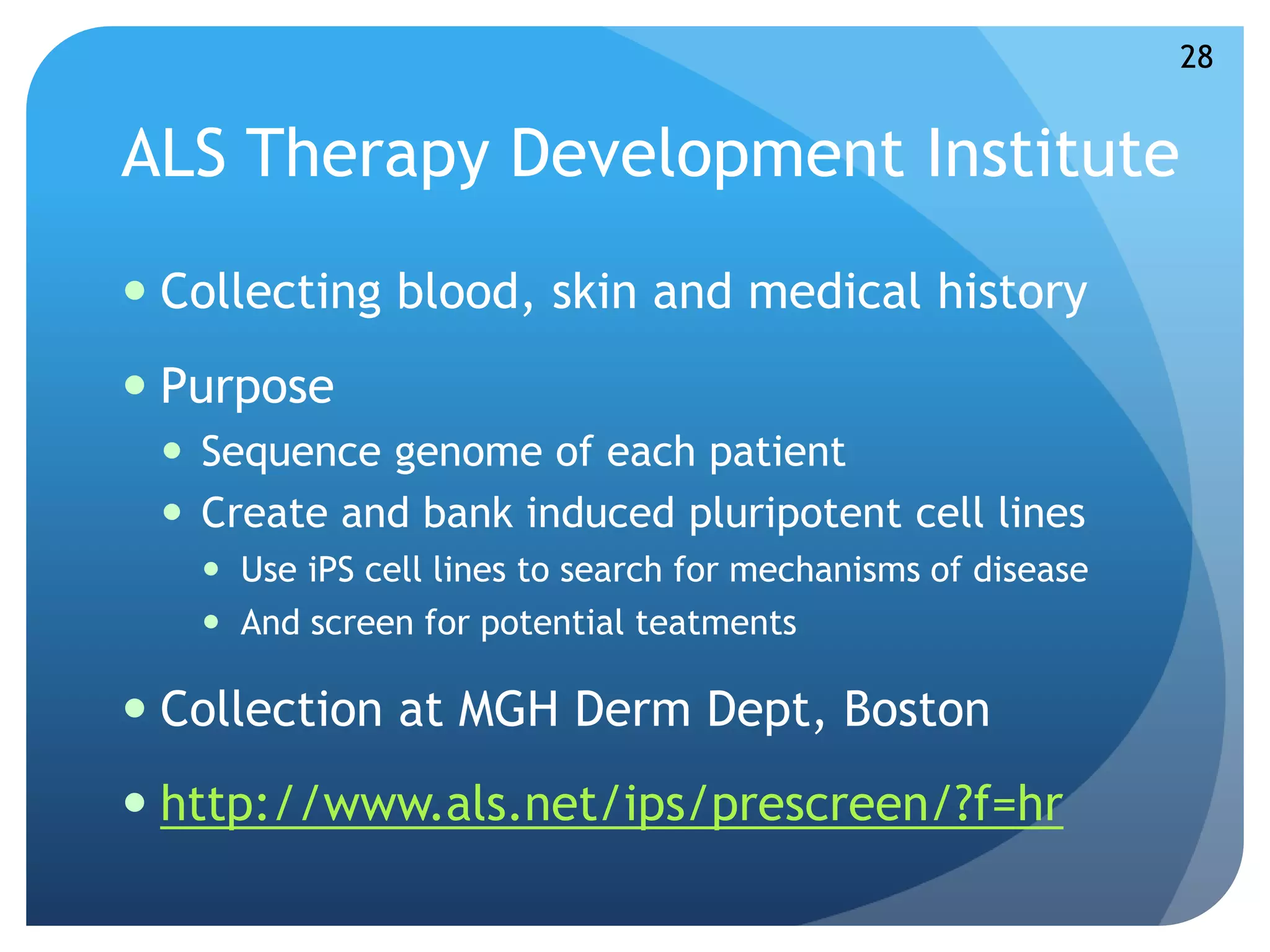
ALS Therapy Development Institute 
 Collecting blood, skin and medical history 
 Purpose 
 Sequence genome of each patient 
 Create and bank induced pluripotent cell lines 
 Use iPS cell lines to search for mechanisms of disease 
 And screen for potential teatments 
 Collection at MGH Derm Dept, Boston 
 http://www.als.net/ips/prescreen/?f=hr 
28
Caution!!! 
 Things can go wrong! 
 Stem cells are manipulated to reproduce 
 Cancer is a risk 
 Route of administration 
 Surgery, anesthesia 
 Immunosuppression 
 Infection 
29
Summary 
 Hopeful 
 Not quite ready for prime-time 
 Change thinking from replacement to 
restorative, repair, protect 
 Resources 
 Clinicaltrials.gov 
30

Presentation 217 dallas forshew decoding stem cells for als 2014

  • 1.
    Decoding Stem Cellsfor ALS ALSA November 7, 2014 Dallas A Forshew, RN, BSN Manager, Clinical Research ForsheD@cpmcri.org Forbes Norris ALS Research Center San Francisco, CA
  • 2.
    Overview  Patientperceptions  What are stem cells?  Where do they come from?  How are they produced?  What are they intended to do?  Studies  International  United States  Dangers???!!!!  The Future 2
  • 3.
    Wide range ofALS patient expectations regarding Stem Cells  Cure and quickly  Stabilize weakness  Regain strength  Give hope  Some patients have trached and vented in anticipation of a cure from stem cells 3
  • 4.
    What is NOTAppreciated by Most Patients  ALS will continue after stem cell administration  Supportive cells may play a key role  Nerves grow very slowly  There are many kinds of neural stem cells and these behave differently  There are applications for use of stem cells in drug discovery and refinement of sub-types of ALS 4
  • 5.
    Case Study 1  RT, 54 yr old male, leg onset 3 yrs ago  Bulbar and breathing normal, just started using motorized w/c, minimal UE weakness  Most ALS patients are very optimistic  Stem cells are the answer, nature will cure itself  Wants to regain walking ability  Too much hype from Brainstorm  Unrealistically heightens expectations  Understands that the Emory pt who regained strength was a fluke  Moved to Atlanta to have a better chance of getting stem cells 5
  • 6.
    Case Study 2  MG, 70 yr old male, onset 7 yrs ago  No use of arms or legs, minimal bulbar changes, some respiratory involvement  New science that is just beginning to be understood  Stem cell progress in ALS will come slowly  Since ALS may be a syndrome, individualized/cocktail therapies will be needed  No one knows how ALS is initiated or spreads  Stem cells can be used to develop treatments and cures 6
  • 7.
    Where do Patientsget Information?  ALS Association / Muscular Dystrophy Association  Internet, support groups, webinars  NEALS (Northeast ALS Consortium)  Internet, webinars, yearly workshop aimed at creating patient research ambassadors  ALS World Wide  Internet, A Patient’s Path through the Stem Cell Maze  ALS TDI (Therapy Development Institute)  Internet, ALS 101 seminars  Patients Like Me  Patients talking with patients  Google “ALS and Stem Cells”: 1,290,000 hits 7
  • 8.
    What are StemCells  Master Cells of the body  Can renew themselves (self-renewal)  Can make a variety of other cells  Two kinds  Adult stem cells  Embryonic stem cells 8
  • 9.
    Adult Stem Cells  Stem cells in specific tissue that replenish their particular tissues  Bone marrow, brain, adipose tissue, liver, skin, teeth, reproductive system  Multipotent  able to form multiple types of cells in their home tissue 9
  • 10.
    Embryonic Stem Cells  Origin  Made from embryos from fertility clinics that are no longer going to be used  Embryos that would otherwise be discarded  2 - 5 days old  Pluripotent  Can be manipulated to form any kind of cell 10
  • 11.
    Induced Pluripotent StemCells  iPS Cells  Share many properties with embryonic stem cells  Model of disease  ALS not just one disease  Drug discovery  Use iPS cells instead of mice 11
  • 12.
    A Rose isa Rose is a Rose Gertrude Stein  But a stem cell is not a stem cell…  Stem cells from different labs are very different  They do not turn into the same kind of cells  They do not behave the same  Each time a new stem cell line is produced, the FDA treats it as a new drug 12
  • 13.
    Purpose of StemCells in ALS  Replace nerves??  Motor neurons grow very slowly  1 mm per day but…  Replace supporting cells in spinal cord  Astrocytes, glia cells, etc 13
  • 14.
    Supportive Cells Glia Cells 14
  • 15.
    Astrocytes  Mostcommon support cell in brain and spinal cord  Transport nutrients to neurons  Help form a network on which neurons grow  Phagocytic ability to clean CNS debris  Help maintain correct chemical concentrations around neurons  Key to the growth of new neurons from neural stem cells Astrocyte Image courtesy of Biodidac 15
  • 16.
    Other Glia Cells  Microglia  Phagocytic ability to clean CNS debris  Oligodenendroglia  Schwann cells of the CNS  Insulation to neurons  What makes white matter white 16
  • 17.
    Clinical Trials Clinicaltrials.gov  21 clinical studies  Mexico, Iran, China, South Korea, Poland, India, Italy, Spain, France, Israel  All types of stem cells, mostly bone marrow  All routes of administration  Vein, muscle, brain, spinal fluid, spinal cord 17
  • 18.
    Neuralstem, Inc US company  Commercially produced, large quantities  Derived from a single 8 week old aborted fetus  Aimed at producing human neurons and glia cells  Phase I trial completed  Emory University, Atlanta, GA  FDA approved implementation of Phase II trial September 2013  Emory University, Atlanta, GA  University of Michigan, Ann Arbor, MI  Mayo Clinic, Rochester, MN 18
  • 19.
    Neuralstem, Phase IStudy  Emory University  Intrathecal injection of spinal-cord derived stem cells from a single 8 week old fetus  Phase I safety trial  Are these stem cells safe?  Is the route of administration safe?  18 Surgeries in 15 patients  Result: safe! 19
  • 20.
    20 Riley, Jonathan,et al., Congress of Neurologic Surgeons, 5/4/12
  • 21.
    Neuralstem, Phase II,Open Label  Emory, U of Mich, Mass General  Same cells, same route  Only local sALS patients  15 ambulatory patients, 5 groups  Cervical spine injections for 1st 2 groups  Cervical and lumbar injections for last 3 groups  Dose escalation  Increasing number of injections and numbers of cells 21
  • 22.
    Brainstorm-Cell Therapeutics NurOwn  Hadassah Medical Organization, Israel  Successful Phase I study in Israel  Safe!  Phase IIa started December 2012 in Israel  Bone marrow derived autologous stem cells secreting neurotrophic factors (NTF)  Dose escalating  12 patient (full) 22
  • 23.
    Brainstorm, Phase II,D-B, P-C  Mass General, U Mass, Mayo Rochester  Stem cells from pt’s own bone marrow, propagated ex-vivo, induced to secrete NTFs  IM and intrathecal one time injections  48 pts  By invitation only, must be local 23
  • 24.
    Mayo Clinic, Rochester,MN  Phase I study  5 groups of 5 patients, dose escalation  20 already enrolled  Autologous adipose tissue derived stem cells  Adipose tissue removed via syringe through abdominal incision  media fed to fat cells so stem cells precipitate out  growth factors induced (promote nerve growth and protection)  expanded to billions (takes several weeks)  injected into spinal fluid 24
  • 25.
    Cedars Sinai, PhaseI, Open Label May include Emory and Forbes Norris  Funded through CIRM  (California Institute for Regenerative Medicine)  Protocol not complete  18 patients, early in disease, still walking  Same surgical technique as Emory  Lumbar spine only  Probable start, early 2015 25
  • 26.
    UC San Diego UC San Francisco  Funded through CIRM  Stem Cells from UCSD  Problems in cell development causing delay  May start in 2015 26
  • 27.
    Cell Surgical Network  ~ 35 US centers  Clinical Intervention Study  Adverse Events and Clinical Outcomes for the Deployment of Adipose Derived SVF (Rich in Adult Stem Cells and Growth Factors) for Select Orthopedic, Neurologic, Urologic, and Cardio-Pulmonary Conditions.  Autologous adipose stem cells  Liposuction, centrifuge to separate stem cells from fat, add to IV fluid, infuse peripheral vein or injected directly into joints, subcutaneously, into spinal fluid, or nebulized  Not FDA approved 27
  • 28.
    ALS Therapy DevelopmentInstitute  Collecting blood, skin and medical history  Purpose  Sequence genome of each patient  Create and bank induced pluripotent cell lines  Use iPS cell lines to search for mechanisms of disease  And screen for potential teatments  Collection at MGH Derm Dept, Boston  http://www.als.net/ips/prescreen/?f=hr 28
  • 29.
    Caution!!!  Thingscan go wrong!  Stem cells are manipulated to reproduce  Cancer is a risk  Route of administration  Surgery, anesthesia  Immunosuppression  Infection 29
  • 30.
    Summary  Hopeful  Not quite ready for prime-time  Change thinking from replacement to restorative, repair, protect  Resources  Clinicaltrials.gov 30