P. R.Pote Patil College of Pharmacy, Amravati.
Presented by,
Mr.Nawaz Hakam
S.Y.B.Pharm (V Sem)
Guided By,
Mr. Chetan M.Jain
(Assistant Professor)
M.Pharm (Q.A)
Definition
 QbD is a systematic approach to
development that begins with
predefined objectives and emphasizes
product and process understanding
and process control, based on sound
science and quality risk management.
Introduction
 The aim of pharmaceutical development is to design quality
products &its manufacturing process to consistently deliver
the intended performance of products.
 Information from pharmaceutical development studies can be
basis for quality risk management.
 QbD is the modern approach for quality of pharmaceuticals.
 These describe use of QbD to ensure quality of
pharmaceuticals.
 The foundation of QbD is ICH guidelines (Q8, Q9 & Q10).
 Q8 – pharmaceutical development.
 Q9 – quality risk management.
 Q10 – pharmaceutical quality system.
ICH Q8 Guideline
 Describe science and based approaches for pharmaceutical products
and manufacturing Process development.
 Induced concept of design space.
 A system for designing analysing and controlling manufacturing
during process of critical quality and performance attribute of raw
and in process materials and processes with goal of ensuring final
product quality.
ICH Q9 Guideline
 Describe systematic Process for assessment, Control,
Communication and review of quality risk.
 Operational areas to facilitate Risk management along with proper
maintenance of packaging and labelling.
ICH Q10 Guideline
 According to ICH Q10 effective pharmaceutical quality system is
based on ISO quality concept.
 Describe key system that facilitate Establishment and maintenance
of state of control for process performance And product quality.
 Facilitate continuous improvement.
Objectives
 To achieve meaningful product quality specifications that are based
on clinical performance
 To increase process capability and reduce product variability and
defects by enhancing product and process design, understanding, and
control
 To increase product development and manufacturing efficiencies
 To enhance root cause analysis and post-approval change
management
Benefits
• Eliminate batch failure.
• Minimize deviation and costly investigations.
• Avoid regulatory compliance problems.
• Empowerment of technical staff.
• Build scientific knowledge base on science issues.
• Ensure consistent information
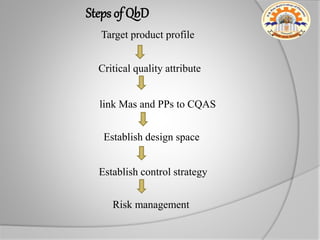
Target product profile
Critical quality attribute
link Mas and PPs to CQAS
Establish design space
Establish control strategy
Risk management
Steps of QbD
conclusion
 QbD is increasingly become an imp and widely used technique in
pharmaceutical product development.
 While QbD is most effective when it is when it is employed at
product design level it should be accomplished in a manufacturing
and quality assurance environment.
 implementing QbD concept in product development provided
quality medicine to the patient, production improment to
manufacture with significantly reduce batch failure and regulatory
body‘s having robust confidence on quality of products.
 This approach allows the establishment of flexability and priority
boundaries in process.
References
1. Lawrence, X.Y., Amidon, G., Khan, M.A., Hoag, S.W., Polli,
J., Raju, G.K. and Woodcock, J., 2014. Understanding
pharmaceutical quality by design. The AAPS journal, 16(4),
pp.771-783.
2. https://learnaboutgmp.com/good-validation-
practices/pharmaceutical-quality-by-design-qbd-an-
introduction-process-development-and-applications/
3. ICH Guidelines Q8, Q9, Q10.
presentation

presentation

  • 1.
    P. R.Pote PatilCollege of Pharmacy, Amravati. Presented by, Mr.Nawaz Hakam S.Y.B.Pharm (V Sem) Guided By, Mr. Chetan M.Jain (Assistant Professor) M.Pharm (Q.A)
  • 2.
    Definition  QbD isa systematic approach to development that begins with predefined objectives and emphasizes product and process understanding and process control, based on sound science and quality risk management.
  • 3.
    Introduction  The aimof pharmaceutical development is to design quality products &its manufacturing process to consistently deliver the intended performance of products.  Information from pharmaceutical development studies can be basis for quality risk management.  QbD is the modern approach for quality of pharmaceuticals.  These describe use of QbD to ensure quality of pharmaceuticals.  The foundation of QbD is ICH guidelines (Q8, Q9 & Q10).  Q8 – pharmaceutical development.  Q9 – quality risk management.  Q10 – pharmaceutical quality system.
  • 4.
    ICH Q8 Guideline Describe science and based approaches for pharmaceutical products and manufacturing Process development.  Induced concept of design space.  A system for designing analysing and controlling manufacturing during process of critical quality and performance attribute of raw and in process materials and processes with goal of ensuring final product quality.
  • 5.
    ICH Q9 Guideline Describe systematic Process for assessment, Control, Communication and review of quality risk.  Operational areas to facilitate Risk management along with proper maintenance of packaging and labelling.
  • 6.
    ICH Q10 Guideline According to ICH Q10 effective pharmaceutical quality system is based on ISO quality concept.  Describe key system that facilitate Establishment and maintenance of state of control for process performance And product quality.  Facilitate continuous improvement.
  • 7.
    Objectives  To achievemeaningful product quality specifications that are based on clinical performance  To increase process capability and reduce product variability and defects by enhancing product and process design, understanding, and control  To increase product development and manufacturing efficiencies  To enhance root cause analysis and post-approval change management
  • 8.
    Benefits • Eliminate batchfailure. • Minimize deviation and costly investigations. • Avoid regulatory compliance problems. • Empowerment of technical staff. • Build scientific knowledge base on science issues. • Ensure consistent information
  • 9.
    Target product profile Criticalquality attribute link Mas and PPs to CQAS Establish design space Establish control strategy Risk management Steps of QbD
  • 11.
    conclusion  QbD isincreasingly become an imp and widely used technique in pharmaceutical product development.  While QbD is most effective when it is when it is employed at product design level it should be accomplished in a manufacturing and quality assurance environment.  implementing QbD concept in product development provided quality medicine to the patient, production improment to manufacture with significantly reduce batch failure and regulatory body‘s having robust confidence on quality of products.  This approach allows the establishment of flexability and priority boundaries in process.
  • 12.
    References 1. Lawrence, X.Y.,Amidon, G., Khan, M.A., Hoag, S.W., Polli, J., Raju, G.K. and Woodcock, J., 2014. Understanding pharmaceutical quality by design. The AAPS journal, 16(4), pp.771-783. 2. https://learnaboutgmp.com/good-validation- practices/pharmaceutical-quality-by-design-qbd-an- introduction-process-development-and-applications/ 3. ICH Guidelines Q8, Q9, Q10.