Downloaded 65 times

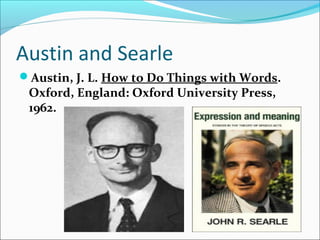

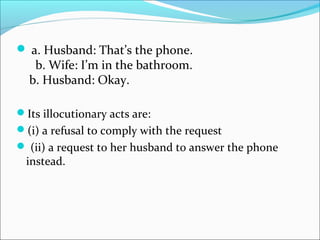
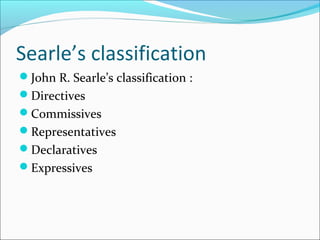
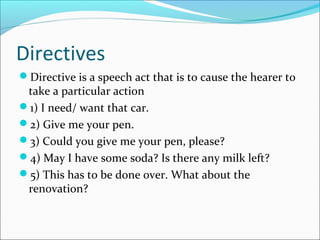
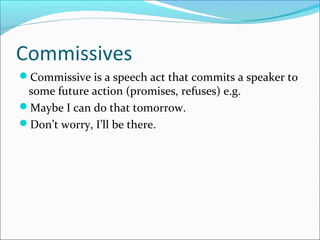
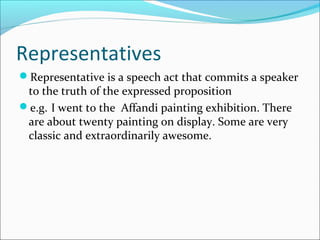
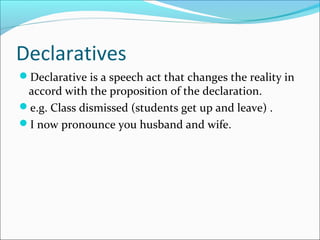
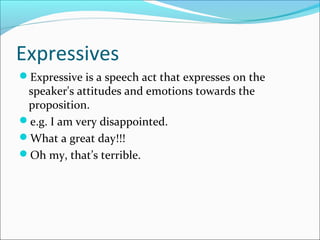
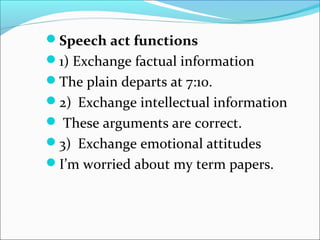


Speech act theory was proposed by John L. Austin and J.R. Searle. It holds that language is used not just to describe or inform, but also to perform actions or "do things." Utterances can have locutionary meaning (literal meaning), illocutionary force (intended meaning), and perlocutionary effect (effect on the listener). Searle classified speech acts into five categories: directives, commissives, representatives, declaratives, and expressives. Indirect speech acts use utterances in non-literal ways to perform actions.


