PRECIPITATE LABOR
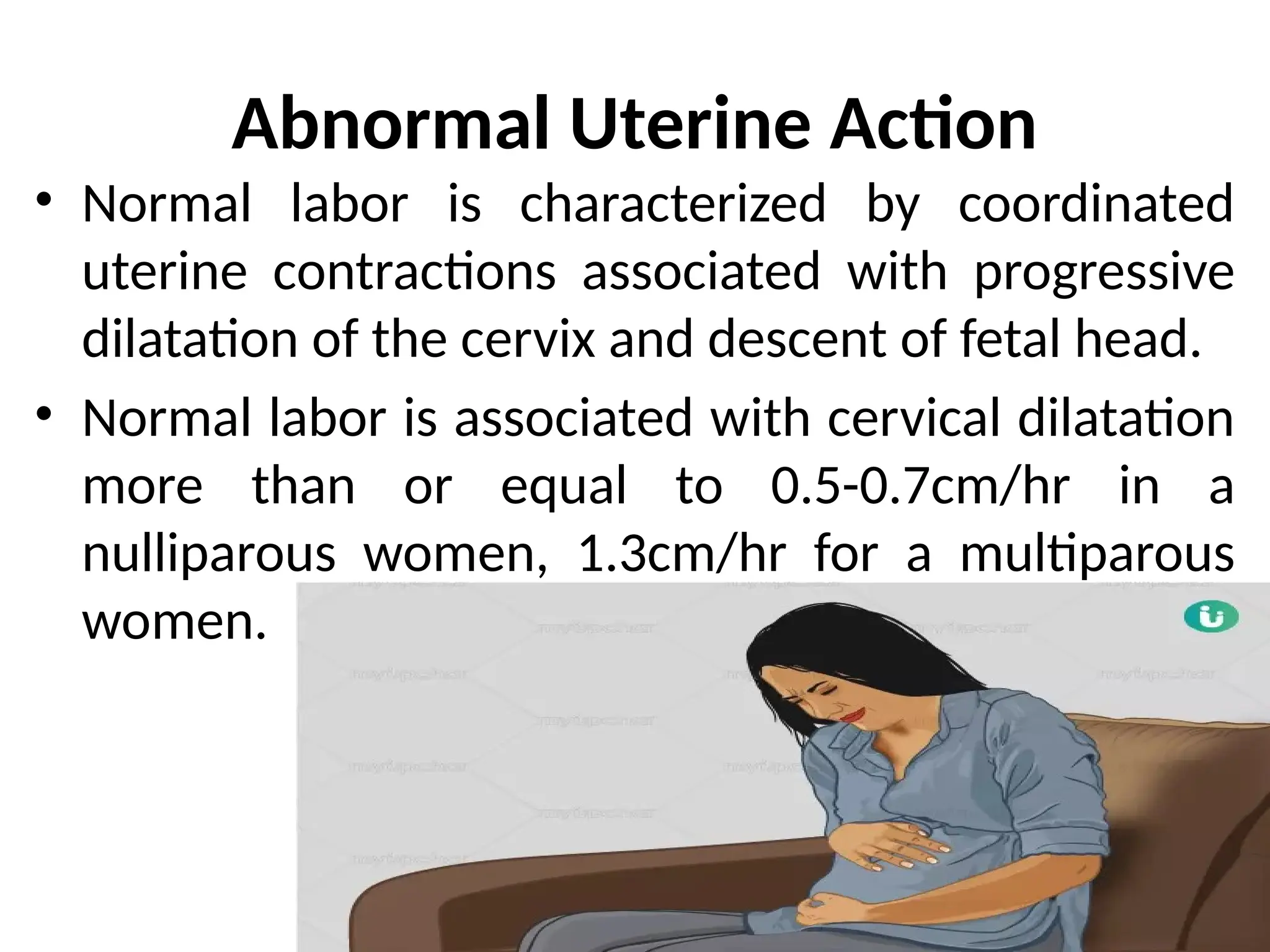
Abnormal Uterine Action
• Normal labor is characterized by coordinated
uterine contractions associated with progressive
dilatation of the cervix and descent of fetal head.
• Normal labor is associated with cervical dilatation
more than or equal to 0.5-0.7cm/hr in a
nulliparous women, 1.3cm/hr for a multiparous
women.
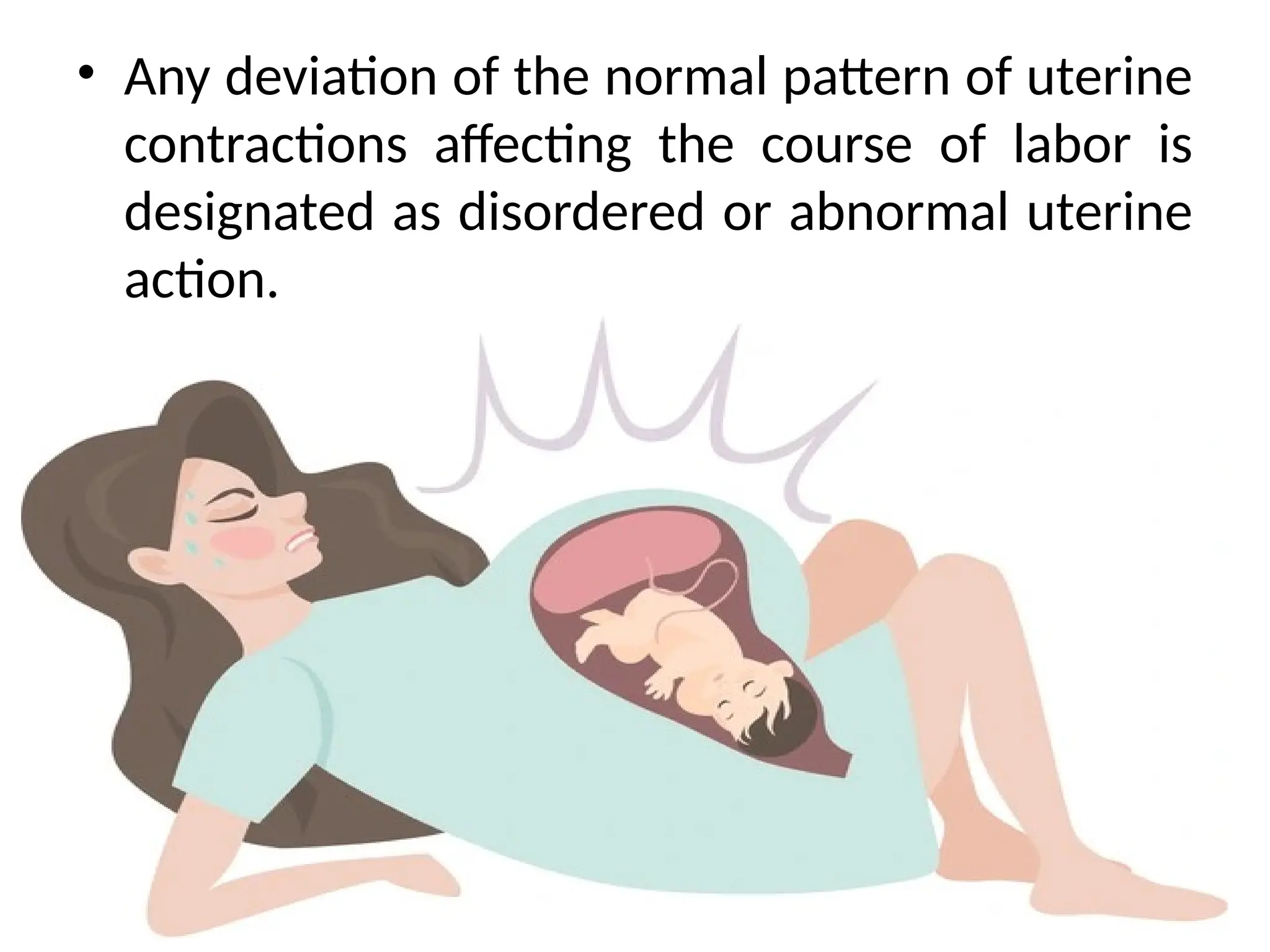
• Any deviation of the normal pattern of uterine
contractions affecting the course of labor is
designated as disordered or abnormal uterine
action.
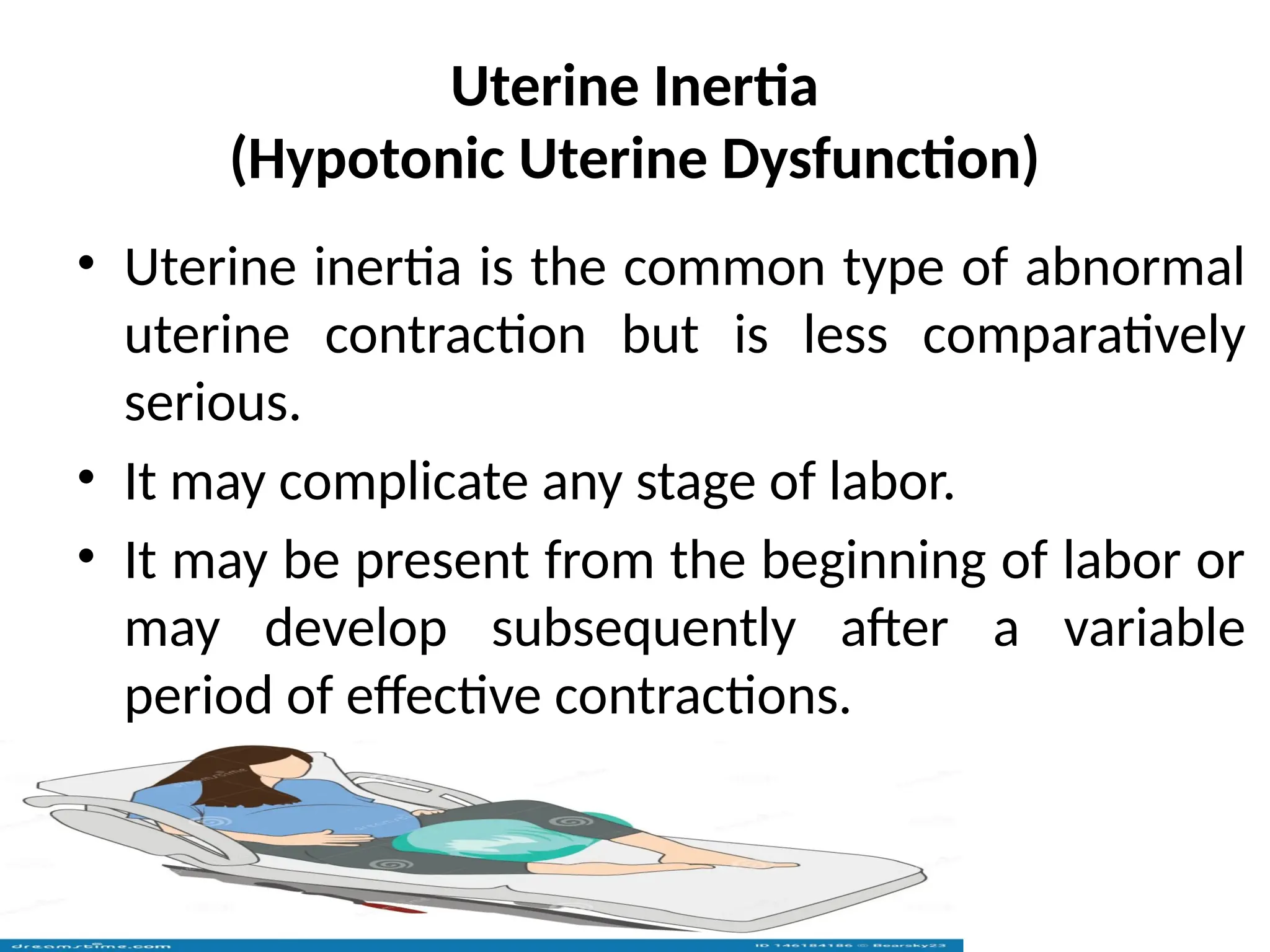
Uterine Inertia
(Hypotonic Uterine Dysfunction)
• Uterine inertia is the common type of abnormal
uterine contraction but is less comparatively
serious.
• It may complicate any stage of labor.
• It may be present from the beginning of labor or
may develop subsequently after a variable
period of effective contractions.
Hypotonic Uterine Dysfunction
• The intensity is diminished
• Duration is shortened
• Intervals are increased
• Good relaxation in between contractions
• Intrauterine pressure during contraction is less
than 25mm Hg.
• Less painful uterine contractions
• Less hardening of uterus during contractions
• Uterus becomes relaxed after contraction.
• Poor dilatation of cervix.
• Presence of cephalo-pelvic
disproportion
• Intact membranes
Incoordinate Uterine action
• It usually appears in active stage of labor.
• The hypertonic state of the uterus arises from any
of the conditions such as spastic lower uterine
segment, colicky uterus, asymmetrical uterine
contraction, constriction ring or generalized tonic
contraction of the uterus and all these states are
collectively called incoordinate uterine action.
• Increased frequency and/or duration of
uterine contractions cause rise in baseline
tone and thereby diminish circulation in the
placenta intervillous space.
• These contractions fail to make progressive
cervical effacement and dilatation.
Precipitate Labor and Delivery
• A labor is called precipitate when the
combined duration of the first and second
stage is less than 3 hours.
Incidence
• Prevalence is about 2%
Causes
• Placental Abruption
• Uterine tachysystole
• Hyperactive Uterine contractions
• Diminished soft tissue resistance
Maternal Risks
Maternal Risks
• Extensive laceration of cervix, Vagina and
Perineum.
• PPH-Post partum hemorrhage
• Inversion
• Uterine Rupture
• Infection
• Amniotic fluid Embolism
Fetal/Neonatal Risks
• Intracranial hemorrhage
• Apgar score is low
• Fetal Hypoxia
• Fetal injuries
• Bleeding from cord tear/rupture
• Skull injury
• Brachial plexuses injury
• Hospitalization of women with previous history
of precipitate labor, before onset of true labor.
• Tocolytic agents can be administered to reduce
the intensity of uterine contractions.
• Delivery of the head should be controlled.
• Episiotomy should be done liberally.
• Oxytocin augmentation is avoided.
Precipitate labor.pptx incoordinate uterine actions

Precipitate labor.pptx incoordinate uterine actions

  • 1.
  • 2.
    Abnormal Uterine Action •Normal labor is characterized by coordinated uterine contractions associated with progressive dilatation of the cervix and descent of fetal head. • Normal labor is associated with cervical dilatation more than or equal to 0.5-0.7cm/hr in a nulliparous women, 1.3cm/hr for a multiparous women.
  • 3.
    • Any deviationof the normal pattern of uterine contractions affecting the course of labor is designated as disordered or abnormal uterine action.
  • 4.
    Uterine Inertia (Hypotonic UterineDysfunction) • Uterine inertia is the common type of abnormal uterine contraction but is less comparatively serious. • It may complicate any stage of labor. • It may be present from the beginning of labor or may develop subsequently after a variable period of effective contractions.
  • 5.
    Hypotonic Uterine Dysfunction •The intensity is diminished • Duration is shortened • Intervals are increased • Good relaxation in between contractions • Intrauterine pressure during contraction is less than 25mm Hg.
  • 6.
    • Less painfuluterine contractions • Less hardening of uterus during contractions • Uterus becomes relaxed after contraction. • Poor dilatation of cervix. • Presence of cephalo-pelvic disproportion • Intact membranes
  • 7.
    Incoordinate Uterine action •It usually appears in active stage of labor. • The hypertonic state of the uterus arises from any of the conditions such as spastic lower uterine segment, colicky uterus, asymmetrical uterine contraction, constriction ring or generalized tonic contraction of the uterus and all these states are collectively called incoordinate uterine action.
  • 9.
    • Increased frequencyand/or duration of uterine contractions cause rise in baseline tone and thereby diminish circulation in the placenta intervillous space. • These contractions fail to make progressive cervical effacement and dilatation.
  • 10.
    Precipitate Labor andDelivery • A labor is called precipitate when the combined duration of the first and second stage is less than 3 hours.
  • 11.
  • 12.
    Causes • Placental Abruption •Uterine tachysystole • Hyperactive Uterine contractions • Diminished soft tissue resistance
  • 13.
  • 14.
    Maternal Risks • Extensivelaceration of cervix, Vagina and Perineum. • PPH-Post partum hemorrhage • Inversion • Uterine Rupture • Infection • Amniotic fluid Embolism
  • 16.
  • 17.
    Fetal/Neonatal Risks • Intracranialhemorrhage • Apgar score is low • Fetal Hypoxia • Fetal injuries • Bleeding from cord tear/rupture • Skull injury • Brachial plexuses injury
  • 19.
    • Hospitalization ofwomen with previous history of precipitate labor, before onset of true labor. • Tocolytic agents can be administered to reduce the intensity of uterine contractions. • Delivery of the head should be controlled. • Episiotomy should be done liberally. • Oxytocin augmentation is avoided.