








Preceptorship Overview
and
Framework
Presented by:
Adahlia T. Basco, RN, MAN, Ed. D
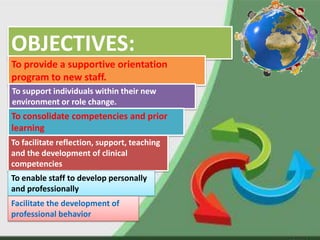
OBJECTIVES:
To provide a supportive orientation
program to new staff.
To support individuals within their new
environment or role change.
To consolidate competencies and prior
learning
To facilitate reflection, support, teaching
and the development of clinical
competencies
To enable staff to develop personally
and professionally
Facilitate the development of
professional behavior
OUTLINE
• Introduction
• Elements of Preceptorship
• Benefits of Preceptorship
• Attributes of an Effective Preceptor
• Output of Preceptorship
• Preceptorship Framework
Introduction
• Preceptorship
• Preceptor
• Preceptee
• Duties and Responsibilities
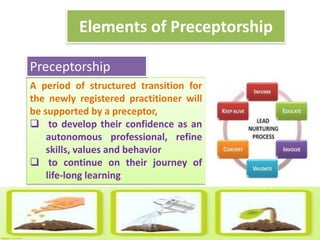
Elements of Preceptorship
A period of structured transition for
the newly registered practitioner will
be supported by a preceptor,
 to develop their confidence as an
autonomous professional, refine
skills, values and behavior
 to continue on their journey of
life-long learning
Preceptorship
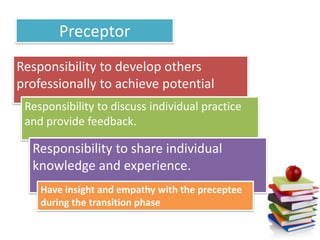
Preceptor
Responsibility to develop others
professionally to achieve potential
Responsibility to discuss individual practice
and provide feedback.
Responsibility to share individual
knowledge and experience.
Have insight and empathy with the preceptee
during the transition phase
Preceptor
• Act as an exemplary role model.
• Receive preparation for the role.
• Enables the embracement of the hospital
policy
Preceptee
Opportunity to apply and develop the knowledge, skills and
values already learned.
Develop specific competences that relate to the
preceptee’s role
Opportunity to reflect on practice and
receive constructive feedback
Take responsibility for individual learning and
development by learning how to ‘manage self’
Benefits of Preceptorship
Develops confidence
Professional socialization into working environment.
Increased job satisfaction leading to improved patient
satisfaction
Feels valued and respected
Feels proud and committed to the organization’s strategy and
objectives.
Develops understanding of the commitment to working within
the profession
Responsibility for maintaining up-to-date knowledge.
Preceptee
Preceptor
• Develops appraisal, supervision, mentorship
and supportive skills.
• Enhances ability to progress
• Feeling of value to the organization, newly
registered practitioners and patients.
• Identifies commitment to their profession
and the regulatory requirements.
• Supports their own lifelong learning.
• Enhances future career aspirations.
Employer
Enhanced quality of patient care.
Enhanced recruitment and retention.
Reduced sickness and absences.
Enhanced staff satisfaction
Opportunity to identify those staff
that require additional support or a
change of role.
Reduced risk of complaints.
Benefits to the profession
Embracing professional responsibilities…
 Providing a high standard of practice and care at
all times.
 Making care the priority.
 Working with others to protect and promote the
health and well-being of those in their care, their
families and careers.
Enhancing the image of health care professionals.
Attributes of an effective preceptor
• giving constructive feedback;
• setting goals and assessing competency
• facilitating problem-solving
• active listening skills.
• understanding, demonstrate and show reflective-
practice ability in the working environment.
• demonstrating good time-management and
leadership skills.
• demonstrating a clear understanding of the
regulatory impact of the care that they deliver and
the ability to pass on this knowledge.
• providing a high standard of practice at all times.
Output of Preceptorship
• On successful completion of preceptorship it is
anticipated that the registered practitioner will
have become an effective, confident and fully
autonomous registered individual, who is able
to deliver high quality care for patients.
• The practitioner’s continuing journey will then
take them forward as an independent and
innovative leader and role model for future
generations of health care practitioners.
Preceptorship Framework
Preceptorship Standards
• audit tool to support the monitoring
of the standards
• self-assessment tool identifying the
essential skill set for preceptors.
Tool
A written process/procedure to guide the
implementation of preceptorship.
Have systems in place to track and monitor
preceptees, from commencement through to
completion of the preceptorship period.
Organizations will demonstrate that preceptors
are supported in undertaking the role.
Organizations will ensure that their
preceptorship arrangements meet and satisfy
professional regulatory body and organizational
requirements.
QUESTIONS ?
THANK YOU!!!
References
• Banks P. Kane H. Roxburgh M. et al. (2010) Evaluation of
Flying Start NHS. Scotland:
• NHS Education Scotland.
• Department of Health (DH) (2004) National Health Service
Knowledge and Skills
• Framework. London: DH
• Department of Health (DH) (2010) Preceptorship
framework for newly registered Nurses,
• Midwives and Allied Health Professionals. London: DH.
• Department of Health Social Services and Public Safety
(DHSSPS) (2010) A Partnership
• for care. Belfast: DHSSPS.

Preceptorship overview and framework

  • 1.
  • 2.
    OBJECTIVES: To provide asupportive orientation program to new staff. To support individuals within their new environment or role change. To consolidate competencies and prior learning To facilitate reflection, support, teaching and the development of clinical competencies To enable staff to develop personally and professionally Facilitate the development of professional behavior
  • 3.
    OUTLINE • Introduction • Elementsof Preceptorship • Benefits of Preceptorship • Attributes of an Effective Preceptor • Output of Preceptorship • Preceptorship Framework
  • 4.
    Introduction • Preceptorship • Preceptor •Preceptee • Duties and Responsibilities
  • 5.
    Elements of Preceptorship Aperiod of structured transition for the newly registered practitioner will be supported by a preceptor,  to develop their confidence as an autonomous professional, refine skills, values and behavior  to continue on their journey of life-long learning Preceptorship
  • 6.
    Preceptor Responsibility to developothers professionally to achieve potential Responsibility to discuss individual practice and provide feedback. Responsibility to share individual knowledge and experience. Have insight and empathy with the preceptee during the transition phase
  • 7.
    Preceptor • Act asan exemplary role model. • Receive preparation for the role. • Enables the embracement of the hospital policy
  • 8.
    Preceptee Opportunity to applyand develop the knowledge, skills and values already learned. Develop specific competences that relate to the preceptee’s role Opportunity to reflect on practice and receive constructive feedback Take responsibility for individual learning and development by learning how to ‘manage self’
  • 9.
    Benefits of Preceptorship Developsconfidence Professional socialization into working environment. Increased job satisfaction leading to improved patient satisfaction Feels valued and respected Feels proud and committed to the organization’s strategy and objectives. Develops understanding of the commitment to working within the profession Responsibility for maintaining up-to-date knowledge. Preceptee
  • 10.
    Preceptor • Develops appraisal,supervision, mentorship and supportive skills. • Enhances ability to progress • Feeling of value to the organization, newly registered practitioners and patients. • Identifies commitment to their profession and the regulatory requirements. • Supports their own lifelong learning. • Enhances future career aspirations.
  • 11.
    Employer Enhanced quality ofpatient care. Enhanced recruitment and retention. Reduced sickness and absences. Enhanced staff satisfaction Opportunity to identify those staff that require additional support or a change of role. Reduced risk of complaints.
  • 12.
    Benefits to theprofession Embracing professional responsibilities…  Providing a high standard of practice and care at all times.  Making care the priority.  Working with others to protect and promote the health and well-being of those in their care, their families and careers. Enhancing the image of health care professionals.
  • 13.
    Attributes of aneffective preceptor • giving constructive feedback; • setting goals and assessing competency • facilitating problem-solving • active listening skills. • understanding, demonstrate and show reflective- practice ability in the working environment. • demonstrating good time-management and leadership skills. • demonstrating a clear understanding of the regulatory impact of the care that they deliver and the ability to pass on this knowledge. • providing a high standard of practice at all times.
  • 14.
    Output of Preceptorship •On successful completion of preceptorship it is anticipated that the registered practitioner will have become an effective, confident and fully autonomous registered individual, who is able to deliver high quality care for patients. • The practitioner’s continuing journey will then take them forward as an independent and innovative leader and role model for future generations of health care practitioners.
  • 15.
    Preceptorship Framework Preceptorship Standards •audit tool to support the monitoring of the standards • self-assessment tool identifying the essential skill set for preceptors.
  • 16.
    Tool A written process/procedureto guide the implementation of preceptorship. Have systems in place to track and monitor preceptees, from commencement through to completion of the preceptorship period. Organizations will demonstrate that preceptors are supported in undertaking the role. Organizations will ensure that their preceptorship arrangements meet and satisfy professional regulatory body and organizational requirements.
  • 17.
  • 18.
    References • Banks P.Kane H. Roxburgh M. et al. (2010) Evaluation of Flying Start NHS. Scotland: • NHS Education Scotland. • Department of Health (DH) (2004) National Health Service Knowledge and Skills • Framework. London: DH • Department of Health (DH) (2010) Preceptorship framework for newly registered Nurses, • Midwives and Allied Health Professionals. London: DH. • Department of Health Social Services and Public Safety (DHSSPS) (2010) A Partnership • for care. Belfast: DHSSPS.