PRECEPTORSHIP:
SCOPE, CONCEPT AND FRAMEWORK
Dr. A.Seethalakshmi
Reader, Faculty of Nursing
SRU.
Preceptor-Pre ceptee
• Roles and responsibilities
• Preceptor- Initiate an
understanding
• Clear expectations and goals
• Scope of student practice: can
and cannot should be clear:
dressing/blood transfusion/
medications
• Safe comfortable learning
environment- for student
• Safe environment for the
patient
• Identify the level of
competency of the student
• Ethical legal and moral
responsibility
• Do not assign tasks outside the
scope
• Students – professional, safe
environment for the patients
• Course requirements ,
competencies, skill checklist,
plan each day as to the
objectives to be achieved
• Support and guidance
– Pay attention to your
hunches/clues
– Don’t wait
– Give specific feedback early and
monitor closely
- Seek help
- Do not pass a student who has not
performed satisfactorily
• How will the schedule and other information
be communicated to all who need to know
• Orientation to facility
– Policies and procedures
– Dress code
• Make expectations clear: 80% of failures in
the work place arise from unclear
expectations
Planning Learning:
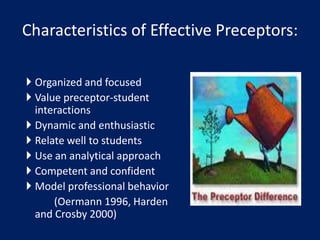
Characteristics of Effective Preceptors:
 Organized and focused
 Value preceptor-student
interactions
 Dynamic and enthusiastic
 Relate well to students
 Use an analytical approach
 Competent and confident
 Model professional behavior
(Oermann 1996, Harden
and Crosby 2000)
Positive, enthusiastic attitude
Provide appropriate, frequent feedback
Show respect for student
Challenge student to perform
Question student and promote higher level
thinking
Provide appropriate structure
(Allen-Chabot, 2006)
Positive Characteristics of Preceptors:
• Lack of introduction
• Want more feedback
• Feel uncomfortable when preceptor discussed
other students with them
• Feel like they are a burden
• Feel overwhelmed
(Allen-Chabot, 2006)
Preceptor- how not to be
• Adult learners prefer learning situations that
are:
– Practical and problem-centered
– Promote their positive self-esteem
– Integrate new ideas with existing knowledge
– Capitalize on their experience
– Allow choice and self direction
Characteristics of students
• Learning styles
– Visual learners: prefer to see your body language and
facial expressions; will do better with written
instructions; better understand client from the chart
– Auditory learners: interpret meaning through tone of
voice, pitch and other nuances; will do well with case
conferences and meetings, interviewing and
instructing patients
– Kinesthetic learners: prefer a hands-on approach; will
learn by practicing skills; be adept food production,
anthropometric measures, demonstrating skills to
others
contd..
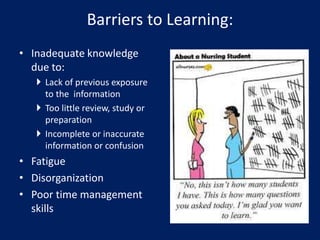
Barriers to Learning:
• Inadequate knowledge
due to:
 Lack of previous exposure
to the information
 Too little review, study or
preparation
 Incomplete or inaccurate
information or confusion
• Fatigue
• Disorganization
• Poor time management
skills
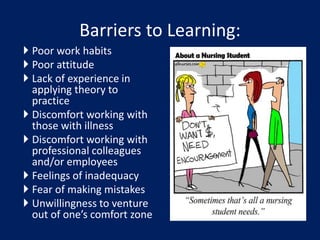
Barriers to Learning:
 Poor work habits
 Poor attitude
 Lack of experience in
applying theory to
practice
 Discomfort working with
those with illness
 Discomfort working with
professional colleagues
and/or employees
 Feelings of inadequacy
 Fear of making mistakes
 Unwillingness to venture
out of one’s comfort zone
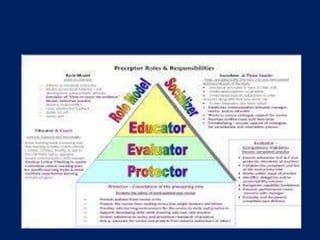
• Planner
• Role model
• Information provider
• Facilitator of learning
• Resource developer
• Assessor of learning
Roles of Preceptors:
• How to interact with patients
• How and when to contact you?
• When there is a problem do you want him/her
to solve it or come to you right away or
something in between?
• Assess performance and progress?
Preceptor Style:
• Characterized by:
 Appreciation of diversity
 Cultural competence: the ability to discover the
culture of each client/patient and effectively adapt
interventions for her or him. (Curry 2000).
 Skills needed for cultural competence
– Become more knowledgeable about different cultures
– Develop flexibility in approaches/interventions
– Identify and/or develop culturally appropriate
education approaches, techniques, and materials
Professionalism:
Goal: to provide meaningful feedback for your
student’s development.
Feedback should be frequent, ongoing, and
constructive.
Aim for daily feedback
 Let the student know what they have done well
 Let the student know what they need to improve
 Let the student plot a course of action
Evaluation
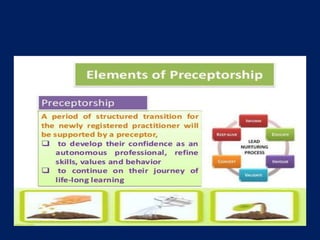
Preceptorship

Preceptorship

  • 1.
    PRECEPTORSHIP: SCOPE, CONCEPT ANDFRAMEWORK Dr. A.Seethalakshmi Reader, Faculty of Nursing SRU.
  • 2.
    Preceptor-Pre ceptee • Rolesand responsibilities • Preceptor- Initiate an understanding • Clear expectations and goals • Scope of student practice: can and cannot should be clear: dressing/blood transfusion/ medications • Safe comfortable learning environment- for student • Safe environment for the patient • Identify the level of competency of the student
  • 3.
    • Ethical legaland moral responsibility • Do not assign tasks outside the scope • Students – professional, safe environment for the patients • Course requirements , competencies, skill checklist, plan each day as to the objectives to be achieved • Support and guidance – Pay attention to your hunches/clues – Don’t wait – Give specific feedback early and monitor closely - Seek help - Do not pass a student who has not performed satisfactorily
  • 4.
    • How willthe schedule and other information be communicated to all who need to know • Orientation to facility – Policies and procedures – Dress code • Make expectations clear: 80% of failures in the work place arise from unclear expectations Planning Learning:
  • 5.
    Characteristics of EffectivePreceptors:  Organized and focused  Value preceptor-student interactions  Dynamic and enthusiastic  Relate well to students  Use an analytical approach  Competent and confident  Model professional behavior (Oermann 1996, Harden and Crosby 2000)
  • 7.
    Positive, enthusiastic attitude Provideappropriate, frequent feedback Show respect for student Challenge student to perform Question student and promote higher level thinking Provide appropriate structure (Allen-Chabot, 2006) Positive Characteristics of Preceptors:
  • 9.
    • Lack ofintroduction • Want more feedback • Feel uncomfortable when preceptor discussed other students with them • Feel like they are a burden • Feel overwhelmed (Allen-Chabot, 2006) Preceptor- how not to be
  • 10.
    • Adult learnersprefer learning situations that are: – Practical and problem-centered – Promote their positive self-esteem – Integrate new ideas with existing knowledge – Capitalize on their experience – Allow choice and self direction Characteristics of students
  • 12.
    • Learning styles –Visual learners: prefer to see your body language and facial expressions; will do better with written instructions; better understand client from the chart – Auditory learners: interpret meaning through tone of voice, pitch and other nuances; will do well with case conferences and meetings, interviewing and instructing patients – Kinesthetic learners: prefer a hands-on approach; will learn by practicing skills; be adept food production, anthropometric measures, demonstrating skills to others contd..
  • 13.
    Barriers to Learning: •Inadequate knowledge due to:  Lack of previous exposure to the information  Too little review, study or preparation  Incomplete or inaccurate information or confusion • Fatigue • Disorganization • Poor time management skills
  • 14.
    Barriers to Learning: Poor work habits  Poor attitude  Lack of experience in applying theory to practice  Discomfort working with those with illness  Discomfort working with professional colleagues and/or employees  Feelings of inadequacy  Fear of making mistakes  Unwillingness to venture out of one’s comfort zone
  • 15.
    • Planner • Rolemodel • Information provider • Facilitator of learning • Resource developer • Assessor of learning Roles of Preceptors:
  • 16.
    • How tointeract with patients • How and when to contact you? • When there is a problem do you want him/her to solve it or come to you right away or something in between? • Assess performance and progress? Preceptor Style:
  • 18.
    • Characterized by: Appreciation of diversity  Cultural competence: the ability to discover the culture of each client/patient and effectively adapt interventions for her or him. (Curry 2000).  Skills needed for cultural competence – Become more knowledgeable about different cultures – Develop flexibility in approaches/interventions – Identify and/or develop culturally appropriate education approaches, techniques, and materials Professionalism:
  • 19.
    Goal: to providemeaningful feedback for your student’s development. Feedback should be frequent, ongoing, and constructive. Aim for daily feedback  Let the student know what they have done well  Let the student know what they need to improve  Let the student plot a course of action Evaluation

Editor's Notes

  • #5 Reflection/Discussion: What suggestions do you have for a new preceptor who feels overwhelmed at the thought of trying to fulfill all of the preceptor roles?
  • #16 Reflection/Discussion: What suggestions do you have for a new preceptor who feels overwhelmed at the thought of trying to fulfill all of the preceptor roles?
  • #17 Reflection/Discussion: What suggestions do you have for a new preceptor who feels overwhelmed at the thought of trying to fulfill all of the preceptor roles?
  • #19 Reflection/Discussion: What the student observes and learns from you and other professionals solidifies and internalizes the concept of professionalism. What will you do to reinforce your student’s ability to practice professionally and ethically?
  • #20 The written evaluation forms should not provide the student with any surprises!