

Technology Training that works
Practical Troubleshooting & Problem
Solving of Modbus Protocols
Technology Training that worksTechnology Training that Workswww.idc-online.com/slideshare
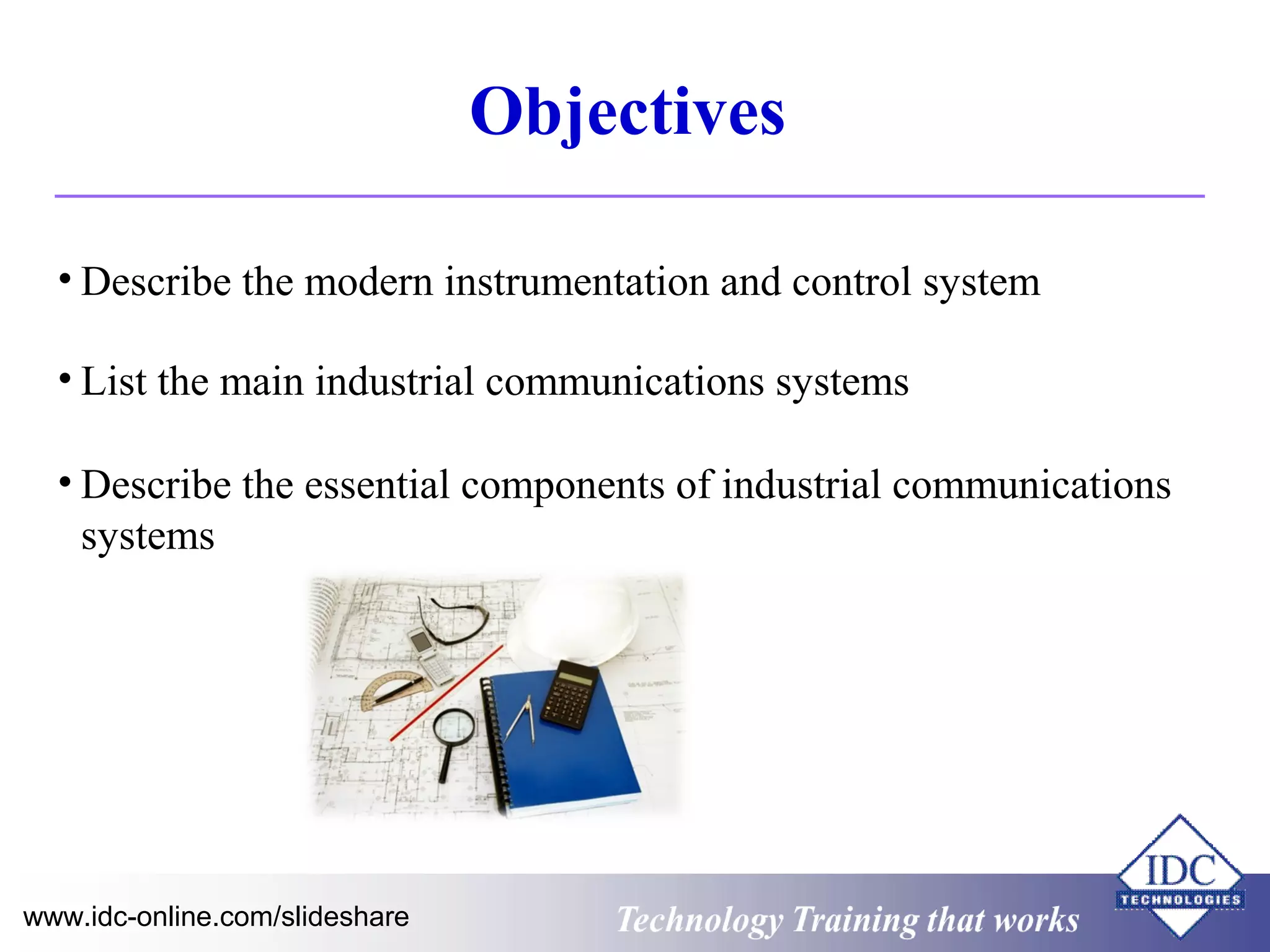
Objectives
• Describe the modern instrumentation and control system
• List the main industrial communications systems
• Describe the essential components of industrial communications
systems
Technology Training that worksTechnology Training that Workswww.idc-online.com/slideshare
Introduction
• Data communications - transfer of information from one point to another
• Modern instrumentation - Transfer of digital data
• Communications system
A transmitter to send information, a
receiver to accept it, and a link (the
medium) between the two
• Protocols - Rules governing the communication
Technology Training that worksTechnology Training that Workswww.idc-online.com/slideshare
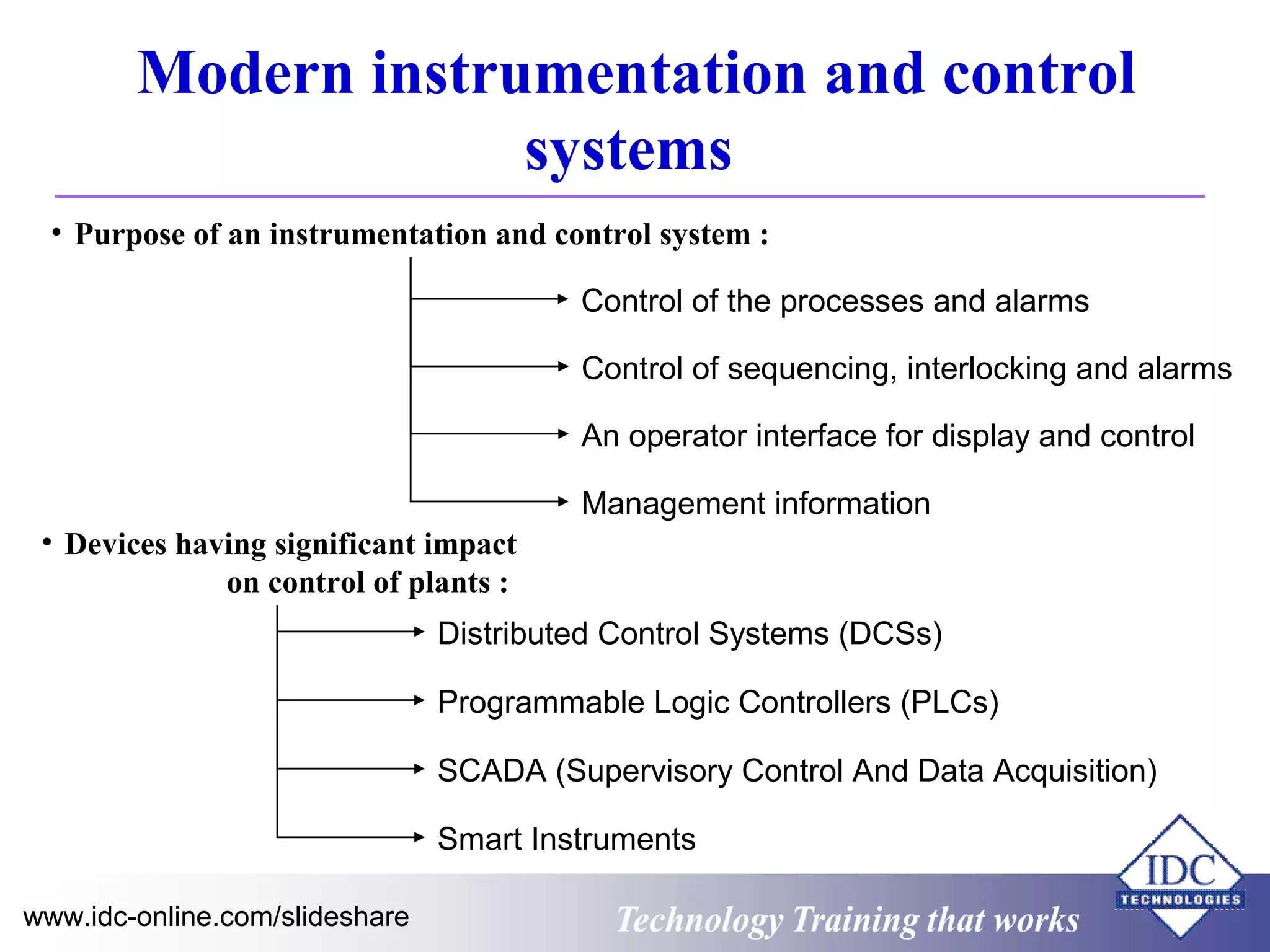
Modern instrumentation and control
systems
• Purpose of an instrumentation and control system :
Control of the processes and alarms
Control of sequencing, interlocking and alarms
An operator interface for display and control
Management information
• Devices having significant impact
on control of plants :
Distributed Control Systems (DCSs)
Programmable Logic Controllers (PLCs)
SCADA (Supervisory Control And Data Acquisition)
Smart Instruments
Technology Training that worksTechnology Training that Workswww.idc-online.com/slideshare
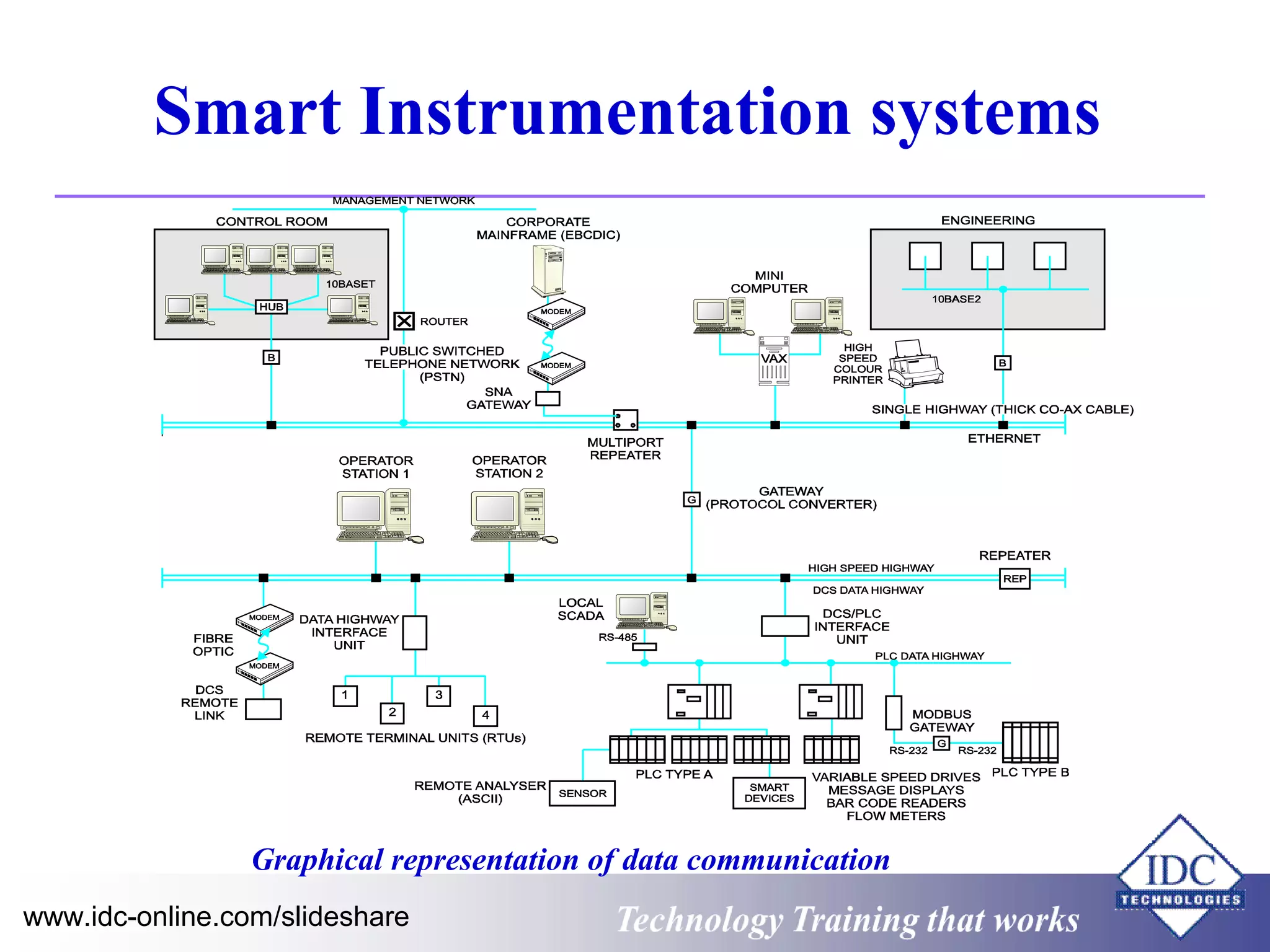
Smart Instrumentation systems
Graphical representation of data communication
Technology Training that worksTechnology Training that Workswww.idc-online.com/slideshare
OSI Model
• Developed by the International
Organization for Standardization
• Universal framework for building
communications systems
• 7-layer model
• Missing the 8th (‘user’) layer
Technology Training that worksTechnology Training that Workswww.idc-online.com/slideshare
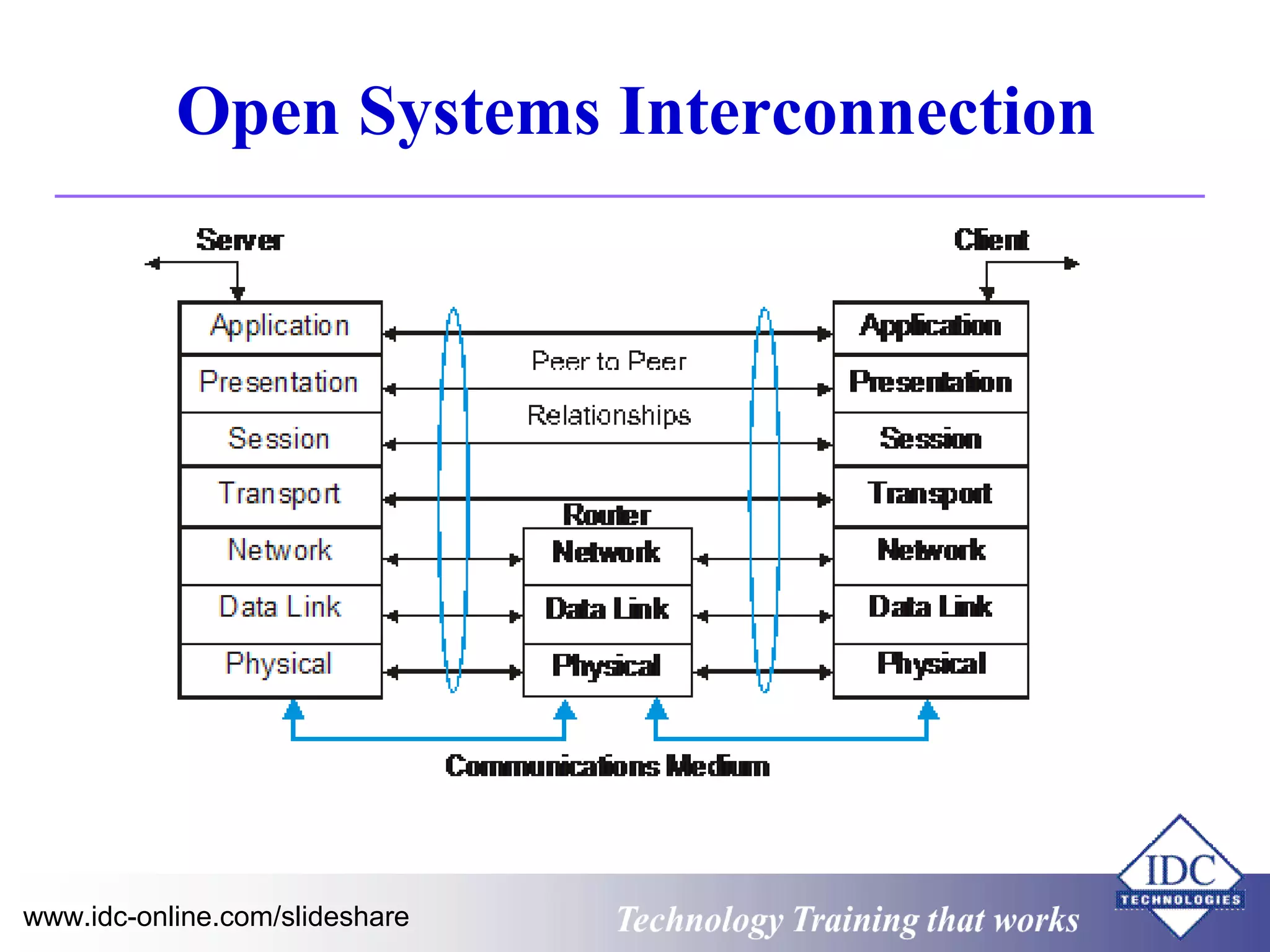
Open Systems Interconnection
Technology Training that worksTechnology Training that Workswww.idc-online.com/slideshare
Protocols
• Rules for transmission of data
• Asynchronous (byte oriented) or synchronous (packet
oriented)
• Information can include:
– Sync byte(s)
– Function code
– Destination address
– Source address
– Data
– Checksum (BCC, CRC, etc)
Technology Training that worksTechnology Training that Workswww.idc-online.com/slideshare
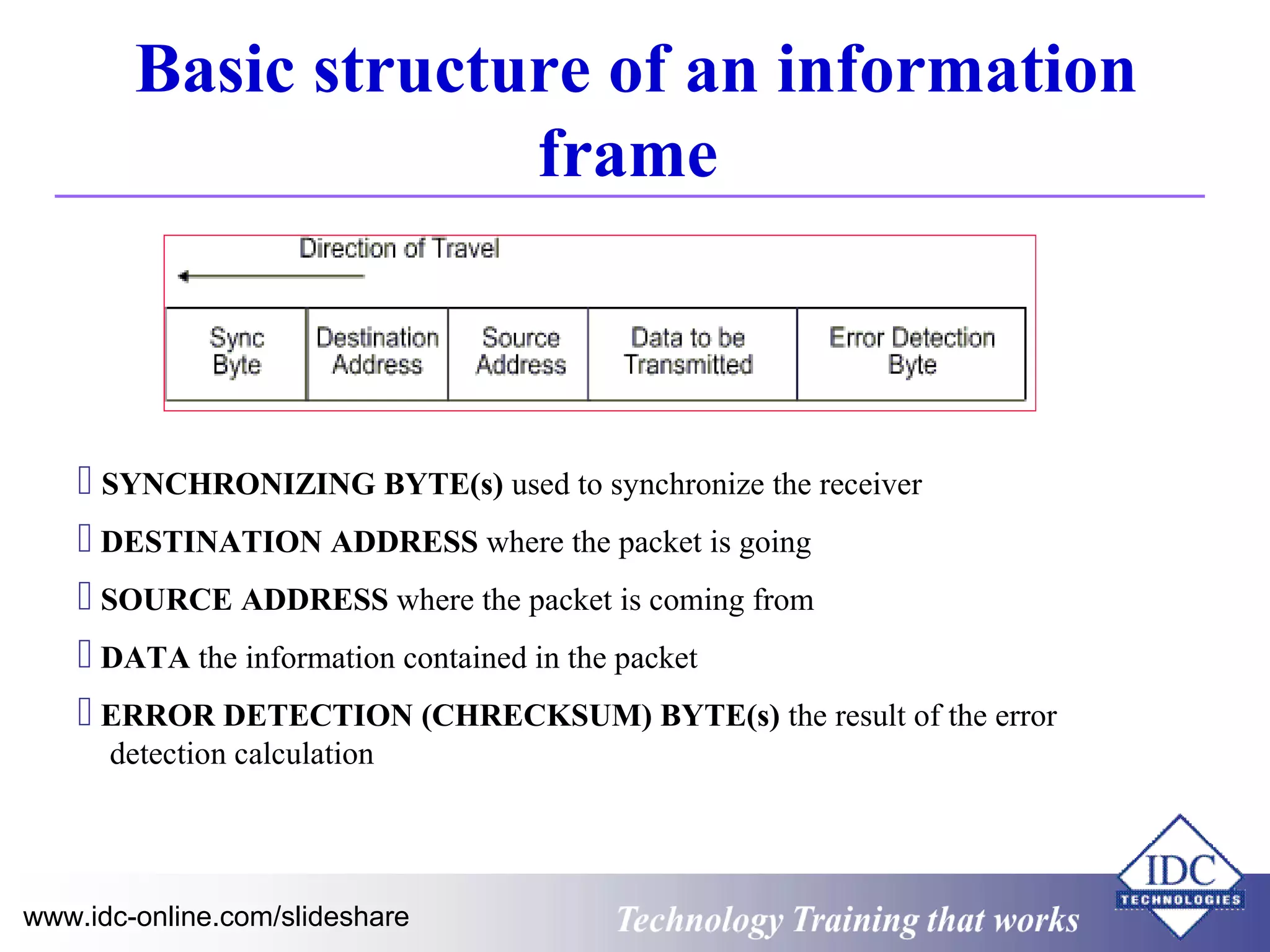
Basic structure of an information
frame
 SYNCHRONIZING BYTE(s) used to synchronize the receiver
 DESTINATION ADDRESS where the packet is going
 SOURCE ADDRESS where the packet is coming from
 DATA the information contained in the packet
 ERROR DETECTION (CHRECKSUM) BYTE(s) the result of the error
detection calculation
Technology Training that worksTechnology Training that Workswww.idc-online.com/slideshare
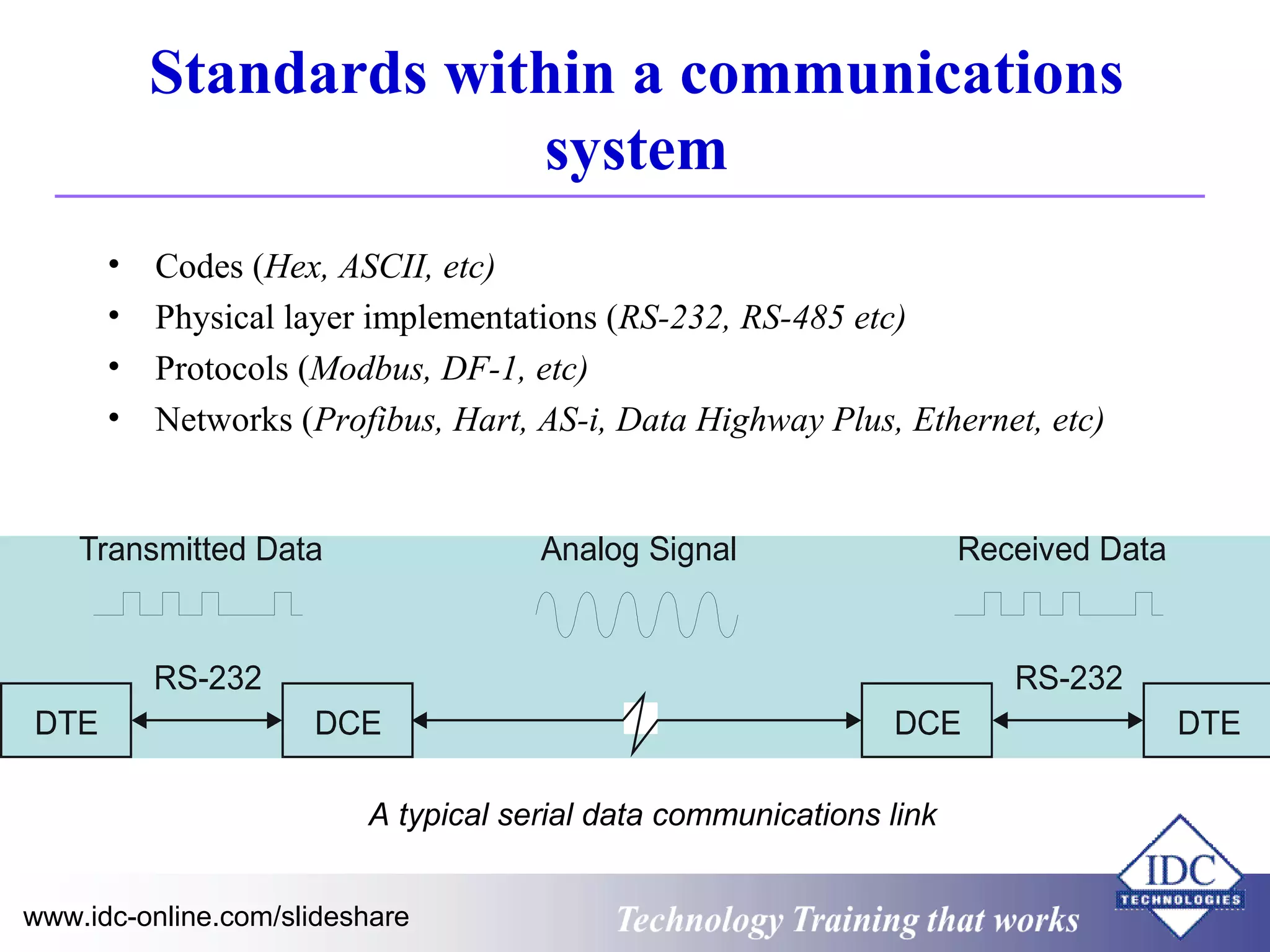
Standards within a communications
system
• Codes (Hex, ASCII, etc)
• Physical layer implementations (RS-232, RS-485 etc)
• Protocols (Modbus, DF-1, etc)
• Networks (Profibus, Hart, AS-i, Data Highway Plus, Ethernet, etc)
A typical serial data communications link
Technology Training that worksTechnology Training that Workswww.idc-online.com/slideshare
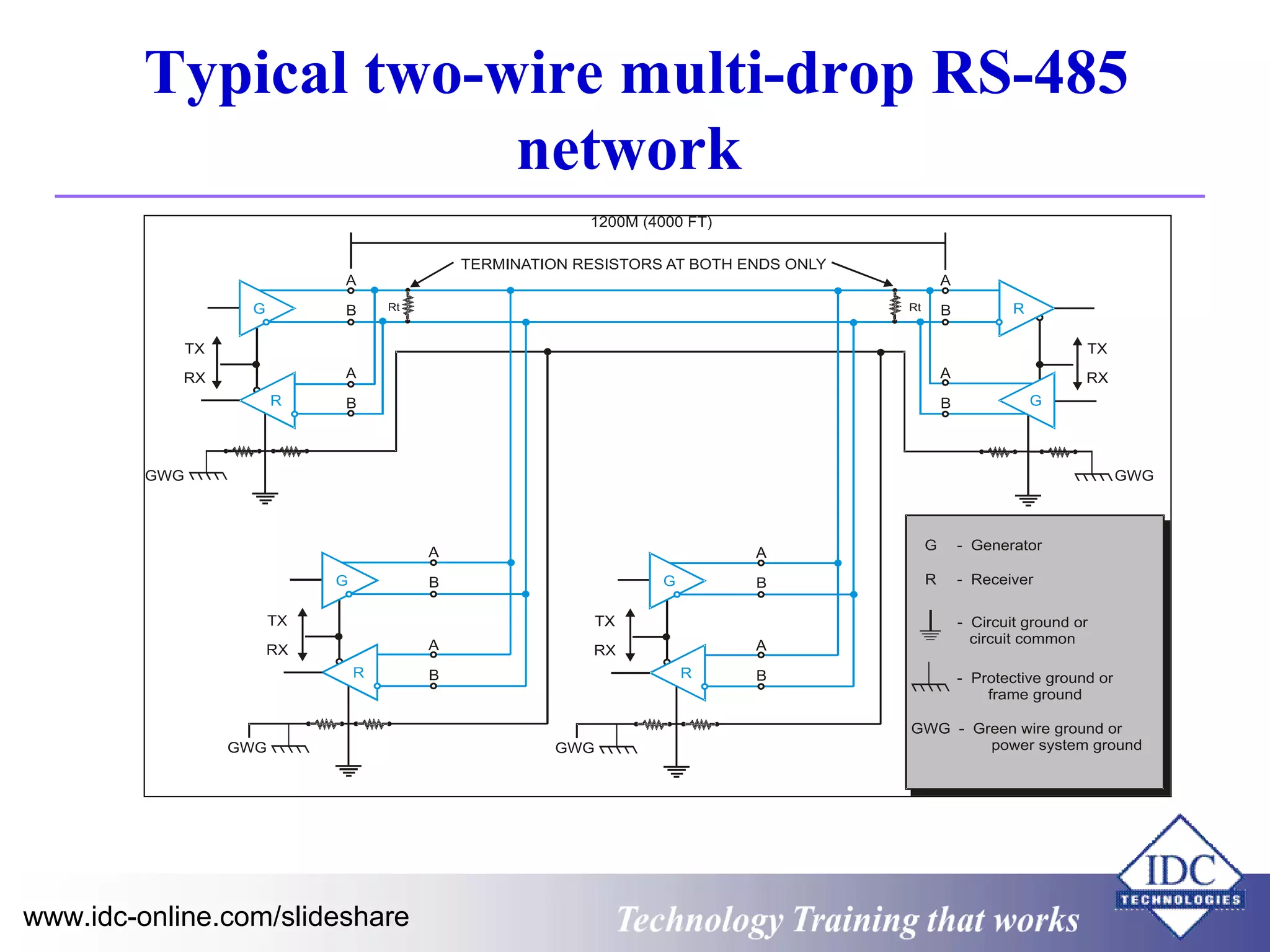
Typical two-wire multi-drop RS-485
network
Technology Training that worksTechnology Training that Workswww.idc-online.com/slideshare
Standards
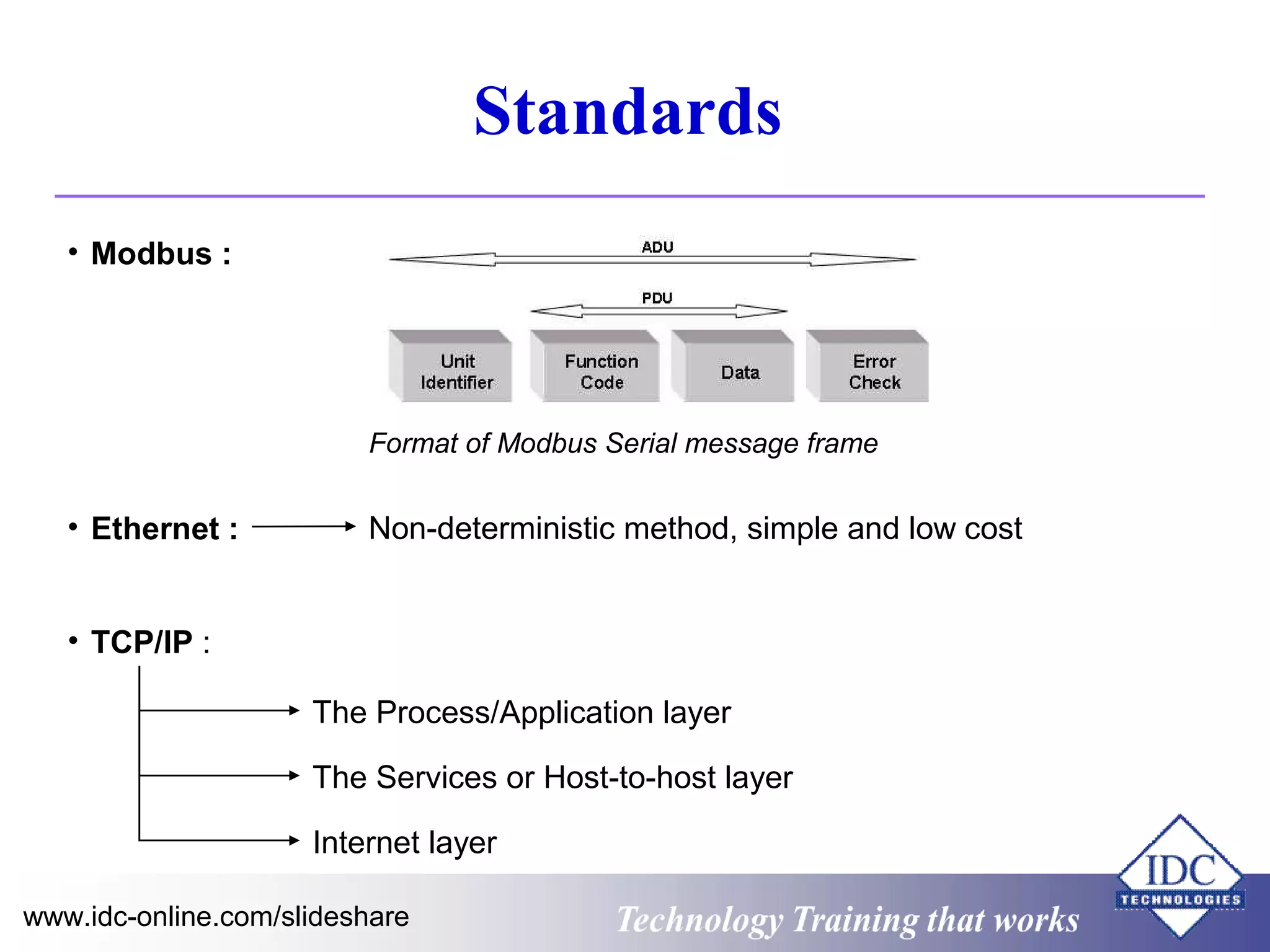
• Modbus :
Format of Modbus Serial message frame
• TCP/IP :
The Process/Application layer
The Services or Host-to-host layer
Internet layer
• Ethernet : Non-deterministic method, simple and low cost
Technology Training that worksTechnology Training that Workswww.idc-online.com/slideshare
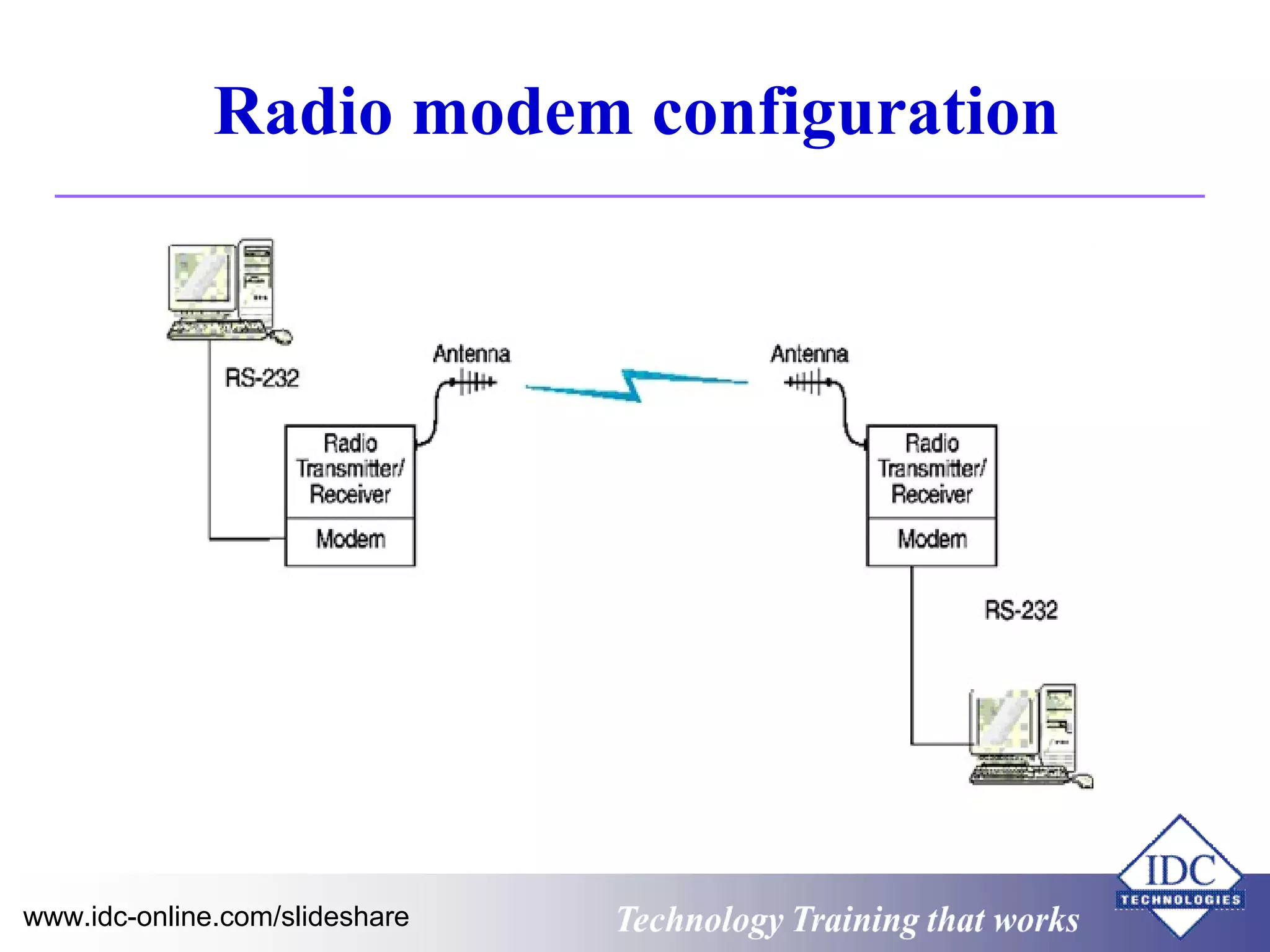
Radio modem configuration
Technology Training that worksTechnology Training that Workswww.idc-online.com/slideshare
DO YOU WANT TO KNOW MORE?
If you are interested in further training or information,
please visit:
http://idc-online.com/slideshare

Practical Troubleshooting & Problem Solving of Modbus Protocols

  • 1.
    Technology Training thatworks Practical Troubleshooting & Problem Solving of Modbus Protocols
  • 2.
    Technology Training thatworksTechnology Training that Workswww.idc-online.com/slideshare Objectives • Describe the modern instrumentation and control system • List the main industrial communications systems • Describe the essential components of industrial communications systems
  • 3.
    Technology Training thatworksTechnology Training that Workswww.idc-online.com/slideshare Introduction • Data communications - transfer of information from one point to another • Modern instrumentation - Transfer of digital data • Communications system A transmitter to send information, a receiver to accept it, and a link (the medium) between the two • Protocols - Rules governing the communication
  • 4.
    Technology Training thatworksTechnology Training that Workswww.idc-online.com/slideshare Modern instrumentation and control systems • Purpose of an instrumentation and control system : Control of the processes and alarms Control of sequencing, interlocking and alarms An operator interface for display and control Management information • Devices having significant impact on control of plants : Distributed Control Systems (DCSs) Programmable Logic Controllers (PLCs) SCADA (Supervisory Control And Data Acquisition) Smart Instruments
  • 5.
    Technology Training thatworksTechnology Training that Workswww.idc-online.com/slideshare Smart Instrumentation systems Graphical representation of data communication
  • 6.
    Technology Training thatworksTechnology Training that Workswww.idc-online.com/slideshare OSI Model • Developed by the International Organization for Standardization • Universal framework for building communications systems • 7-layer model • Missing the 8th (‘user’) layer
  • 7.
    Technology Training thatworksTechnology Training that Workswww.idc-online.com/slideshare Open Systems Interconnection
  • 8.
    Technology Training thatworksTechnology Training that Workswww.idc-online.com/slideshare Protocols • Rules for transmission of data • Asynchronous (byte oriented) or synchronous (packet oriented) • Information can include: – Sync byte(s) – Function code – Destination address – Source address – Data – Checksum (BCC, CRC, etc)
  • 9.
    Technology Training thatworksTechnology Training that Workswww.idc-online.com/slideshare Basic structure of an information frame  SYNCHRONIZING BYTE(s) used to synchronize the receiver  DESTINATION ADDRESS where the packet is going  SOURCE ADDRESS where the packet is coming from  DATA the information contained in the packet  ERROR DETECTION (CHRECKSUM) BYTE(s) the result of the error detection calculation
  • 10.
    Technology Training thatworksTechnology Training that Workswww.idc-online.com/slideshare Standards within a communications system • Codes (Hex, ASCII, etc) • Physical layer implementations (RS-232, RS-485 etc) • Protocols (Modbus, DF-1, etc) • Networks (Profibus, Hart, AS-i, Data Highway Plus, Ethernet, etc) A typical serial data communications link
  • 11.
    Technology Training thatworksTechnology Training that Workswww.idc-online.com/slideshare Typical two-wire multi-drop RS-485 network
  • 12.
    Technology Training thatworksTechnology Training that Workswww.idc-online.com/slideshare Standards • Modbus : Format of Modbus Serial message frame • TCP/IP : The Process/Application layer The Services or Host-to-host layer Internet layer • Ethernet : Non-deterministic method, simple and low cost
  • 13.
    Technology Training thatworksTechnology Training that Workswww.idc-online.com/slideshare Radio modem configuration
  • 14.
    Technology Training thatworksTechnology Training that Workswww.idc-online.com/slideshare DO YOU WANT TO KNOW MORE? If you are interested in further training or information, please visit: http://idc-online.com/slideshare