An Introduction to IO-Link
Russell Smith
Balluff Limited
WHAT IS IO-LINK?
2
not another bus system!
3
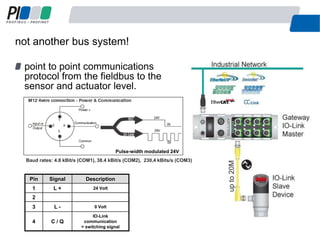
point to point communications
protocol from the fieldbus to the
sensor and actuator level.
upto20M
Pulse-width modulated 24V
Baud rates: 4.8 kBit/s (COM1), 38.4 kBit/s (COM2), 230,4 kBits/s (COM3)
Pin Signal Description
1 L + 24 Volt
2
3 L - 0 Volt
4 C / Q
IO-Link
communication
+ switching signal
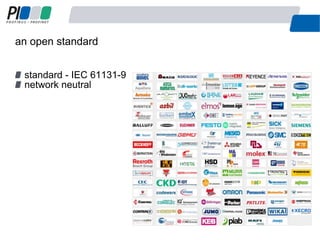
standard - IEC 61131-9
network neutral
an open standard
4
5
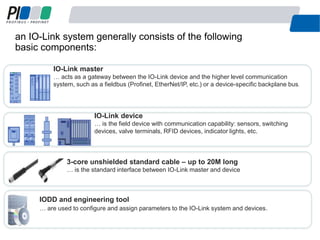
IO-Link master
… acts as a gateway between the IO-Link device and the higher level communication
system, such as a fieldbus (Profinet, EtherNet/IP, etc.) or a device-specific backplane bus.
IO-Link device
… is the field device with communication capability: sensors, switching
devices, valve terminals, RFID devices, indicator lights, etc.
3-core unshielded standard cable – up to 20M long
… is the standard interface between IO-Link master and device
IODD and engineering tool
… are used to configure and assign parameters to the IO-Link system and devices.
an IO-Link system generally consists of the following
basic components:
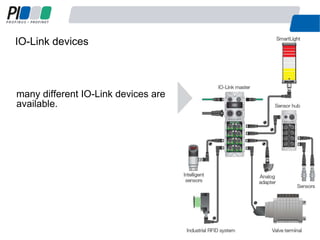
IO-Link devices
6
many different IO-Link devices are
available.
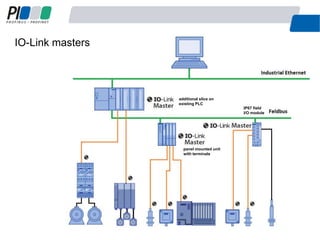
IO-Link masters
7
panel mounted unit
with terminals
IP67 field
I/O module
additional slice on
existing PLC
WHY IO-LINK?
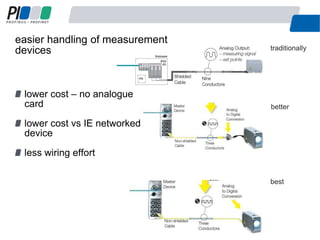
easier handling of measurement
devices
9
traditionally
better
best
lower cost – no analogue
card
lower cost vs IE networked
device
less wiring effort
10
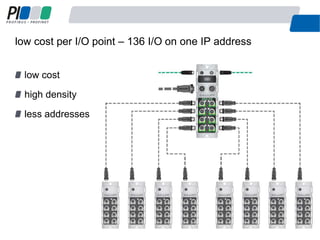
low cost
high density
less addresses
low cost per I/O point – 136 I/O on one IP address
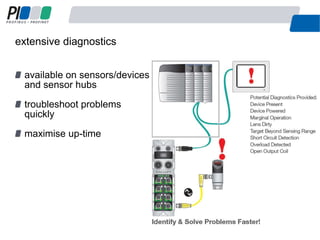
extensive diagnostics
11
available on sensors/devices
and sensor hubs
troubleshoot problems
quickly
maximise up-time
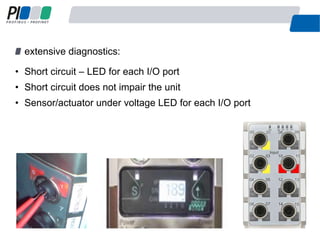
• Short circuit – LED for each I/O port
• Short circuit does not impair the unit
• Sensor/actuator under voltage LED for each I/O port
extensive diagnostics:
12
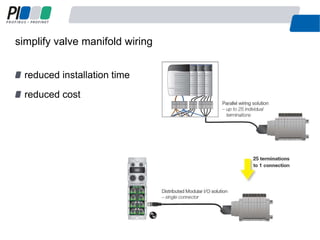
simplify valve manifold wiring
13
reduced installation time
reduced cost
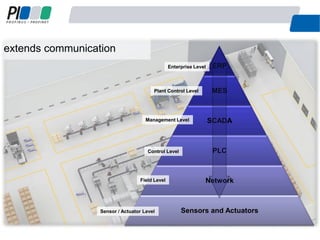
extends communication
14
ERP
MES
SCADA
PLC
Network
Sensors and Actuators
Enterprise Level
Control Level
Management Level
Plant Control Level
Field Level
Sensor / Actuator Level
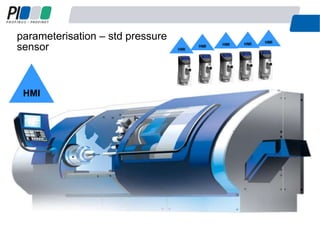
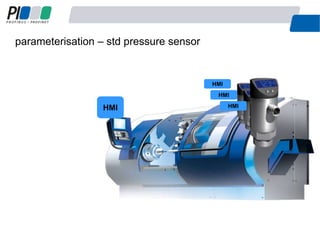
HMI
parameterisation – std pressure
sensor
15
HMI
HMIHMIHMI
HMI
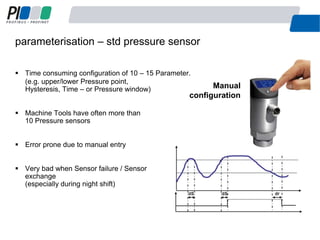
 Time consuming configuration of 10 – 15 Parameter.
(e.g. upper/lower Pressure point,
Hysteresis, Time – or Pressure window)
 Machine Tools have often more than
10 Pressure sensors
 Error prone due to manual entry
 Very bad when Sensor failure / Sensor
exchange
(especially during night shift)
parameterisation – std pressure sensor
16
Manual
configuration
parameterisation – std pressure sensor
17
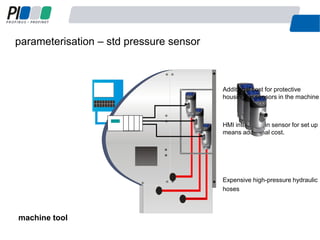
HMI
HMI
HMI
HMI
HMI integrated in sensor for set up
means additional cost.
Expensive high-pressure hydraulic
hoses
parameterisation – std pressure sensor
18
machine tool
Additional cost for protective
housing for sensors in the machine
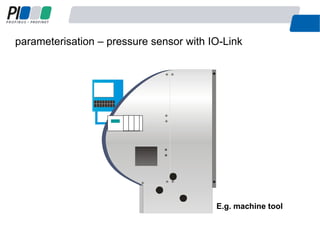
E.g. machine tool
parameterisation – pressure sensor with IO-Link
19
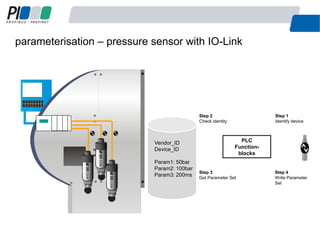
PLC
Function-
blocks
Vendor_ID
Device_ID
Param1: 50bar
Param2: 100bar
Param3: 200ms
Step 1
Identify device
Step 3
Get Parameter Set
Step 2
Check identity
Step 4
Write Parameter
Set
parameterisation – pressure sensor with IO-Link
20
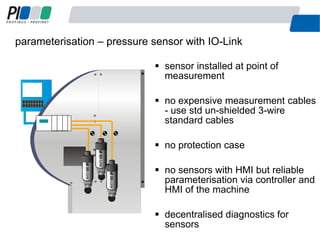
 sensor installed at point of
measurement
 no expensive measurement cables
- use std un-shielded 3-wire
standard cables
 no protection case
 no sensors with HMI but reliable
parameterisation via controller and
HMI of the machine
 decentralised diagnostics for
sensors
parameterisation – pressure sensor with IO-Link
21
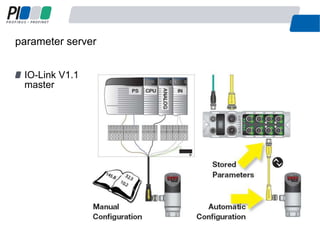
parameter server
22
IO-Link V1.1
master
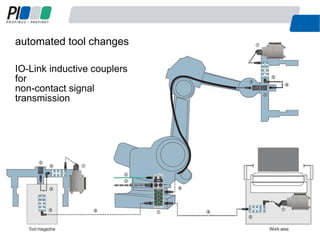
automated tool changes
23
IO-Link inductive couplers
for
non-contact signal
transmission
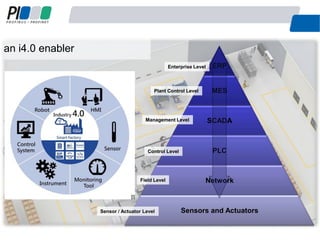
an i4.0 enabler
24
ERP
MES
SCADA
PLC
Network
Sensors and Actuators
Enterprise Level
Control Level
Management Level
Plant Control Level
Field Level
Sensor / Actuator Level
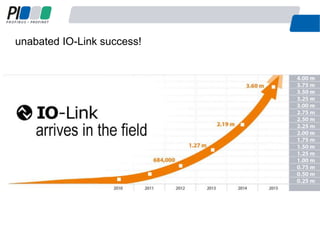
unabated IO-Link success!
25
HOW IO-LINK?
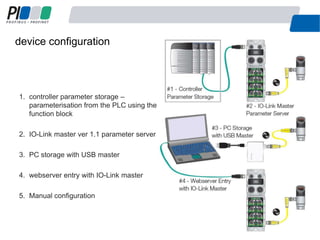
device configuration
27
1. controller parameter storage –
parameterisation from the PLC using the
function block
2. IO-Link master ver 1.1 parameter server
3. PC storage with USB master
4. webserver entry with IO-Link master
5. Manual configuration
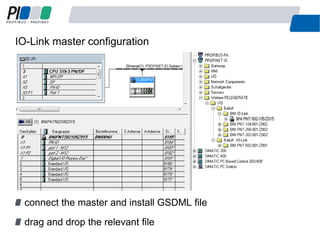
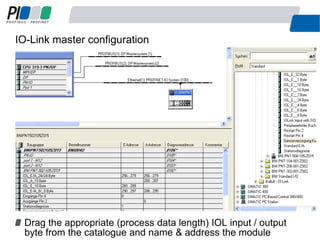
IO-Link master configuration
connect the master and install GSDML file
drag and drop the relevant file
Drag the appropriate (process data length) IOL input / output
byte from the catalogue and name & address the module
IO-Link master configuration
29
THANKS FOR LISTENING!
Russell Smith
Product Marketing Manager Industrial Networking
+44 (0)777 331 7984
russell.smith@balluff.co.uk
www.linkedin.com/in/russellsmithindustrymanager

Introduction to IO-Link - Russell Smith

  • 1.
    An Introduction toIO-Link Russell Smith Balluff Limited
  • 2.
  • 3.
    not another bussystem! 3 point to point communications protocol from the fieldbus to the sensor and actuator level. upto20M Pulse-width modulated 24V Baud rates: 4.8 kBit/s (COM1), 38.4 kBit/s (COM2), 230,4 kBits/s (COM3) Pin Signal Description 1 L + 24 Volt 2 3 L - 0 Volt 4 C / Q IO-Link communication + switching signal
  • 4.
    standard - IEC61131-9 network neutral an open standard 4
  • 5.
    5 IO-Link master … actsas a gateway between the IO-Link device and the higher level communication system, such as a fieldbus (Profinet, EtherNet/IP, etc.) or a device-specific backplane bus. IO-Link device … is the field device with communication capability: sensors, switching devices, valve terminals, RFID devices, indicator lights, etc. 3-core unshielded standard cable – up to 20M long … is the standard interface between IO-Link master and device IODD and engineering tool … are used to configure and assign parameters to the IO-Link system and devices. an IO-Link system generally consists of the following basic components:
  • 6.
    IO-Link devices 6 many differentIO-Link devices are available.
  • 7.
    IO-Link masters 7 panel mountedunit with terminals IP67 field I/O module additional slice on existing PLC
  • 8.
  • 9.
    easier handling ofmeasurement devices 9 traditionally better best lower cost – no analogue card lower cost vs IE networked device less wiring effort
  • 10.
    10 low cost high density lessaddresses low cost per I/O point – 136 I/O on one IP address
  • 11.
    extensive diagnostics 11 available onsensors/devices and sensor hubs troubleshoot problems quickly maximise up-time
  • 12.
    • Short circuit– LED for each I/O port • Short circuit does not impair the unit • Sensor/actuator under voltage LED for each I/O port extensive diagnostics: 12
  • 13.
    simplify valve manifoldwiring 13 reduced installation time reduced cost
  • 14.
    extends communication 14 ERP MES SCADA PLC Network Sensors andActuators Enterprise Level Control Level Management Level Plant Control Level Field Level Sensor / Actuator Level
  • 15.
    HMI parameterisation – stdpressure sensor 15 HMI HMIHMIHMI HMI
  • 16.
     Time consumingconfiguration of 10 – 15 Parameter. (e.g. upper/lower Pressure point, Hysteresis, Time – or Pressure window)  Machine Tools have often more than 10 Pressure sensors  Error prone due to manual entry  Very bad when Sensor failure / Sensor exchange (especially during night shift) parameterisation – std pressure sensor 16 Manual configuration
  • 17.
    parameterisation – stdpressure sensor 17 HMI HMI HMI HMI
  • 18.
    HMI integrated insensor for set up means additional cost. Expensive high-pressure hydraulic hoses parameterisation – std pressure sensor 18 machine tool Additional cost for protective housing for sensors in the machine
  • 19.
    E.g. machine tool parameterisation– pressure sensor with IO-Link 19
  • 20.
    PLC Function- blocks Vendor_ID Device_ID Param1: 50bar Param2: 100bar Param3:200ms Step 1 Identify device Step 3 Get Parameter Set Step 2 Check identity Step 4 Write Parameter Set parameterisation – pressure sensor with IO-Link 20
  • 21.
     sensor installedat point of measurement  no expensive measurement cables - use std un-shielded 3-wire standard cables  no protection case  no sensors with HMI but reliable parameterisation via controller and HMI of the machine  decentralised diagnostics for sensors parameterisation – pressure sensor with IO-Link 21
  • 22.
  • 23.
    automated tool changes 23 IO-Linkinductive couplers for non-contact signal transmission
  • 24.
    an i4.0 enabler 24 ERP MES SCADA PLC Network Sensorsand Actuators Enterprise Level Control Level Management Level Plant Control Level Field Level Sensor / Actuator Level
  • 25.
  • 26.
  • 27.
    device configuration 27 1. controllerparameter storage – parameterisation from the PLC using the function block 2. IO-Link master ver 1.1 parameter server 3. PC storage with USB master 4. webserver entry with IO-Link master 5. Manual configuration
  • 28.
    IO-Link master configuration connectthe master and install GSDML file drag and drop the relevant file
  • 29.
    Drag the appropriate(process data length) IOL input / output byte from the catalogue and name & address the module IO-Link master configuration 29
  • 30.
    THANKS FOR LISTENING! RussellSmith Product Marketing Manager Industrial Networking +44 (0)777 331 7984 russell.smith@balluff.co.uk www.linkedin.com/in/russellsmithindustrymanager