GUJARAT TECHNOLOGICAL UNIVERSITY
Chandkheda , Ahmedabad
Affiliated
S. N. PATEL INSTITUTE OF TECHNOLOGY & RESEARCH
CENTER, UMRAKH
SUBJECT: Professional Practice & Valuation
TOPIC: Types of estimation
Guided By
Bhavin Kashiyani
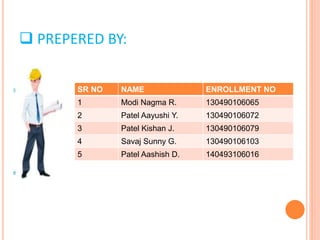
 PREPERED BY:
SR NO NAME ENROLLMENT NO
1 Modi Nagma R. 130490106065
2 Patel Aayushi Y. 130490106072
3 Patel Kishan J. 130490106079
4 Savaj Sunny G. 130490106103
5 Patel Aashish D. 140493106016
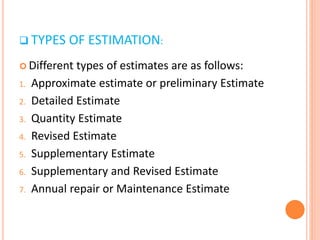
 TYPES OF ESTIMATION:
 Different types of estimates are as follows:
1. Approximate estimate or preliminary Estimate
2. Detailed Estimate
3. Quantity Estimate
4. Revised Estimate
5. Supplementary Estimate
6. Supplementary and Revised Estimate
7. Annual repair or Maintenance Estimate
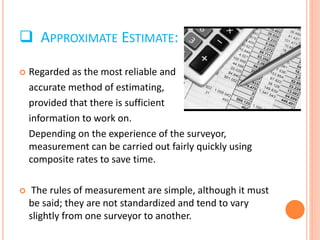
 APPROXIMATE ESTIMATE:
 Regarded as the most reliable and
accurate method of estimating,
provided that there is sufficient
information to work on.
Depending on the experience of the surveyor,
measurement can be carried out fairly quickly using
composite rates to save time.
 The rules of measurement are simple, although it must
be said; they are not standardized and tend to vary
slightly from one surveyor to another.
 Preliminary study of the project
 Administrative approval
 To investigate feasibility
 To get loan from bank
 For insurance purpose
 For deciding taxes
 To decide rent of a building
 PURPOSE OF APPROXIMATE ESTIMATE:
 DETAILED ESTIMATE:
• This estimate is an accurate and is based on
the plan and sanctions of the building.
• This include the detailed particulars for the
quantities, rate and cost of all the items
involved for satisfactory completion of a
project
• Quantities of all items of work are calculated
from their respective dimension on the
drawing on a measurement sheet .multiplying
these quantities by their respective rate in
separate sheet, the cost of all items of work
are worked out individually and then
summarized
 A detail estimate is accompanied by
 Report
 Specification
 Detailed drawing showing plane Design data and calculation
 Basis of rates adopted in the estimate
 QUANTITY ESTIMATE:
• This is complete estimate or list
of quantities for all items of work
required to complete the concerned
project.
• The quantity of each individual items of work is worked
out form respective dimensions on the drawing of the
structure to find the cost of an item in quantity is
multiplied by the rate per unit from that item.
• The purpose of the bill quantity i.e. to provide a
complete list of quantities necessary for the competition
of any engineering project and when price given to the
estimated cost of the project
 REVISED ESTIMATE:
• IT Is also a detailed estimate and is prepared a fresh
when the original sanctioned detailed estimate exceeds
by 10% or more ,either due to rates being found
insufficient or due to some other reasons
• It is always possible that in spite of
all precaution in the planning stages
it becomes clearly during execution
the actual cost of a project will exceed
the original estimate, now generally
a certain cushion of the cost is available,
if the exceedance is higher
 SUPPLYMENTARY ESTIMATE:
• This is a fresh detailed estimate of the additional
work in additional work in addition to the original
one and is prepared when additional work is
required to supplement the original work
• There is always a like hood that while executing a
certain project it may be considered worthwhile to
carry out additional work ,which was not foreseen
in initial stages and therefore not actual for the
preliminary estimate
• Execution of such work required drawing up and
approval of supplementary estimate and the exercise is
essential similar to that of drawing up the estimate for
the main work it is naturally expected that the cost of
additional work will be much smaller than the main
work
• But in case where the saving is due to a material
deviation of structural nature from the design originally
approved supplement estimate is prepared for a revised
technical sanction
• The method of preparation of supplementary estimate
is the same as that of detail estimate and it should be
accompanied by full report of the circumstances which
render it necessity.
 SUPPLEMENTARY AND REVISED ESTIMATE:
 When a work is partially abandoned and the estimated
cost of the remaining work is less than 95% of the
original work,or when there are material deviations and
changes in design which may cause substantial saving in
the estimate , then the amount of the original estimate
is revised by the competent authority.
A supplementary and revised estimate
is the prepared and fresh technical
sanction of the competent authority
is obtained
 ANNUAL REPAIR OR MAINTENANCE
ESTIMATE:
 Annual Repair estimate is called detailed estimate and is
prepared to maintain the structure or work in proper
order and safe condition.
 For building this includes,
1.White washing
2.Colour washing
3.Painting of doors and windows
4.Minor repairs,etc
 For road works A.R. estimate includes,
1.patch repairing
2.renewals
3.repair bridges
4.repairof culverts etc.
For building,the quantities are based on the previous
measurements recorded in the standard M.B. for petty work,
such as replacement of glass panes,repairs of floors,patch repair
to cement plaster to walls etc.whose repairs can not be
estimated in the beginning only lump sum provision is made for
different items in the estimate.
 Professional Practice & Valuation (Atul Publication)
 REFRENCES:
Ppv ppt

Ppv ppt

  • 1.
    GUJARAT TECHNOLOGICAL UNIVERSITY Chandkheda, Ahmedabad Affiliated S. N. PATEL INSTITUTE OF TECHNOLOGY & RESEARCH CENTER, UMRAKH SUBJECT: Professional Practice & Valuation TOPIC: Types of estimation Guided By Bhavin Kashiyani
  • 2.
     PREPERED BY: SRNO NAME ENROLLMENT NO 1 Modi Nagma R. 130490106065 2 Patel Aayushi Y. 130490106072 3 Patel Kishan J. 130490106079 4 Savaj Sunny G. 130490106103 5 Patel Aashish D. 140493106016
  • 3.
     TYPES OFESTIMATION:  Different types of estimates are as follows: 1. Approximate estimate or preliminary Estimate 2. Detailed Estimate 3. Quantity Estimate 4. Revised Estimate 5. Supplementary Estimate 6. Supplementary and Revised Estimate 7. Annual repair or Maintenance Estimate
  • 4.
     APPROXIMATE ESTIMATE: Regarded as the most reliable and accurate method of estimating, provided that there is sufficient information to work on. Depending on the experience of the surveyor, measurement can be carried out fairly quickly using composite rates to save time.  The rules of measurement are simple, although it must be said; they are not standardized and tend to vary slightly from one surveyor to another.
  • 5.
     Preliminary studyof the project  Administrative approval  To investigate feasibility  To get loan from bank  For insurance purpose  For deciding taxes  To decide rent of a building  PURPOSE OF APPROXIMATE ESTIMATE:
  • 6.
     DETAILED ESTIMATE: •This estimate is an accurate and is based on the plan and sanctions of the building. • This include the detailed particulars for the quantities, rate and cost of all the items involved for satisfactory completion of a project • Quantities of all items of work are calculated from their respective dimension on the drawing on a measurement sheet .multiplying these quantities by their respective rate in separate sheet, the cost of all items of work are worked out individually and then summarized
  • 7.
     A detailestimate is accompanied by  Report  Specification  Detailed drawing showing plane Design data and calculation  Basis of rates adopted in the estimate
  • 8.
     QUANTITY ESTIMATE: •This is complete estimate or list of quantities for all items of work required to complete the concerned project. • The quantity of each individual items of work is worked out form respective dimensions on the drawing of the structure to find the cost of an item in quantity is multiplied by the rate per unit from that item. • The purpose of the bill quantity i.e. to provide a complete list of quantities necessary for the competition of any engineering project and when price given to the estimated cost of the project
  • 9.
     REVISED ESTIMATE: •IT Is also a detailed estimate and is prepared a fresh when the original sanctioned detailed estimate exceeds by 10% or more ,either due to rates being found insufficient or due to some other reasons • It is always possible that in spite of all precaution in the planning stages it becomes clearly during execution the actual cost of a project will exceed the original estimate, now generally a certain cushion of the cost is available, if the exceedance is higher
  • 10.
     SUPPLYMENTARY ESTIMATE: •This is a fresh detailed estimate of the additional work in additional work in addition to the original one and is prepared when additional work is required to supplement the original work • There is always a like hood that while executing a certain project it may be considered worthwhile to carry out additional work ,which was not foreseen in initial stages and therefore not actual for the preliminary estimate
  • 11.
    • Execution ofsuch work required drawing up and approval of supplementary estimate and the exercise is essential similar to that of drawing up the estimate for the main work it is naturally expected that the cost of additional work will be much smaller than the main work • But in case where the saving is due to a material deviation of structural nature from the design originally approved supplement estimate is prepared for a revised technical sanction • The method of preparation of supplementary estimate is the same as that of detail estimate and it should be accompanied by full report of the circumstances which render it necessity.
  • 12.
     SUPPLEMENTARY ANDREVISED ESTIMATE:  When a work is partially abandoned and the estimated cost of the remaining work is less than 95% of the original work,or when there are material deviations and changes in design which may cause substantial saving in the estimate , then the amount of the original estimate is revised by the competent authority. A supplementary and revised estimate is the prepared and fresh technical sanction of the competent authority is obtained
  • 13.
     ANNUAL REPAIROR MAINTENANCE ESTIMATE:  Annual Repair estimate is called detailed estimate and is prepared to maintain the structure or work in proper order and safe condition.  For building this includes, 1.White washing 2.Colour washing 3.Painting of doors and windows 4.Minor repairs,etc
  • 14.
     For roadworks A.R. estimate includes, 1.patch repairing 2.renewals 3.repair bridges 4.repairof culverts etc. For building,the quantities are based on the previous measurements recorded in the standard M.B. for petty work, such as replacement of glass panes,repairs of floors,patch repair to cement plaster to walls etc.whose repairs can not be estimated in the beginning only lump sum provision is made for different items in the estimate.
  • 15.
     Professional Practice& Valuation (Atul Publication)  REFRENCES: