Structural design-II

Prepared by:

Kauswala Tausif k
Structural Design-II syllabus

•RCC DESIGN
•STEEL DESIGN
RCC DESIGN
• Loading standards as per I.S & guidelines for
the preparation of structural layout.
• Analysis, design & detailing of G+3 RC
framed building for residential & commercial
Purpose with ductile detailing.
• Design & detailing of underground and
elevated water tanks of different c/s.
• Design & detailing of cantilever & counter fort
retaining wall
STEEL DESIGN
• Design of bolted / welded plate girder for
static and rolling loads.
• Structural layout & Designing of every
components of industrial building.
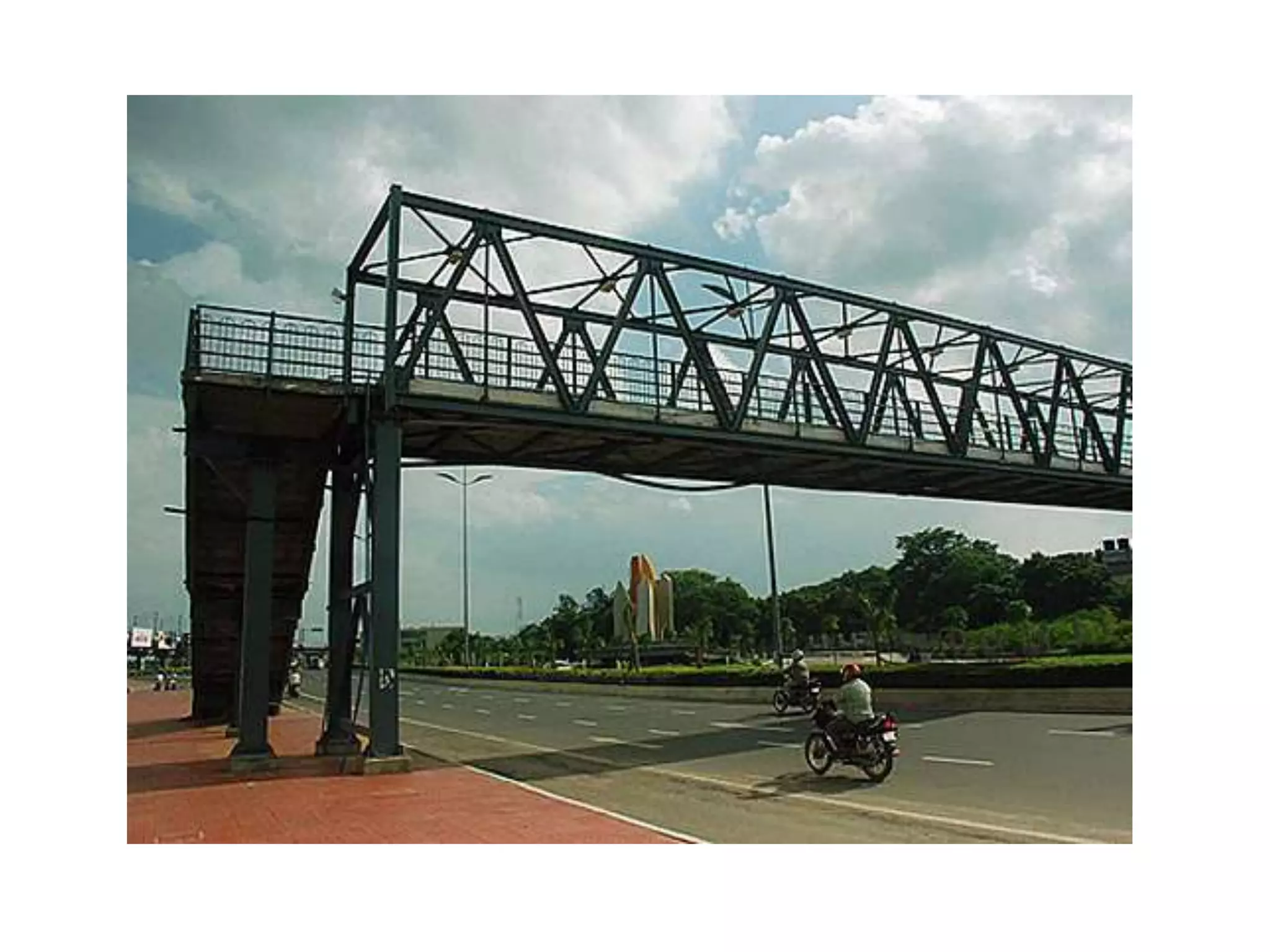
• Design of foot over bridge and structural
system of through and deck bridge.
• Design principles for tall steel structures like
transmission towers, chimney etc
Topics covered by ME
• Full Steel design –all chapters
• RCC design - Analysis, design & detailing of
G+3 RC framed building for residential &
commercial Purpose with ductile detailing.
Theories based on
foot over bridge
Topics
• When to use truss girders..?
• Difference between Plate girder and Truss
girders.
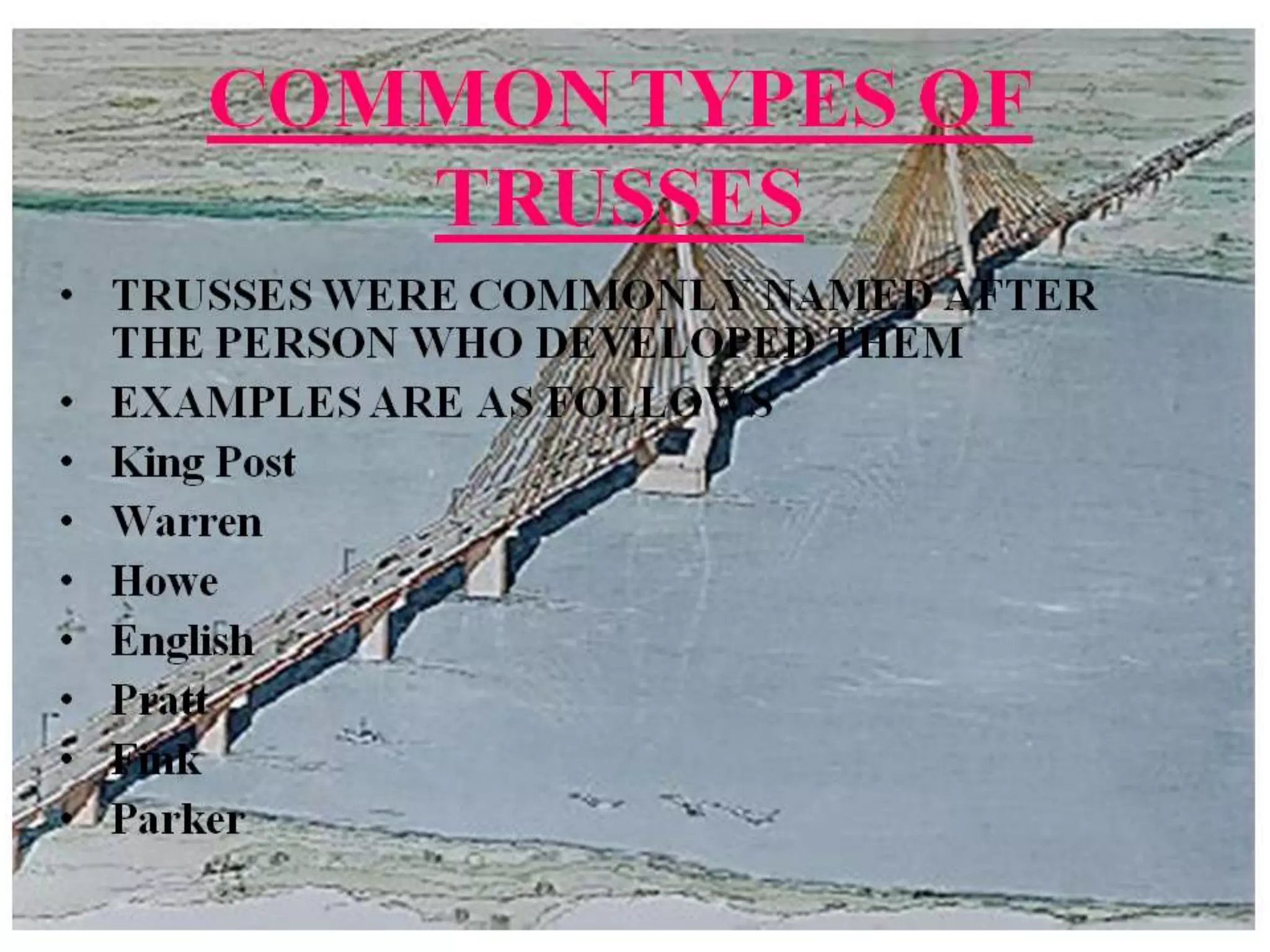
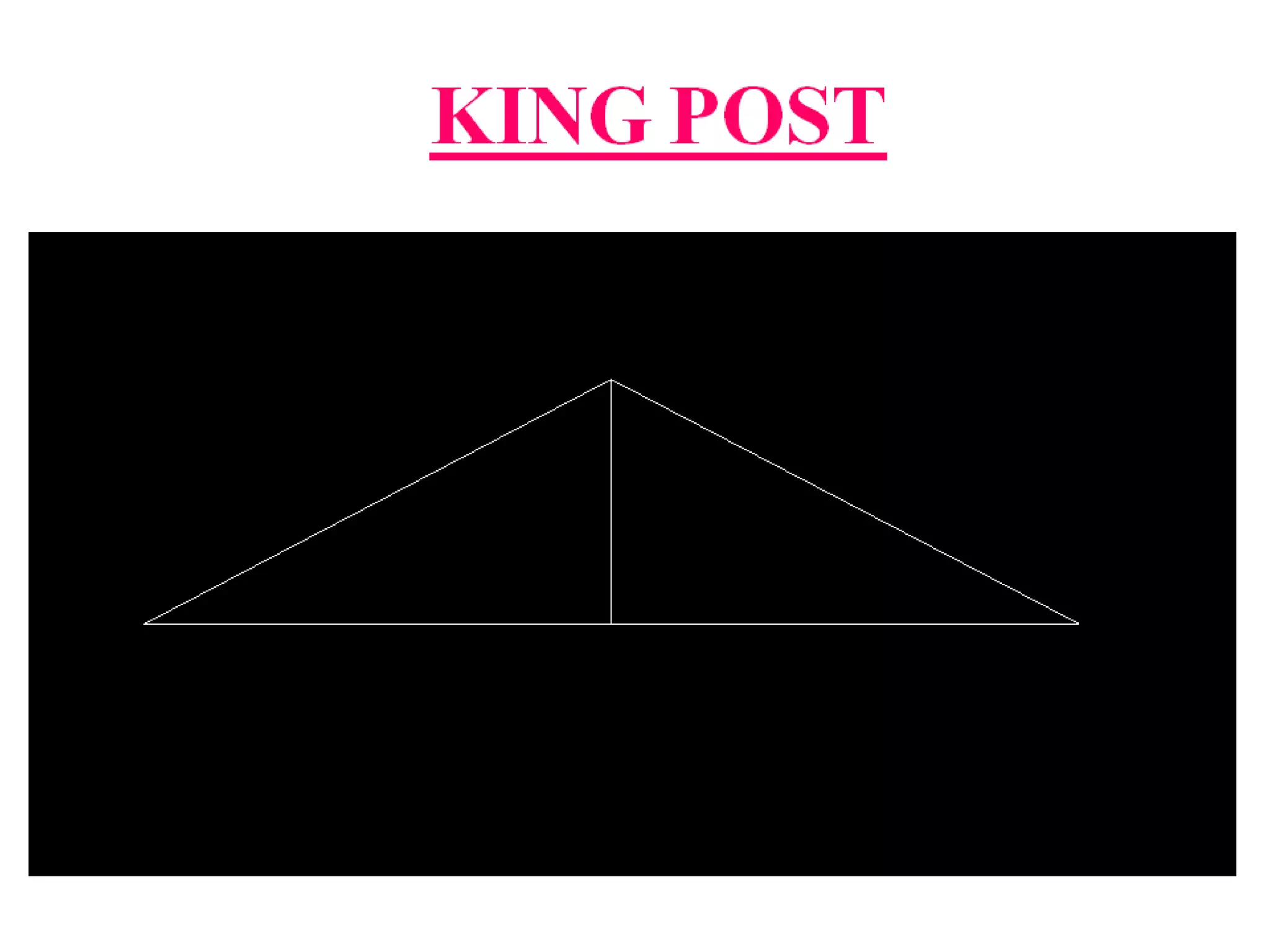
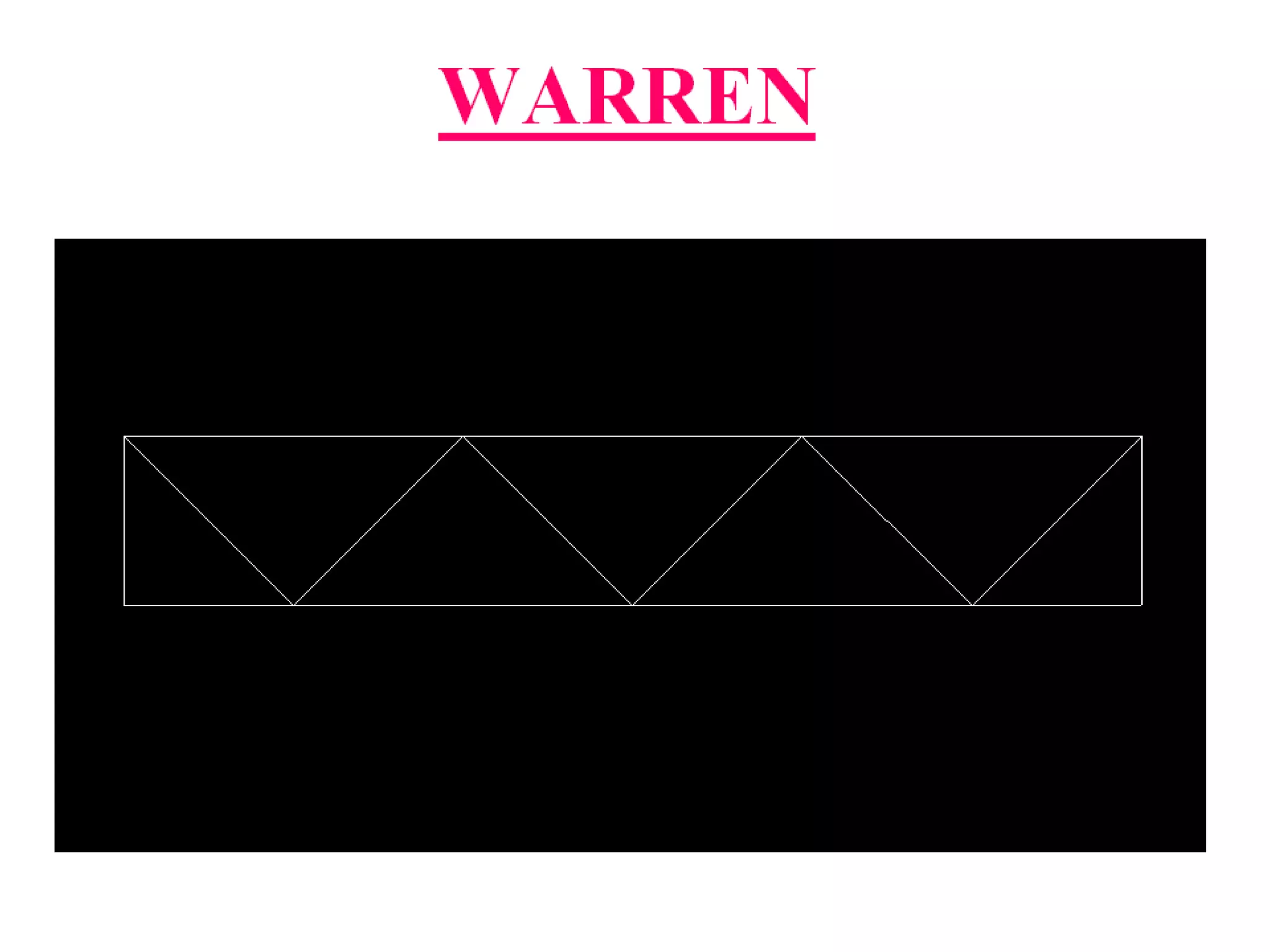
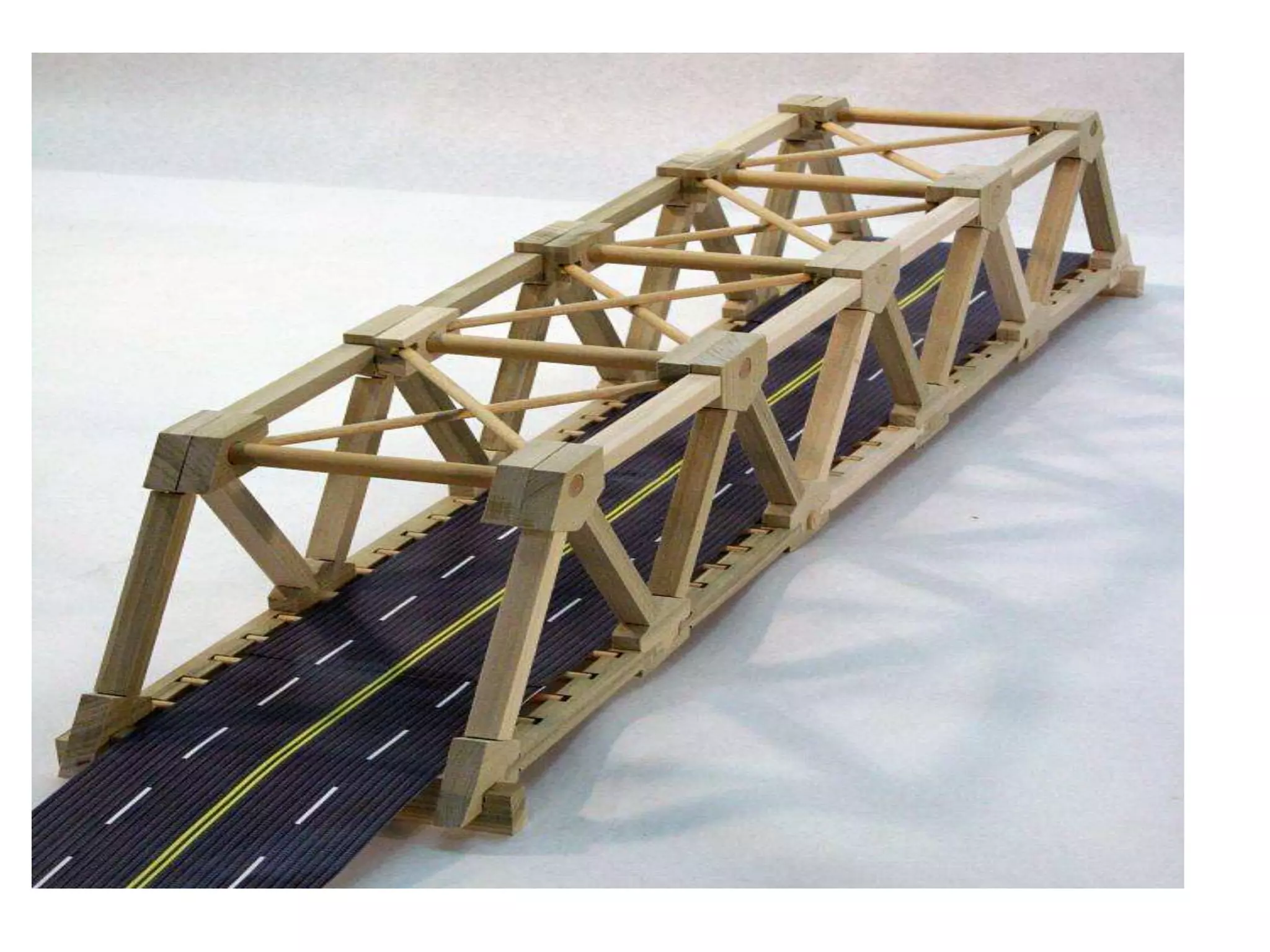
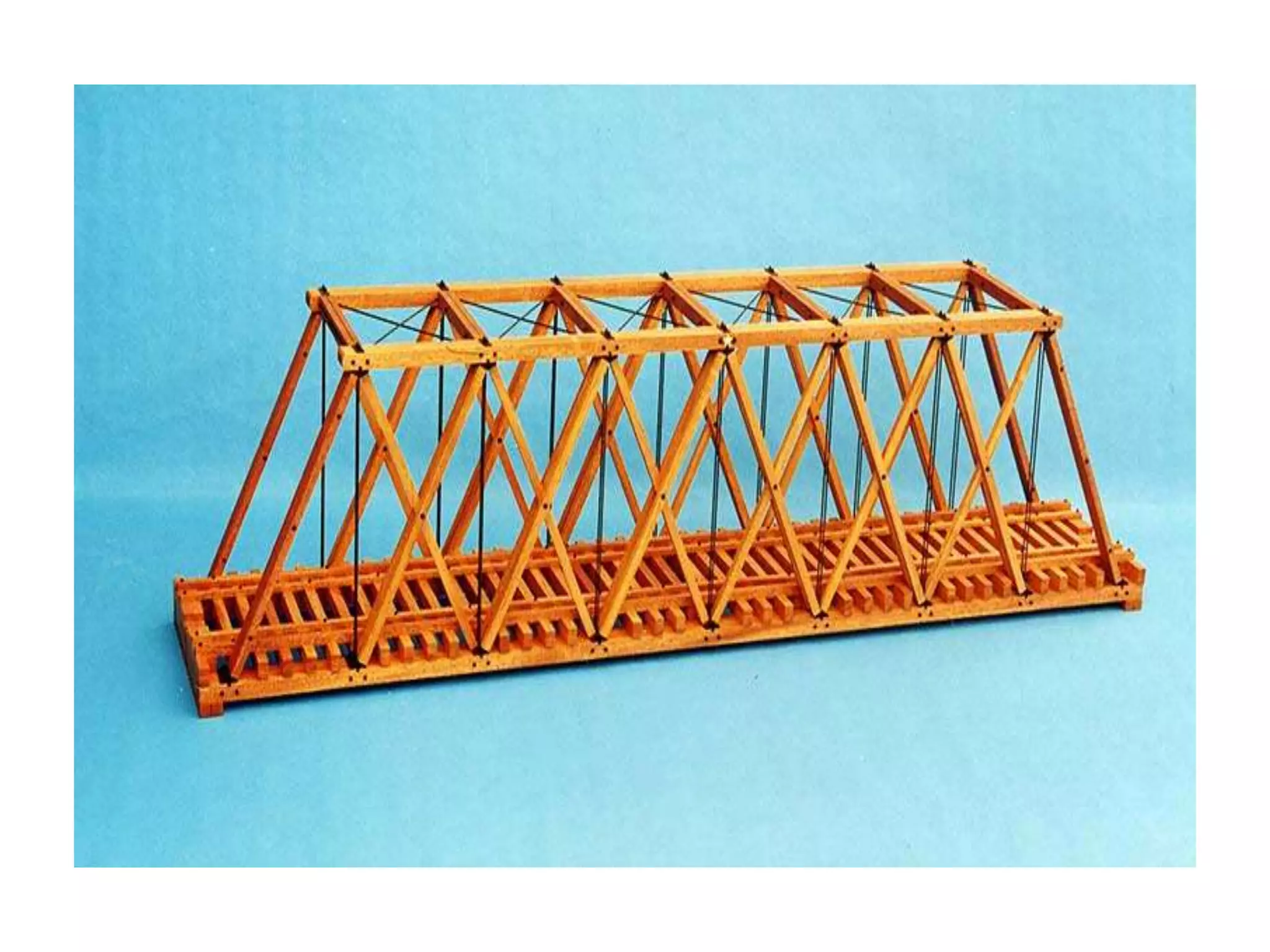
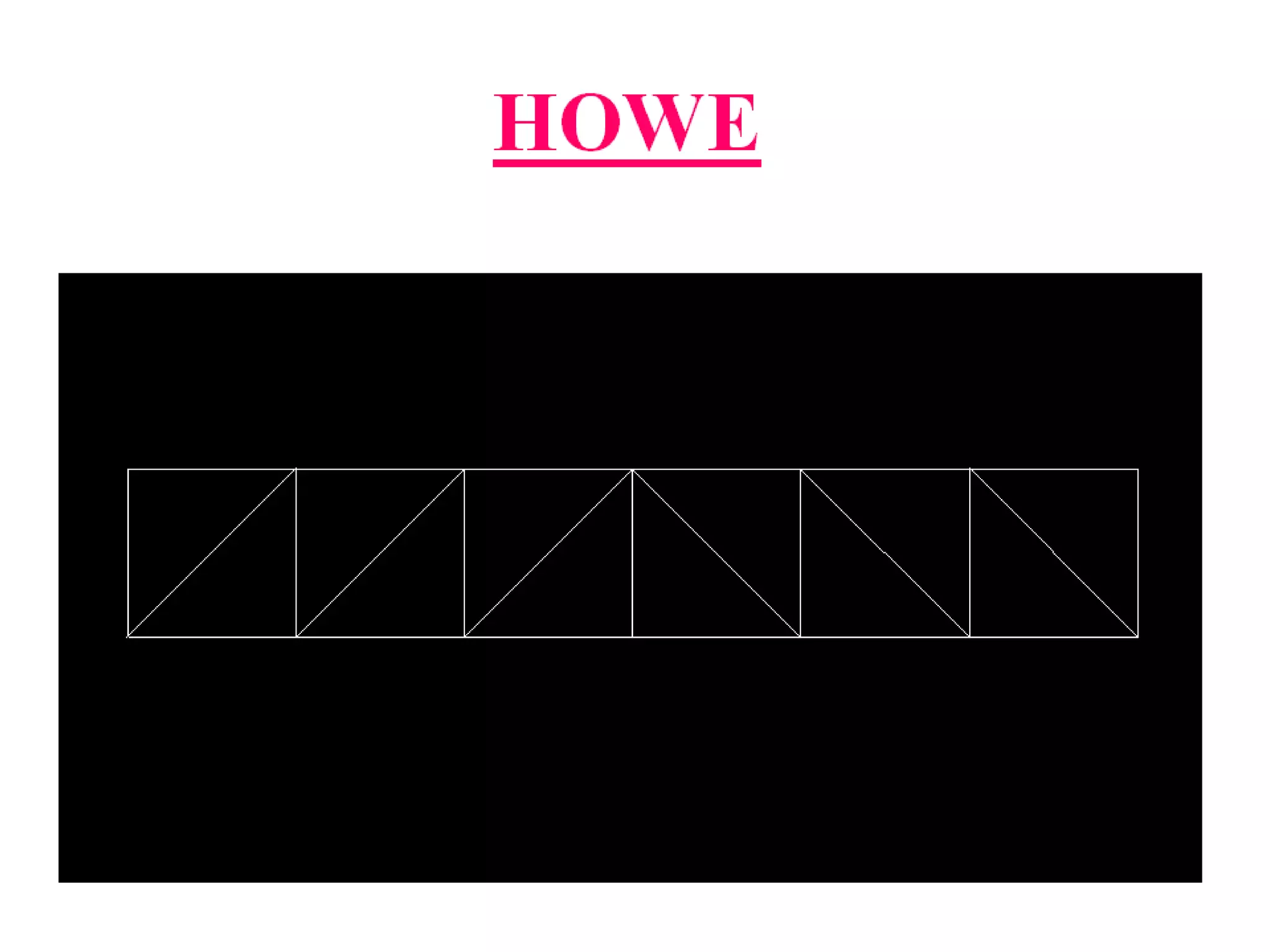
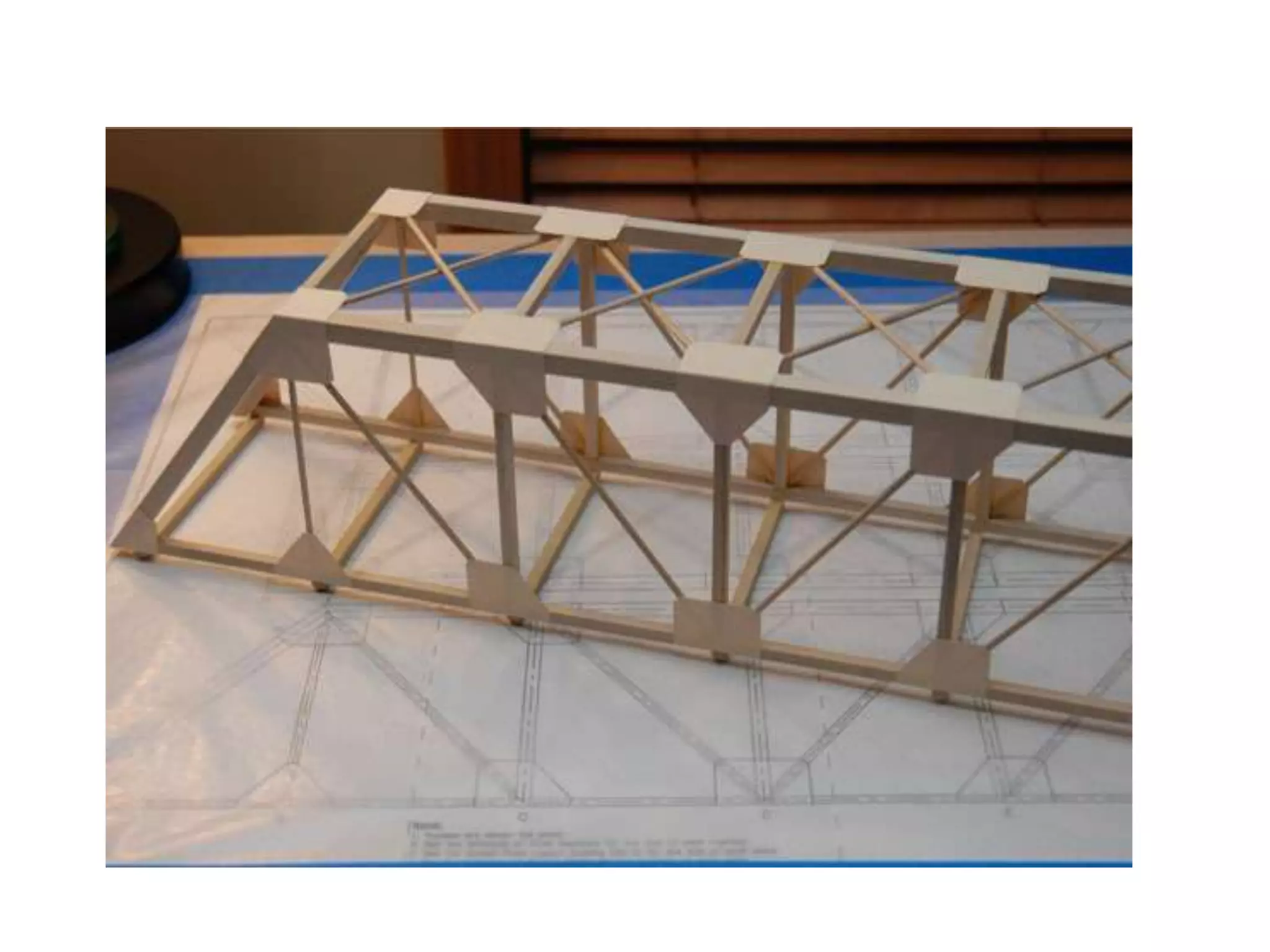
• Types of Truss girders
• Components of Truss girder.
• Loads on Truss girder
• Applications of Foot over Bridge
When to use..??
• To carry main load
• When load is so large that can not be
economically bridged using plate girders
• If span is comparatively large.
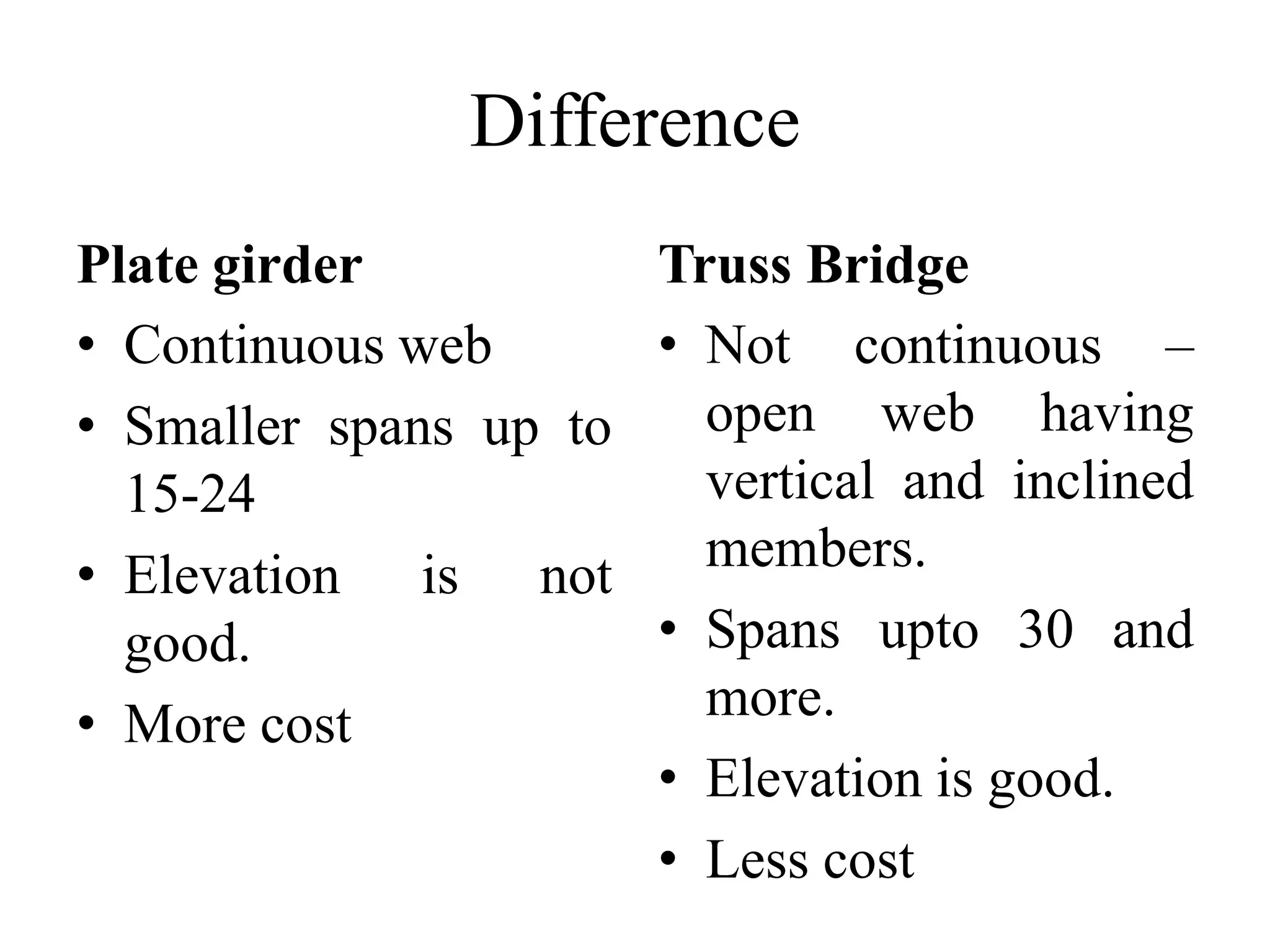
Difference
Plate girder
Truss Bridge
• Continuous web
• Not continuous –
open web having
• Smaller spans up to
vertical and inclined
15-24
members.
• Elevation is not
• Spans upto 30 and
good.
more.
• More cost
• Elevation is good.
• Less cost
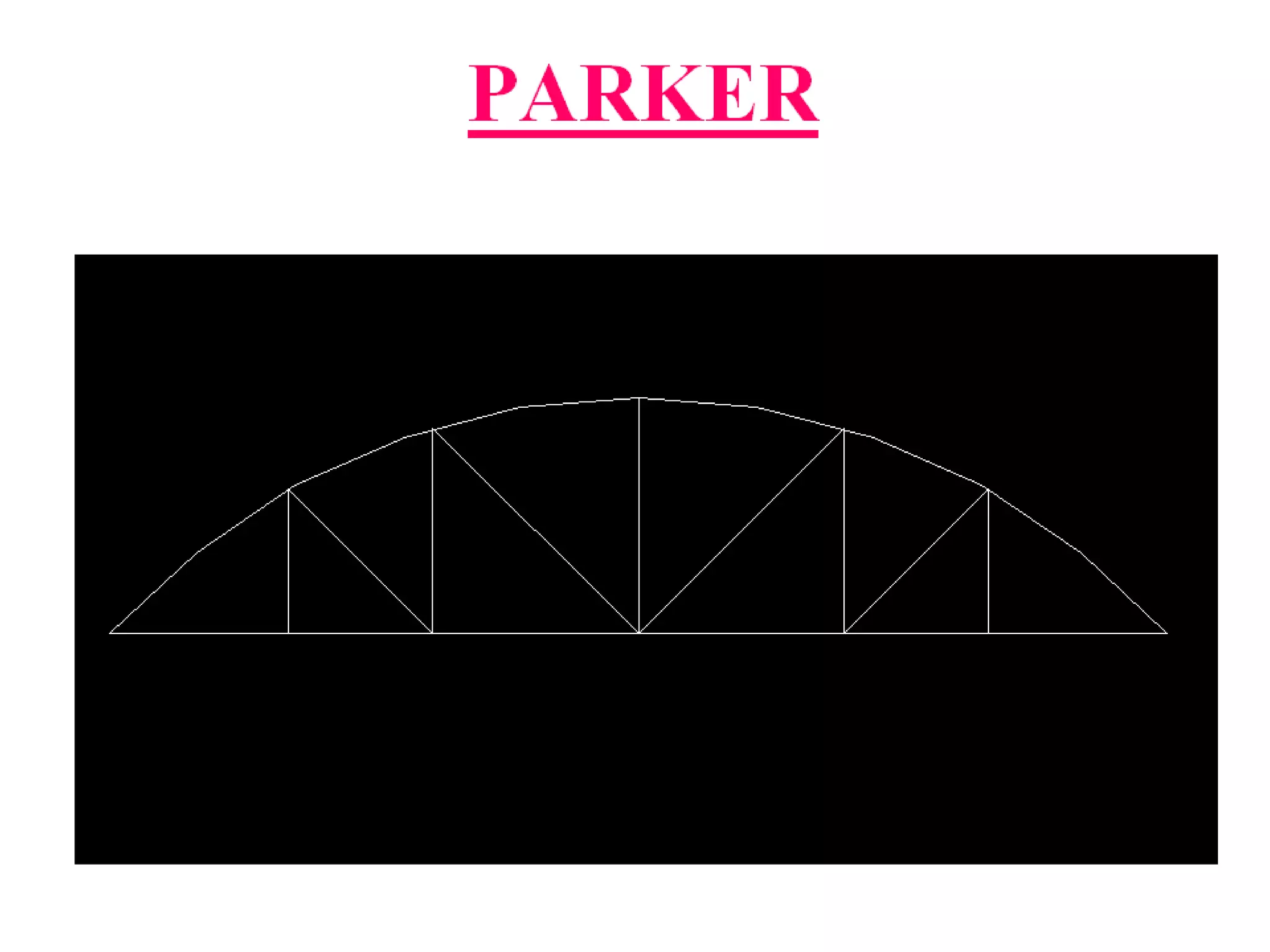
Types of truss girders
• Through type
• Deck type
• Semi type/half through
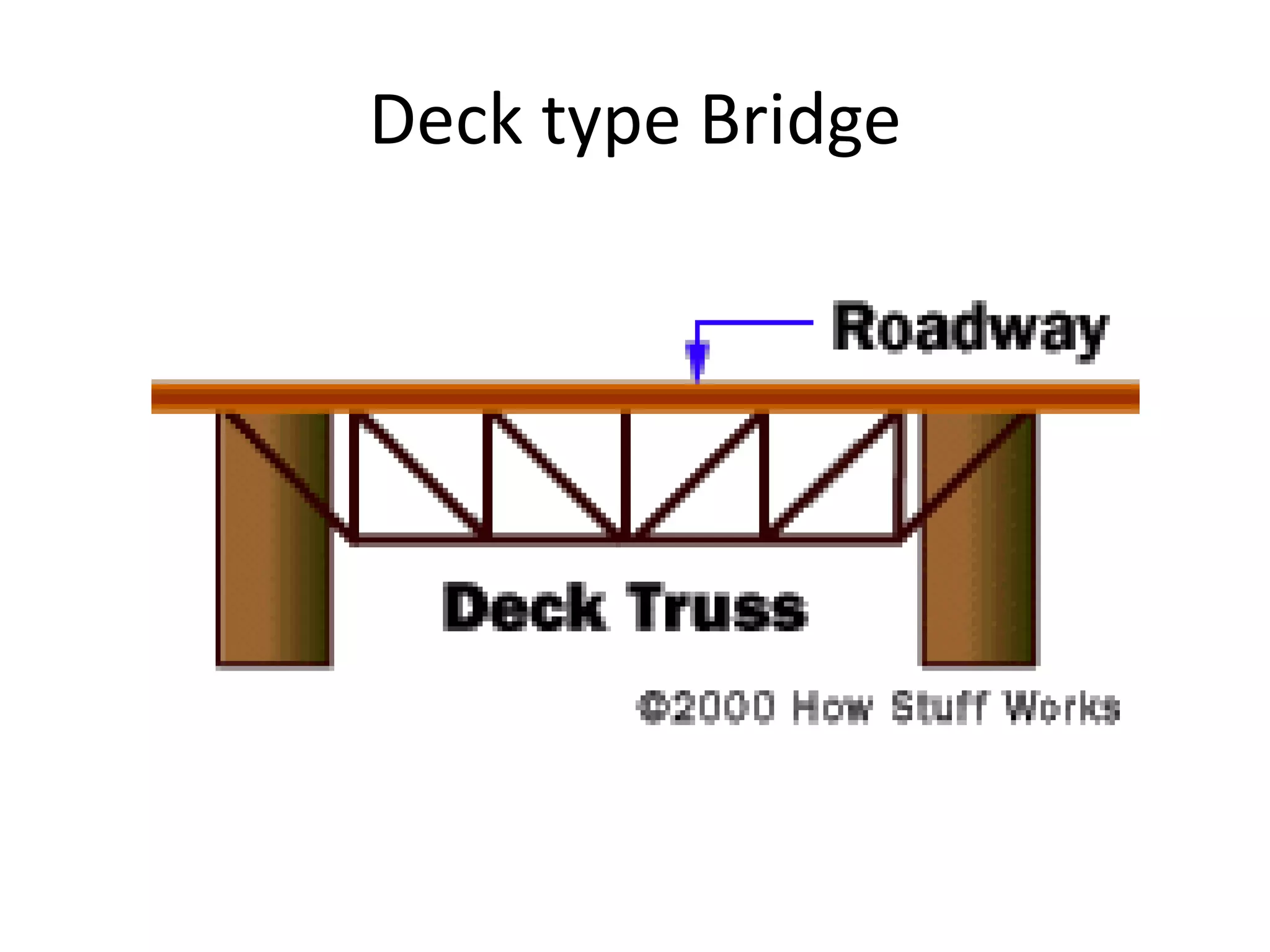
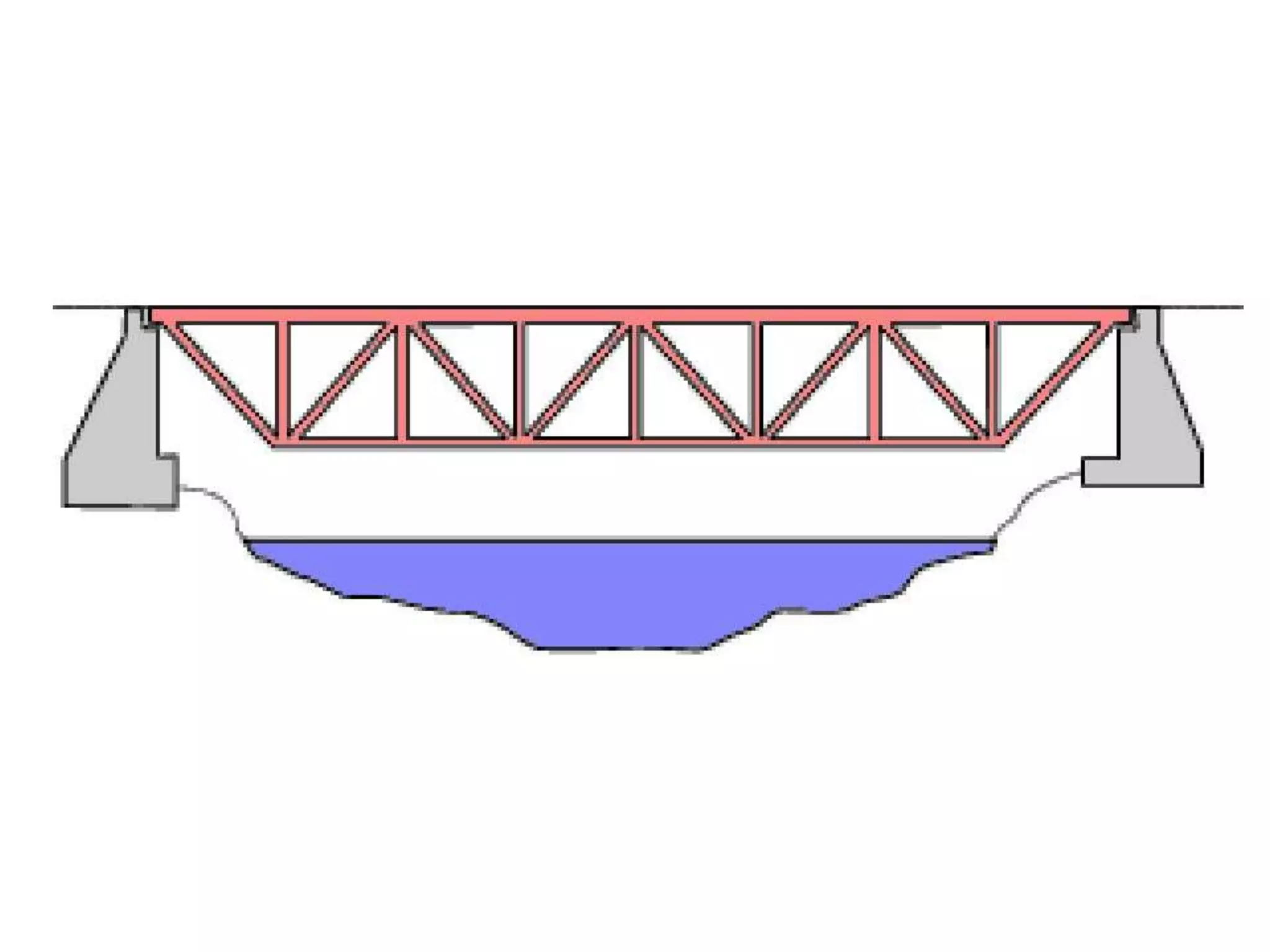
Deck type Bridge
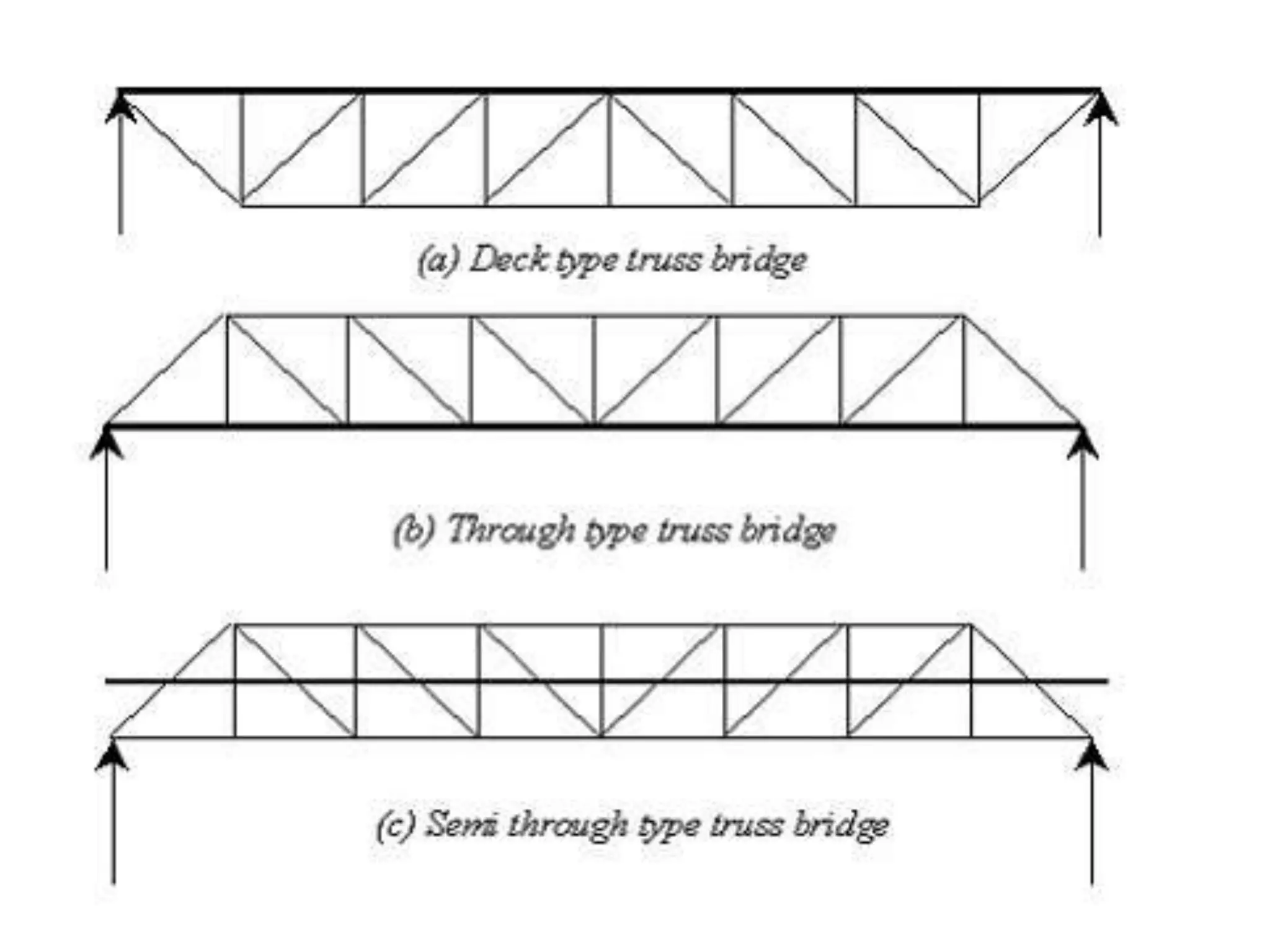
The carriageway rests on the top of the main
load carrying members. In the deck type plate
girder bridge, the roadway or railway is placed
on the top flanges as shown and the cross
girders are supported by the trusses generally
at the panel points
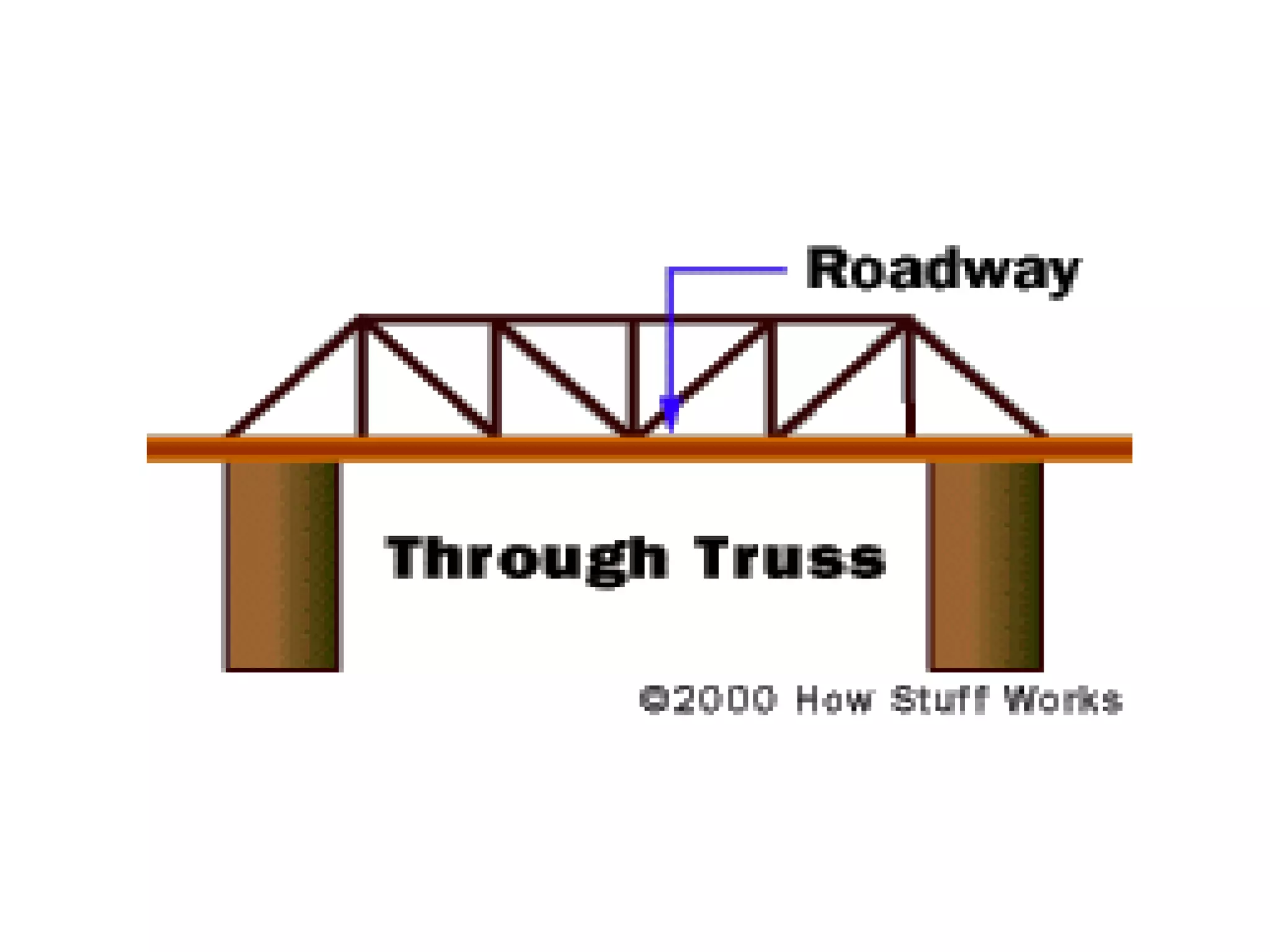
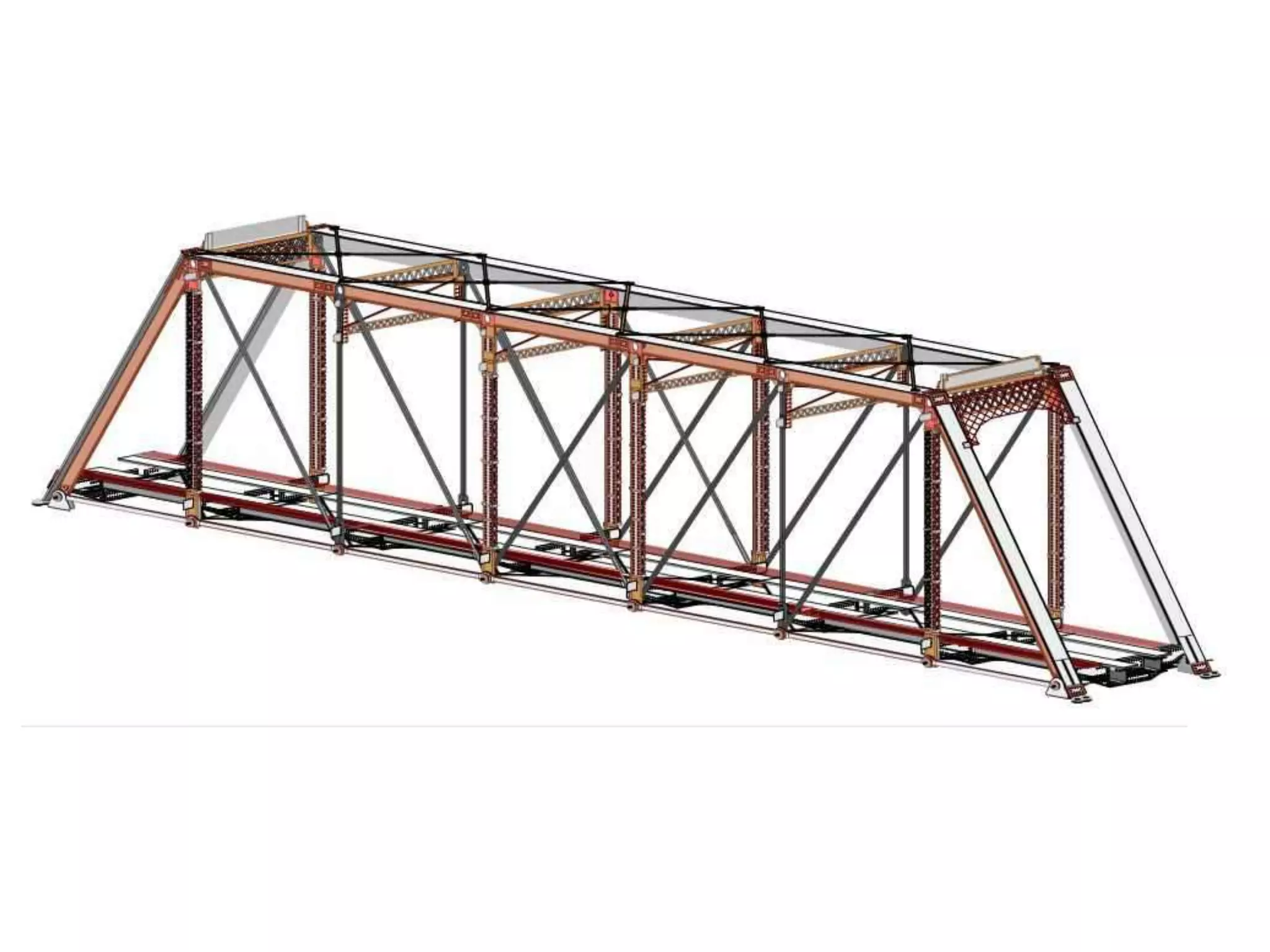
Through type truss
• - The carriageway rests at the bottom level of
the main load carrying members. In the
through type plate girder bridge, the roadway
or railway is placed at the level of bottom
flanges. The bracing of the top flange or lateral
support of the top chord under compression is
also required.
Semi through type bridge
The deck lies in between the top and the bottom
of the main load carrying members. The
bracing of the top flange or top chord under
compression is not done and part of the load
carrying system project above the floor level
The lateral restraint in the system is obtained
usually by the U-frame action of the verticals
and cross beam acting together.
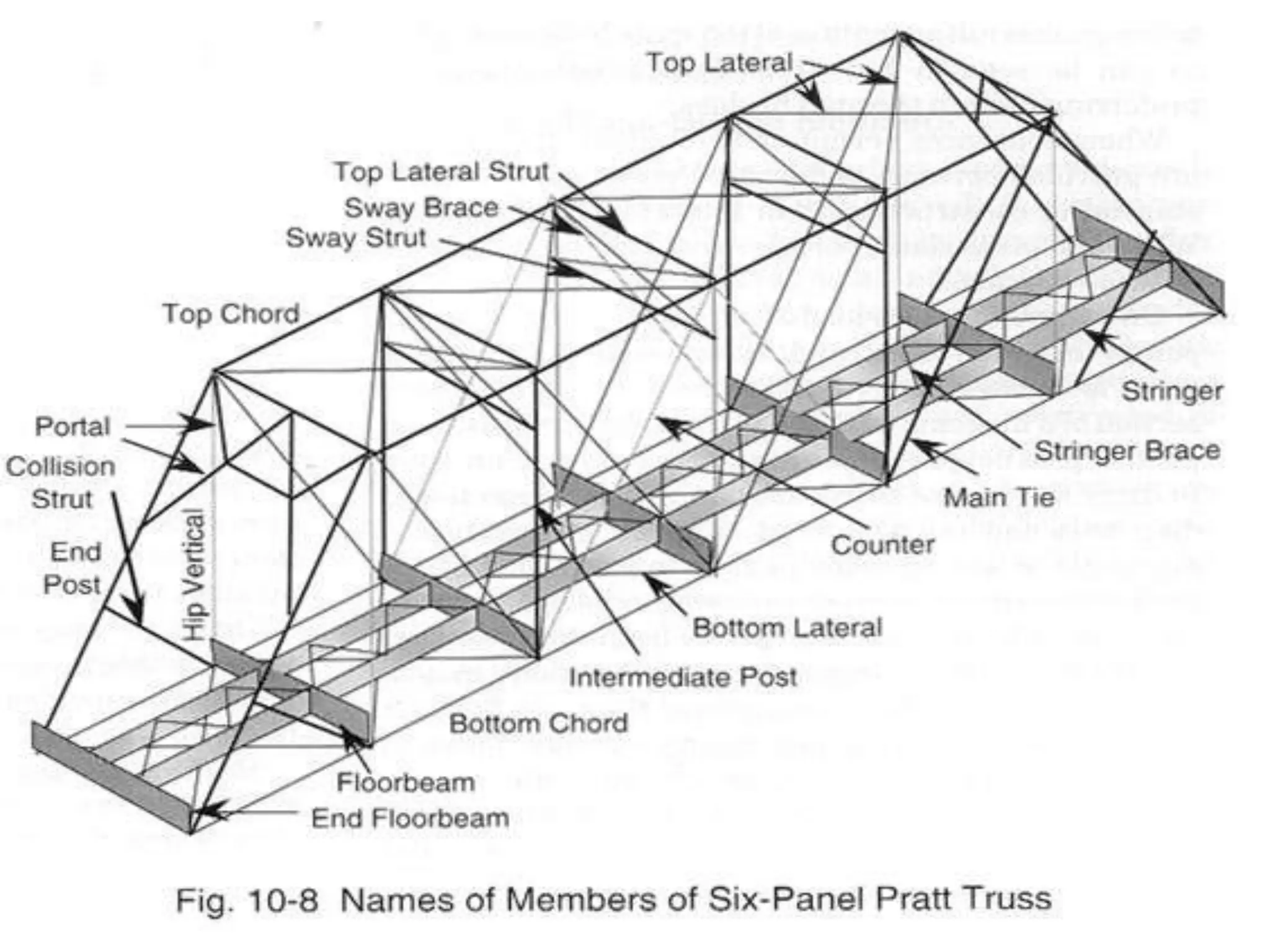
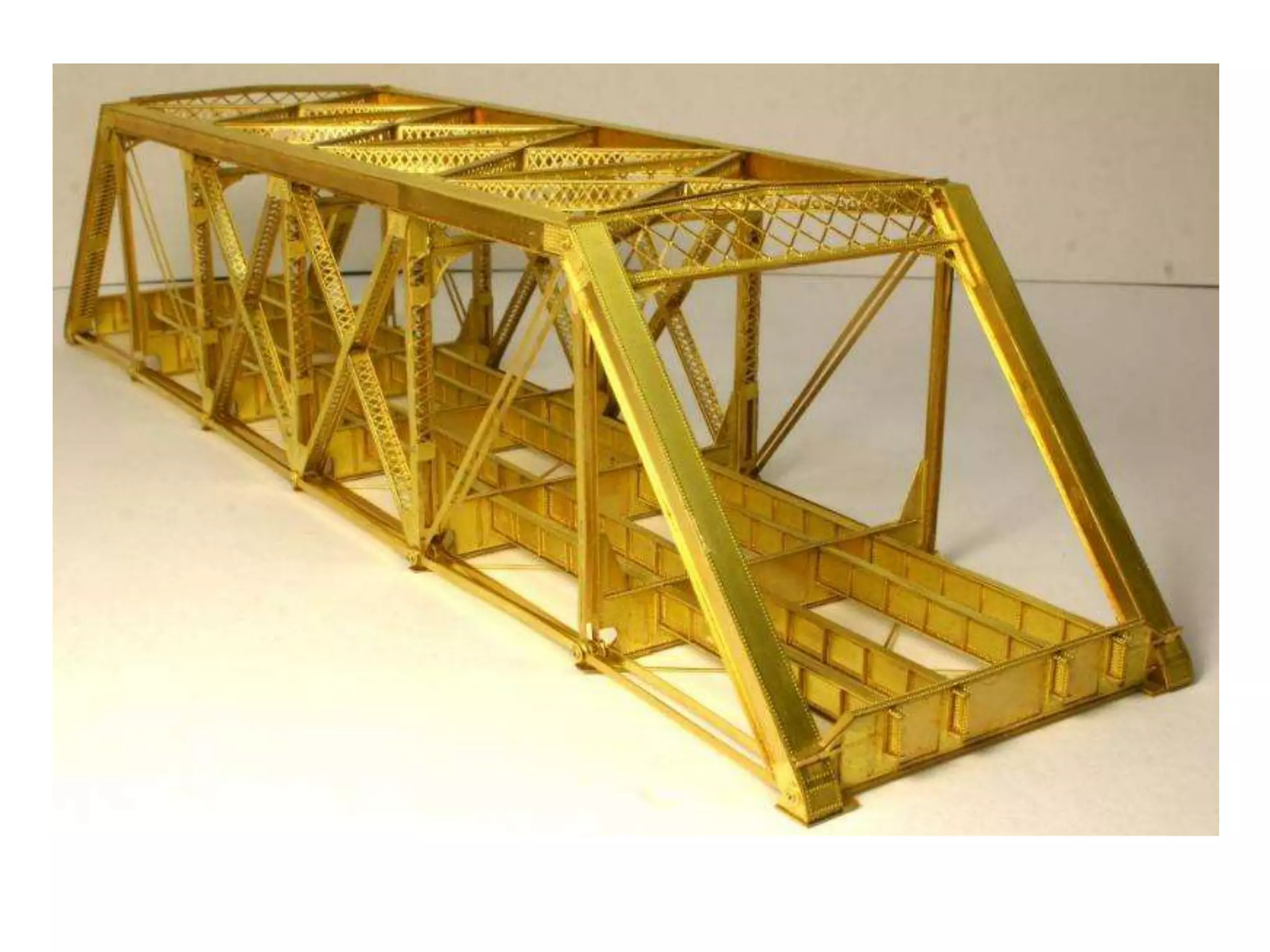
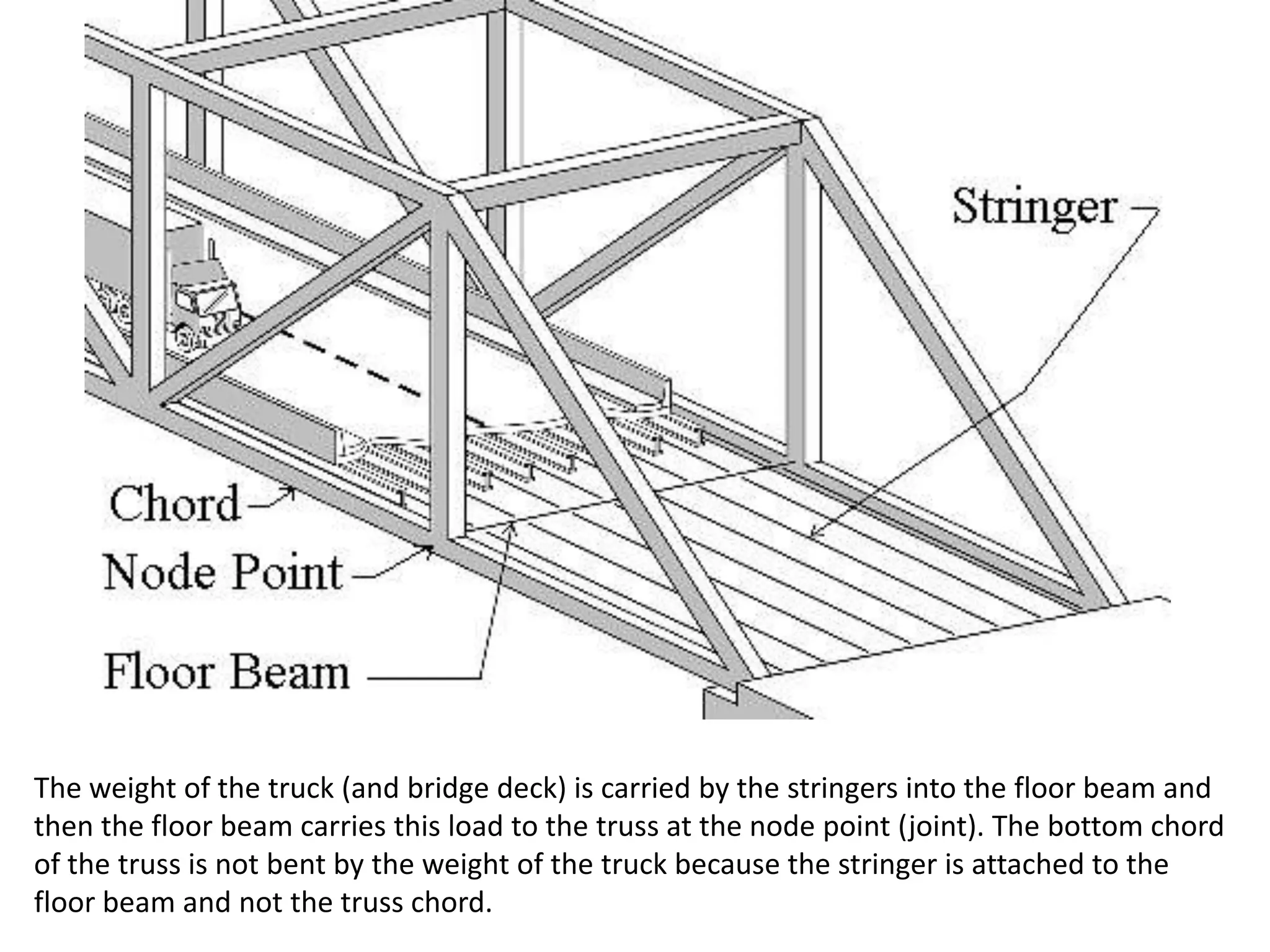
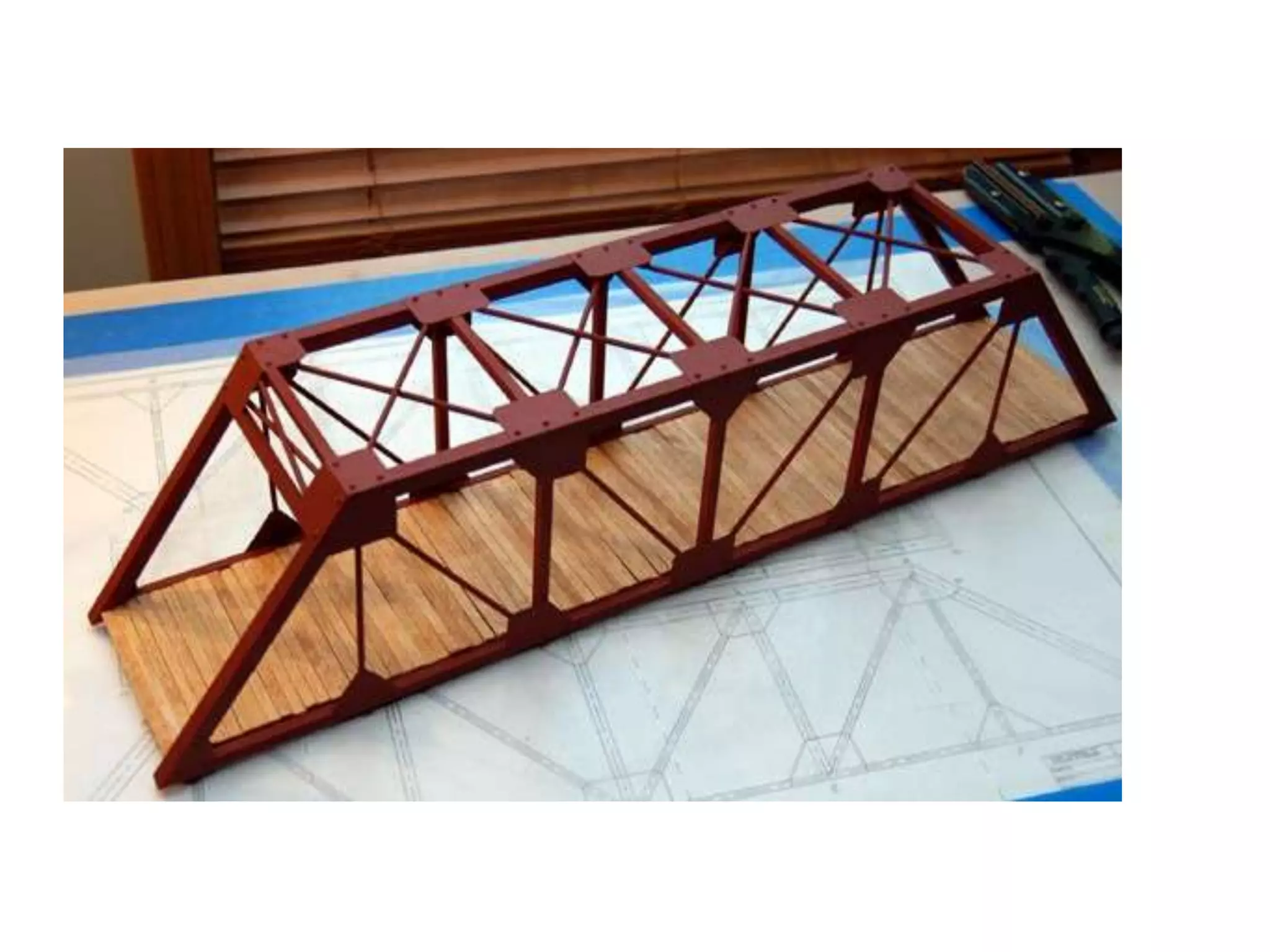
Components of Truss girder bridges
The weight of the truck (and bridge deck) is carried by the stringers into the floor beam and
then the floor beam carries this load to the truss at the node point (joint). The bottom chord
of the truss is not bent by the weight of the truck because the stringer is attached to the
floor beam and not the truss chord.
Loads Applicable on truss girder
The following are the various loads to be considered for the purpose of
computing stresses, wherever they are applicable.

Dead load
Live load
Impact load
Longitudinal force
Thermal force
Wind load
Seismic load
Racking force
Forces due to curvature.
Forces on parapets
Frictional resistance of expansion bearings
Erection forces
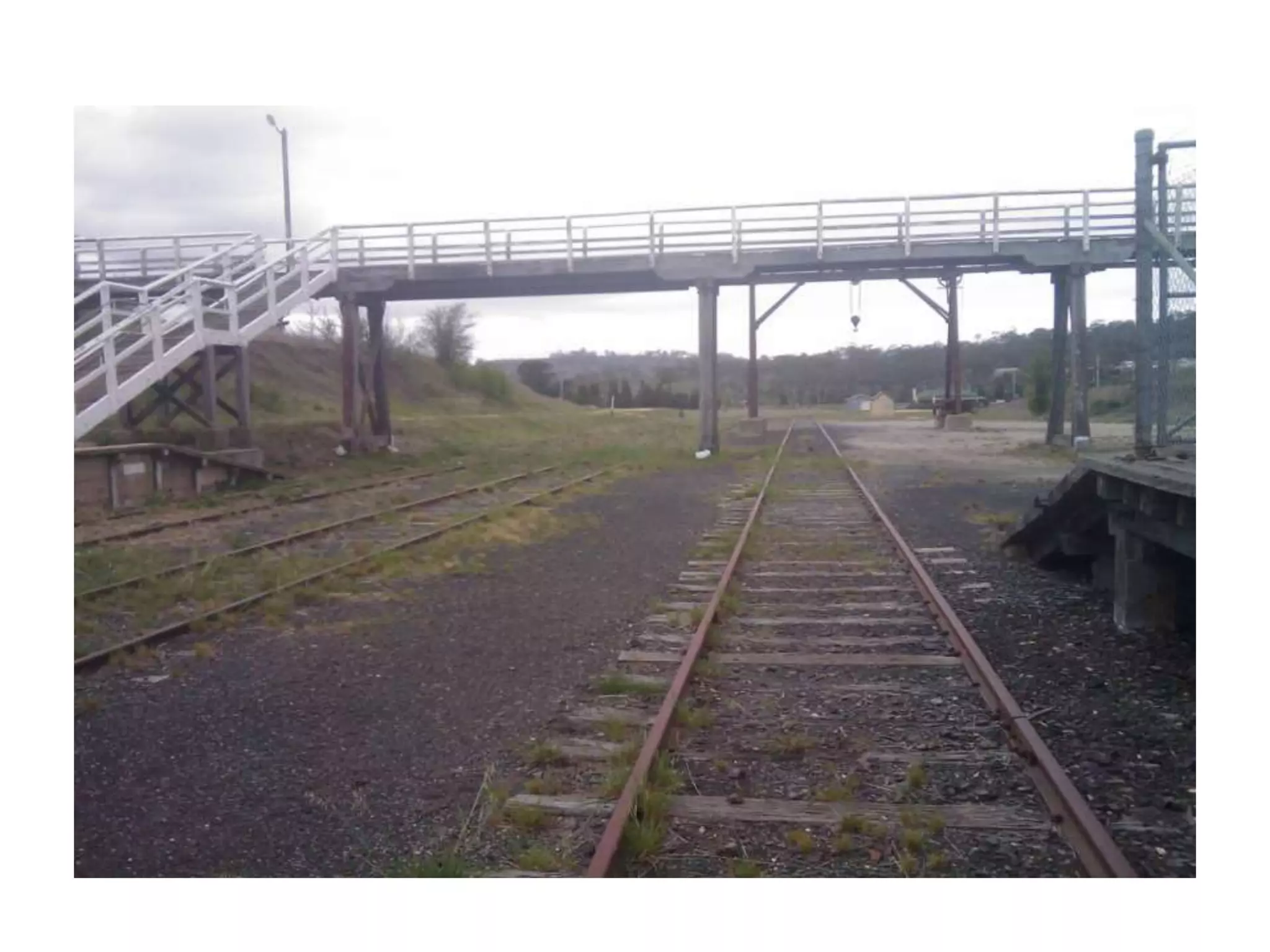
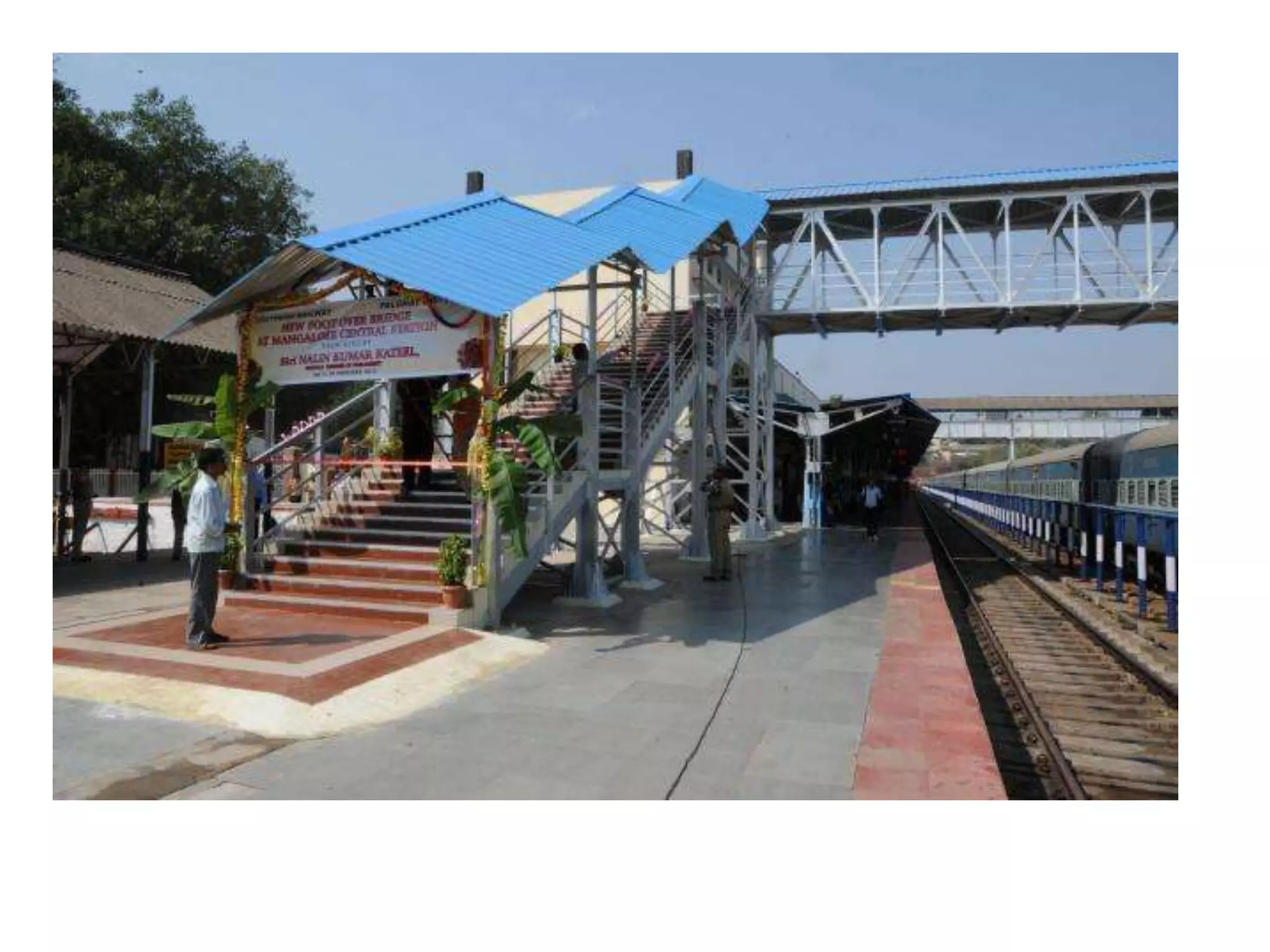
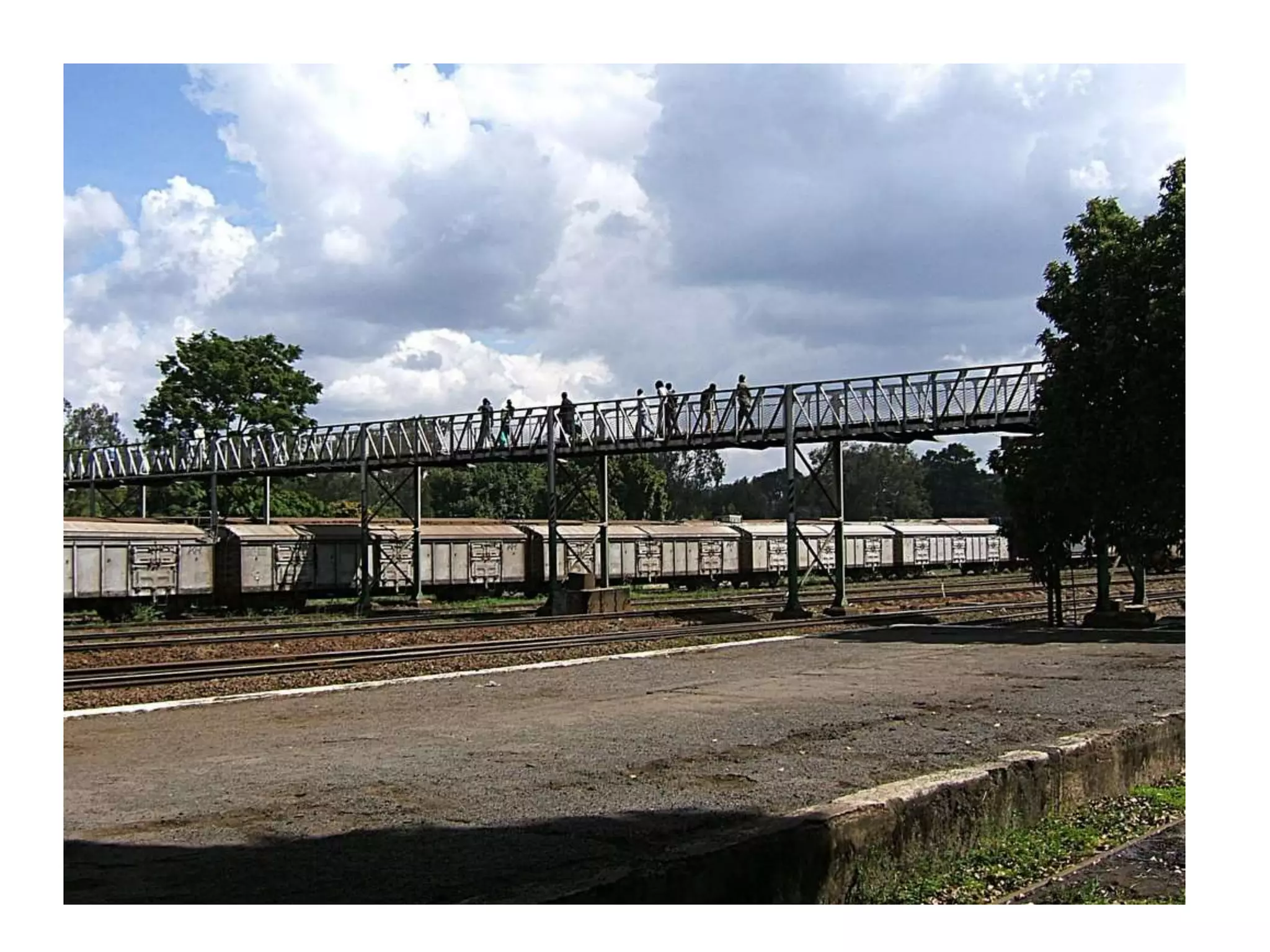
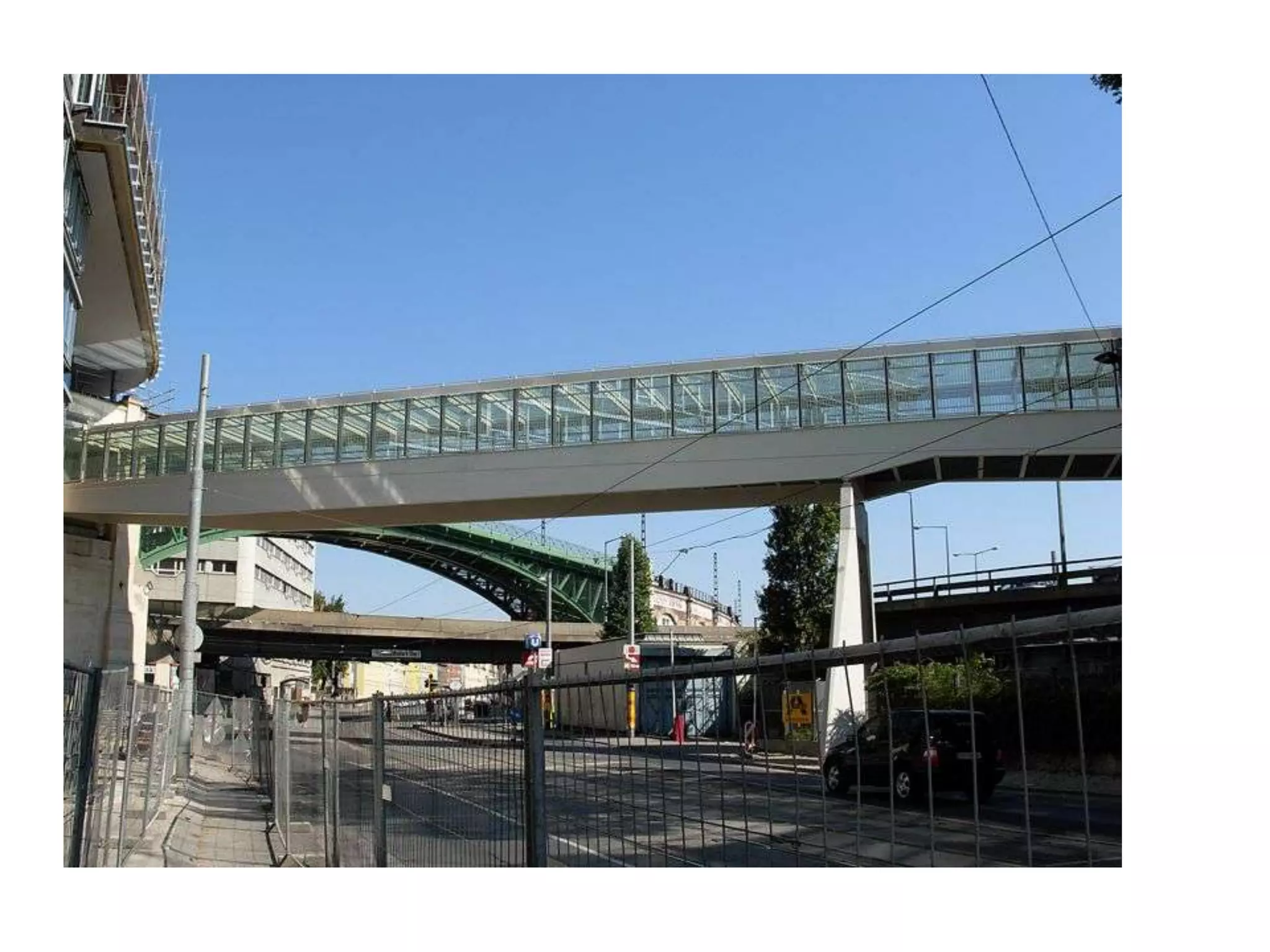
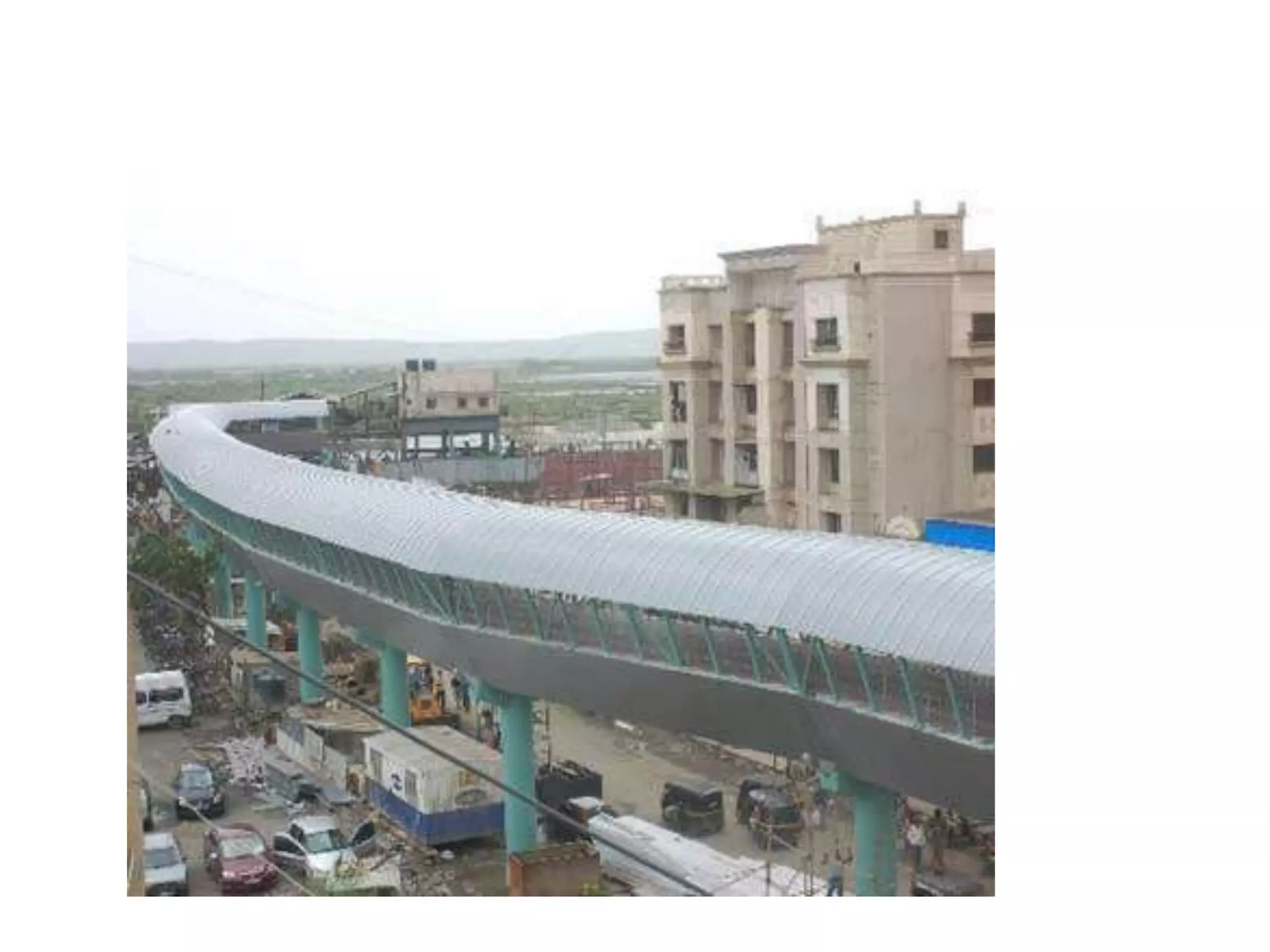
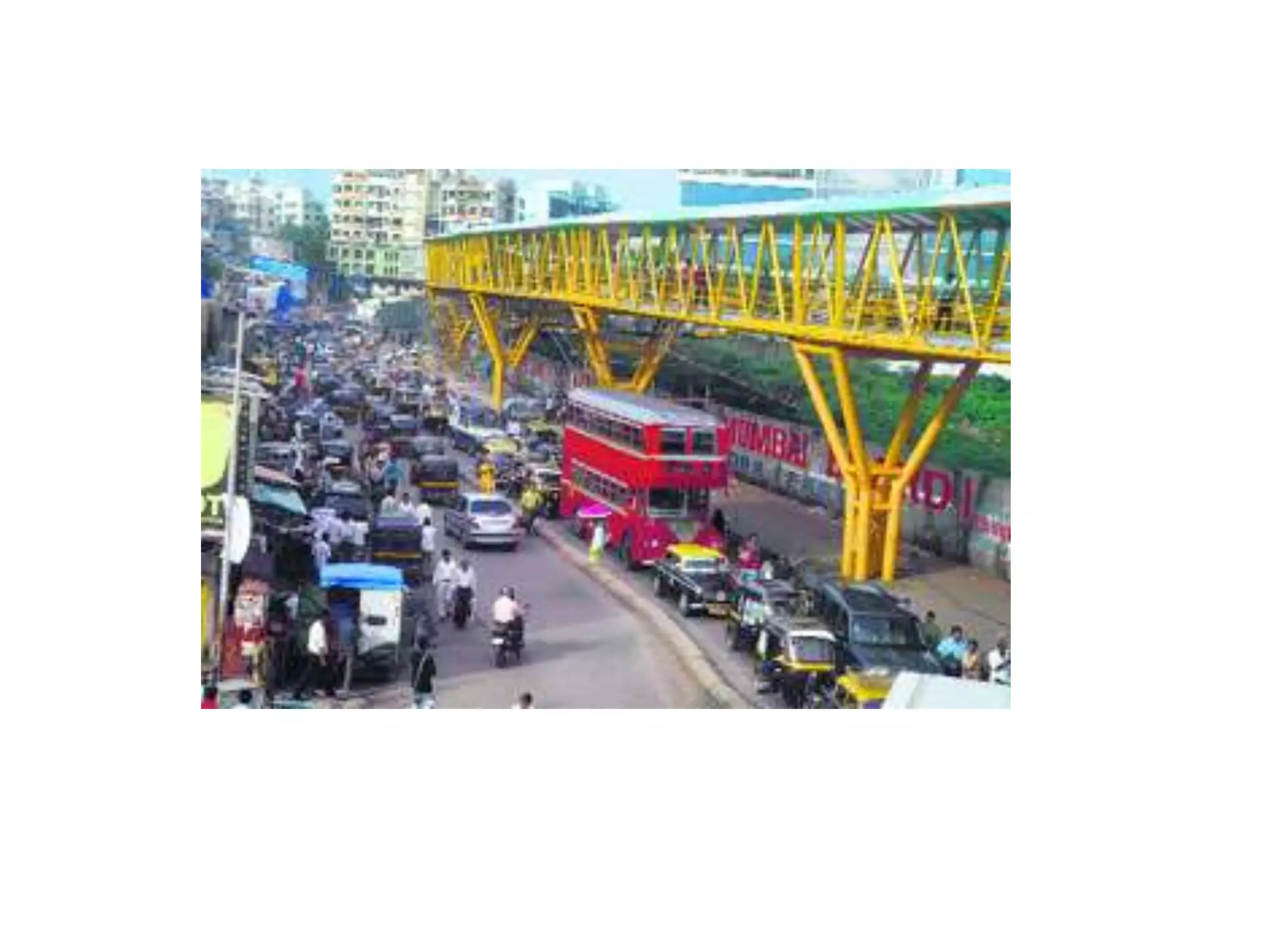
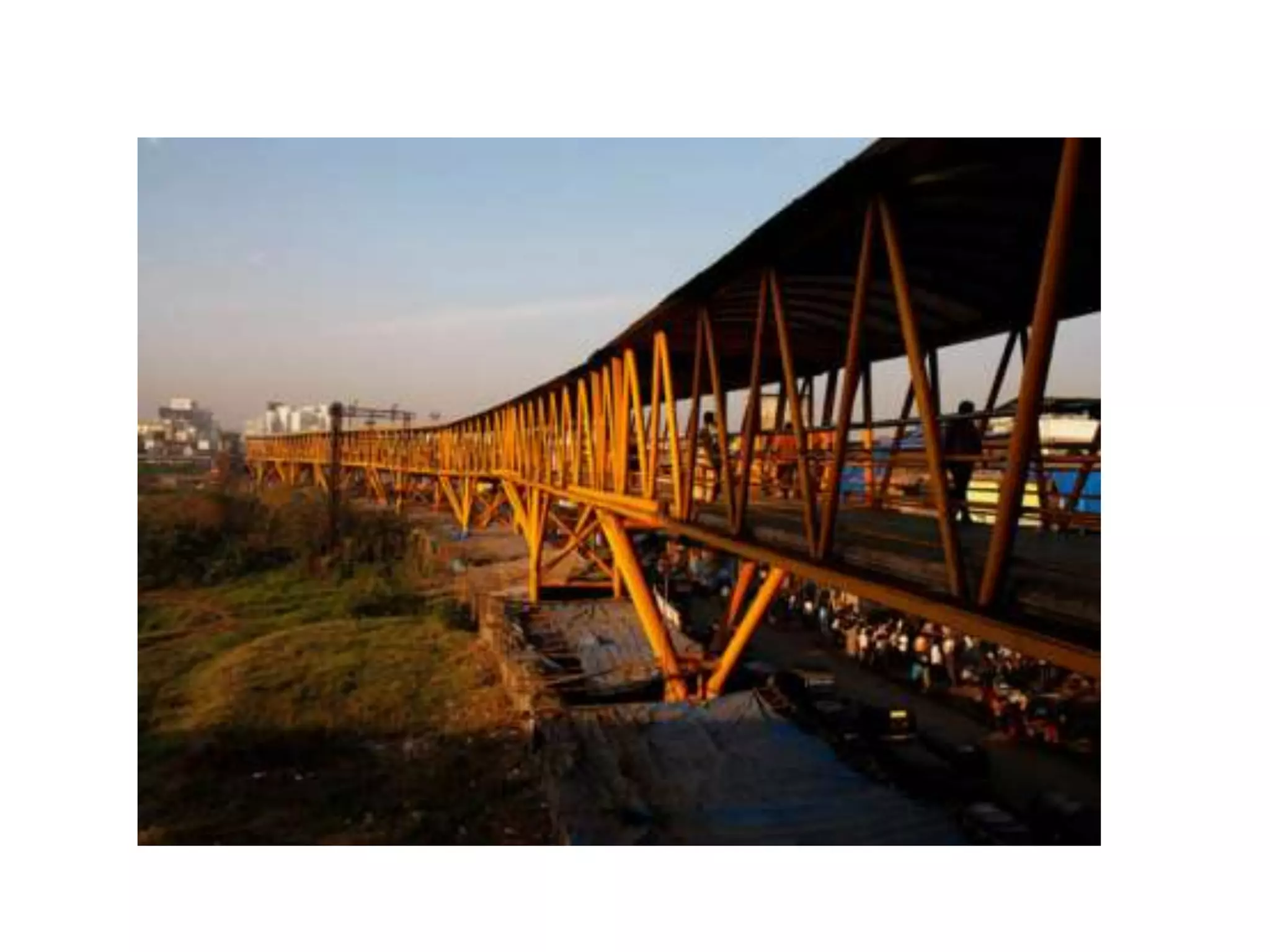
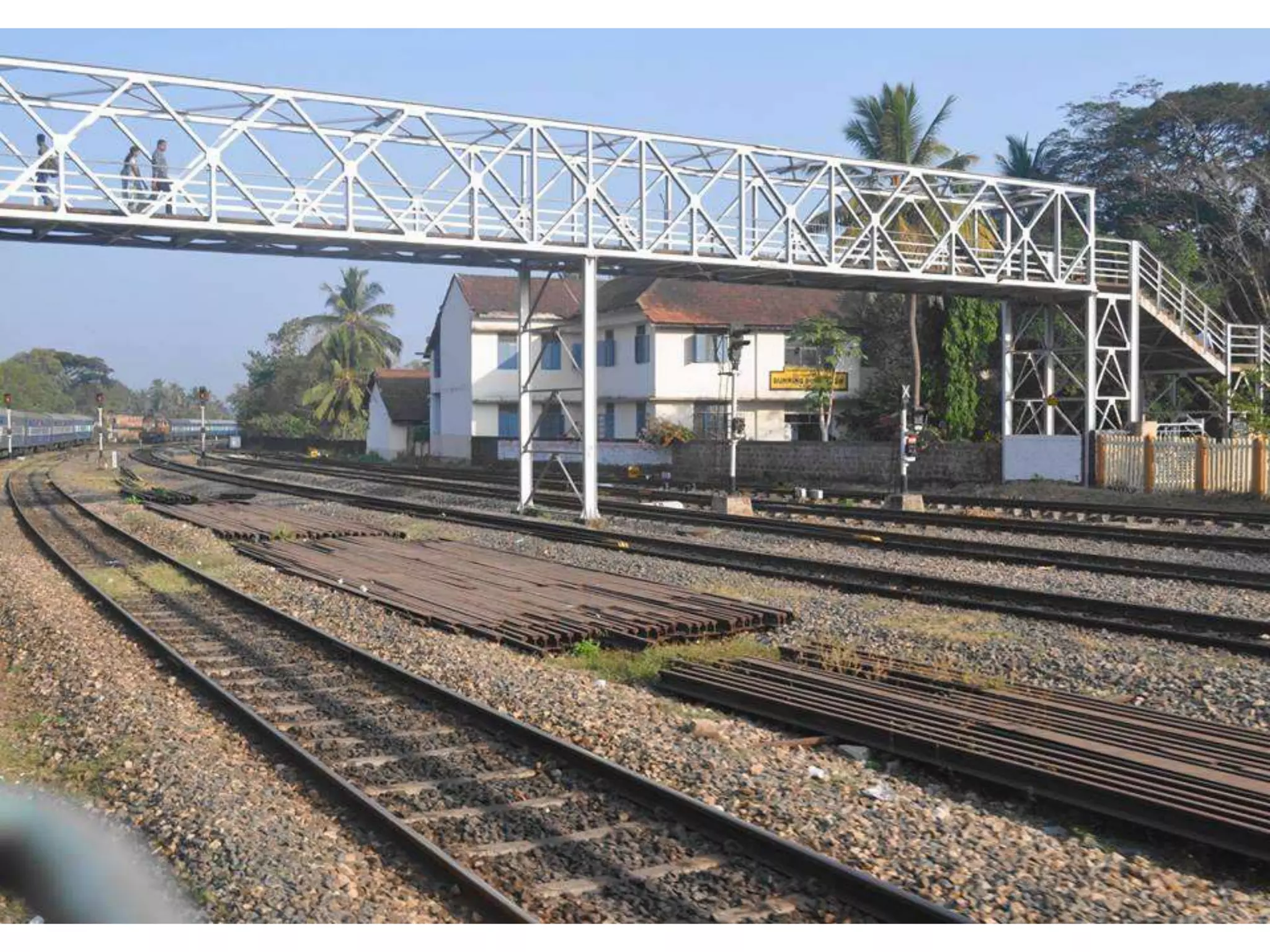
Applications of Foot bridge

At railway station to
change the
platforms
Sky walk
in metro
cities
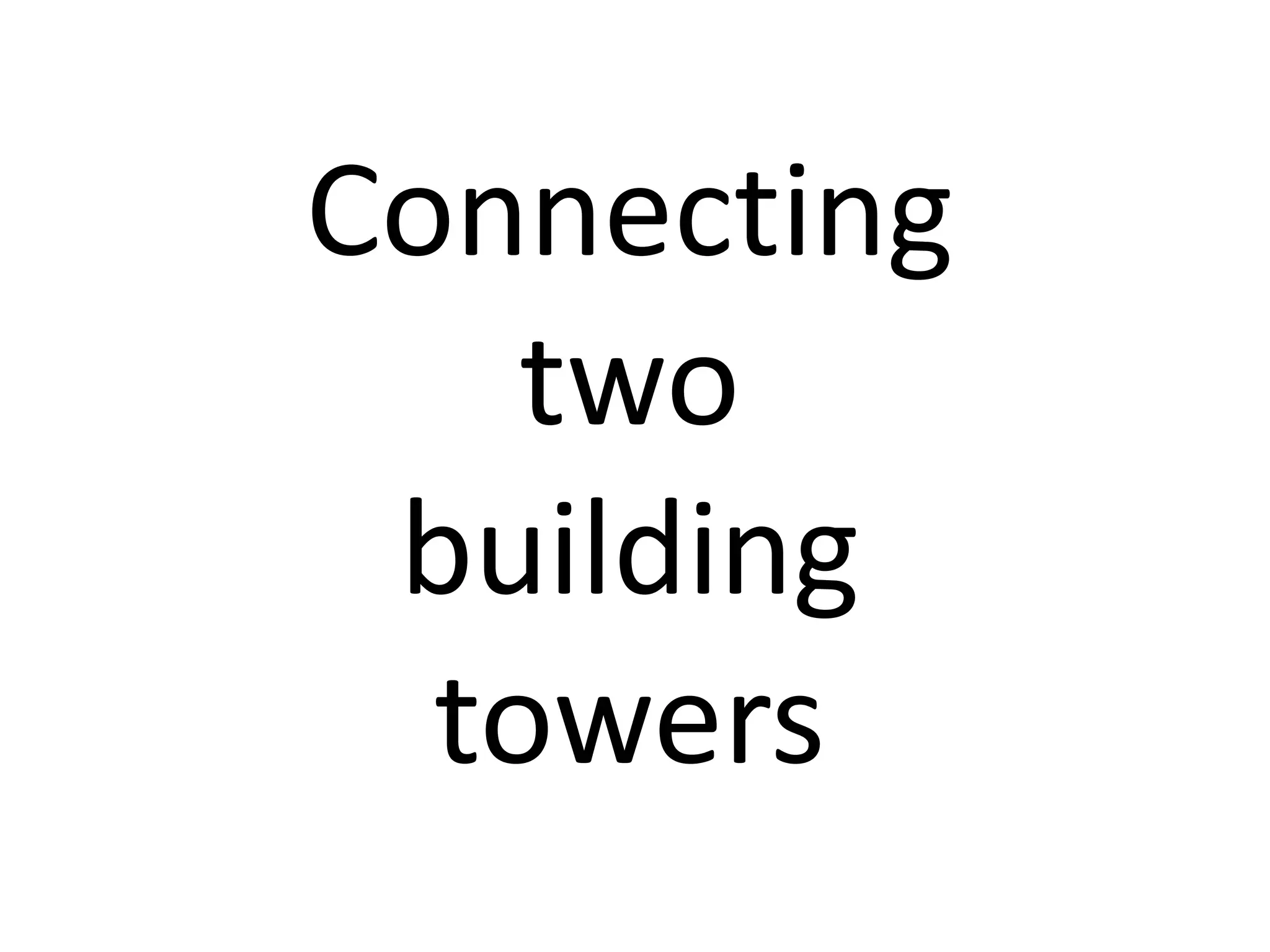
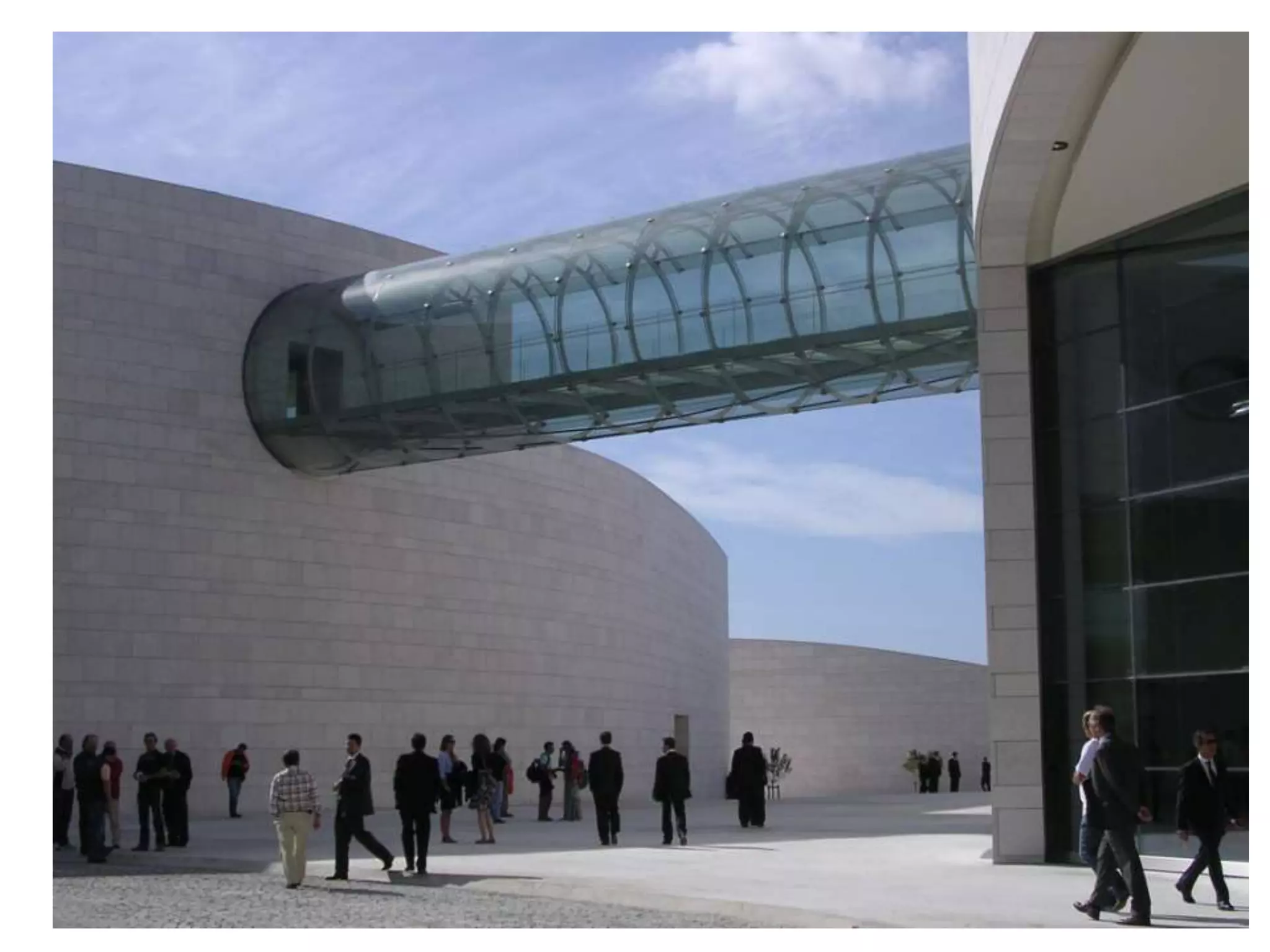
Connecting
two
building
towers
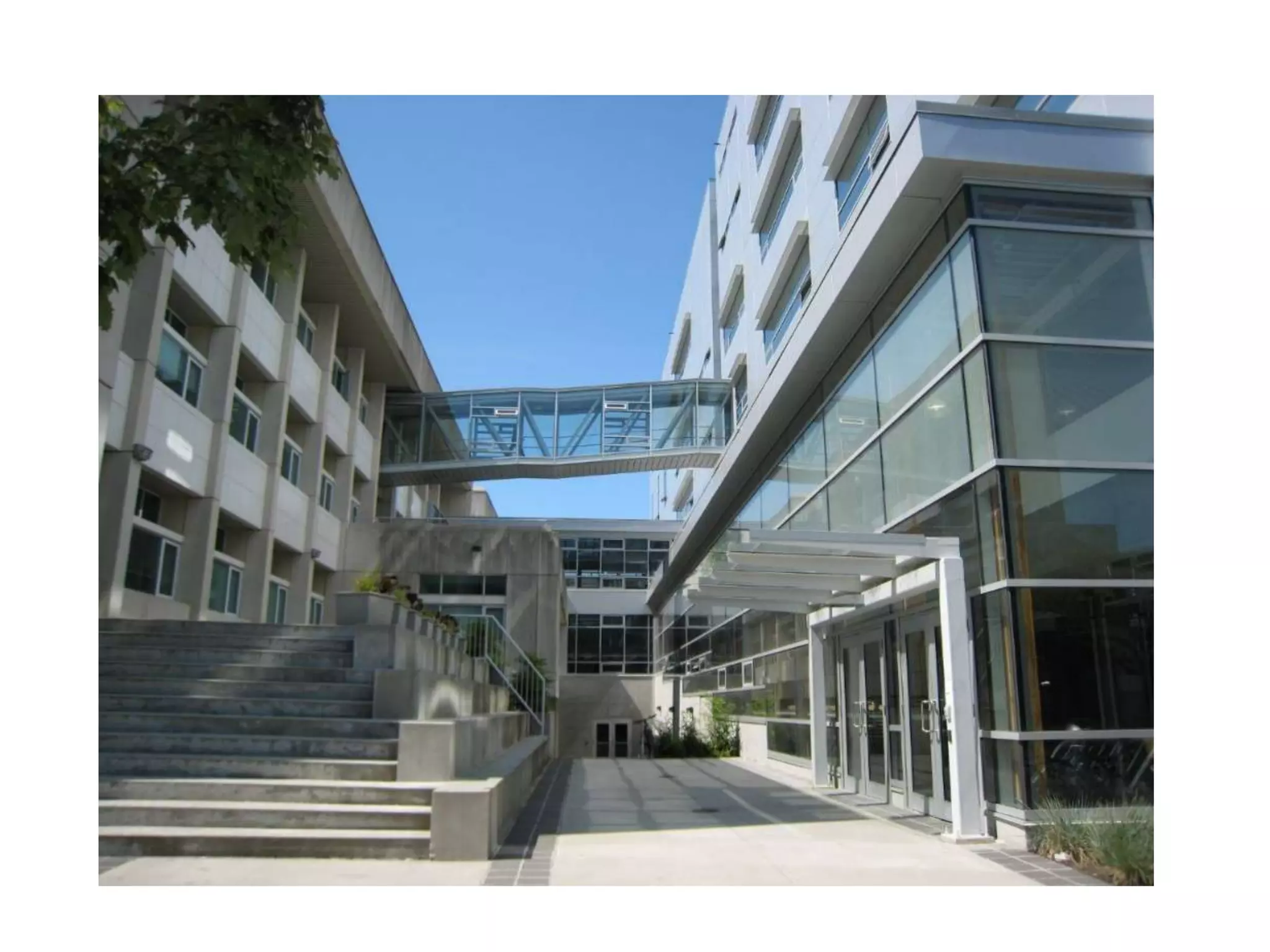
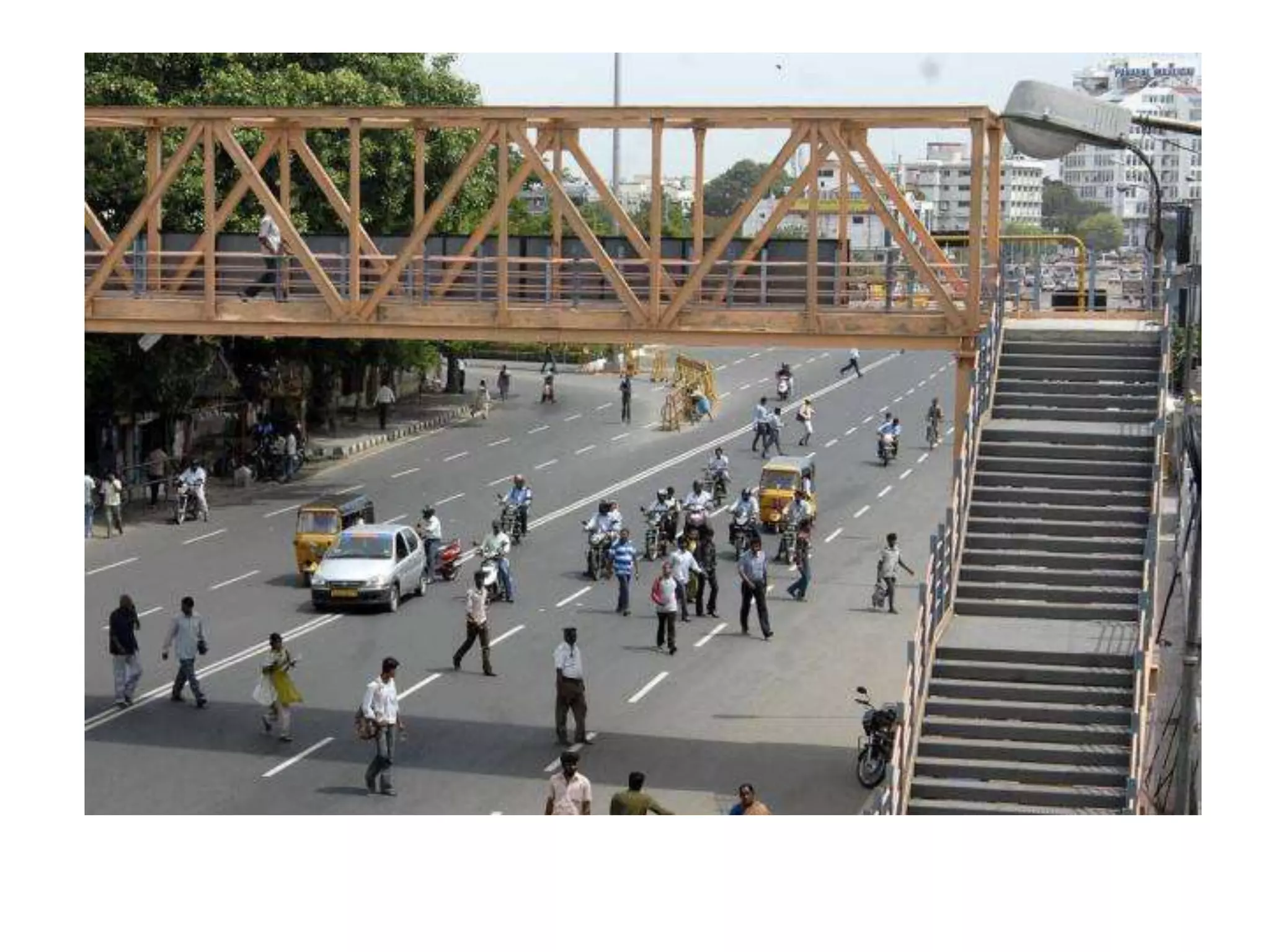
Busy
Streets to
cross the
roads
Foot bridge presentation

Foot bridge presentation

  • 1.
  • 2.
  • 3.
    RCC DESIGN • Loadingstandards as per I.S & guidelines for the preparation of structural layout. • Analysis, design & detailing of G+3 RC framed building for residential & commercial Purpose with ductile detailing. • Design & detailing of underground and elevated water tanks of different c/s. • Design & detailing of cantilever & counter fort retaining wall
  • 4.
    STEEL DESIGN • Designof bolted / welded plate girder for static and rolling loads. • Structural layout & Designing of every components of industrial building. • Design of foot over bridge and structural system of through and deck bridge. • Design principles for tall steel structures like transmission towers, chimney etc
  • 5.
    Topics covered byME • Full Steel design –all chapters • RCC design - Analysis, design & detailing of G+3 RC framed building for residential & commercial Purpose with ductile detailing.
  • 6.
  • 7.
    Topics • When touse truss girders..? • Difference between Plate girder and Truss girders. • Types of Truss girders • Components of Truss girder. • Loads on Truss girder • Applications of Foot over Bridge
  • 8.
    When to use..?? •To carry main load • When load is so large that can not be economically bridged using plate girders • If span is comparatively large.
  • 9.
    Difference Plate girder Truss Bridge •Continuous web • Not continuous – open web having • Smaller spans up to vertical and inclined 15-24 members. • Elevation is not • Spans upto 30 and good. more. • More cost • Elevation is good. • Less cost
  • 10.
    Types of trussgirders • Through type • Deck type • Semi type/half through
  • 12.
  • 14.
    The carriageway restson the top of the main load carrying members. In the deck type plate girder bridge, the roadway or railway is placed on the top flanges as shown and the cross girders are supported by the trusses generally at the panel points
  • 16.
    Through type truss •- The carriageway rests at the bottom level of the main load carrying members. In the through type plate girder bridge, the roadway or railway is placed at the level of bottom flanges. The bracing of the top flange or lateral support of the top chord under compression is also required.
  • 17.
    Semi through typebridge The deck lies in between the top and the bottom of the main load carrying members. The bracing of the top flange or top chord under compression is not done and part of the load carrying system project above the floor level The lateral restraint in the system is obtained usually by the U-frame action of the verticals and cross beam acting together.
  • 18.
    Components of Trussgirder bridges
  • 21.
    The weight ofthe truck (and bridge deck) is carried by the stringers into the floor beam and then the floor beam carries this load to the truss at the node point (joint). The bottom chord of the truss is not bent by the weight of the truck because the stringer is attached to the floor beam and not the truss chord.
  • 24.
    Loads Applicable ontruss girder
  • 25.
    The following arethe various loads to be considered for the purpose of computing stresses, wherever they are applicable. Dead load Live load Impact load Longitudinal force Thermal force Wind load Seismic load Racking force Forces due to curvature. Forces on parapets Frictional resistance of expansion bearings Erection forces
  • 38.
    Applications of Footbridge At railway station to change the platforms
  • 43.
  • 48.
  • 52.